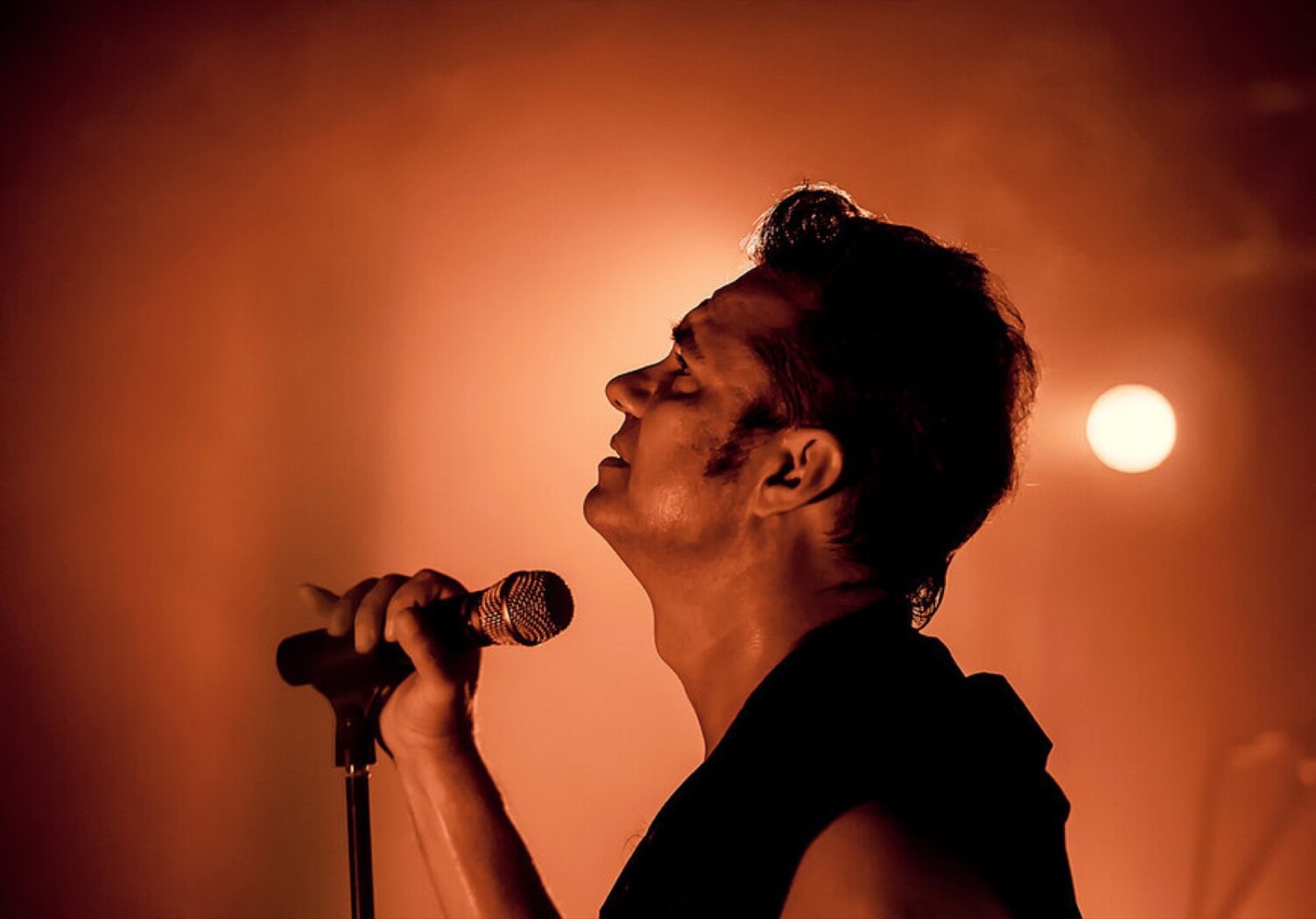
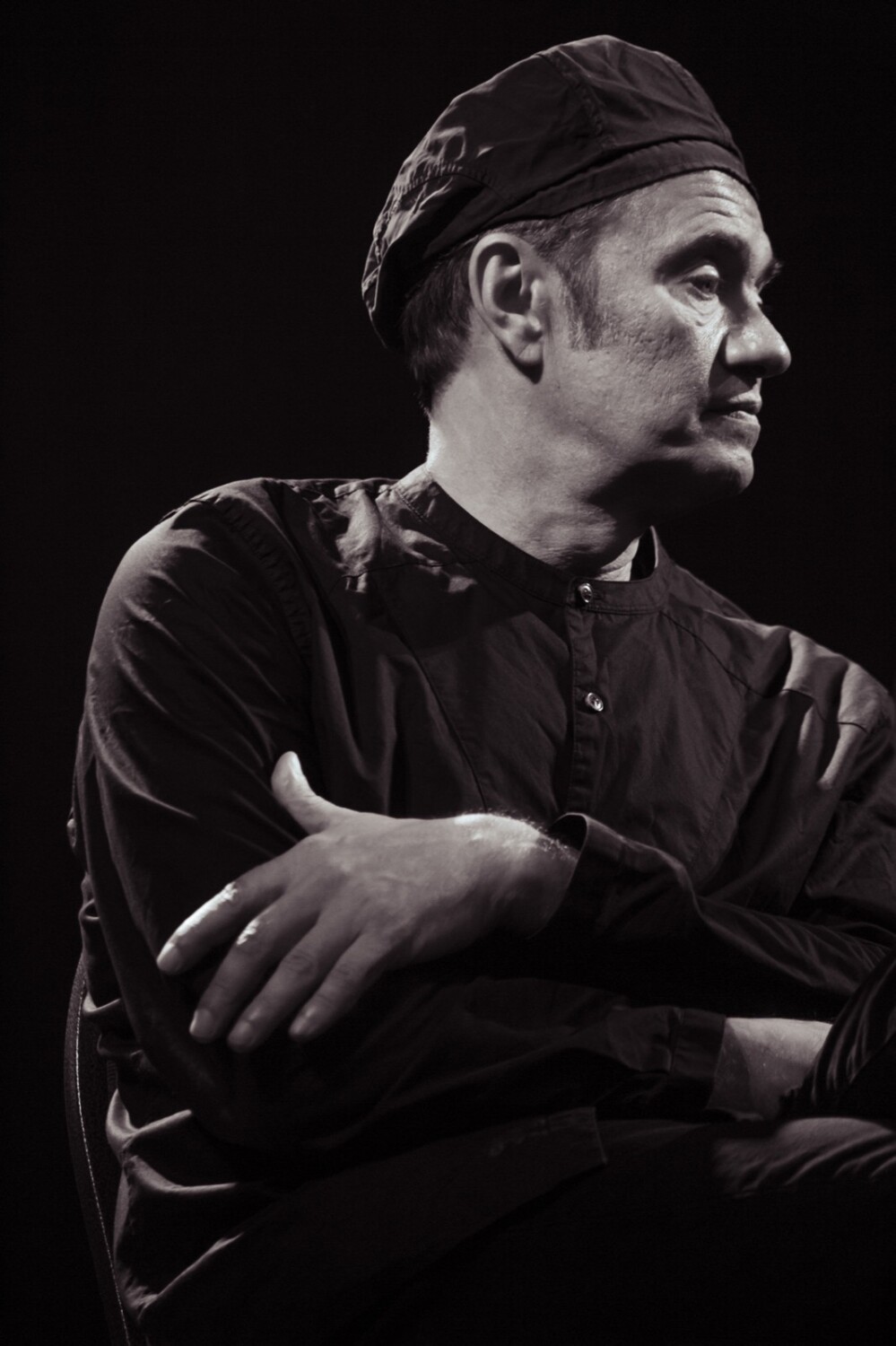
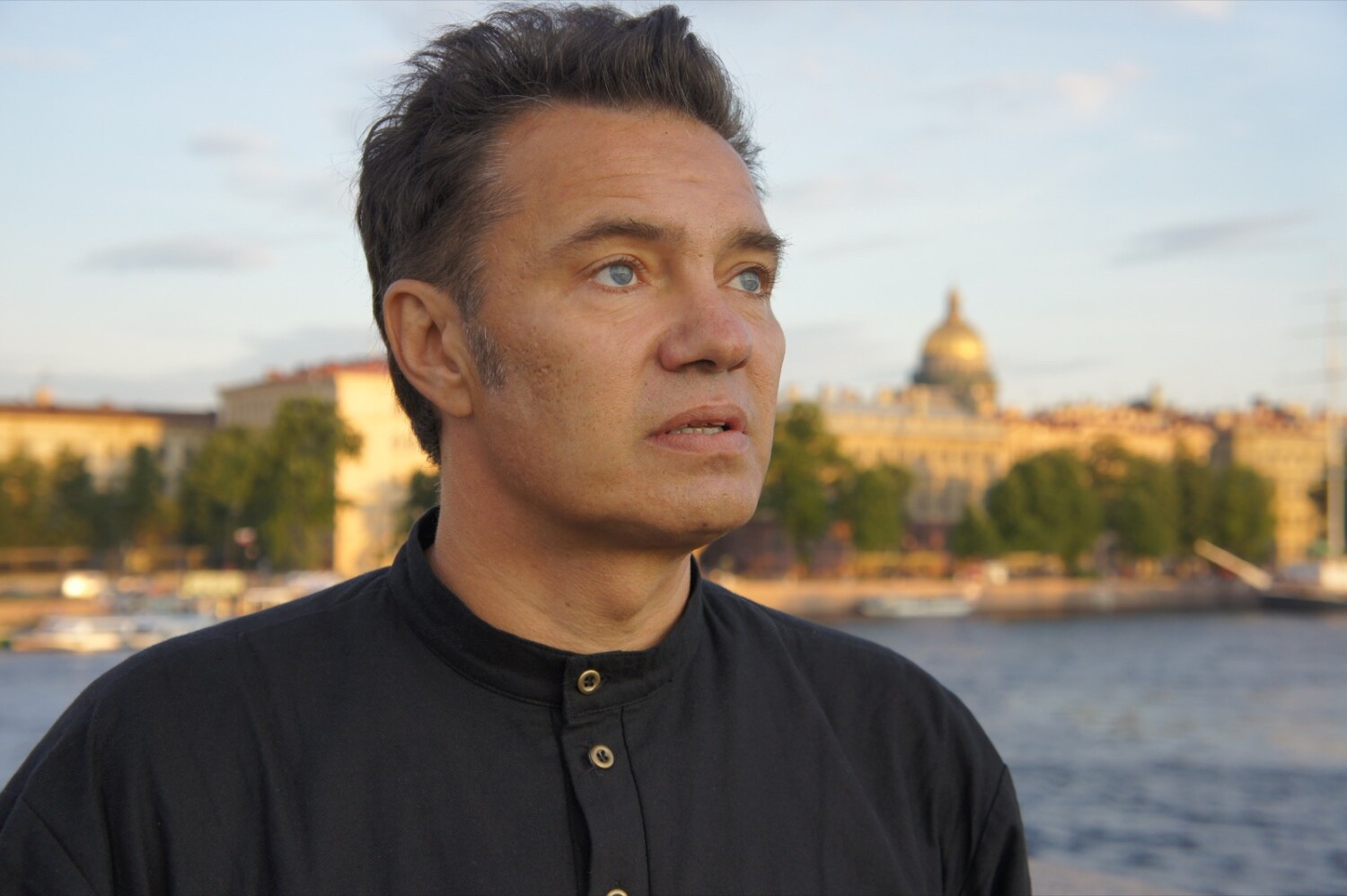
You started singing professionally at just twenty-three, and you already had songs such as “The Procession of Fish” and “Coloured Dreams.” Where did that particular mood come from at such a young age? Did something happen, or why did you begin writing such dark songs?
Actually, I started singing much earlier. I performed in a choir when I was six, and we had a rock band at school. We played all kinds of songs, not only dark ones. By the age of fifteen, I was already in a school band that performed English-language covers as well as some of our own songs. As for what inspired me, I suppose Russian rock music played a certain role, although initially, it was British rock, and only later Russian music. More specifically, the Leningrad Rock Club and its most prominent representatives, bands such as Aquarium, Piknik, and others. They gave us the sense that it was possible to write beautiful rock songs in Russian. That was what inspired and motivated me. As for their supposed darkness, I’m not sure I would call those songs dark. There were tracks such as “Delusions of Grandeur” and “It’s Not My Fault,” which could hardly be described that way. It was, however, a period when we were discovering all kinds of underground esoteric literature: the Upanishads, the Bhagavad Gita, clandestinely circulated texts about Maharishi, and the works of Indian, German, and many other philosophers and esoteric thinkers. This underground literature attracted a great deal of attention among us students in the Faculty of Philology, so we read it voraciously. That may be where the language came from, not necessarily a dark language, but a metaphorical one.
Did figures such as Aleister Crowley also inspire you? Did you read Blavatsky?
Yes, I read them for a while during those years, because their works were also circulated through samizdat, but I wouldn’t say I was particularly inspired by them. Perhaps I sensed a certain detachment from the material world, a kind of paranoia. Although Nietzsche’s paranoia appealed to me, and I remember being fascinated by some of Schopenhauer’s statements. But I never immersed myself very deeply in those kinds of things; that suggestion of Satanism frightened me. Apparently, I’m not really an advocate of a metaphysical perception of the world.
Why was all of this literature underground? You were studying at university, weren’t you allowed to read such texts there?
No, of course not. Our curriculum was entirely Soviet; it was 1981 or 1982. We had general courses in foreign and Russian literature. But these philosophers and esoteric writers were forbidden, so we had to find their works ourselves, just as we did with anti- Soviet literature by writers such as Shalamov and Solzhenitsyn. These typed or photocopied samizdat texts circulated on A4 sheets. They were literally passed from hand to hand, and you would be given only a few days to read them. They were fascinating partly because they were forbidden. That made them twice as interesting.
You are not only a singer, but you also compose the music and write the lyrics. When people perceive you primarily as a lyricist, does that ever offend you? Which is more important to you: the words or the music you create?
I have always tried to achieve a kind of equal harmony between the lyrics and the music within the rock-song genre. That is why I don’t regard the lyrics as poetry in their own right. I always try to weave them into the musical fabric; the two depend on one another. In my opinion, there are bands far more centred on their lyrics than Televizor. We have tried to leave more space for the music. Whether we succeeded is, as they say, for you to decide.
What comes first – the music or the words?
It varies. Sometimes a single line of text immediately becomes a melodic phrase and pulls the music along behind it. At other times, a musical idea develops into a song. It would be difficult for me to calculate the proportions. Over the years, I have generally tried to ensure that the music doesn’t lag behind the lyrics, but also that it doesn’t become too dominant. It is an attempt to find harmony within the genre.
When you began making your recordings and incorporating electronics, don’t you think it was slightly premature for that time, that you were somewhat ahead of the other musicians playing alongside you? It was quite experimental.
The scene was fairly loose and unstructured. It consisted largely of Soviet vocal-instrumental ensembles and rock bands whose main reference point was the music of the 1970s. But we considered ourselves progressive. It sounds funny now, but nevertheless, we were searching for something new because we had already completed that entire course of musical education: from jazz and early rock ’n’ roll through art rock and psychedelia. We had already fallen in love with all of it, and we were looking for a new sound. That sound arrived first in the form of post-punk and then new wave, and it completely captivated us. New technology offered the possibility of creating something unlike the elaborate blues-based experiments of our predecessors. It introduced an entirely different approach to arrangements and vocal melodies. We listened to enormous amounts of this music. We obtained recordings through various underground pirate channels and copied them for one another.
Whom did you listen to? Who were the musicians and bands you followed at the time?
I remember being thrilled by albums from Depeche Mode, Talking Heads, The Cure, and Peter Gabriel in the early 1980s, as well as all kinds of new-wave bands. We devoured them like sunflower seeds, one after another. Duran Duran, Kajagoogoo, Zigzig Sputnik, and Dead Can Dance of course. The list was enormous. We listened to electronic music in all its forms, to everything involving synthesisers, but also to the legacy of post-punk.
You have a song called “Mega-Misanthrope.” To what extent do you consider yourself a misanthrope? You once said that all your songs were autobiographical, which is why I wanted to ask whether you regard yourself as one.
Of course, that side exists within me. Generally speaking, I feel less and less of an intense desire to celebrate and rejoice in humanity’s achievements. Nevertheless, I follow what is happening in the world with great interest, not only humanity’s traditional, endless wars, but also developments in astrophysics and quantum physics. Naturally, I’m observing from the sidelines, to put it mildly; I don’t possess any deep knowledge of these subjects. Still, I am interested in exoplanets on which life might be possible, as well as the idea of quantum immortality. I find it all fascinating. So I don’t share the view that humanity has reached a complete dead end and is inevitably moving towards self- destruction, although that outcome remains possible.
Perhaps we interpret everything as being darker than it really is? Do you not actually consider yourself so pessimistic?
For me, a song is a way of capturing an emotional state. A long time ago, I encountered a definition of art that I liked: art should reflect the painful sensations experienced by the person creating it. Roughly speaking, if art does not respond to one’s internal symptoms of pain, it cannot be sufficiently sincere or profound. That became a kind of pattern for me, so I began with my own painful sensations, which are given to us so that we can avoid greater problems in the future. Perhaps, in that sense, it is a form of therapy or self-treatment. People have often told me that the album A Suicide’s Dream, despite being depressive, actually inspires them to live. Strangely enough, it helps pull people out of depression. You fight fire with fire; you treat like with like. A person begins to focus on what they are feeling, realises that their condition has been described, and discovers that they can let it go. I have heard this many times. At first, I was surprised, but eventually it became clear that the music does, after all, possess a therapeutic effect.
You left Russia. How has that affected what you sing about? Have the situation and everything that has happened over the past few years influenced your work?
Emigration is an anxious and troublesome affair, as history has repeatedly demonstrated. I am living through a new period of my life, confronting new challenges and problems, and observing myself in this situation as well. It is funny and unsettling at the same time. But I am not burning any bridges, nor am I attempting to renounce my former self. I have no desire to endlessly and ostentatiously reinvent myself.
How would the twenty-three-year-old Mikhail Vladimirovich have received the person you are today?
With irony, I hope, and with an affectionate pat on the shoulder: “Well, old man, you’re still kicking up a fuss somehow.” But perhaps he would also say, “Look, these songs sound much better than they did when we started. Back then, we could never have imagined this kind of sound or this approach to composition. Respect.” That is what I would say to myself. At least I keep trying to communicate with my younger self and not drift too far away from him, because youth is an age of sincerity. At the time, I had not consciously deciphered many of the things I was doing, but they were honest responses to the surrounding world. I believe that the sincerity of that age is something a person needs throughout their life, and I try to preserve it as much as I can. From time to time, I measure myself against that young Borzykin.
What do you know about life today that the twenty-three-year-old man who wrote “The Procession of Fish” did not know?
I think I now understand the sheer number of ways in which my consciousness can be manipulated. Perhaps I have encountered a great many mental fraudsters who can no longer persuade me, and I try to keep my distance from them. My religiosity, for example, is now approaching zero compared with the spiritual searching of my youth. I was pulled in different directions: at one point I became absorbed in Buddhism, at another I was drawn to Taoism. Over the years, however, I have increasingly come to feel that faith, despite all its power and perhaps even its therapeutic effect, must be supported by knowledge. Otherwise, it is hallucination. I feel less and less inclined to glorify my own hallucinations and desires. On the other hand, I have also developed a sense of irony towards age itself. We inherit all these assumptions: if someone is older, they must be wiser; our parents passed something down to us, and because they lived longer, they must be right. This is absolute nonsense as well and should not be taken seriously. An endless admiration for experience simply because it is determined by age, or even by the course of someone’s life, is also a delusion. These are fairly simple realisations. But, overall, I still have the feeling that I knew nothing before and know nothing now.
What is happening in your life at the moment? What are you working on, and what are your plans? Is there anywhere we might be able to hear you perform soon? Could people perhaps travel to Montenegro to see one of your concerts? Are you planning any performances?
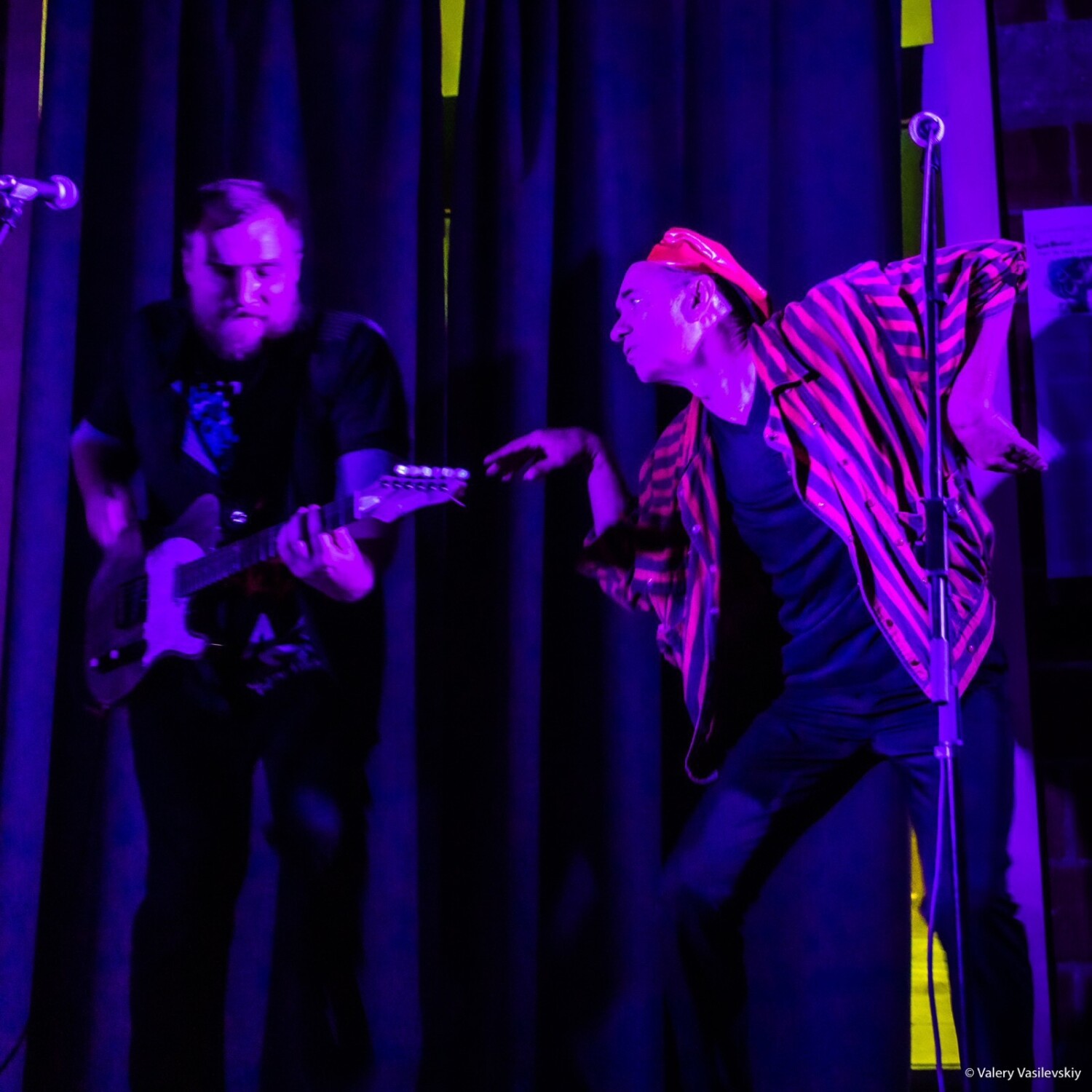
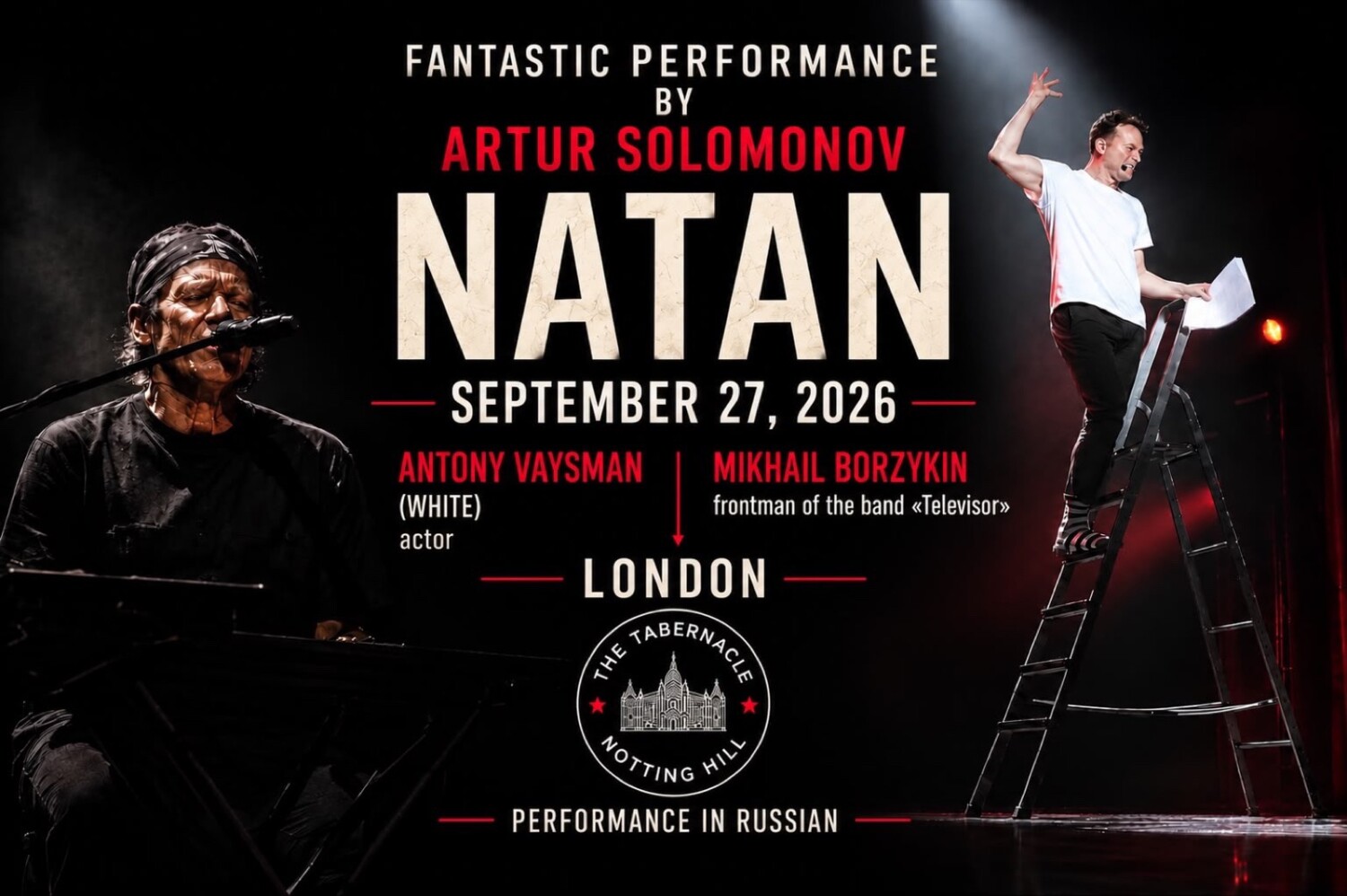
We have already performed in Montenegro quite a lot. There simply aren’t that many listeners here, so we give a few concerts each year in three cities, but not in large numbers. We are planning to return to Belgrade, possibly in October. We now perform with a new line-up: a new drummer, a new guitarist, and currently a second drummer from Tallinn. We recently travelled to Tallinn and played a concert there as well. I am also participating in theatre productions here with European Act, performing my own songs within the plays. I sing ten or eleven of my songs in Almar, a production about Albert Einstein; the songs are woven into the performance itself. We stage it regularly and may take it to Lithuania in the near future. There is also Arthur Solomonov’s play Nathan, in which Anatoly Bely performs, and I sing. We are scheduled to present it in London on 27 September. Information should be available on Facebook, Instagram, and Telegram.