In what ways, and through which nuances, do you seek to evoke both an emotional and an intellectual response in the viewer? Do you aim to guide the viewer toward specific affective states, or is instability itself part of the work’s
structure?
I think an artwork is interesting if it first makes you feel something, especially if you don’t fully understand it. That feeling, if one is curious, can make the work stay in your mind. It makes you return to the shapes that created those first sensations, and after that some people may begin analysing the work and drawing intellectual conclusions. That’s why I often come back to the visceral quality of the works: to feel first and think later. I never actually intend to guide the viewer. Although the works have a specific meaning to me, that does not mean they will be perceived in the same way by others. In this sense, I think the sculptures in particular become places onto which emotions can be projected, often ending up somewhere between the humorous and the tragic.
How do you see your work positioning itself within the contemporary condition? Which formal elements, material choices, or spatial decisions do you consider a concrete materialisation of the current socio-political or psychological landscape?
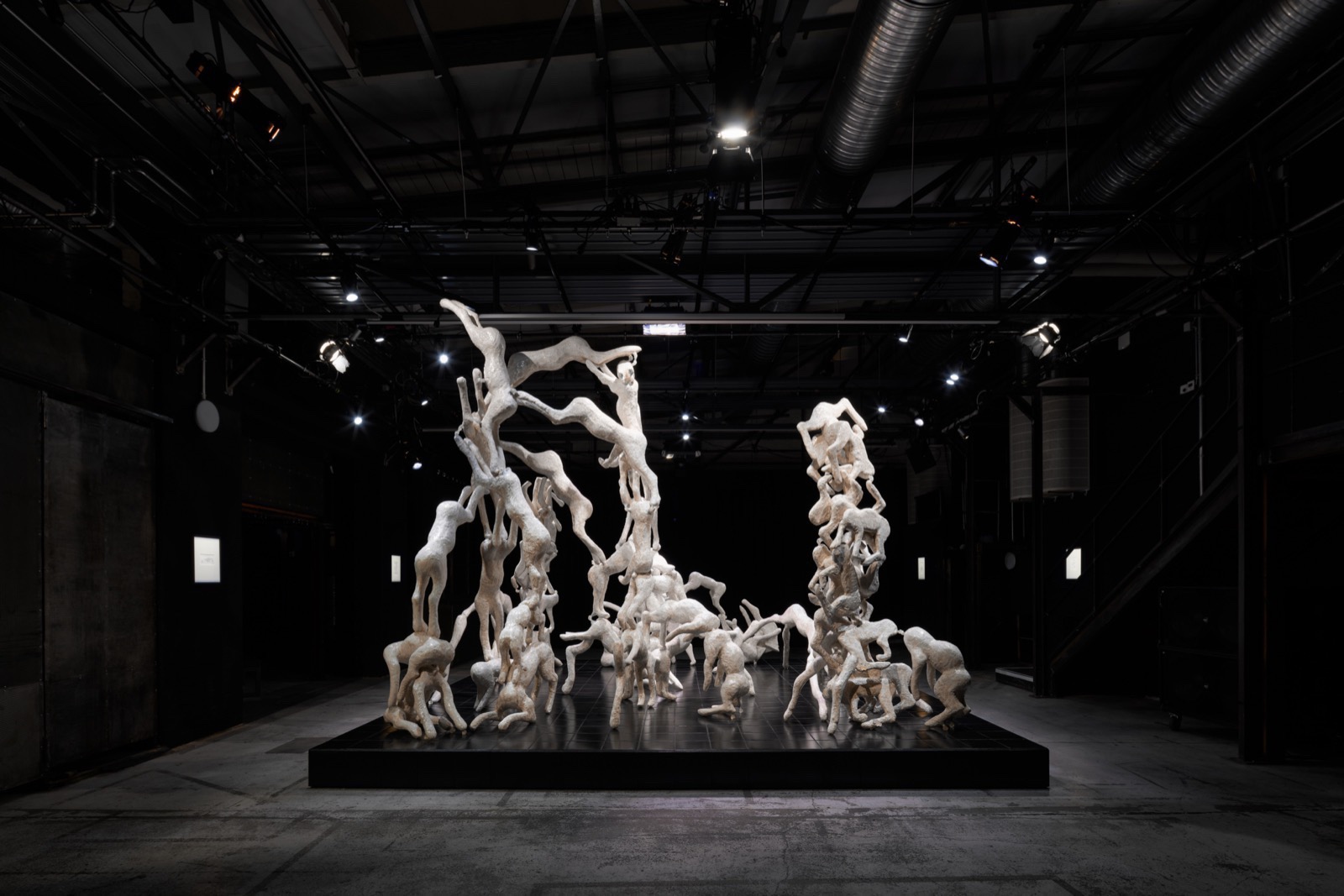
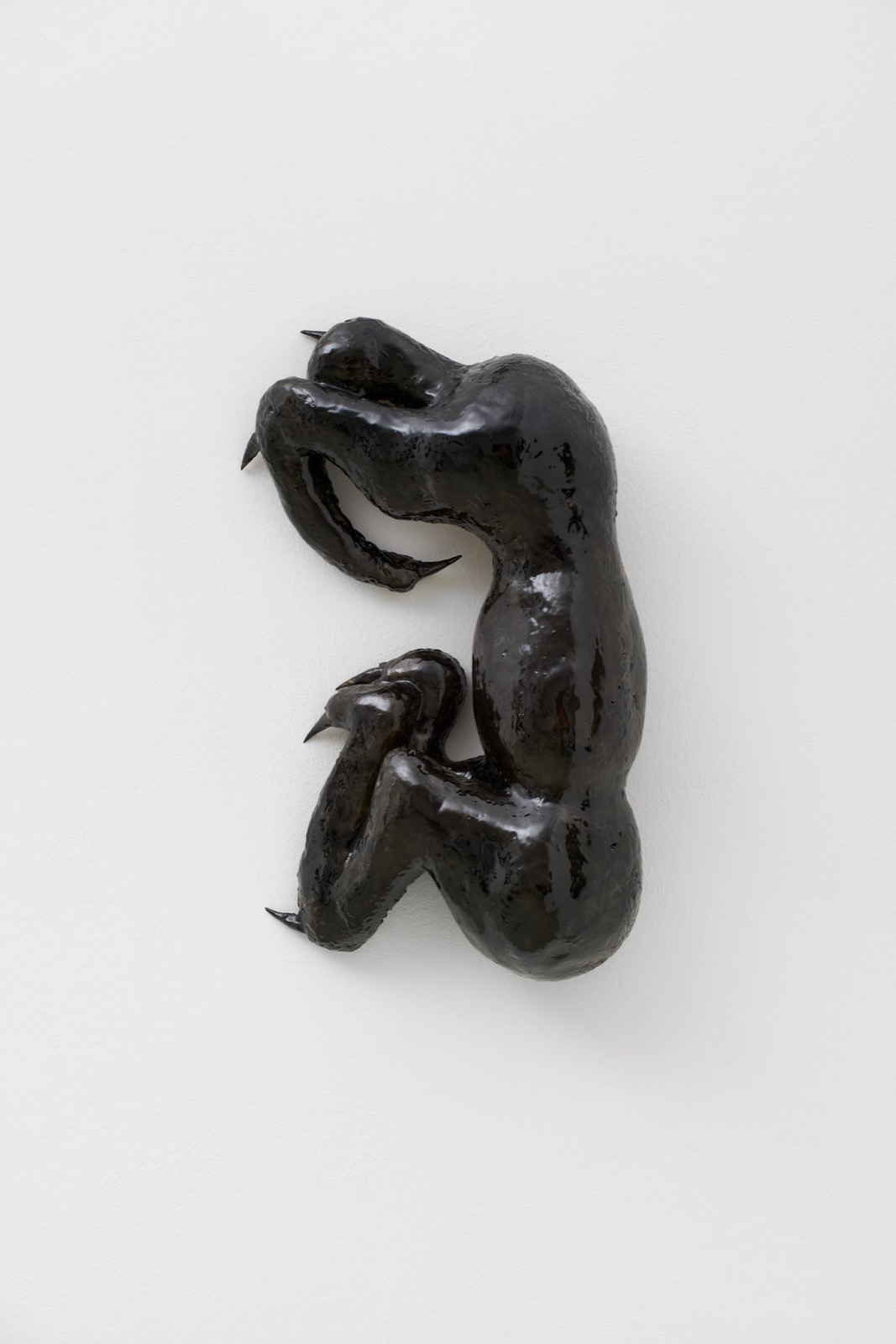
I think a lot about affect and transformation, along with an anxiety about the future. As I work with fragmented and hybrid bodies, often in states of metamorphosis or with lost limbs, these forms in my world undermine fixed ideas about identity, self-awareness through analysis, and subjectivity. Metamorphosis or mutation also speaks to bodily crises, such as reproduction. It is also why I keep returning to contradictory forms or meanings: sculptures that can be uncomfortable yet still deeply attractive to look at. I am interested in that psychological tension, which resonates with our moment of technological acceleration, something that is both an object of fear and excitement within a hyper-modern but somehow decaying society.
The tension between a soft fluidity and a sharper, slightly darker component appears strongly present in your work. Do you recognise this duality within your personal sphere as well? Are there biographical fragments or lived experiences that resonate with this contrast?
Yes, I’ve always been somehow crippled with dual emotions, dark thoughts and memories, and at the same time I see myself as a happy person, although complicated. Anxiety is in general a problem with contradictory emotions, but it is also something very creative, even if it involves suffering, which I think artists need to be truly genuine. When I was just about to finish my bachelor’s degree in philosophy (I wrote on aesthetic experiences), I entered a place of depression and couldn’t finish no matter how hard I tried. The depression could come from so many directions, as I did not have an easy childhood. There was a clash in me especially then, as I saw myself as a capable person, the good girl syndrome of doing everything well and right. That’s when I turned to art instead, and it made me better. After a year working with art, I went back and got my degree and then started my master’s in fine art.
Movement and fluidity reach a particular intensity in your performances, expanding what is already latent within the sculptures. Do you perceive a hierarchy between these two practices, or do you consider them mutually generative? If you were to choose one sculptural work and one performance to which you feel particularly connected, which would they be, and why?
I think sometimes that performance and sculpture are almost the same. It makes sense to me that one of the practices often leads to the other. I’m only really connected to my own works because while I still make them they are me, or a version of me. When they leave me there is less of a connection; it’s a tingling feeling meeting a sculpture a couple of years again after it left the studio. Other artists I was very curious about, for example when studying art history and philosophy but probably in relation to what was available, are Richard Serra’s sculptures and Joan Jonas’ performances.
How has your academic background influenced the construction of your artistic identity? In particular, how does your engagement with philosophy and aesthetics translate into your material research and formal decisions?
As a teenager I said to my mother that “I don’t want to be an artist, they’re so melancholic and have so much anxiety and I don’t want that,” and that’s why I chose philosophy, even if I didn’t know what to study at university. But I knew I had to study, and philosophy is just one of my interests (concerning objects and thing-power I read Jane Bennett, for example). However, in my BA thesis I wrote on aesthetics. After going through a lot of other fields, I found that the one concerned with art was the most interesting. I got curious about combining two seemingly contradictory theories, internalism and externalism, of aesthetic experiences. But I felt I wasn’t close enough to understand exactly where this aesthetic experience comes from, this feeling when one digests art or encounters art that is really appealing to oneself. Which is another reason, besides what I already mentioned, why I wanted to make art, make it myself, and find the source of aesthetic experiences, which I’m somehow still in the practice of doing. Funnily enough, not wanting to be an artist because they seemed down led me to philosophy, while
becoming sick myself in turn led me to art to make myself better.
Your sculptures often evoke contorted bodies or suspended organisms. Do these forms emerge from an investigation into inner turmoil, or do they relate more to an aesthetic, symbolic, or ecological condition or perhaps inhabit an intermediate
space?
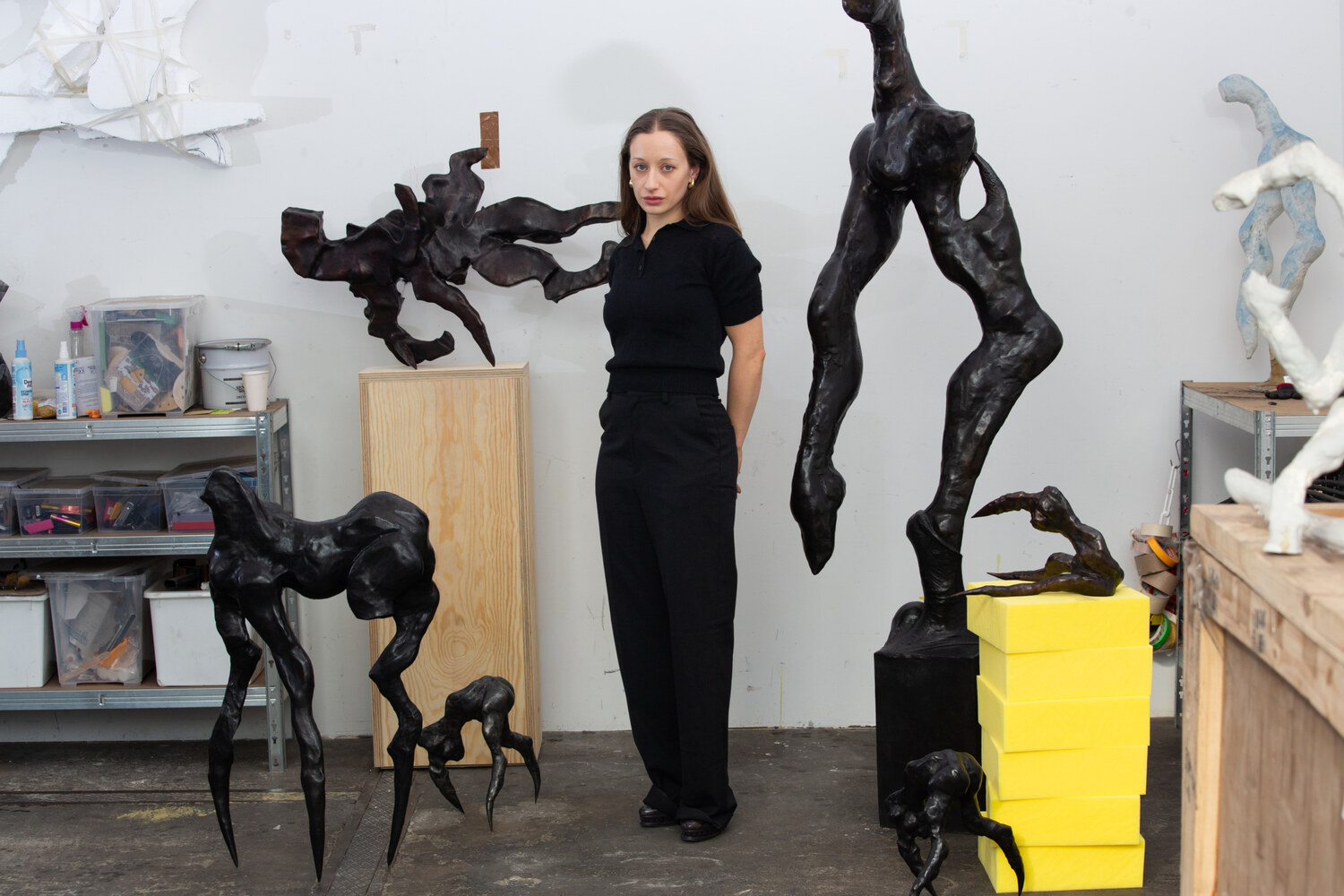
I work with everything, but the inner turmoil must be there, because I need to shut down the brain, become intuitive, and listen to impulses, like cutting off a leg or not. In the beginning I really did not want a head, so I thought no head, no head, no head was better for association, giving an abstract aspect to the work. I work until the point where it doesn’t annoy me anymore. All my references are woven into what I’ve seen, and that can come from everything: my dreams, memories, biographies of people from the Renaissance and Baroque periods, but most visuals and new forms come just before falling asleep, and out of respect for the work I always get up and write them down.
Sculpture inevitably implies a negotiation with space. At what stage of your creative process does the surrounding environment come into play? When you imagine a work, do you envision an ideal architectural or spatial condition that fully activates its aesthetic and intrinsic potential? What would this ideal context be?
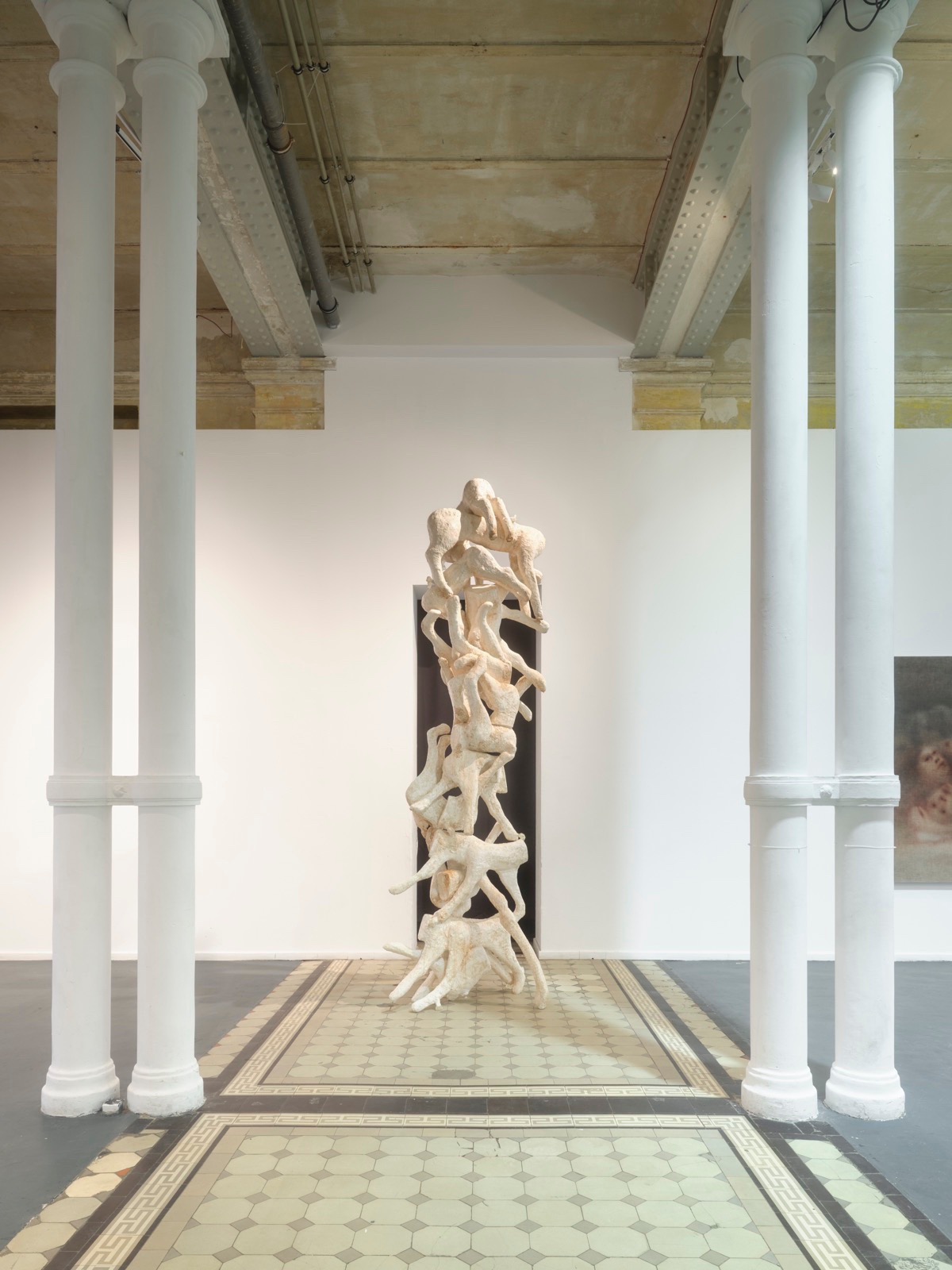
It really depends on the exhibition or project, I think about function a lot too. Some sculptures need a podium or another material to stand on, and some do not, and of course I decide if they need it. Technical solutions can happen too, its more about solving problems that you created yourself, and I want it to make conceptual sense as well. In general, I would prefer the sculptures to be outside.
Looking ahead, are there specific artists, institutions, or contexts with whom you would like to initiate a dialogue or collaboration? Are there environments, perhaps still unexplored, where you feel your work could acquire a new dimension?
I would like to make my own sculpture garden. I’ve been fantasising about that since years.
Turning to your new project in Stockholm, could you share the conceptual core of the exhibition? What is the cohesive axis around which the stylistic and structural decisions unfold?
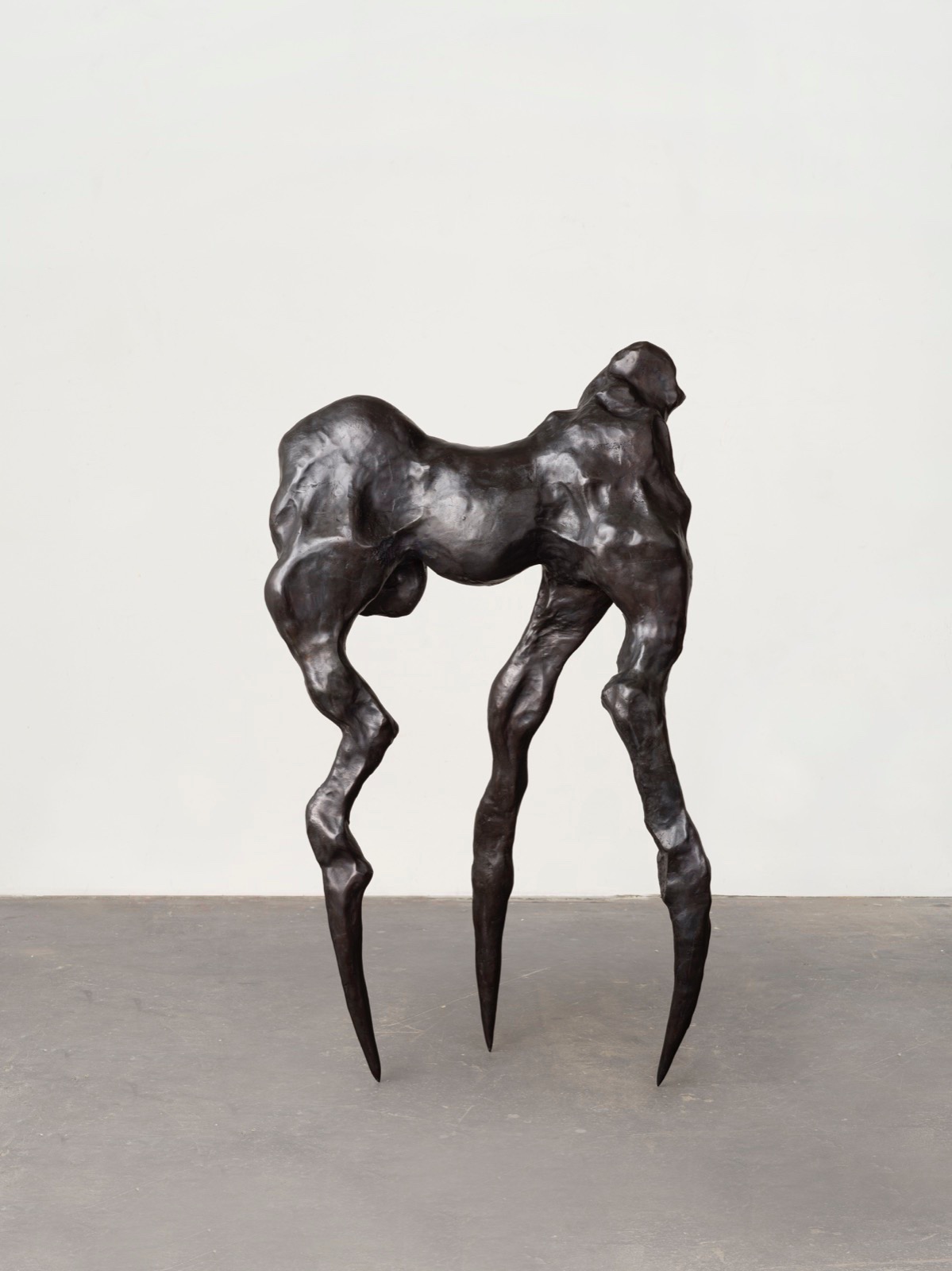
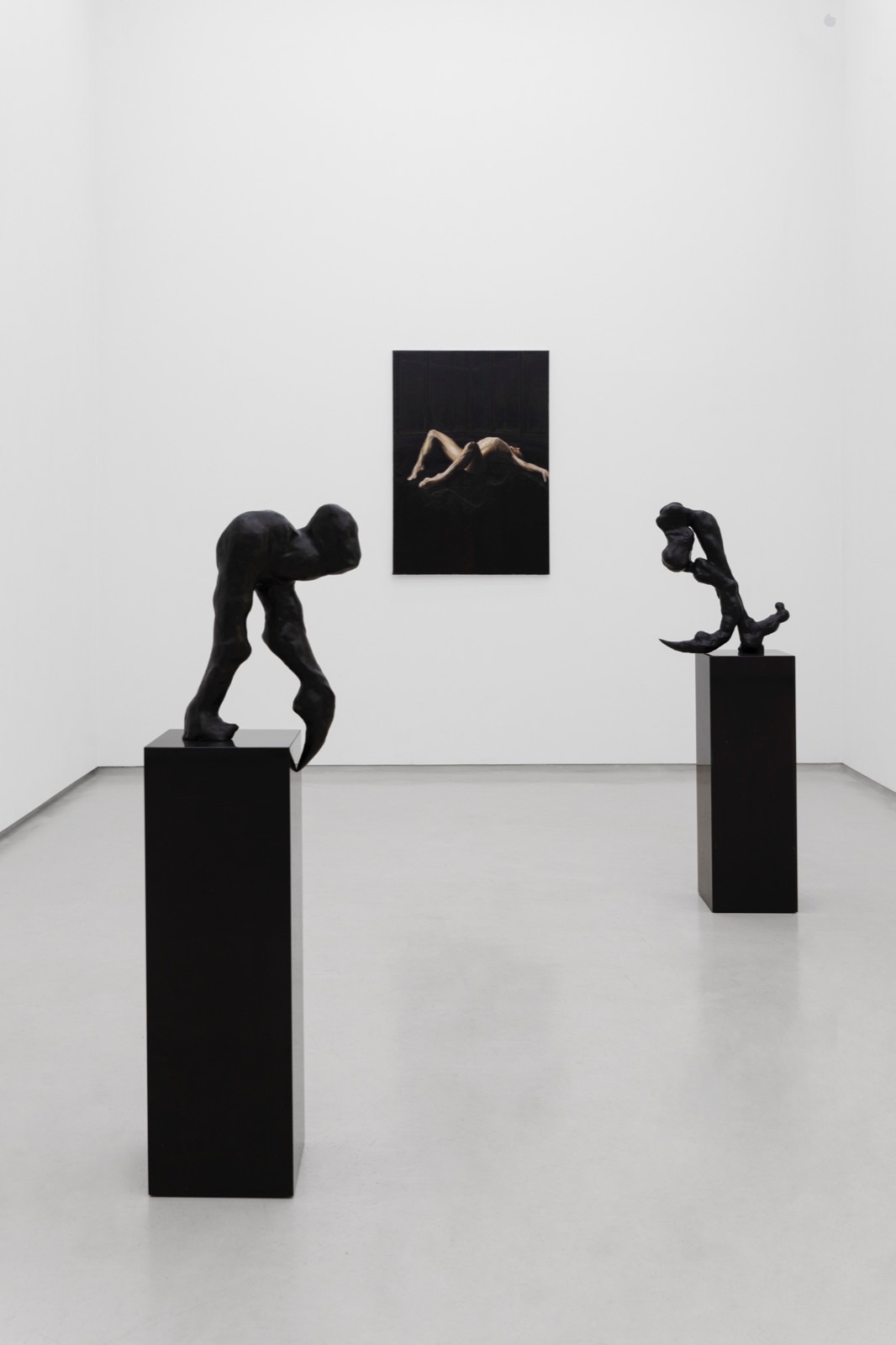
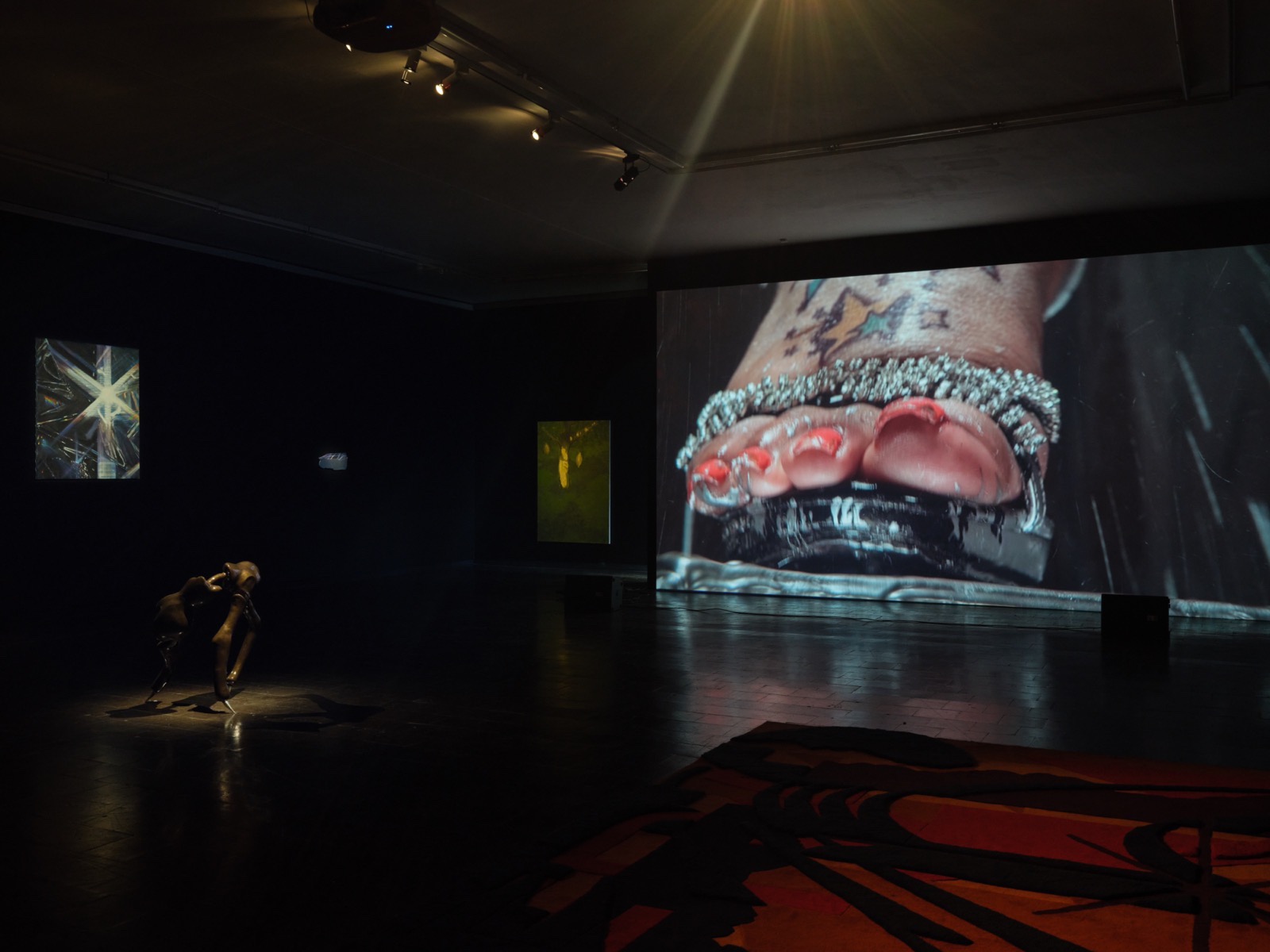
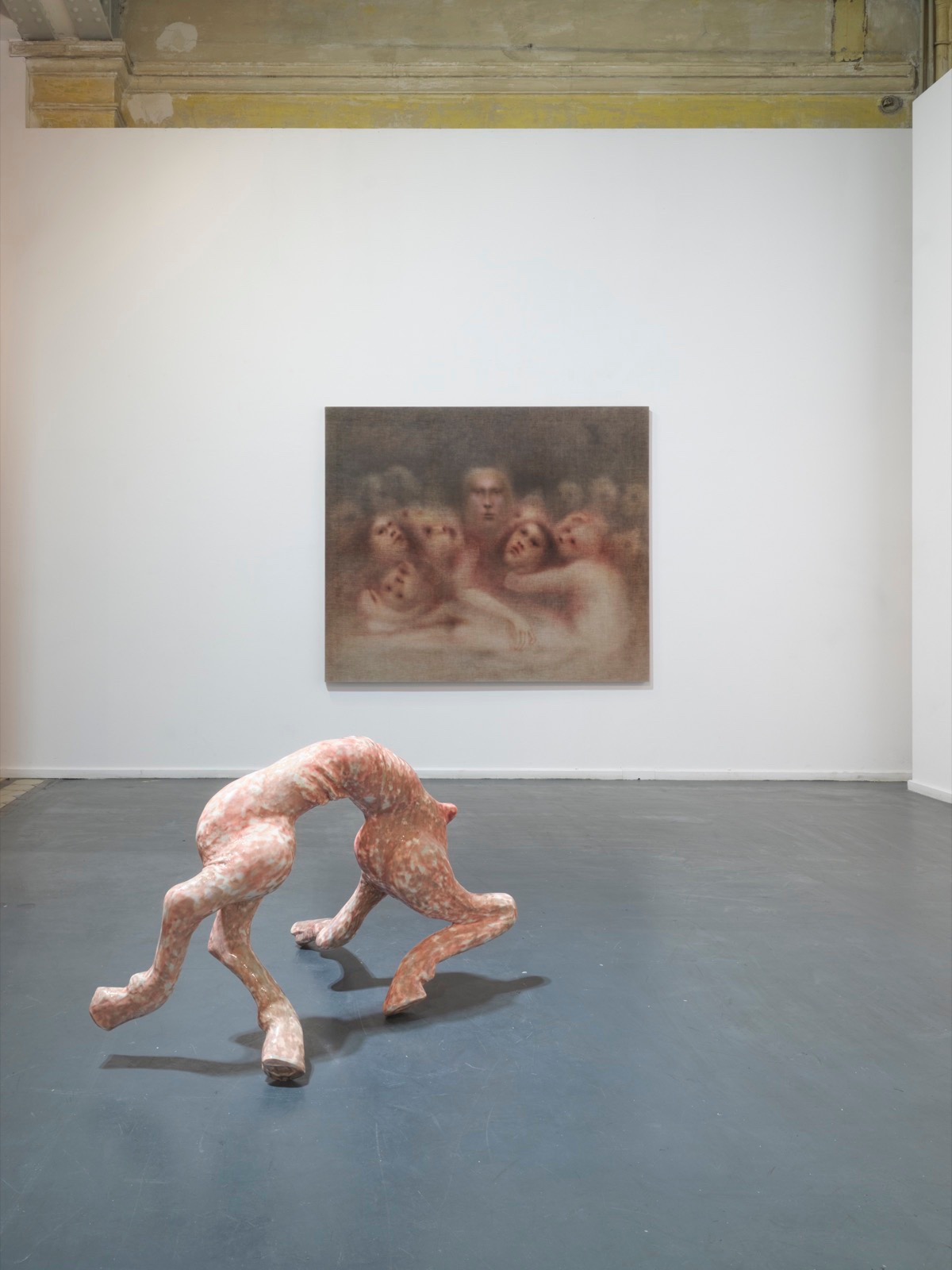
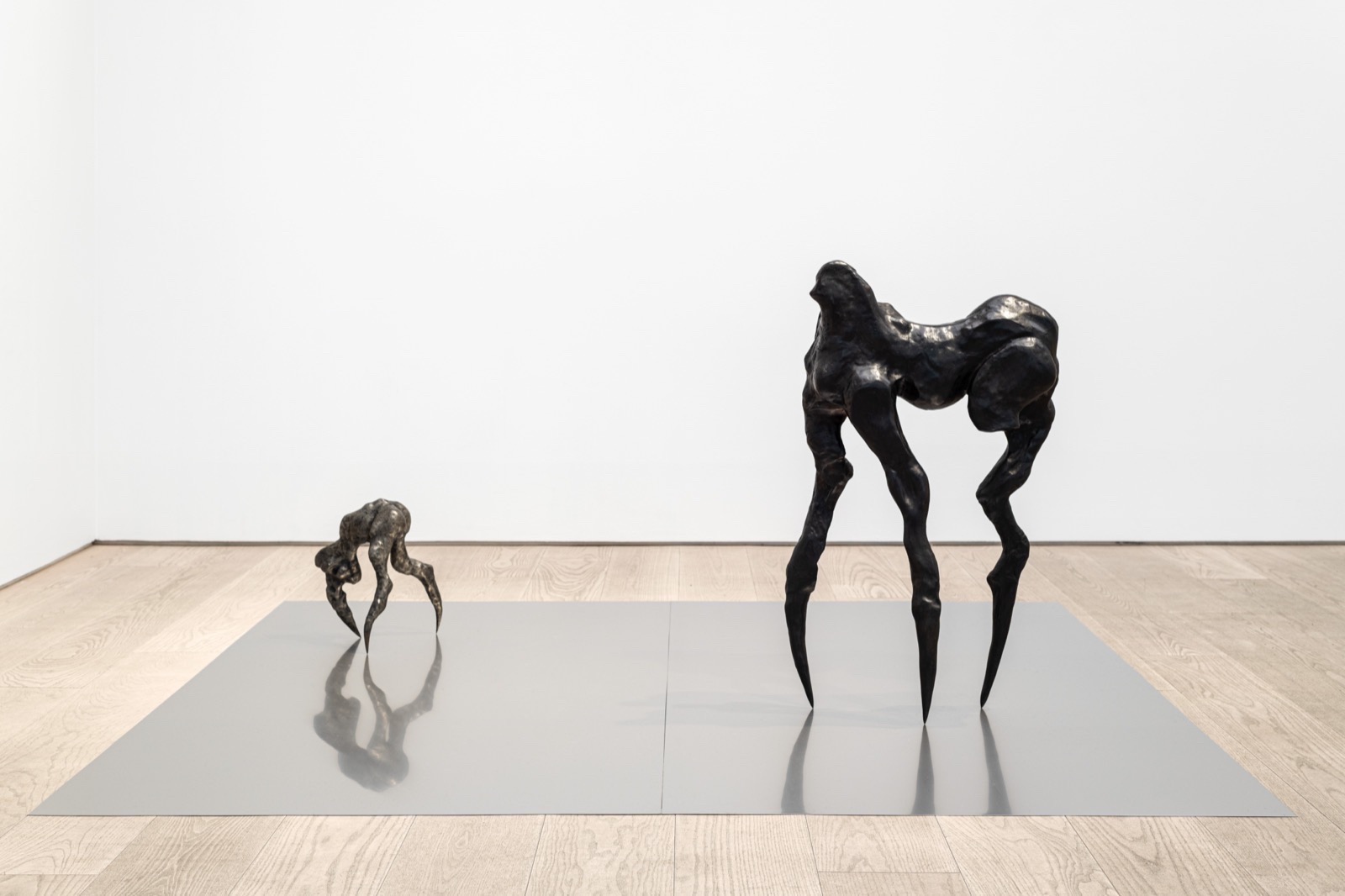
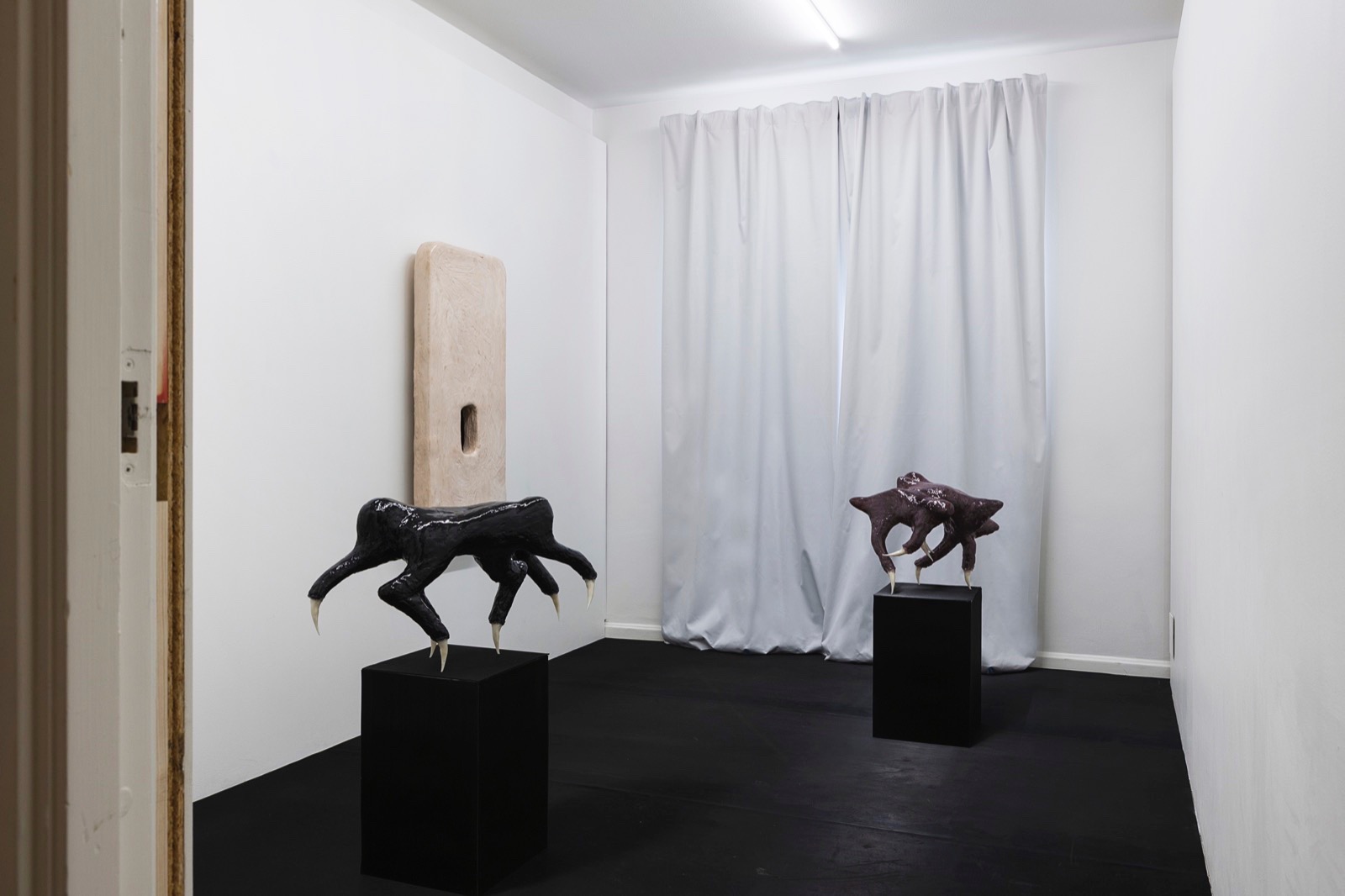
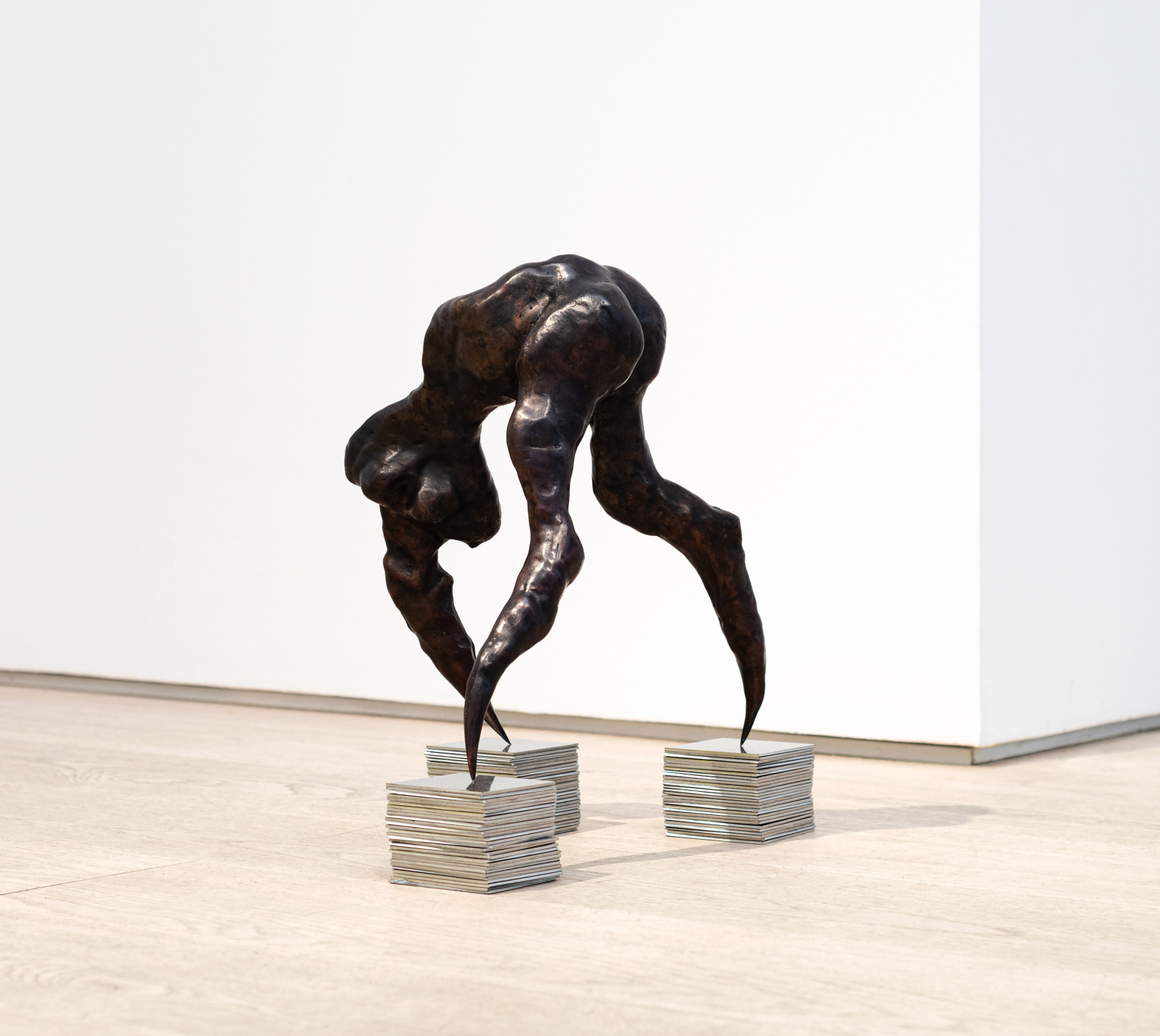
For this exhibition I worked partly with earlier influences from about a year back, which is visible in, for example, Coccyx, but in general the sculptures were created at the same time, which automatically connects them. They are also all bronze, and I am presenting them on different podiums made of metal, wood, and foam, giving them a space to inhabit and coexist. A fun way for me to think about the exhibition title, On Three Legs, is how it appears in each piece. All of them have these limbs being pulled in different directions, forced to balance and stay stable even if they look like they are about to walk or fall over. Legs, for me, are connected to my early memories of movement, as I grew up around the theatre with my mother as a ballet dancer and my father an opera singer. Everyone was dramatic and expressive, and I remember seeing legs with tension and muscles. Rebirth Machine is balancing on one foot stuck in a stocking next to an egg, while the other is in the air, relaxed but flexing. The third leg here could be a neck or a large penis, while Posture (on two legs) almost looks drunk. It only has two legs, but the third point is standing on its head. Static figures, if they do not have flat supports, need three points to stand, like Statue, which actually has three legs but one has been cut off. What creature actually has three legs? Immediately we think of something unnatural or broken but still functional, which allows us to enter a surreal space while trying to attach it to reality. These are contradictions I enjoy.