You often speak about the “unseen.” In Dammi i Colori, although the visual field is saturated with colour and political context, the work seems equally concerned with what remains hidden behind Tirana’s chromatic architectural landscape. What does the “unseen” mean to you in this context, and how does it reveal itself?
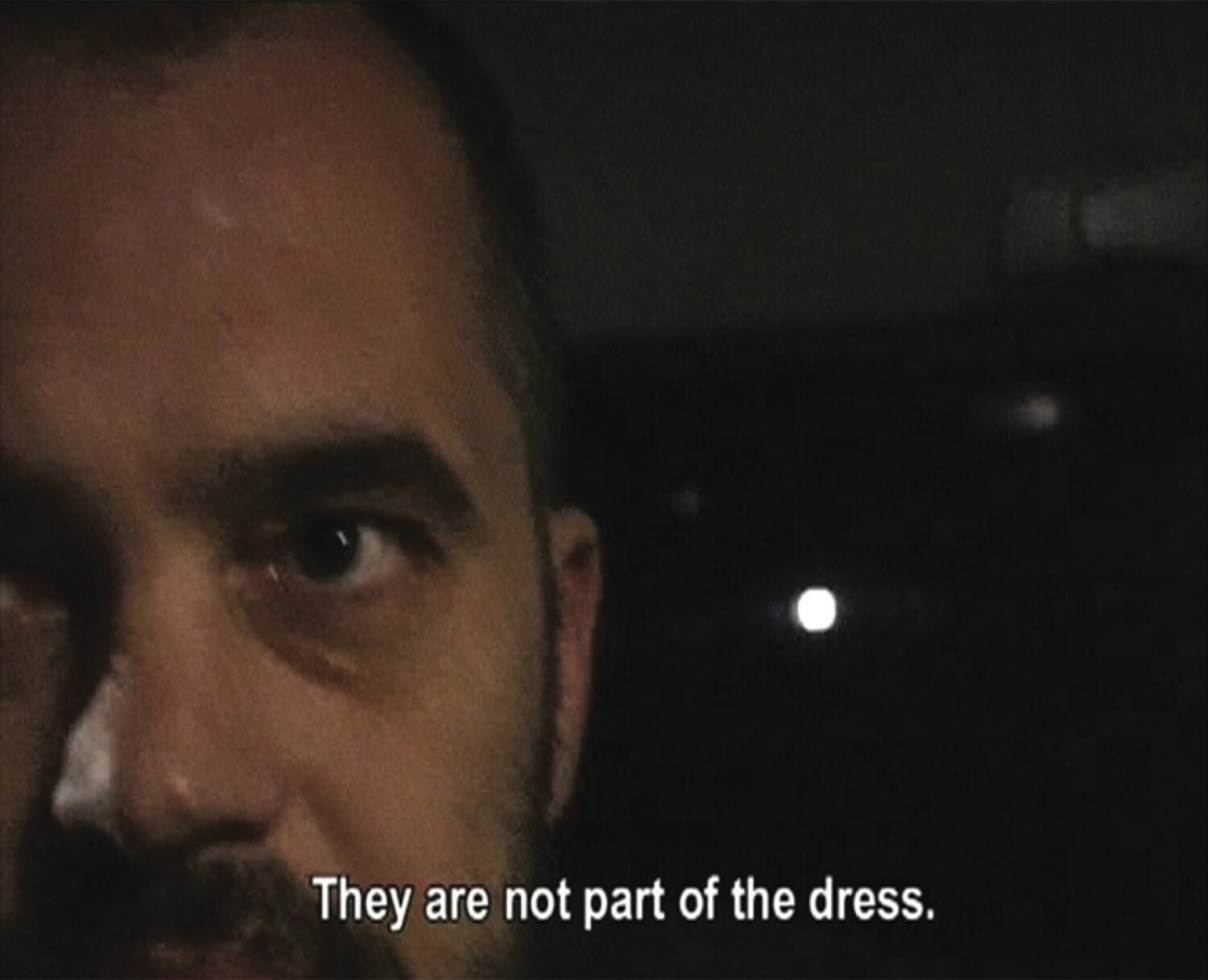
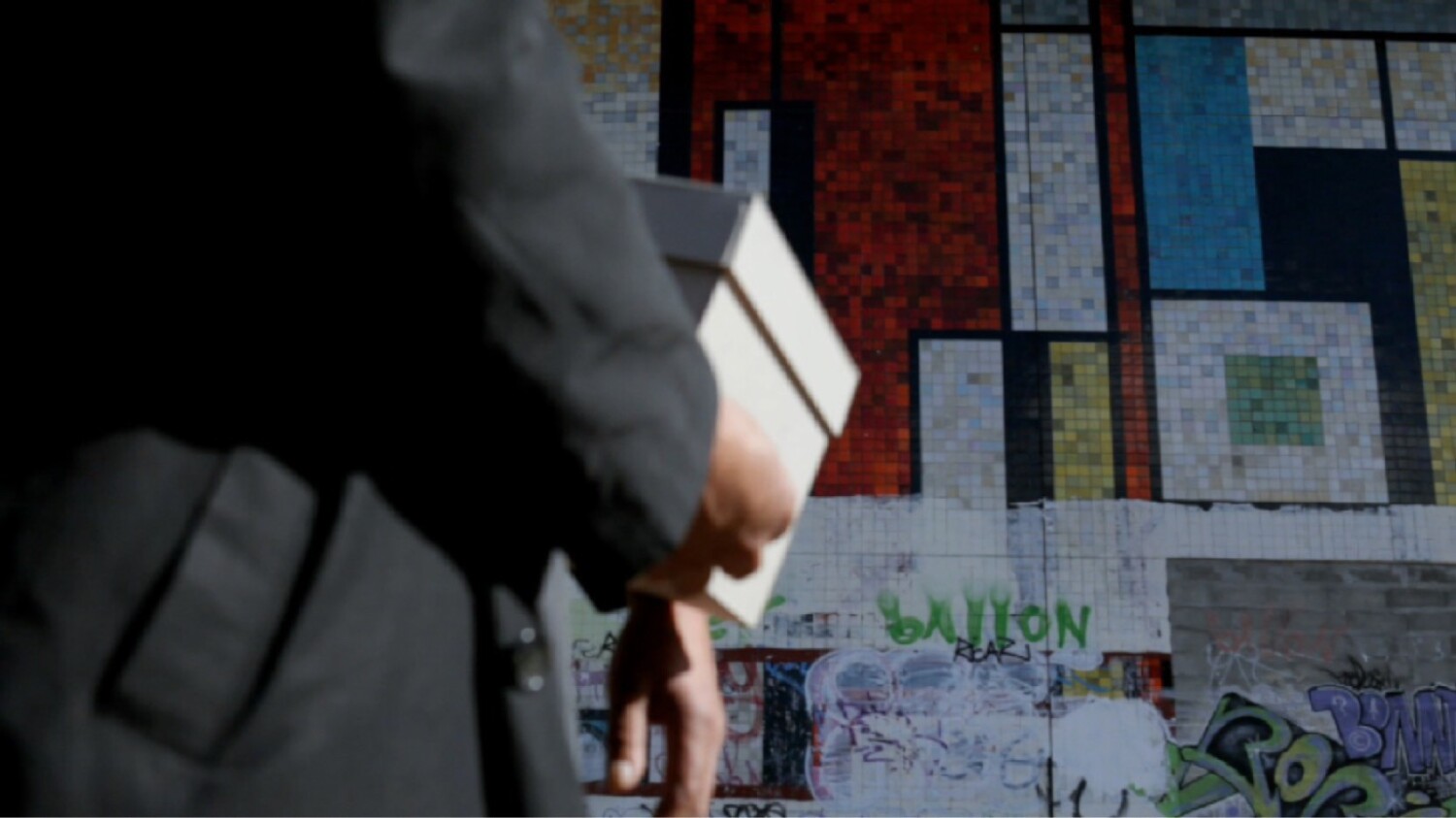
Before I went back to Tirana to film Dammi i Colori, I met Edi Rama, a friend and the mayor of the city, who had initiated this project. It was not an aesthetic project, but a political project that employed aesthetic means and tools. I asked him what the first reactions of the people had been. By the time I arrived, many buildings and streets had already been painted in different colors across the city. He told me that the reactions were highly contrasted, and so, in order to understand what people really thought, the municipality organised a poll with two questions. The first question was: “Do you like it?” The second was: “Would you like it to continue?” To the first question, roughly 63% of people answered that they liked it, while 36% said they did not. But to the second question, around 90% wanted the project to continue, and only 10% wanted it to stop. To come back to your question, the unseen is not behind the colors. It lies precisely in the distance between those two results. There was a group of people, about 27%, who did not particularly like the colors in themselves yet still wanted the project to continue. This difference is what triggered my desire to make the film. I wanted to make a film about the power of color within a political action a power that is not embedded in its aesthetic qualities alone, but in what it sets in motion within people, in the frequencies it touches in their hearts, frequencies that do not necessarily pass through what their eyes perceive.
Across many of your works, time seems to function not only as subject matter but as a material to be manipulated. In Time No Longer, the use of fresco feels conceptual as much as material. Where does the relationship between material and temporality lie for you, and how dependent are the two on one another?
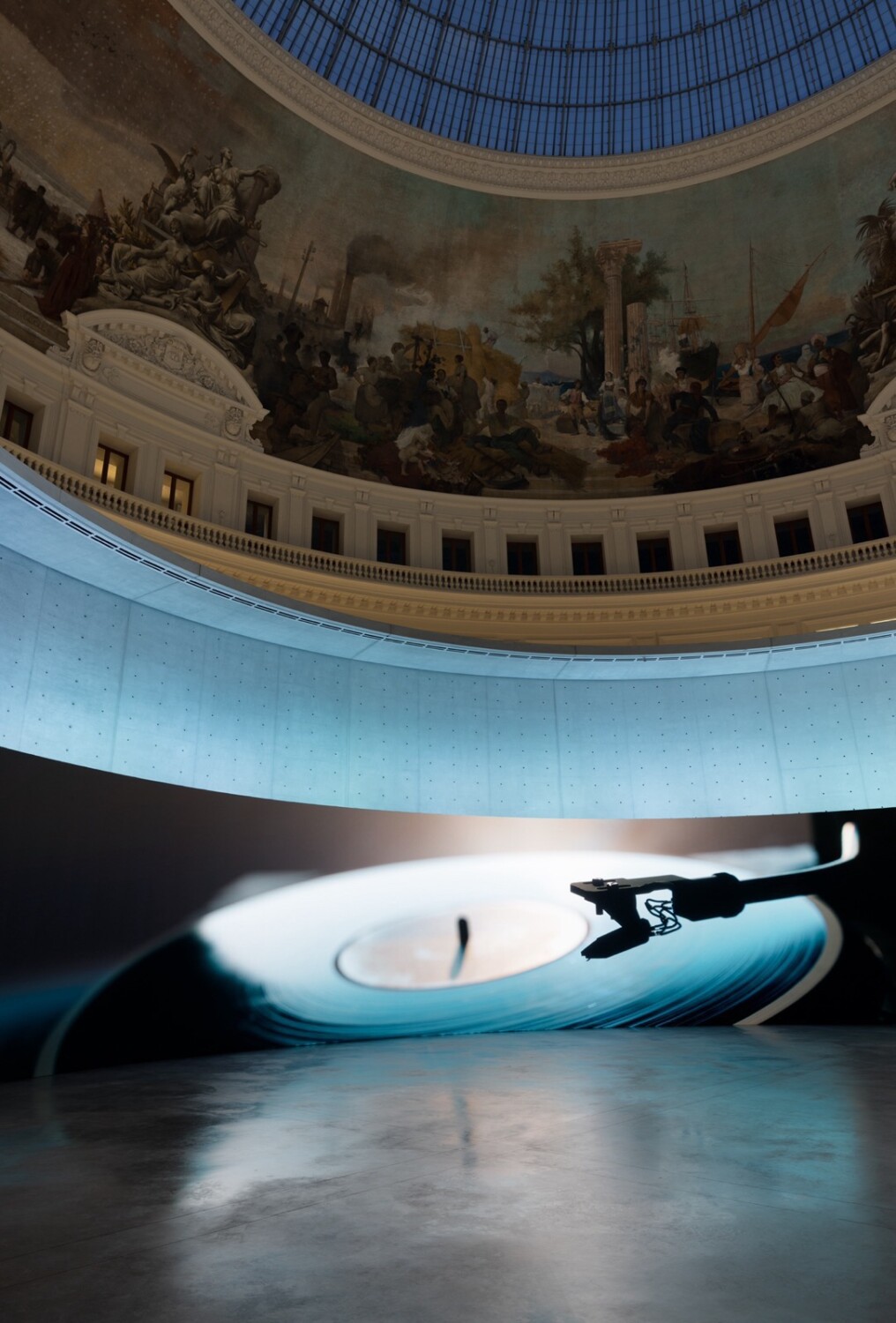
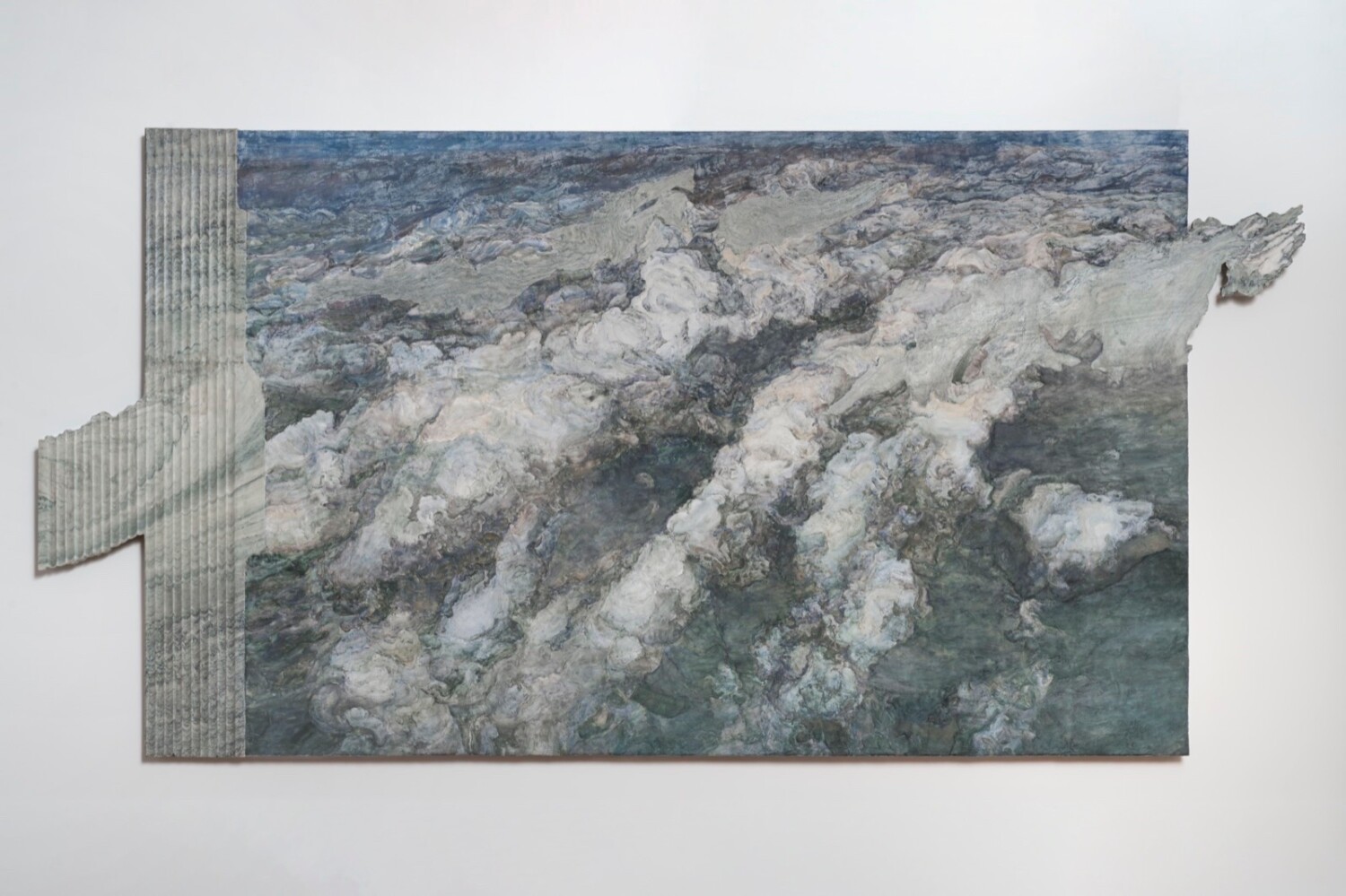
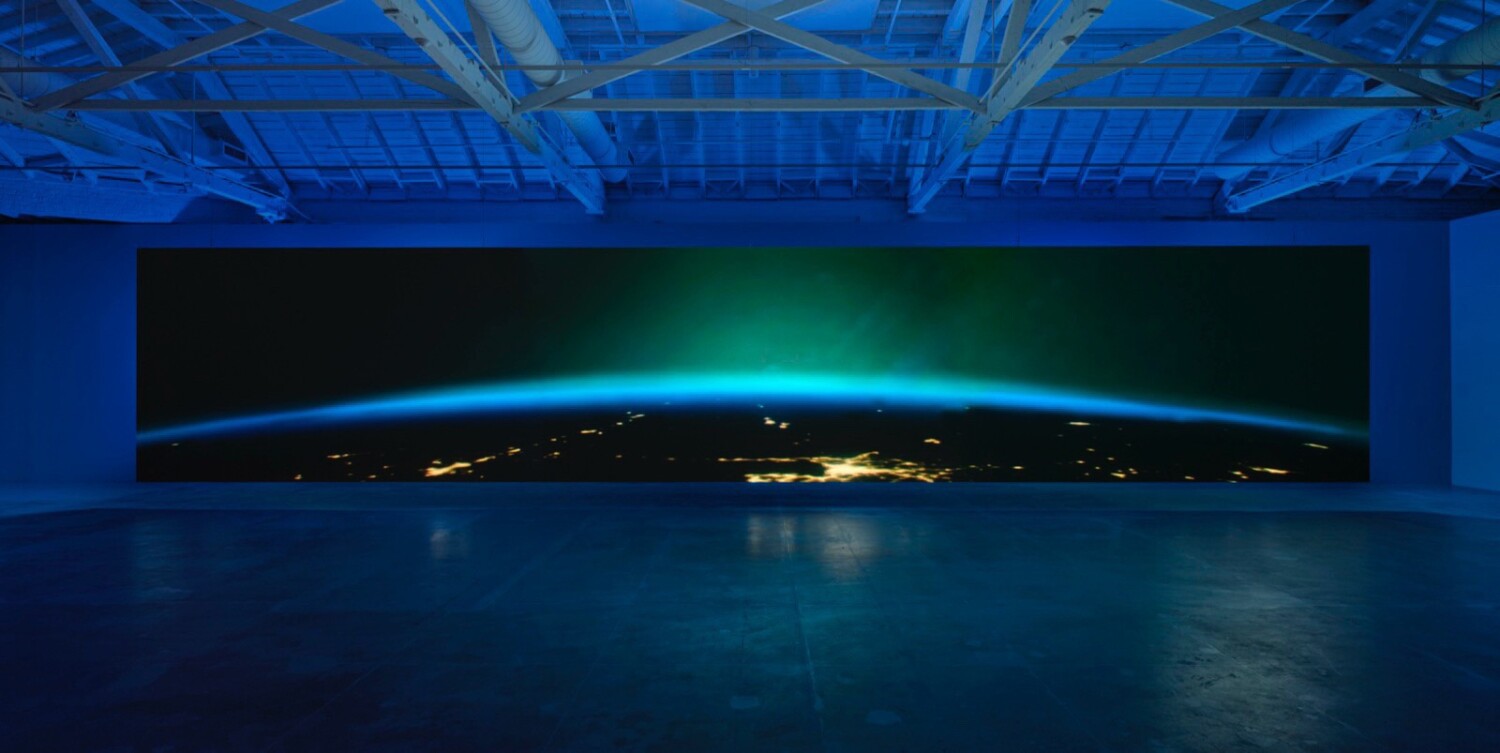
Time not only transforms materials, it also transforms our perception of materiality itself and of the ways it unfolds. Materiality can be concrete or immaterial, analogue or digital. In that sense, the juxtaposition of the CGI work Time No Longer and the frescoes I have made in recent years brings together two mediums that are both profoundly shaped by time, yet situated at almost opposite ends of technological history. Fresco is one of the oldest artistic mediums, and paradoxically one of the most enduring. Its materiality has demonstrated an extraordinary capacity to survive the passage of centuries. CGI, by contrast, represents one of the most advanced image-making technologies available today. Yet its existence depends on an ever-evolving technological infrastructure. Like many contemporary digital technologies, it is inherently tied to cycles of innovation and obsolescence, making its long-term preservation far less self-evident than one might assume. Time acts on both, but in different ways. In the fresco, it becomes inscribed in the transformation of matter itself, through the carbonation of the lime and the calcification that binds the pigments to the freshly laid plaster. In the CGI image, time is embedded in a painstaking process of construction, combining mathematical modelling with cinematic approaches. Placing them side by side is a way of reflecting not only on how different materials absorb and embody time, but also on how time itself reshapes our understanding of materiality.
Your practice moves across a wide range of subjects and mediums while still maintaining a recognisable internal logic. How do you preserve that sense of continuity across different forms? And do you think consistency within an artistic practice is truly necessary?
The more one works across different mediums and subjects, the more important it becomes to preserve an internal logic an underlying architecture that sustains the work across its differences. It is a way of maintaining continuity where it is least visible: beneath the shifts in form, medium, or subject matter. In my work, consistency emerges not through a recognisable visual language, but through the persistence of certain intuitions, and ways of thinking that unfold across works which may, on the surface, appear to have little in common. In that sense, I believe coherence within an artistic practice becomes even more important when the work does not rely on the logic of signature or visual recognisability.
You left Albania at a young age and entered a cultural context shaped by a very different historical and political reality. Do you think the way you experienced displacement affected your relationship to artistic production?
There are two moments that profoundly shaped my relationship to artistic production: a displacement in time and a displacement in space. The displacement in time occurred with the fall of the communist regime. Until then, everything we knew was contained within a closed system, while what was happening abroad, in the West, was largely inaccessible and forbidden. When the regime collapsed, information began to enter the country in a sporadic, fragmented, and non-chronological way. As a result, our understanding of contemporary art was not formed through a linear historical narrative, but through the accidental chronology of encounters through magazines, books, reproductions, and occasional glimpses of works that somehow managed to pass through the former isolation of the country. But with the fall of the regime, it was not only a new geography that opened up; it was an entirely new world. What became accessible was not simply what existed abroad, but a complete break with previous values, ways of being, social codes, and dominant narratives. This had a profound impact on me, as it did on many artists of my generation and those slightly older. All of a sudden, everything seemed possible. Nothing was forbidden anymore. Yet this newfound freedom immediately raised another question: what is it that one should do? What is it that one truly wants to do? To what extent are one’s choices guided by artistic intuition and reflection, and to what extent are they influenced by the sudden availability of artistic forms, languages, and positions that had previously been inaccessible? These forms were especially seductive precisely because they had been forbidden. They arrived carrying not only their own artistic propositions, but also the aura of freedom itself. The challenge was therefore not simply to embrace what had become possible, but to distinguish between genuine artistic necessity and the fascination produced by a long-denied possibility. The second displacement is the one you mentioned: arriving in Paris as a fine arts student and being confronted with an entirely different artistic environment. This happened in 1996, roughly six years after the fall of the regime. Those two displacements have continued to shape the way I think about making art.
As your work became increasingly recognised internationally, did your relationship to authorship or self-representation change? Did you ever feel pressure to translate, dilute, or relinquish parts of your own context in order to be understood more broadly?
On the contrary. Contemporary art is, at its core, a framework that emerged from the West a particular way of producing, presenting, and understanding artistic practice. Over time, however, it has expanded far beyond its original context, creating opportunities for artists from every part of the world to participate. In principle, access is open to all, regardless of geography or cultural background. Yet for artists working outside the established centers of contemporary art, inclusion often comes with certain unspoken conditions. There is a greater willingness to embrace new stories, perspectives, and cultural references than to accept formal innovations originating from elsewhere. An invisible barrier persists: while diversity of content is encouraged, the authority to redefine artistic language and form is still often assumed to belong to the Western centres themselves. I became aware of this dynamic relatively early. More instinctively than strategically, I began moving away from work that relied directly on narratives connected to my place of origin. Instead, I looked for ways to develop my own artistic specificity through formal experimentation and conceptual inquiry, rather than through subject matter alone. This choice introduced a different set of challenges. Audiences and institutions are often immediately receptive to works that bring unfamiliar places, histories, or images into view. But when the focus shifts from cultural representation to questions of form and artistic structure, that initial openness can become more limited. Interest is no longer driven by the appeal of difference or by expectations of cultural otherness; it must be sustained by the work itself and by the singularity of the artist’s vision. Confronting this reality has been an important part of my trajectory. It is a challenge I never sought to avoid and one that, through persistence and conviction, I have been able to overcome.
In works like Intervista (Finding the Words), language and recollection take a central role, while in pieces such as Le Clash, music becomes the primary narrative force. How do you determine whether a work should be carried by sound or by language? Can one express what the other cannot, or are they interchangeable?
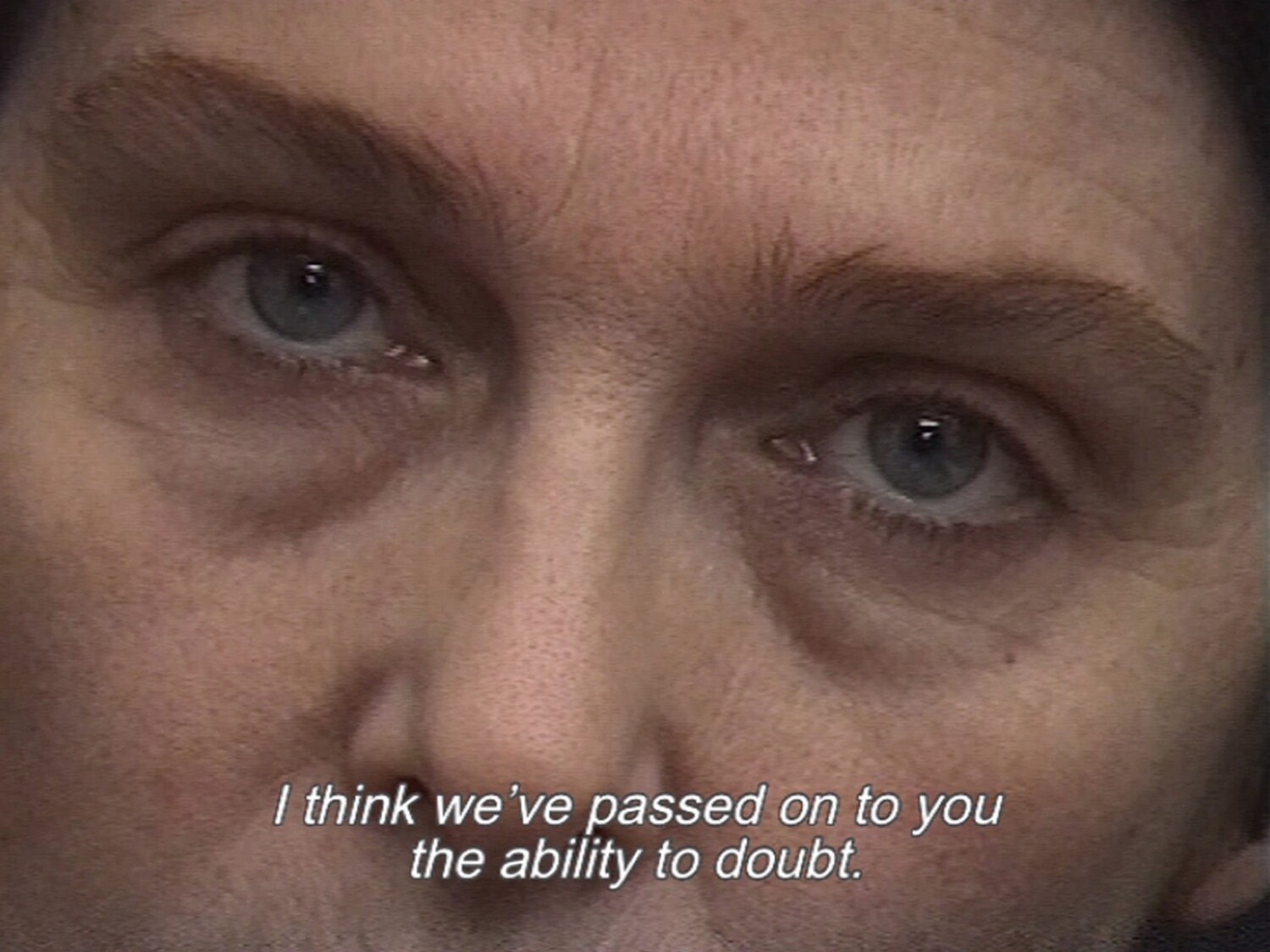
Correct, and I do not think language and music are interchangeable. That is precisely what makes each of them so essential in its own field. They certainly share certain qualities rhythm, syncopation, the shaping of time but they ultimately operate in fundamentally different ways. Language has the capacity to name the world explicitly, whereas music has the capacity to resist such naming. It evokes meaning without fixing it. Yet despite this difference, language, as in Intervista, and music, as in Le Clash and other works, do share something fundamental. In both cases, there is an archaeological impulse. In Intervista, the search is literally for lost words. Recovering them becomes a way of creating a platform from which I can ask my mother what changed, what evolved, or what broke between the past and the present, with the communist system falling apart. The recovery of language made possible through the school for the deaf and mute enabled me to question memory, history and transformation. Something similar happens in *Le Clash*. Here, the excavation concerns music. *Should I Stay or Should I Go* appears to emanate from a building as though it had remained embedded within its walls, carrying the traces of another time into the present.
A lot of your work relies on individual memory, inner narrative, and recollection. In your understanding of your own subconscious, does memory exist in an auditory or visual manner? Is sound the bridge that connects you back to the past, or does recollection reveal itself more through the image?
What the two works that we took as examples ultimately share is that they treat language and music as forms of excavation. They use fragments of the past whether words or sounds as keys that allow us to read the present differently, as we try to glimpse into possible futures. The visual is the stage where this process is conveyed by means of sound.
In Time No Longer, music originates from Messiaen’s Quartet for the End of Time, composed in captivity using only the instruments available to the prisoners. In works like The Last Resort, instruments are physically present yet rendered unplayable. What role does the musical instrument occupy within your work? Do you see it simply as a tool, as a performer, or as something with a kind of autonomous presence, withholding sentience even?
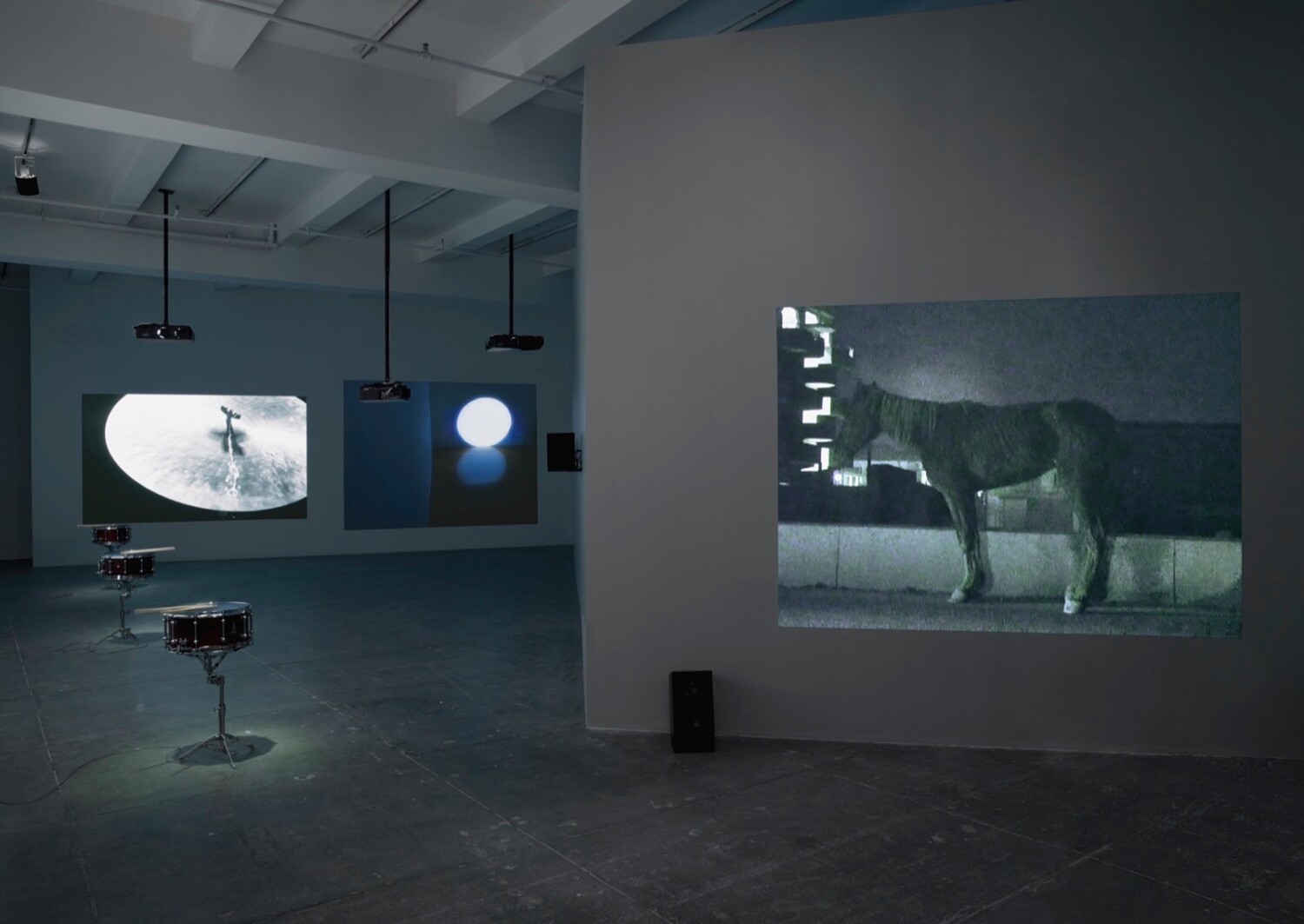
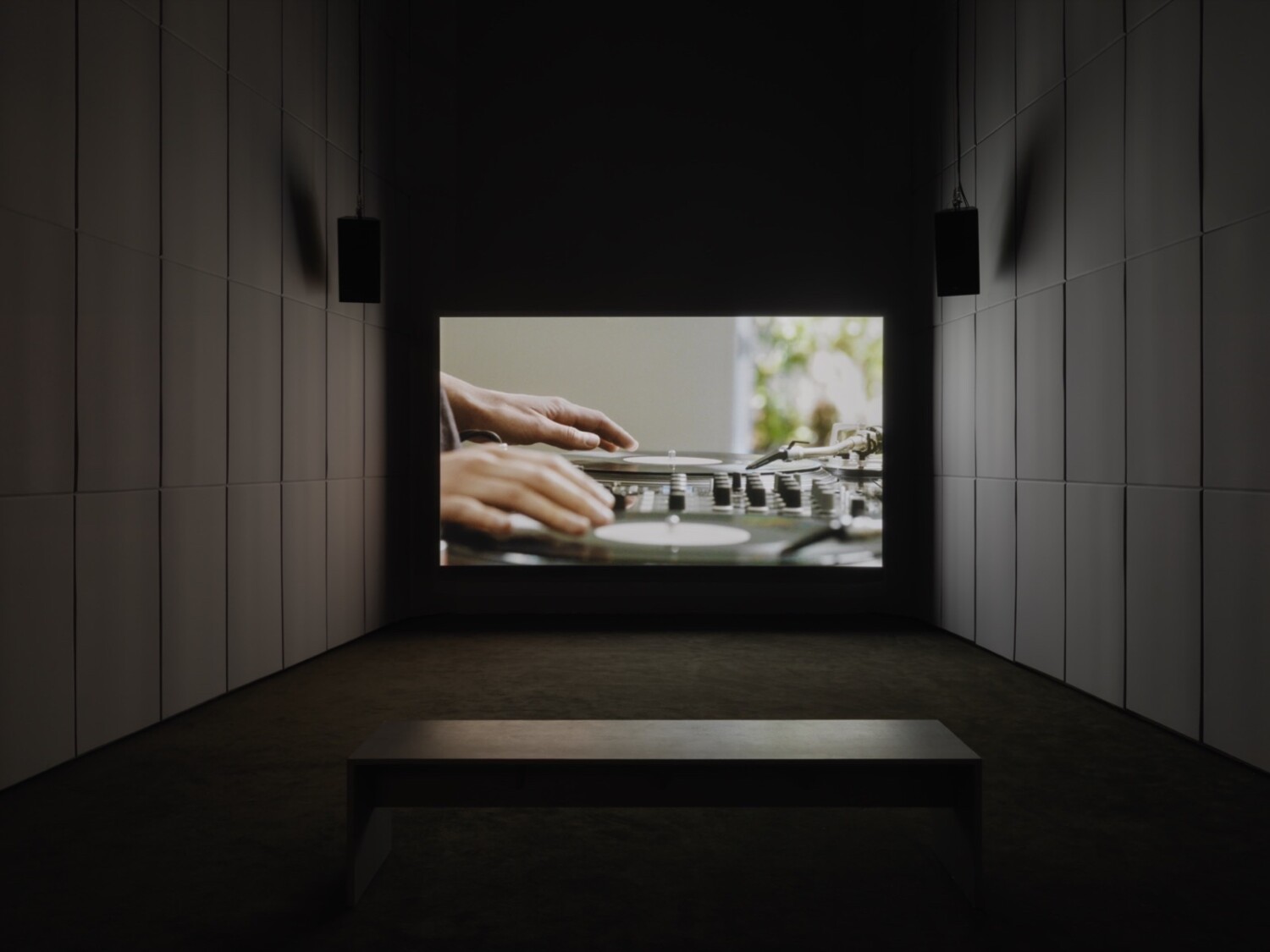
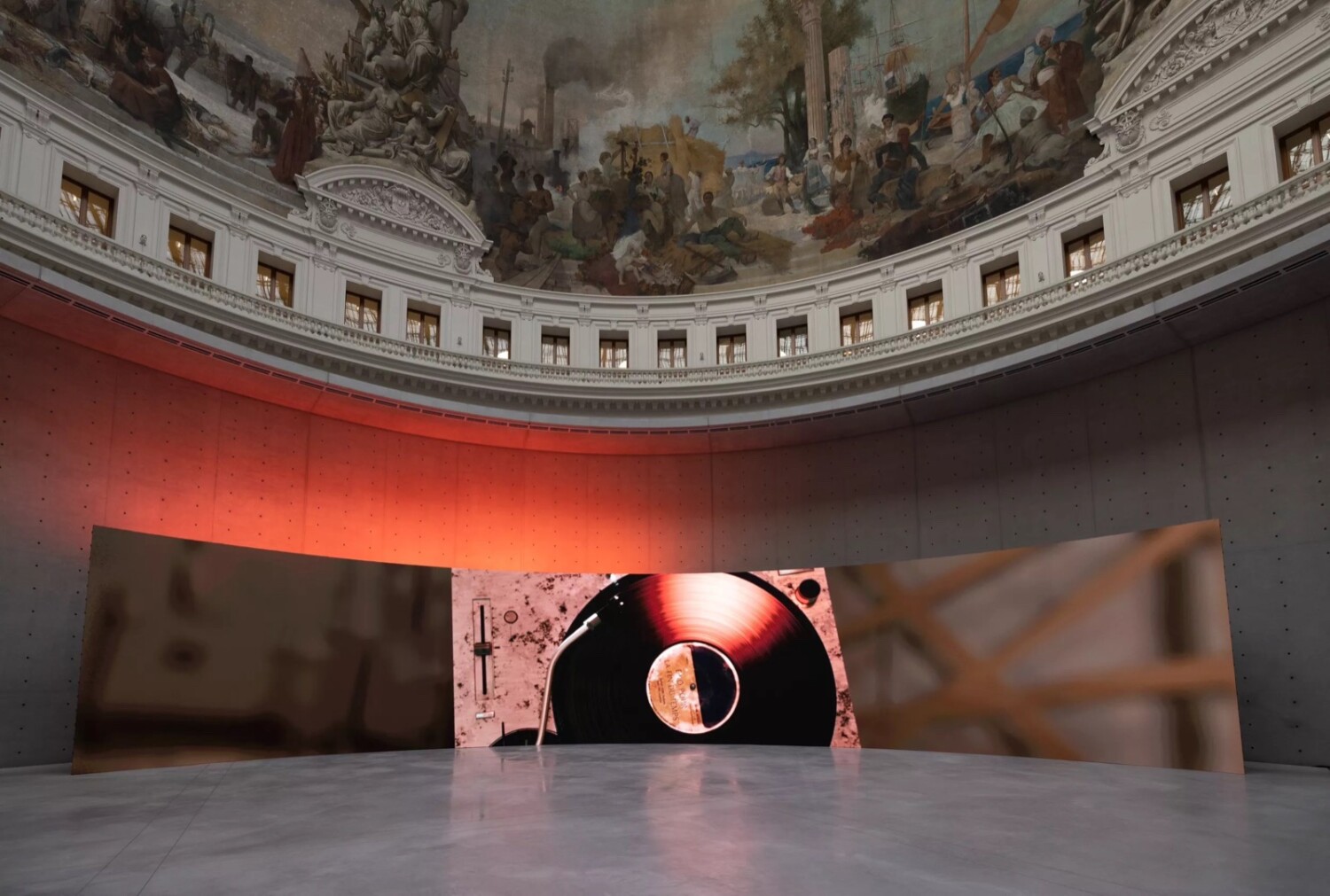
Well, the drums in The Last Resort are playing and functioning like the instruments that they are. The only essential difference is that they are not played by musicians’ hands but are triggered from sounds played within the body of each drum. The relationship between the drumsticks and the drumskin is effectively reversed. It is no longer the drumsticks that play the drumskin; rather, it is the skin that plays the sticks. The fact that the drums are suspended upside down introduces another force into the work: gravity. In that sense, the piece operates as the exact opposite of Time No Longer*. There, the turntable plays Messiaen’s composition not according to the musical chronology in which it was written, but according to where the stylus happens to land on the vinyl in the absence of gravity. In both cases, gravity and its absence actively participate in the playing of the music. What interests me is the interval between will and letting go, and the intuition that emerges in the space between them. That intuition is more than a tool or a method. It has an autonomous presence because it resists our will. This is precisely what gravity or its absence does in the two works we have just discussed. It does not become sentient in itself. Rather, by displacing part of our will into an external force, it transforms the conditions in which intuition arises. It introduces a form of agency that is neither entirely ours nor entirely outside us.
Your work suggests a very particular relationship to time, not only through time-based media but through the internal temporality of the works themselves. Does this altered perception of time seep into the ordinary structure of your daily life, when ordering a coffee, or crouching down to tie your shoes? Has your experience of time changed significantly since you were younger?
I wouldn’t be able to tell, although I would guess so. What has changed, however, is the way my perception of space has reshaped my perception of time. When I was growing up in Albania during the communist regime, we lived within an enclosed space that we could not leave. Time unfolded within those boundaries. Since then, and increasingly over the years, I have travelled constantly, mostly because of my work. In the past few years alone, I have been moving continuously between Berlin, Naples, and Paris. As my experience of space has become more fragmented, moving between them continuously rearranges my sense of duration and sequence. So, more than becoming aware of the passage of time through age say, by noticing that I have to crouch down a little more to tie my shoes what has really changed is that, depending on where I am, I sometimes no longer know which pair of shoes I am tying.