Fight or Flight

Clothing by Elisabed Amiredjibi and photographed by Oliver Leone.

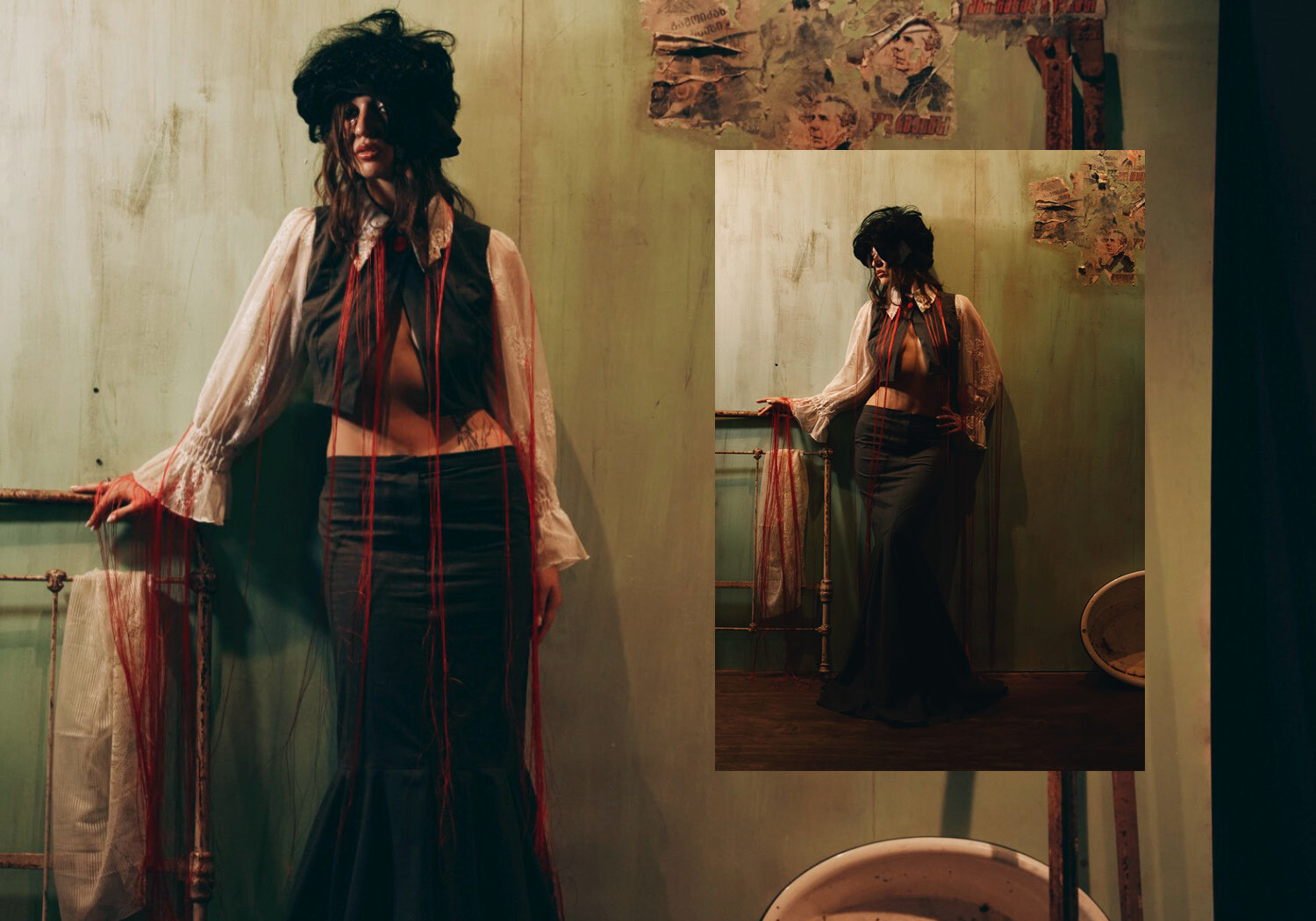
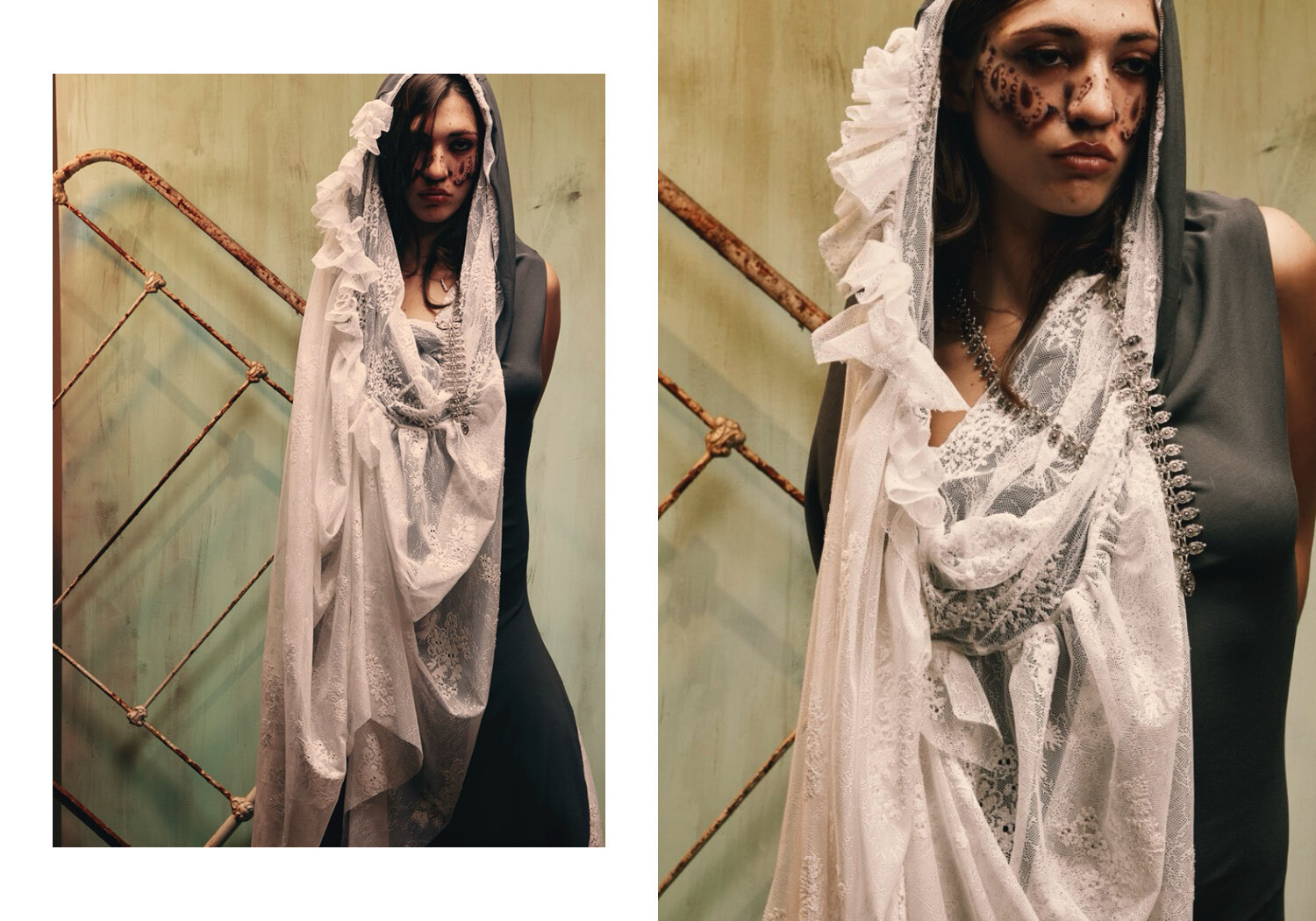
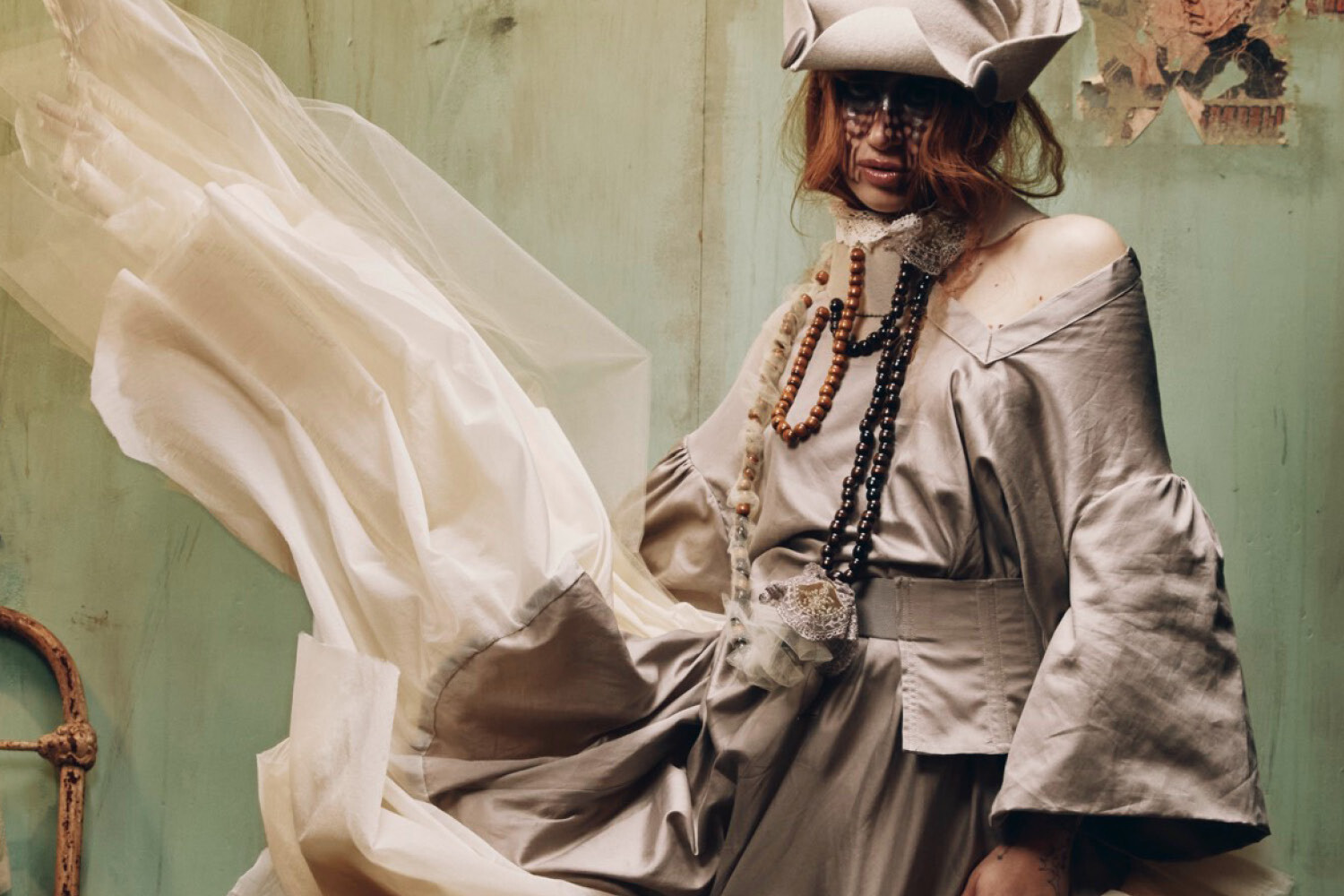
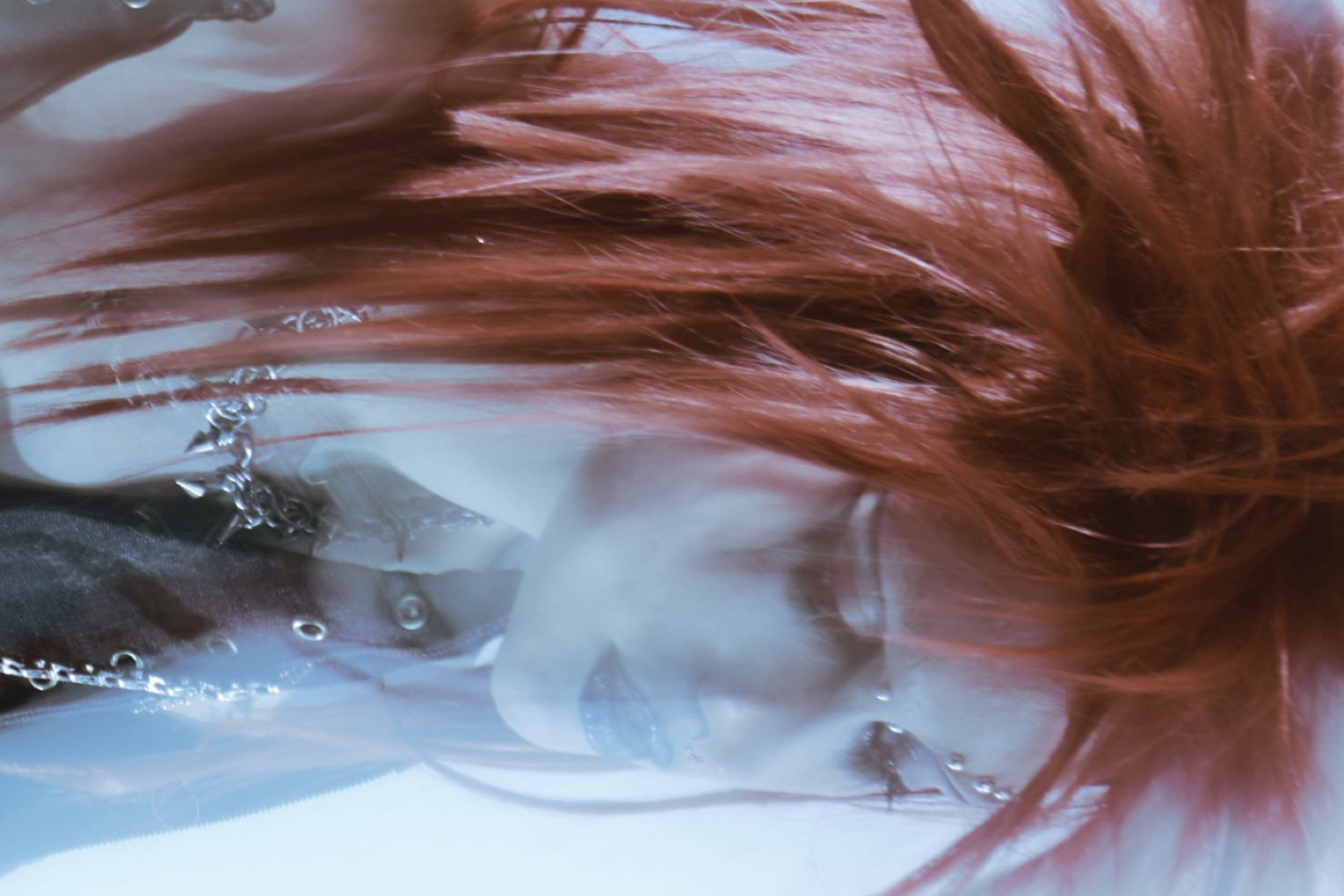
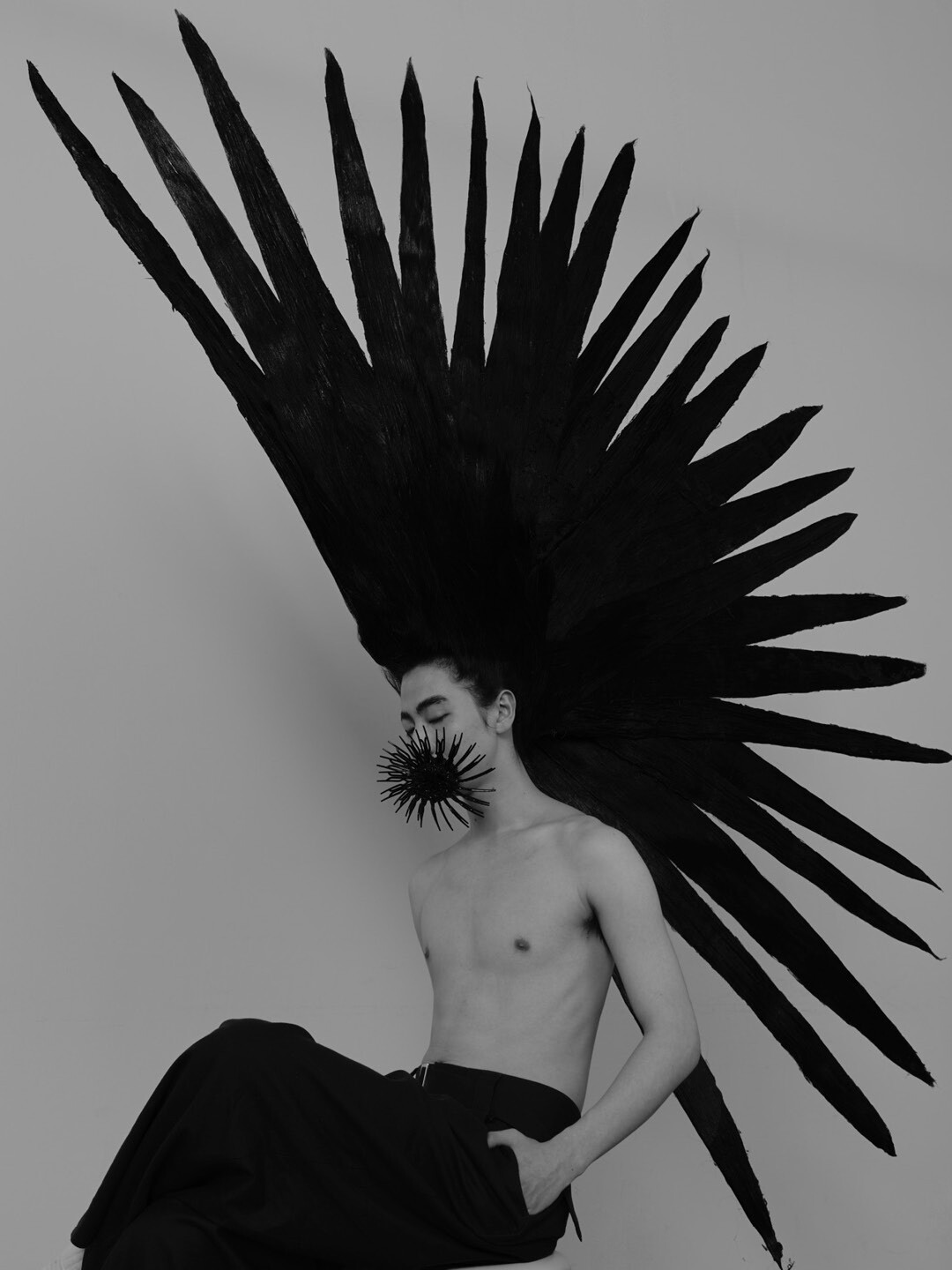
Softness has weight, romance has mildew, and the body stands inside its aftermath, dressed for survival. Presenting collection by Georgian designer Elisabed Amiredjibi, photographed by Oliver Leone.

Which materials, techniques or cultural influences are central to your current work, and why?

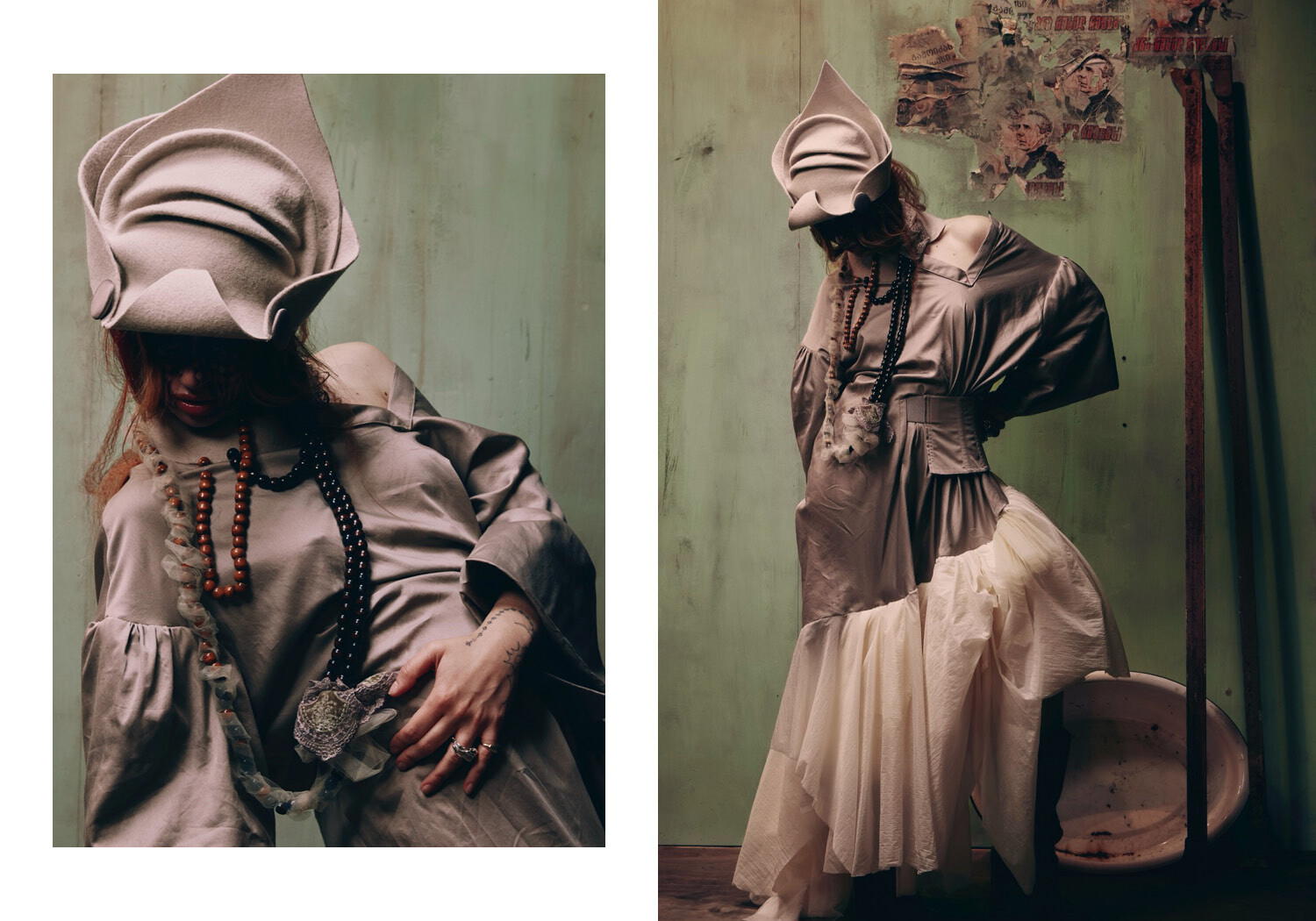
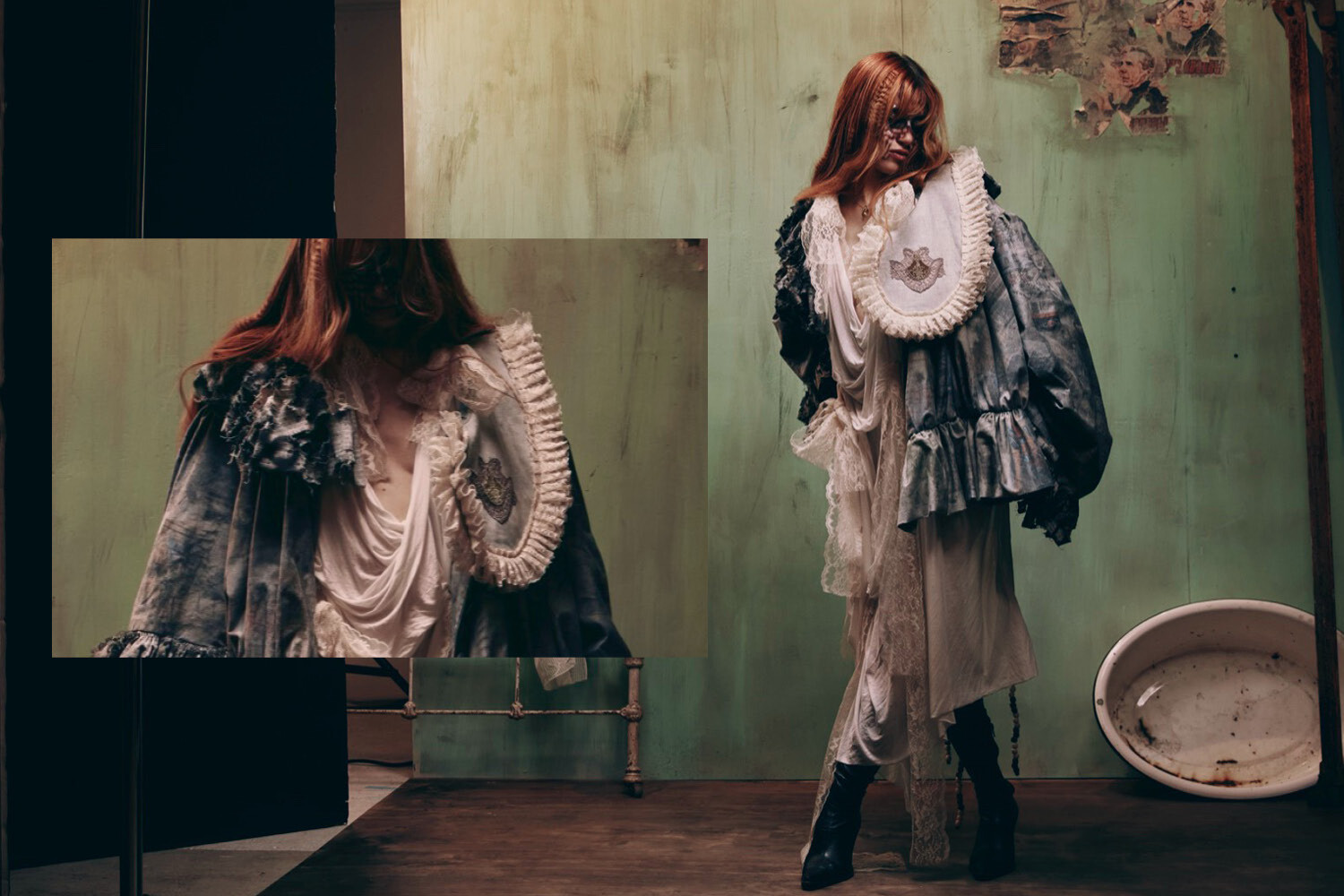
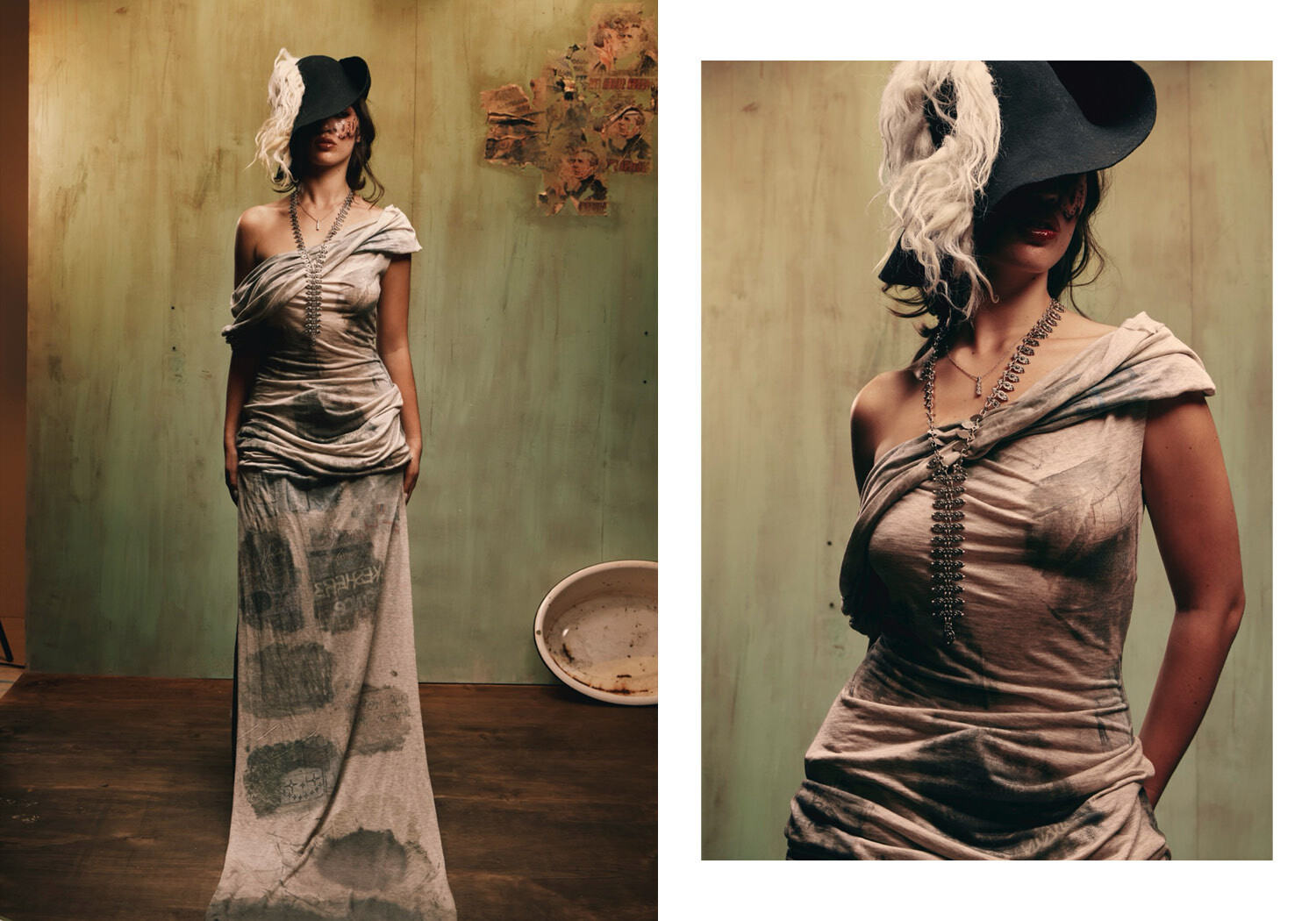
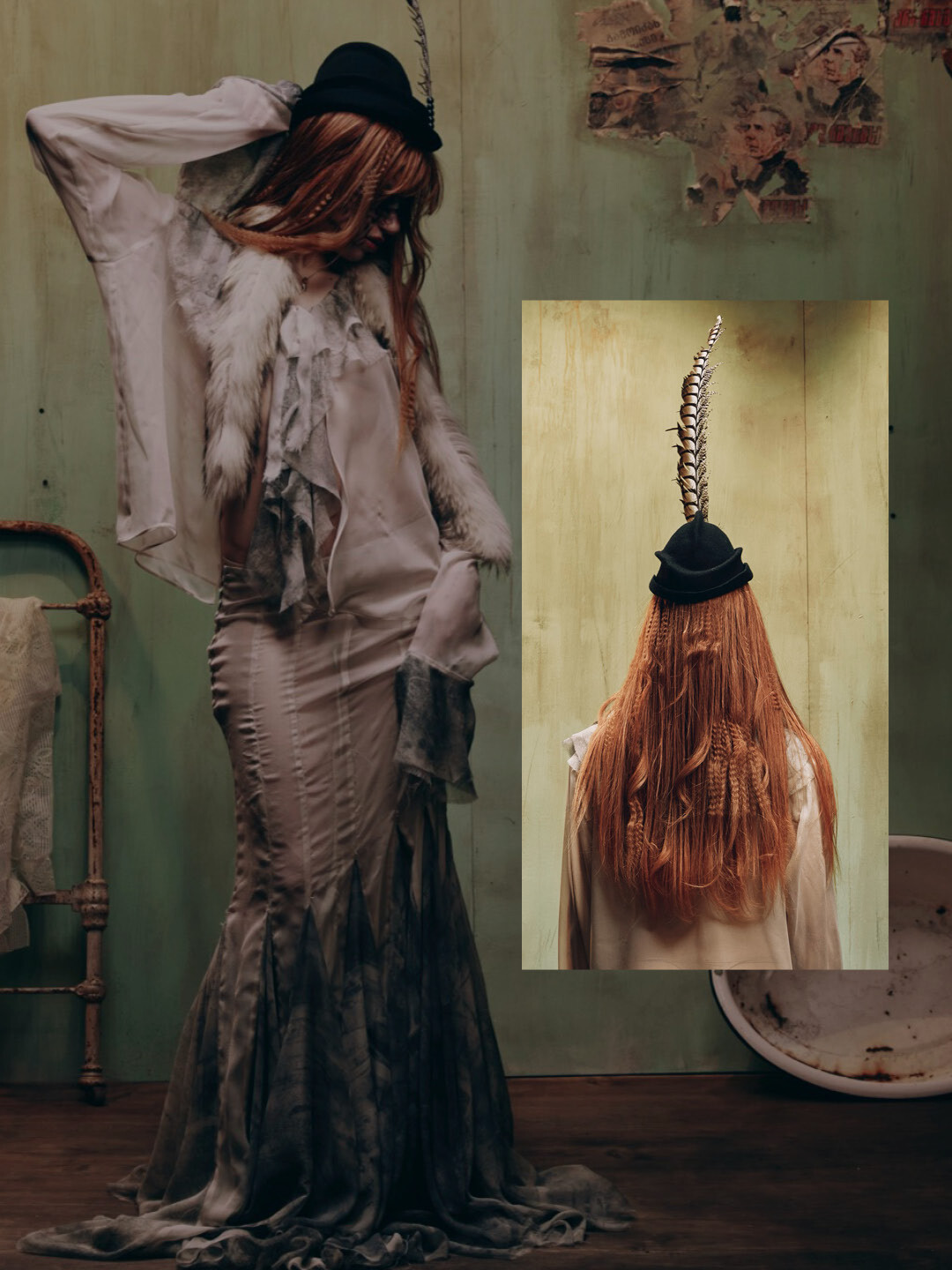
Coming from the country of Georgia, a 2,500-year-old nation whose territory has long been contested by larger foreign powers and subjected to cultural erasure, I see cultural preservation as a form of resistance. This has led to me going back to referencing my cultural heritage in everything I make. For this specific collection, I referenced the iconic Georgian epic The Knight in the Panther’s Skin by Shota Rustaveli and traditional attire of Kinto dancers. The wool hat with the long pheasant feather references the hat that Shota himself wore, the silhouette and materiality reminisces the drapes from some illustrations that were made of this epic. I made prints of walls from my hometown, Tbilisi, on the godets of the skirt as well as the frills of the top.

Kinto dancers were merchants of Tbilisi from the 19th and 20th century, dancing in the style of Kintouri. A lot of people choose to ignore the fact that Kintouri was actually a big origin of queer art in Georgia, referencing them feels especially important now, as queer people in Georgia continue to face increasing political hostility and marginalization.

Tell us about your rituals—what anchors your process when everything else feels unstable?

There is a certain amount of focus and discipline needed to pursue a creative career. Having a vision and loving your craft is often not enough. There are frequent periods of not really understanding what you’re doing, or where it holds any value, but eventually you realize there is always one consistent thing you can return to, and that is your craft. I would love to say that what anchors my process is some beautiful ritual of seeking inspiration, but in reality it has come down to forcing myself to become “unstuck,” no matter how much my brain fights it. This means continuing to make even when I feel completely uninspired, or emotionally and mentally consumed by other aspects of my life. So in many ways, my process anchors me and everything around me, not the other way around.

What role does your environment play in shaping your work?

The city shapes my work in a way where it reminds me just how far from home I really am. When I first moved here, I began to have a new appreciation for my culture, I went back to listening to a lot of traditional Georgian music, reading more Georgian literature than I have before, constantly researching and deepening my knowledge about my culture, this is a big reason why I cannot stay away from pulling references from my culture and weaving it into my work. Homesickness has impacted my work more than anything else has. With the political tension, watching my friends back home take part in the peaceful protests that the government and police have turned violent makes me feel like I am not doing the part I should be. But at the same time, I know that as a young person in Georgia there is not much of a prospect for my future. As a young person in Georgia, there isn’t much for us to look forward to.

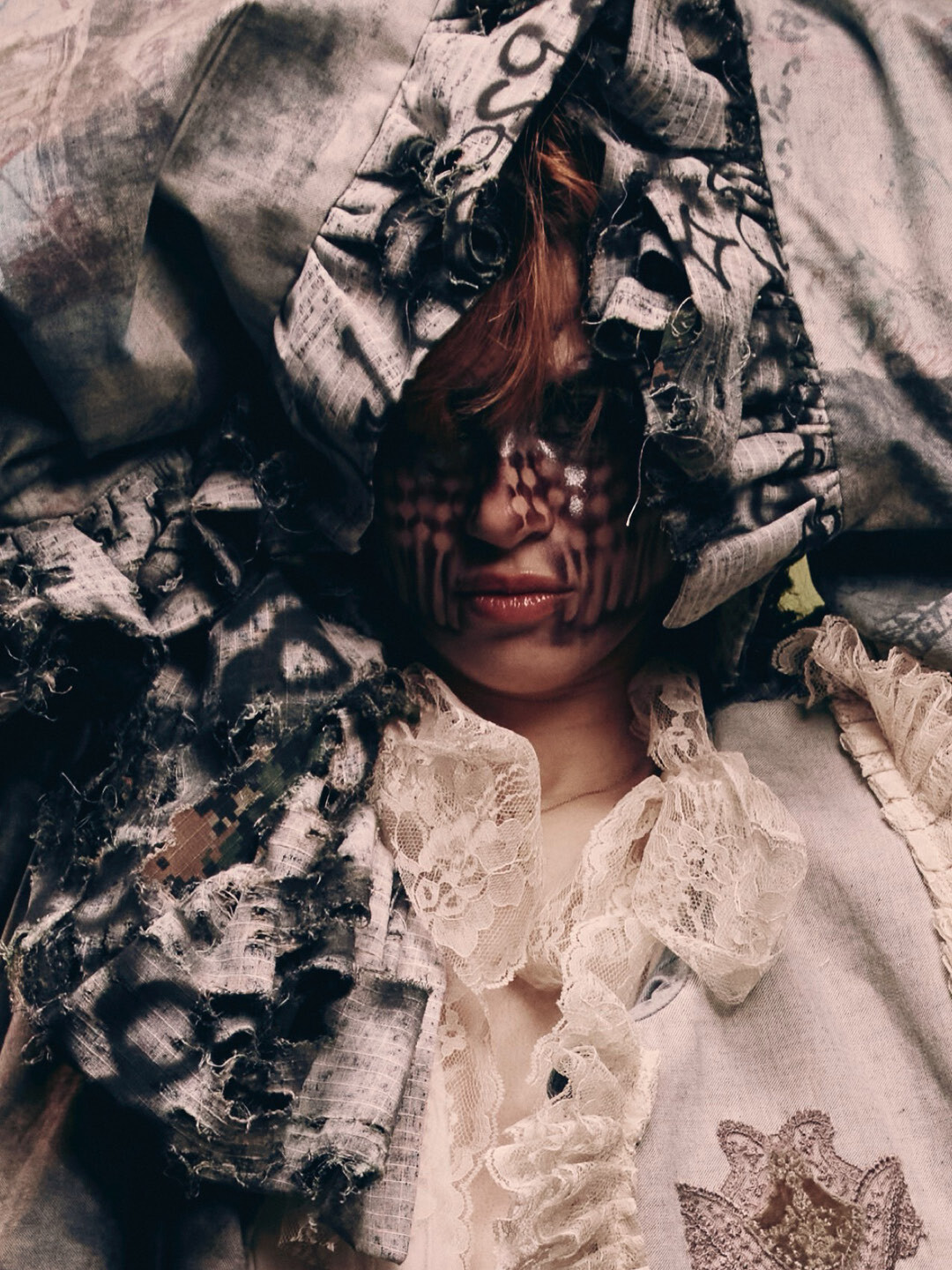
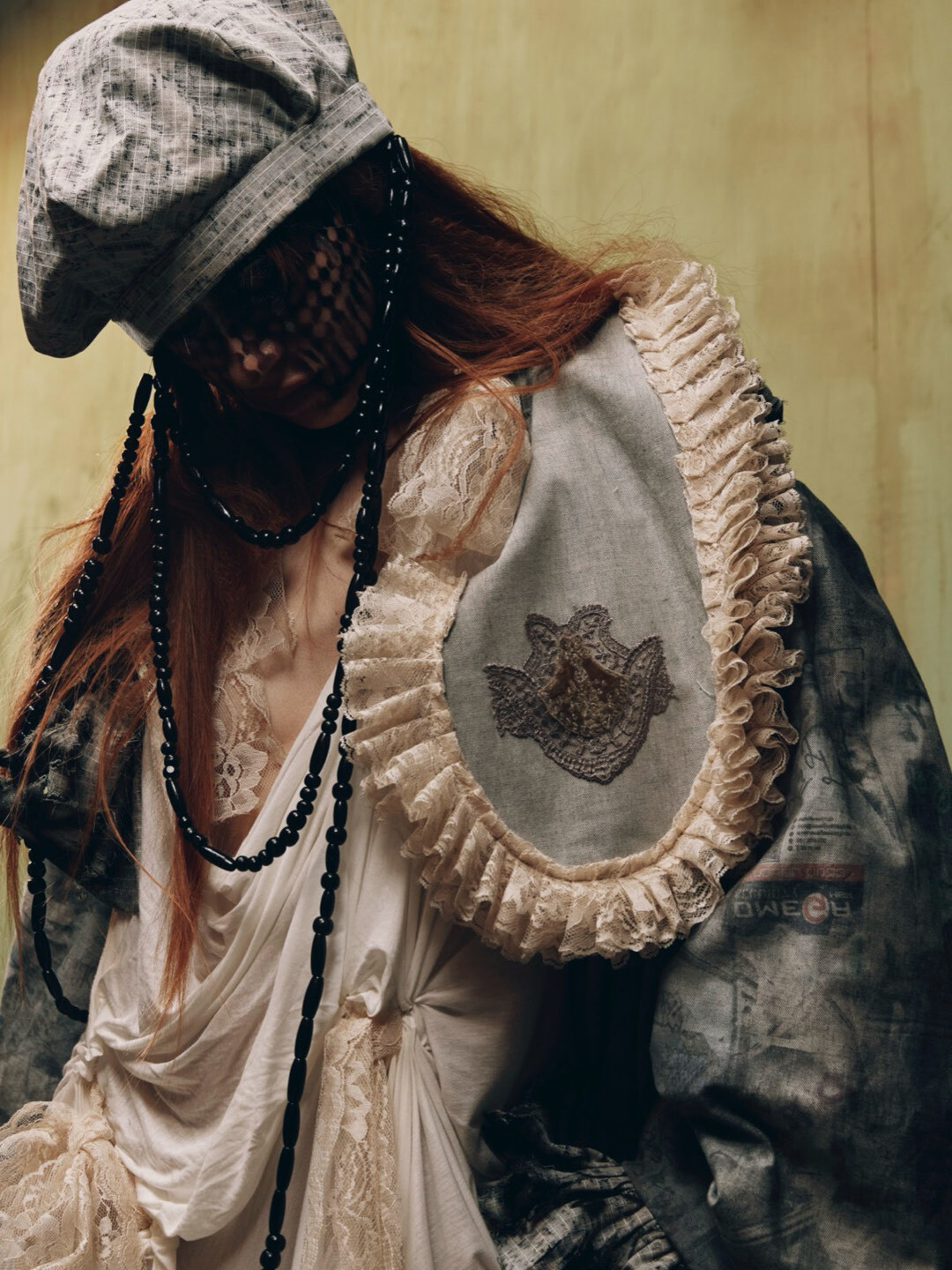
We have been stripped of the right to a democratic vote, of the ability to pave our own way, and the freedom to create art that challenges the political reality we inhabit. So, my work has been shaped by a lot of bitter-sweetness. I am lucky to have the opportunity to do what I do where I do it, but I constantly yearn for the life that I could have back home and feel a certain amount of guilt leaving it behind. As part of my collection I created fabric prints of images my friends have sent me from Tbilisi, capturing graffiti tags across my hometown. Graffiti is one of the most interesting forms of protest. It is raw, accessible, and public. The city itself becomes the canvas for the voices that the government aims to silence. As political tensions rise, so does the presence of street art. For me, these markings are artifacts, imprinting them into my work feels like bringing the streets of Tbilisi to life and carrying them over into a new form.

Your silhouettes speak in a certain dialect. What emotions or tensions are stitched into them?

As of right now, a lot of the work I have done has been shaped by political references, silhouettes included. I have referenced Soviet school uniforms, traditional Georgian garments, and some illustrations of the Georgian epic “The Knight in the Panther’s Skin” by Shota Rustaveli.

For a long time I gravitated towards larger silhouettes, ones that have a presence, but as I continued on with my research for this collection, I saw them slowly come closer to the body, having traces of sharpness and structure but still embellished with delicate flowing qualities. A lot of it speaks to an emotional aspect that I carry into my work – something delicate, transparent, vulnerable, accompanied by a harshness, a presence, maybe anger.

What was the initial spark that drew you to fashion design, and how has your vision evolved since then?

I’ve grown up in a family of women who loved the craft of sewing. My mom and my grandma have always made their own clothes, and naively I sat at their sewing machines at the age of probably five or six and made random stitches on pieces of fabric, pretending I was also making something valuable. I always observed their way of dressing and admired it from a distance, drawing inspiration and making small doodles of models with various designs I had thought of in my brain. Growing up, pursuing fashion has always felt like a distant dream, and something that would likely be impossible for me because I did not think that I would be able to find a way into that realm from where I was, which was Georgia. At the time, there were no Georgian designers that had made it on a global scale, there was no real opportunity to even enter that world. Eventually, Demna Gvasalia rose to fame, this was a turning point for me and my motivation to pursue my dream. Demna represented my culture on a global scale, he was from a country that people did not even know existed, and that is exactly what felt like a spark: the very idea of representing an unheard community. Fashion has always been at the forefront of cultural resistance. It has always been a reflection of the society it lives in, what that society values, and in turn, what it defies.

Fight or Flight

Credits:

Photography&Set design: Oliver Leone / @angelsafternoon
Fashion: Elisabed Amiredjibi / @jibiwrrld, @lzvettta
Hair stylist: Dakota Mack / @5taaar
MUA: Qeto Chantadze / @qetoch
Production assistant: Makena Kumfert / @kena_kumfert
Models: Natia Tchitchinadze, Liza Kharabadze / @creams.creams, @lizakharabadze

You may also like

Manon

Fashion | Exclusive
In gossamer whispers and empowering weaves, she bares her dreams and desires in a world ever so silent, it is deafening. An exquisite ballet of minimalism and nature by Chloé Le Reste and Sara Medali.

The Human Cost of Fashion Week

Fashion | Spotlight
Revealing the hustle and bustle behind every fashion week instagram post you have seen this month. Words by Amelie Stanescu.

Metamorphosis

Fashion | Exclusive
Amidst a symphony of vibrant hues, muse Lydia Swee in tapestry of ruffled and blossoming elegance, paints life with her every twirl. Editorial series shot by Carlos Cordero-Rosales.