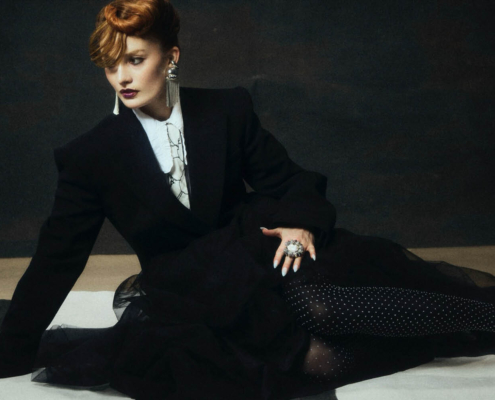
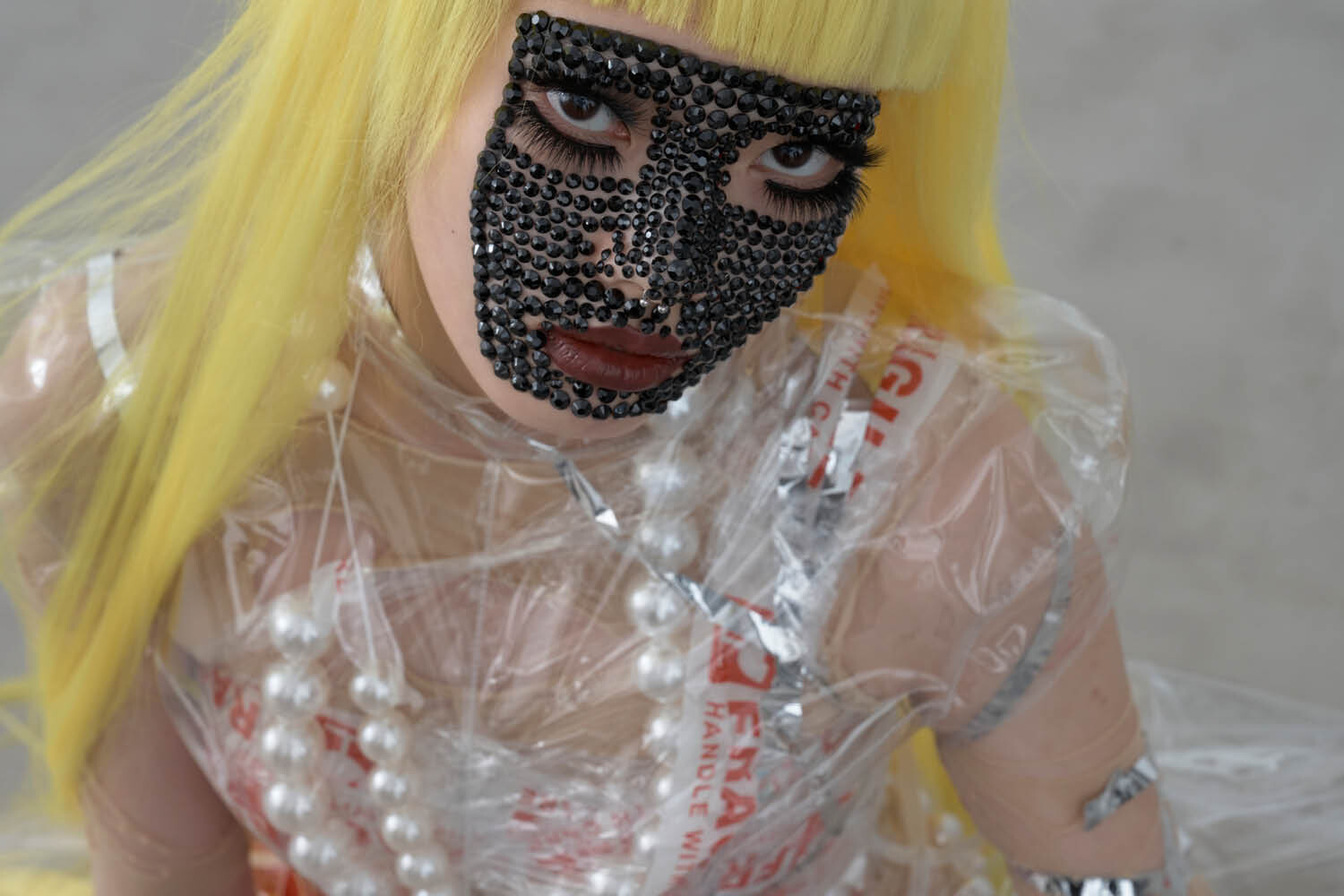
MIRJAM MANUSAMA – Creative Director and protagonist
You trained across art and fashion and work between drawing, garment and costume, treating each as its own language. You describe craft as something that speaks. When the disciplines in Woven Stories meet, what passes between them?
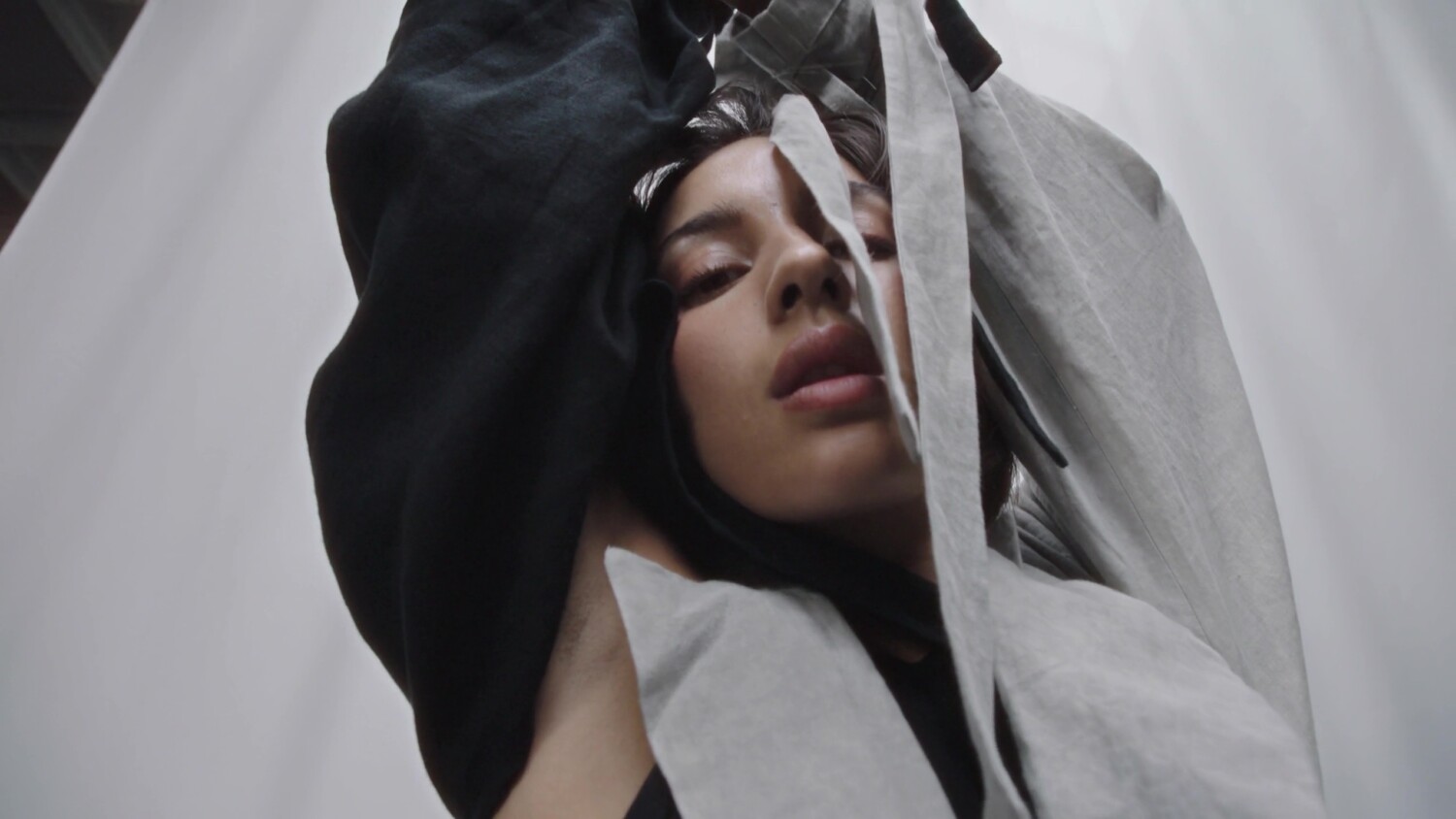
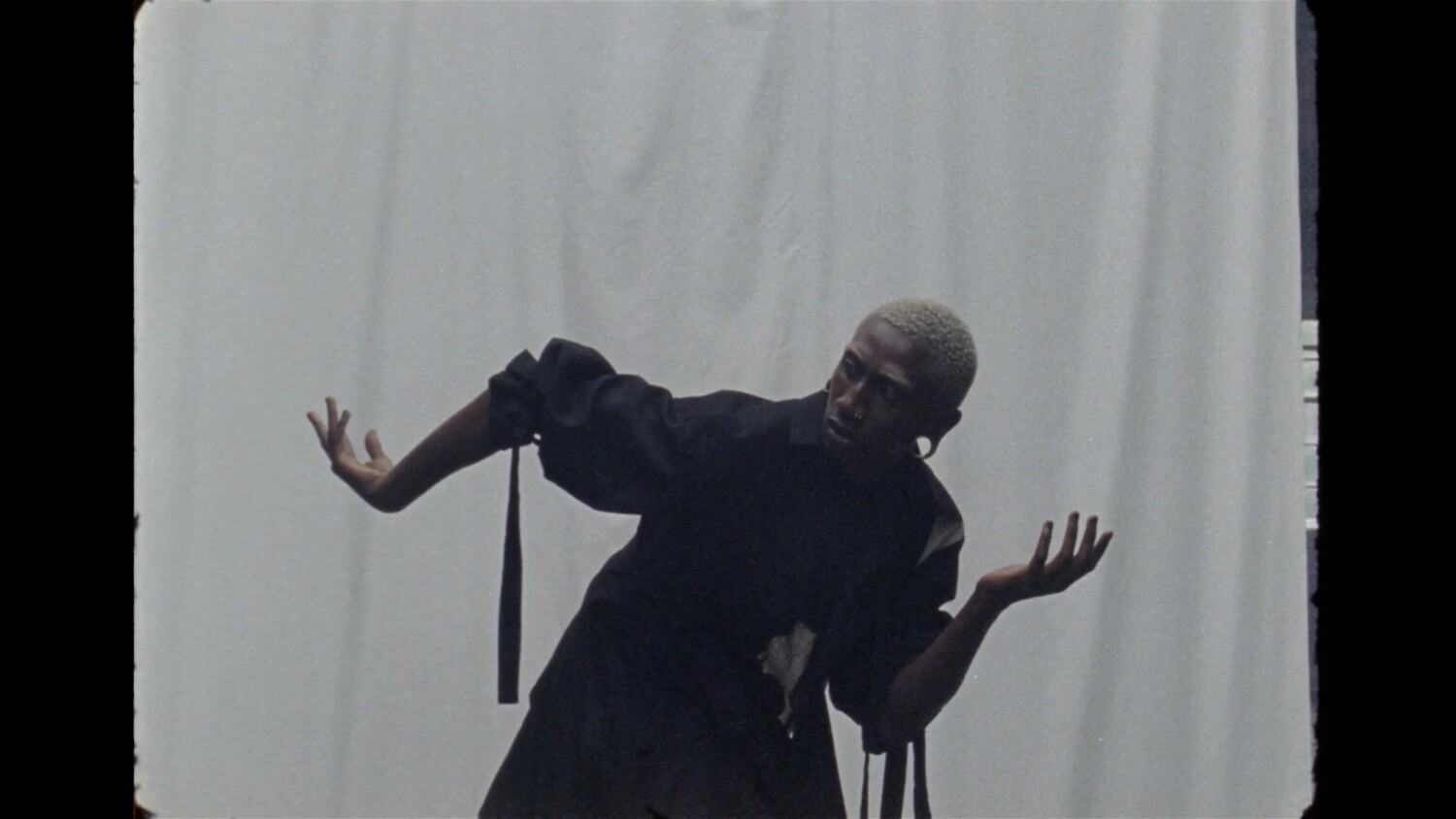
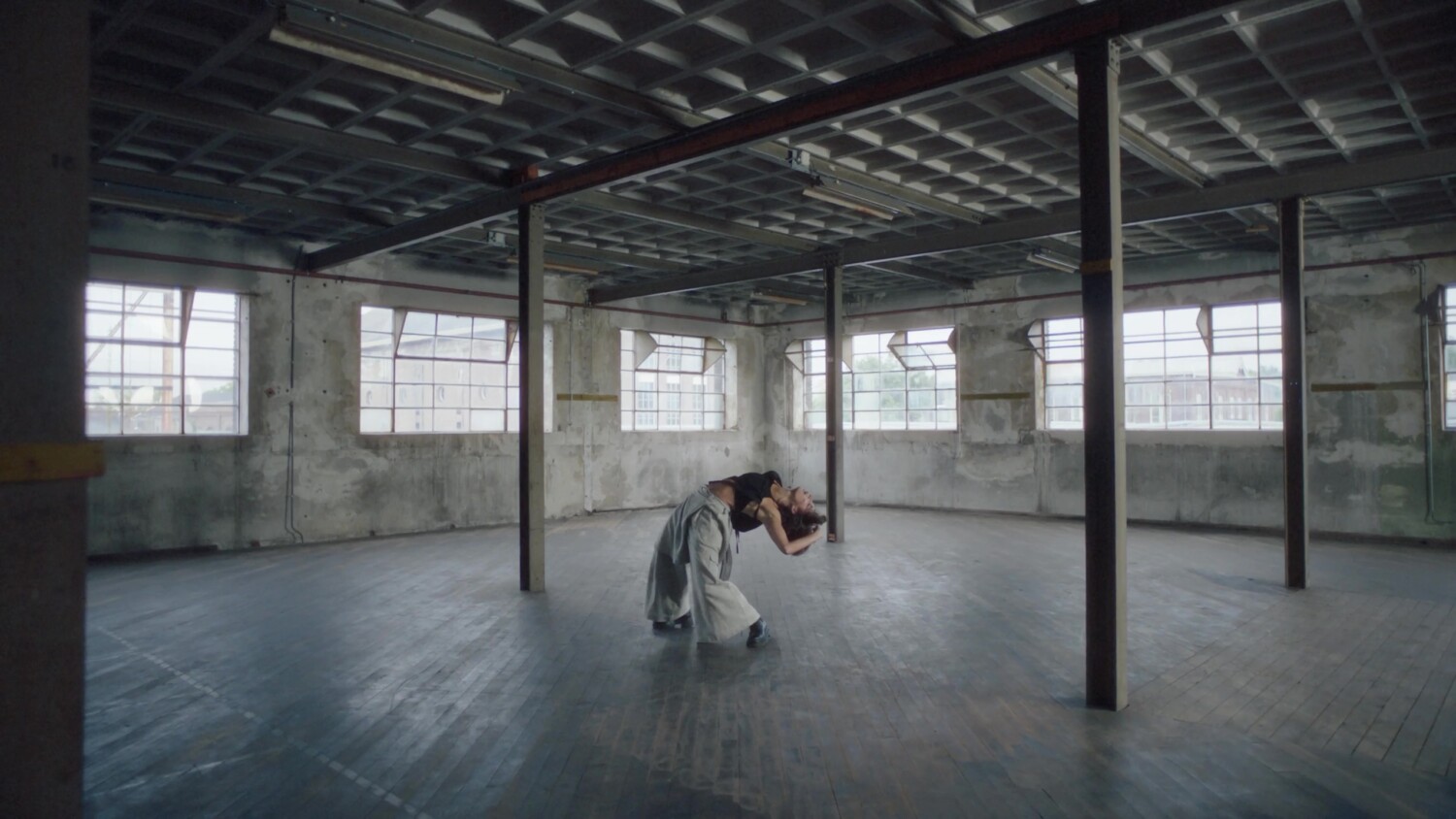
My clothing is deeply inspired by the human body and its movement. I design through draping, following the body’s natural flow, so movement is already embedded in the garments. Bringing the dancers and the clothing together feels like completing the work. The garments are not separate from the body, they come alive through it extending the body. The dancers express the intention behind the clothing and story, while the clothing extends and amplifies their movement. Together they become one language.
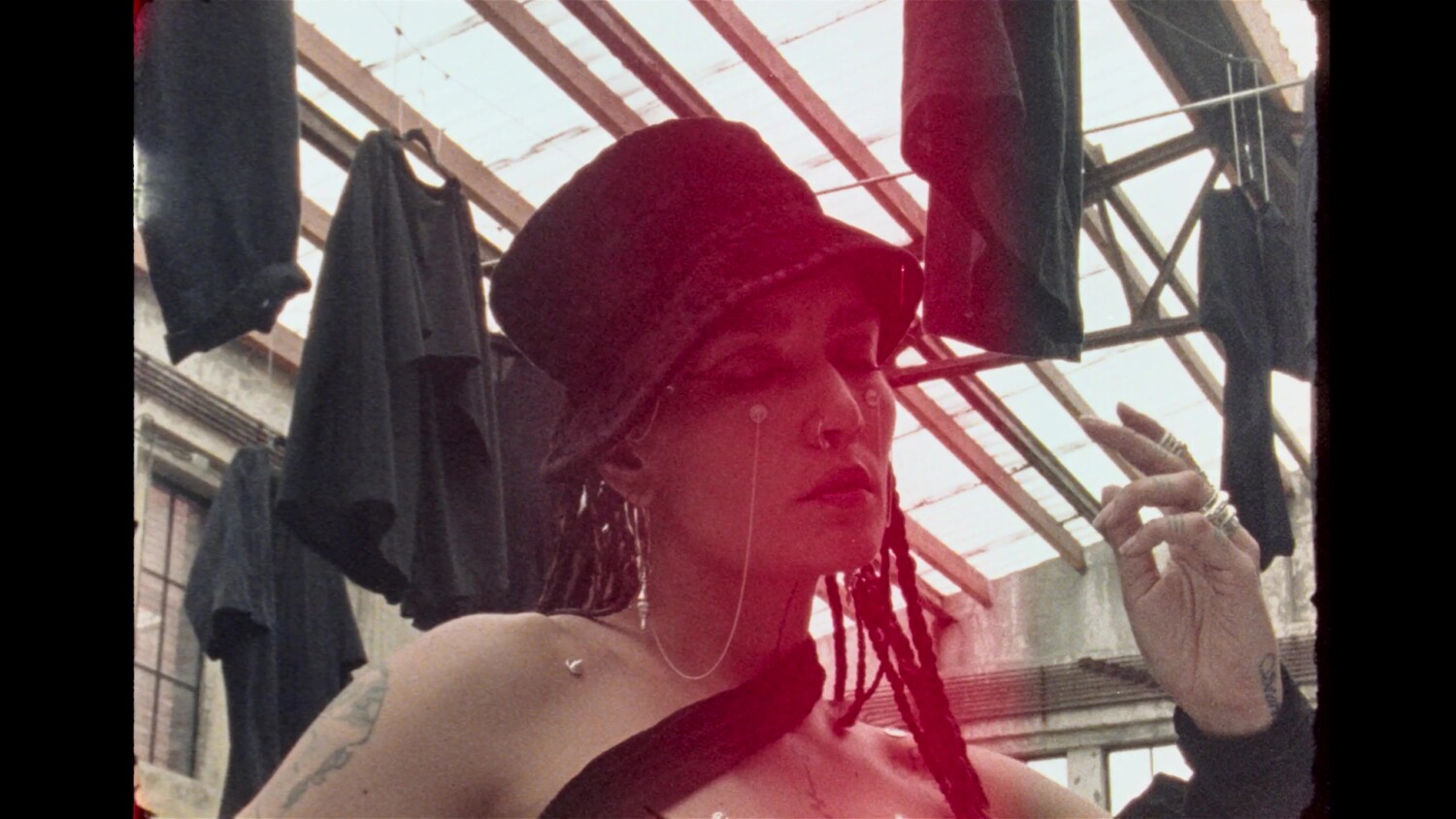
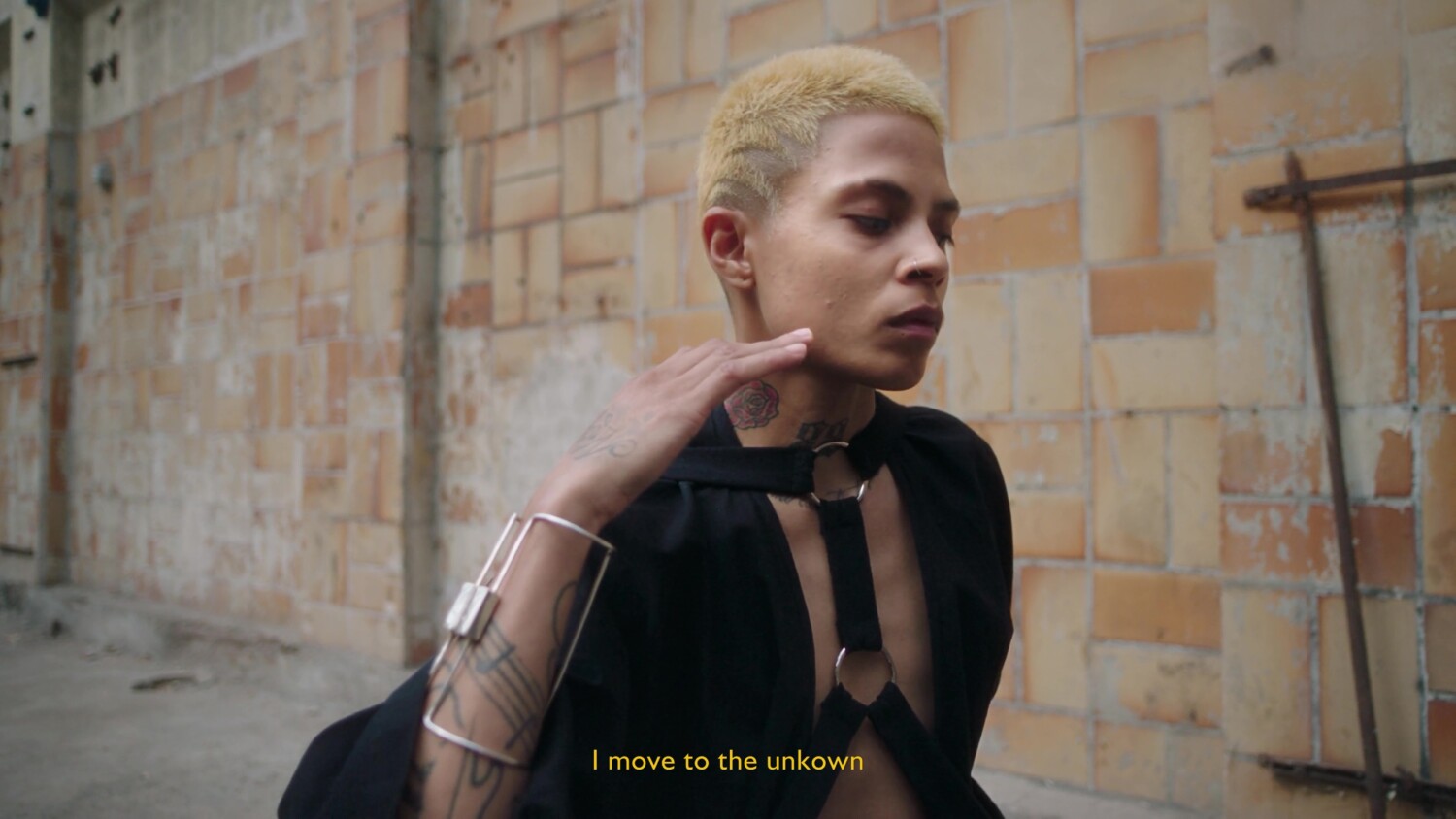
The collaborators were chosen very carefully. The dancers (Gil the Grid -Movement Director and Dancer-, Melissa Diktas & Sedrig Verwoert) are a very important visual language in the film. I believe that everything we experience is stored in the body. Through movement, emotions, memories, healing, and transformation become visible. Each dancer was chosen carefully, not only for their movement style but also for their personal background and the way they embody the story. They each bring their own language and perspective.
The talented music producers Giovanni ‘JAEL’ Jano Fatbinan & Joris ‘Siroj’ Titawano share the same Moluccan roots as I do, which brought an authentic connection to the themes of ancestry, identity, and belonging that run through Woven Stories. Their music carries not only sound, but also memory, culture, and emotion.
For the jewelry, we collaborated with Naula_Studio, whose creations are inspired by her roots in New Caledonia. Her language and cultural heritage resonate deeply with my own.
When these disciplines come together, they begin to speak to one another. The music, the movement, the art, and the clothing all communicate the same story, but through different mediums. There is a dialogue between them. The movement gives life to the garments, the garments shape the movement, the music creates an emotional landscape, and the visual art connects everything back to the inner world from which it originated.
Creating a bridge between different disciplines is important to me because each craft strengthens the other. Together they can express something more complete, more layered, and more human than any one discipline could achieve on its own. In Woven Stories, that shared language became a way to speak about identity, heritage, healing, and self-expression.
Your Moluccan heritage runs through both the label and the film. How do the cultural layers you carry shape what you allow beauty and belonging to mean?
Growing up with Moluccan roots in the Netherlands made me aware that identity is layered. I carry the stories of my ancestors with me—their resilience, sacrifices, displacement, and strength, alongside my own experiences. As a third-generation in the Netherlands, I am very aware that the freedom I have today was not available to my ancestors in the same way.
Their journeys are part of who I am and influence how I move through the world as an artist and designer. That has deeply shaped my understanding of beauty. For me, beauty is not about fitting into a standard, an ideal, or an expectation. Beauty lies in authenticity—in honoring where you come from while allowing yourself the freedom to become who you are.
Still today 2026, it is 75 years since the first generation of Moluccans arrived in the Netherlands. For many families, including my own, the impact of that history is still felt today. The recent apologies from the Dutch government show that these experiences are not simply historical events, but part of a living memory that has been carried through generations.
They faced circumstances that left little room for choice, self-expression, or the exploration of identity. The fact that I can now create, question, express myself, and shape my own path is something I do not take for granted. It is both a privilege and a responsibility.
That awareness influences my work. It reminds me to honor the people who came before me while creating space for new possibilities. Beauty, to me, is found in that connection between past, present, and future—in carrying your history with you while allowing yourself to grow beyond inherited limitations.
You bring in the context “Grandmother Etta”, who belongs to the first Moluccan generation that built a life in the Netherlands, and is one of the last living voices of that beginning. What does this presence ask of the work, and what did you want to protect/highlight with this addition?
Oma Etta, she remains one of the last living voices of that beginning. Because of that, her presence carries immense value. We hold it with deep respect, gratitude, and care.
Her presence asked something important of the work: to listen. Not to rush past history, but to acknowledge it. Woven Stories is about movement towards the future, but it is equally about recognizing the foundations on which that future is built. Grandmother Etta embodies that foundation.
When she speaks, it is a reminder. Her words carry wisdom about staying connected, respecting one another, honoring where you come from, and understanding that family and community are things you continue to build together every day.
What I wanted to protect was the humanity and dignity of her generation, the lived experiences, sacrifices, resilience, and strength that often remain unseen as time passes. Our existence today is connected to those who came before us. Their stories are not separate from ours; they continue through us.
In the film, Grandmother Etta becomes a living thread between past, present, and future. She reminds us that identity is not something we create alone. It is woven from generations of stories, resilience, love, and community. By including her voice, we honor not only her story but also the generations whose experiences made it possible for us to stand where we are today.
You described Manusama Nuance -your artisanal fashion label- as daring shells for introverts, a practice outside trends and gender roles, then you decided to return back the name of the brand to your own full name, what did you keep and what did you set down with this passage?
Manusama Nuance was my fashion brand, and for many years it was everything to me. I poured my heart, energy, and identity into it. It wasn’t just a brand; it represented a significant chapter of my life and creative development.
But after years of building it, I slowly realized that I could no longer feel my own spark within it. That was probably the hardest part of all, because I cared so deeply about it. When you are no longer aligned with what you are doing, something begins to fade. For me, that was my creativity, my curiosity, and my sense of freedom.
Letting go of the brand identity I had built for so many years initially felt like giving up. But over time, I realized it wasn’t about giving up at all. Sometimes you have to detach yourself from something you’ve held onto for so long in order to find yourself again. What once helped you grow can eventually become something you outgrow.
The philosophy behind Manusama Nuance never changed. I still believe deeply in authenticity, craftsmanship, self-expression, and creating from a place of awareness. What no longer fitted was the framework. The brand was primarily focused on fashion and collections, while my creative practice had expanded beyond that.
Over the years, I discovered that my greatest fulfillment comes from working as a multidisciplinary artist. Today, I see myself less as someone creating products and more as a vessel for translating my own inner world and a person’s inner world into something tangible. Whether through clothing, art, tattooing, film, or drawing workshops, I am interested in personal stories and creating work that helps people connect to their own strength, beauty, and identity.
Returning to my own name was a way of coming back to myself. What I left behind was a structure that no longer reflected who I was becoming. What I kept was the essence: the values, the craftsmanship, and the stories. Looking back, it wasn’t an ending but an act of trust, creating space for something new to emerge. Today, working as Mirjam Manusama feels more honest and allows me to embrace all aspects of my creativity without limitation.
You treat creation as something unpredictable and spontaneous rather than planned. You call making a dialogue with the unknown. Where does certainty have to fade before the work can begin?
I think certainty has to fade the moment I try to control the outcome. That’s usually where the work stops being alive. Every piece begins with a feeling, a question, or sometimes just a small spark of curiosity. I rarely know exactly what the final result will look like. What I do know is that I have to trust the process enough to follow it.
For me, creating is a dialogue between what I know and what I don’t know. My craftsmanship, experience, and skills give me a foundation, but the most meaningful discoveries happen when I allow space for something unexpected to emerge.
Whether I am draping fabric, drawing, or tattooing, there is always a moment where I have to stop directing and start listening. The work begins to tell me what it needs. That’s the dialogue with the unknown, from there I’m just a vessel of something bigger, a translation of inner worlds, it can be my own or someone else’s.
I think uncertainty is essential because transformation cannot happen when everything is already decided. If I know exactly where I’m going, there is no room for discovery. The unknown invites me to stay curious, present, and open.
In many ways, my creative process mirrors life itself. We often want certainty, but growth happens when we step into places we don’t fully understand yet. That is where creativity lives for me.
In your practice clothing reads as a second skin, an inner state made wearable. How does craftsmanship carry an inner world into the open?
I see craftsmanship as a way of giving form to things that are often invisible. Constantly shifting emotions, experiences, memories, ancestry, and the different identities we carry shape who we are, yet much of that remains unseen. Through making, I try to translate those inner layers into something tangible.
My garments are built through draping, layering, and asymmetry. These are not only aesthetic choices; they reflect how I see the human experience. We are complex and multifaceted beings, constantly evolving and transforming. The layers in my work mirror the layers within ourselves, while asymmetry allows me to explore the balance between the physical body and the inner self.
I often describe clothing as a second skin because it can communicate something about who we are beyond words. The garments become a meeting point between the inner and outer world. Craftsmanship allows me to slow down and listen to that process. It carries intention. The time, care, and attention invested in making become embedded in the work itself.
For me, craftsmanship is not simply about making an object. It is about creating a language through which the invisible becomes visible. It allows something deeply personal to be expressed, shared, and experienced in the physical world.
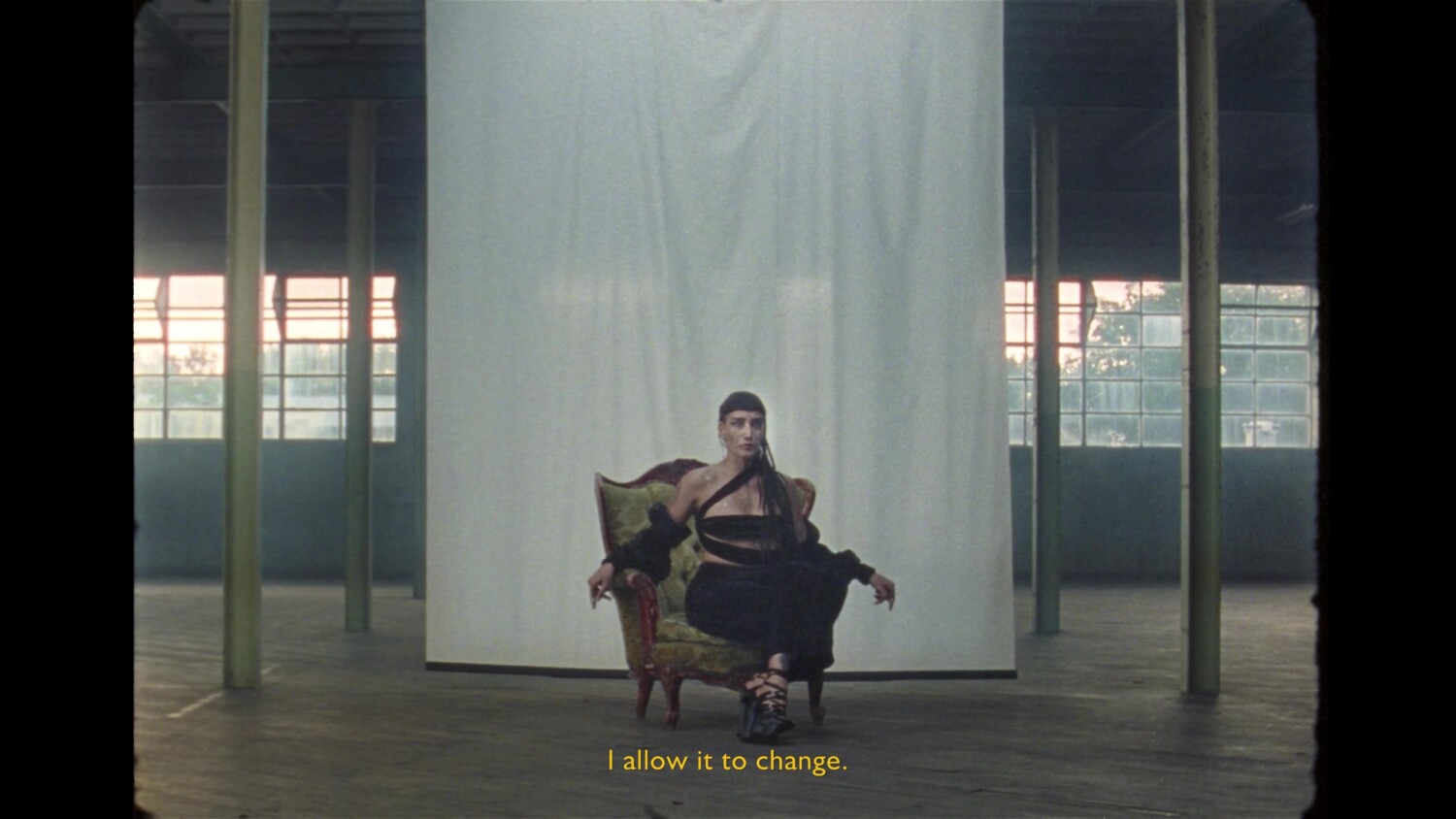
You stand inside this film as protagonist as well as its origin. What shifts when the work asks you to become its subject?
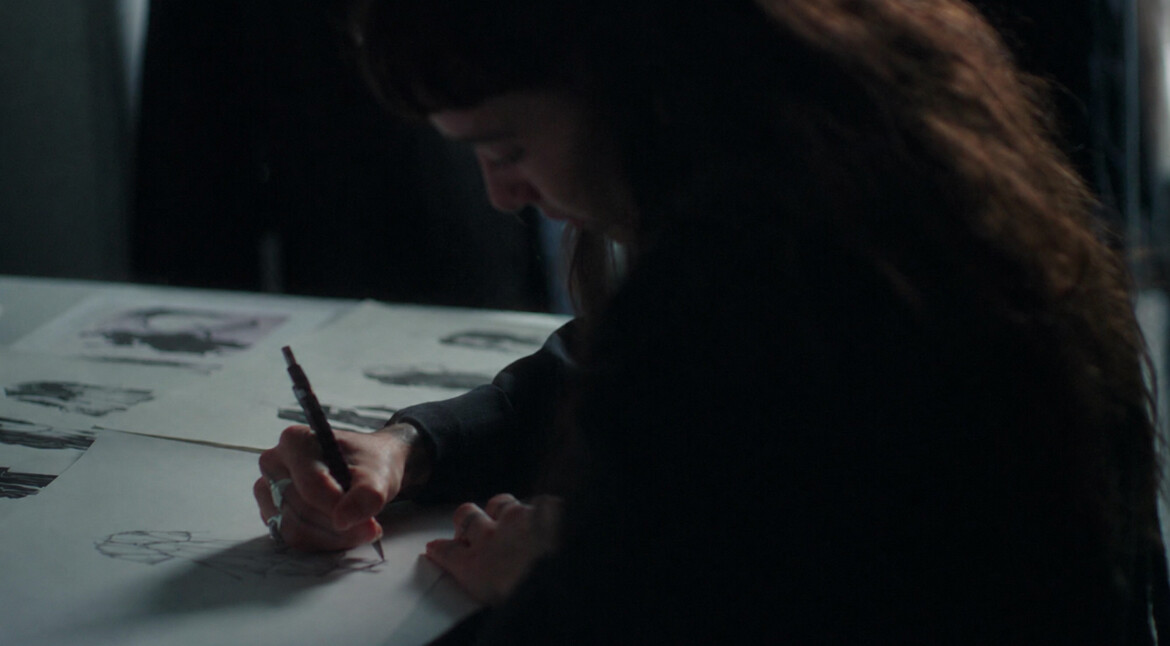
Woven Stories asked me to step into the center of my own work in a way I hadn’t done before. While my work has always been personal, I often translated parts of myself through garments, drawings, or other people. This film invited me to bring all of those parts together and make them visible.
The film is rooted in my own experiences, heritage, creative process, and personal growth. In that sense, I consciously placed myself at the center of the story. Not because I wanted the film to be about me as an individual, but because I wanted to honestly share the things that shape my work and the values I want to contribute to the world: connection, self-expression, transformation, and the freedom to evolve.
What shifted was my relationship to visibility. The work no longer carried the story on its own; I became part of what was being seen. While that asked for vulnerability, it also created a deeper sense of alignment between what I make and who I am. By sharing my own journey, I hope to encourage others to embrace and explore their own.
At the same time, the film was never created alone. Through the collaboration with dancers, musicians, filmmakers, and everyone involved, the story grew beyond my personal experience. Each person brought their own history, perspective, and language to the project. What began as my story became a shared story.
That is what I find beautiful about collaboration. By being deeply personal, the work became more universal. The more honestly we shared our individual experiences, the more space there was for others to recognize something of themselves within it. In that way, Woven Stories is both deeply personal and collective at the same time.
In an earlier project you handed your artworks to other makers: a photographer, a spoken-word artist, a graphic designer, each translating your story into their own medium, something you have called a form of collective healing. Woven Stories widens that circle to dance, music and film. What does healing become when it passes through so many hands?
Yes, I curated my own exhibition during the Motel Mozaïque Festival in Rotterdam, the Netherlands, where I invited other artists to translate my artworks into their own mediums. The works were connected to Moluccan heritage, which the participating artists also shared. What fascinated me was seeing how the same story could take on different forms while still carrying its essence. Each artist brought their own experiences, emotions, and perspectives to the work. Through that exchange, the story no longer belonged solely to me, it became something shared.
I think healing often begins with the realization that our experiences are not isolated. When something personal is shared and received by another person, it creates a bridge of connection. It allows us to see ourselves through a different lens and reminds us that we are part of something larger than ourselves.
Woven Stories expands that idea even further. Through dance, music, film, clothing, and all the people involved, the story continuously moved through different hands, bodies, and perspectives. Every collaborator added a layer of meaning. The dancers brought their own histories and emotions through movement. The musicians translated themes of ancestry, identity, and belonging into sound. The filmmakers shaped how the story could be felt and experienced visually.
What interests me is that the story transforms every time it passes through someone else’s hands. It stopped being a fixed narrative and became something alive. In that process, healing becomes less about an individual journey and more about a collective experience. It becomes an act of witnessing one another, sharing perspectives, and creating space for different truths to exist alongside each other.
For me, healing is about becoming more aware, more connected, and more accepting of the many layers that make us who we are. When a story passes through many hands, it gains depth, and in that depth more people can find a reflection of themselves.