You’ve built a very specific world around your music, one shaped by your childhood, your father’s influence, dark ambient sounds, and a fascination with early digital culture. Today you’re creating in an era where algorithms can turn a niche sound into a global trend almost overnight. How do you stay loyal to the instincts that first shaped Øneheart while everything online moves so quickly? Have you ever felt pressure to repeat the sound people already associate with you instead of following where your curiosity is taking you now?
Yeah, it’s true, everything moves incredibly fast online. I think the best way for me to deal with that is to keep making something that feels unique and that I would enjoy listening to myself.
Over the past few years, I definitely felt pressure from the outside. I was scared of disappointing people who already had a very specific idea of what Øneheart should sound like. At the same time, I never really stopped experimenting with different genres behind the scenes. Now I finally feel like it’s the right moment to show that side of myself to the world.
You’re exploring new directions with your music—listening to Charli XCX, Russian rock bands, hyperpop, and returning to electronic music and EDM—while trying to expand what Øneheart can be. What’s interesting is that you started making dubstep and house at eleven, but very quickly chose a much more unconventional path instead of chasing something obviously commercial. Many people describe your music as ambient or atmospheric, but beneath that surface there’s something deeply emotional and cinematic. Were you surprised by how many people connected with that side of your work? What do you think listeners hear in your music that isn’t immediately obvious?
I’ve always listened to all kinds of music and tried to draw inspiration from everywhere, whether it was spending evenings with my father while he played guitar or walking through the ravine near my house. I’ve always been open to experimenting with different genres, but something really drew me toward atmospheric music around 2017. I was listening to a lot of Burial, Sorrow and Pensees, and later some of my friends introduced me to a lot of lesser-known ambient artists on Bandcamp. At some point I became completely fascinated by that and started experimenting with it myself.
When some of my songs started blowing up online, I was definitely surprised by how deeply people connected with them. I remember receiving messages from listeners saying the music helped them through difficult periods or made them feel something they couldn’t really explain. It was especially strange to experience that while I was still in high school, living in a small town and trying to figure out what I wanted to do with my own life.
Your music comes with a visual world that’s instantly recognizable: early internet graphics, Y2K references, liminal imagery, cold digital environments, and a very particular visual language. It never feels separate from the music. How did you arrive at that visual vocabulary? Were those references already part of your childhood, or did they emerge later while you were building Øneheart?
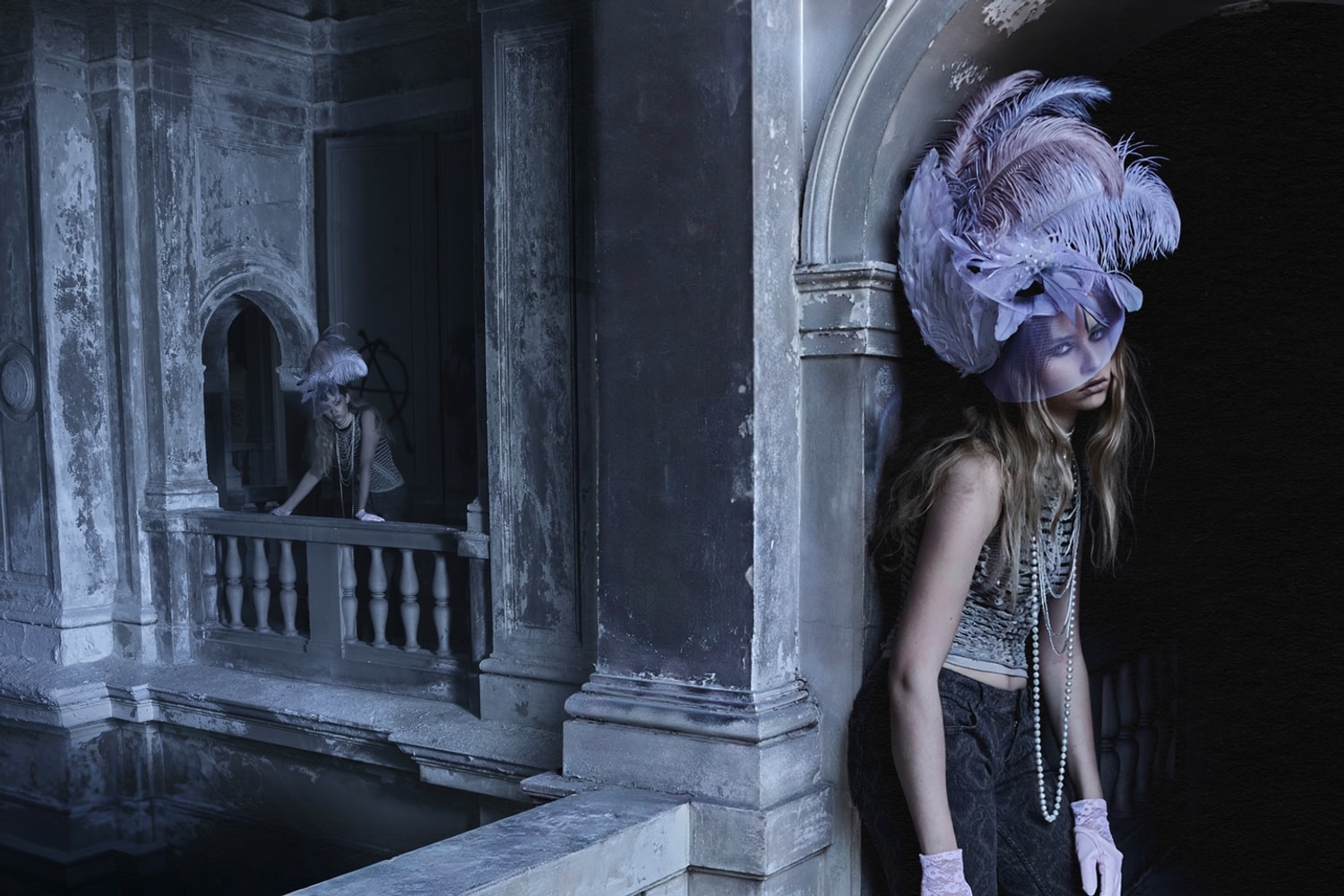
To be honest, I’m not sure if it comes directly from my childhood, but I think growing up in a small town in Central Russia definitely shaped the way I see things. I’ve always enjoyed finding beauty in places, landscapes and situations that other people might consider uninspiring like empty abandoned spaces, fog over a field, quiet streets at night, things like that. I was constantly trying to romanticize the environment around me. And around 2020 or 2021, I discovered the “blue hour” aesthetic and it immediately resonated with me. That was probably the moment when I started consciously developing a more defined visual language around Øneheart.
We’ve talked about your father’s influence, but Samsara Passengers takes that relationship somewhere new. Instead of inspiration, it became collaboration, bringing together your perspective, your father’s, and Dean Korso’s into one project. What did working across generations teach you? Did collaborating with your father change the way you understand your own artistic voice?
It’s actually funny because most of the people I work with are older than me, so I’m usually the youngest person in the room. Working with my father and Dean taught me a lot, especially when it comes to approaching larger projects. Dean in particular changed the way we think about structure, planning and collaboration. Even though there’s a noticeable age gap between us, we’ve always tried to make sure everyone’s opinion has the same weight. I think that’s one of the reasons the project works is when everyone brings a completely different perspective to it.
There’s often something deeply personal behind the decision to become an artist. In your case, music started as curiosity in a garage with a few old CDs and a drum machine, and somehow grew into billions of streams without losing that DIY instinct. Was there a moment when making music stopped feeling like something you did for fun and became a real commitment? And has success ever changed your relationship with creativity itself?
I don’t think success changed the way I write music that much, but it definitely created a new sense of responsibility. When success happens very quickly and at a young age, you don’t really have enough time to understand what’s happening to you. Of course, there are expectations, numbers, and people waiting for the next thing. But underneath all of that, I’ve tried to keep the same reason I started making music in the first place because I enjoy doing it. I think keeping that sense of curiosity and fun is what stops creativity from turning into just another job.
Something fascinating happens when a song goes viral online: it starts collecting its own mythology. Snowfall is a perfect example. The song exists alongside slowed versions, edits, gaming videos, nostalgic montages, and millions of images created by people you’ve never met. Do you ever think those fan-made worlds become part of the artwork itself? At what point does a song stop belonging entirely to its creator?
It’s always fascinating to watch that happen, but Eugene (reidenshi) and I never really gave it much thought while making the song. We definitely couldn’t have imagined how many completely different contexts it would end up living in.
At some point, I think a song does start belonging to the people who connect with it. Everyone attaches their own memories, images and experiences to it, and those interpretations become part of the life of the track. I don’t think that takes anything away from the original meaning, but if anything, it makes the song feel much bigger than the moment in which we created it.