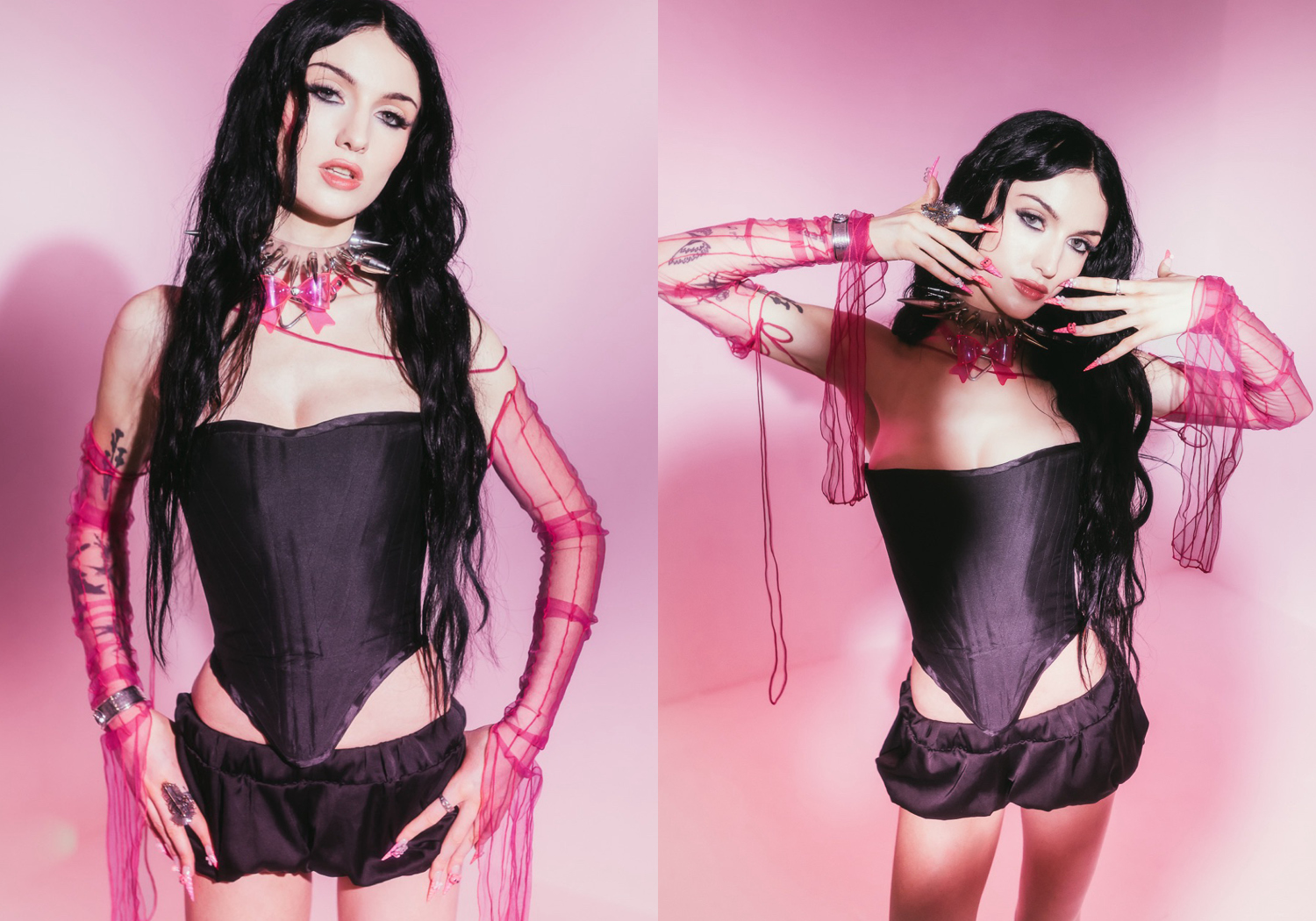
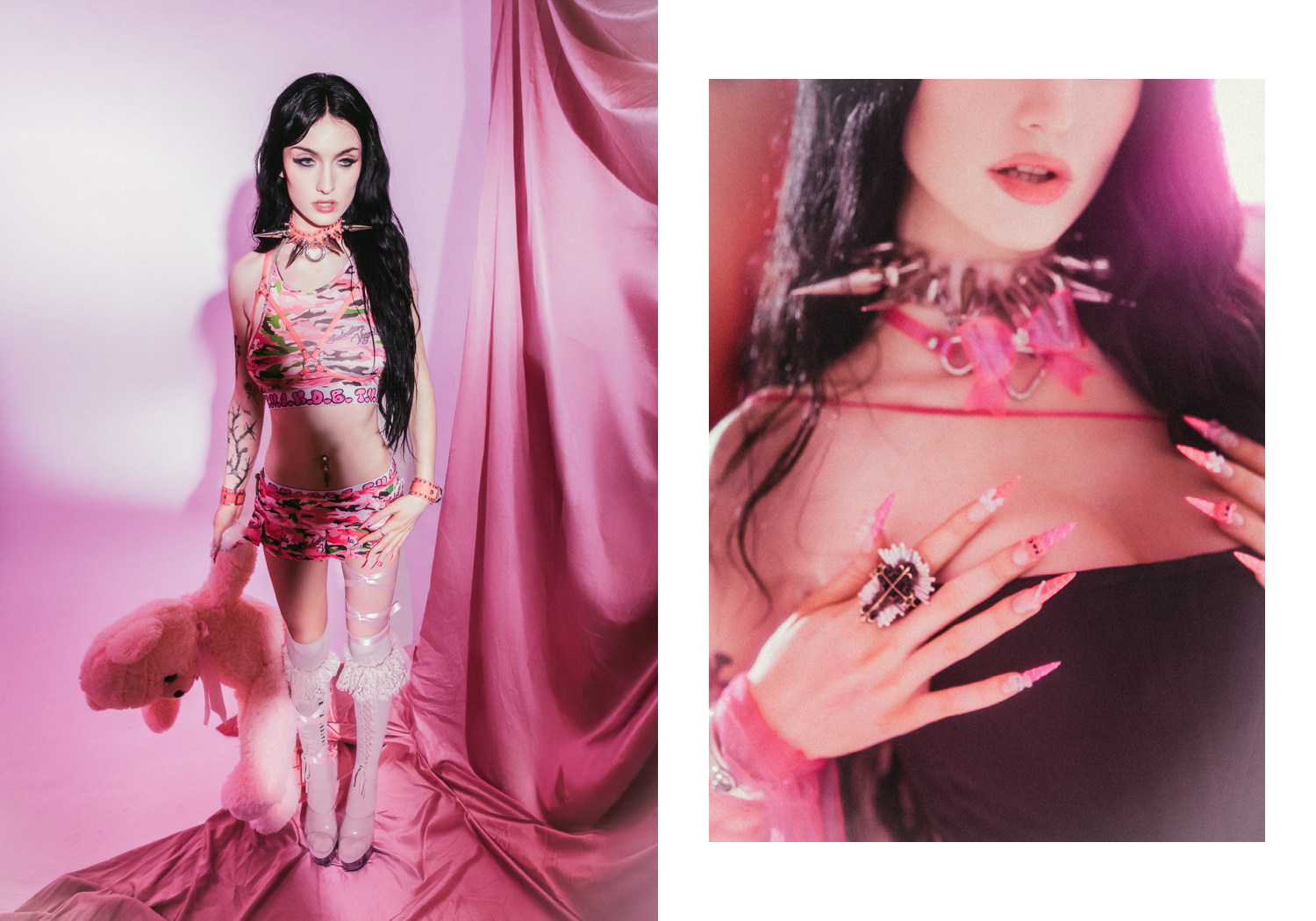
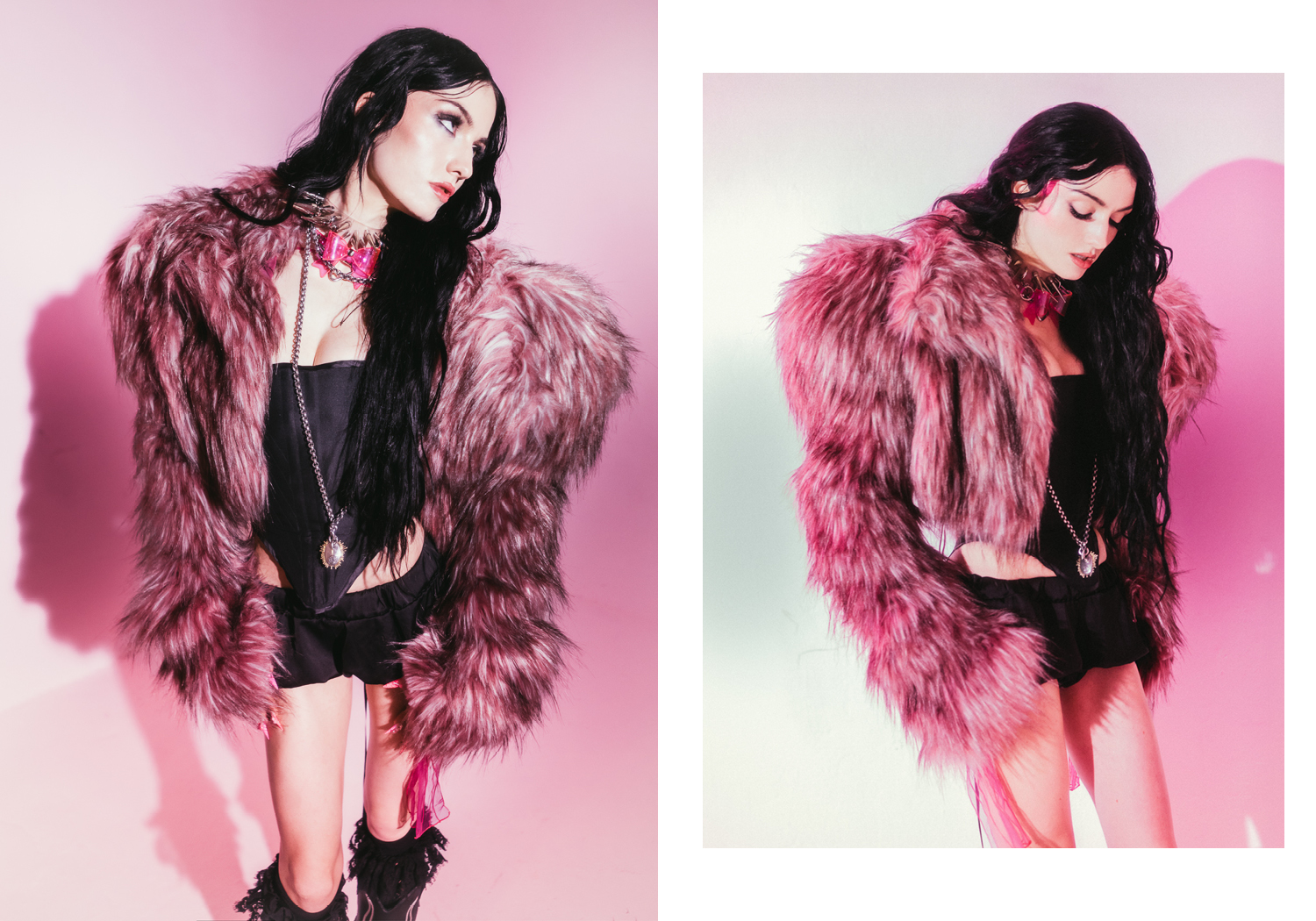
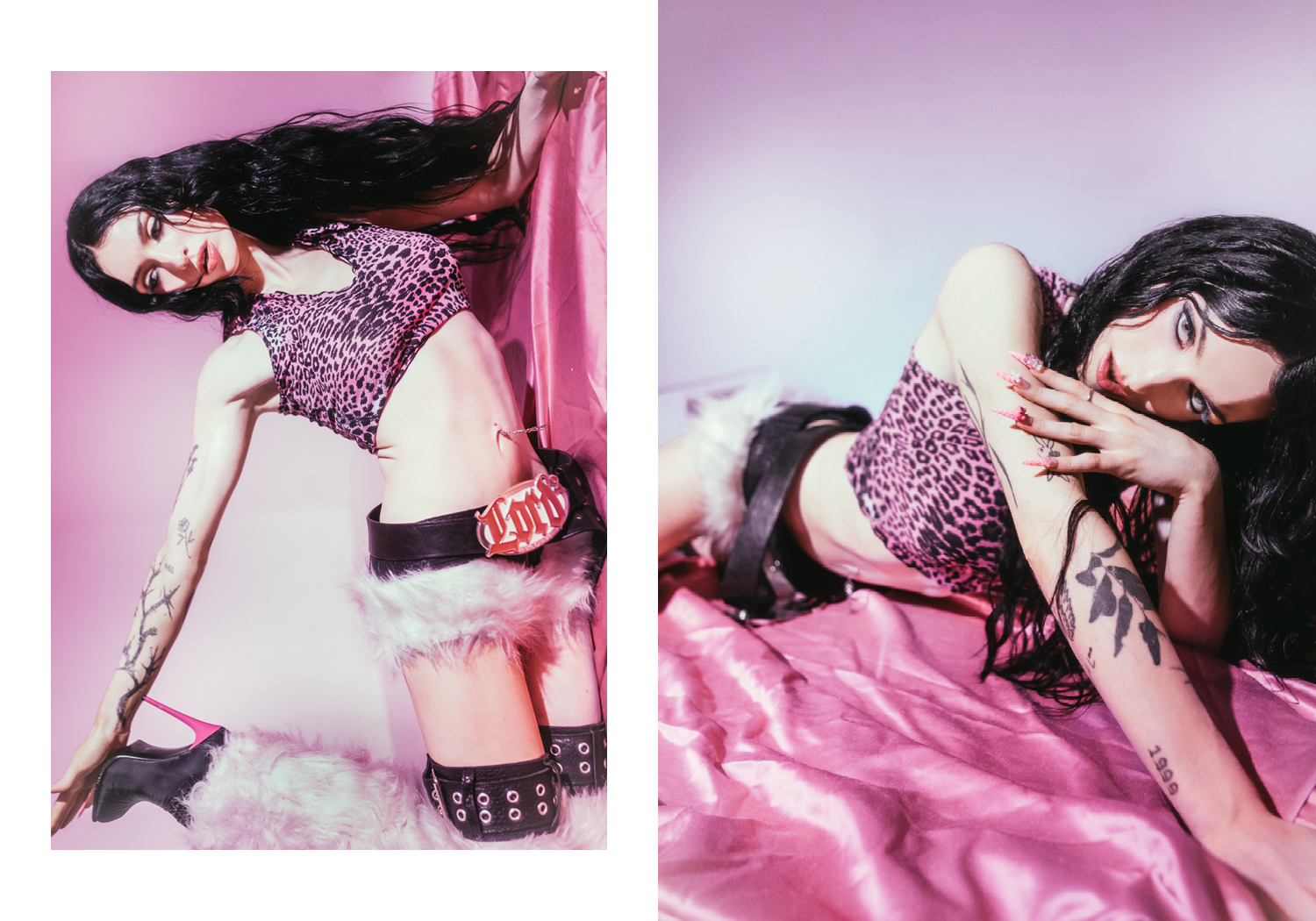
Candycore / MELTX

Interview with Irish Dj & Producer.

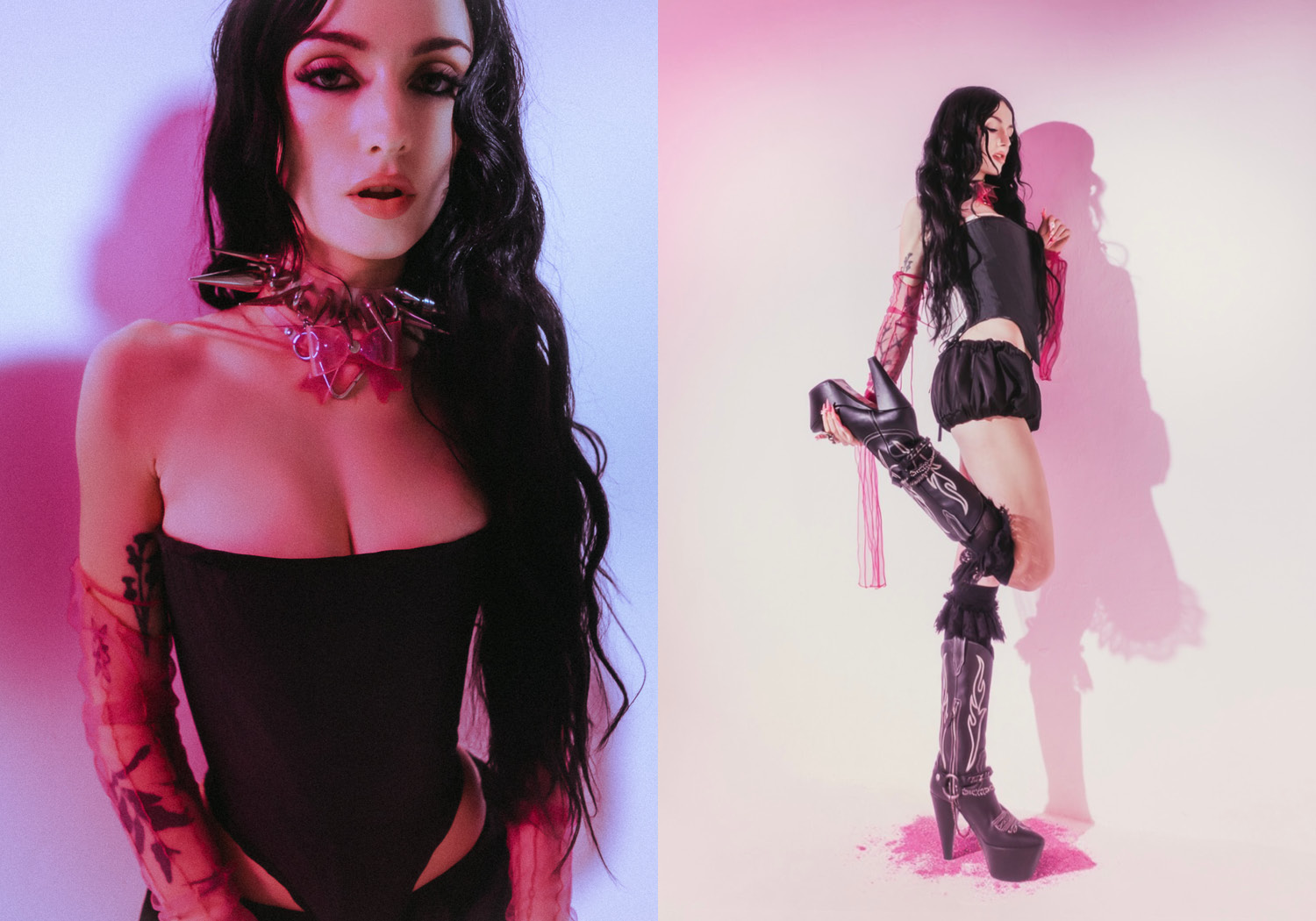
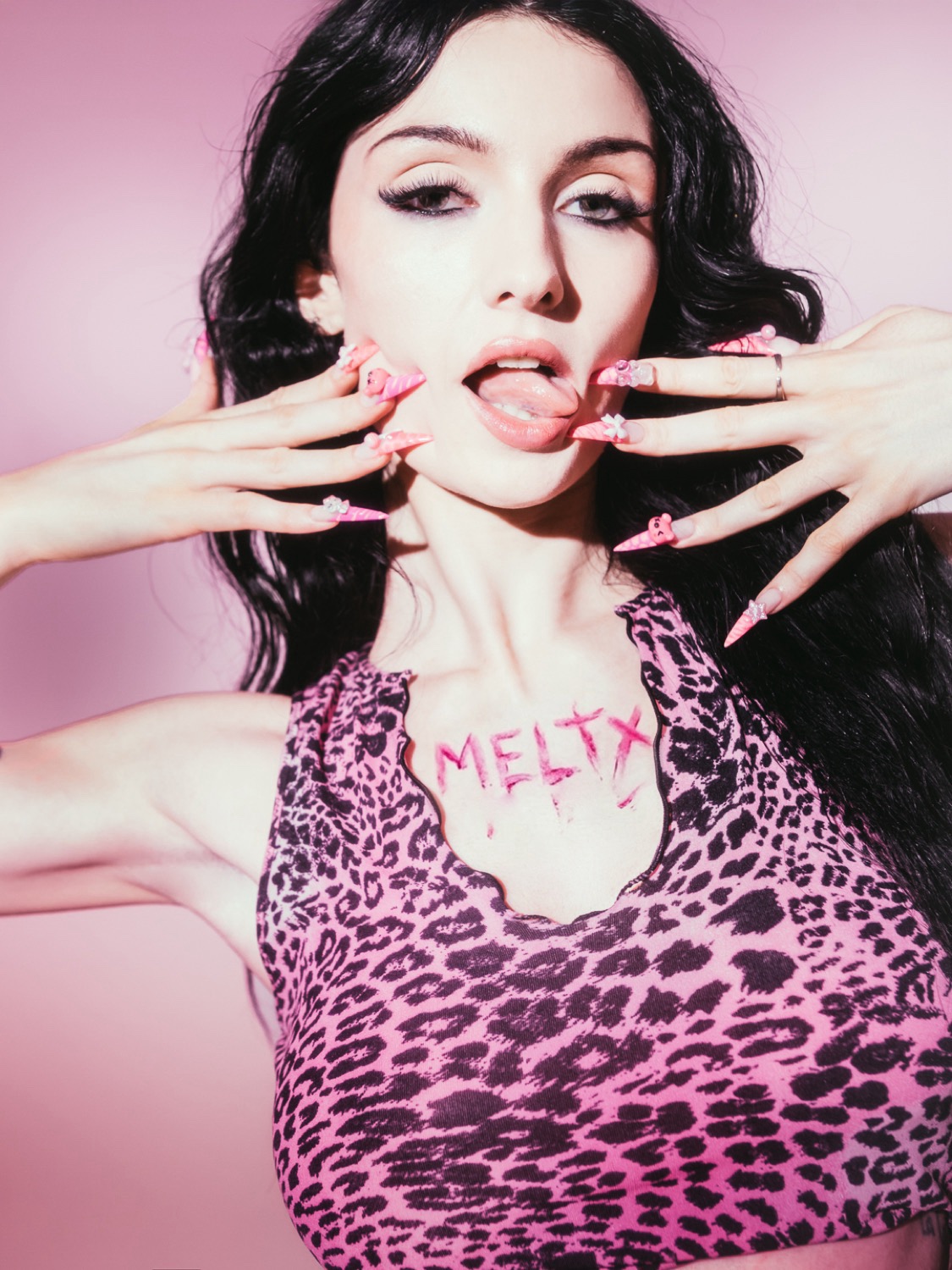
MELTX is building frequencies. In our spotlight on the Irish hard techno DJ and artist, Candycore emerges as more than a debut album: a field of hyperfemininity, pressure, nightlife ritual and self-authored metamorphosis. Moving between film language, rave culture and emotional extremity, MELTX treats transformation as a way of staying legible to herself.

Over the last few years, we’ve seen the transformation of your personal image and fashion persona. Do you see your style and MELTX, your stage persona, as extensions of each other, or do they express different facets of who you are?

How do you balance or merge these identities, and which parts feel most essential or defining to you? I transform all the time. I’ve never been interested in staying the same. Rebranding every couple of years is essential to me because I’m always evolving as a person, emotionally and creatively. MELTX isn’t a mask I put on, she’s an amplified version of different phases of me. My personal style and my stage persona are deeply connected, but they highlight different intensities of the same energy. Sometimes MELTX is darker, sharper, more confrontational; sometimes she’s playful, nostalgic, emotional. My everyday self feeds into that, and the stage version pushes me to explore sides of myself I might not access otherwise. I don’t really “balance” the identities but I let them melt into each other. The most essential part for me is transformation or what I like to call “metamorphosis”. That constant reinvention is what defines me the most.

CANDYCORE is your “debut” album, self-released, though you’ve also put out music on successful labels such as HEKATE, Taapion, NowNow, and Teletech. Looking back, what traits do you notice in a younger MELTX that have matured or flourished while developing this album?

Looking back, I see a younger version of myself who was still searching for her shape and her power. With CANDYCORE, everything feels more intentional and more embodied. I’ve really grown into my femininity – not in a soft or fragile way, but in an empowered, confrontational, hyperfeminine way. I’m no longer questioning whether I’m “allowed” to take up space like this. I just do. My identity feels much more solid now. I know what I want to express, how I want to look, and how I want to sound. I understand myself better – emotionally, artistically, and physically. That confidence seeps into every decision on the album, from the production to the visuals. CANDYCORE feels like the moment where everything aligned: desire, power, and self-knowledge.

You move through musical theatre, film, Parisian streets, and the frequency of techno, weaving them into a single, immersive narrative of self-expression. Every experience feeds the next, creating a holistic rhythm, a fusion of performance, story, and sound that feels alive. Was there a moment when all these threads of your life suddenly snapped together, crystallising into the musical identity you carry today?

For me, everything really snapped together through a form of spiritual enlightenment. I started to see that none of my experiences were separate – the theatre, the film, walking alone through Paris at night, the sound of techno – they were all speaking the same language on different frequencies. Once I understood that, I stopped trying to compartmentalise who I was. That’s when the fusion truly happened. Performance, story, and sound became one continuous narrative instead of separate chapters. I learned to trust that every experience was feeding the next, shaping the same core identity. The musical identity I carry today is the result of that convergence – when intuition, spirituality, and self-expression started moving in the same direction.

If you hadn’t discovered hard techno, how would you have synthesised your past disciplines?

If I hadn’t discovered hard techno, I know I still would have found a way to fuse everything through storytelling and expression. Film would have been a major path for me – creating worlds, characters, and emotional tension through moving images. I’ve always felt drawn to helping others in some way too, whether that’s through guiding, healing, or inspiring transformation. No matter the medium, I would still need to express myself artistically. That’s non-negotiable for me. Techno just happens to be the frequency where all of those impulses collide at once – performance, emotion, darkness, beauty, and release. But the need to create and connect would exist with or without it.

You connect your passion for cinematography and film with your devotion as a DJ and creator. If you could incorporate one of your EPs, albums, songs, or playlists into a movie, where would you see it fitting?

I would place one of my projects directly into the universe of Jennifer’s Body. That film already holds everything I’m drawn to – hyperfemininity, danger, desire, power, and tragedy wrapped in gloss. I imagine my music underscoring a transformation scene, a moment where innocence melts into something predatory, magnetic, and uncontrollable. My sound lives in that same tension between sweetness and violence, glamour and destruction. It wouldn’t just sit in the background – it would possess the scene. For me, that’s the ultimate crossover between cinema and techno: when the music becomes part of the character’s psyche.

Coming from film school and now thriving in the music industry, you’ve often been surrounded by chaotic, lively environments. What activities or hobbies do you enjoy that don’t belong to such active spaces?

Even though I live in loud, chaotic, high-energy worlds most of the time, I really need silence and grounding to stay balanced. I love long walks in nature – they reset my nervous system and bring me back into my body. Yoga and the gym are also essential for me, not just physically but mentally. They help me release everything that builds up in intense environments. I also spend quiet time studying French, which feels like a totally different kind of discipline – slow, focused, inward. Those softer routines are what allow me to survive the intensity of music, performance, and nightlife. They keep me connected to myself beyond the noise.

“Techno just happens to be the frequency where all of those impulses collide at once – performance, emotion, darkness, beauty, and release.”

Coming from film school and now thriving in the music industry, you’ve often been surrounded by chaotic, lively environments. What activities or hobbies do you enjoy that don’t belong to such active spaces?

Even though I live in loud, chaotic, high-energy worlds most of the time, I really need silence and grounding to stay balanced. I love long walks in nature – they reset my nervous system and bring me back into my body. Yoga and the gym are also essential for me, not just physically but mentally. They help me release everything that builds up in intense environments. I also spend quiet time studying French, which feels like a totally different kind of discipline – slow, focused, inward. Those softer routines are what allow me to survive the intensity of music, performance, and nightlife. They keep me connected to myself beyond the noise.

What are some unusual aspects or elements in the world around you that inspire you?

I’m most inspired by people and their stories – especially the ones you don’t hear loudest. The quiet transformations, the hidden contradictions, the scars people carry beneath beauty or confidence. Those human details feed everything I create. Landscapes also move me deeply. Harsh industrial zones, empty highways, sacred nature, chaotic cities – each environment holds a different emotional temperature that I translate into sound. And different cultures constantly reshape the way I see rhythm, ritual, and identity. I love absorbing how people move, celebrate, mourn, and express power in completely different ways. All of that seeps into my music, my visuals, and my sense of self.

How do you distinguish between productive chaos and overwhelming chaos in your life? Are there rituals or practices you use to “breathe inside the chaos”?

For me, the difference between productive chaos and overwhelming chaos is control. On stage, the chaos is intentional – it’s ritualistic, embodied, chosen. The distortion, the volume, the sweat, the intensity all have a purpose. I’m inside the storm, but I’m also guiding it. That’s where chaos becomes fuel, not threat. Overwhelming chaos is completely different. It’s real-life drama, emotional instability, or situations that feel out of control – when your nervous system doesn’t get a choice. In those moments, I have to step back and find stillness instead of adrenaline. My rituals are physical and grounding: breathwork, movement, being alone, silence, nature. I literally slow my body down so the mind can follow. Stage chaos expands me. Life chaos teaches me my limits. Learning to breathe inside both has been one of the most important lessons of my evolution.

You felt a visceral sense of belonging at your first rave, discovering music as a universal, wordless language that spoke directly to your soul. How often do you chase that first-rave feeling in your performances now?

I never chase that feeling for myself anymore. That first rave was a selfish, personal awakening – it cracked something open in me. But once that door is opened, you can’t go back to the innocence of it. Now, the experience isn’t about me at all. What moves me today is the people in front of me. My purpose on stage is to give that feeling back – to transmit the sense of belonging, release, and unity that I once received. It’s not about recreating my own memory, it’s about creating theirs. Watching the crowd dissolve into that same wordless communion is far more powerful than chasing it for myself ever could be.

You emphasise self-built success, consistency, and long-term commitment over hype. What was your most difficult moment of self-doubt, and how did you overcome it?

My hardest moment of self-doubt was when I realised that talent alone wasn’t enough – that if I wanted longevity, I’d have to build everything myself, brick by brick, without shortcuts or cosigns. There was a period where I felt invisible, where I questioned whether anyone would ever actually hear what I had to say or feel what I had to give. What got me through it was consistency and a kind of stubborn devotion to my vision. I reminded myself that hype fades, but commitment doesn’t. I focused on the long game, on becoming undeniable instead of instantly visible. Every set, every track, every visual became an act of proving to myself that I’m capable, that I belong here, that my place in this industry will be earned – not handed to me. That discipline, that choice to show up for myself even when no one was watching, is what carried me through the doubt. And it still does.

You made a short film, Silent, at fourteen years old which went viral and directly addressed mental health issues like eating disorders and depression. You mention that experience profoundly shaped the way you approach emotional intensity in your music — you also said that after creating the film you realized, “intensity isn’t something you have to apologise for.” Looking back, how has your relationship with mental health evolved since you began your journey as a musician and artist?

When I made Silent, I was still very young, but I was already carrying an enormous emotional world inside me. At that time, mental health felt raw, overwhelming, and almost dangerous – something I needed to urgently release before it consumed me. Creating that film was my first realisation that intensity isn’t something to apologise for, that feeling deeply could actually be a form of power and communication. Since then, my relationship with mental health has matured alongside me. As a musician and artist, I’ve learned how to hold intensity instead of being swallowed by it. I no longer see suffering as my identity, but as material – something that can be shaped, transformed, and transmitted into sound, performance, and meaning.

Today, I’m much more protective of my nervous system. I understand the difference between emotional depth and emotional collapse. Music allows me to move through darkness without becoming it. My relationship with mental health now is about awareness, boundaries, and integration – not suppression. The intensity is still there, but now it serves creation instead of destruction.

For those facing similar challenges, what practices or approaches have you found genuinely transformative — ones that foster resilience and self-trust, even if the relief they provide is temporary? What insights or wisdom would you offer to others navigating these struggles?

For me, the most transformative practices have been the ones that bring me back into my body. Breathwork, movement, nature, stillness – anything that quiets the noise long enough for me to hear myself again. None of these fix everything forever, but they create enough space for clarity to return, and sometimes that’s all you need to keep going. I’ve also learned that resilience isn’t about being strong all the time. It’s about self-trust – trusting that you can feel something intense without being destroyed by it. Trusting that you can pull
yourself back from chaos. Trusting that you’re allowed to ask for help. The biggest insight I’d offer is this: don’t fear your depth. The parts of you that feel “too much” are often the parts that hold your power. But you have to learn how to hold them gently. Build rituals that ground you. Surround yourself with people who make you feel safe. And remember that relief doesn’t have to be permanent to be meaningful – temporary light still counts as light. Most importantly, know that your story isn’t finished just because you’re struggling. There is always another version of you waiting on the other side of the chaos, stronger and clearer than the one you are now.

In moments when you feel lost, overwhelmed, or disconnected from yourself, what is the anchor: the thought, action, or ritual that realigns you and restores a sense of inner balance?

When I feel lost or disconnected from myself, my anchor is always the same: coming back into my body. I stop trying to think my way out of the feeling and instead I move, I breathe, I walk, I feel the ground under my feet. That physical reconnection is what realigns me fastest. There’s also a quiet inner reminder I return to: nothing is permanent, not even this moment. That thought alone is stabilising. It gives me permission to soften instead of panic. In those moments, I don’t look for answers – I look for presence. Even something as simple as sitting in silence, stretching, or listening to my own breath restores a sense of inner balance. My ritual isn’t dramatic. It’s about simplicity. Stripping everything back until I can hear myself again. That’s where I always find my way home.

“Stripping everything back until I can hear myself again.”

Candycore / MELTX

Credits:

Artist: MELTX / @meltx__
Photographer: Marco Giuliano / @marcogiulianoph
Styling: Anca Macavei / @ancamacavei
Makeup&Hair: Elena Gentile / @elenagentilemuah
Styling Assistant: Maria Diegues / @maadiegues
Editorial assistant: Ethel Romero / @_bby_ella_

You may also like

Soundscapes vol.107 | Airod

Music | Soundscapes
A hard-edged selection of sounds from Dario Brkic aka AIROD, hailing from Paris, perhaps one of the finest incarnations of what the French techno scene can bring to the table.