Three years at the Omen alongside some of the architects of the sound you were building toward (Sven Väth, Jeff Mills, Frank Lorber, Toni Rios and later DJs such as The Advent, Surgeon and Regis), some of the most important names in techno passed through that booth. What is the one moment, lesson, or conversation from those years that has never left you? Did working and collaborating with people of that caliber make you feel like a man facing Olympus, or did it push you “to climb it”, imagining one day sitting next to them?
For some reason, I never saw that mountain in front of me, I always just saw myself and my music. Because my time was limited, I was never really able to listen much to other DJs. If I had a night off, I usually stayed home to pursue other things I was doing back then, or to sleep and get enough rest for the next tournament or event. Of course, the Omen played an absolutely major role in my DJ career. I have always said it was my DJ school, but in a way, DJ university would be a better term. It was one of the most elite “universities” you could imagine. It was beneficial in so many ways. You would meet amazing artists from all over the world, but since the scene was still very young in ’95, nobody really knew what they were doing. Traveling internationally as a DJ was still very rare — just a few people, Laurent Garnier, Sven Väth, Carl Cox and loads of Detroit DJs. For us, the second-generation DJs, that was not the case yet.
For me, it was incredible to gain the trust of the club managers and to be able to suggest new talent. I remember talking to them about Swedish techno and they started booking various artists from Sweden. Since I was always a big fan of The Advent, I made sure to do the warm-up every time they were booked. The Omen had strong connections with other clubs, like Tresor in Berlin or clubs in London. As a resident DJ, you could sometimes play in London or elsewhere. One time I was playing in London and The Advent was playing right after me. That was the first time I met Cisco and Colin. I stayed long enough to speak to them and I was absolutely amazed and very nervous. Definitely, in a way, I felt like I was facing Olympus when we hung out, because I was so inexperienced. Yet at the same time, it felt very welcoming. Cisco and Colin invited me to their studio the next day in Kensington, which became a key moment for me. I visited their studio, extremely nervous again, and couldn’t believe I was sitting in the place where all those records I loved were made.
It showed me that if you truly believe in something and pursue it with every cell of your body, nothing can stop you from getting there. And if you don’t get exactly where you planned, you might end up somewhere even better. I also learned that if you want something, you need to work for it and ask for it. It’s a mix of both. I was facing Olympus and I was ready to climb it too. It was never about sitting next to the artists I admired; it was about finding my own place within the scene. I was searching for my own spot, a place where I could contribute my idea of music, which was maybe a little different from others. I didn’t spend much time listening to others or following their footsteps, so I stayed uninfluenced. That, I think, helped me stand out. Of course, I was inspired by other artists, but I would always do my own thing. When it came to music, I always had a huge confidence that I knew what I was doing. I knew what I liked and what I didn’t, which was the opposite of most other aspects of my life. That’s how I found my own niche — by doing what felt right. And above all, I was lucky enough to play in places where people had open ears to listen.
In 1996 you began your collaboration with Evosonic, a satellite radio station dedicated to electronic music known for its deeper approach, and so you had a space where you were more than a DJ, also a storyteller and a selector. But a club set is a conversation with a room full of people while radio is a monologue into silence: no crowd, no dancefloor, no energy to read. How important was this for you and did those hours alone in a booth actually change how you thought about the internal logic of a set?
Wow, these are really interesting questions! My main goal has always been sharing the music I was enthusiastic about with other people. When I found good music, already at the age of 11, 12, or 13, I wanted to tell people, “Hey, listen to this track, check this one out, this is great. You have got to listen to this music, it’s going to give you a great time.” That was one of the driving forces that got me into DJing, and it still drives me today. I just want to show people my idea of music and that they can have a good time with it.
When the opportunity appeared to do this via radio, my reaction was, “Wow, doing this I can reach even more people.” There was also a community aspect to those shows. Back then, we had a fax machine, and we would tell listeners to fax us from wherever they were tuning in. For younger readers, between 1996 and 1999, the internet was still very basic, no streaming, mostly local radio stations with a 100-kilometre radius. Evosonic was a satellite radio station, meaning it could be heard all over Europe. It was mind-blowing to get a fax from Spain, for example Mallorca: “Hey, I’m listening to you here. This is a great show.” To be able to reach so far and share my music over the airwaves was incredible. I also really enjoyed the talking part, telling a little backstory of a track, the producers, the label, where the music came from. The moment I started doing radio shows, I fell in love with it and it continues to this day. That is why I started my CLR Podcast series back in the day and why I’m still doing it.
I always loved being able to reach as many people as possible with the music I liked. It also influenced the way I DJed. Sometimes I would play something on the radio that I wouldn’t necessarily play in a club set, but hearing people enjoy it on air gave me courage. I started asking myself, “Why shouldn’t I also play this on the dance floor?” That pushed me to step outside formulas, to become even more the DJ I wanted to be — braver, willing to play and integrate music I might not have dared to in a club.
Your record label CLR, since its launch in ‘99, has quietly changed its meaning three times: “Chris Liebing Records”, “Create Learn Realize”, and now “Create Learn Repeat”. Most people know the ego story behind the first change. What about the shift from Realize to Repeat? Realize is about bringing something into the world for the first time. Repeat suggests you’ve already completed that cycle once, understood it, and you are now choosing to go again on a path you already mastered. Is that where you feel you are at? And what do you know at the start of this cycle that you wish you’d known at the start of the first one?
The name Chris Liebing Records was born out of pure necessity. I actually started the label Fine Audio Recordings in 1996, but due to a legal dispute concerning the name rights, I lost it in 1999. I then changed my distributor, and while my first release was ready, I wasn’t able to use the old label name anymore, so I had to quickly come up with a new one. When it comes to naming things, especially under pressure, my creativity isn’t always at its best, so I thought I would just call it the way I am called myself. I soon realized that this focused too much on me as a person, which is why I finally gave the abbreviation CLR a new meaning: Create Learn Realize. You create, and while you create, you learn more about how you create, and then you realize something out of that creation.
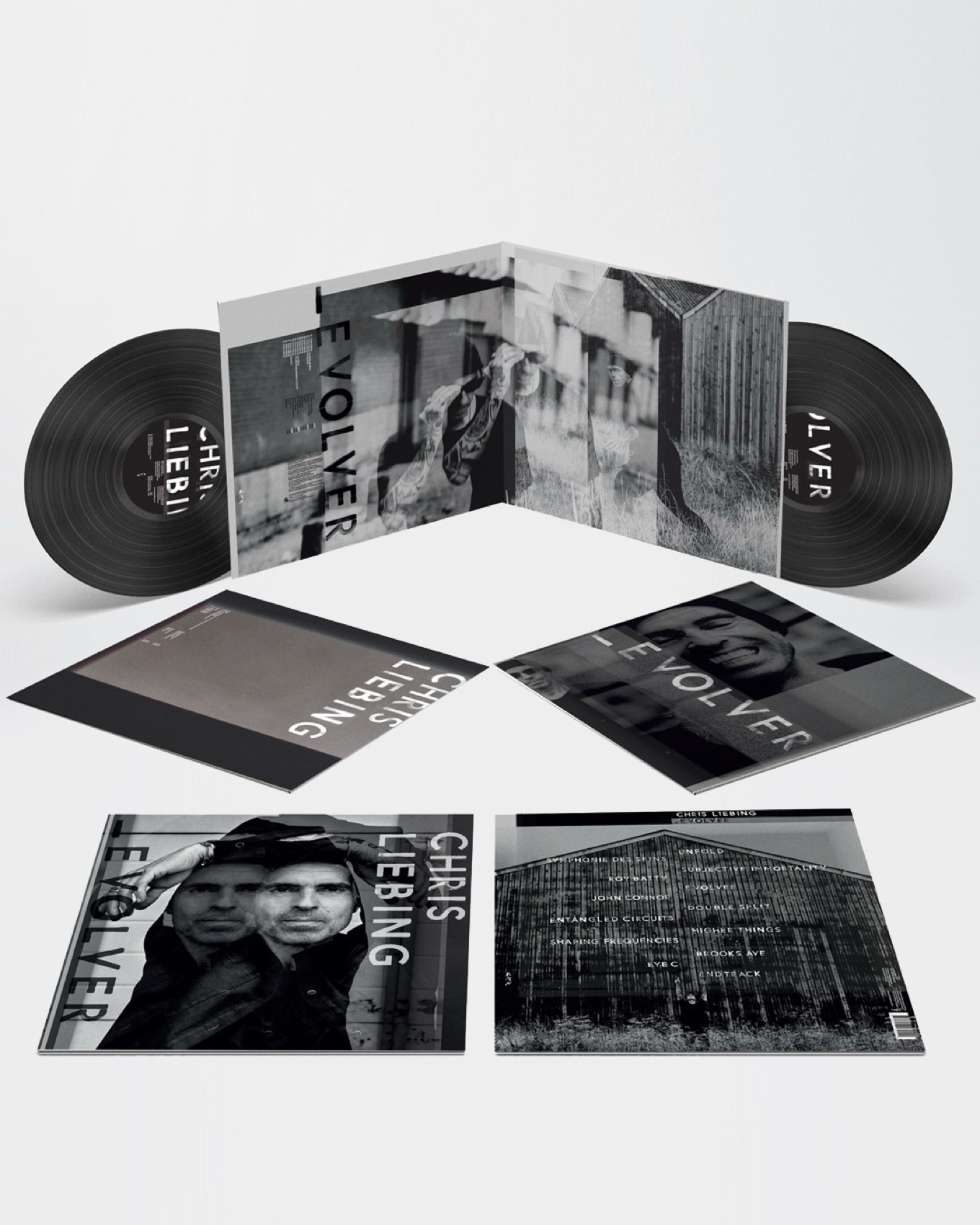
Later, I took a five-year-long break from releasing music on the label and focused on producing my albums for Mute Records. When I restarted the label after this break, I changed the abbreviation again to Create Learn Repeat, with “repeat” meaning that I had done a lot of realization and simply wanted to continue the process. Just like you say, I completed the cycle not just once, but multiple times and I kind of understood where it took me. The realization was already there, but now I just want to repeatedly do it and focus on the respective fine-tuning. Fine-tuning I had learned over the years — not constantly trying to find new ways, but once I found certain ways that worked for me, mastering them to perfection. Now I want to become better and better at it, which was also a driving force behind my newest album. I didn’t want to reinvent the wheel, I just wanted to make the techno I create in the best possible form I’m capable of at this moment.
I think the only thing I really wish I had known at the start of the first cycle was that you can always continue and there is no end if you are truly passionate about something. You will always find a way to continue, even if things are not going according to plan. Just to keep going is success. There is no failure, only the failure of when you stop trying. Maybe knowing this back then would have given me more patience and helped me worry less.