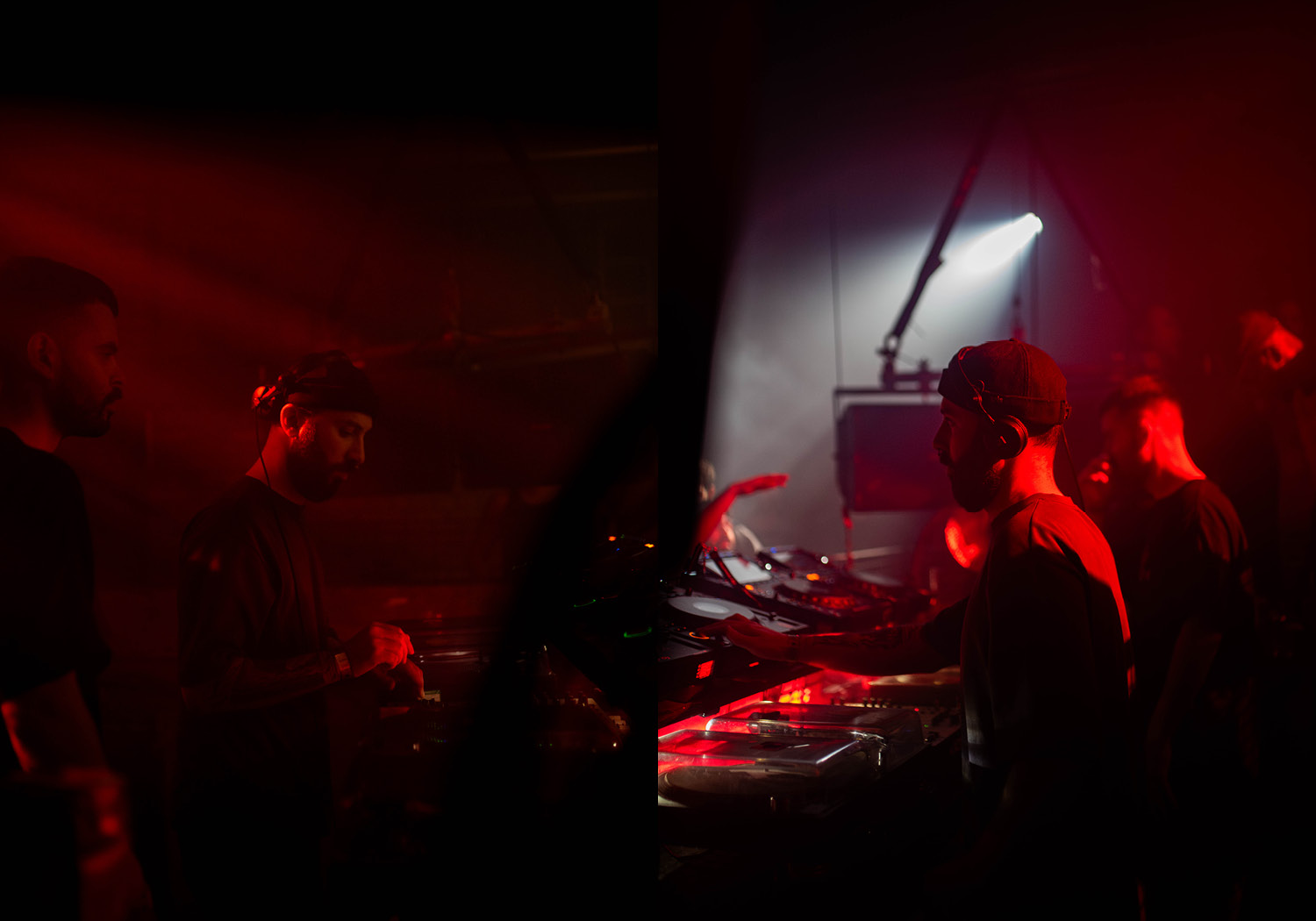
Exactly one year ago, in January 2025, you made your debut at the legendary Fabric in London as the only DJ in R3, delivering an intense all-night-long set — a once-in-a-lifetime moment. What did it mean to you? And what does it feel like every time you’re back behind the decks in a club where you spent years, like when you played B2B with Yant a few months later?
Fabric is one of those clubs that really shaped my musical identity from the very first time I stepped inside, right after I moved to London. DJs like DVS1 and Klock, Villalobos’ endless closing sets, and of course the incredible residents… I have so many powerful memories and emotions tied to that dancefloor.
Being invited to play an all night long set there was definitely one of the highlights of last year.
Playing in Room 3 feels very different from the other rooms. I remember talking with Jorge, Fabric’s creative director, about the musical direction for the night, and he described Room 3 as “a club within the club.” That really stuck with me, and it felt important to bring something completely different from my usual techno sets. It ended up being one of the most emotional and rewarding experiences I’ve had as a DJ, because I was able to really move freely across different genres that are part of my musical background, from ambient to dub, through minimal, electro and lots of house, barely touching the playlists I’d normally rely on.
The vibe in that room was incredible from start to finish, so much so that I ended up playing an extra hour to an hour and a half past the scheduled closing time. A really special synergy formed, and that’s exactly the feeling I’m always chasing as an artist, that true symbiosis between music and people, where one beat moves everyone together. It was something special.
As for the B2B with Yant in Room2, it was another fantastic and memorable experience. Andrew and I have known each other for a few years and have shared the booth in the past, but we’d never actually played B2B before. I have huge respect for him, as a producer, as a DJ, and most importantly as a person.
We had talked a few weeks before the event about tossing around some ideas and discussing the direction of the set, but as usual, with life being so hectic, we only remembered on the day that we hadn’t really prepared anything. We barely picked a couple of options for how to open the set, and that was it!
I have to say, I’m not usually a massive fan of B2B sets, but when the music and personalities of two artists complement each other so naturally, even without speaking, that’s when something magical can happen. I was so happy to play with Andrew, we clicked instantly and I think we really took the crowd on a great journey. The three hours flew by, and by the end we were in full sync. Honestly, I think we could have played another three or four hours if we’d had the chance.
I had the privilege of seeing you live twice in Milan: at the Eureka party and more recently at Le Orrende party. On both occasions, I noticed your constant exchange of glances with the audience, almost like a natural gesture or a necessity. Is that so?
It’s funny you mention that, and it’s definitely not the first time I’ve heard it. What people notice is actually a very natural gesture that came out of necessity. Let me explain.
I remember my first times playing in front of an audience in Rome, especially the many opening sets at Rashomon when I was barely 18. Promoters would put me on the very first slot of the night, but in reality I was playing for people queuing outside, waiting to get in. By the time the doors actually opened, I often only had about 30 minutes left of my set.
Still, it felt like a huge responsibility. Back then, everyone kept saying that the opening set is one of the most important moments of the night, and honestly, that’s one of the biggest truths, and something that gets overlooked far too often by promoters today. I clearly remember my hands shaking and my eyes barely leaving the decks.
Over time, with more experience, I realised that the only real way to connect and understand what track fits a specific moment is by looking at the dancefloor, feeling the energy and knowing when to push things forward or pull them back. It’s about sensing what’s working and what isn’t in real time.
Every venue is different, every crowd is different, every time slot is different, and every sound system is different. That’s also why every DJ is different, two people can have the exact same playlist and still play it in completely different ways. I feel It always takes a bit of time, from the first record you play to the moment you really feel in control of all those elements. Sometimes that connection is instant, other times it builds slowly, because you’re constantly listening, feeling and adjusting.
That’s why looking at the dancefloor becomes essential. What might look like a habit is actually something that developed out of necessity, a gesture that, over the years, has simply become natural.
What can you share with us about your future? Are there any upcoming projects or ideas you’d like to reveal?
There are quite a few things I’m working on at the same time, and in the fast paced rhythm of London they keep getting slightly pushed back, but I’m confident they’ll finally see the light soon.
We have some important dates coming up with Bloom, featuring some of the strongest lineups we’ve curated so far. The project is now split into two slightly different directions: on one side, club nights in a new 300- capacity venue, where we’ll bring our vision of techno; on the other, a collaboration with a smaller, secret space where we explore more eclectic sounds, leaning towards house, dub, and electro, styles we’ve always been deeply connected to.
We’re also expanding the project beyond a party series. Bloom will soon become a record label, releasing both vinyl and digital music, and we’ll be announcing more about that very soon.
On a personal level, I’ve also started producing more again, so after a short pause there will be quite a few new releases coming out this year.
At the same time, I’m developing another personal project, something that started as a bit of a utopia and is slowly becoming more concrete. It’s about finding ways to rebalance the music ecosystem from the ground up, touching on both social and economic aspects, and I really hope it will come to life soon.
All in all, it’s a future full of music and ideas in progress, and hopefully, very soon, all of this will turn into the present.