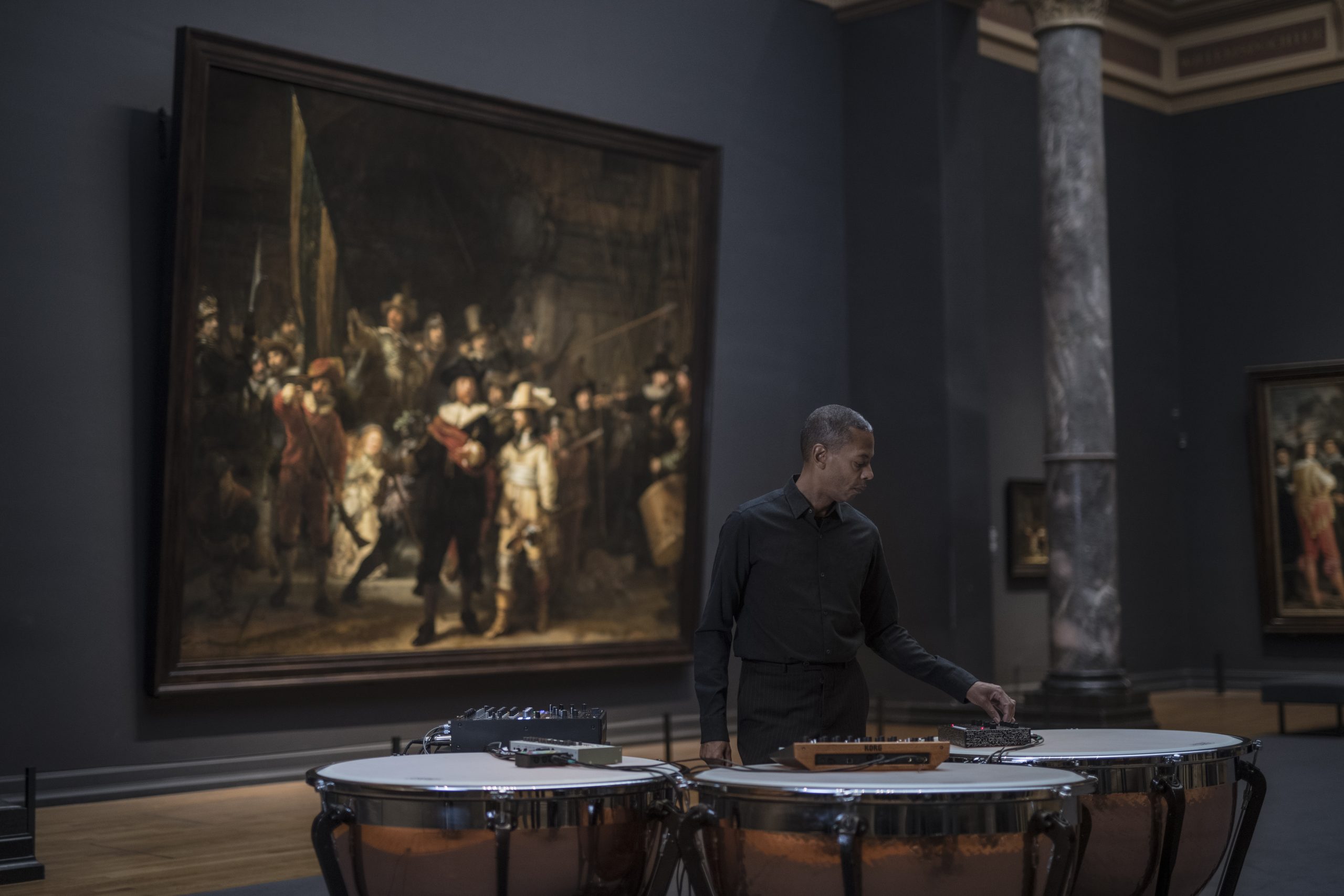
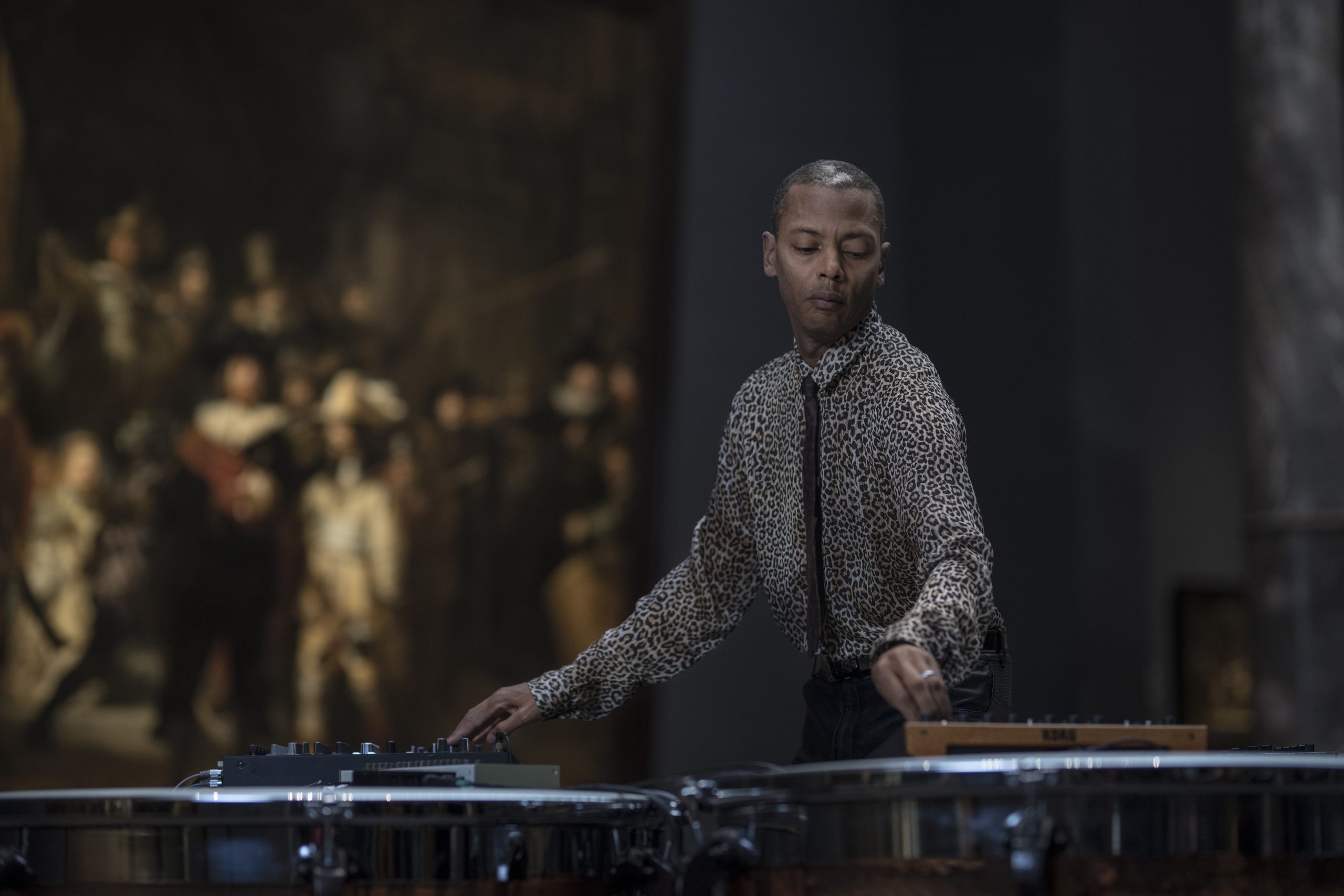
The interesting question is what music allows us to notice. Rembrandt organised a crowd into a charged arrangement of gestures, glances and bodies. Mills approaches that arrangement as something with a life beyond its frame, using rhythm and movement to extend the scene into time. The painting stays the same. Our attention has somewhere new to go.
This way of working belongs to a practice Mills has developed across decades. The Detroit-born DJ, producer and composer has moved between club culture, orchestral composition, film and visual art, pursuing the possibilities of electronic sound beyond the dance floor. His work with Audio Obscura brings that curiosity into direct contact with art history.
For Audio Obscura, the Rijksmuseum is integral to the work. The organisation has built its programme around electronic music in places with a strong architectural or cultural identity, from Amsterdam Central Station to the A10 motorway during the city’s 750th anniversary celebrations. Here, the museum’s own collection becomes the starting point for a new commission.
The film premieres by invitation in the Gallery of Honour on October 21, followed by public screenings at the Rijksmuseum auditorium from October 22 to 25. The 50-minute film is scheduled three times daily, at 12:00, 14:00 and 16:00. Admission is free and includes entry to the museum; tickets are limited and allocated by timeslot.
A painting survives through the attention successive generations give it. Mills adds his own interpretation to that history, working with the possibility that looking at an image can be an active experience: one shaped by sound, movement and the stories we bring to what we see.