The noise became sound / Charlie Sparks

Music / Cover Story & exclusive shoot by Nasty.

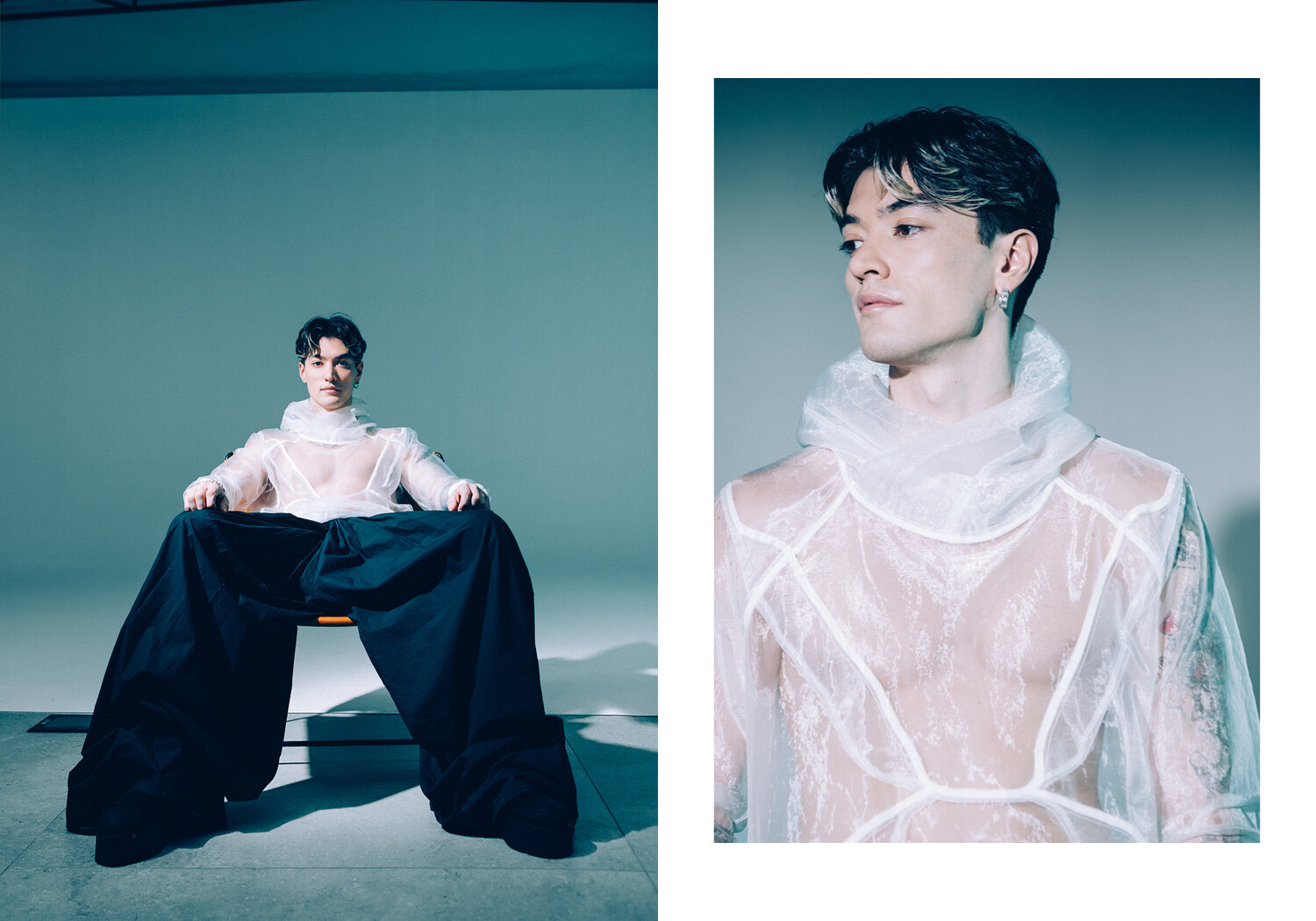
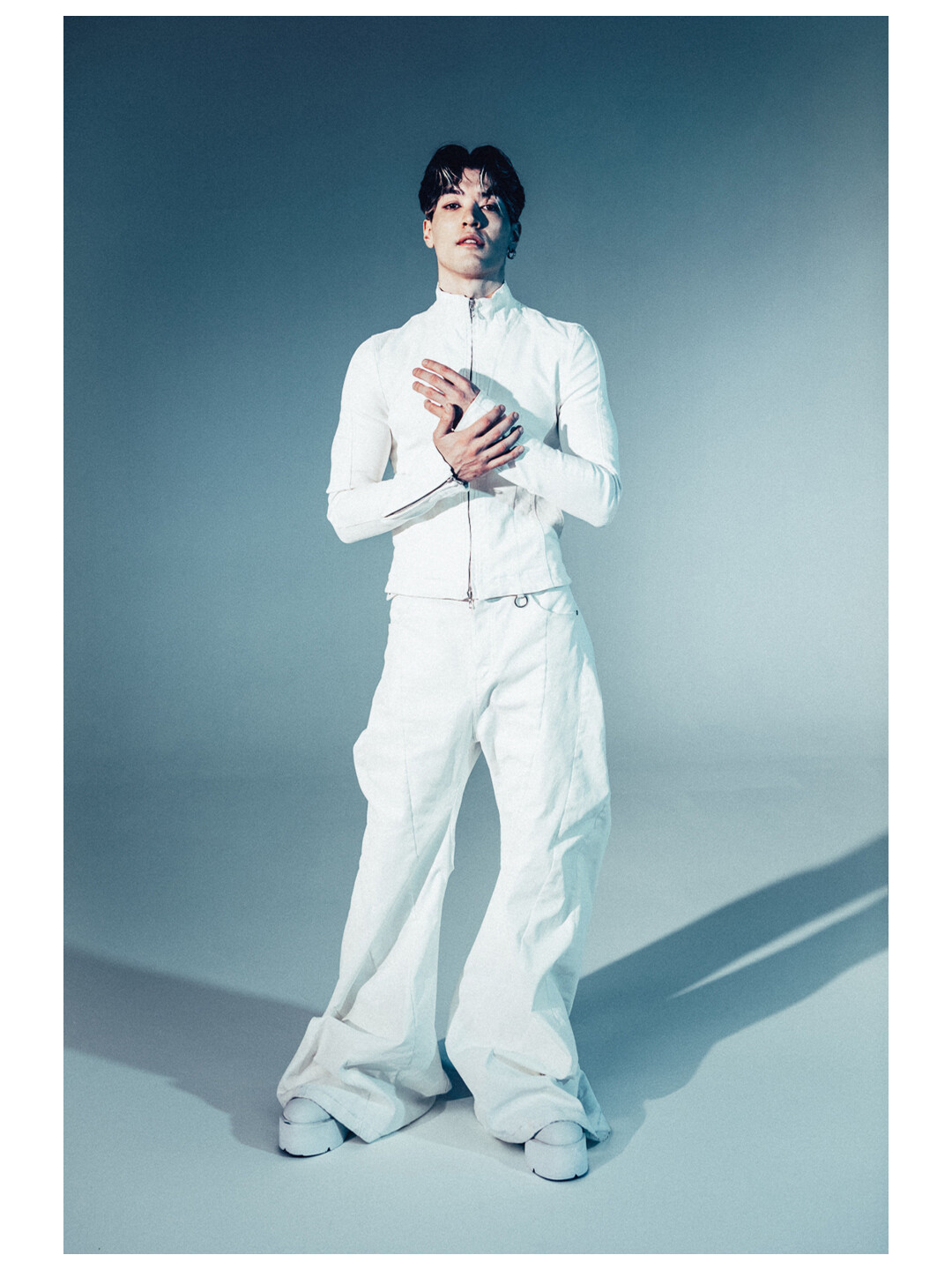
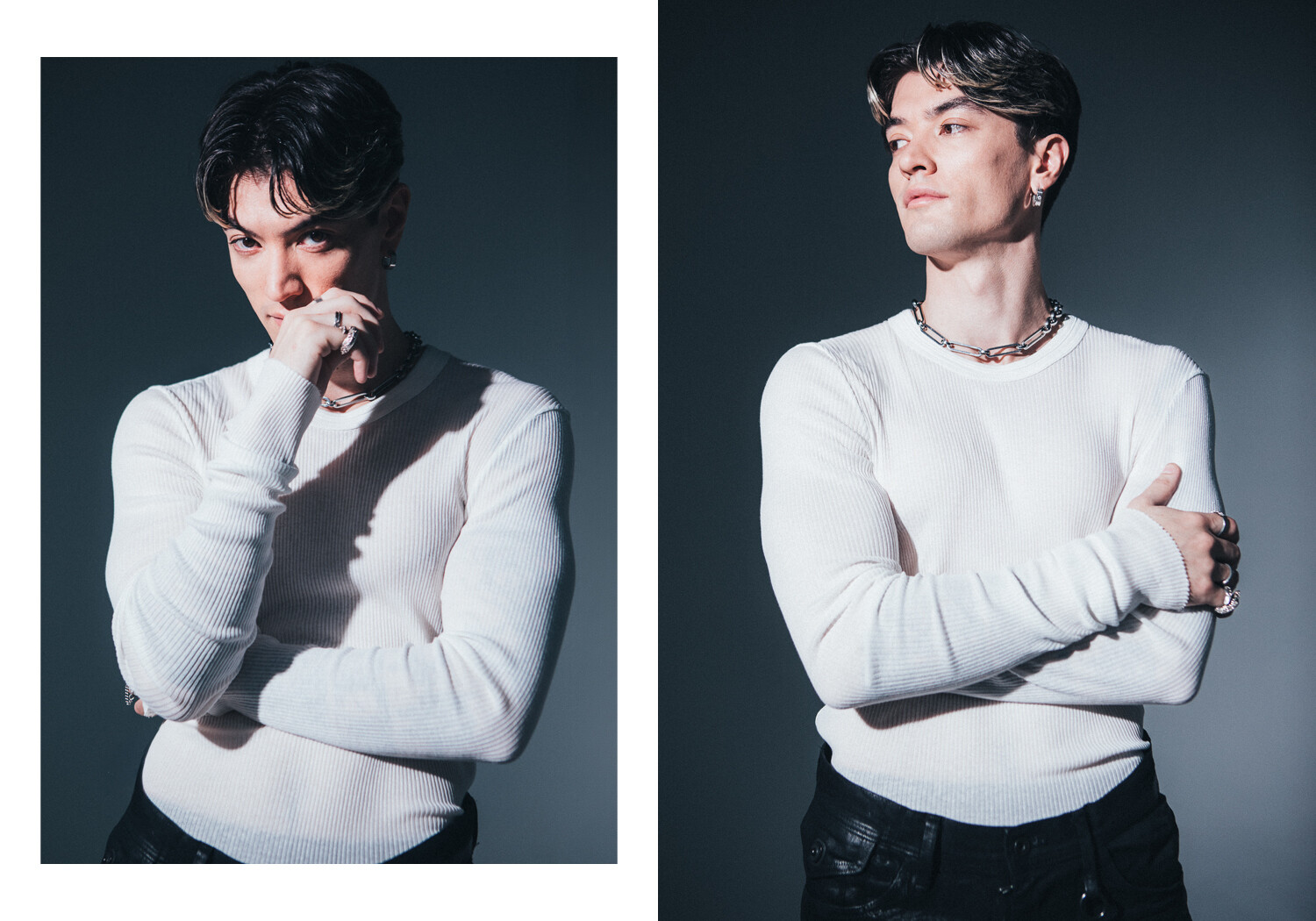
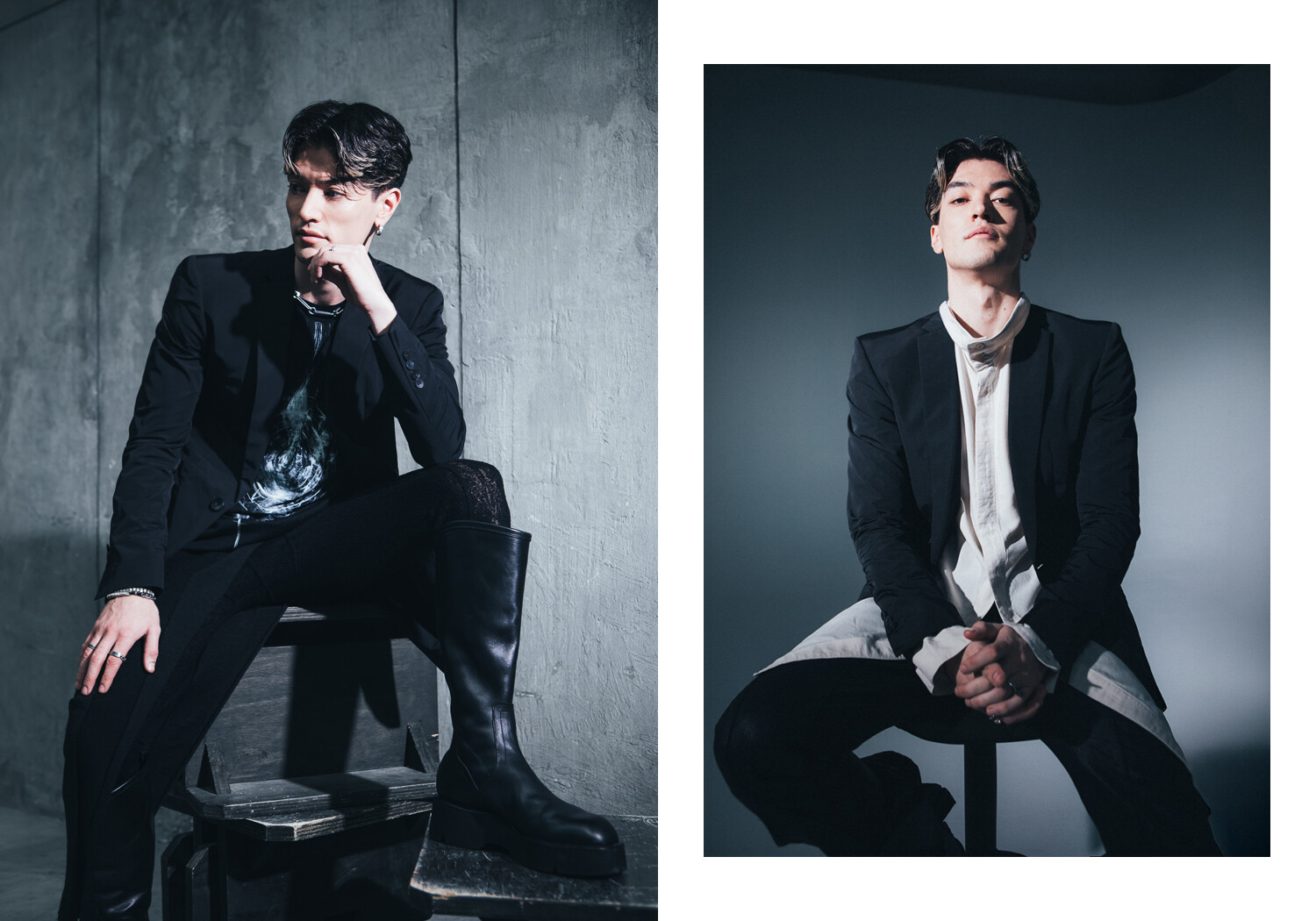
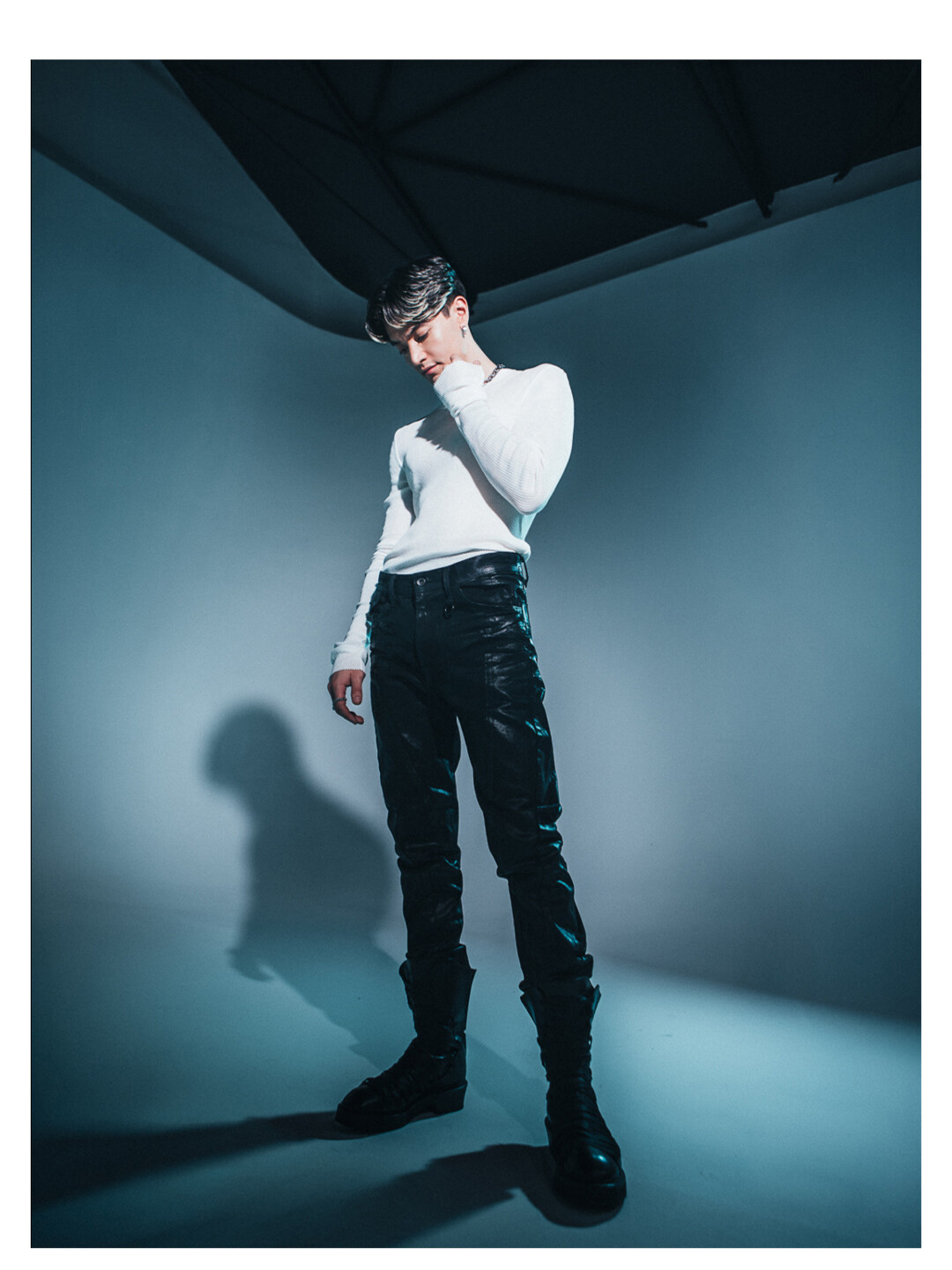
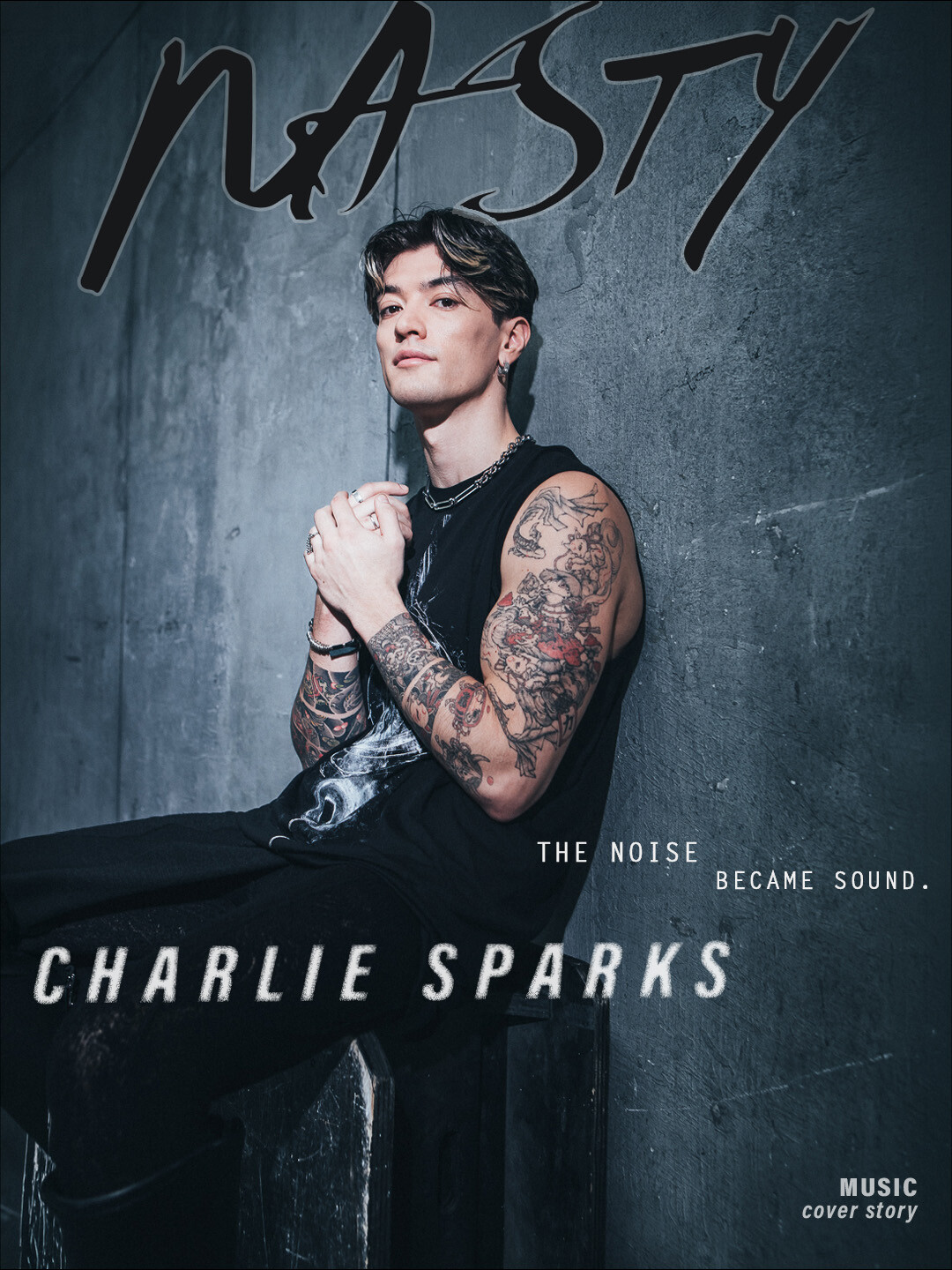
Six shows in twenty-four hours and the DAW stayed closed for a year. This is a story about what touring takes before it gives anything back. Charlie Sparks on finishing an architecture degree while techno was already winning, on Kawasaki-Daishi and Carl Cox, on the genre war he started with Hollaback Girl, on rock bottom and family and the year he couldn’t find the producer inside the DJ. “Power Up” is the new album. But this is the story of what it took to get there. Charlie here appears photographed by Marco Giuliano and styled by Anca Macavei in a JULIUS exclusive. “Power Up” is about what happens when you stop running from yourself. The shoot follows the same logic. JULIUS — Japanese, like Charlie’s inheritance — because you cannot build something original until you have stood inside everything you already are.

Your sound has been described as the love child of Armin, Indira, Landry, Lens, and Cox. You called it your favourite compliment ever. Why that one specifically — and which of those five shows up most in what you actually make. Which one are you still trying to earn.

I remember reading this with a smile on my face. It’s just the level of respect I have for all the artist’ names and to be compared to not one but all of them is such an honour. I also like that the people are understanding and loving the diversity I have within my music. I believe every one of those artists has influenced my work, but the king, Carl Cox, is one artist I will always and forever be learning from.

Charlie Sparks. You were born with it. How much of your artistic identity was shaped by the name you were given, and how much of the name was shaped by who you became.

It’s me. The music, the person you see on stage, the artist people follow — it’s not a costume or a front. It’s me in the flesh, in front of thousands of people, and the energy I give out comes straight from my heart.

You grew up in Kawasaki-Daishi and go back every summer. Most artists talk about dual identity as a resource. We want to know if it’s ever felt like a fracture — a place where you didn’t fully belong to either side. And how much of what you’ve built is an attempt to resolve that, or at least to hold both things at once.

See, I’ve never really understood when people say they never felt belonging because of being parts of two worlds. I can see why but I never understood it personally. For me it was another way to stand out, be a black sheep. It allowed me to be different from birth and one quote that stuck with me in my childhood was from one of my idols in a completely different scene. “The one thing I can be is the same as everybody else. I hate that”, Arnold Schwarzenegger.

You finished your architecture degree even when the music was pulling harder. What made you stay and finish — was it discipline, was it fear, was it for someone else. And is there anything you lost by leaving, or does it live inside everything you make.

Both discipline and pure love of architecture. It’s classed as the mother of the arts and I was in love with what I was doing. That’s what helped me finish the degree. But music, especially techno, was my first pure passion in life. I knew that nothing I did would compare to the feeling I get from it, so I had to give it my all and see before I gave up on the dream. You don’t lose it, you forget. But it’s always inside. Architecture uses materials and space to create emotions for the user. Music uses sounds. There are times where I miss it, but I know I’ll use it again. It’s given me a mental foundation for how to approach everything in life.

ELEKTRA is a community and family-like place. You went to your first rave alone. You warn artists about isolation from personal experience — and trust me on that advice is doing a lot of work. How much of ELEKTRA is for emerging artists and how much of it is for you, the version of you who needed it and didn’t have it.

ELEKTRA is for everyone and that’s the beauty. It’s a place for ravers to find new best friends and memories on the dancefloor. A place for emerging artists to have a platform and showcase their talent. A place for me to be proud of and feel part of something bigger, together. All experiences are better when you share them. I’m proud to finally be at the place where one of my goals is real: creating opportunity through talent. When I started I had no one around me to guide me. I had to find everything in the dark. If I can shine a little light, my day is made.

The first year of touring professionally you couldn’t open your DAW. A year is a long time. That’s not a creative block — that’s something more structural. What was actually happening. And when you finally went back to the studio, what was the first thing you made and what did it feel like.

When I started this journey as a producer I had the time to focus on just that, my studio and producing. When I joined my agency, Apelago, my journey as a DJ touring around the world started. Sometimes 3-4 shows on the same weekend. I once had 6 shows in 24 hours. Travelling alone, meeting new people, I had so much input during those first years that I was incapable of finding time for myself and my producing. When I first started producing I was a techno producer. Harder techno. I want to emphasise that word, harder, because my sound was never hard techno. It was harder techno, keeping the essence and energy of techno at its core. But as a DJ I discovered all these new genres in hard dance. Reverse bass, French core, gabber, bounce. That changed my sound completely, as a producer and as a DJ. The first studio session back I had to learn from the start. I was producing a new genre. It was like going back to square one, reshaping my sound and learning how to make this music again. The first EP back was Rude Boy Selecta, a mix of my old sound with everything I had been playing as a DJ.

You said your thought process over the past year was clouded and confused in both your production and your performances. That’s an unusual thing to admit publicly. What was doing the clouding. And what cleared it.

Life itself was cloudy. There was so much input and hectic energy, mostly good, all at once, that I couldn’t find my way back to the producer inside me. I got taken on this insane journey as a DJ, one who had to learn as he went. The ride was absolutely insane and still is. But over time, with small changes, I was able to compartmentalize and have a clearer vision of what’s in front of me.

You said hitting rock bottom in your personal life was a big push for your creative side. You said it in an interview and moved on. We’re not moving on. What happened? Not for gossip — because the album is described as a testament to four years of battles in both your music life and your personal life and we want to understand what we’re actually listening to.

I think what people forget is that the DJ you see on stage is also a human and also it’s the first time they experience this new journey and change in life. Yes it’s what I’ve worked towards but no one warns you how crazy it is and also you don’t want a warning you want to go ahead but it still takes a toll on your body mind and personal life. There’s the partying side where you come from the dancefloor and all of a sudden you’re on the other side while the dancefloor version of you is still your shell and to slowly adapt into a new shell which is being the DJ, the one providing the party with responsibility takes time.

There were also a lot of family issues and breaks within it at the same time that were pulling everyone apart that I had to deal with once the show was over. I learned that you never know what life is going to throw at you both good and bad. This is the beauty of life, so I just see it as no matter how bad you think it is. It will and can get better because life is full of surprises.

You stood in that crowd in 2019 and told your friends you’d play Awakenings one day. Then you walked to that stage as the act. What lives between those two moments: what it cost you, what you gave up, what you carried, what you left behind.

I gave up a normal life but I would not change it for the world. The hardest thing you sacrifice is the love you felt on the dancefloor as a raver, the feeling that made you do what you do and gave you the passion in the first place. I forgot that feeling for a long time. But I started to make sure I give myself moments to experience it again, even if it’s just one night in Pacha listening to Solomun. It’s important to remember where it came from. There’s a lot you give up. But it doesn’t feel like giving up. It feels like gaining. The passion that burns inside has allowed me to gain so much more. I’m not thinking about what I left behind to be here. I’m thinking about everything I gained along the way. Power up is just the start of that. In One Piece there’s many times where Luffy has trained and trained and won but there are moments where he hasn’t or moments where failure becomes a lesson and that’s exactly that. The only limit I had to break was myself. There’s a lot of excuses that can be said and things that need to be done but once you break past your own mental self you can only start the journey of breaking through and powering up.

You described the album as the most complete and personal statement you’ve ever made and then described making it as simply following your feeling without restraining yourself to any style or hype. That sounds simple. It wasn’t. What were you restraining yourself to before that and what finally gave you permission to stop?

It’s easy to compare in this industry and in life. Especially when there is a lot of hype and commotion around you. As a DJ you want to please the audience, but I wanted to be the artist. I want to create art that resonates in me, that will then hopefully resonate with people for a long time, not just for the moment. I was in the studio and kept thinking, can I make it like this, should I make it more like the sound that’s currently hyped. Nothing came out of it. So I gave myself a little slap. Just be you, that’s how you got here and that’s what people want. I emptied my mind of all the nonsense and just created. Like a true artist would.

2026 for you was all full throttle, straight to it, no time for messing around. That doesn’t sound like someone who just finished something. It sounds like someone who spent a long time not being allowed to go fast. What was slowing you down?

It’s always myself. I was battling myself mostly, and the lifestyle just caught up to me. I was a producer first, then I had to learn to become a DJ. It was a long journey back to being able to handle both. But that’s when one becomes an artist. It sounds like excuses. And personal and family issues were a big thing that lingered. But there comes a time when you have to just push. Excuses don’t matter anymore. It’s either do or don’t. That’s when I started the album.

The press sometimes calls you the poster boy of UK hard techno. That’s a position with a ceiling built into it. Poster boys get replaced. Have you thought about what comes after being the face of a moment and does that thought keep you up at night?

You can break through any ceiling with brute force. I like the name because it means you’re doing something correctly. What comes after is for people to see me as Charlie Sparks, a respected and loved artist just following his dreams.

Then a fan called you Baby Techno. Does that nickname bother you? Because being labelled the baby of anything in a scene built on seniority and credibility is either endearing or condescending and you’ve never said which.

I love it hahah. To be called “baby techno” in an industry where you earn respect over time is a compliment and was eye-opening to see that it doesn’t have to take a long time as long as you put your mind to it. Put in the hard work and you can achieve what others have. There is no specific time frame to achieve success.

You said the one thing you’d change about the scene is the hate and judgement between genres. Who judged you. What genre war have you been in the middle of that you haven’t talked about publicly?

It was back when I started and techno was still very much techno. I was always interested in commercial pop music as well and that’s when I started to mix the two. Hollaback Girl and My Humps were the first two tracks that started a whole new judgement from the older crowd in the techno scene. I got pulled aside one time and got told off about doing this but that’s the very reason I did it. You should never tell someone what to do, especially an artist. You’re allowed opinions but in art there is no correct way that’s the beauty.

The hard techno world had a serious reckoning around sexual misconduct. You weren’t part of it. But you’re inside the world it happened in, you’re building a label, you have a platform. What do you think the scene still hasn’t properly dealt with.

The sad thing is it’s happening most likely in all areas of music, not just the hard techno scene. The scene has responsibility but I think mainly it’s down to the artist to just set a good example of how you should act as a human because people look up to us and if we abuse that power then who is going to show the way. It’s crazy to me that people have to be told to act like a nice human because that should come naturally and something you want to do.

Energy is your entire brand. It’s your nickname, it’s your label tagline, it’s how every promoter describes you. But energy is also one of the most effective ways to never have to stop. Never have to be still. Never have to sit with something. Is the energy a gift or is it also a defence?

Naturally I cannot be still so it’s perfect for me. I can’t stay in one place, I always have to move forward or be doing something and especially with my music it’s hard not to feel the energy. It’s a gift in my opinion and one I want to share with the world. I just love when the whole room resonates with the same energy of pure love and passion.

You said the album tracks walls you’ve overcome time and again from your first professional show until now. Walls are interesting. They’re not enemies. They’re things you built or things that were built around you. What were your walls actually made of? And which ones did you build yourself?

For my whole life the walls were built by others. I accepted them and knocked them down, because every time you do you come out a better version of yourself on the other side. But it got to a point where I built my own wall, from all the outside pressure and everything going on in my personal life. The wall you build yourself is the hardest to overcome. I tried to find a way through slowly. You don’t have to break it straight away. As long as you keep pushing, the wall will fall. And then you can go full pace and be the better version of yourself. I have learned a lot every time I’m at a wall. And even more every time I overcome one.

[post_title]

Credits:

Talent: Charlie Sparks / @charliesparksmusic
Photography: Marco Giuliano / @marcogiulianoph
Styling & Interview: Anca Macavei / @ancamacavei
Fashion: JULIUS / @_julius7official
Accessories: Alberto Galinari / @alberto_gallinari
Makeup: Elena Gentile / @elenagentilemuah
Styling assistant: Dima Jbara / @dima.jbara
Editorial assistant: Tuong Vi / @tuongvi.dvu

You may also like

Soundscapes vol.40 / Deru

Music | Soundscapes
A selection by Deru, American composer, music producer and sound designer Benjamin Wynn creating cinematic and highly textured experimental electronic music.

Dark Blue / Anohni at Southbank

Music | Spotlight
Jamie Macleod Bryden attends Southbank for Anohni’s “Dark Blue”. A night devoted to Lou Reed and his music “through the lens of dark blue”.

Techno with an Emotional Edge / Simone Zino

Music | Interview
In conversation with Simone Zino, the Milan based artist who’s reshaping the landscape of techno with his distinctive sound and relentless passion, solidifying his place as one of the genre’s most dynamic and innovative talents.