Turning Wounds Into Light / Ultra Sunn

EBM roots, alchemy on stage, light after darkness.

New Beat slowed everything down. Front 242 pushed everything forward. Years of Baroque training sharpened the discipline, underground culture sharpened the instinct and somewhere in between Ultra Sunn found the frequency that became their own.

You’ve described Ultra Sunn as a safe space. People write to tell you the music pulled them out of depression. Your shows are loud, dark and physically demanding. Safety in that room doesn’t look like comfort. What do you think is actually happening to someone in there?

I don’t think we’re creating a safe space because we avoid darkness. I think we’re creating one because we’re willing to walk through it. ULTRA SUNN probably began as a way of healing ourselves. We all carry wounds. For years I lived with severe anxiety, eating disorders, and I reached a point where simply existing became incredibly difficult. I was hospitalized, and I remember feeling as though I had reached the very bottom of my own abyss. Maybe, that’s where something changed. Once you’ve touched the bottom, a different kind of desire appears, the absolute thirst to rise again, to return to the light. Since then, that’s become the heart of what we do. We take raw material and through music, movement, sweat and complete presence, we try to transform it into something that lifts us. It’s almost an alchemical process. It asks for a certain discipline, even a kind of sacrifice, physically and mentally. Every concert is a passage. We willingly step into the darkness together, hoping that somewhere in the middle of the night, something begins to shine. What matters most to me happens in the eyes. I spend a lot of time looking at people during our concerts, because that’s where the real conversation begins. If people leave feeling lighter, it’s because, together, we uncovered something that was already there.

You’ve described the advice Front 242 gave you as invaluable. That’s a strong word. What did they tell you, and why does it still matter?

Front 242 have a purity in their work that very few artists have. There is no compromise, everything feels completely true, and that’s what struck us the most. Our conversations were mostly technical: how to build an album, how to push the energy further on stage, how to dare more and break out of your own limitations. Their advice was incredibly liberating. We probably haven’t applied every single thing religiously yet, but those words stayed with us. Beyond the music, we recognized a certain sense of humor and a way of seeing things that felt very familiar. What impressed us most was their absolute focus before stepping on stage. That purity of intention, that commitment to the art, is something we deeply admire.

EBM and New Beat are Belgium’s gift to electronic music. What did they give you specifically, not as influences, but as a way of understanding what music is for?

Sam: I discovered these genres almost by accident. They were always somewhere around me growing up, but it was when I was about 20 that I truly fell in love with them. There was a legendary club night in Brussels, in the club that felt like a second home to me, where DJs from the New Beat scene were playing records from that era. I discovered this slow, strange, hypnotic, dark, sexy and incredibly free music. It felt completely different from anything else. When I came home at 8 AM, I only wanted one thing: to go back into the city, visit record shops, ask questions and buy everything I could find. At the time, almost nobody cared about this music anymore, and some shops had piles of forgotten records collecting dust. They were almost worthless. Later, I learned that even the birth of New Beat came from an accident a record accidentally played too slowly on the radio. I love that idea that sometimes the things that change your life come from something higher.

Gaëlle, you’ve said you think of songs as clothes, designed to be felt on the body. What does the new album feel like to wear?

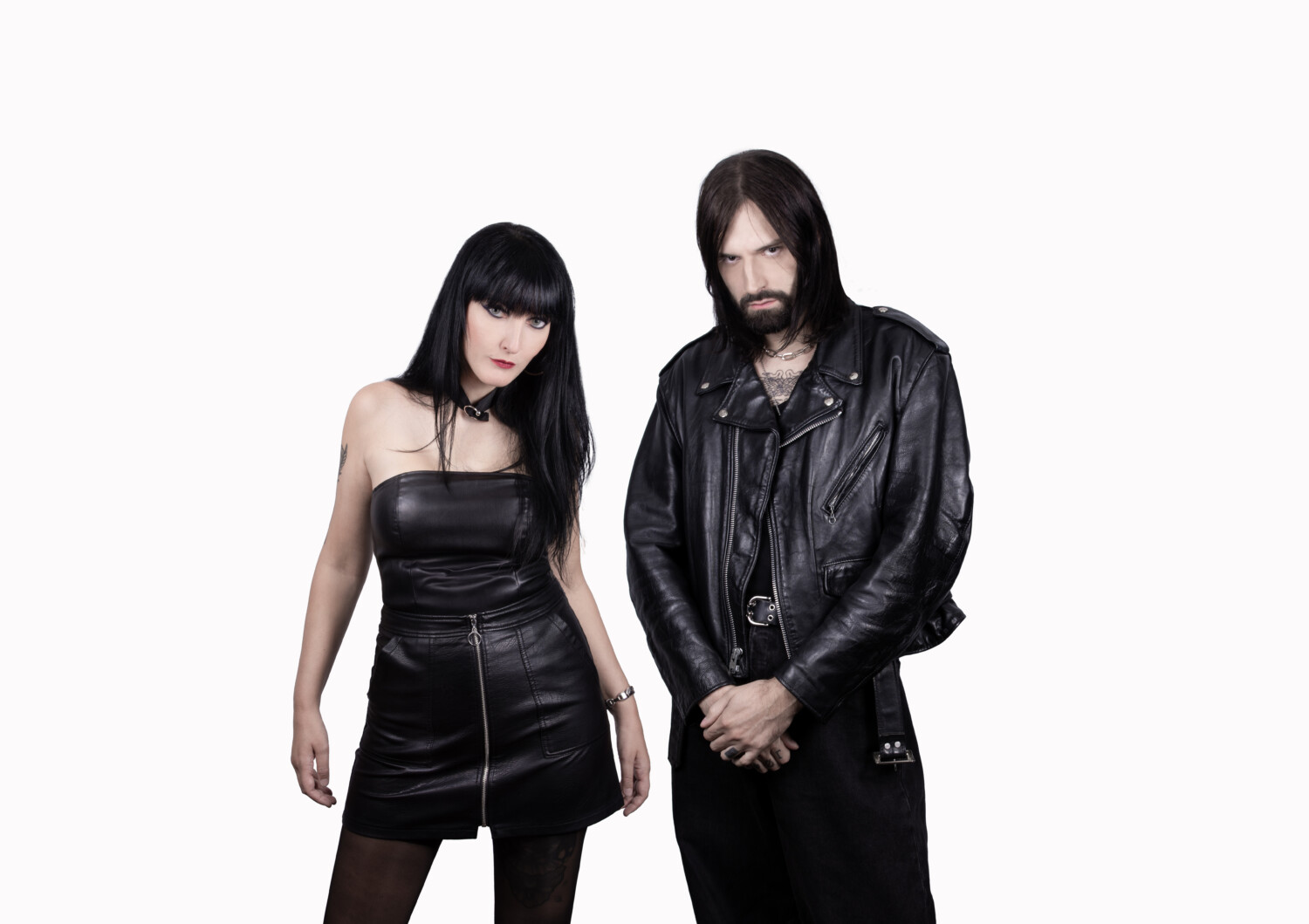
Gaelle: it’s true, we use this idea a lot in our creative process. A song has to fall on you like a garment, like a fabric that naturally takes the shape of your body. This second album feels more combative. It’s like wearing an armor. We drew a lot of inspiration from fantasy worlds, old vampire stories, and 19th-century romanticism. There is something dark and protective about it. Once you remove it, underneath there is something magical: vulnerability, strength, imagination and transformation. You’ve said that turning feelings like betrayal and violence into something explosive on a dancefloor feels like a victory.

What do you think happens to a person when they dance while holding something that once broke them?

Yes, this is probably the most powerful moment. Dancing is a way of dissolving into sound. You enter an invisible current that carries you somewhere beyond yourself. You feel stronger and beautiful.

Gaëlle, you came to this through classical piano, your training built on structure and resolution. Sam, you came through years of bands, with structures built on feel and instinct. When those two approaches pull a song in different directions, who wins?

Gaëlle: My journey was also about unlearning many things. Playing synthesizers is a completely different world from classical piano. I loved the freedom, the exploration, and the more delicate work of shaping sound. I think classical training gives you a certain way of listening, an attention to detail. Over the last two decades, I’ve spent my life going to as many concerts as possible: rock shows, raves, classical concerts. This is actually something Sam and I connected on very deeply. We both have this endless curiosity for music.

Sam: It’s true. As a child, my dream was to become a professional harpsichord player. I think my parents weren’t necessarily excited about the idea of having a musician as a son, but they still took me to many concerts, and I was fascinated by Baroque music. Handel, Bach, Rameau, Scarlatti, Dowland, Vivaldi, Saint Colombe… Eventually, I felt this urgency to create music myself. I bought a guitar, and that became my entry point into actually making music. Playing in bands when I was younger taught me so much, and most importantly, it introduced me to some of my closest friends.
I like to compare music to navigation. Some people learn through the navy, with discipline and tradition. Others jump onto a pirate ship and discover things through instinct and adventure. Both are demanding paths, and both are valid. To answer the question, nobody wins, because there is no battle. Very quickly, those two worlds meet in the same place. In the end we are workin on the the same ship!

You list Beyoncé and Underworld as influences. What do those two have in common?

Those were influences that guided us especially during the creation of our first album, US. And I have to admit, I enjoyed seeing some people completely miss the point and reveal their own limitations by dismissing those references. Energy, emotion, transformation, and connection. That’s what matters. A 909 kick drum and some glitters that’s it!

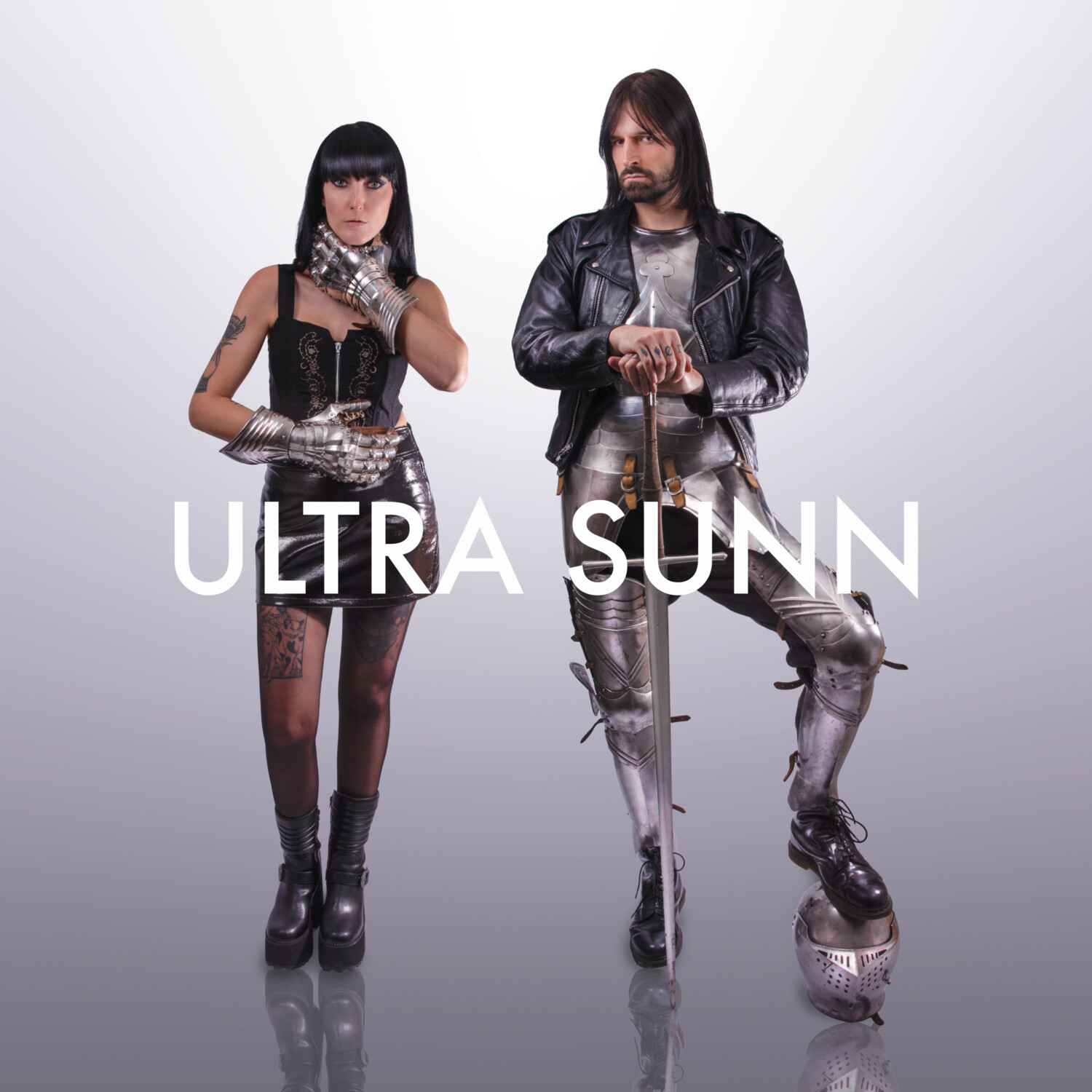
You’ve said people see before they feel, that sight is our first sense. What are you trying to give people visually, before they’ve heard a single note?

Sight is our most immediate sense.We try, with the means we have, to create the most beautiful and coherent experience possible. Our videos are choreographed to the music, and our lighting is an extension of the songs. We’ve built a setup that can adapt to every situation. In a small club, our lights create a full movement. In a venue like the Belasco in Los Angeles or the Olympia in Paris, we can fill the entire space and give the music another dimension. We spend an enormous amount of time thinking about these details, so thank you for noticing!

You project light and positivity. But light has to come from somewhere. What did Ultra Sunn have to absorb before it could give anything back?

I don’t know if we absorb darkness before we can give light. Maybe we do. What I do know is that we step on stage fully aware of how fortunate we are to be there. Just before the lights go down, we always try to keep a sense of play between us.

You often say your concerts give people strength. I’d like to reverse the direction. Who/what has quietly made Sam stronger? Who/what has quietly made Gaelle stronger?

I grew up in a house that often felt empty. My father worked incredibly hard and wasn’t around very much, and my mother struggled with addiction before we were separated from her. As a teenager, I went through eating disorders and severe anxiety. The rest of my family was incredibly demanding, it was like nothing ever felt quite good enough. Thankfully, I’ve always been self-taught by nature. I’ve always loved learning on my own, escaping into stories, which eventually led me to study archaeology. Music became a refuge, but also a fire. It introduced me to people who became my family, and it gave me a reason to move forward.
Then ULTRA SUNN started taking us around the world. Playing all around made me realize that every single concert is a gift. I feel an immense gratitude toward the people who choose to spend an evening with us. There is something deeply precious and sacred about that exchange.

“The Beast In You” fascinated me because most artists either romanticize their darkness or try to defeat it. Your title suggests coexistence. I’m curious whether you’ve reached a point where certain parts of yourselves no longer need fixing—only understanding.

The idea behind “The Beast In You” was never to destroy that part of ourselves. It was to face it. We all have imperfections. We all have demons, and some of them are incredibly powerful. But if they live within us, then they are also part of us. The question is no longer how to kill them, but how to put their strength in the right direction. The moment you stop fighting yourself, that energy becomes your own.

You often describe anxiety as something you’ve learned to live with. I wonder whether anxiety ever gave you something you secretly wouldn’t want to lose. Sometimes our deepest wounds if transuted become extraordinary perception. Has anxiety ever sharpened your sensitivity in ways peace never could?

I remember meeting a fortune teller in New Orleans who gave me an image I’ve never forgotten. She told me anxiety is like a fast-moving river. If you stand against it, it will drown you. But if you build watermills along its course, that same force can become incredibly fertile. I think that’s what this album is about. Not defeating the beast, but learning to work with its strength until it becomes something that helps you create, love, and live more fully.

Every philosophy eventually becomes an identity. The identity could eventually becomes a prison. Do you ever worry that becoming “the hopeful band” leaves less room for your own anger, confusion or resentment?

I studied ancient texts, especially Homer, and one of the greatest lessons I took from The Odyssey is that fulfillment lies in movement. Odysseus never survives by becoming rigid. He adapts, he learns, he changes course without losing sight of where he’s going. That’s how I try to live. I have a very free approach to life. We can observe things, we can make assumptions, but I don’t like the idea of being imprisoned by a dogma, even one of my own. The moment your identity becomes fixed, it stops being alive. Travel has reinforced that feeling. Every city, every culture, every person offers you another way of looking at the world. If you’re paying attention, you’re constantly evolving. Of course we feel anger, confusion, and resentment. Those are deeply human emotions. The difference is that we try not to let them speak for us. We let them travel through us first, and we transform them into something beautiful before they find their voice. I think that’s one of the purposes of art.

There seems to be an enormous amount of discipline behind your optimism. People usually imagine hope as an emotion. Your work makes it feel closer to a practice. What rituals quietly protect the version of yourselves your audience gets to meet?

Well, it’s not very glamorous, but it’s true: when we’re not on the road, we spend an enormous amount of time in the studio. That said, discipline doesn’t exclude emotion. In fact, it protects it. More than anything, what keeps us grounded is our connection to nature. We walk a lot. We love listening to the wind in the trees, the ocean waves, watching animals, paying attention to the small rhythms of the living world. Even on tour, we always try to find time to walk. That’s how we recharge. It’s where our minds become quiet enough for new ideas to arrive. Nature has a way of reminding you that everything moves in cycles, and that nothing beautiful can be rushed.

Your music often speaks about becoming. But I wonder if adulthood isn’t actually a process of subtraction. Not adding confidence. Removing performance. Not finding identity. Outgrowing imitation. Looking back, what has life slowly stripped away that you’re grateful to have lost?

This week, we visited a retrospective of Henri Matisse in Paris. We were struck by a sentence of his that was written on a wall near his paintings: “I hope that as old as we live, we will die young.” Like Matisse, we don’t believe too much in the idea of becoming “finished” adults. We are constantly evolving, constantly being reshaped by life. We are a material that is always put back on the workbench. We keep working on ourselves to soften our edges and remove what no longer serves us. Staying young is about remaining curious and willing to be transformed.

What’s the part of you no one is allowed to see, even when everyone thinks they do?

I hope I never become completely understandable. It would be a very boring way to live!

Turning Wounds Into Light / Ultra Sunn

Credits:

Artists: Ultra Sunn / @ultrasunn
Photo: Kris Parenti, Alejandro Lomeli/ @krisparenti @a.lomels
Interview: Isabella Chiocca / @bambina___0
Editor: Anca Macavei / @ancamacavei

You may also like

Soundscapes vol.138 | Kat Duma

Music | Soundscapes
With an education in classical music and experimentation with Ableton, Kat Duma is a genre-defying artist. Ranging from noise-based industrial to hazy ambient compositions, she keeps on pushing the boundaries of what is considered pop. This playlist very well shows the diversity in her influences.

Withstood the test of time

Art&Culture | Interview
A talk with BabyNymph, a Russian producer and DJ based in Athens, on self-expression, bravery, originality, and pride. The need to enhance respect and equality is more topical than ever. June is just another excuse to celebrate the greatness of freedom. Happy Pride Month!