Leila Prosperi – You Want to Give Up the Taste of the Cherries?
The idea of beauty keeps mutating. What does it mean to you right now?
I do not seek beauty in a formal or aesthetic sense. I have absolutely no interest in creating something attractive or decorative; I reject the idea of having to please the eye at any cost. For me, beauty does not lie in how a work appears, but in the intention behind it. I believe radically in tenderness. If an image manages to make me feel that kind of vulnerability, that is when I feel touched. I cannot stand art that manipulates the viewer to elicit intense emotions in a contrived way, nor am I interested in grandiose images. I want to be moved with a gentleness so profound that it provokes almost embarrassment, a sort of modesty.
In this, I feel very close to Sappho. In her famous Fragment 16, she stands in sharp contrast to the aesthetic canon of monumental beauty imposed by the Greek culture of her time. Whilst everyone celebrated the cold, geometric grandeur of an army of horsemen or ships, she stated: ‘I say that the most beautiful thing is that which one loves’. Sappho shifted the centre of gravity of beauty away from appearance and into inner intention, preferring the splendour of a beloved’s face to all the chariots of an army. For me, this marks the birth of tenderness in art: stepping away from the chorus of perfection to defend the fragile detail.
My absolute favourite source of inspiration, something that moves me deeply, is the devotional drawings that nuns produced in the Middle Ages to depict Christ or the saints. Art history has often dismissed these drawings as naïve or unprofessional, but to me they are of absolute beauty because they exude a pure intention: a fervent and disarming desire to convey an intimate feeling, the need to give visual form to an inexplicable love.
Today, in an age dominated by an obsession with strength, performance and the immaculate perfection of social media, I believe it is an act of resistance to defend the naivety and fragility of tender things.
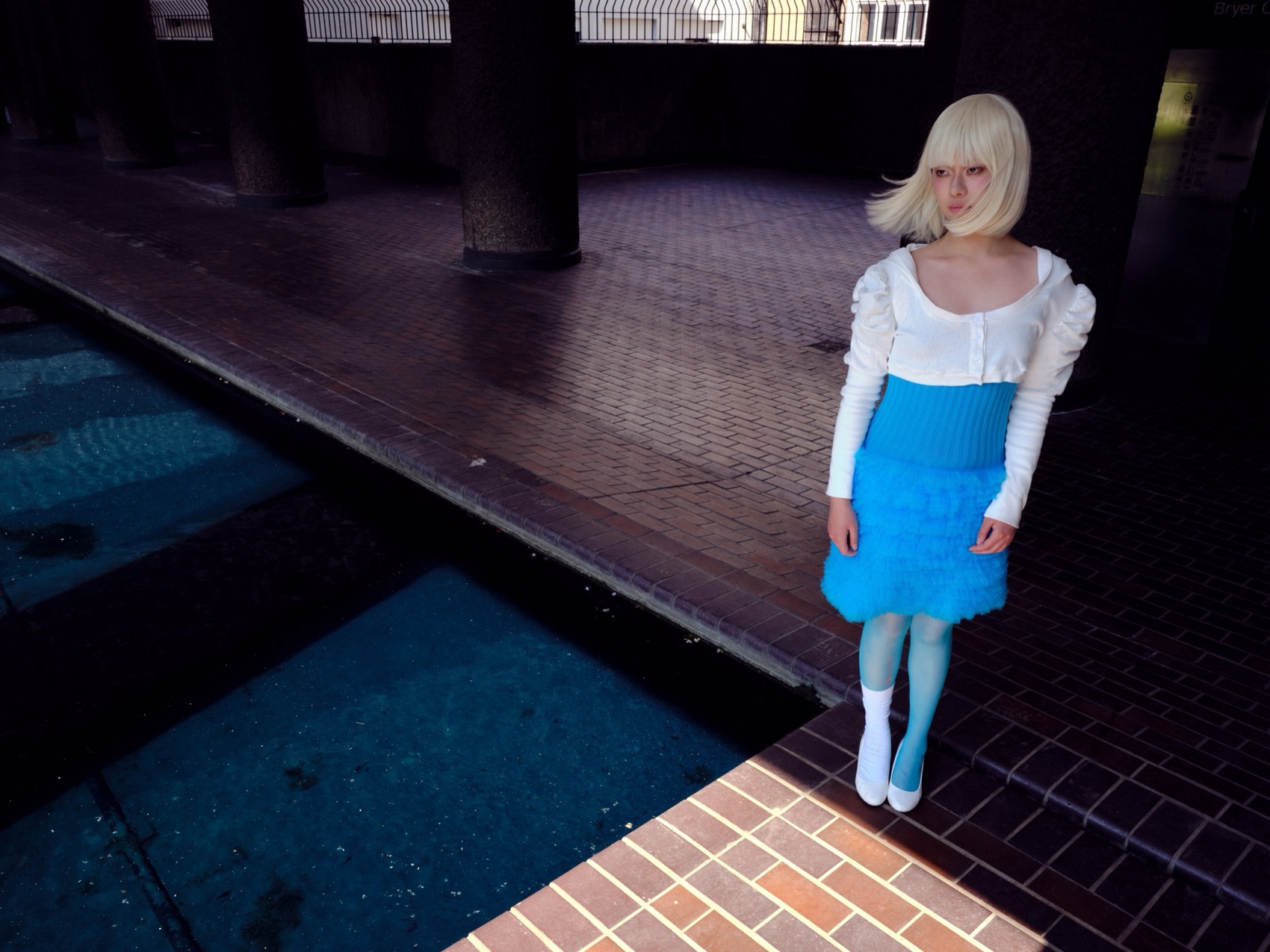
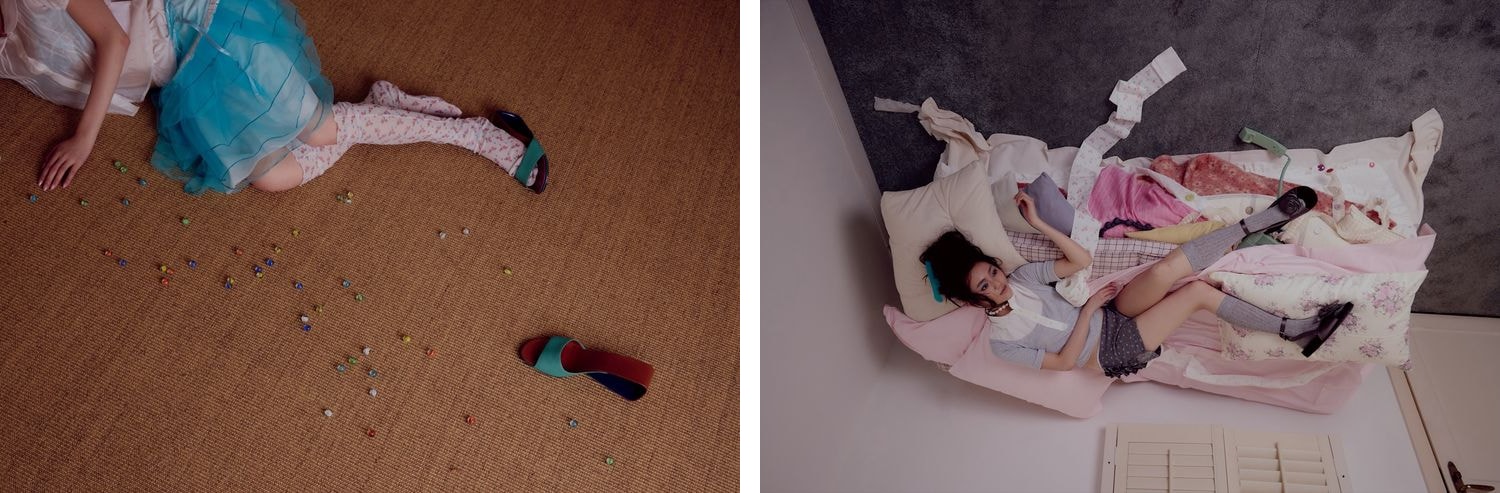
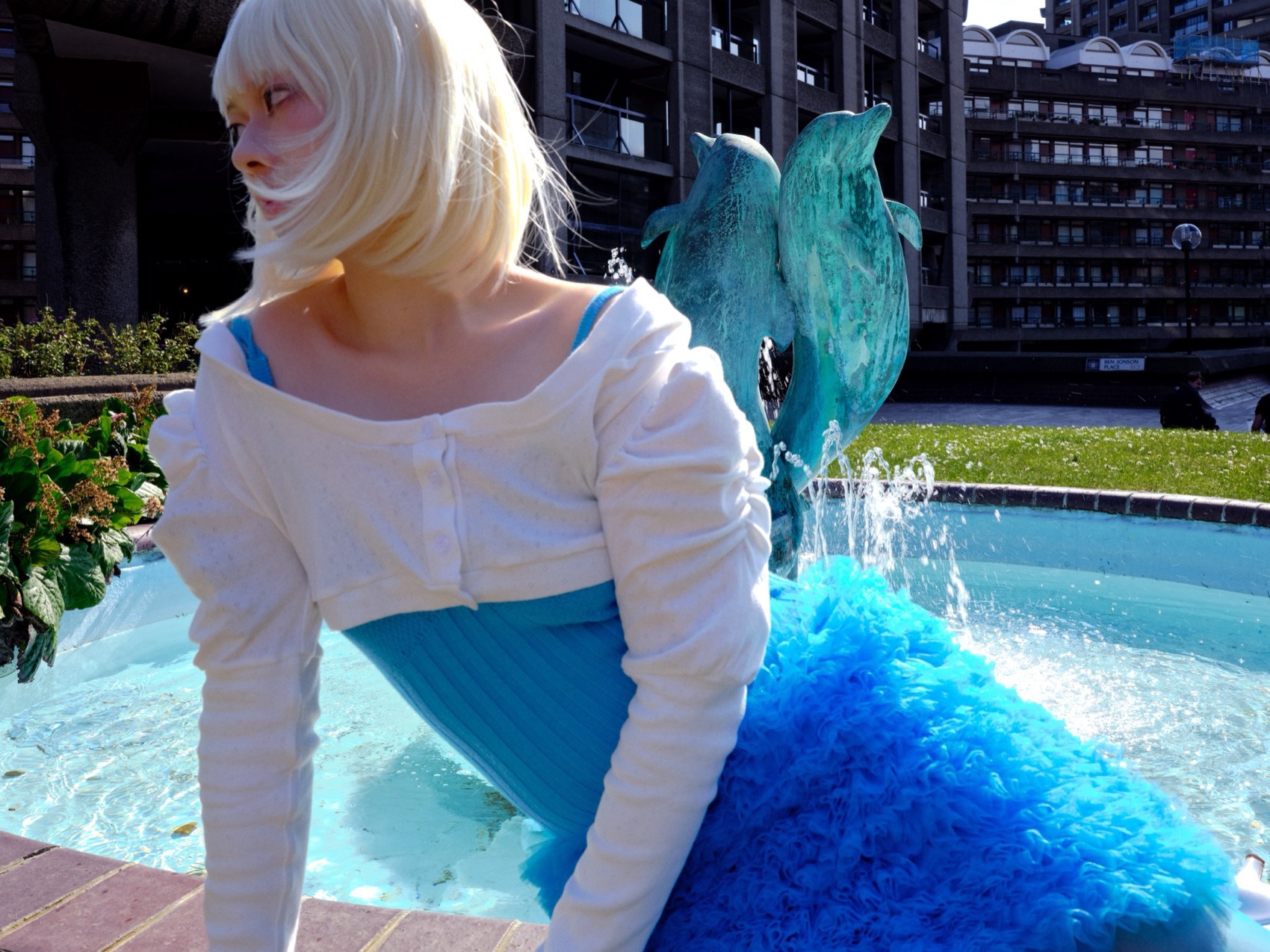
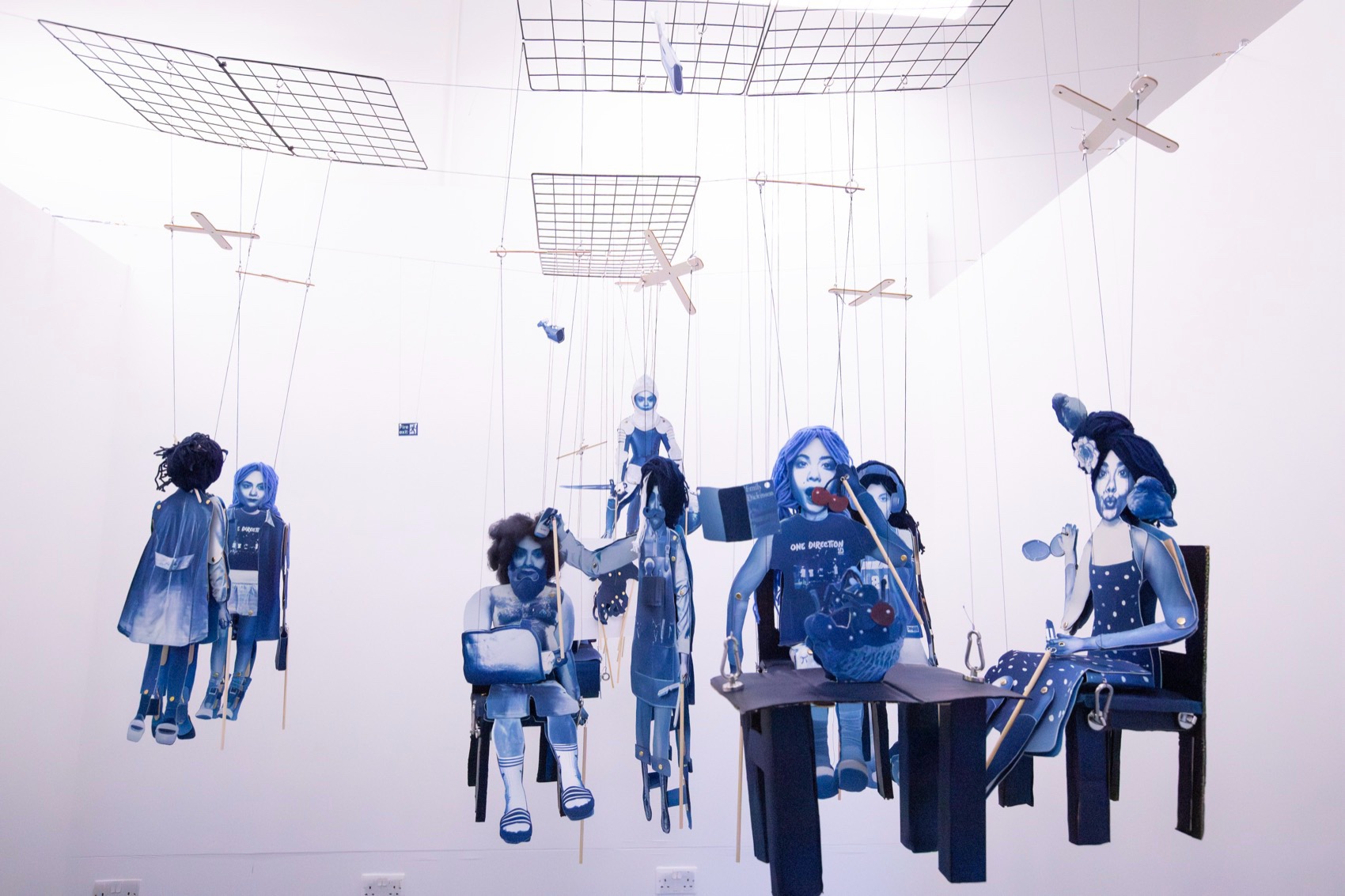
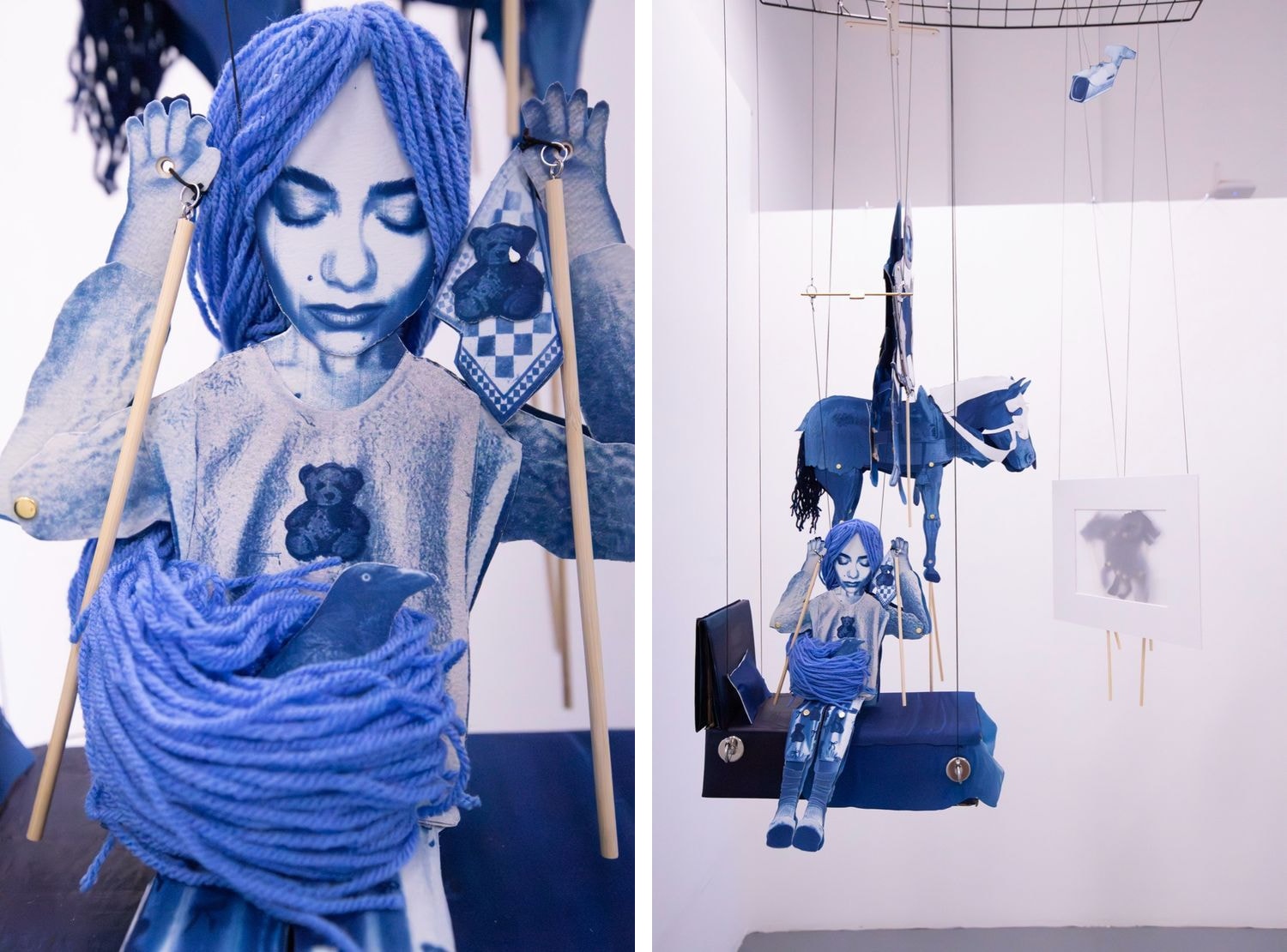
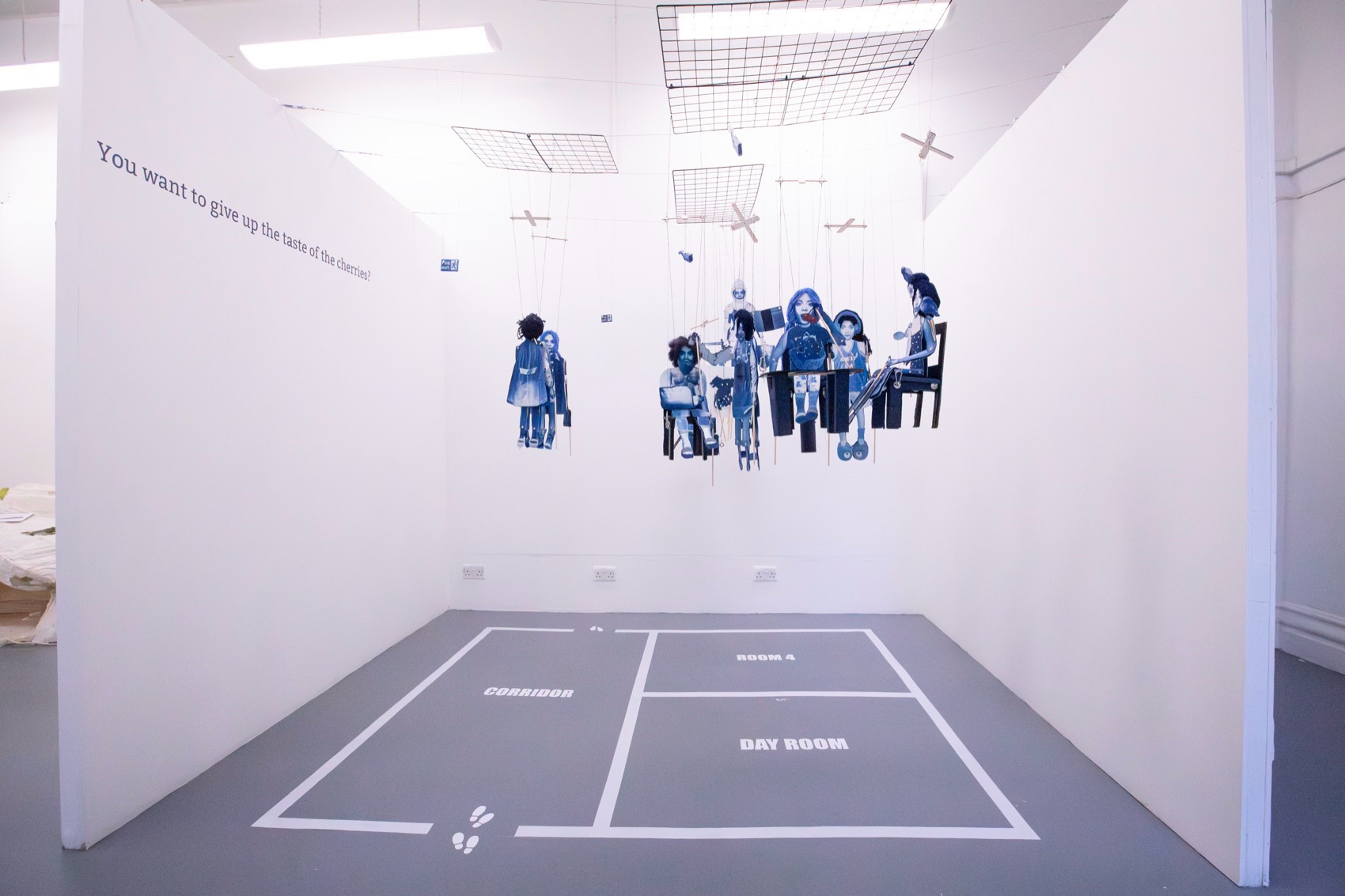
For the piece in my final exhibition, You Want to Give Up the Taste of the Cherries?, a work that explores the theme of depression, the easiest trap would have been to resort to pity or shock value. I wanted the exact opposite. I wanted the audience to encounter that pain through tenderness. The puppet format serves this purpose: it lends a fragile and poetic quality to each character, disarming the viewer. Beauty, for me, is exactly this: something that reveals itself to the eye with tenderness, almost in a whisper, without overwhelming you, and which gives you the time to discover it at your own pace.
Do you think photography still has the power to challenge the norms, expose the reality or even disturb — or has everything already been seen?
Today more than ever, images are not merely a representation, but the primary currency with which we negotiate the meaning of reality. We live in a saturated visual ecosystem, where the manipulation and appropriation of others’ images constitute our main linguistic code. In this context, photography retains its subversive and unsettling power only if it relinquishes any claim to ‘purity’ and embraces contamination by other media.
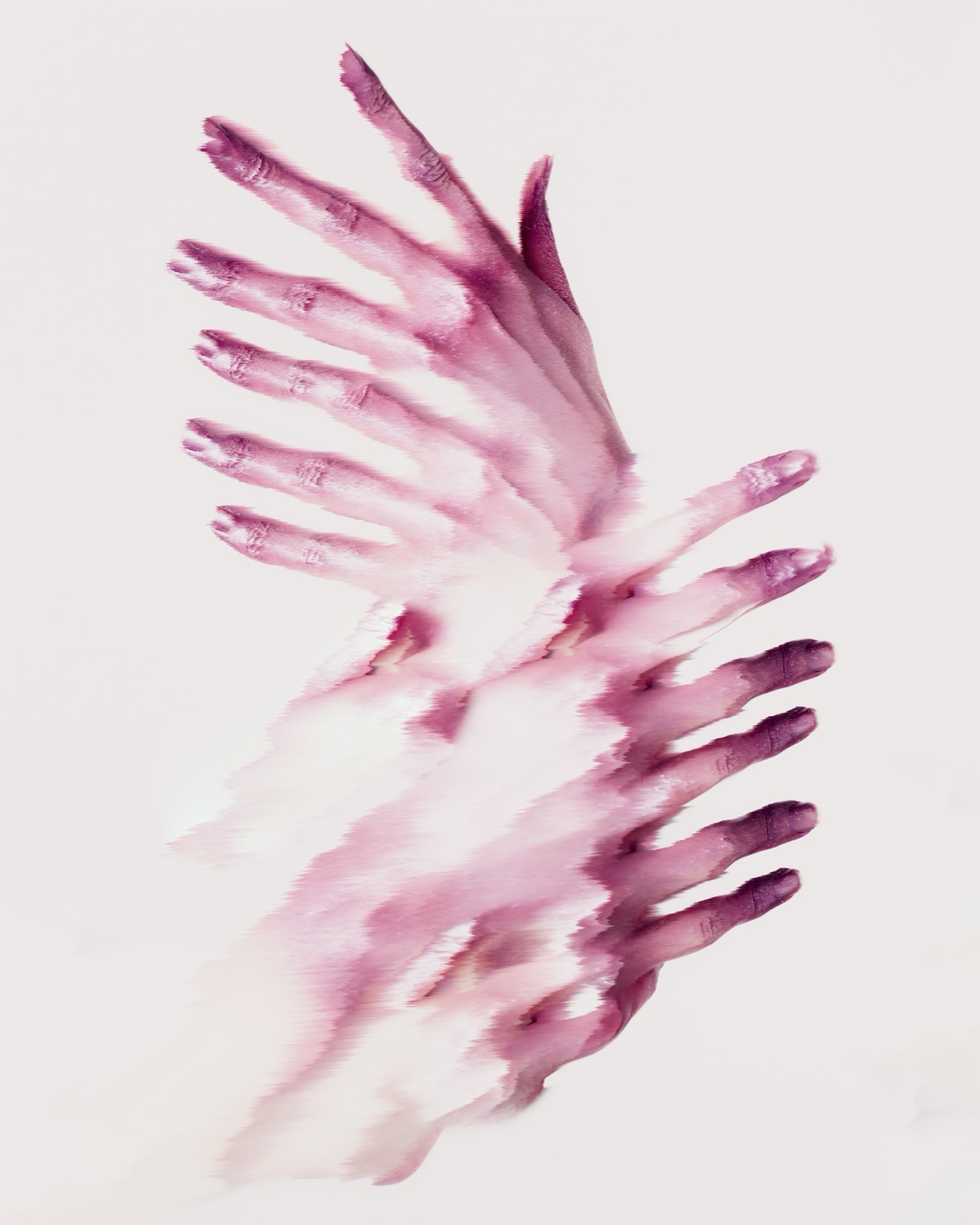
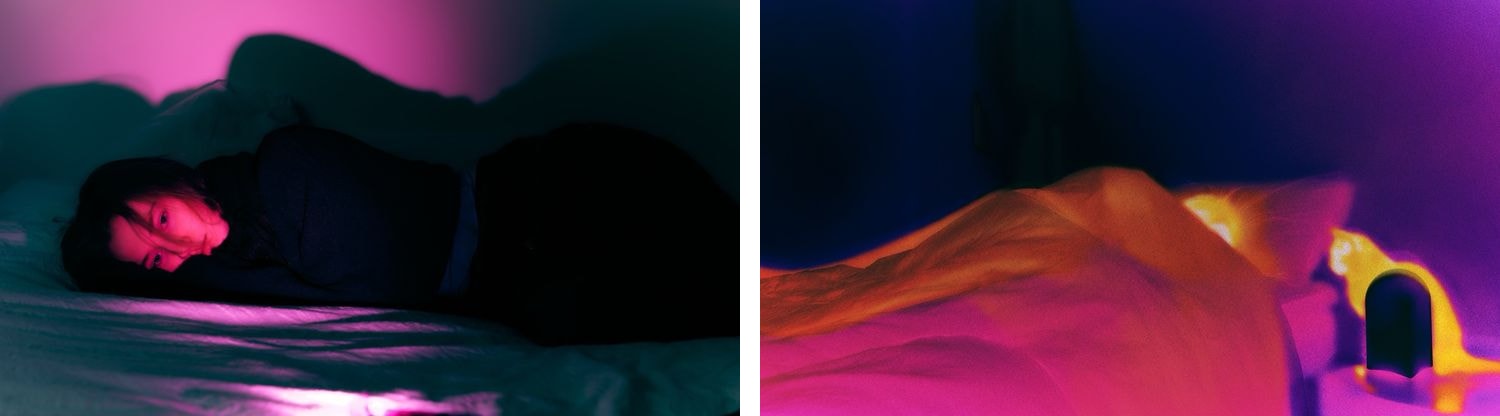
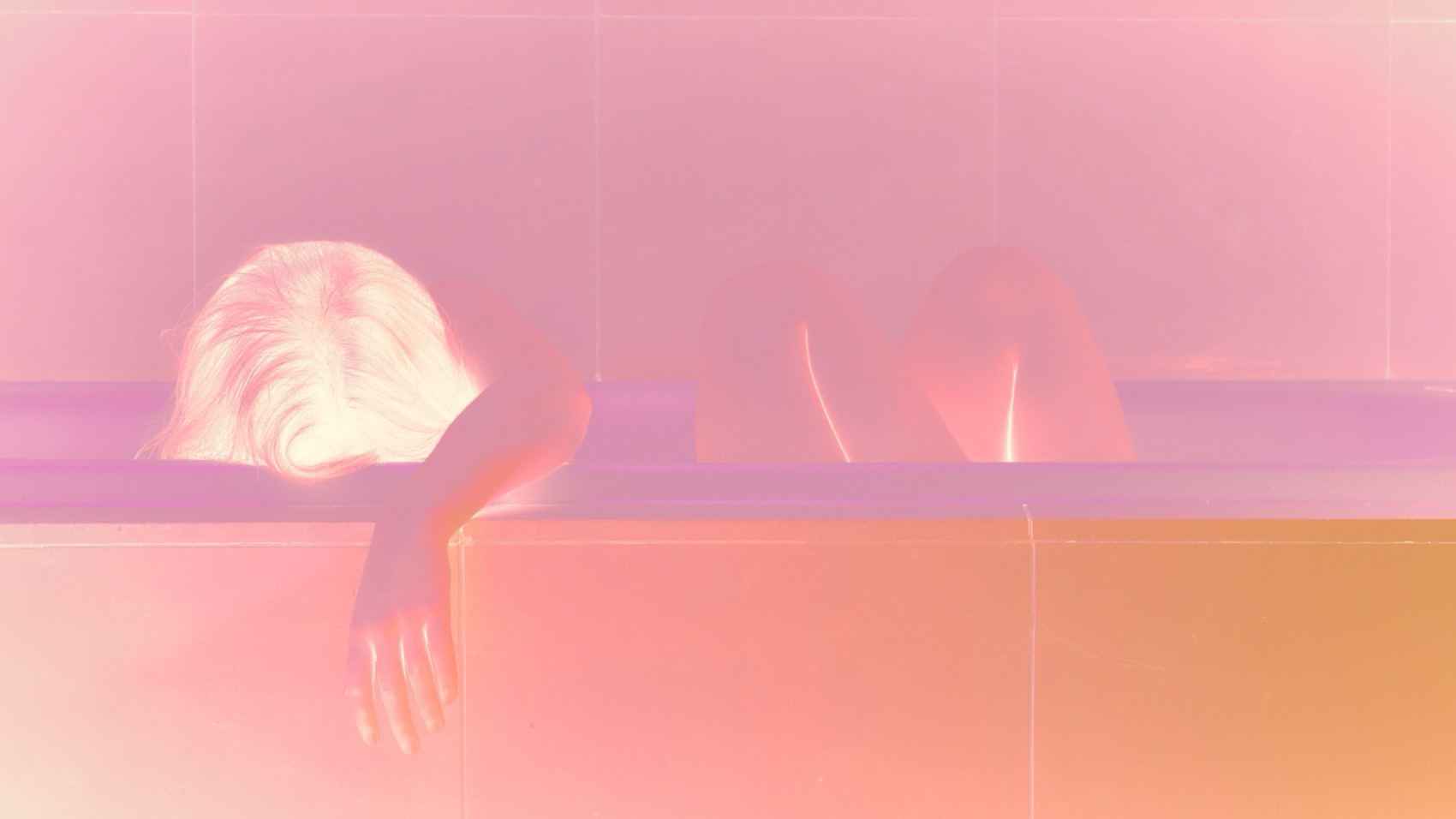
The technological hyper-definition that captures visible detail is no longer an end in itself, but a raw material. The true artistic act has shifted to post-production, editing and curation. It is no coincidence that we are witnessing a radical return to analogue photography and the darkroom: a deliberate process where selection and chemical manipulation become curatorial practice. I think of photography not as an objective document, but as an expanded syntax. Collage, for example, is a perfect example of this: an act of re- contextualisation where images function as phonemes in a personal dictionary, reassembled to subvert common assumptions and offer a different way of seeing.
This performative approach really reflects my own practice and how I’ve developed as an artist. Since I was a teenager, I’ve used the camera and a zoom lens like a shield, and as a way to observe people and places closely. Walking around with the camera let me go places I’d never have had the courage to go otherwise. It became a kind of filter that turned my shyness into a way of watching carefully and patiently, giving me access, physically and psychologically, to spaces I would never have dared enter on my own.
When I look through my archive, whether it consists of printed negatives or digital files, I do not see isolated shots, but a single, layered, trans-temporal narrative. Two images taken five years apart and on two different continents engage in a dialogue through formal and conceptual resonances. That invisible link is my perspective on the world: a constantly evolving visual autobiography that does not document reality, but questions it.
Within this process of unveiling, studying art at university was my real conceptual catalyst. In my first year, I worked mostly on darkroom processes, focusing on printing and cyanotype. The turning point, however, came during the early interim group shows. Finding myself sharing the gallery space with peers who worked in sculpture, whose monumental works occupied the space almost aggressively, altering the very flow of visitors, I felt a real friction. Against that assertiveness, my traditional two-dimensional prints, confined to the wall’s surface, seemed to almost evaporate into the surrounding visual noise.
That sense of spatial fragility radically redefined my photographic ontology. I understood that the ultimate goal of my research could no longer lie in the act of taking the photograph, but in the physical manipulation of its tangible trace. Supported by my tutors, I began to challenge the traditional rules of the medium, exploring ways to lift the image off the wall, or rather, to make it emerge from it. While my earliest experiments consisted of wall-based installations with three-dimensional elements extending toward the viewer’s space, my current research has completed this separation entirely: the images have freed themselves from their flat support to inhabit the space, floating in the room like true sculptural bodies.
How does your environment shape your visual language?
The urban landscape is my habitat, and these days I experience the world through a gaze that is perpetually filtered through photography, instinctively framing and dissecting what I see: I look at everything by cutting it into frames, thinking about how it would work in a photograph. In this process, going out for aimless walks through the streets is my main activity, and it is why I defend my solitude almost fiercely. You have to be radically alone to savour the street, to take the time to really look at things without distractions.
For me, solitude is the very driving force behind photography. The camera, ultimately, serves to put some distance between you and the world. It’s a filter, a shield that protects you from things you’d otherwise be afraid of. When I arrived in London, photographing the city was my way of coming to terms with the isolation I felt. It allowed me to be present in the world, yet safe. A bit like a modern flaneur: you wander aimlessly, observing everything, but staying one step back.
Another thing that thrills me is noticing the compositions the city creates all by itself. London is full of unintentional ready-made sculptures: rubbish dumped on a street corner, objects with no connection whatsoever which yet, by some absurd twist of fate, strike an incredible harmony. I’m absolutely obsessed with these accidental balances.
For me, street photography is this: you wait for lines, colours, empty and full spaces to fall into place of their own accord for just a single second. In that second there is a perfect climax; you snap the shot, and a moment later it all falls apart. The moment passes and there’s no point in taking the photograph any more. It’s gone. There’s something magical about that moment when everything falls into place and you’re there to witness it.
If reality is so fleeting, it’s obvious that the much-vaunted ‘realism’ of photography is a false premise. The idea of documenting reality objectively no longer works, because pure visual reporting fails to scratch the surface. I therefore prefer to embrace the surreal dimension of photography. Constructing fictional or altered scenes allows me to reach emotional truths that a documentary image will never even touch upon.
This is the same approach I use in the studio. When I combine images from different archives in a collage to construct my puppet-sculptures, I draw on the original spirit of the Surrealists and their ability to generate new narratives. I do the same thing as the street does, but on my own terms: I create a pastiche of seemingly unrelated elements which, for some strange reason, when brought together, begin to scream out a new meaning.