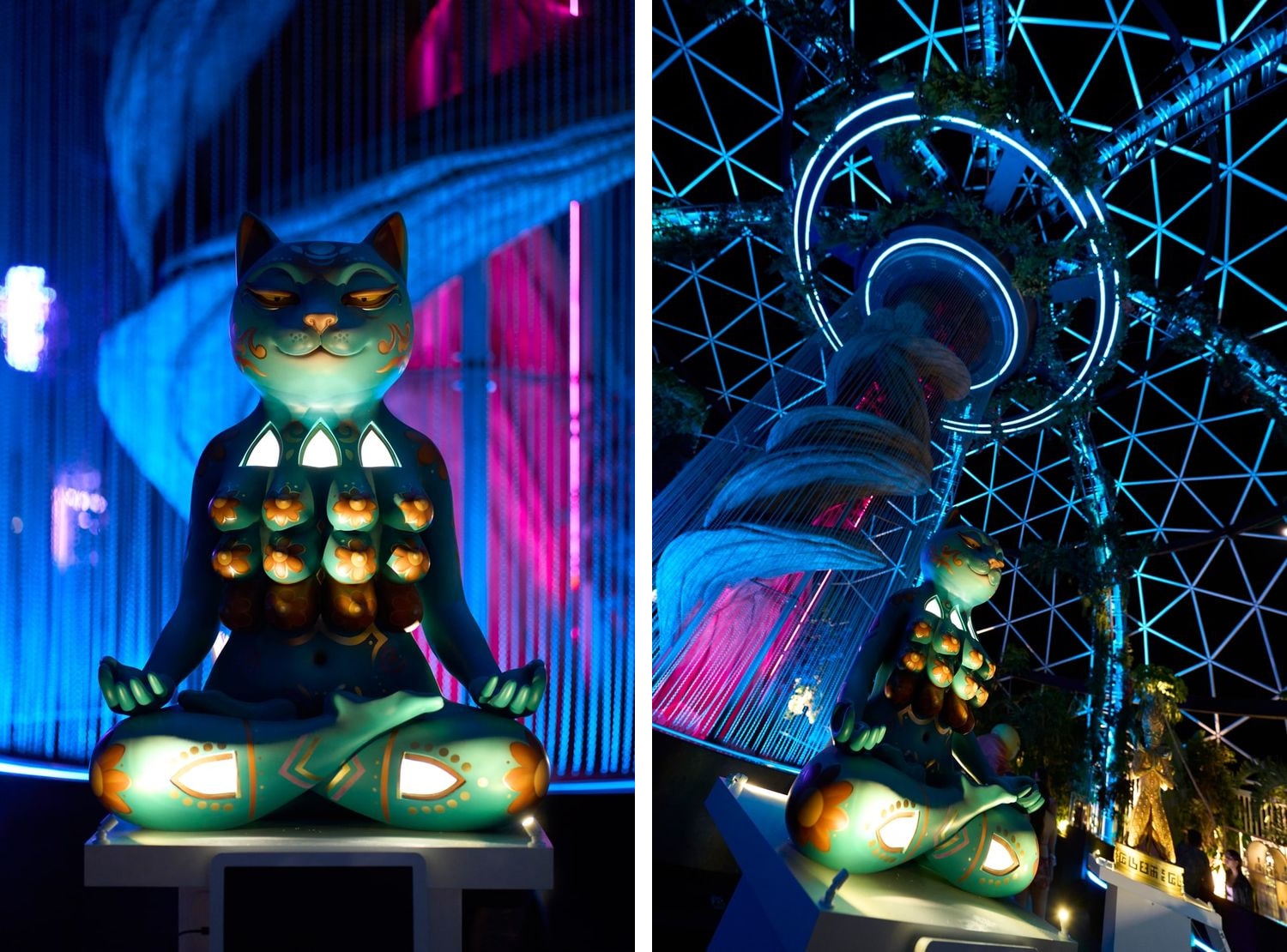
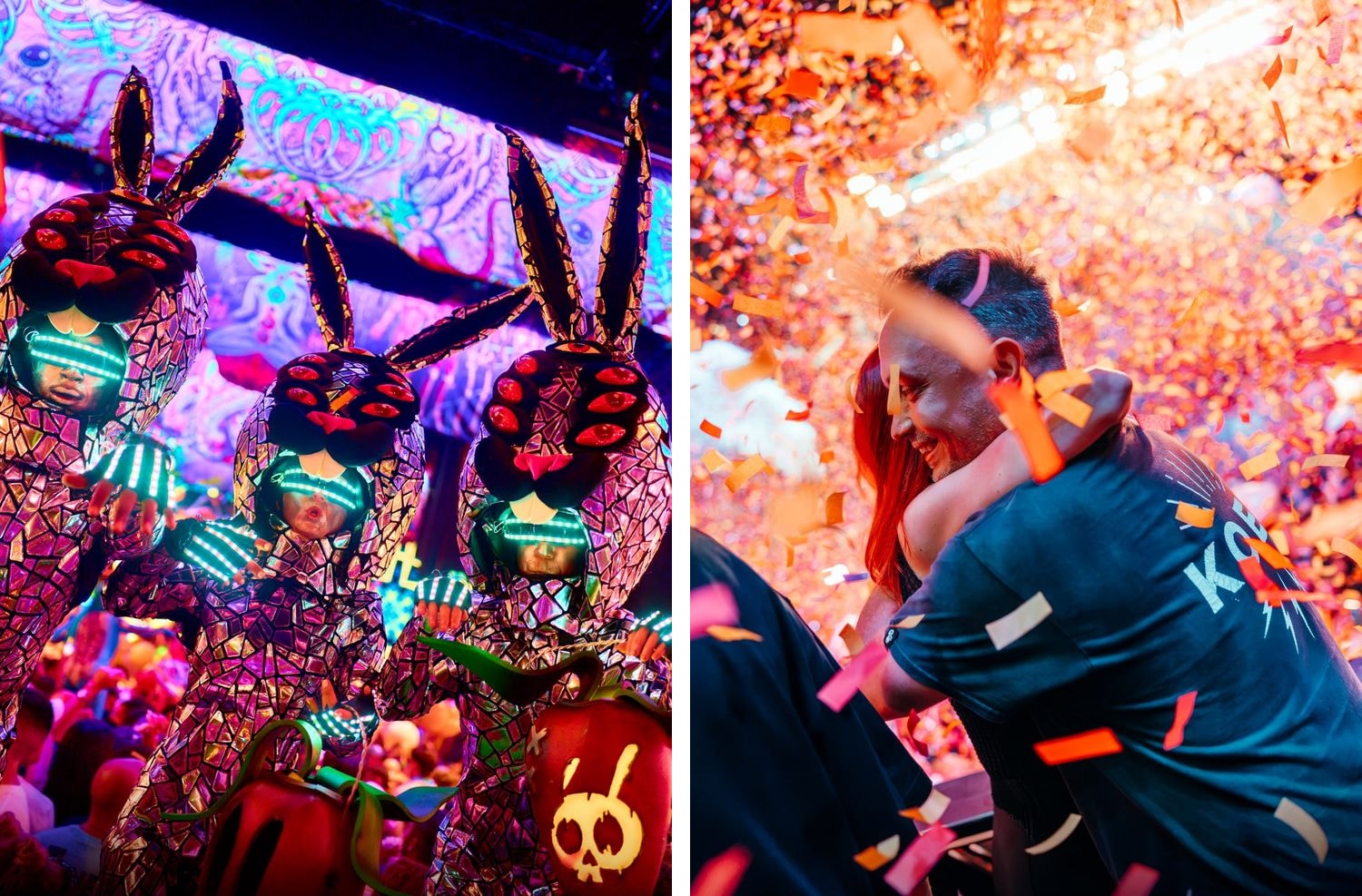
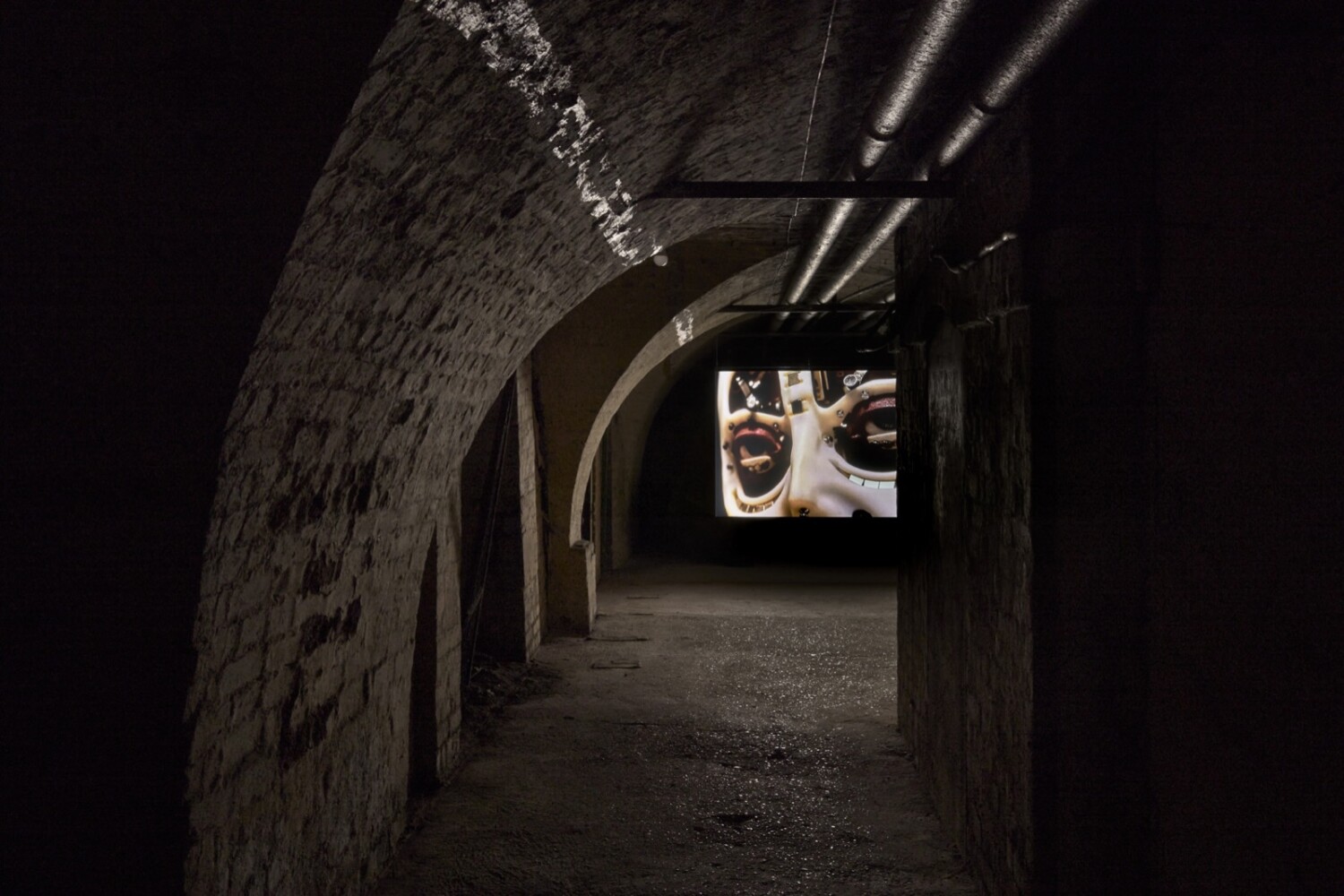
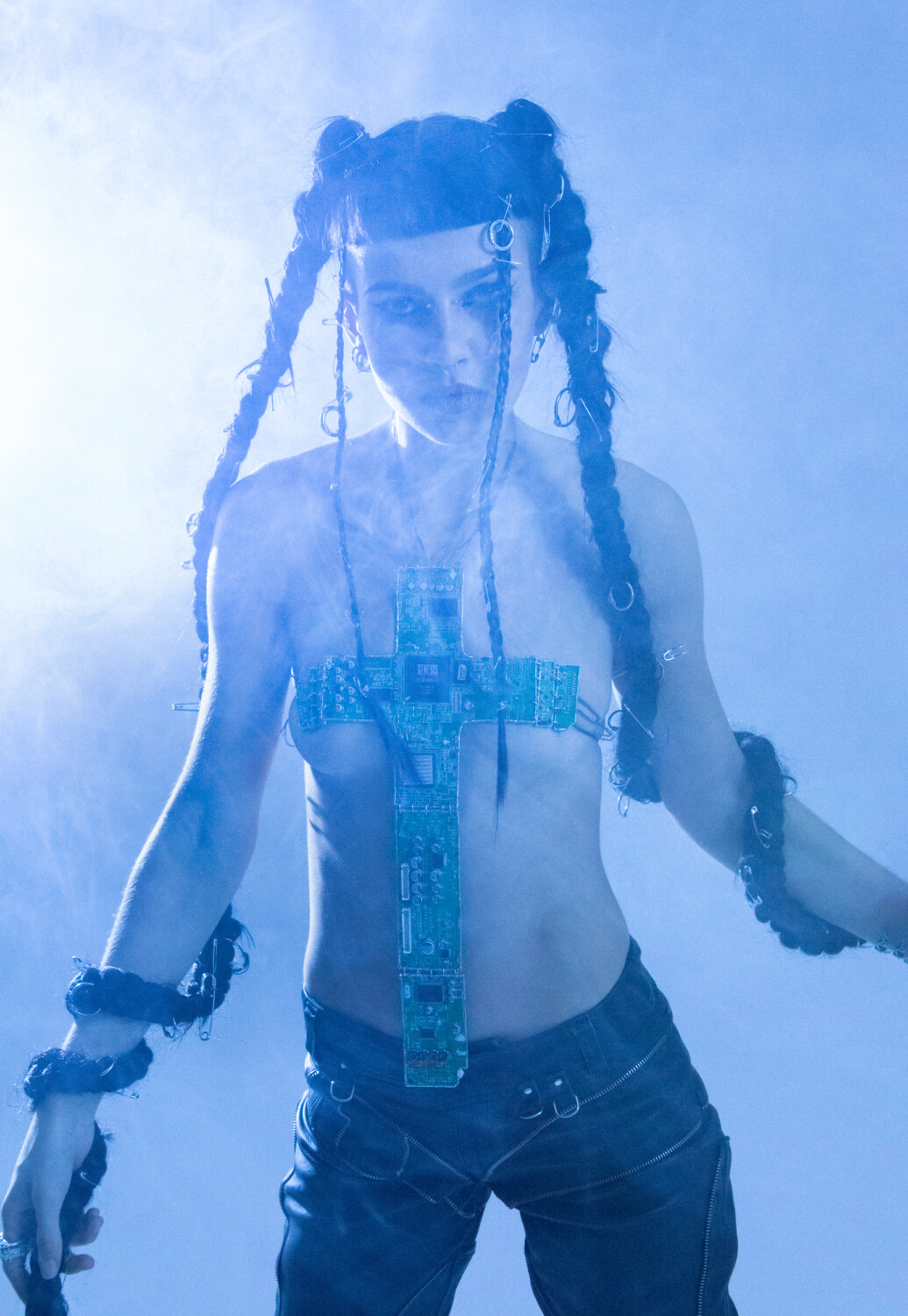
The visual language has a similarly tangible origin. In 2010, the year elrow was founded, South African artist Dan Popper taught the team how to create decorations using EVA foam, a lightweight, inexpensive material that can be cut and painted. The 2026 season opened with Bhūtarāh, a theme developed with Popper himself. The circle closed where it had begun: with hands-on craftsmanship, albeit on a much larger scale.
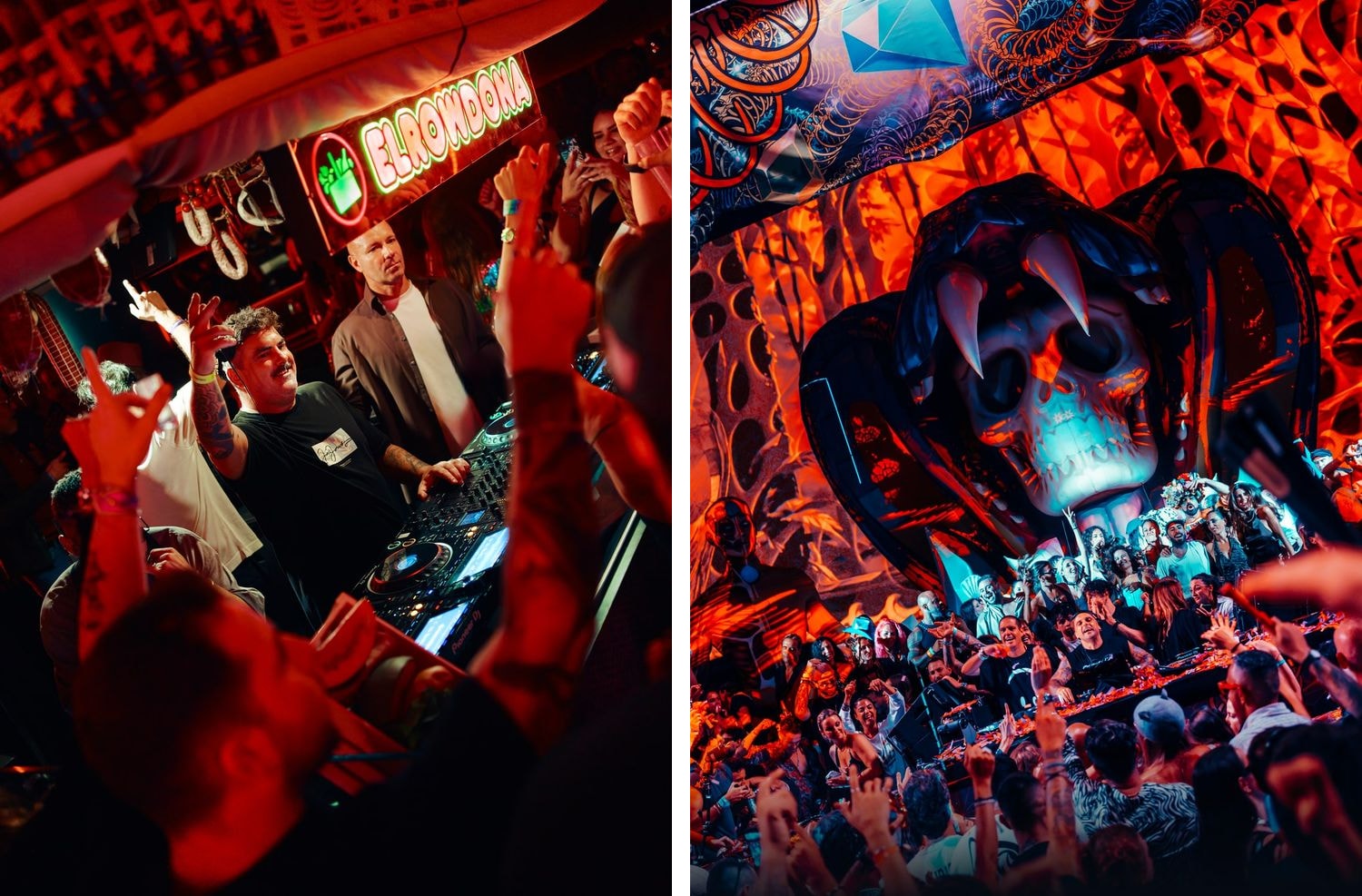
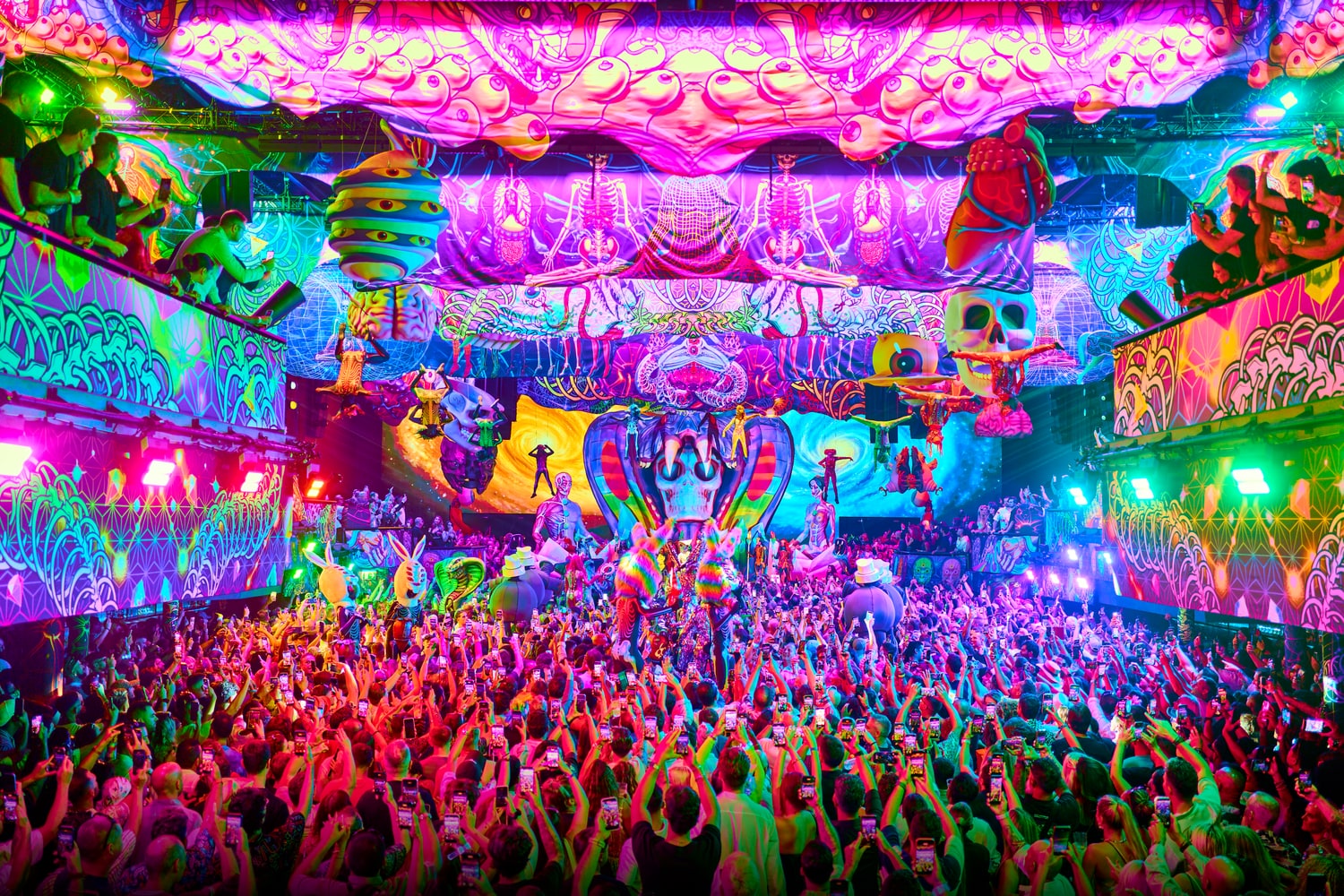
The closing followed the same trajectory, this time with Austrian artist NYCHOS. Dance With The Serpent, first created in 2023, returned as version 2.0, reimagined for the dimensions of [UNVRS]. In NYCHOS’s work, animal and human bodies are peeled open layer by layer, revealing fragmented, vividly coloured anatomies. In a room full of costumed bodies, those images were not merely a backdrop. They articulated what was happening on the dance floor below.
One thinker gave this kind of structure a name: Mikhail Bakhtin. In his study of Rabelais, published in English as Rabelais and His World, the medieval and Renaissance carnival emerges as a second life for the people. For a limited time, hierarchies are suspended and everyone takes part. Carnival is not something you watch from the outside; it is something you inhabit. Laughter belongs to everyone and is directed at everyone, including those who laugh. Its defining figure is the grotesque body: open, unfinished, always on the verge of becoming something else. It also brings endings and beginnings together, because what comes to a close makes room for what is about to emerge.
Every analogy has its limits. Bakhtin’s carnival belonged to the public square; this one has a door, a ticket and a production schedule. Yet the framework holds up remarkably well. Creatures sharing space with the crowd, collective laughter, bodies opened up on screens, a party marking an ending while already pointing towards the next cycle.