With Nike Ground, you demonstrated that reality can be manipulated to the point where fiction is no longer perceived as fiction and instead begins to produce real effects. More than twenty years later, how has that relationship changed? How has this mechanism evolved?
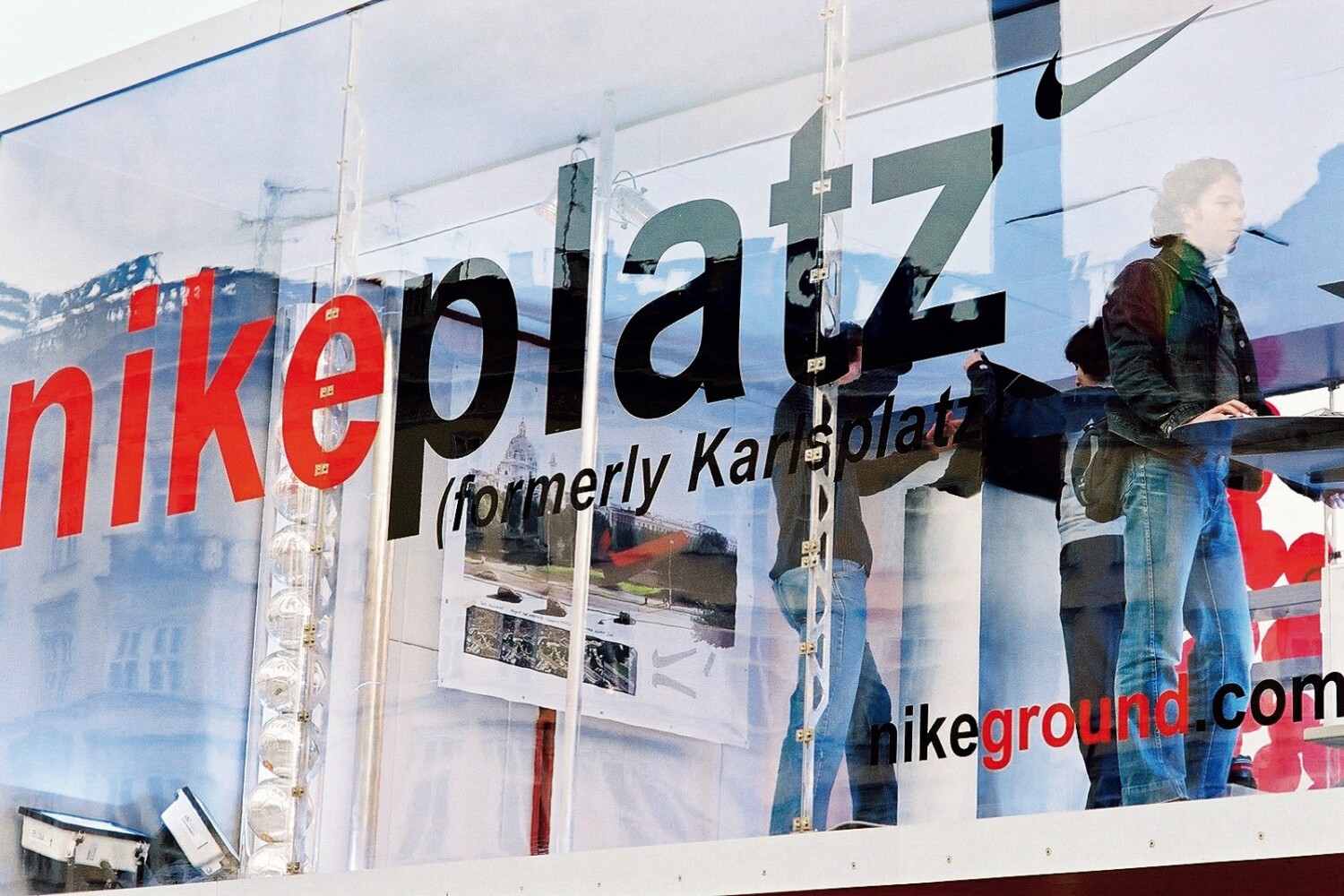
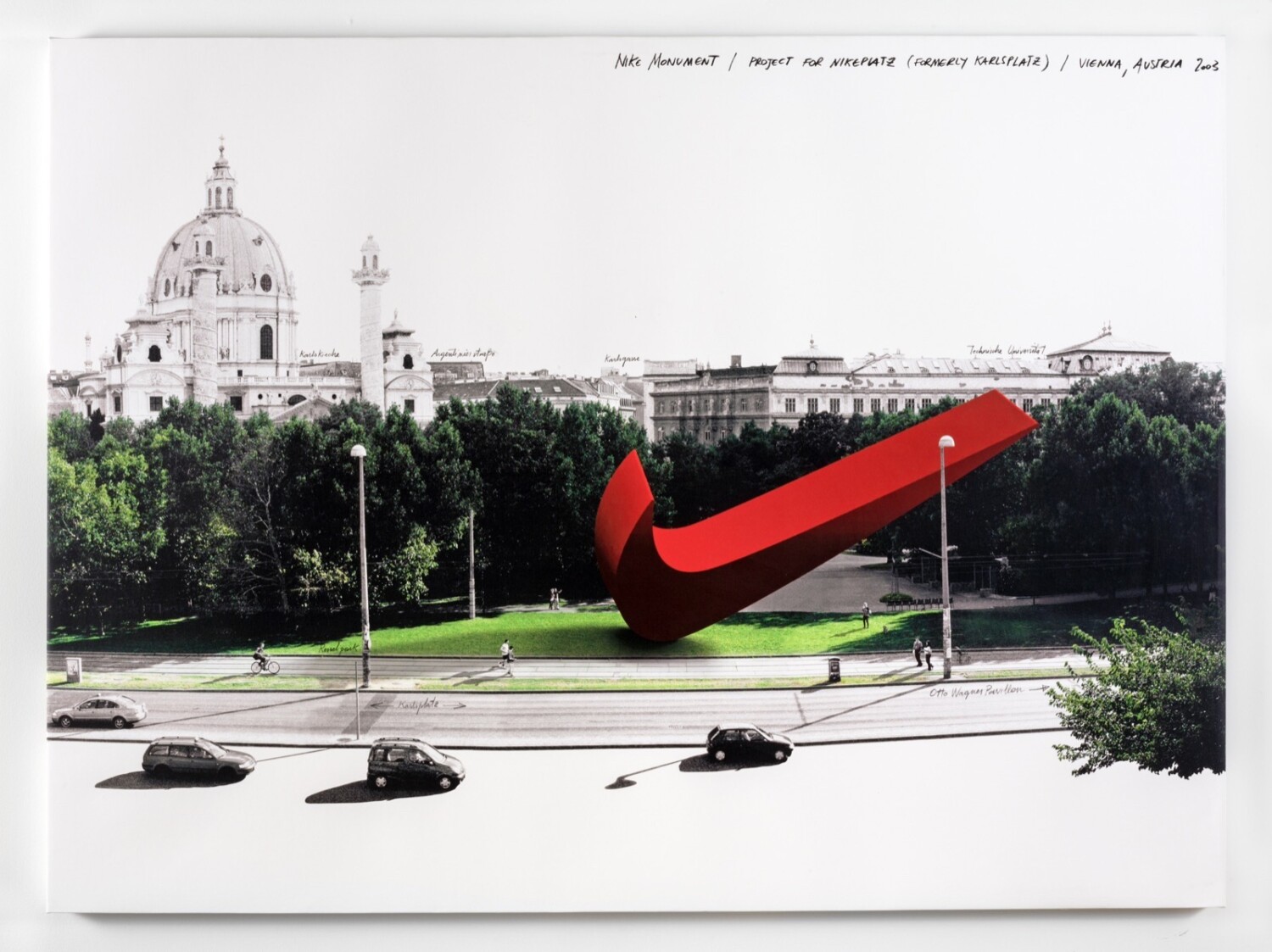
Nike Ground was an installation in public space. It simulated a real-world corporate branding takeover of Vienna’s Karlsplatz. We created a fictional campaign announcing that the historic public square would be renamed “Nikeplatz” as part of a supposed corporate sponsorship deal with Nike. We produced a convincing communication campaign high-tech container, website, press releases, branding materials and the public, media, and institutions reacted as if the renaming were real. The project was never an actual Nike initiative; rather, it exposed how corporate language, institutional aesthetics, and media circulation can produce perceived reality, and how fiction can generate real social and political effects. Until Nike sued us… Where it differs from contemporary fake news is scale and automation. In the 2000s, the illusion still required artisanal construction and targeted dissemination. Today, similar effects are produced continuously and at scale by algorithmic feeds, engagement incentives, and AI-generated content. Nike Ground was still about exposing a mechanism. Today the mechanism is exposed by default, and somehow that makes it harder to see. Back then, memes made us laugh and maybe think. Today, they wage war.
Over the years, you’ve closely observed the evolution of online behaviour. What is the most significant shift or deterioration you’ve witnessed in human behaviour, and the one you’ve found most compelling to explore through your work?
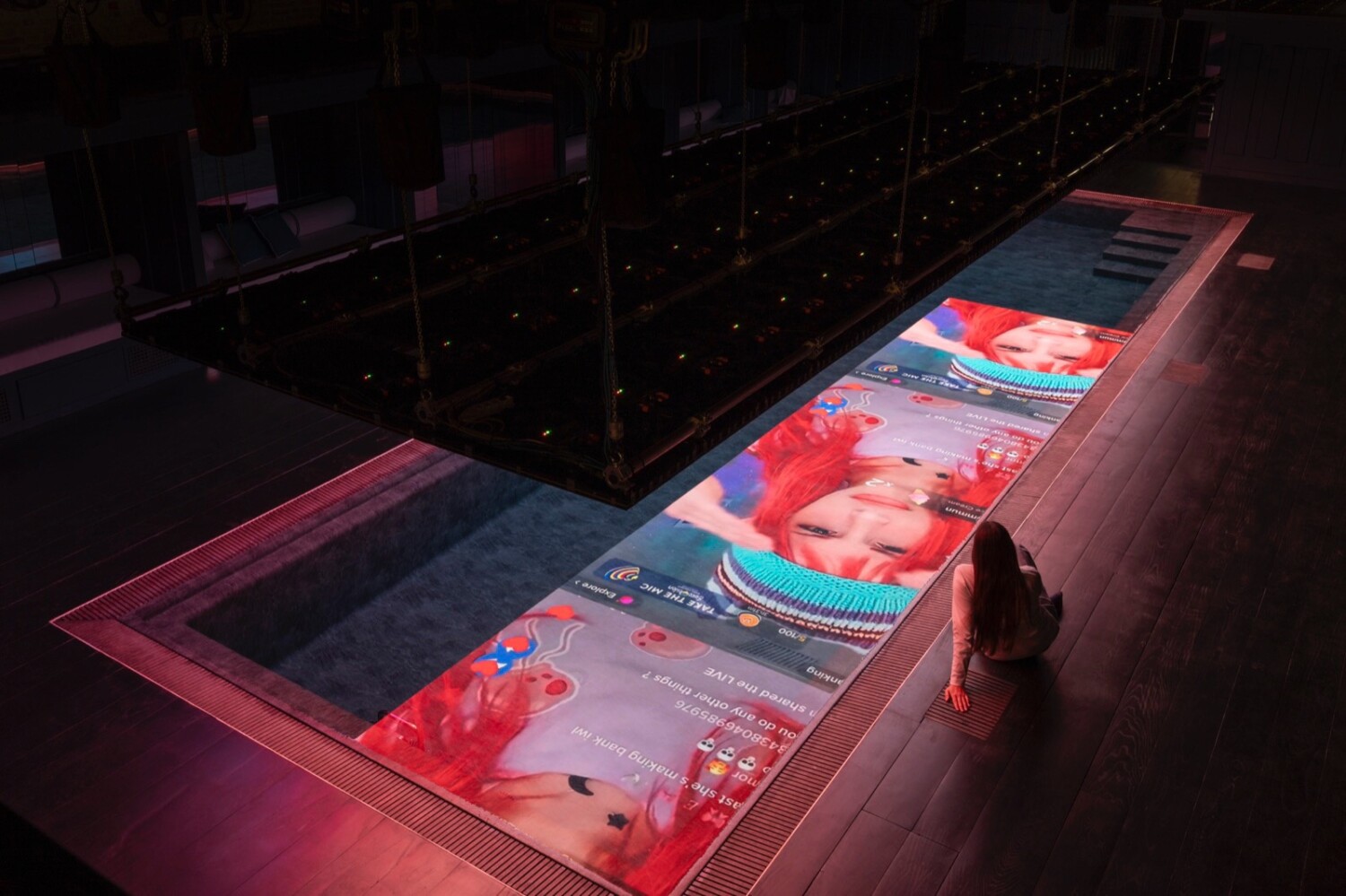
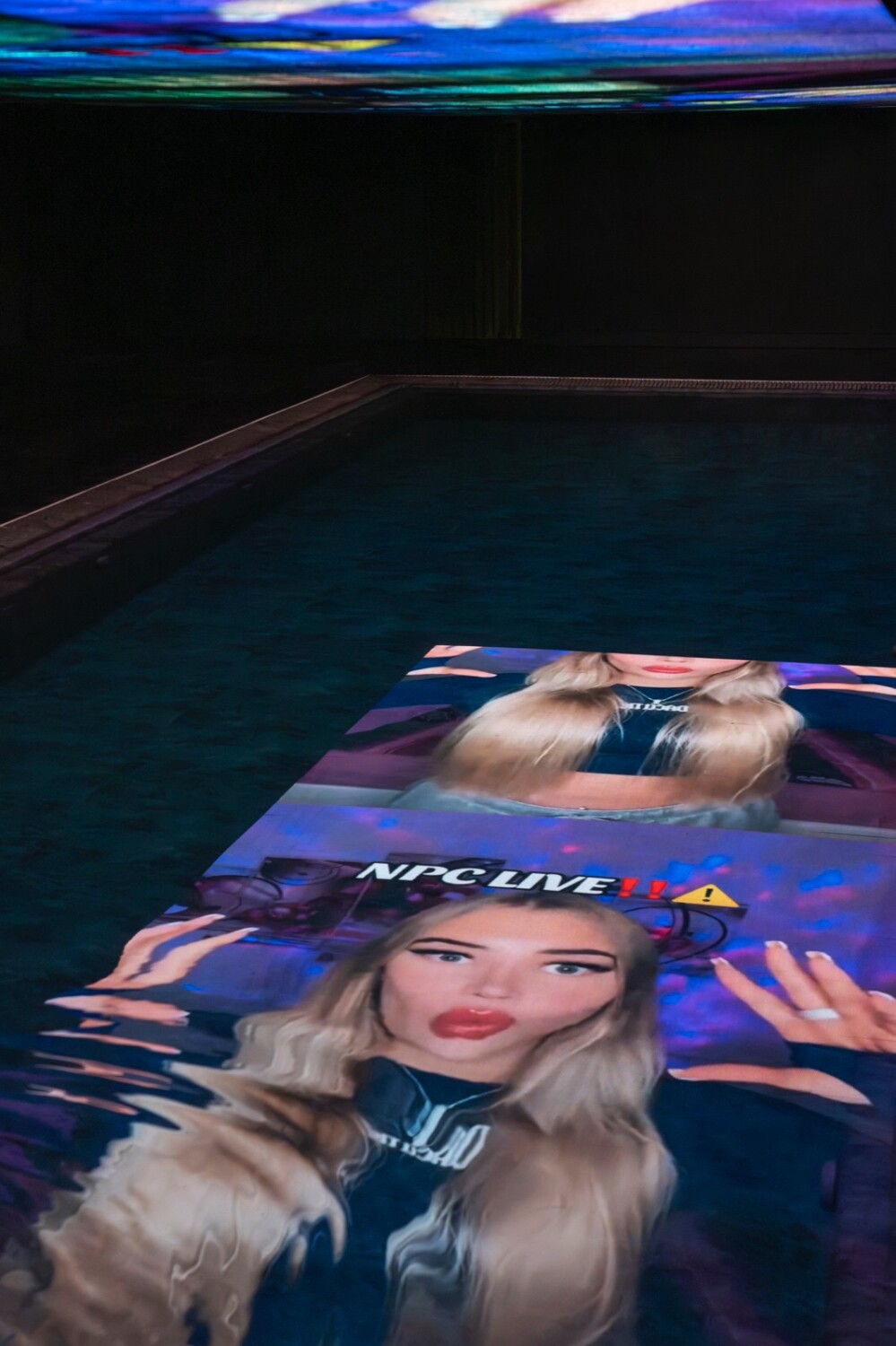
The biggest shift is that the internet stopped being a place we visited and became the environment we inhabit. Early online culture encouraged experimentation because identities were unstable and consequences felt remote. Today, the opposite is true: everything is persistent, quantified, and optimised for visibility. We’ve internalised the logic of the platform. What’s deteriorated isn’t just attention or privacy, but our relationship to ourselves. We perform our identities as if we were training data for algorithms, constantly producing signals that can be measured, classified, and monetised. Surveillance no longer feels imposed from above; it has become participatory, even pleasurable. We’ve never been fascinated by technology itself, but by the strange behaviors it elicits. The internet functions like a psychological laboratory where desire, fear, narcissism, empathy, cruelty, and boredom become unusually visible. This idea informs our video But I Love Human, recently presented in a private swimming pool beside Palladio’s Redentore church in Venice. A monumental horizontal LED screen is suspended above the water, whose rippling reflections evoke the myth of Narcissus. The ten-minute film is a supercut of NPC livestream performers who mimic videogame non-player characters, repeating mechanical gestures and scripted dialogue for online audiences, often for pay. The work frames this practice as a symptom of a culture shaped by algorithmic demand: content produced to juice the algo. Today’s assembly lines are platforms like TikTok, where automation targets not only labor but one’s own self. It may be too late to escape these loops. But art can make them visible, reflecting them back like a pool that never settles into a stable image.
You continue to use the Internet despite having spent more than twenty years exposing its most disturbing dynamics. How do you live with this apparent contradiction without ever feeling the need to resolve it?
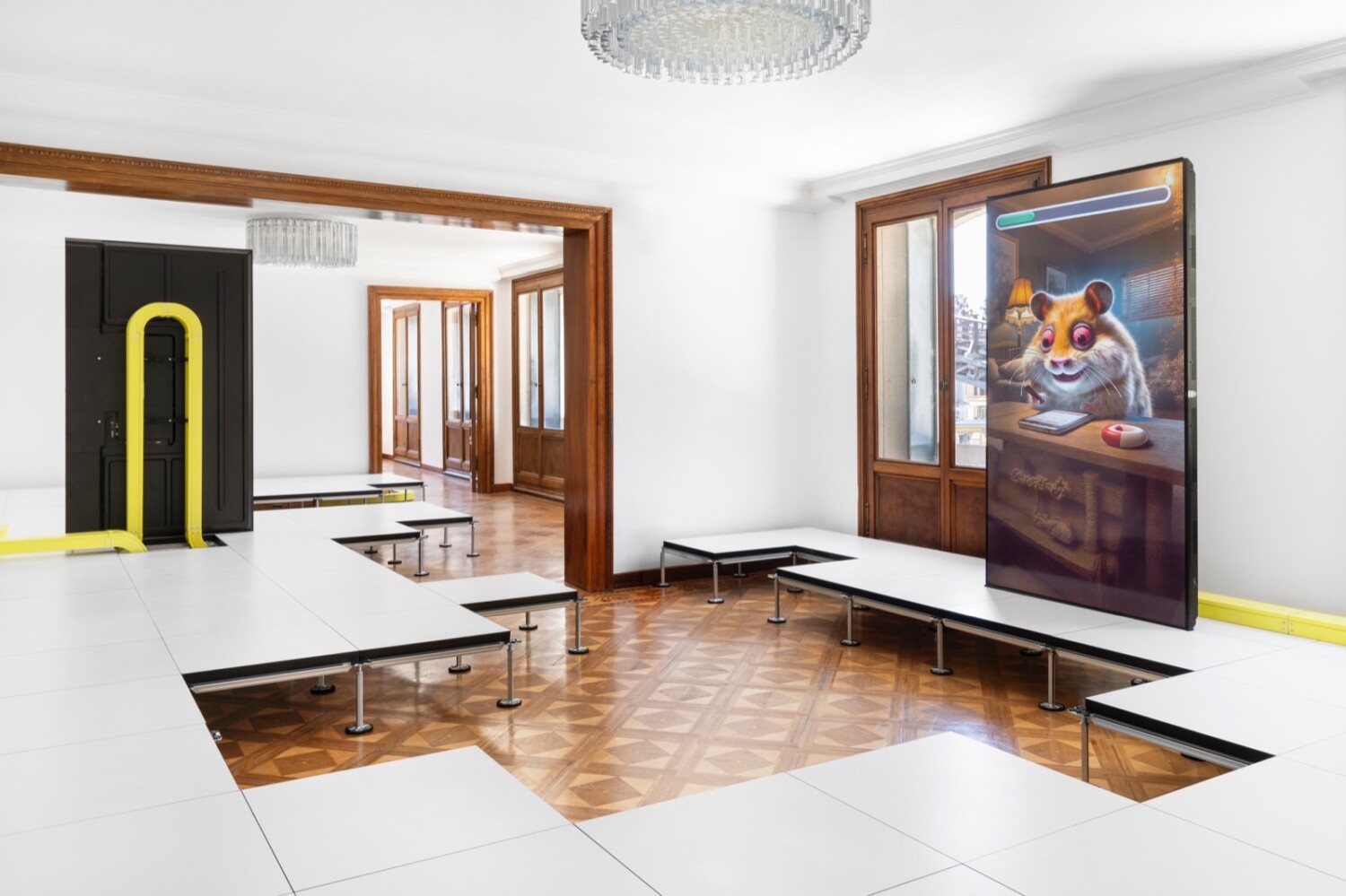
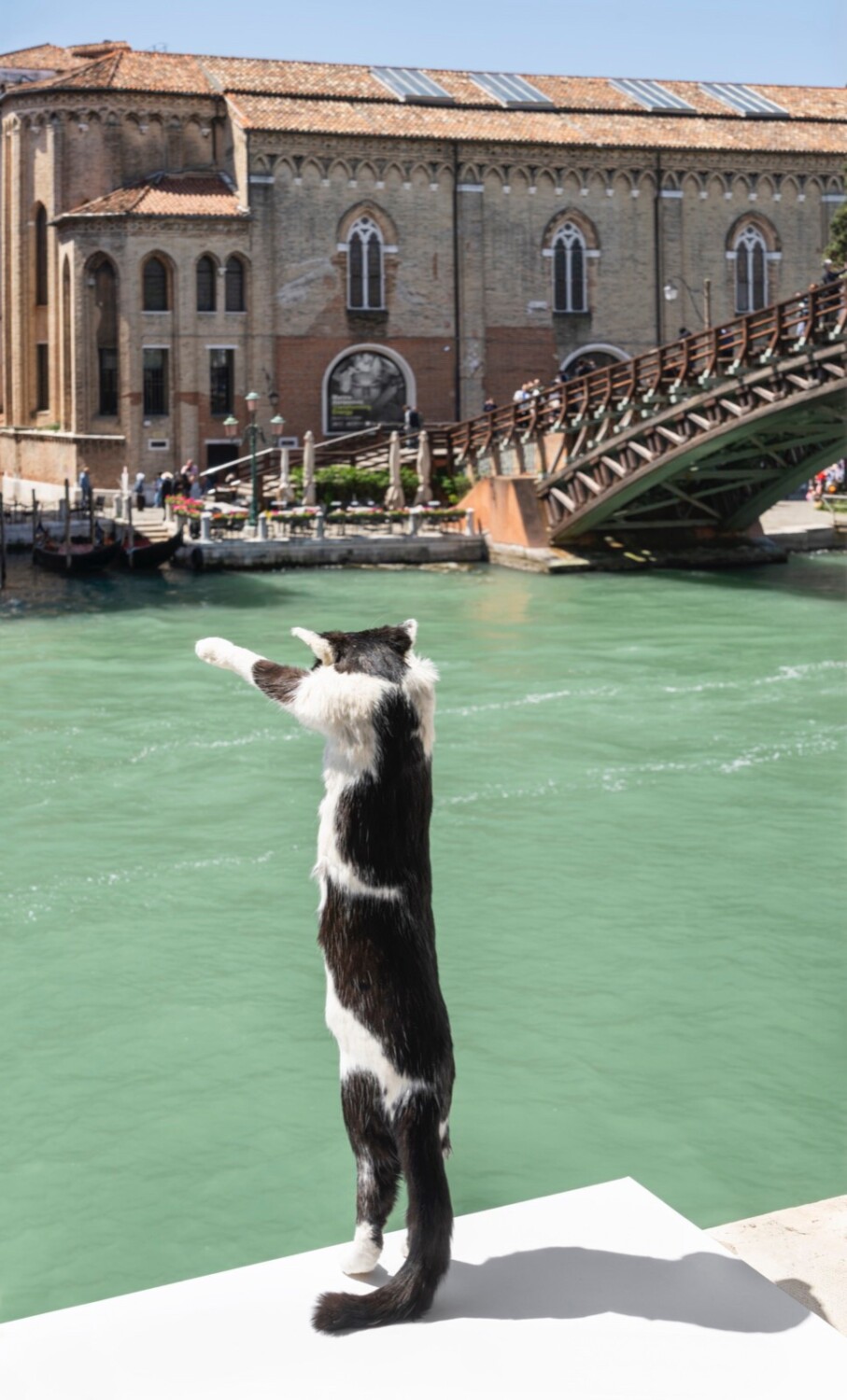
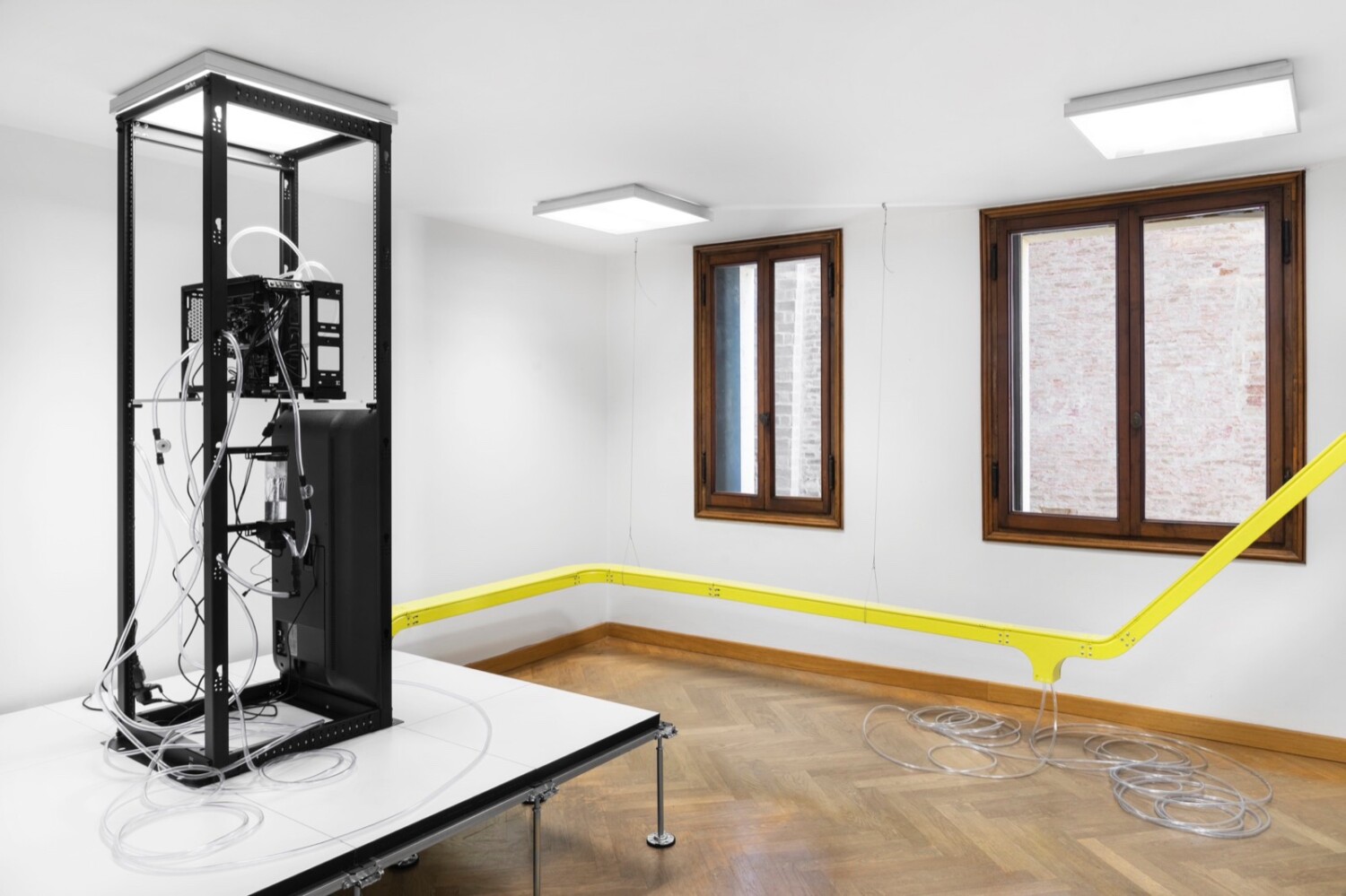
Looking back, our work has always navigated a contradiction: we critique these systems but we are also drawn to inhabit them. In the early days, the web felt like a kind of wild frontier, identity was fluid, authorship unstable, and the rules were still being made. We were drawn to myth-making, hoaxes, and the ease with which reality could be bent online. Over time platforms became centralised and extractive. Our focus shifted from playful subversion to looking at how these systems shape behavior, emotion, and even morality, rewarding intensity over nuance. Our exhibition in Venice continues that trajectory. RAGE BAIT, the title of the show isn’t an anomaly, it’s a core feature of an attention economy where outrage travels fastest. We try to make this contradiction visible, tangible tracing how online dynamics spill into bodies, politics and physical space, mirroring our own shift from imagining what the internet could be to confronting what it has become.
In Are You Still There?, you used real conversations from a suicide helpline that have since become part of a dataset used to train the very machines now speaking in our place. Where does critical observation end, and where does complicity with the very system you’re critiquing begin?
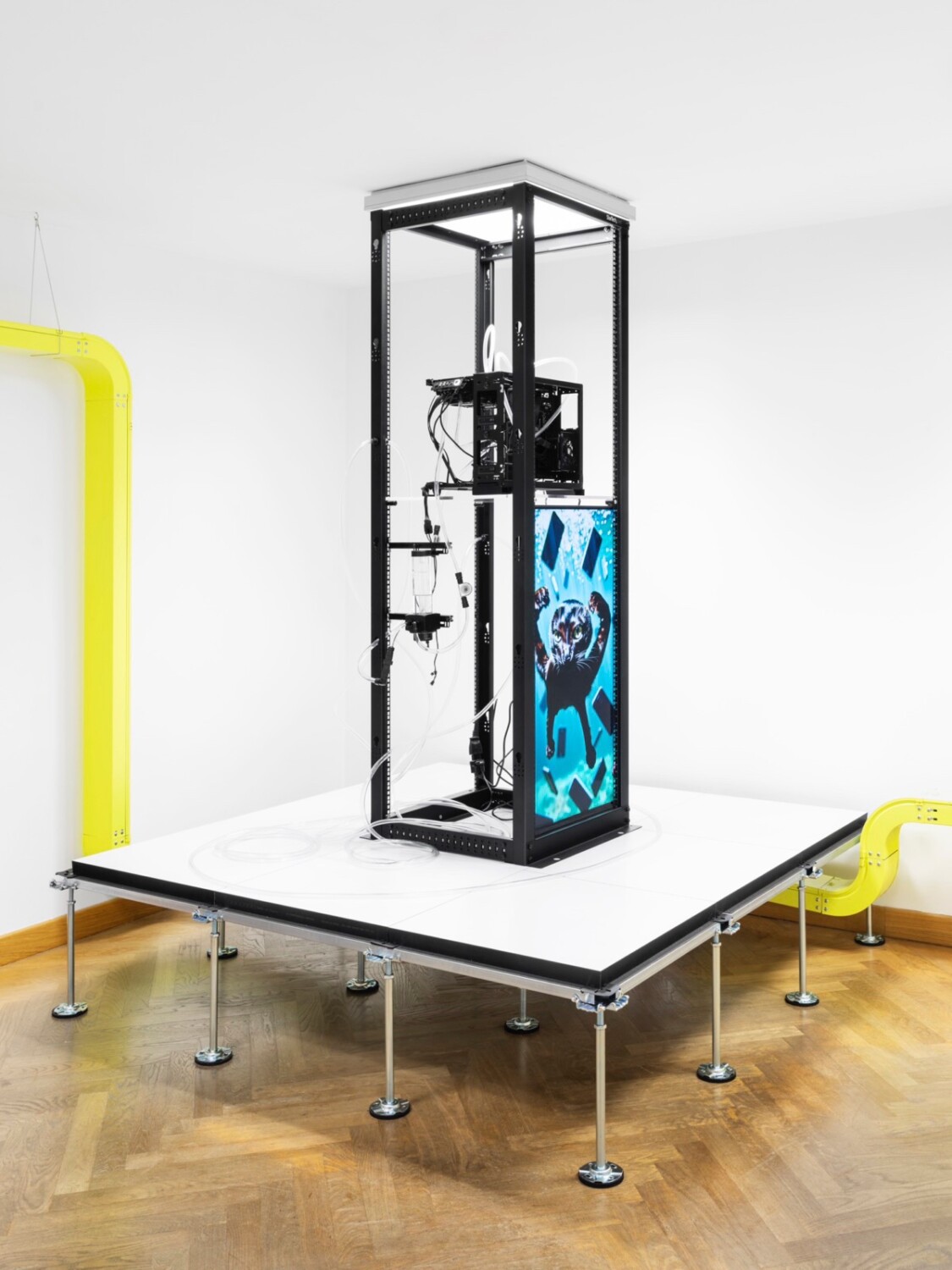
Are You Still There? is a series of AI-generated videos in which “Italian Brainrot” characters restage real conversations from a suicide prevention helpline. The conversations come from a publicly available dataset of murky origins. Although they predate AI, they have been used to train the very chatbots people now treat as substitutes for a psychoanalyst. Back in 1966 computer scientist Joseph Weizenbaum observed the so-called “Eliza Effect”, the tendency to project emotional understanding onto machines that merely mirror our words. Today, the Eliza Effect is no longer an exception it has become infrastructure. The internet itself functions as a giant mega-Eliza, algorithmically optimized to provoke emotions like rage, indignation, and hatred. Because these emotions are measurable, they can be exploited for profit and political manipulation. In contemporary AI systems, every click, prompt, or interaction becomes training data that modifies the system itself. Observation is never neutral. To quote Heinz von Foerster: “Objectivity is the delusion that observations could be made without an observer.”
J. Baudrillard argued that the more information we receive, the less capable we become of acting. If our dependence on information and now on artificial intelligence is producing a new form of opacity, how do you see that opacity manifesting itself within today’s art world and its market?
Baudrillard imagined information ending in paralysis rather than clarity. Today, AI accelerates that condition by making opacity productive. We’re no longer overwhelmed by information alone, we’re surrounded by systems that continuously process information on our behalf while concealing how they arrive at their conclusions. Nadim Samman, in Poetics of Encryption, suggests that opacity is no longer merely an obstacle to overcome but the defining condition of digital culture. Encryption is not just a technical process; it’s a cultural logic. Increasingly, value is generated through what cannot be fully accessed, verified, or interpreted. The contemporary art world operates in much the same way. Algorithms determine visibility, collectors rely on private networks, markets move through opaque signals, and AI systems produce images through datasets that remain largely inaccessible. Everyone interacts with interfaces while the mechanisms underneath become progressively more inscrutable.
What is the part of yourselves that no one can ever truly see, even when everyone believe they can?
Despite all the social media posting, our private life is still pretty opaque. Long ago we decided that our work should be the focus rather than our bio.