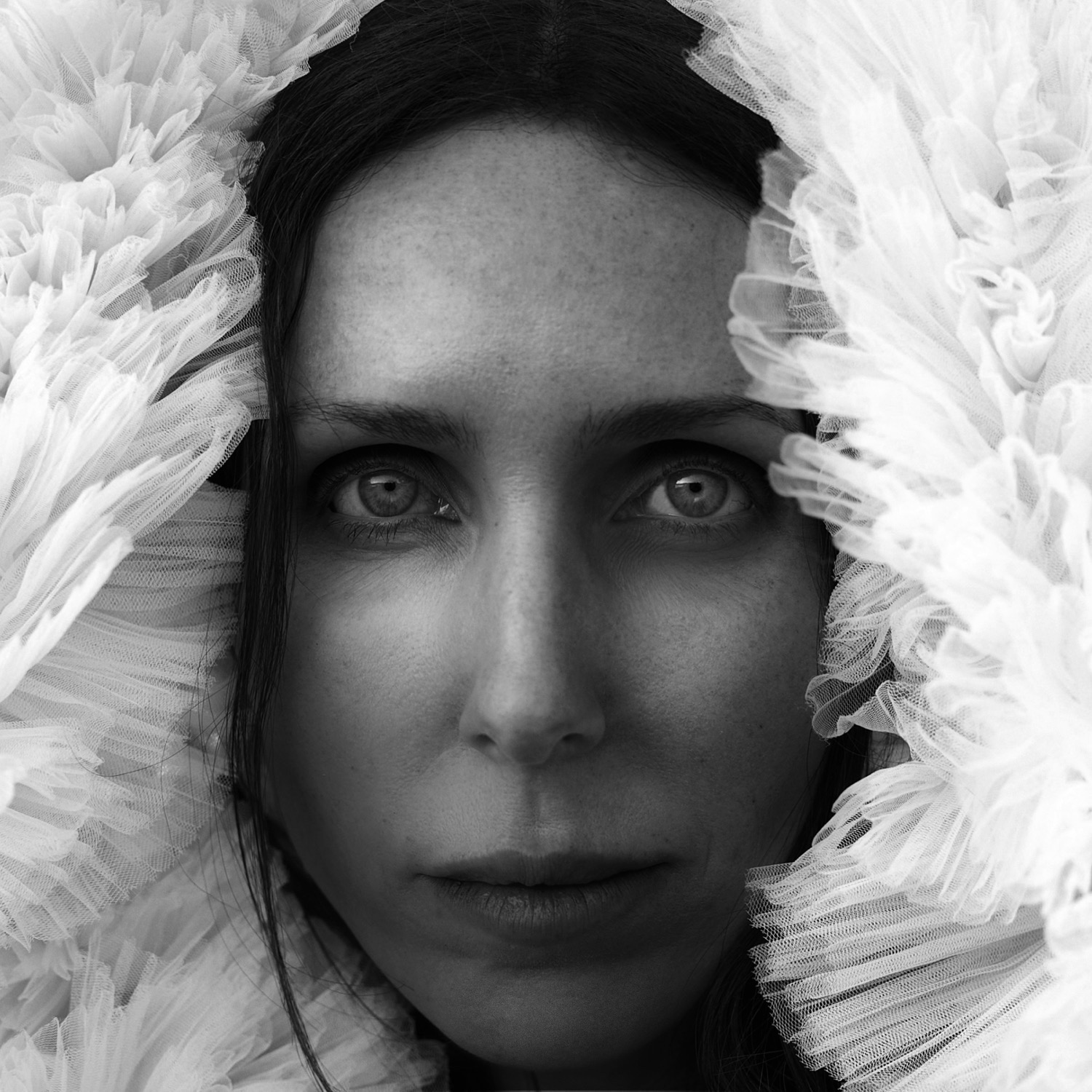
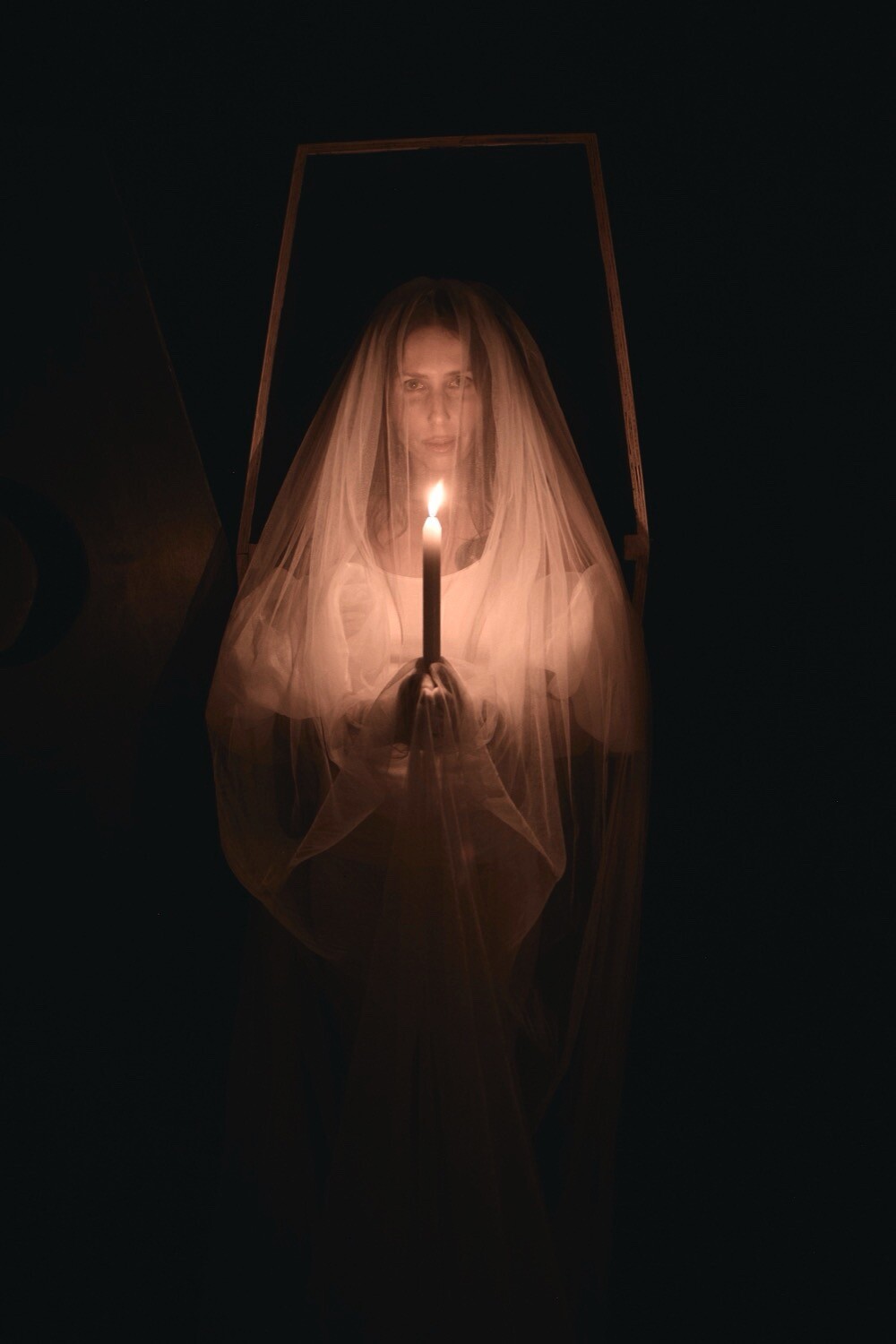
Some transformations arrive all at once. Others happen so slowly you only recognize them by the traces they leave behind. Chelsea Wolfe has spent years writing from that threshold, where endings become beginnings, where grief changes shape, where the stranger in the mirror begins to feel familiar.
Across her eight past albums she has moved through an alchemical arc: the unconscious, family history, addiction and the invisible worlds that exist alongside our own, treating darkness as as the most genuine calling worth listening to.
Her newest work circles something even more intimate. For an animist, nothing that dies really leaves — it changes into soil, into root, into the next thing growing. Beneath the ghosts, the rituals, the forests, and the dreams lies a quieter realization: there are many ways to lose yourself, and even more subtle ways to find your way back.
What begins as a conversation about ghosts slowly reveals itself to be about something far more familiar: the versions of ourselves we quietly abandon in order to keep loving, keep surviving; about recognizing the moment you stop abandoning yourself and go back to rediscovering your own truths.
“This stranger I become now” — become, present tense. Not “have become.” You’re not describing change after the fact. You’re watching it happen while you sing. Is the song the transformation or the documentation of it?
It’s a documentation of being in the transformation, of accepting where you’re at now, of entering the second half of life and catching glimpses of the person you’re becoming as outdated stories fall away. These glimpses are lighting the way forward.
On “The Dark” you didn’t say dark dreams or deep dreams, you said violet. In chakra systems violet is the crown, where individual consciousness dissolves. That’s a very specific color to put at the end of a lyric about becoming a stranger to yourself. Did you choose it for what it means or for how it sounded?
There’s a play on words, of course — rose hips, violet dreams. That song is simultaneously extremely personal and very universal. And of course, sometimes the meaning changes depending on when I listen to it. Right now, it feels to me like a song about being an introverted person in a loud and aggressive world.
“Death Is Not the End” has Robin Finck and Matt Chamberlain: industrial chaos and metronomic precision in the same room. “The Dark” has Stella Mozgawa and Justin Meldal-Johnsen: trance-state repetition and atmospheric drift. Those are two completely different nervous systems. Did you cast the musicians the way you’d cast actors — choosing which energy belongs inside which song?
Yes, it was an intuitive process choosing musicians for each song. And also a chance to ask some musicians that I’ve admired for a long time to be part of the songs. I love the grounded energy Stella brought to “The Dark,” and the whimsical nature of Justin Meldal-Johnsen’s playing. Matt Chamberlain is such a solid and interesting player, and Robin Finck’s guitar playing has such a mystical and open feeling to me — I appreciate so much what each of these singular players brought to the music.
“Death Is Not the End” is also a Bob Dylan song. Nick Cave covered it on Murder Ballads. You’ve cited Cave as a formative influence. Are you answering him?
In a way, aren’t we always answering the greats who came before us?
You’ve said these are the first glimpse. A glimpse implies the rest looks different. What should we be expecting that these two tracks haven’t shown yet?
There is a lot of playfulness yet to come. Fragments first, then the perfume, then the songs, then eventually the album.
On “She Reaches Out”, Mat Auryn wrote the framing — he’s a writer on the psychic and the occult. Is the way you’re releasing this album a ritual in itself?
The timing of the perfume campaign collaboration was synchronistic, and lined up with when we were planning to release new music so we decided to do a little bit of crossover between the two, especially since the theme of the Ghosts line and “Death is Not the End” had thematic similarities. There’s a lot of intention and care put into releasing new music, and also there is room for mystery and chance occurrences.
The Veil is what you wore onstage for years. Shadow People is what you call the figures that come during sleep paralysis. Doppelgänger is the stranger you keep becoming in your own lyrics. You turned your ghosts into something people wear on their skin. Did you name these, or did Douglas Little?
Douglas and the Heretic team developed the scents and titles. When they presented it to me to create a visual collaboration, it felt very aligned with my own inspirations going into my new album: exploring our connection to the afterlife, spiritualism, and again, playfulness within darkness.
Sixteen years with Ben Chisholm. What would your records sound like without him; do you ever let yourself think about that?
I’ve written and recorded without him on various projects over the years, so it’s not a mystery to me as to what it would be like without Ben. He adds a distinct sonic color to the work, but at the same time I always follow my instincts as we create, and everything is filtered through my own vision of what the work should be. We both have our strengths that complement one another, and through that we’ve developed a way of working that allows freedom to swim into deeper waters with each new record.
In a way, aren’t we always answering the greats who came before us?
You’ve described your practice as animism, the belief that the earth itself carries a sentient spiritual essence. If people heard your records as devotional music addressed to something alive in the soil and the trees, would they be closer to what you’re actually doing?
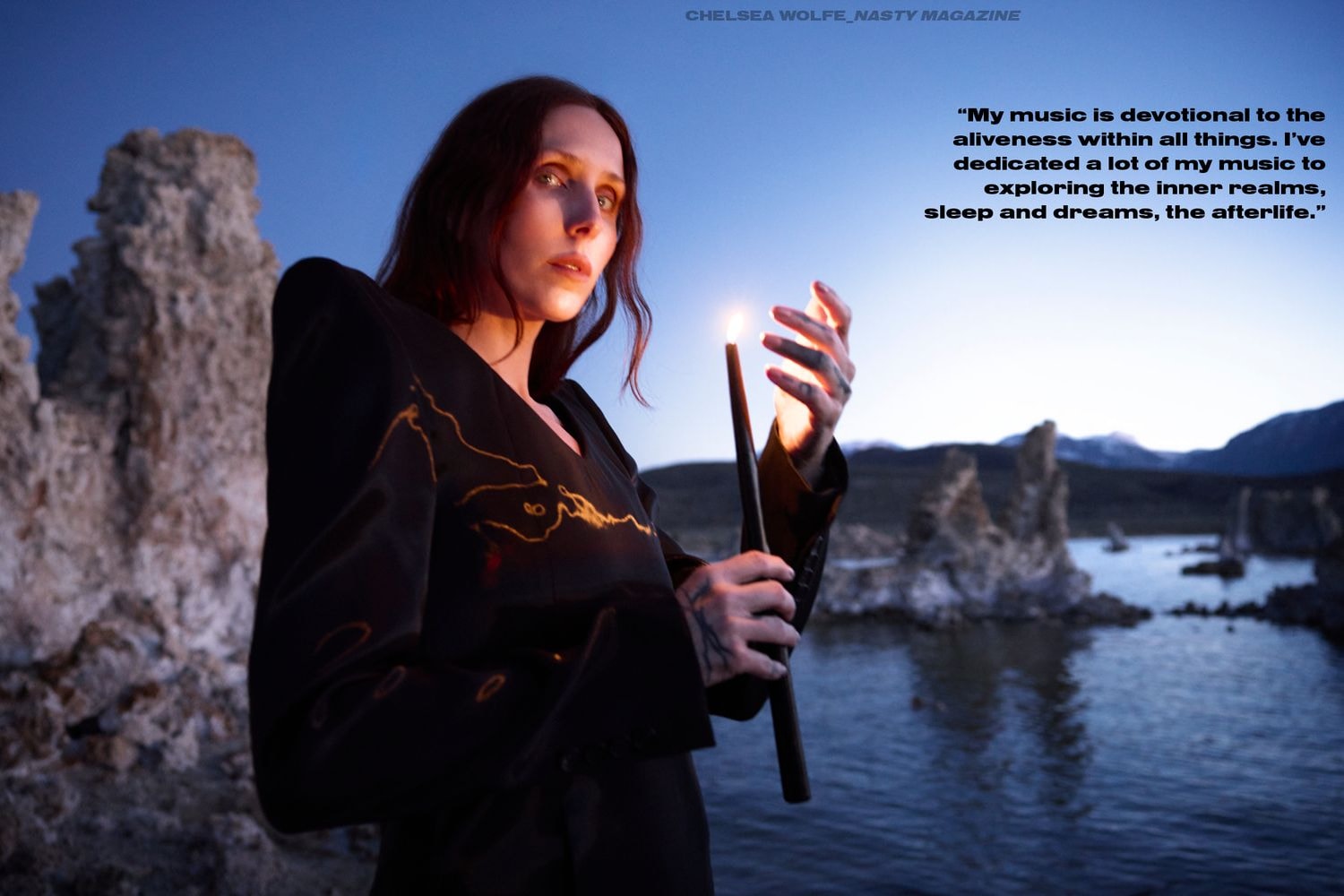
I suppose my music is devotional to the aliveness within all things. I’ve dedicated a lot of my music to exploring the inner realms, sleep and dreams, the afterlife. For me, I have such a rich inner world but often have a hard time expressing that in everyday interactions or conversation, so I channel it into music and art.
The dark moon is when practitioners traditionally release, compost, let things die properly. In older traditions, that phase belongs to Hecate, the one who moves freely between the living and the dead. You made an album about ghosts during the phase of the cycle that’s about letting the dead be dead. Are these songs a release or a summoning?
These songs are both a release and a summoning. There is a lot of self-summoning within my new album. After a long period of self-abandonment, it’s like a séance for my own soul. I imagine a lot of people can likely relate to realizing that you’ve been pouring yourself into someone else, and that someone has become a bottomless pit. So you must release this person from your life or you’ll find yourself completely drained.
For an animist the dead don’t leave. They change form and stay inside the living system: soil, water, root structure, air. A ghost album made from that understanding isn’t haunting. It’s kinship. Are you mourning on this record or are you tending?
This album has its heavy-hearted moments as I explore memories I’m working through, but it’s also about taking responsibility and taking action and moving forward and learning to tend to your own life.
You almost deleted the sleep paralysis detail from your Abyss bio. You’ve told interviewers your albums aren’t autobiographical, even the ones that obviously are. In Kabbalah, in the Eleusinian mysteries, in folk witchcraft, the most potent things lose their charge when they’re exposed. Is that closer to what you’re doing when you refuse to explain?
I’m a private person. I’m a Scorpio. Some people think they know all about me, but they really only know a little bit of the surface. I share bits and pieces, but there’s a lot of my life, creativity, and spirituality that I keep to myself for the sake of my own sanity. It’s better to put it into the music.
Alchemy names four stages of transformation: the blackening, the purification, the first light, the completion. Your discography follows that arc almost exactly — Abyss, Hiss Spun, Birth of Violence, She Reaches Out. If the sequence is done, what does the new album belong to? And can you name something that survived all four unchanged?
My own resolve survived. The new album is a return to root. We’re back in the soil, beginning another cycle. Every song, every album, every work goes through this. You start with nothing in a way — you see what you’ve learned from your last cycle of work, what has been transmuted, what is left over. You sort through, process, and put in the work to grow and create something new.
Eight albums. Not one sounds like it came from the same person as the one before. Something always had to be abandoned to get there, not just a sound but a whole way of being yourself. What does that kind of repeated loss accumulate into?
The through-line of the records is that I’m always being myself. I try not to let myself stagnate in a box of expected outcomes.
There is a lot of self-summoning within my new album. After a long period of self-abandonment, it’s like a séance for my own soul.
Abyss went into the unconscious. Hiss Spun went into the family. She Reaches Out went into addiction. Each album faced one thing you hadn’t looked at yet. If this record faces the dead, what’s left after that?
After each record, I have this worry that I’ll never have anything to write about again. But life holds many treasures, some more challenging to mine than others, but there’s always something new to learn or explore.
Your influences have always surfaced in the work a record later: Jung during Abyss, Gottesdiener’s Moon Book during She Reaches Out. What are you taking in right now that your audience won’t hear for another three years?
Probably the book The Great Cosmic Mother: Rediscovering the Religion of the Earth.
You’ve moved through the Art Nouveau deck, the Dark Wood tarot, Kim Krans’ Archetypes. Which deck are you pulling from right now, and which card keeps showing up?
Lindsay Mack’s Soul Tarot deck has been a gentle one to work with while I have a lot going on, and am putting a lot of work out into the world. I’ve been pulling King of Pentacles frequently, which in this deck has beautiful artwork of a Bristlecone Pine tree and a meaning of the importance of sharing your lived experience with others. Another one I turn to during stressful times is Yumi Sakugawa’s Cosmic Comfort deck.
Not what you hide, what you actively refuse to turn into a song. What material is off limits, and when did you draw that line?
If something feels too personal, I write about it in a more cryptic way — I hide the message within a different context.
For most people “what keeps you up at night” is a figure of speech. For you it’s a medical history. You’ve had sleep paralysis since childhood, insomnia severe enough for hospital studies, shadow people close enough to grab a knife. Now you’re sober, living in a forest, deeper into your practice than you’ve ever been. Has what visits you at night changed?
I still get sleep paralysis, but only in the summer. I much prefer the quiet of the winter, especially when it’s snowing — it’s like a cocoon.
After everything you’ve shed (sounds, substances, relationships, whole versions of yourself) what do you have now that you didn’t have at twenty-three? And does it get easier, or do you just get better at it?
What I have now is being able to value myself, and to recognize when I’m self-abandoning. Just like anything you work at and practice, it becomes easier as it becomes more second nature.