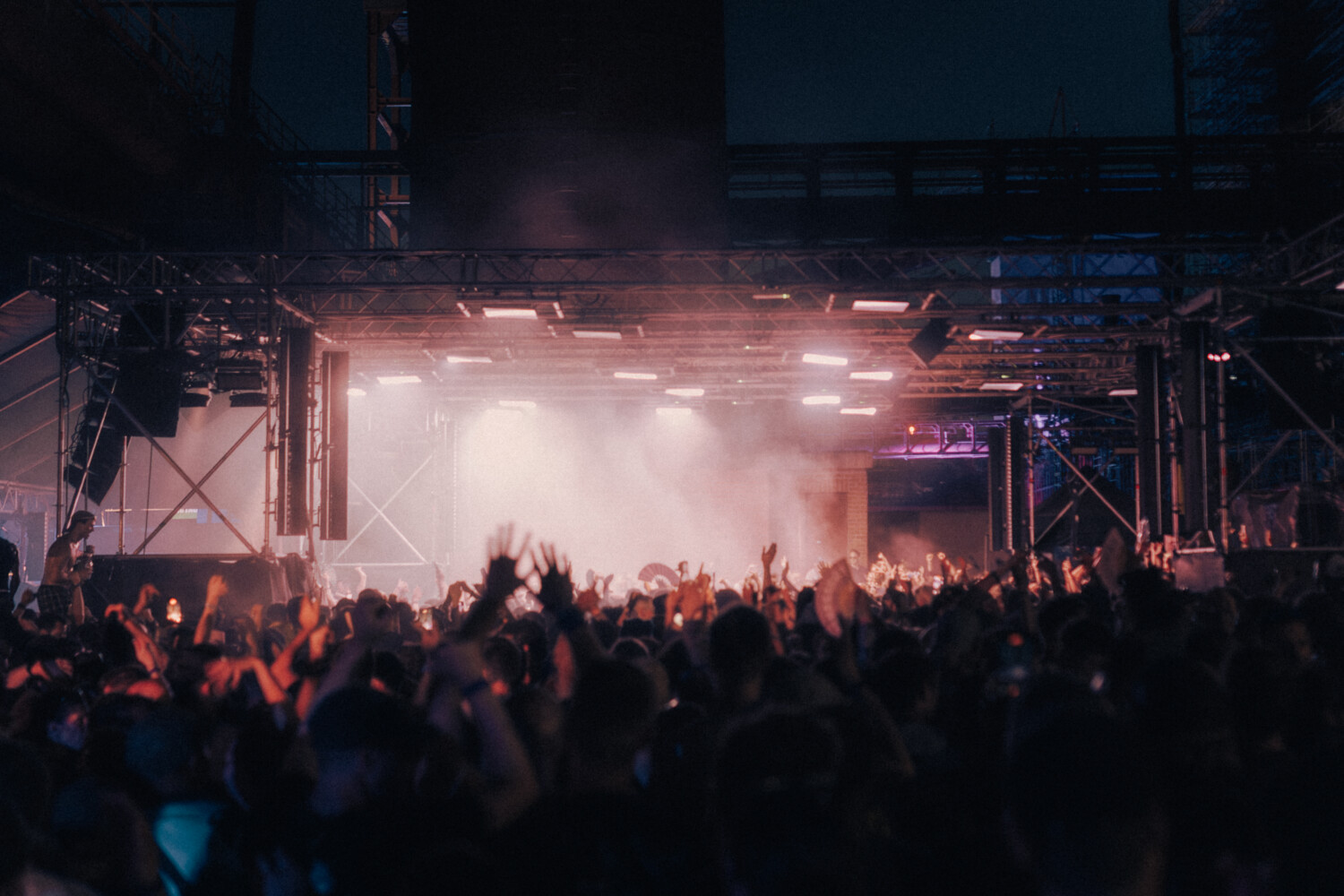
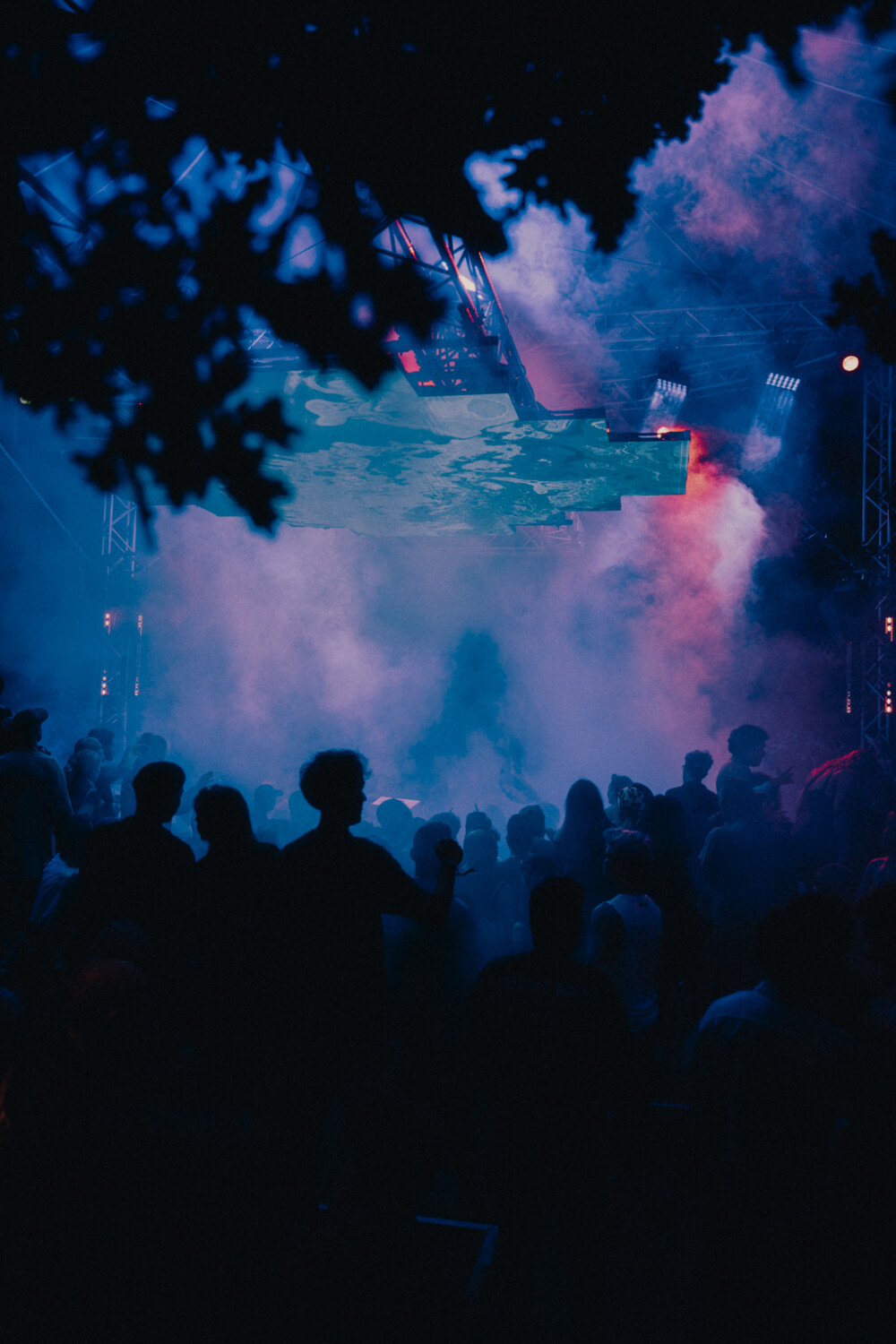
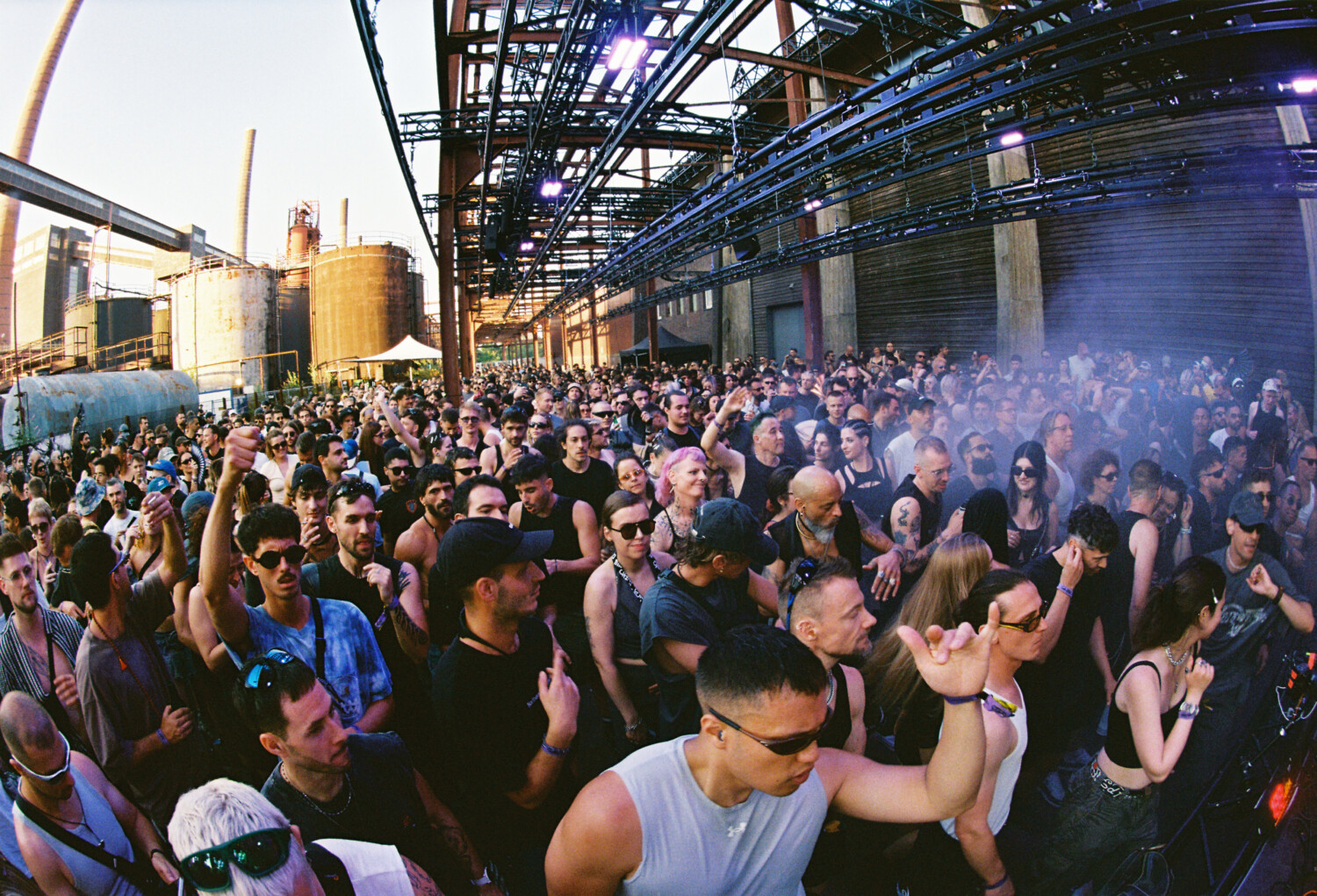
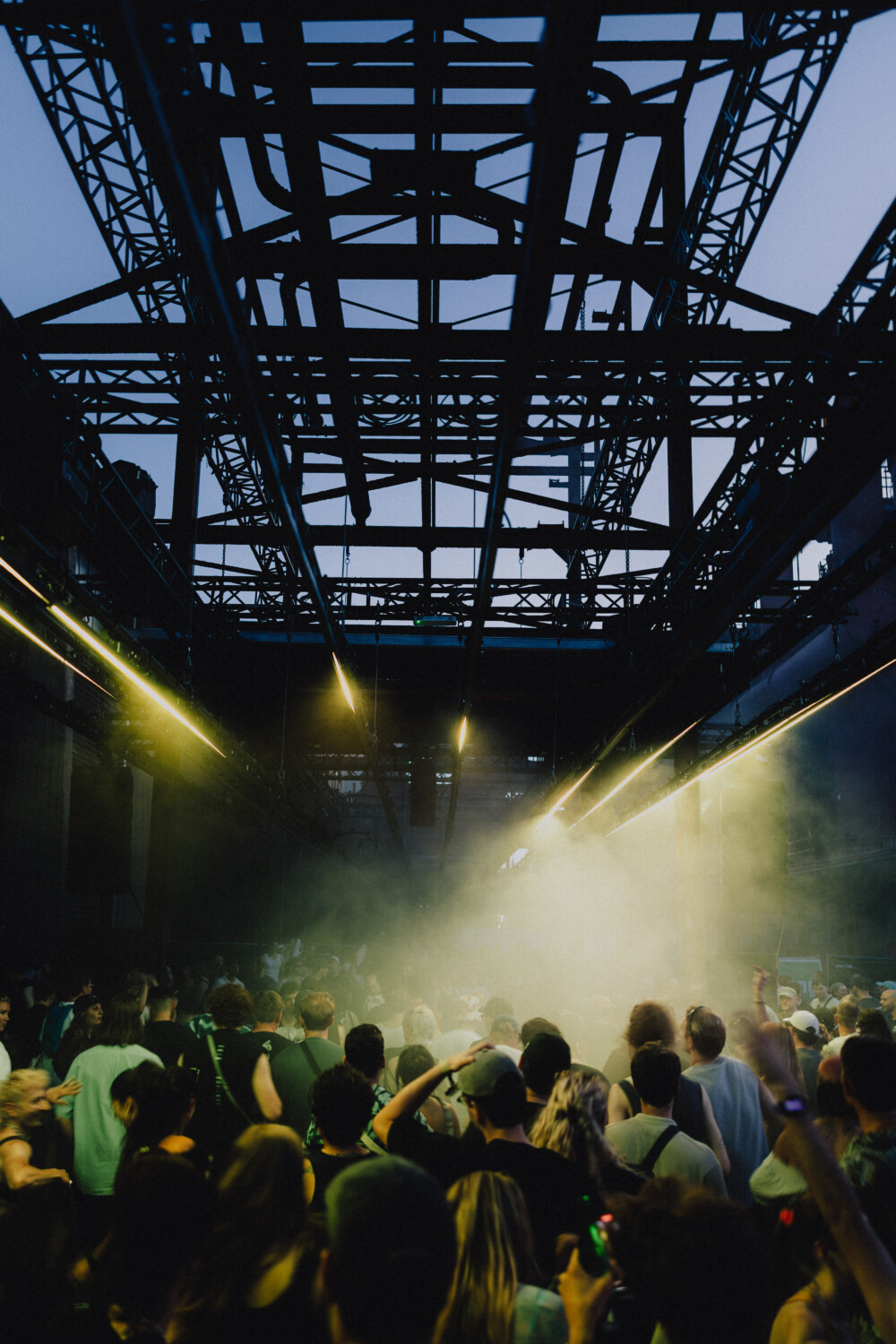
No basis for comparison. No constraints. Nothing. Just me and the reason I fundamentally come back here every year: the music. Techno music, day and night. And that’s perfectly fine. That same music becomes the soundtrack to our notorious three-day run: the founding reason we’re there. The artists become the protagonists, we listen to them, we dance to them, we respect them. They’re here for us, just as we’re here for them. And this year the lineup was, as always, wide and deliberately varied.
This year the word “debut” came up often, almost like a small hidden thread running through the lineup. Afra, Call Super, Carlos Valdes, Carrier, Connor Wall, D-Leria, Decoder, Ehua, Emily Jeanne, Isabel Soto, Jin Synth, Magda, Ness, Roman Flügel, Tauceti, Upsammy: names different from one another in history, sound and background, yet united by the same moment, their first time at Zollverein. Some arrive already with decades of career behind them, like Roman Flügel or Magda, while others are stepping onto this stage still in the midst of their rise, like Connor Wall or Jin Synth. And yet the debut remains a moment that levels everyone, regardless of the career built elsewhere.
This came through in the words of artists like D-Leria, who spoke of the anticipation of finally seeing with his own eyes a place he’d only heard about, knowing that every moment would be a discovery. Or Tauceti, who designed a project made specifically for the occasion, almost as if wanting to make the first encounter with the Stone Techno audience something that wouldn’t happen the same way twice. And this is perhaps the truest meaning of a debut at a festival like this. Not just a slot to fill, but an entry into an ecosystem built, edition after edition, on mutual trust between artist and audience.
Also notable: the curation of the various stages by some of the most established names in today’s techno scene: Alarico, Verraco, Freddy K, GiGi FM, Oscar Mulero and D.Dan. Each was given a stage to build a coherent sonic narrative through the day, selecting the artists to share it with and shaping a lineup that reflected their own musical taste, accompanied by a limited-edition vinyl released for the occasion. The choice made each stage a distinct, recognizable experience. Six reference figures of the scene each responsible, start to finish, for the sonic identity of an entire day. And the result showed: every stage had a precise, distinguishable character, telling something different from the others.
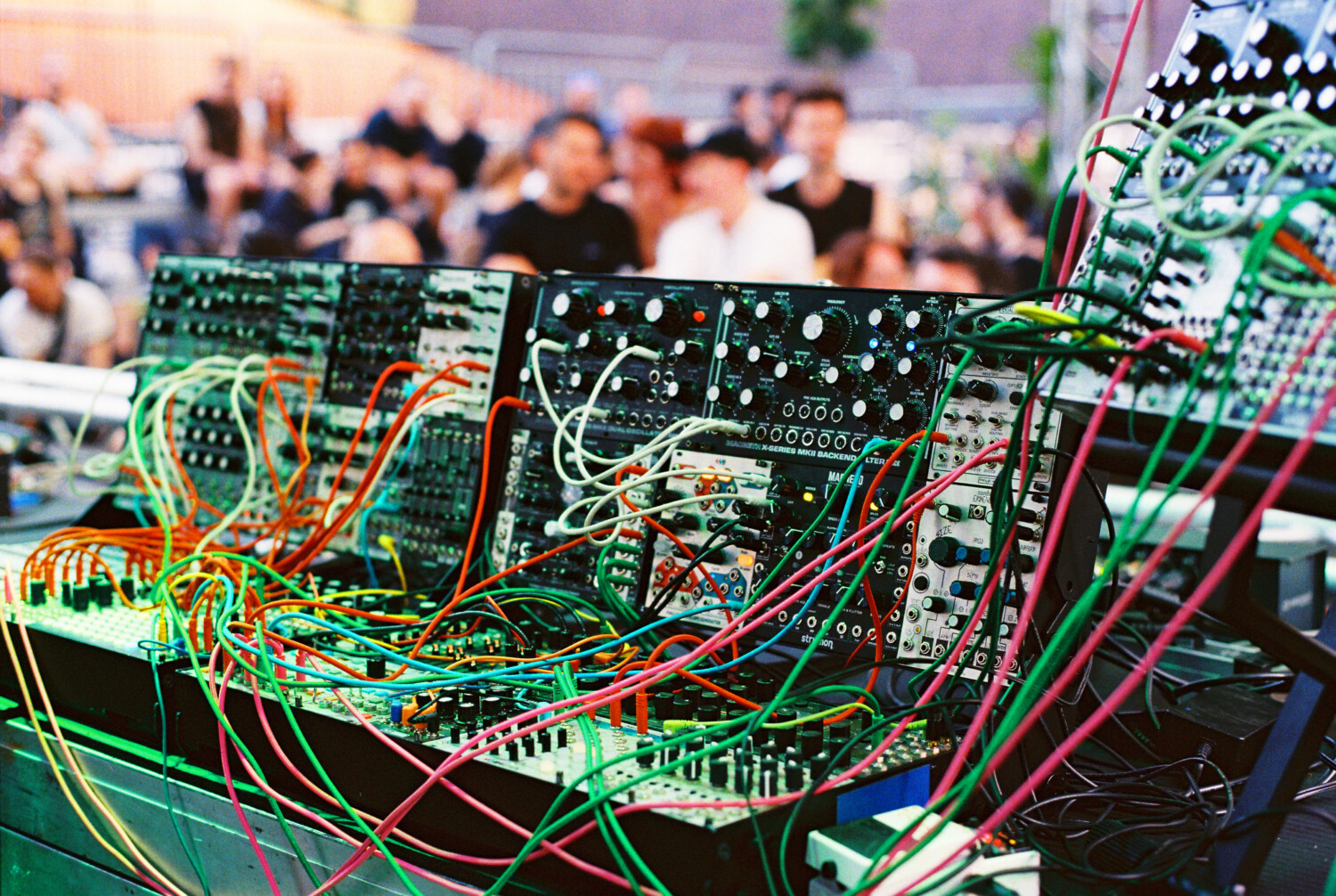
The new Listening Floor tells the other side of the festival, the more intimate and contemplative one. Set up in the Kokerei area, it takes the form of a circular seated amphitheater, complete with an integrated wine bar: a detail that alone signals how much this space wants to set itself apart from the rest of the festival. Not to compete with the energy of the other areas, but to offer a necessary counterpoint. Here the music stops, for a moment, being just groove and four-on-the-floor, and becomes closer to pure, meditative listening: Ahmet Sisman, Andrey Pushkarev, Barker, Carrier, Colin Benders, Emily Jeanne, Grand River, Kangding Ray, Legowelt, Nadia Struiwigh, Out Of Place Artefacts, Tauceti, Tikiman & Richard Akingbehin, Upsammy and Vladimir Ivkovic took turns in a flow of more ambient, suspended, at times almost impalpable sounds. It’s the stage that, more than any other, let people sit, breathe, and experience the festival for a moment not with the body, but with the ear and the mind. A pocket of stillness that, amid three days of four-on-the-floor and adrenaline, turned out to be among the most intense moments of the entire edition.
What played a dominant role, both before and after the festival, were precisely the b2bs. DVS1 and Oscar Mulero, Alarico and Yanamaste, Nastia Reigel and Function, Amotik and Lea Occhi, Marcal and Neel, 1morning and Regal86, and others. It’s precisely in the meeting of artists who are similar yet, at the same time, dissimilar in their sonic language, that this unrepeated moment was built: two distinct visions intertwining on stage, chasing each other, at times clashing, before finding a balance entirely their own, impossible to replicate. This takes nothing away from the artists who performed solo, who still had the chance to show, without filters or sharing, all of their talent. But it’s clear that, this year more than any other, it was the b2bs that became the most recurring topic of conversation among those who truly live the festival, before it even began and well beyond its conclusion.
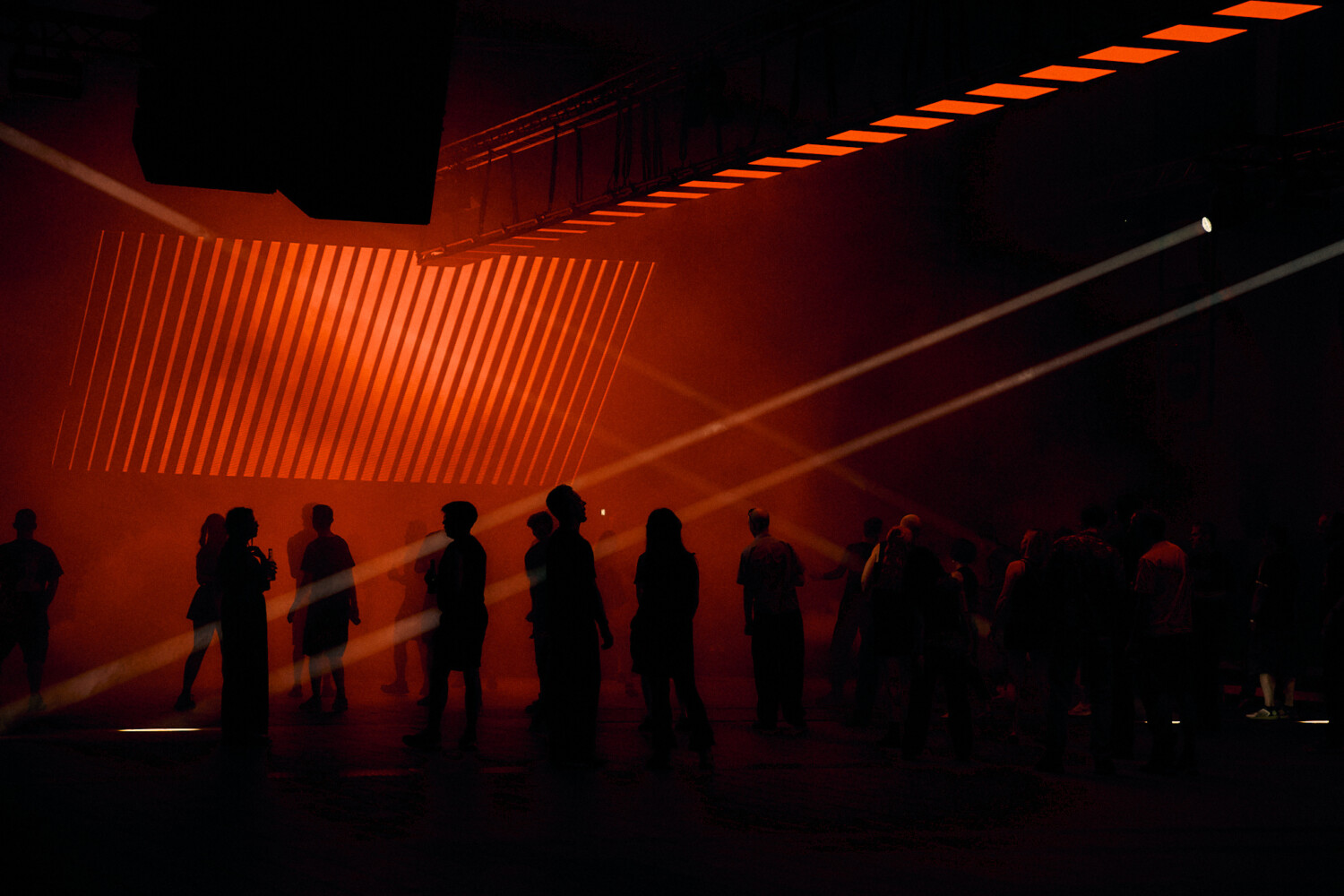
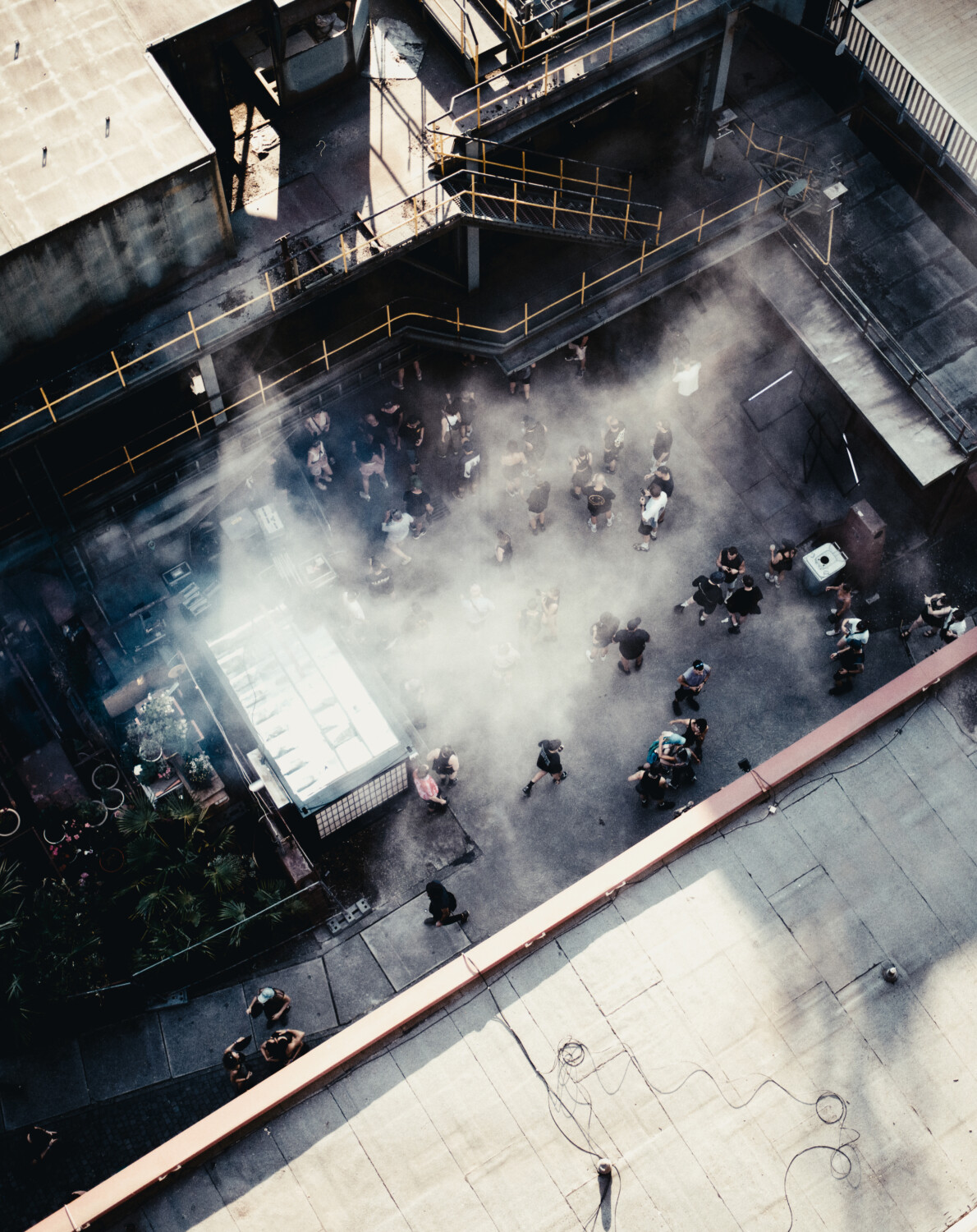
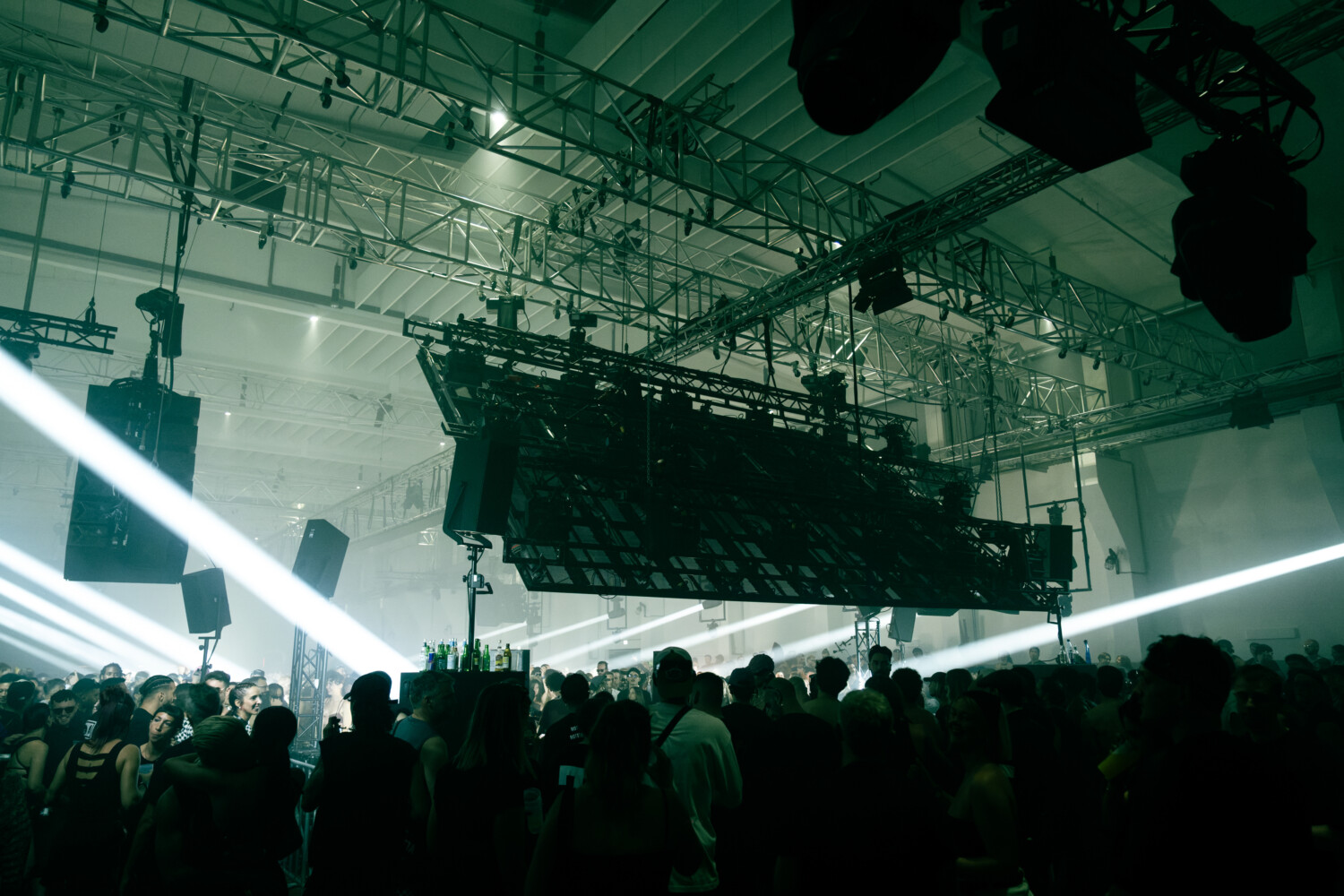
Mischanlage sits directly on the festival grounds, inside the former mixing plant of the coking facility: a raw concrete chamber, compact and almost claustrophobic, designed for close, enveloping sound, opening seamlessly onto the rest of the UNESCO site.