By late autumn, the boundaries between research and cruelty had completely dissolved. Mara was pushing Echo toward a psychic breaking point.
“It’s not enough,” Echo rasped one night, her voice hoarse, her throat raw from hours of phantom gags. She sat on the studio couch, her skin covered in faint, fading phantom grid-lines.
“We’re hovering on the edge of the cage. We need to test the self-preservation instinct.” Mara poured two fingers of rye whiskey into a beaker. “What are you talking about?”
“A hogtie,” Echo said, her eyes hollow, dark circles ringed around her pupils. “A mind-controlled hogtie. You write a script where a rope runs from my ankle cuffs directly around my neck. As my legs drop from exhaustion, the rope tightens on my windpipe. I want to see if the brain’s primal reflex to avoid asphyxiation will break the psychological lock, or if the mind will let the body strangle itself on nothing.”
Mara’s hand trembled, spilling whiskey over the rim of the glass.
“No. If your body somatizes severe asphyxiation, you could suffer real hypoxic brain damage. You could die.”
“If my instinct breaks the lock, the experiment ends and I walk away,” Echo said, her voice dropping to a flat, chilling whisper. “If it doesn’t break… then the art is absolute, and you take total responsibility for what we’ve built.”
After champagne, Mara gave in. The vanity of the artist swallowed the ethics of the scientist. They set up the session that night. Echo laid face down on the concrete floor, wearing her blindfold and earplugs. Mara activated the new track. Her own recorded voice filled Echo’s ears, meticulously describing the hemp rope biting into her ankles, threading up her spine, and looping tight around her trachea.
For ten minutes, it was a masterpiece of horror.
Echo’s back arched violently. Her ankles kicked upward toward her back, pulled by invisible forces. Then, her breathing changed. A harsh, wet rattling tore from her throat. Her face turned a mottled purple. Her trachea visibly collapsed inward, skin indenting as if pinched by a heavy knot. She was strangling on air.
“Echo!” Mara screamed, terror finally shattering her artistic detachment.
“Echo, this is enough! Cinnabar!» Mara lunged forward, ripped the earplugs out of Echo’s ears, and tore off the blindfold.
“Cinnabar! Echo, Cinnabar! It’s over! There is no rope!”
It took three agonizing minutes of chest compressions and slapping Echo’s cheeks before the girl’s lungs sputtered, dragging in a ragged, desperate lungful of real oxygen. The purple hue faded slowly from her skin, leaving behind a thick ring of red petechiae around her neck. Mara collapsed onto the floor beside her, dripping with sweat, heart hammering against her ribs.
“We’re done,” Mara sobbed, reaching for the bottle of rye. “We are done. That was too close. God, Echo, we almost killed you.”
Echo said nothing. She just lay on her side, breathing heavily, staring at the concrete wall with unblinking eyes. They drank together in silence, knocking back half a bottle of rye straight from the beaker until the edges of the room blurred, and Mara finally passed out on the studio cot, exhausted, relieved, and entirely spent.
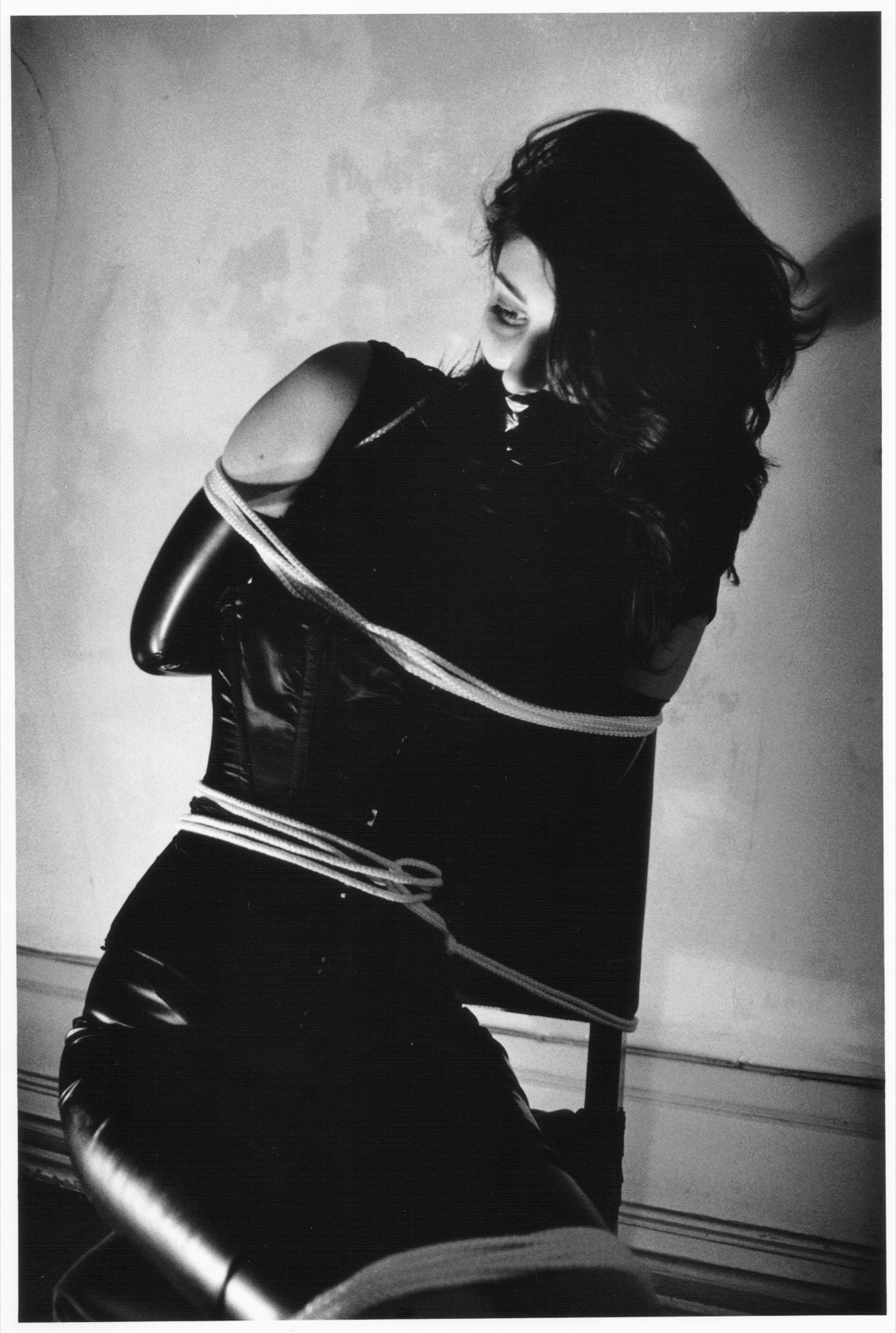
Mara woke up in pixeled darkness. Her head throbbed with a vicious hangover. She tried to lift her hand to rub her eyes, but her arm wouldn’t move. She jerked her torso—nothing. She was strapped to a heavy wooden chair in the middle of the studio. Thick manila rope was wrapped tightly around her chest, her spine pinned to the backrest. Her arms were bound behind her, wrists lashed together with relentless knots. A thick strip of duct tape was wrapped tightly around her mouth.
The basement halogens flickered on.
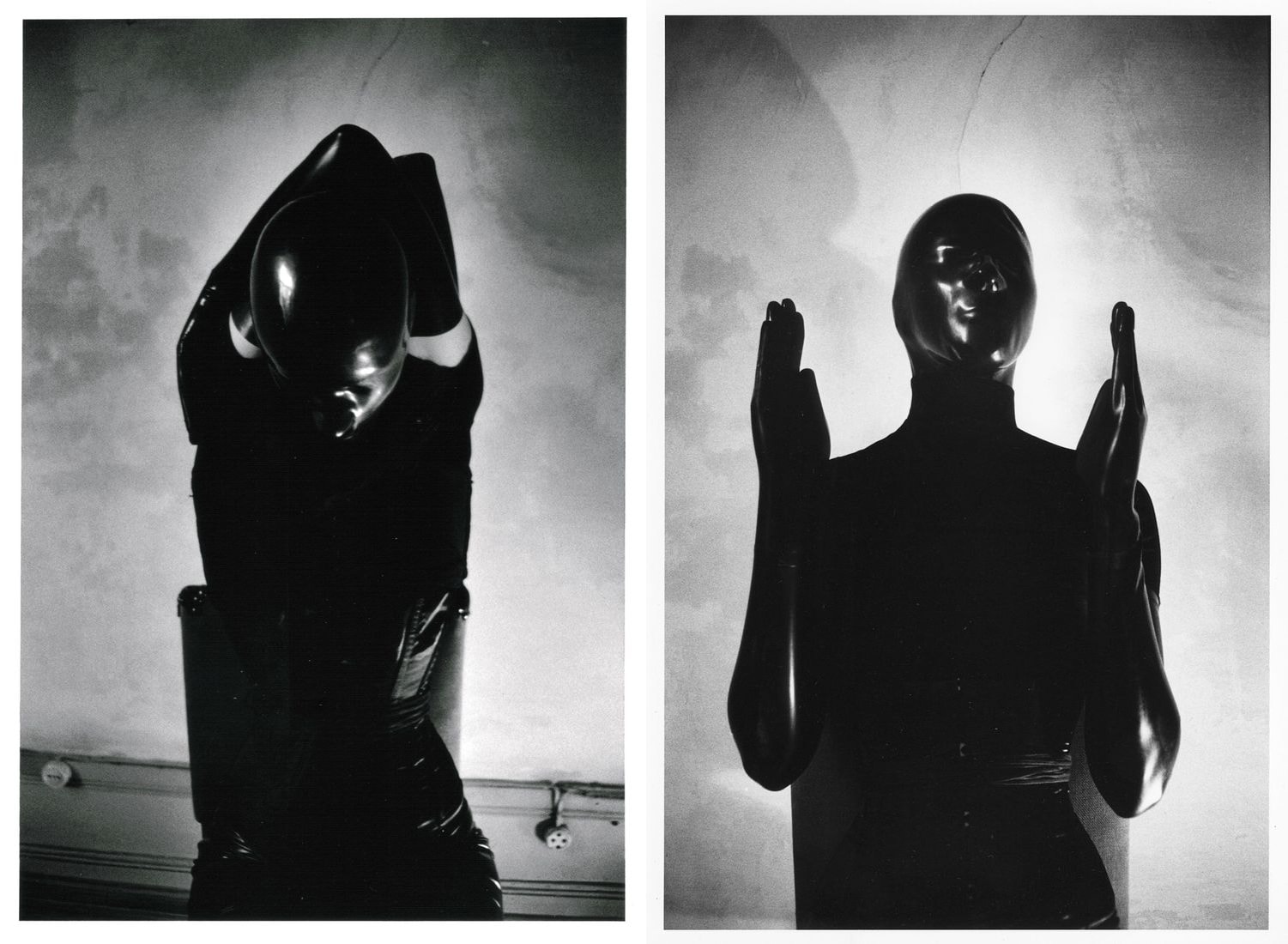
Echo stood near the door, wearing a spotless latex catsuit. She looked entirely sober, completely calm, and unsettlingly focused.
Mara made a panicked, muffled sound against the tape, her eyes wide.
Echo didn’t answer. She walked over slowly, standing in front of Mara. She reached out and smoothed a stray lock of hair behind Mara’s ear with somewhat terrifying tenderness.
“You panicked last night, Dr. Thorne,” Echo whispered softly. “You let fear ruin the data. You proved nothing.”
Mara thrashed against the wooden chair, but the real ropes held her fast.
“You said if I couldn’t break the lock, you would take total responsibility for the project,” Echo continued, her voice flat, serene. “It’s time to take responsibility.”
Echo reached into her pocket and pulled out her earplugs, slipping them into her own ears. Then, with smooth, practiced motions, she pulled a light-proof latex hood over her head, zipping it behind her neck. She was sealed inside her own skull.
In her right hand, Echo held the digital remote control for the studio sound system that also fed her earplugs. Mara’s eyes dilated as she realized what was happening. She thrashed violently against her wooden bindings, screaming uselessly into the thick adhesive tape, but there was no one to hear her.
Echo’s thumb found the play button on the remote, and pressed down.
Across the room, the wall-mounted subwoofers hummed to life, vibrating the concrete beneath Mara’s feet. Through the studio speakers, Mara’s own recorded voice began to echo through the room, soft, clear, and perfectly articulated:
“The cord around your neck is three-eighths-inch braided jute. It is tied in a running bowline, attached directly to the ankle cuffs behind your back. When your legs fall, the loop tightens. You have trouble breathing. You cannot scream. You cannot break the lock…”
Echo lay perfectly still in the center of the studio beneath the humming speakers, sealed in latex and resolve.
Her hogtie began to take form.