About the photographer: Kori He
How does intuition guide you when you’re behind the lens — do you follow chaos or control?
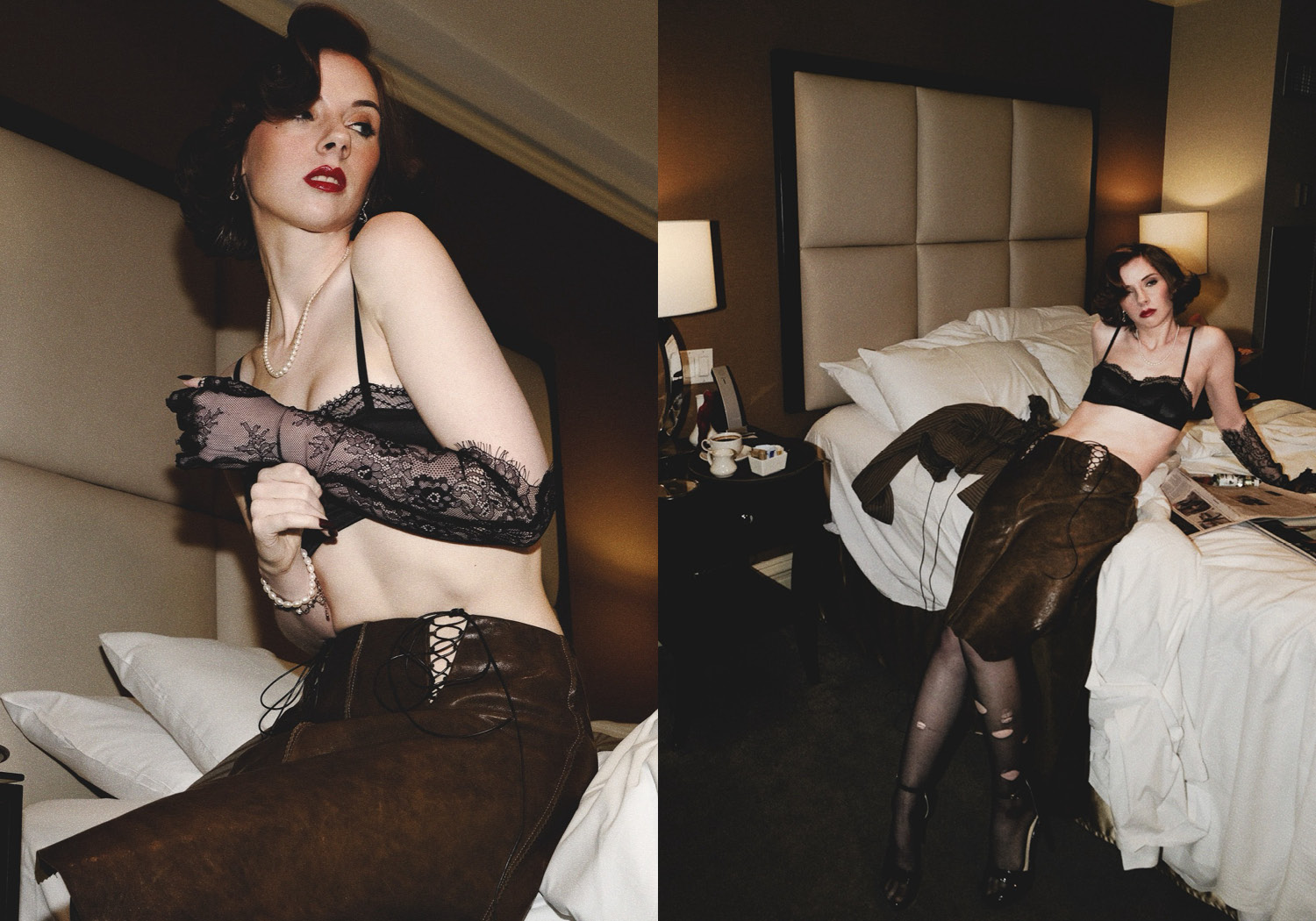
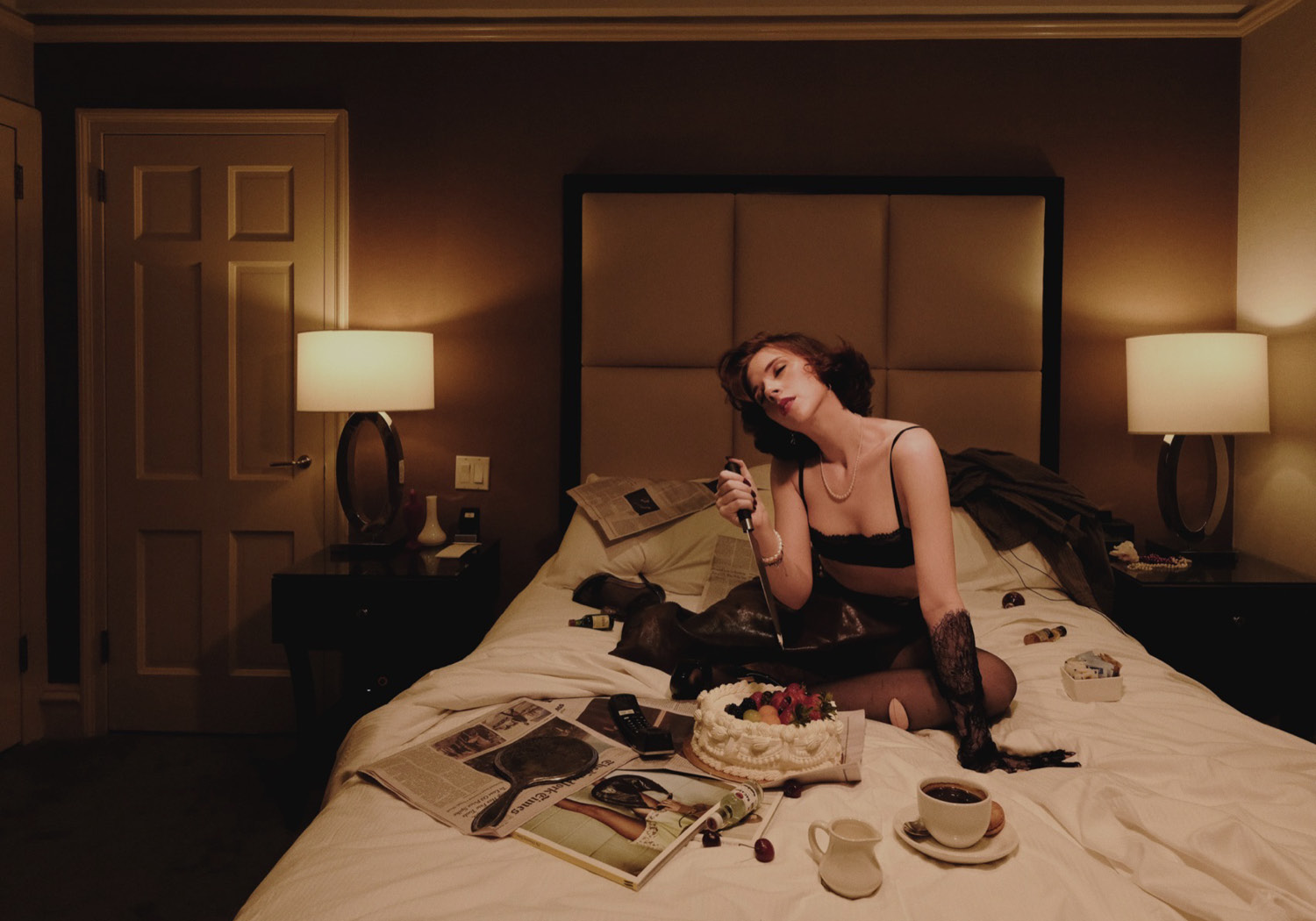
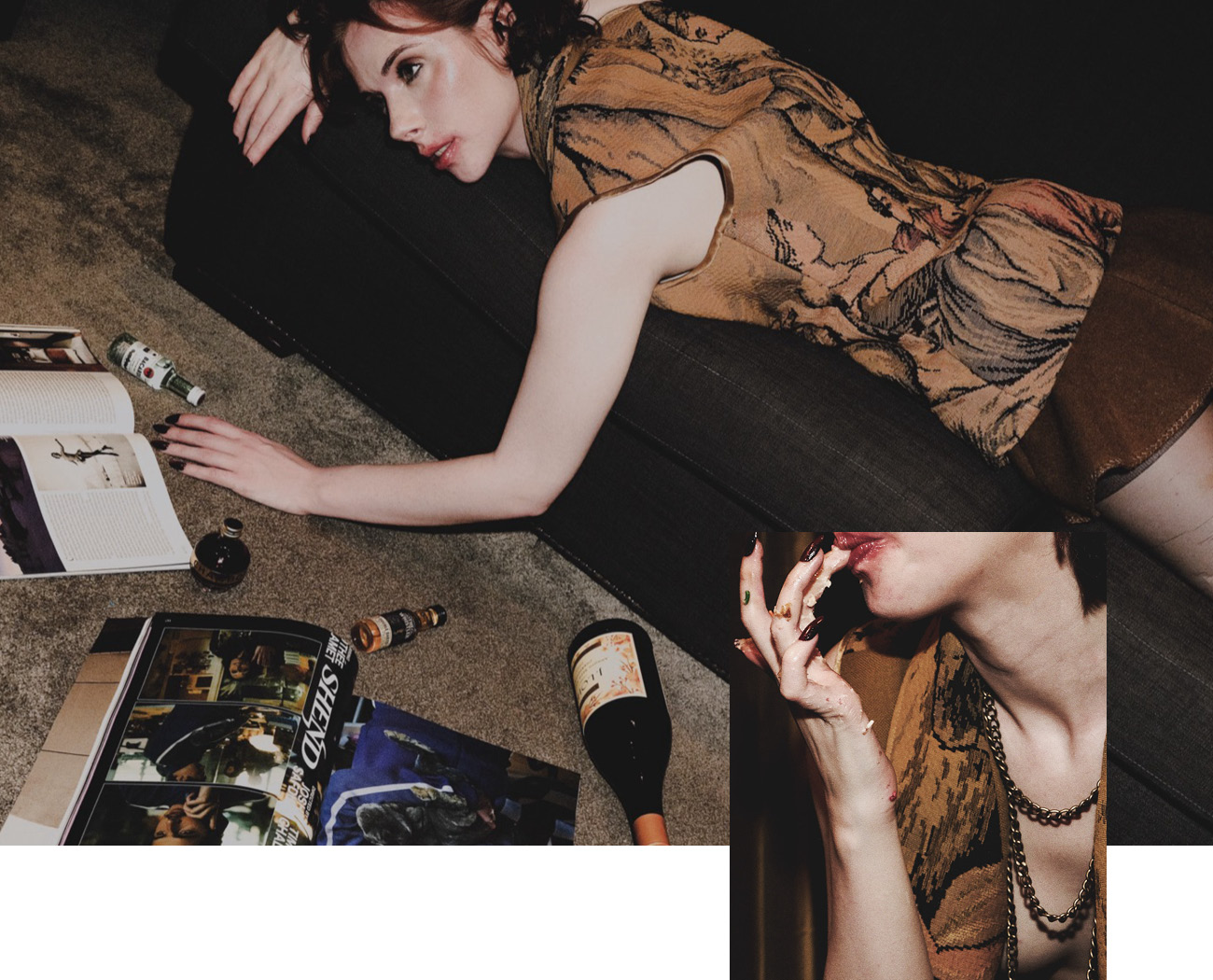
I don’t separate intuition from structure — intuition happens inside a very clear framework. Before shooting, I usually build a very precise emotional and spatial logic. In this series, the character is a “drifter” — someone suspended between indulgence and disinterest, existing in a temporary space like a hotel suite. That idea already defines how she moves, how she occupies the bed, and how she touches objects.
But once I start shooting, I stop directing too tightly. I allow small disruptions — a gesture that becomes careless, a moment where she stops “performing elegance.” That’s where intuition comes in. So I don’t follow chaos. I create a controlled situation where chaos can reveal something truthful.
What emotion do you find yourself chasing the most when you shoot?
I think I’m always chasing a kind of detachment. Not in a cold way, but more like a distance. I’m really drawn to that pull between presence and absence — when someone is physically there, but their mind has already drifted somewhere else. Those in-between moments matter more to me than any clear emotion. Like when a gesture is unfinished, or when the subject is caught in the middle of something, not fully aware of being seen.
In this series, she’s constantly moving between indulgence and detachment. She’s doing things that should feel excessive or emotional, but there’s always a slight disconnect. That contradiction is usually what pulls me in.
What’s the most fragile thing about your creative process?
The most fragile part is the moment when the subject stops performing and starts existing. Everything in my work depends on that shift. The styling, the references, even the narrative — they’re all constructions. They create a kind of surface. But if the subject stays aware of that surface, the image just becomes decorative.
What I’m really waiting for is a small rupture — when that control slips. It can be very subtle. A hesitation, a gesture that doesn’t quite “fit,” a moment where she’s no longer presenting herself but simply drifting. There’s also a kind of negotiation happening. The subject is aware of being seen, I’m aware of constructing the image, and somewhere in between, something real either appears or doesn’t. That moment is extremely fragile. You can’t direct it, and the more you try to reach for it, the more it disappears.
When do you know a photograph is finished — or do you believe in letting it remain imperfect?
I don’t think in terms of completion. I think in terms of charge. A photograph is finished when the charge between elements holds — between the garment and the body, between control and collapse, between elegance and something more destructive underneath.
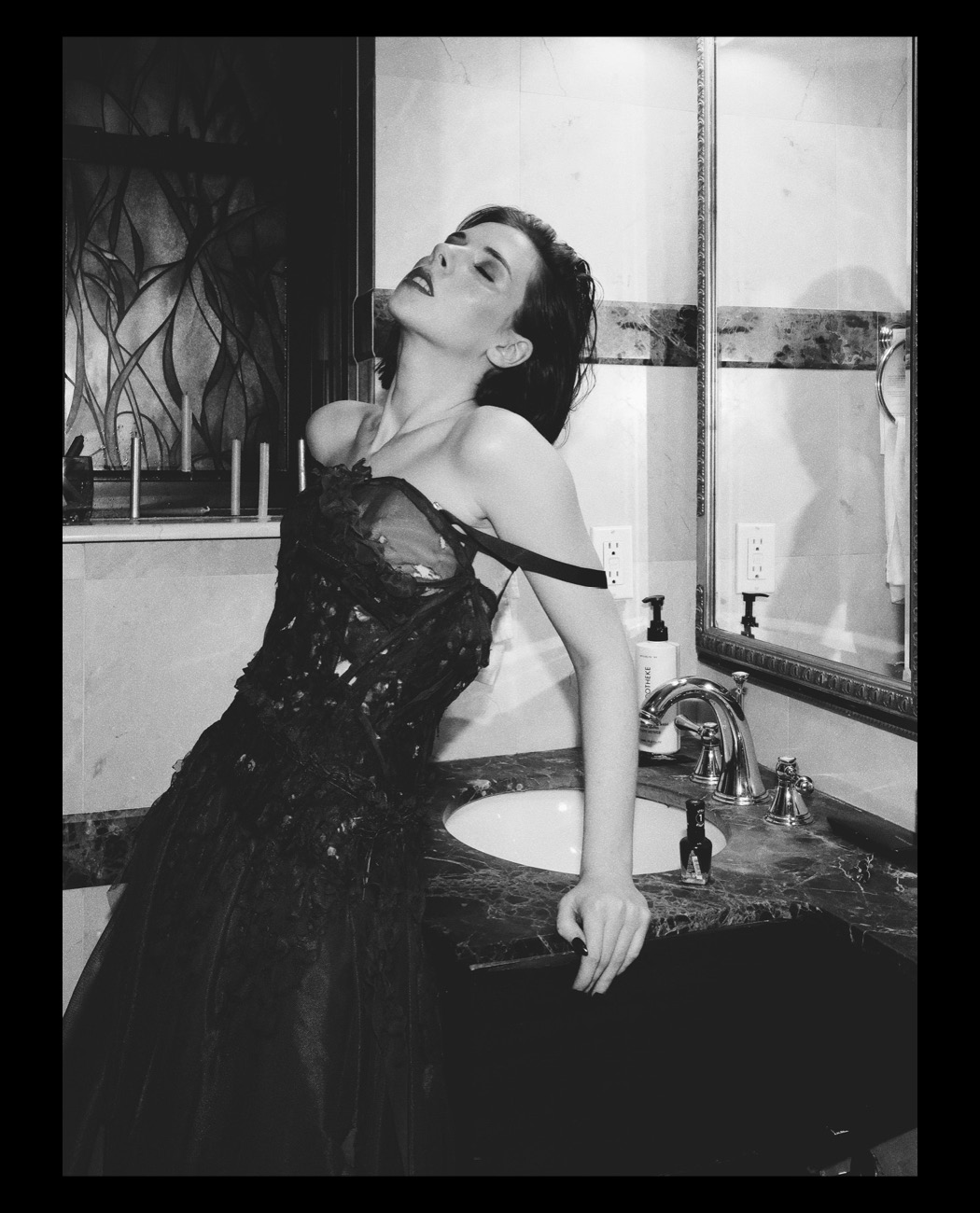
In this series, I was influenced by Helmut Newton — the precision, the constructed sensuality — but I wasn’t interested in resolution. I wanted the image to feel slightly unstable, even slightly uncomfortable, sometimes unsettling. So I often leave things imperfect on purpose. Imperfection allows the image to keep breathing.
How does your environment (city, solitude, noise) shape your visual language?
I’m drawn to narrow, temporary spaces — places that feel intimate, but also a bit distant. Spaces that are private, but not really personal.
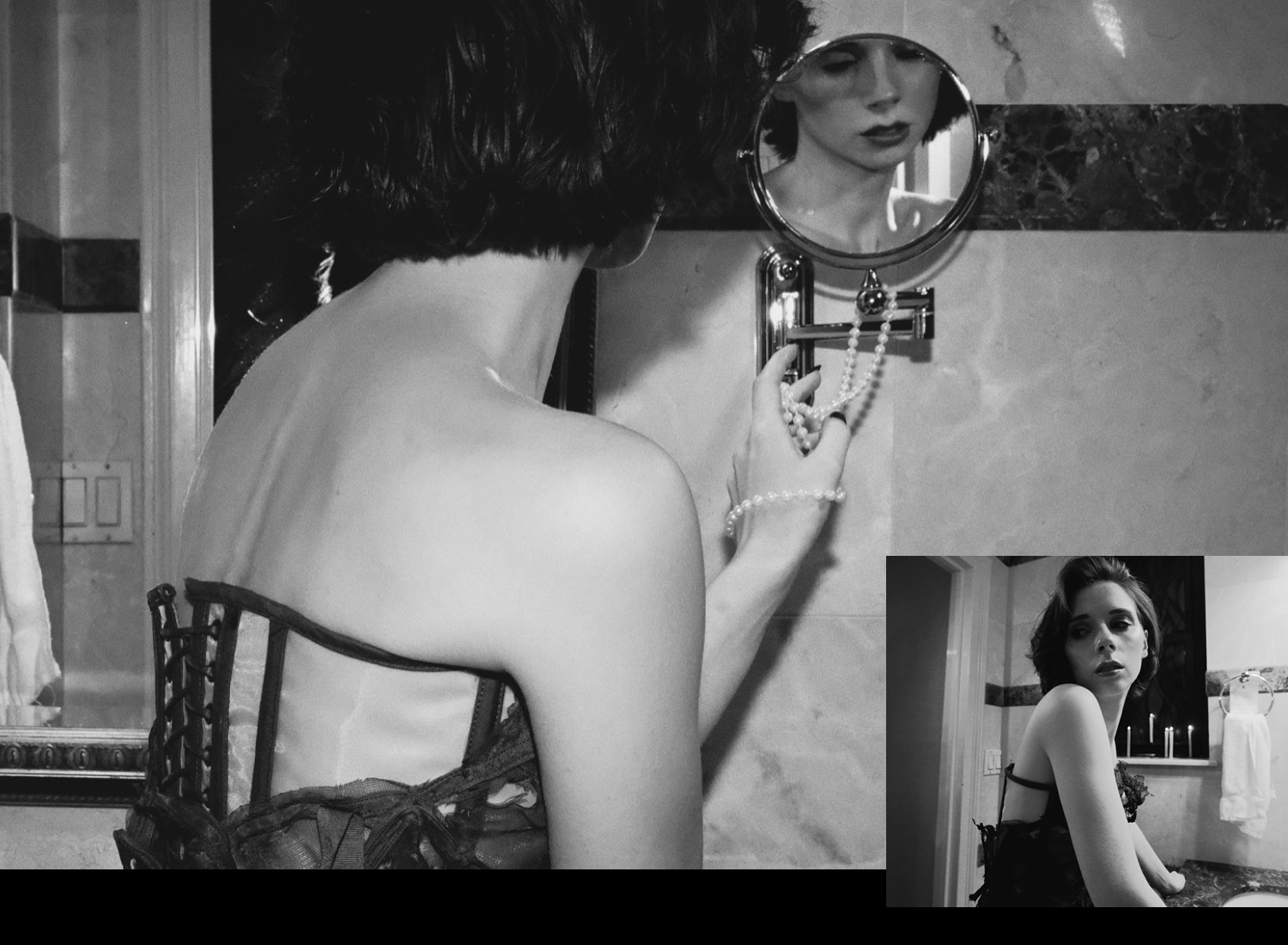
For this series, the hotel room was very important. It has this sense of anonymity. It’s a space where identity feels slightly suspended — you’re not fully yourself, but you’re also not performing for anyone in particular. Living in a city like New York, there’s always movement, noise, people. But what I’m more interested in is the isolation within that. That moment when someone is finally alone, within a contained space, and there’s nothing left to perform.
That’s usually when something starts to shift — when the charge becomes visible.
Whose gaze do you shoot for — your own, the subject’s, or the viewer’s?
I start from my own gaze, but I’m not trying to fix how the image should be read. I’m more interested in keeping something unresolved — where the subject isn’t fully accessible, and the image doesn’t explain itself. There’s always a slight distance. Because of that, the viewer ends up bringing their own gaze into it. They’re still outside the image, but at the same time, they step into it in a way — projecting their own reading, their own story.
The subject also holds her own space. She’s not there to be fully understood or consumed. Her presence, her resistance, even her indifference all shape how the image unfolds. I think the intimacy I’m drawn to comes from that overlap — between how I see, how she exists, and how the viewer enters the image.