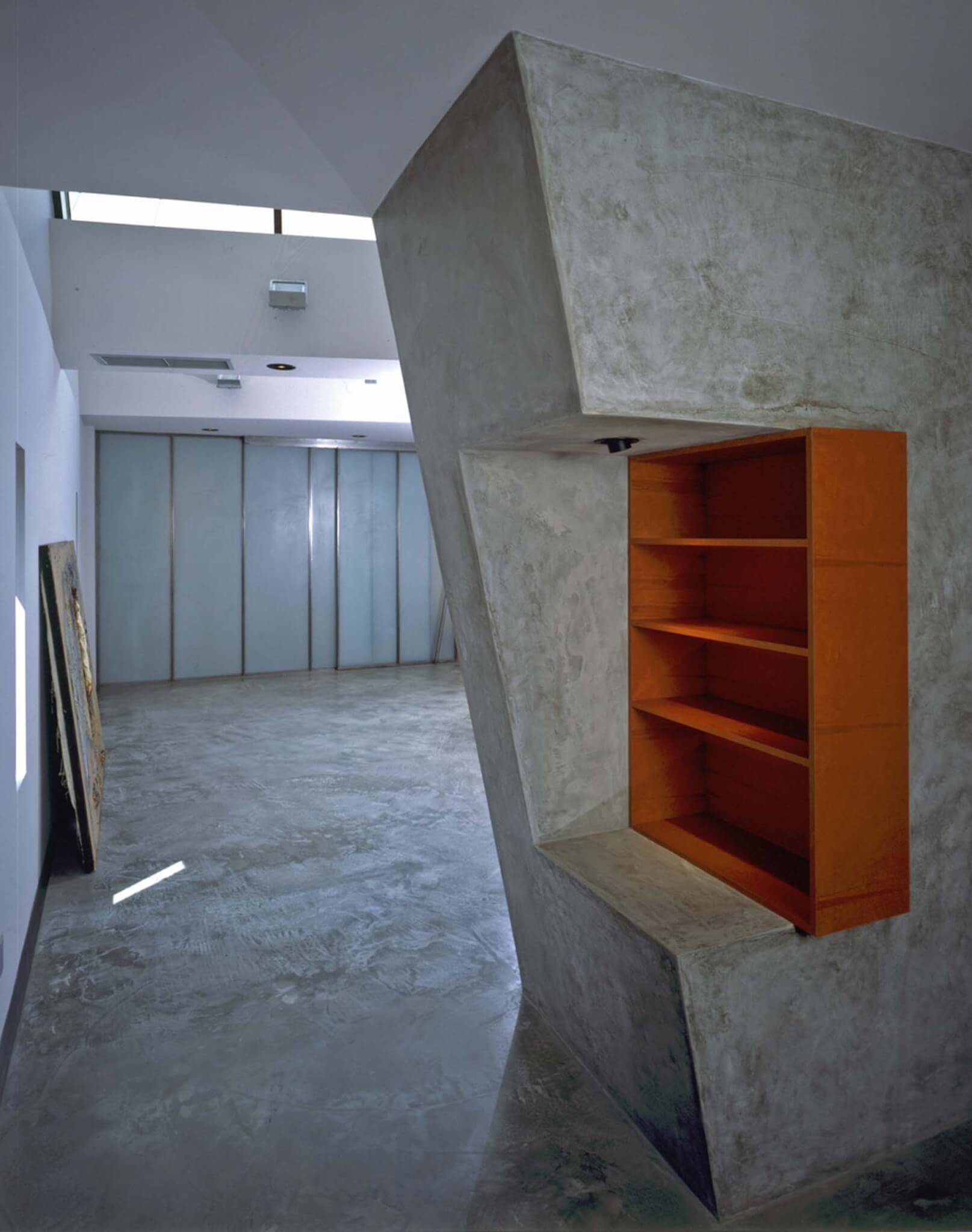
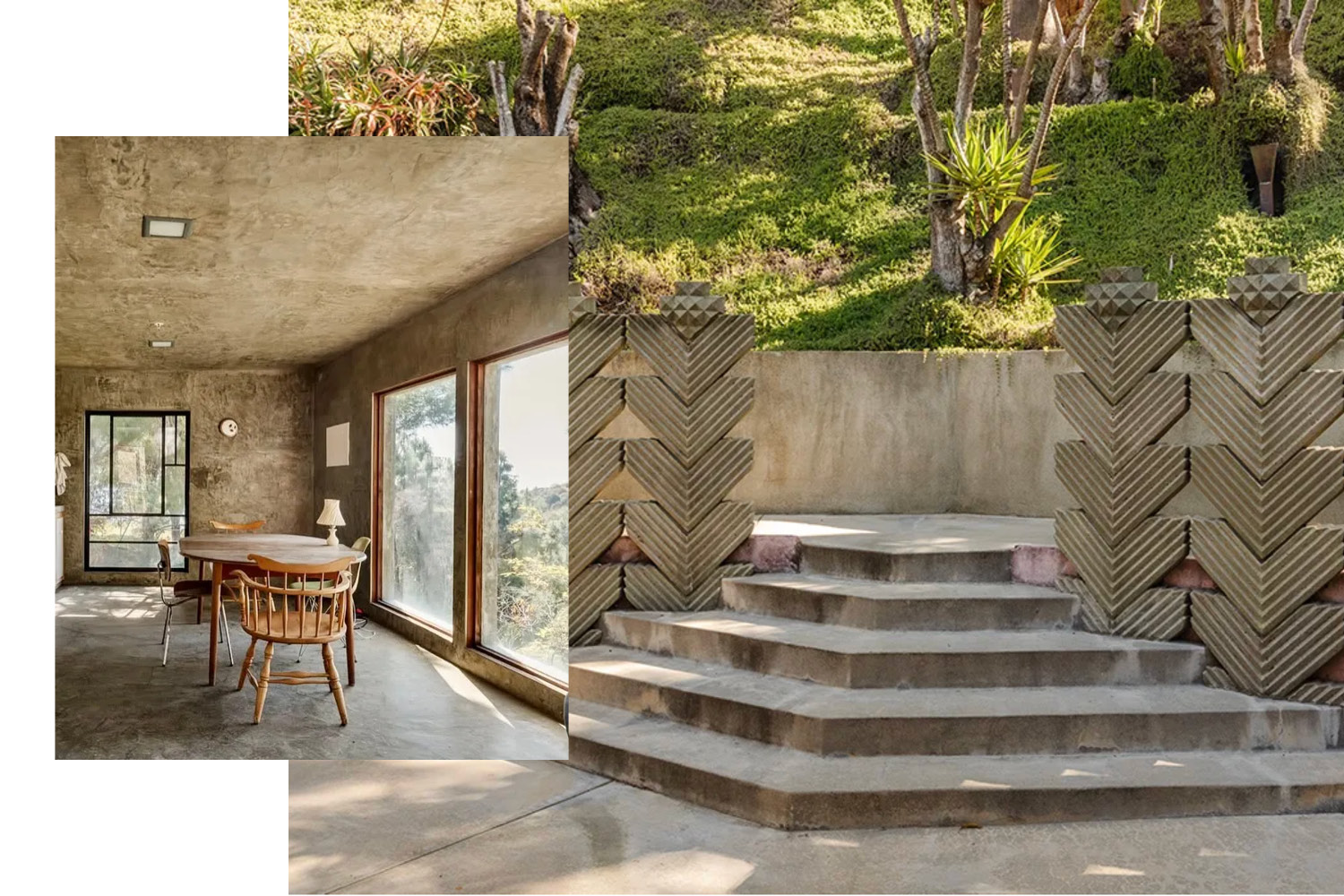
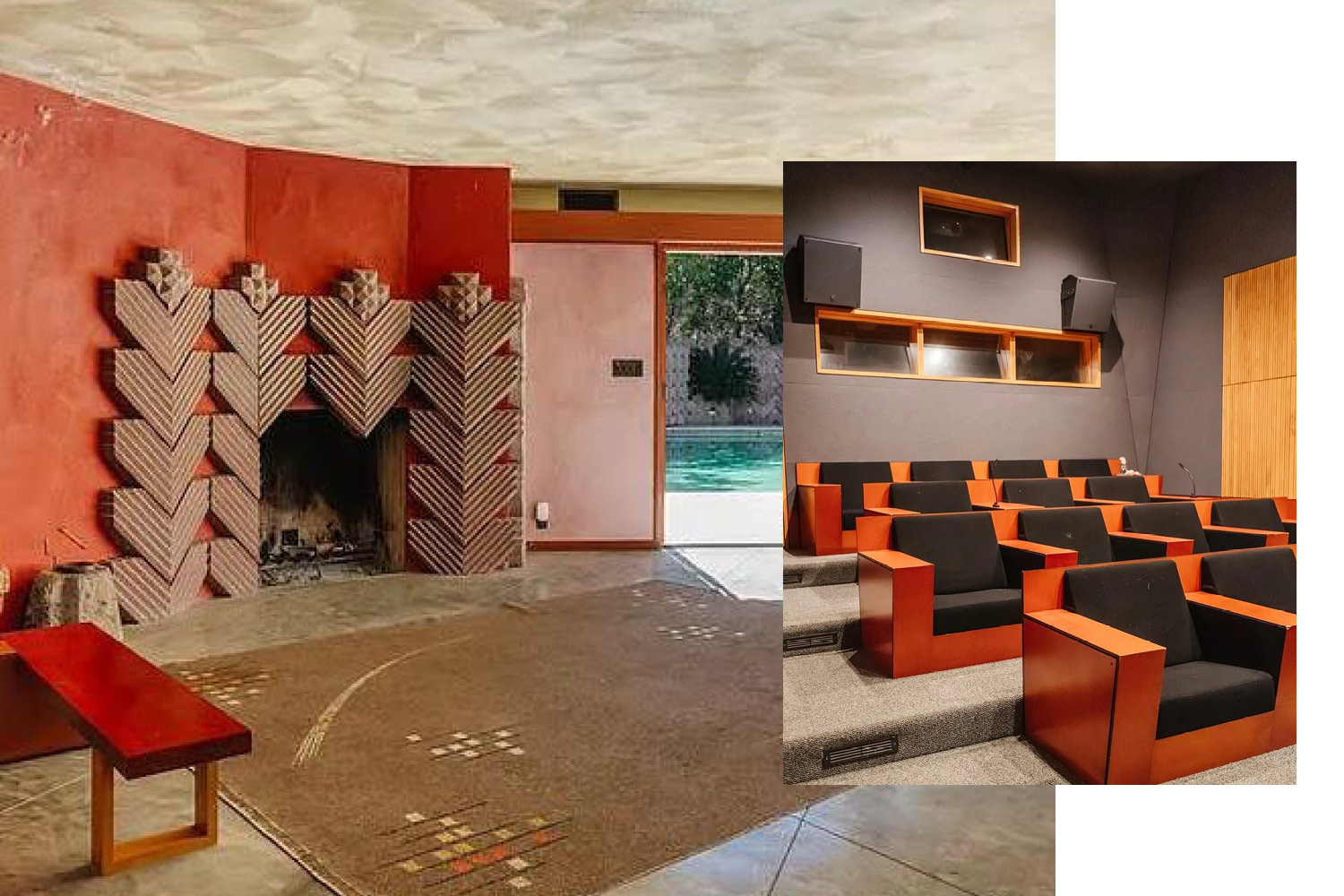
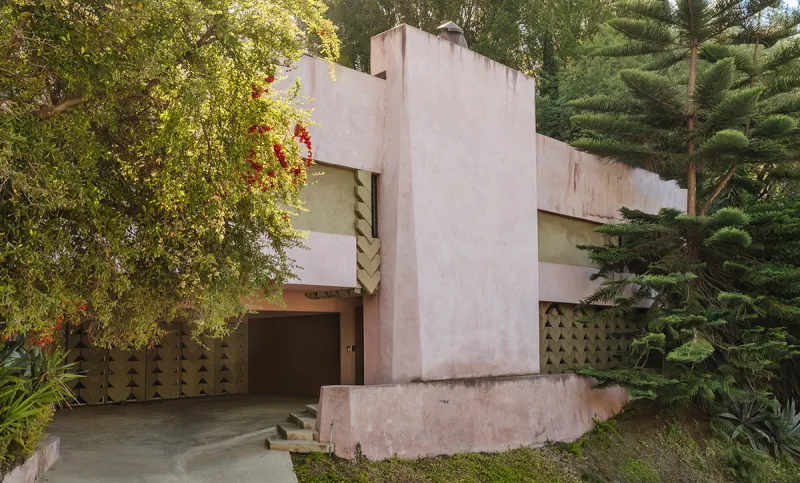
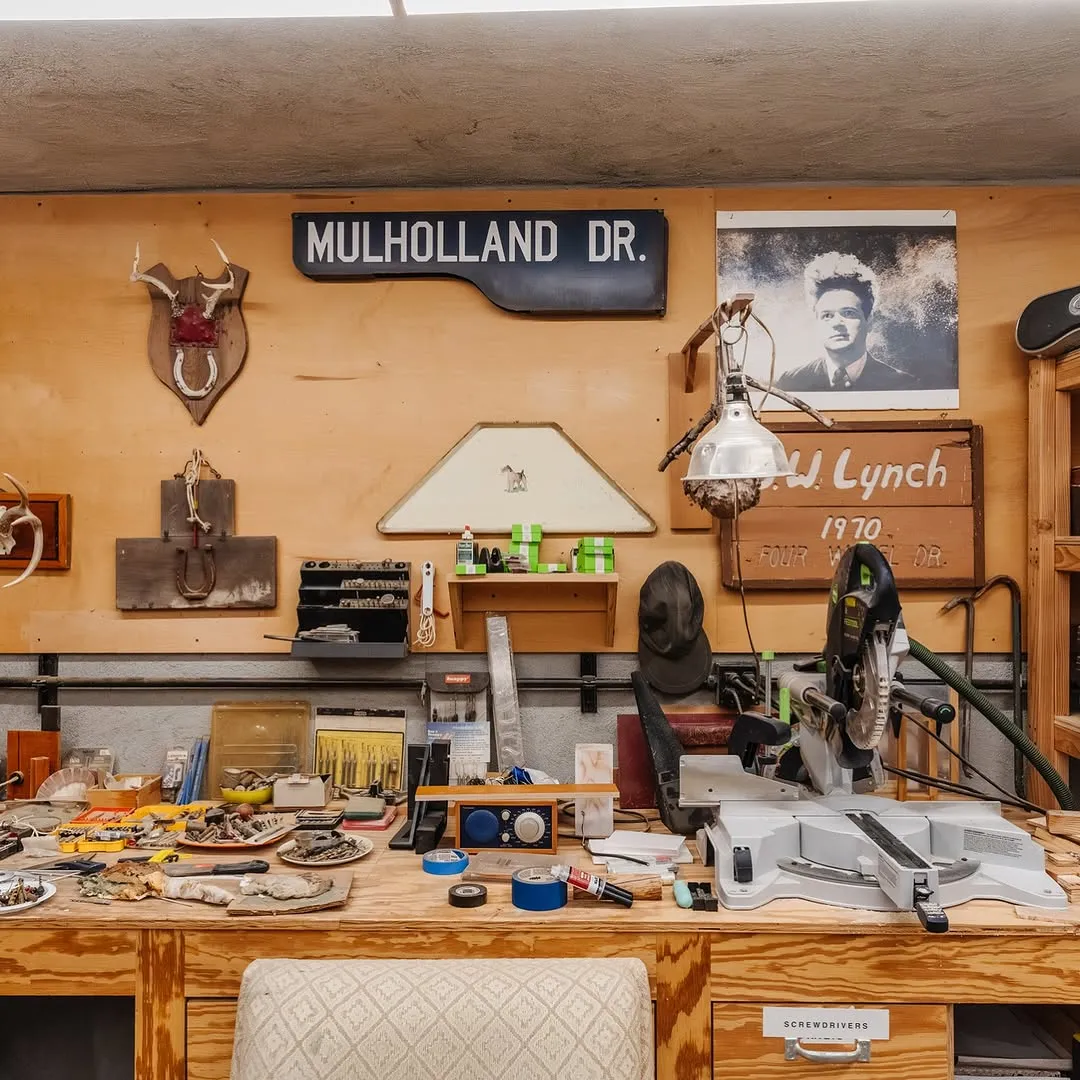
In the woodshop at Asymmetrical Productions, a Mulholland Dr. street sign hangs above the workbench. A miter saw, a radio, a drawer labelled SCREWDRIVERS in plain block letters; the surface of every table littered with ongoing projects. A portrait of young Lynch watching over, hung on the wall above the tools. The furniture seen in Lost Highway was built in this room, and then carried across the compound into the film. The set, workshop and home all occupied the same hillside, connected by concrete footpaths and chevron. The line between where Lynch lived and where he created was never drawn.
Hollywood’s relationship to the domestic has always been one of deliberate distance. The studio system is built on separation. The director works here, post-production happens elsewhere, and the work stays within the boundaries specified for it. Even directors who collapsed some of that distance, like Kubrick, who reconstructed his own apartment’s furniture for Eyes Wide Shut, maintained the fundamental partition between where they lived and where things were physically made. Lynch refused it. The compound was not where he lived alongside his work. It was a place where both coexisted without distinction, an argument for what becomes possible when the space you create is also the space you wake in, rest in, exist in.
In 1973 he began practicing Transcendental Meditation and continued without interruption for the rest of his life, twice daily. He described it as diving within, moving below the pressure of the day into a layer where ideas sit available rather than forced. The compound’s architecture and the meditation practice held the same logic: arrange the space, arrive with attention, and wait for what the conditions make possible.