Constellation Divine
Fashion | Exclusive
Air, Earth, Water and Fire, coexisting in the most powerful combination. A fashion story from NYC photographed and directed by Queena Yan, including a dream time of 10 muses.
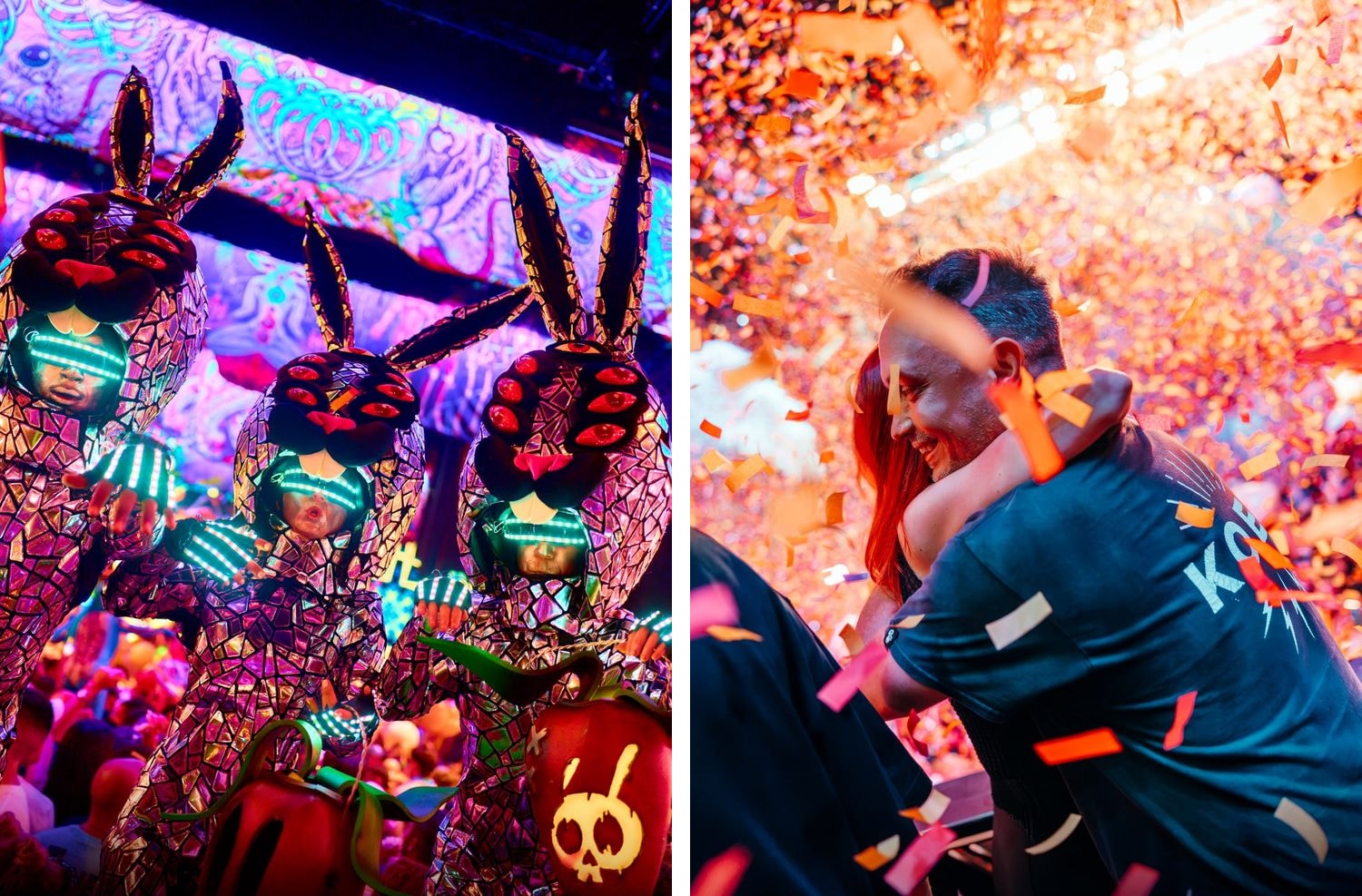
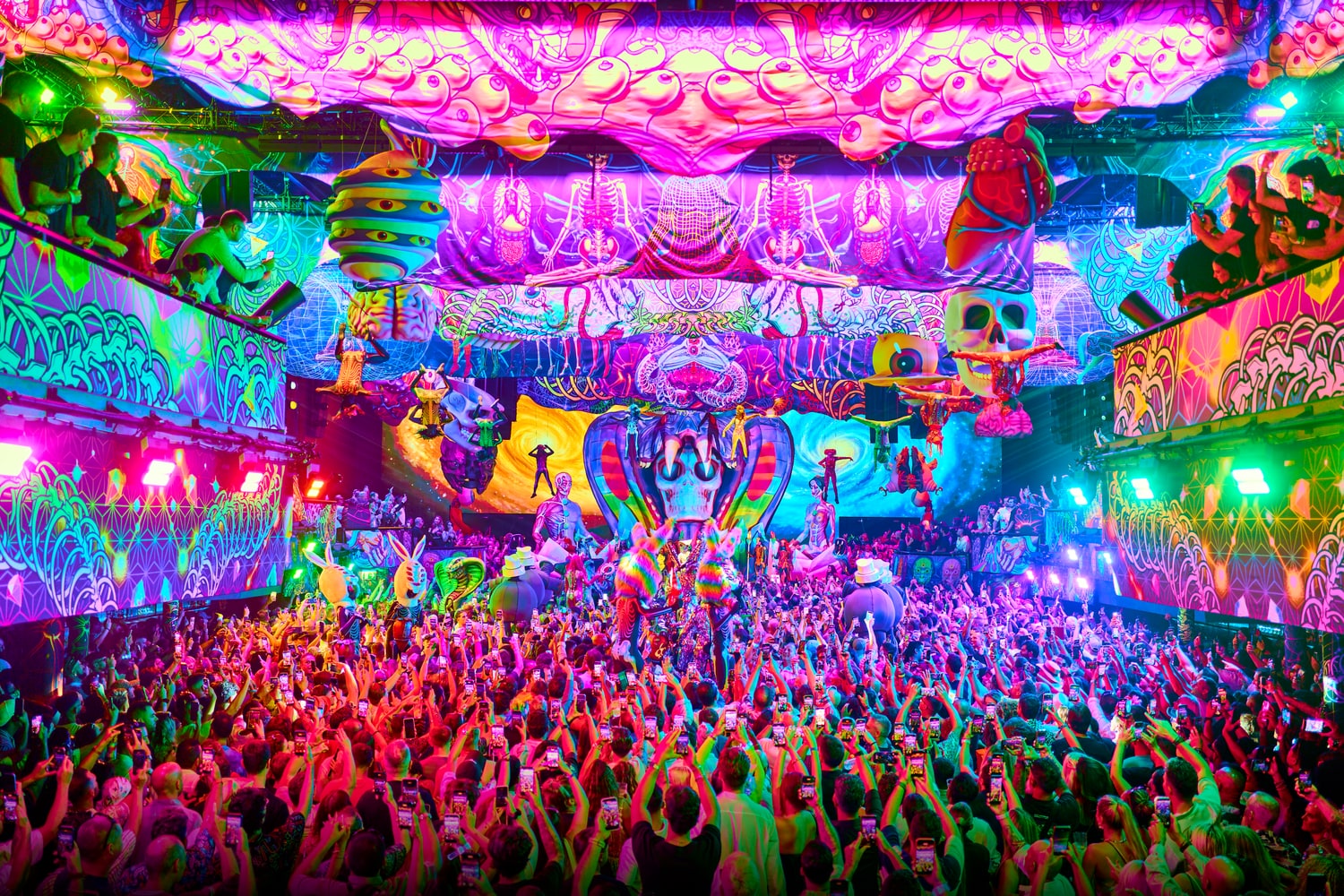
To understand elrow’s closing party, you have to look up, then bring your gaze back down a few metres. Suspended above the dance floor are science-fiction figures and creatures that no bestiary has ever recorded. Lower down, those same beings walk among the crowd, at the level of the dancers, and for a moment it becomes impossible to tell who is wearing the costume and who is watching. Colour is everywhere, leaving no room for shadows. On the walls, across bodies, in the air. On the night of October 3, the Main Room at [UNVRS] had the grandeur of a monument and the temperament of a street parade.

The venue plays its part. [UNVRS] stands on the site of the former Privilege, long billed as the world’s largest club. From the outside, it resembles a whitewashed Ibizan finca. Inside, it is a space designed for arena-scale productions, with a custom-built L-Acoustics sound system and a modular structure capable of transforming its identity every night. Now in their second summer together, elrow and [UNVRS] have not come together as two forces testing each other’s limits. They have merged, driven by the same instinct for scale.
The right word for that night is the simplest one: celebration. To celebrate is to honour an event and mark it in a way that lifts it out of ordinary time. The word carries a sense of solemnity that the term “party” has lost along the way. A closing party is usually framed as an ending. This one felt more like an anniversary, and those with the strongest claim to celebrate it were the people who had built it.
Behind every elrow Saturday lies a body of work the audience never sees. The themes for a season begin to take shape in October, as soon as the previous one ends, and the production process continues until the opening in June. Once the opening is over, attention turns to the closing. For much of the team, it is a commitment without a break, and the final Saturday is when the pressure finally lifts. The staff, the family and the audience that has followed the summer come together in the same room to celebrate the same thing.
That celebration is an inherited craft for elrow, as its genealogy makes clear. The company was founded in 2010 by brothers Cruz and Juan Arnau, but it belongs to the sixth generation of a family from Fraga, in Aragon, that has been organising other people’s leisure for more than a century and a half. According to historical accounts, Café Josepet opened in 1870, followed by a cinema, a dance hall and a nightclub. That nightclub became Florida 135, nicknamed the Cathedral of Techno and designed in 1985, according to contemporary accounts, to evoke the world of Blade Runner. Seen in this light, the Main Room no longer feels like an exception. The science-fiction creatures hanging from its ceiling have a precedent in a provincial club conceived forty years ago as the set of a film.

The visual language has a similarly tangible origin. In 2010, the year elrow was founded, South African artist Dan Popper taught the team how to create decorations using EVA foam, a lightweight, inexpensive material that can be cut and painted. The 2026 season opened with Bhūtarāh, a theme developed with Popper himself. The circle closed where it had begun: with hands-on craftsmanship, albeit on a much larger scale.
The closing followed the same trajectory, this time with Austrian artist NYCHOS. Dance With The Serpent, first created in 2023, returned as version 2.0, reimagined for the dimensions of [UNVRS]. In NYCHOS’s work, animal and human bodies are peeled open layer by layer, revealing fragmented, vividly coloured anatomies. In a room full of costumed bodies, those images were not merely a backdrop. They articulated what was happening on the dance floor below.
One thinker gave this kind of structure a name: Mikhail Bakhtin. In his study of Rabelais, published in English as Rabelais and His World, the medieval and Renaissance carnival emerges as a second life for the people. For a limited time, hierarchies are suspended and everyone takes part. Carnival is not something you watch from the outside; it is something you inhabit. Laughter belongs to everyone and is directed at everyone, including those who laugh. Its defining figure is the grotesque body: open, unfinished, always on the verge of becoming something else. It also brings endings and beginnings together, because what comes to a close makes room for what is about to emerge.
Every analogy has its limits. Bakhtin’s carnival belonged to the public square; this one has a door, a ticket and a production schedule. Yet the framework holds up remarkably well. Creatures sharing space with the crowd, collective laughter, bodies opened up on screens, a party marking an ending while already pointing towards the next cycle.

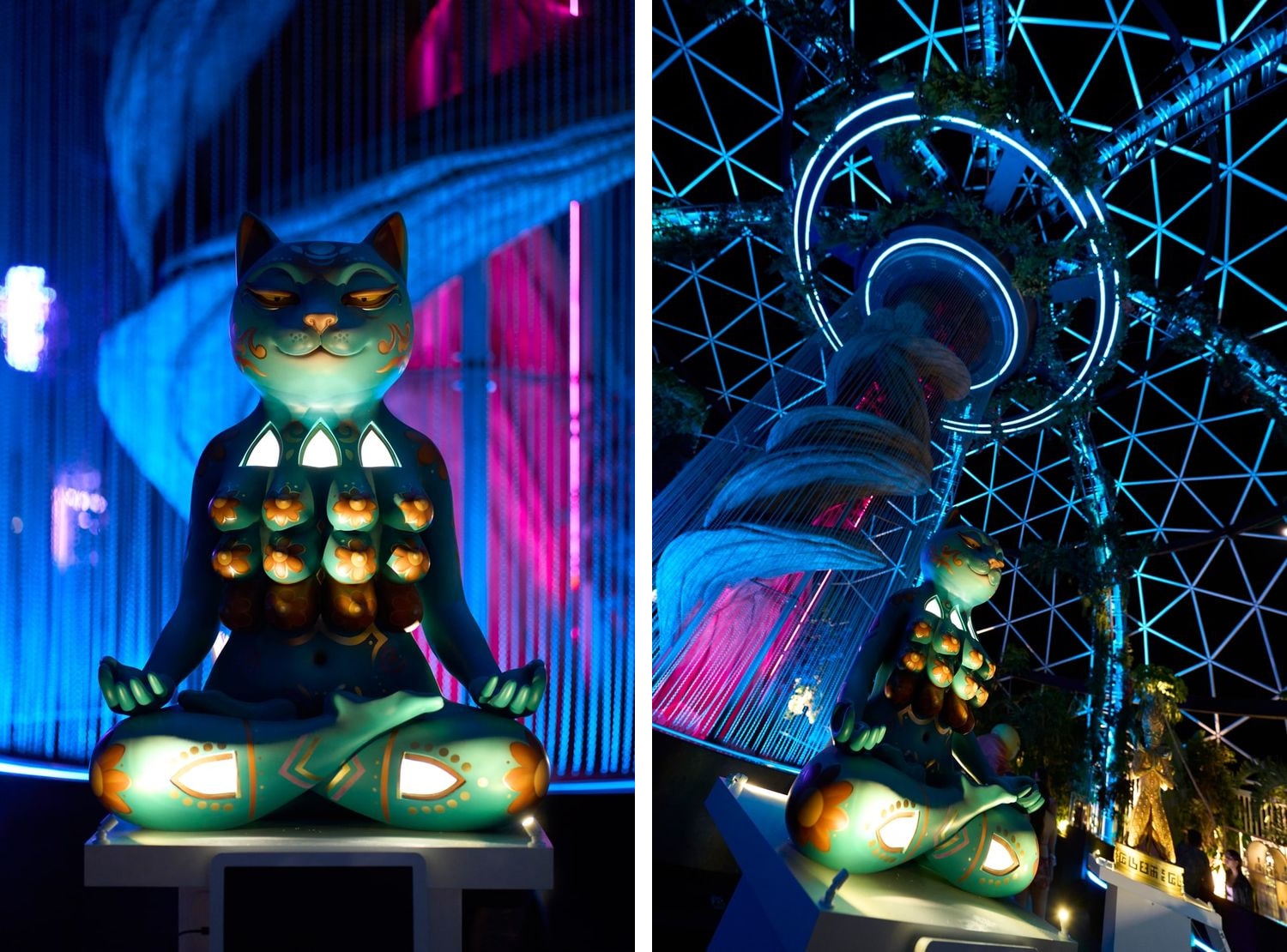
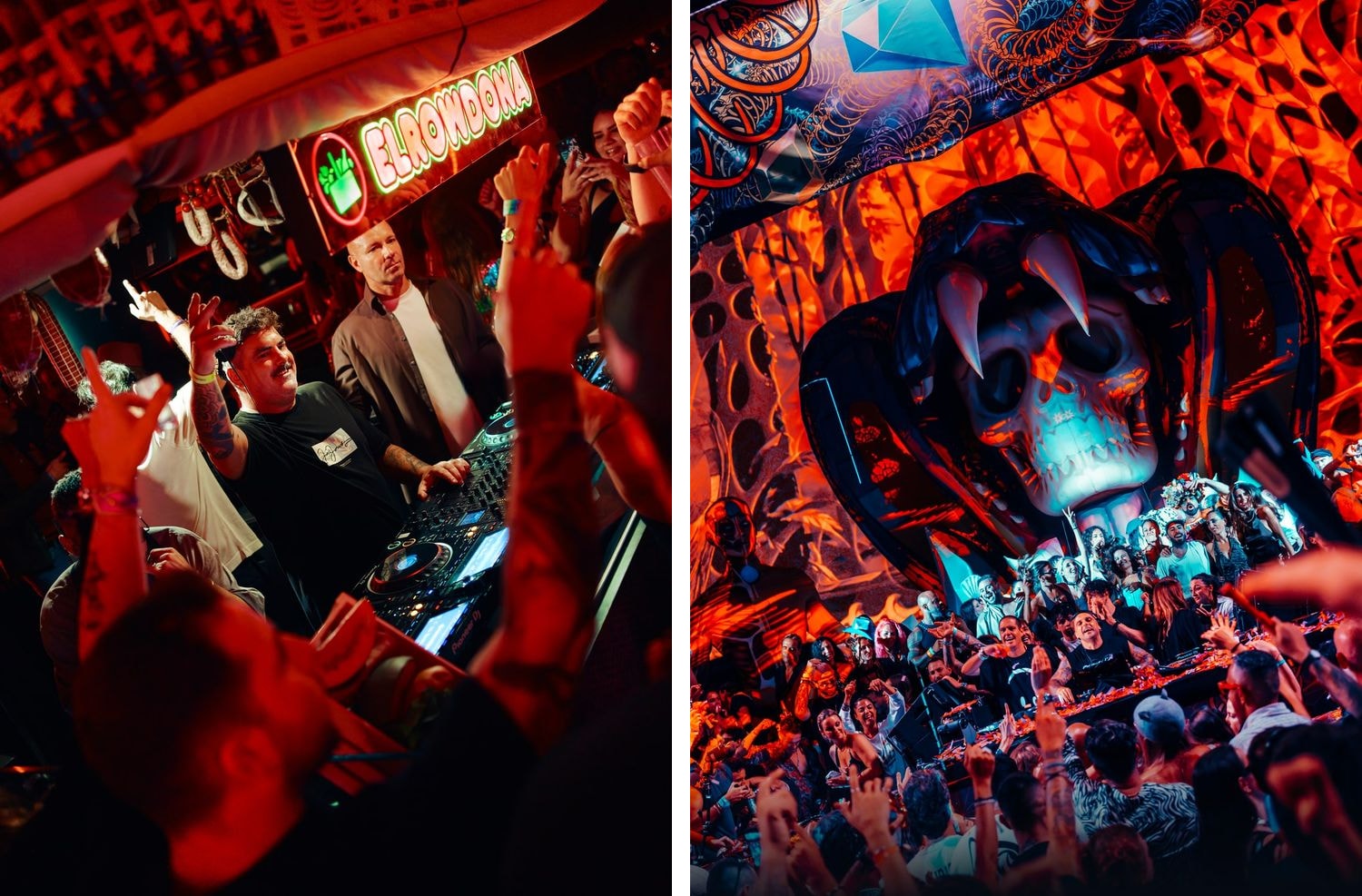
A few steps from the Main Room, the Bunker reproduced the celebration on a smaller scale. The colours and characters were still there, but the room was more intimate and the atmosphere shifted. In the main space, you witnessed a pharaonic celebration. In the Bunker, you found yourself inside the same celebration in a more intimate form, almost like a family gathering. The two rooms were not competing with each other. They were telling the story of the same event from two different distances.
Behind the decks were AAT, Chelina Manuhutu and Tini Gessler playing back-to-back, followed by Paco Osuna. Ilario Alicante took the final slot, bringing the night to a close and, in a sense, drawing the season to an end.
The figures elrow released at the end of the residency give a sense of the work behind it: 18 consecutive Saturdays, 14 sold-out shows, 2,034 performers and more than 5,400 kilograms of confetti. The last figure has an almost philological resonance. Confetti is the raw material of carnival, and here it was produced, loaded and fired by the tonne.
Carnivals end, and that is part of their purpose. But Bakhtin insisted that the end of one cycle already contains the beginning of the next, and elrow’s calendar proves him right with almost comic precision. One week off, then the winter shows. And in October — right now — work begins again on the theme for next summer. We do not yet know what it will be. We do know where it starts: with a family that has spent more than a century and a half bringing people together in the same room, with a stage material that costs little and can be worked by hand, and with a night when, for a few hours, in a room of this size, everyone was part of the party and no one was standing outside it.

Credits:
Party: Elrow / @elrowofficial
Location: [UNVRS] / @unvrsibiza
Artist: Nychos / @nychos
Words: Gianmaria Garofalo / @gianmaria.garofalo