Music Comes First, The Rest Is Hush / DVS1

DVS1 on absence, attention and what it costs to protect a culture from itself.

He learned to listen in a cell. A pocket AM/FM radio, Saturday nights, a Minneapolis show called “Strictly Butter”, the only thread back to the scene, while everything else had been taken. Thirty years later, Zak Khutoretsky is still building rooms designed to recreate that condition: no phone, no lights on the booth, no stage, just sound at the pressure it was always meant to be felt. When you remove the exit routes, you hear more. It is an argument he has been making since before most of his audience was born, and he has never once softened it. The name he chose for all of it is a question he hasn’t finished answering. DVS1 – devious one – belongs to a man who has spent three decades trying to disappear. Behind walls of speakers. Behind a no-photo policy. Behind illegal spaces with no addresses. The logic is consistent: the less you see, the more you hear. What the “HUSH 30” tour actually was — under the anniversary framing, under the 30 cities and the Wall of Sound finales — was a man finding his way back inside his own argument. Four years running Aslice, a tech company built to redistribute royalties across the scene, had quietly consumed the person who designed it: he kept touring, kept playing, kept showing up, but the headspace that made any of it mean something had gone somewhere he couldn’t reach from the road. DVS1 spent four years protecting other people’s music and losing access to his own. The tour was thirty cities of finding his way back to himself.

We’re conducting this interview right after you finished your global tour to celebrate the 30th anniversary of HUSH. The tour began last year in Detroit in May of 2025 and brought you all over the world to clubs such as Berghain, Bassiani, Stereo, Gare, smartbar and many more. From the outside it looked like a natural flow of dates, but what really goes on behind the scenes to hold together this tour de force? Can you share a bit of the general idea of the tour and which role did the venues play?

I’m glad to hear that everything appeared to be a seamless tour from the outside. I sat down ahead of time and tried to pin the people, places, countries, and promoters that I’ve had long- standing relationships with or that I have built trust with and that played a key role in my excitement and enthusiasm for this music and culture. After selecting the right locations and partners, it became a process of understanding what was actually possible in each location and how I could express myself in a meaningful way, whether that meant an all-night set, inviting some guests, adding some extra speakers, or presenting the Wall Of Sound. The goal of this tour was to build something that felt intentional and not just put the HUSH name on a bunch of promo.

Last weekend, you finished your HUSH 30 celebration in Amsterdam with “The Wall of Sound”, your most iconic sensory and experimental project. Since its first edition in 2015, the format has passed through American cities such as Detroit, New York and Los Angeles, but also with many editions in Europe. Can you share some insights into what it takes to put an event like this together, and what characteristics must a venue have to host it at its best?

Over the years of doing these wall of sound events, we’ve been able to fine-tune all the moving parts into its current form. Since the first edition in 2015, we have tried different sound systems, different lighting setups and have presented this concept in sonically challenging rooms. All of those experiences helped us realize what were the most important and core elements that we actually needed. One of the biggest realities we have to take into consideration before committing to doing an event like this is to understand the location and if it can handle the sound levels without disturbing any neighbors.
The amount of work that goes into doing this can quickly all be for nothing if we open the doors and suddenly have to turn it all down. It also comes down to having the right partner and a shared understanding of what we’re trying to achieve, and if we believe the local community and everyone involved is ready for this experience the way we imagine it. To do something of this scale, we cannot compromise on any of the primary details – the whole point of the Wall of Sound project is to push boundaries and remind people of the most basic elements of this culture. The music and the experience have to come first.

“I could be playing in the most perfect ‘on paper’ venue, with great sound and lighting, and still have a horrible night. I could also walk into a terrible room with a bad sound system, distorted or broken monitors, and maybe have one of the best nights ever.”

The philosophy of The Wall of Sound is clear: music is meant to be listened, not seen. This huge sound system protects and hides the DJ, like a puppeteer behind the scenes. Yet today you are perceived almost as a god of music. How do you navigate this tension between wanting to disappear and being at the center of the audience’s adoration? At this stage in your path, what still manages to surprise you behind the decks?

I think, as an artist, it requires having a clear vision of how I want the music to be experienced on the other side of the speakers when I’m playing. How can I help the crowd fully be in the moment to experience and take in the atmosphere I’m creating? I have to have enough foresight to be able to request the elements I need not only for myself but for those listening. If I didn’t have so many years on the dancefloor, I would never even think about these details, but I know very clearly what I think makes the experience better and allows the people to fully immerse themselves and get lost in the music. It can be something as simple as having no lights on the DJ booth, avoiding that lights shine in people’s faces, or walking around the venue 30 minutes before I start my set and noticing or paying attention to and asking for subtle things to be changed right in the moment before I go on. A lot of artists will complain about the stage they are on, or that we’re under bright lights or the big LED screens, but they make no move to ask for anything different or to make clear what it is they actually want. I think what still surprises me in a positive way is walking into a venue that simply “gets it”. One that has built their environment with the experience at the forefront and being obviously the first priority, as opposed to walking into a venue that is purpose-built for the circus and the visual identity instead of putting the music first. Lights and visuals can be an integral part of the experience. There’s a big difference between a space designed for spectacle with a stage and one that’s designed for the dancefloor.

Did you already reflect on the HUSH 30 shows yet? I assume there have been many highlights? Has this physical and introspective journey given back something you had lost along the way?

Even after 30 years in this community and scene, the HUSH30 tour simply cemented my love and passion for what I do. The timing of this anniversary couldn’t have come at a better moment for me personally, having shut down Aslice only a year before we started the tour. Aslice had created a situation for me in which a majority of my energy, creativity, and effort went into running a fully functioning tech company with a small team spread across the world. To support those efforts and keep the project fully independent, I also continued touring and was right back on the road after Covid, playing almost every weekend. That period forced me to realize very clearly that I’m only one person, and that I have to decide how and where I give my time, energy, and focus. Whereas with the HUSH 30 tour, I was finally able to put my head back down into the process of being an artist and focus all my energy into the creative details. I think it can be felt from both sides. For those in the audience, I hope the experience came across as more grounded and true to what I can deliver. For me, I was finally back in a musical headspace. After four years of being fully involved in and consumed by the Aslice project, it felt extremely freeing to return my focus solely to music and creativity again.

HUSH is your focal point and the name of everything you do. That “hush” refers less to the sound of the music and more to the secrecy of the event itself. Looking at today’s clubbing culture, however, it seems to describe a common issue: people talking on the dance floor or behind the DJ booth. For those who want to experience the set without distractions, doesn’t this become almost an obstacle? Have we shifted from listening to socialising, or has this tension always existed between the two?

I actually never even thought about how relevant the symbolism of the HUSH girl is to the current problem of people speaking on the dance floor. Thanks for pointing that out. To answer your question: yes, HUSH has always been about some level of secrecy or trying to promote the underground aesthetic where not everything is in plain sight, where you have to work for it and where you have to be slightly “in the know” to find it. I think there’s always room for improvement on our dance floors when it comes to social etiquette. Back in 2014, I launched the Enjoy Right Now campaign and was already speaking out about the problems of cameras and phones in clubs. Now in 2026, I’ve seen clubs in Ibiza banning phones on the dancefloor. Even they’re heading into a better direction, realizing the problem technology has had on the whole experience. While that issue is finally being addressed or at least better recognized everywhere, you just mentioned a new one that’s been bubbling and building the last few years. In a lot of places now, I am noticing this problem of people talking and socializing on the actual dance floor, where people should be letting go and having their experience. I have no doubt that this topic will be more verbally addressed over the coming years, as it also becomes a distraction to many on the dance floor. This is by no means a “new” problem, but it’s absolutely becoming more pronounced!

You mentioned your no-photo campaign ENJOY RIGHT NOW which over time has become not only your trademark but also a distinctive way to protect freedom and anonymity on the dancefloor. Cities like Berlin and London have made it part of their culture, and now Ibiza and Milan as well. It’s one thing to introduce it into an already rooted culture, another to bring it into places where entertainment dominates: does the audience’s reaction change? How do you prevent it from becoming just another marketing element?

You know there’s a big difference between posting a sign and saying you support something. Whether that be no photography, whether that be promoting safe spaces etc and actually doing something about it! I do find it funny watching some artists promote their parties that have no photos with them actually videoing or photo’ing their own party. It is hypocritical to be talking about no photos while posting photos, and I’m wondering how they can’t see that? The moment I came up with the Enjoy Right Now campaign, I quickly understood that I have to walk the walk if I’m gonna talk the talk. Regardless, I’m still happy to see this being implemented in more places around the world whether it be commercial or underground because it’s needed to preserve the dance floor and the experience.

You have built systems to protect the dancefloor, ensuring quality and sonic consistency. But in private moments, do you ever miss chaos? The unpredictability of imperfect rooms, illegal spaces, bad acoustics that forced you to fight for impact?

Oh, I still have plenty of chaos, and until recently I was operating an illegal space in my hometown of Minneapolis for about 15 years – it only closed because of a fire in the building. Just because I may be at the level I’m at and because I demand or aim for certain levels of quality doesn’t mean that it will always happen. I’ve said this before, that I could be playing in the most perfect “on paper” venue, with great sound and lighting, and still have a horrible night or experience. I could also walk into a terrible room with a bad sound system, distorted or broken monitors, and maybe have one of the best nights ever. The magic comes from so many elements and because I come from the raw, illegal, underground scene, I can adapt to all of it. But if I’m being honest, I would much rather take a night with some chaos! That sense of unpredictability—when it’s all just barely holding together – is something I absolutely look forward to and I’m lucky enough to still experience at times.

All these initiatives (Aslice, SOS, FairPlay) seem to tackle the same problem from different angles. Even when one stops, another emerges. Today, a DJ can simply play and get paid, yet you seem to reject this position: do you feel an ethical responsibility connected to your role? Are you interested in leaving a legacy that is not musical but structural, something that will continue to function even after you stop playing?

I believe all of those projects are already part of my legacy because they’re part of my story. They may have taken different forms, but they all stem from the same principle. I believe that if you reach a position of success or privilege in anything you do, you should always contribute something back. That’s always been important to me. Not because I think I need to play some heroic role, but because I’ve benefited from this culture and from the people around me, and I think that creates a real responsibility. I do reject the idea that my role is simply to show up, play, get paid, and leave. That never felt like enough to me.

In 2013 you founded your own record label Mistress Recordings, “representing the sound that touches all corners of the dancefloor”. The name evokes mastery over one’s music, creative independence and artistic authority, and this is also reflected in the many covers portraying female faces. Is this purely an aesthetic choice, or does artwork tell something deeper? Are there any collaborations or projects you haven’t explored yet but would like to develop through the label?

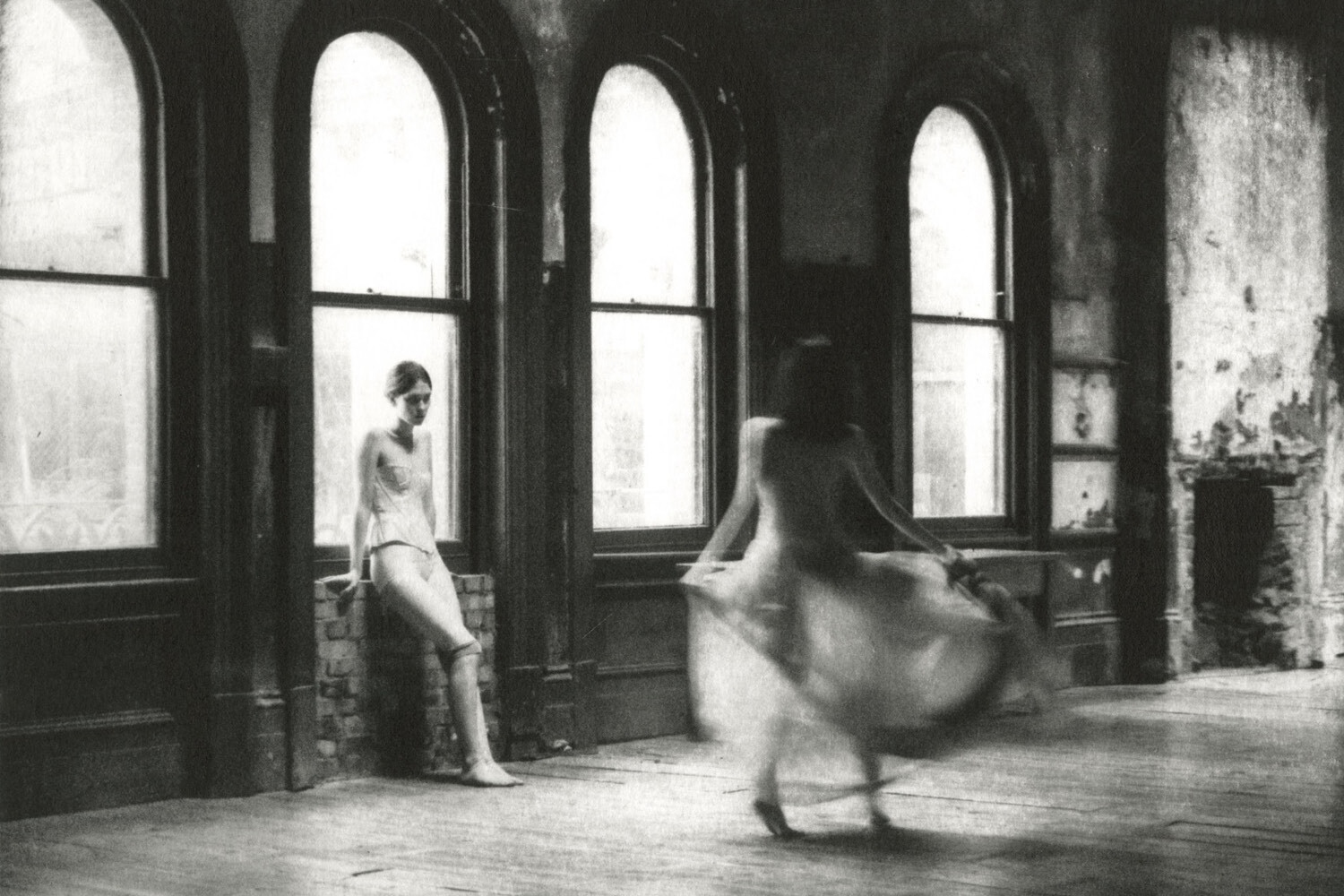
There’s actually a story behind the artwork, so let’s start there. If you look at HUSH, my primary label, the woman holding her finger to her face is the visual identity of my pure view of techno. That’s why HUSH only releases my own music. When it comes to Mistress Recordings, the artwork is also centered around female figures, but they represent my other loves. They are the mistresses to the HUSH woman and to that pure form of techno I’m so connected to. Mistress is a nod to all the influences I carry with me. It’s where I come from and where I’m still going. It’s the space where there are no musical restrictions. If you listen to the next releases – Mistress 18 and Mistress 18.5 – by Dona vs. DJ Plant Texture, it opens up with a hip-hop interlude on its way into heavily influenced Chicago acid tracks and Detroit-inspired Motown-style house music. These sprinkles of various parts of my history and taste is exactly what the Mistress label is for.

With Mistress Recordings, are you thinking more like a producer, a DJ, or a curator? What guides you when deciding what belongs on the label?

It’s really all three, but curator is probably the best word. The producer in me pays attention to the technical ability and idea. The DJ in me thinks about what the record does in a room, how it moves bodies, and the feeling it invokes. The curator in me makes the final decision, always thinking about how the music flows and presents a story to the listeners and collectors of our label. What ends up on Mistress is anything that feels true to my wider musical identity. It doesn’t have to sound like HUSH or the techno I’m known for, that’s the whole point. I’m not interested in releasing music just because it fits a market or trend. It has to feel timeless to me in some way. It’s something that I don’t just do on the label, but carries over into the nights we put together, the special events I curate, even to something like the Wall of Sound.

You have confronted the pitfalls of the electronic music scene through projects and initiatives that highlighted the culture’s challenges and turned them into opportunities for growth. Setting aside those you’ve already addressed, what do you think is the biggest challenge a DJ can face today? And is there any aspect of a DJ’s life that you feel is underestimated or more difficult than it appears from the outside?

I think the biggest problem facing any new artist (DJ and Producer) these days is that all the attention is on social media presence, viral moments, breakdowns, and hands-in-the-air, rather than on true artistic and musical expression. Everyone feels they have to compete with everyone else to be noticed. As much as I would love to say that true music and art will find its way, it’s becoming more and more difficult to sift through all the “entertainment” and find the “art”. Regardless of that reality, I would still tell any true artist to stay with their art, to do this out of pure love and passion for creating and expressing, and let the hype come and go. Focus on finding your unique, singular voice in this world!

When you started out, a DJ’s reputation was built in clubs, not online. Your path, in fact, developed before social media became indispensable. Can a young DJ today afford the same absence or would they pay too high a price? Is it still possible to build a career on trust over time rather than how frequently you appear?

I’m answering this from a position of privilege because I came up in a time when I didn’t need social media to build my career, and I fully understand that the reality is different for younger artists today. At the same time, I still believe that true art, real passion, and a genuine point of view have a much longer lifespan than marketing or hype. Social media might get you in front of people quicker, but it can also disappear just as fast when you’re competing with others. I’ve said it before, but music and art in general should not be a competition. What’s difficult now is that so many artists feel pressure to be visible all the time, and to chase quick success. A lot of my generation, before social media existed, had years to experiment, gain experience, and slowly develop an identity and vision. While I understand that the younger generation today can’t necessarily approach things in exactly the same way, I still think it’s extremely important to take your time and develop as an artist.

Many emerging artists are told to “follow their passion” or “stay true to themselves”, but these phrases can feel abstract, sometimes even misleading, when confronted with the reality of the industry. Think about what you have experienced firsthand. If you were to give a young artist a piece of truly honest advice, not something comforting, but something real, even if it leaves a bitter taste, what would you tell them?

I’ve been asked this question by many young artists, and my first response is simply asking if they have a job that they don’t hate that earns them money. Specifically enough money to put a roof over their head and allow them creative time to develop who they are. When I was coming up, we were told to take the risk, drop everything, and fully commit to chasing your art. I think times have changed and today I might tell them not to quit that job. Instead, cherish it, because that source of income allows them the freedom to stay true to themselves and to follow the feeling. If they quit that job and rely solely on art to pay their bills, it might influence their direction too early in their growth and create that feeling of competition.

I hope your days aren’t just filled with studio time, gigs, and meetings, but that you also carve out space for books, films, or music that might even influence your sound. If we spent 24 hours with you, what would we see of your life and daily routine? And right now, what makes you happy or fills you with gratitude in everyday life?

With all my travel and the constant airport runs, I’ve had to be honest with myself: when I have time off, the last thing I want to do is head back out again. I decided I needed to build my own safe and comfortable space to live my life when I finally have a few free moments. As much as I would love to tell you I’m an avid reader, film buff, or have other artistic interests, the reality is that keeping up with my musical pursuits and passion for discovery truly takes all of the creative energy and spare time I have. Luckily, there are people in my life that I trust who are into other artforms, such as books, movies, or even other genres of music, who I ask specifically to give me pointers or share recommendations. Otherwise, I would need to clone myself to go as deep into each one as I do with music, and unfortunately, science isn’t quite there yet.

“Mistress is a nod to all the influences I carry with me. It’s where I come from and where I’m still going.”

Music Comes First, The Rest Is Hush / DVS1

Credits:

Artist: DVS1 / @dvs1hush
Words: Gianmaria Garofalo / @gianmaria.garofalo
Editor: Anca Macavei / @ancamacavei

You may also like

Soundscapes vol.14 / Virgen Maria

Music | Soundscapes
Mixing Latin-rhythms, experimental direction and dance structures, a trance like playlist curated by Virgen María, the Madrid-based artist and producer committed to a transgressive and uncensored aesthetic that mixes sexuality and spirituality.

Hector Oaks / Chasing Highs

Music | Soundscapes
A conversation and playlist from Héctor Oaks, label owner of OAKS & KAOS and resident at Bassiani (Tiblisi) &  Herrensauna (Berlin). As DJ, producer and label head his take on techno resonates by combining the contemporary with hand-picked tracks from the history of rave culture.

Finding Home / Innellea

Music | Interview
Innellea is a leading force in the new wave of melodic techno. Rising from Munich with releases on Afterlife, Diynamic, and Innervisions, he’s known for cinematic, emotive soundscapes and sets that blend euphoria with raw human depth.