The Darkness was Always There / Haus Arafna

De-worlding, atemporal space, a darker source of the self.

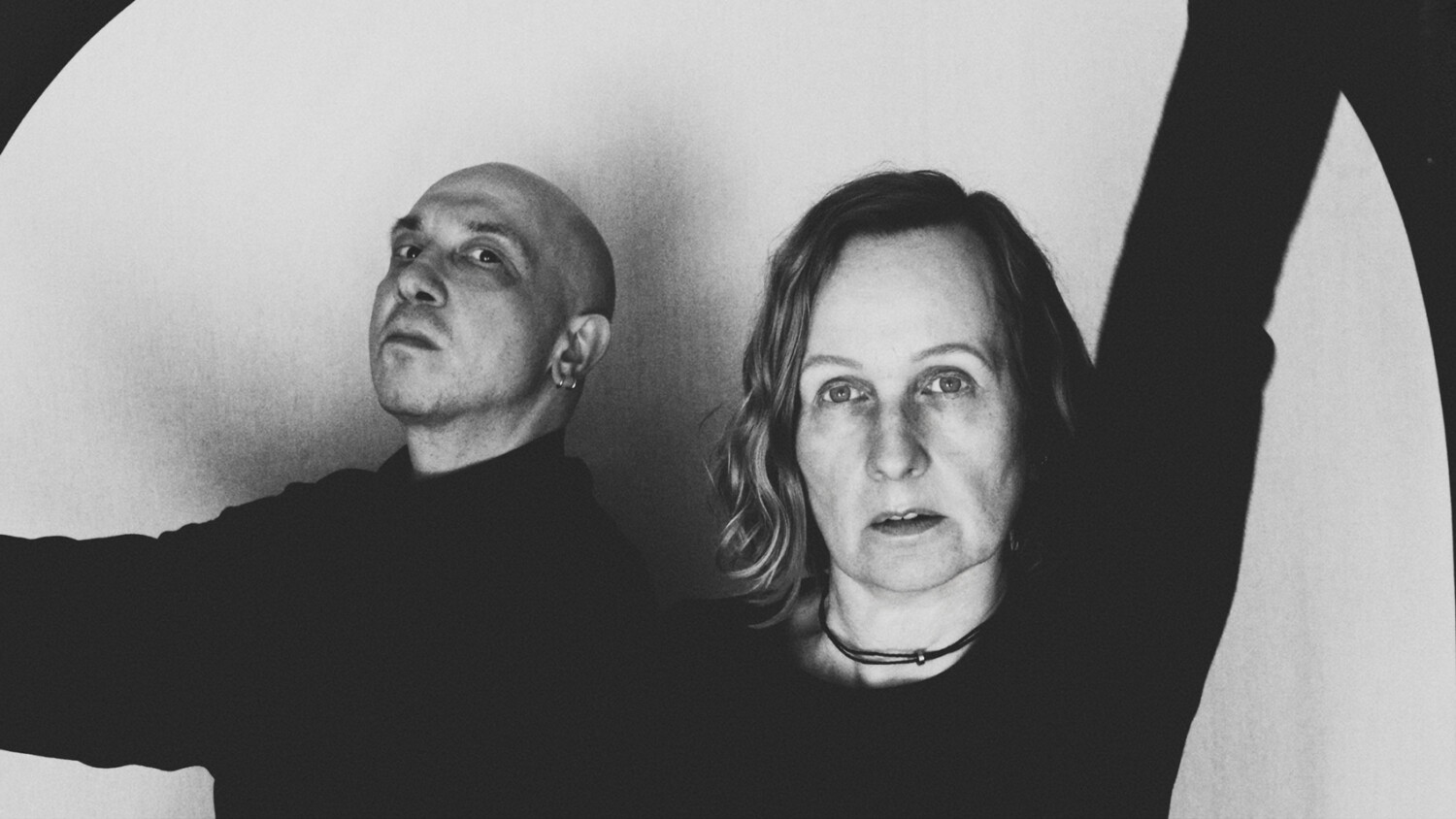
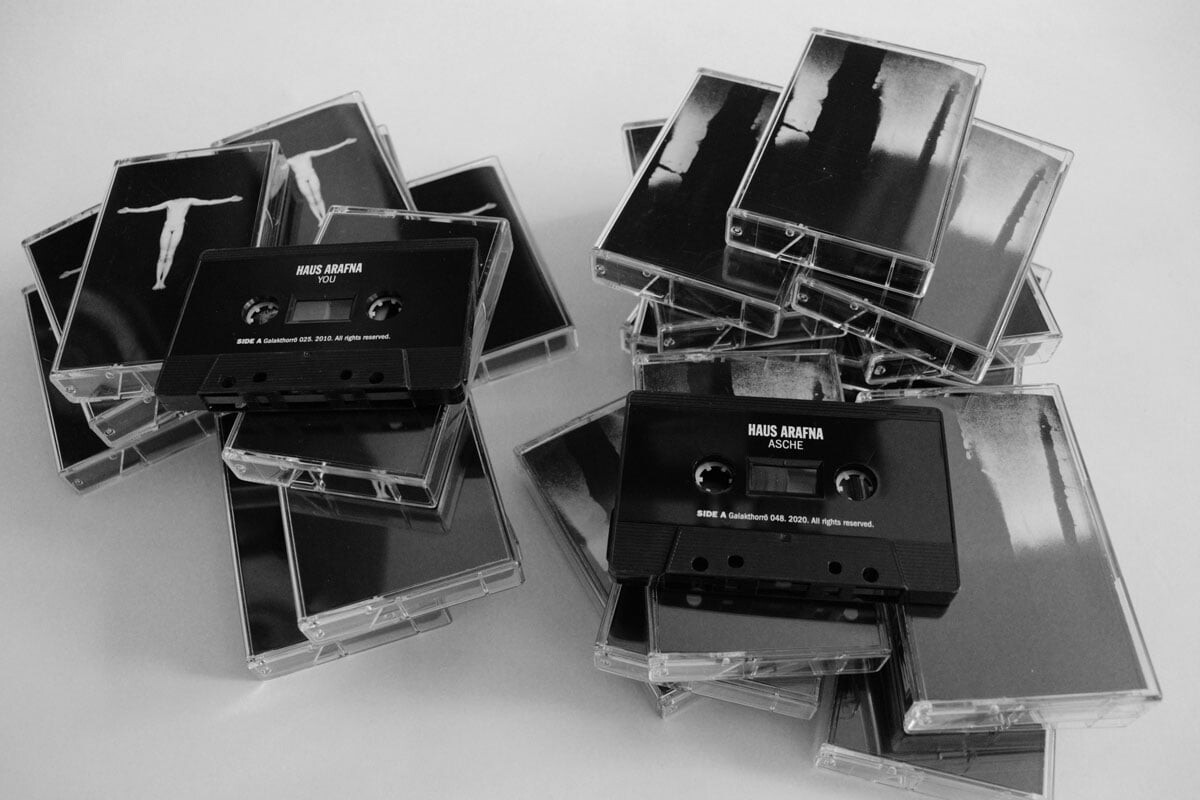
Darkness was never their subject. It was their address. Mr. and Mrs. Arafna have built two projects, Haus Arafna and November Növelet, and a label named after a body producing milk for a life that will not come. Every record pressed, packed and shipped by hand. Every sound assembled once and never again. A conversation with the band, drawn from thirty-five years spent observing what they describe as the slow collapse of the human project.

The Galakthorrö label ships everything personally. Mr. and Mrs. Arafna pack the records into the sleeves, address the envelopes and send them out by hand. Modular patches that only exist once, analogue errors built into the signal, frequencies assembled in a room in Germany then dismantled forever. A practice built around the unrepeatable. Haus Arafna have been making music since 1992. Thirty-four years of witnessing what they refer to as the failure of the human project, our species continually arriving at the same conclusions and calling them catastrophic. Their label, Galakthorrö, is named from the medical dysfunction of when breast milk is secreted in the absence of pregnancy. A body broken, creating something it was not meant to–in preparation for a life that will not come. They found this beautiful enough to build a cosmos around it.  Two projects: Haus Arafna, an industrial soundscape that holds roughness and visceral tension in every beat and November Növelet, which contains everything that roughness cannot. In their youth, they built a strict distinction between the two projects. Since then, the wall of separation has dissolved in the natural evolution of the duos progression. Haus Arafna’s most recent release, The Spring Heals is a 7” single pressed on spring green and black vinyl was sold out before people knew it existed. Something is healing, whether that is a comfort or a threat is unclear.  The two have never performed live. Every record they have made has been produced by them, in private and shipped by hand. They call this direct contact between the maker and the listener. This is a conversation about what that means, and what that costs.

The last thing you read aloud to each other. What was it, and how does reading aloud and being read to transform your experience of literature?

The last thing was The Anthropocene Reviewed by John Green, and more routinely, news magazines while cooking. Reading aloud to each other grows out of our desire to experience titles that interest us both together, line by line, at the same time. It also allows for immediate exchange and discussion. In this way, a book becomes a shared experience; literature is no longer a hermetic one.

Your music is physically invigorating, the pressure, the frequency, it reverberates through the body. Do you experience the physical impact yourself when you make it, or does it only become a body when it reaches the listener?

We try to achieve good audio quality, which is difficult because we unfortunately tend to like the very qualities of poor audio: a lack of high frequencies, no brilliance, washed-out sounds, imprecise bass, background noise, hiss. It always ends up lo-fi. It’s nice to hear that you experience our music that way, that it still manages to rise into something physical. But yes, it already becomes physical in the process. Even very early versions of a promising piece – the moment when something begins to take shape – can make us move. We find ourselves dancing to things that, by most standards, shouldn’t work at all.

You refer to art as the battlefield of the soul. What have you lost there?

We experience transformation there rather than loss. We leave the battlefield in a different form than the one in which we entered it. We are wounded, but not diminished. We look at each other and it seems that nothing has been lost. It is a place of metamorphosis, not of disappearance.

You have said the listener can feel you directly, and that this is what separates your work from the soullessness of pop production. Direct contact has a scale. At what point does the connection you’re describing stop being possible? Have you ever felt the listener back?

By “direct feeling” we mean that there are more points of contact with us as individuals, since we do almost everything ourselves. Beyond the music – its production and the lyrics – this includes all the other tasks that go into the finished product: artwork, photos, manufacturing, distribution, and so on. In most cases, we’ve held every single record or CD in our hands multiple times, and in the end we’re the ones packing your order. We believe that all of this resonates in a kind of magical way. In a pop production, the credited artist is often just the performer, surrounded by a team, and therefore represents only a fraction of the creative and non-creative process that our work embodies. In a sense, the connection we’re describing would disappear if the physical medium were to die out. Certainly, the real power lies in the music itself – but so far, our aura seems to extend beyond that.

Your practice has been built around sounds that cannot be reproduced. Modular patches that exist once, analogue errors integrated into the signal. That was an aesthetic positioning. Now, as AI floods music production with its perfect replications, your decision to create with organic technological textures is a form of resistance. Do you feel that shift? And has it changed anything about the work when a private creative decision becomes a public stance?

Today, a form of resistance can certainly be read into it – but our sound has been the way it is for a long time, so it cannot really be understood as an active stance against AI-generated music. At the moment, we don’t feel this shift very strongly within our small cosmos. First, on a personal level, we can’t even use modern AI tools on our older audio system. Second, in terms of our environment, we operate in a space outside the usual norms of the music industry, where purely digital consumption is uncommon and a culture of collecting physical formats has developed over many, many years. That creates a certain distance – at least for now.
No, so far our work hasn’t changed, at least not in connection with any kind of public stance. In fact, your question is what makes us reflect on whether our approach and preferences in music production might actually be an advantage today. In any case, we should probably stay our course.

You have described the wall between Haus Arafna and November Növelet as dissolving over time. A natural development you didn’t foresee. Those two projects are a division of selves, the hard and the soft; the roots of industrial and wave. As these projects merge, what merges with them, and is there anything about the other person you understand now that you did not when the projects began?

The projects aren’t merging – if they were, there would be a new one with a new name. The boundary between Haus Arafna and November Növelet hasn’t dissolved; it has simply become less clearly defined than it once was, or than we initially intended. The presence of “softness” in Haus Arafna, for example, wasn’t originally part of the plan – but it’s also a different kind of softness than the one in November Növelet. Our musical reference points – wave and industrial – have certainly flowed into both projects, though in different ways and with different emphases. When we started making music, we hadn’t known each other for very long. Of course, by now we understand much more about one another. But at the beginning, there wasn’t much that needed to be understood. The time was relatively unburdened, especially in relation to the music. It was direct, intuitive, and driven more by enthusiasm than by reflection.

You make work about the impossibility of being fully known. We constantly evolve and shift internally, our inner worlds are private and change too quickly for anyone to keep up with. After thirty years, making this work with one another, do you feel you know each other more than anyone else? Does that produce a specific kind of friction in the work? Or, does the knowledge in its totality no longer register?

Yes, we know each other better than anyone else – of course, that’s also because we’re together in our private lives. The better we know each other, the less friction there is. Today, we’re more aware of each other’s vulnerabilities and wounds, which makes certain strange reactions or behaviors easier to understand. On top of that, the different areas of our work are clearly divided, which also has a positive effect and helps to prevent conflict.

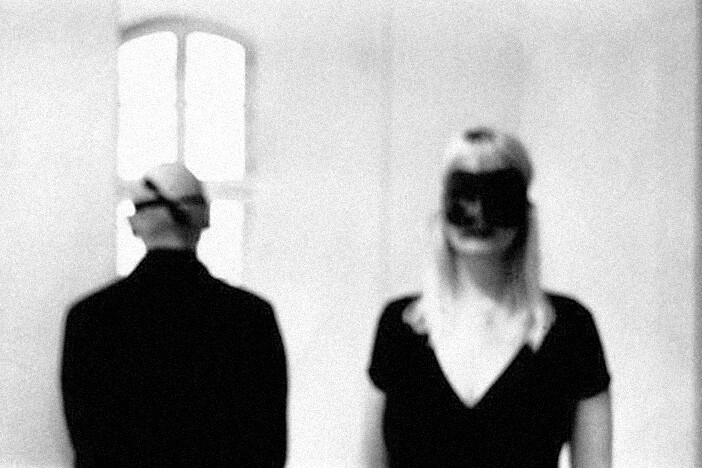
“We try to achieve good audio quality, which is difficult because we unfortunately tend to like the very qualities of poor audio: a lack of high frequencies, no brilliance, washed-out sounds, imprecise bass, background noise, hiss. It always ends up lo-fi.”

When you made Blut, Germany was actively confronting its history, the Wehrmacht Exhibition, Goldhagen, the public reckoning with what ordinary people had done, not just the SS. Your work lived within that reckoning. Now, the AfD is the second largest party in Bundestag. Its leaders refer to the Holocaust Memorial as a monument of shame. You have always said this was inevitable, that Auschwitz is confirmation, not rupture. But there is a difference between knowing something will happen and watching it happen outside your window. What has changed in your work, in what it’s for, and in who you think is listening?

Yes, the period of intensified reckoning in Germany during the 1990s – with the Wehrmacht Exhibition, Goldhagen, and a broader confrontation with the subject of National Socialism – had an influence on our first two albums, even if they did not directly reflect these themes. At that time, we were still following the more conventional approach of an industrial group engaging with and processing historical extreme situations. From the late 1990s onwards, however, we moved away from this concept, as we realised that we could speak from within ourselves – from a darker source of the self. We don’t know where it comes from, but we are able to draw from it. Since then, our work has undergone a kind of de-worlding and operates within a more atemporal space. It does not respond to specific political developments. If anything has changed, it may be who is listening – and from what motivations or dispositions. We have no clear sense of that.

“We realised that we could speak from within ourselves – from a darker source of the self. We don’t know where it comes from, but we are able to draw from it.”

You said the most beautiful things are artifacts, departure, and haziness. Not arrival but departure. What is it about the moment of leaving that holds more beauty than the moment of being there?

Perhaps the destination isn’t more beautiful – but our idea of it is. In the moment of departure, many versions of the future still exist at once. Upon arrival, only one remains. In relation to our music, arrival tends to stand for fixation and conclusion. Artifacts, ruptures, and haziness, on the other hand, reveal process, friction, and multiplicity – in other words, life. That is exactly what interests us in art and music. We call it “Unvollendete Formvollendung,” which sounds paradoxical and almost musical in German – something like “uncompleted completion” in English. Take photography, for example: grain, noise, unbalanced tones – academically speaking, the image is bad. But the atmosphere it creates often affects us more deeply than a correctly exposed and perfectly sharp picture. The same, of course, can be applied to sound.

What is the part of you that no one is allowed to see, even when everyone thinks they do?

It’s a beautiful and highly poetic question. We’ll take the liberty of answering it in the most direct sense: if no one is allowed to see that part, we can’t reveal it here either.

The Darkness was Always There / Haus Arafna

Credits:

Artist: Haus Arafna / @hausarafna_official
Words: Isabella Chiocca / @bambina___0
Editor: Anca Macavei / @ancamacavei

You may also like

Lost Kingdom / The Sirens Of Titan

Music | Spotlight
Unveiled in mid-September, the new album channels the full interiority of the band into a groundbreaking audiovisual project. Combining existential art rock, psychedelic rock, and visuals, it is both a manifesto of uncertainty and a celebration of raw human creativity.

Intersection of Chaos / Inside the World of Lady Tazz

Music | Interview
Born in Montreal, raised in Dhaka, and shaped by Toronto’s underground, Lady Tazz has lived more lives than most artists ever dare to. Her presence is deliberate, and her sets are defined by speed, sensuality, and control. She founded Mind Medizin as a platform for artists who challenge the conventions of the electronic music industry, a space for sound that is stripped-back, forceful, and unconcerned with mainstream appeal. Lady Tazz approaches music with intent, and everything she builds is made to last.

Watergate 20 Years Anniversary

Music | Spotlight
Berlin club institution Watergate celebrates its 20 Years Anniversary with a birthday compilation on Watergate Records in November, Watergate X Irie Daily fashion drop in October and festival showcases in Berlin and internationally.