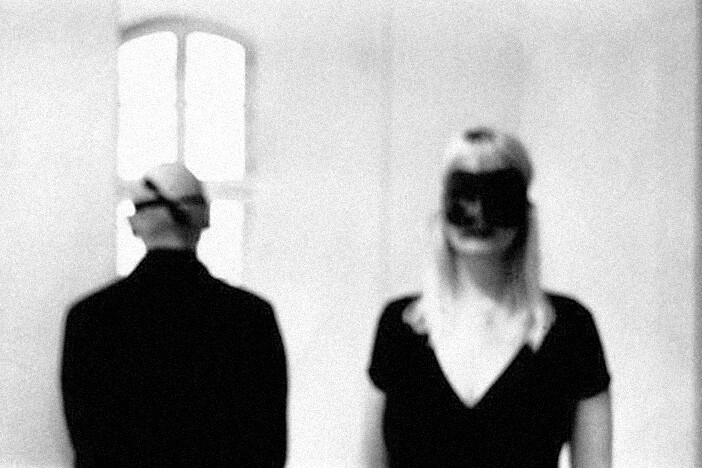
Milochka The Best

Photographed by Mila Chistyakova & Sofiia Franskevich.

A project developed by a female-only modelling agency and produced without a designated photographer, with the images emerging from an ongoing conversation between agent and model about shared experiences of sexual threat in public space, and from an attempt to reverse that dynamic — to imagine the female body not as something passively exposed, but as active, desiring, and potentially threatening. By Mila Chistyakova and Sofiia Franskevich.

Having worked as both a model and an agent, I became aware of how consistently sexualised pressure and abuse operate within the industry. Models are particularly exposed — not only due to visibility, but because the system relies on young girls navigating constant evaluation, rejection, and adjustment, with little control over outcomes.
As a teenager, this behaviour registered as background noise — normalised, dismissed, or subtly redirected onto the girl. With time, the pattern became clearer. Conversations with other models confirmed it: harassment and coercion were common, consequences were rare.
When Mila came to Paris, the topic resurfaced — as it often does, casually at first, then more directly. What emerged was not a series of isolated incidents, but a consistent structure. When you begin to grasp how routinely women are positioned as something to be hunted, anger becomes not only understandable but logical, and alongside it appears a certain desire for inversion — not necessarily revenge, but a reconfiguration of roles, an attempt to occupy the position of threat rather than that of target.
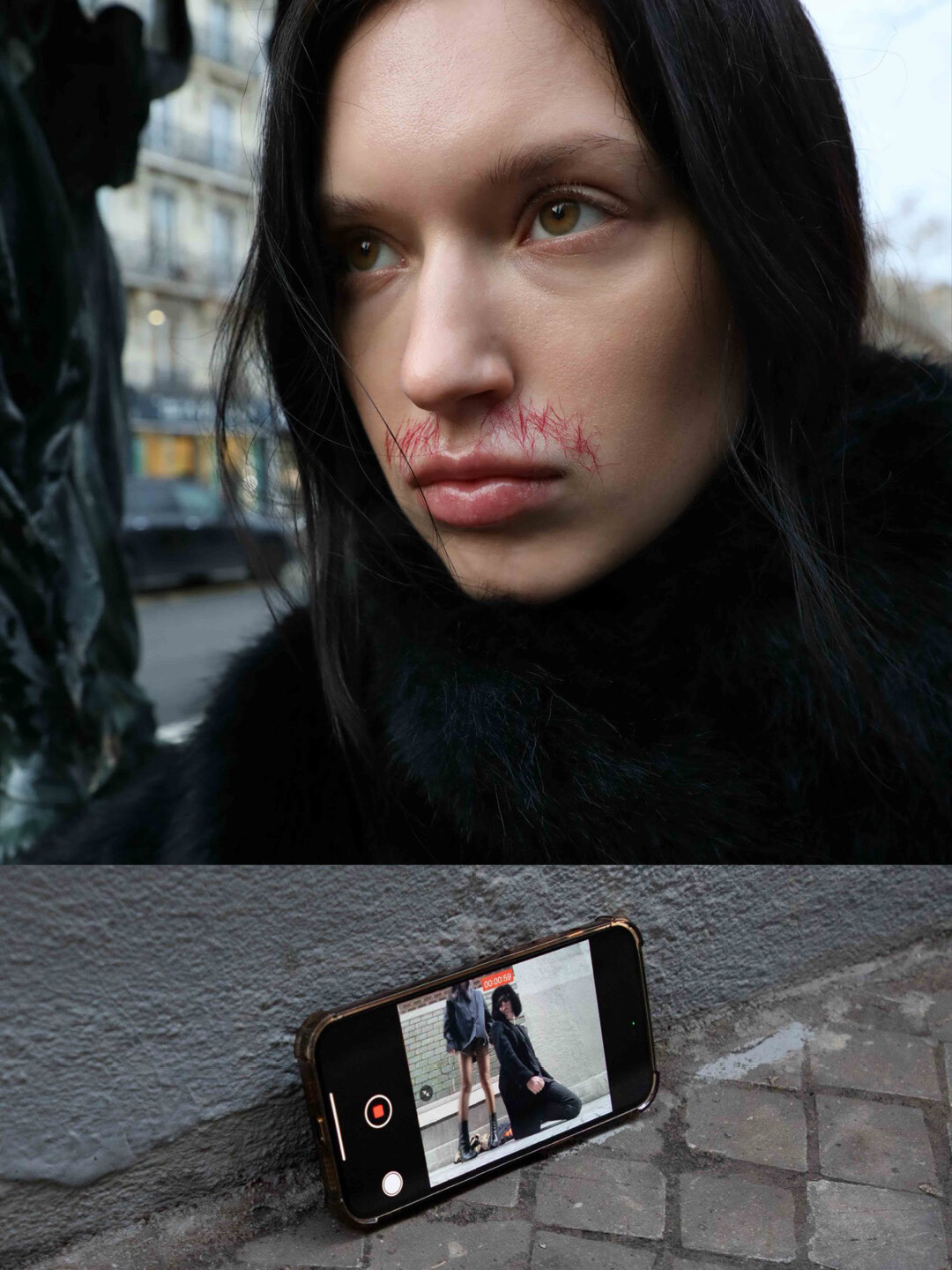
Mila, being naturally expressive and artistic, was immediately drawn to this idea, and we decided to approach it through a kind of staged experiment: during her first days in Paris, she would move through the city in costume, embodying what we half-jokingly described as the figure of male audacity itself — an exhibitionist, a deviant, a potential danger. At some point we simply said: fuck it. Dressing up has always functioned as a method of negotiating identity — as children we play families, as teenagers we borrow from films and subcultures — so it did not seem entirely absurd to try on the role of threat, even if only temporarily.

What became clear very quickly is that this role could not be sustained.

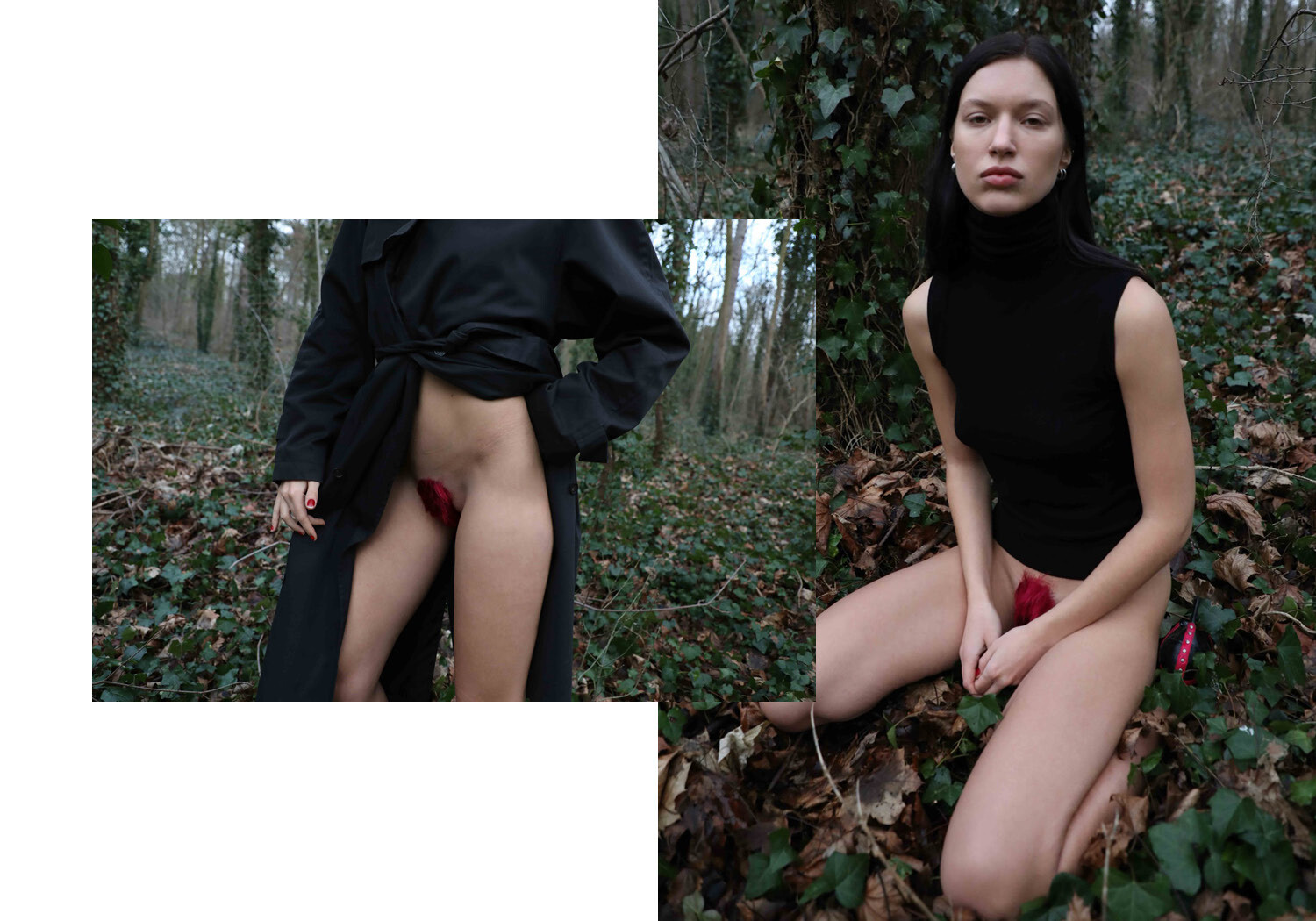
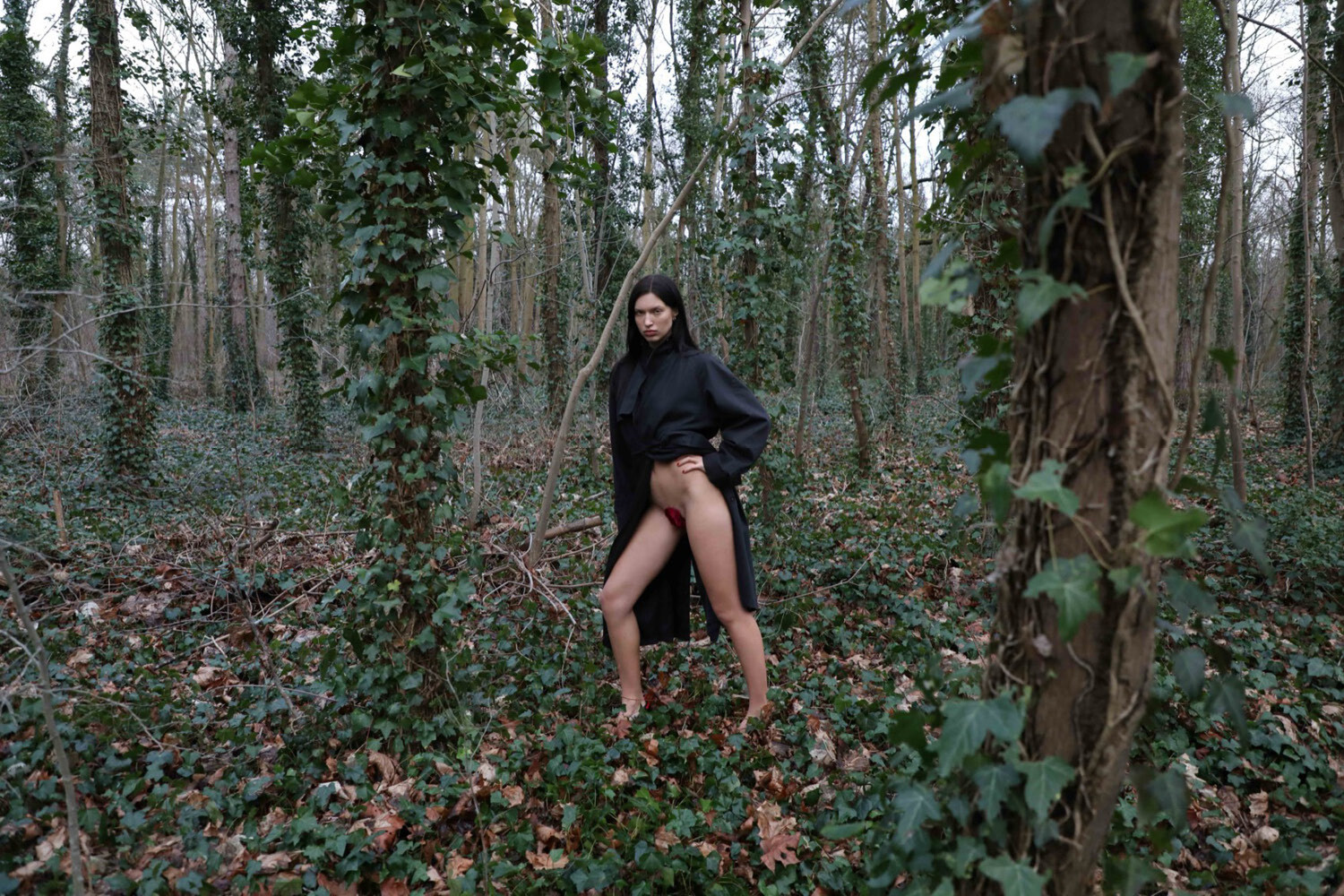
If you imagine going on a “hunt” in Paris, the most obvious location is the Bois de Boulogne, a place whose reputation precedes it. We constructed a “pussy wig” from synthetic hair bought on Strasbourg–Saint-Denis, selected a coat that exaggerated the suggestion of exposure, and arranged for a friend to accompany us for safety. He was late, the light was fading, and eventually Mila and I entered the forest alone.

Almost immediately, we noticed a man standing still on the path ahead of us, watching in a way that felt disproportionate, as if his body had stopped but his attention had not. There was something distinctly unsettling in that stillness, and before we had fully processed it, he unzipped his trousers, took his cock in his hand, and began to masturbate, as if the act itself required no context, no escalation, no permission.

The inversion we had imagined dissolved almost instantly.

We moved away, deeper into the trees but still close enough to the road to feel some degree of orientation, trying to decide whether to continue or to leave. I asked Mila if she wanted to stop, but she didn’t; we had already committed to the process, and in practical terms, we needed very little — five minutes, three images. As we were finishing, the same man reappeared in the distance, this time moving towards us with a clarity of intention that left no room for misinterpretation.

We ran. Mila, half-naked under the coat, her heels sinking into the wet ground, looked almost unreal — like an image extracted from a horror film rather than something happening in real time. We eventually reached a sports ground where there were other people, and only there did the situation begin to deflate; she changed into her normal shoes, and we made our way back towards the metro, passing men whose glances felt continuous with what had just happened.

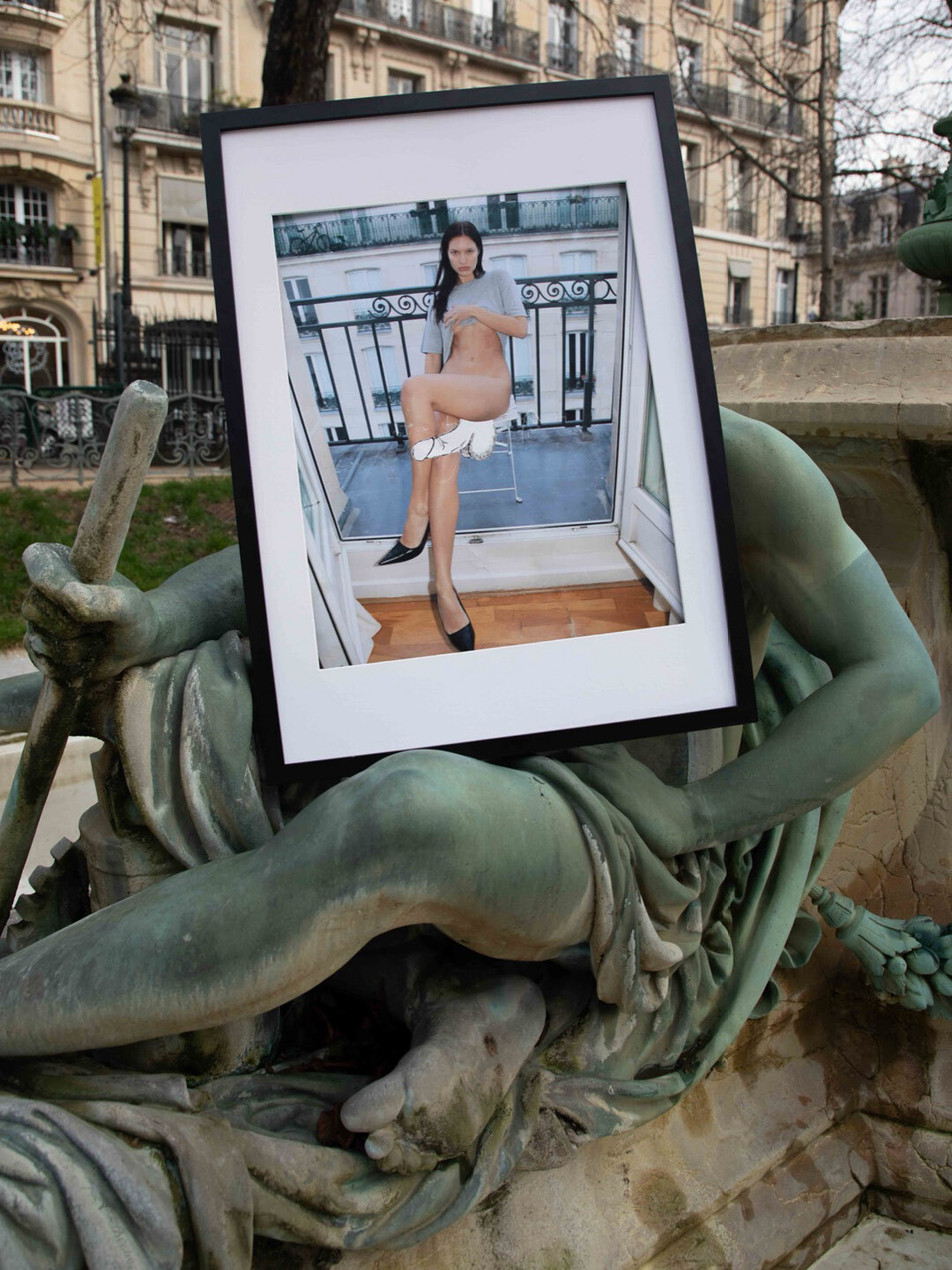
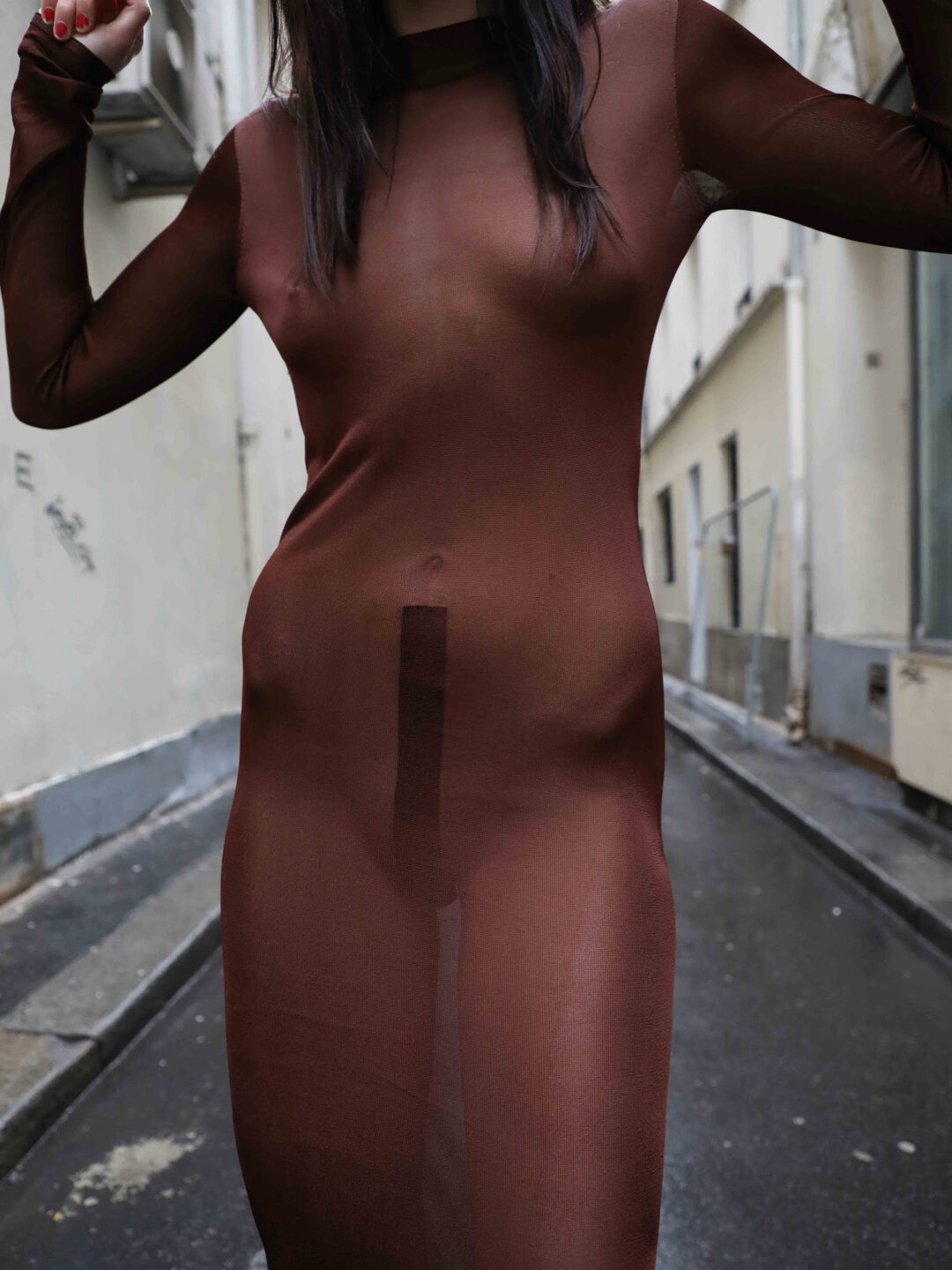
The first location was enough to understand the limits of the premise. The second was a small square near Réaumur–Sébastopol, where Mila wore a sheer Saint Laurent dress that made the body hyper-visible in a different way. The park appeared empty when we entered, which gave a temporary sense of control, but as we began shooting, a man sat down on a bench and started observing us with a persistence that quickly became familiar. Each time we shifted position, he adjusted his own in order to maintain visibility; distance did not function as distance. When we finally decided to leave, unsure whether we had the image but certain that we did not want to remain, he approached us and offered to have a drink — a casual proposition that carried the weight of everything that had preceded it.

At that point it became evident that the project required a different strategy, because the premise of visibility itself was unstable. Our attempt at performance did not register as threat; instead, it functioned as a magnet for attention, collapsing almost immediately into the same dynamic we had set out to challenge. What we needed were locations that could simulate public space while still offering some degree of control.

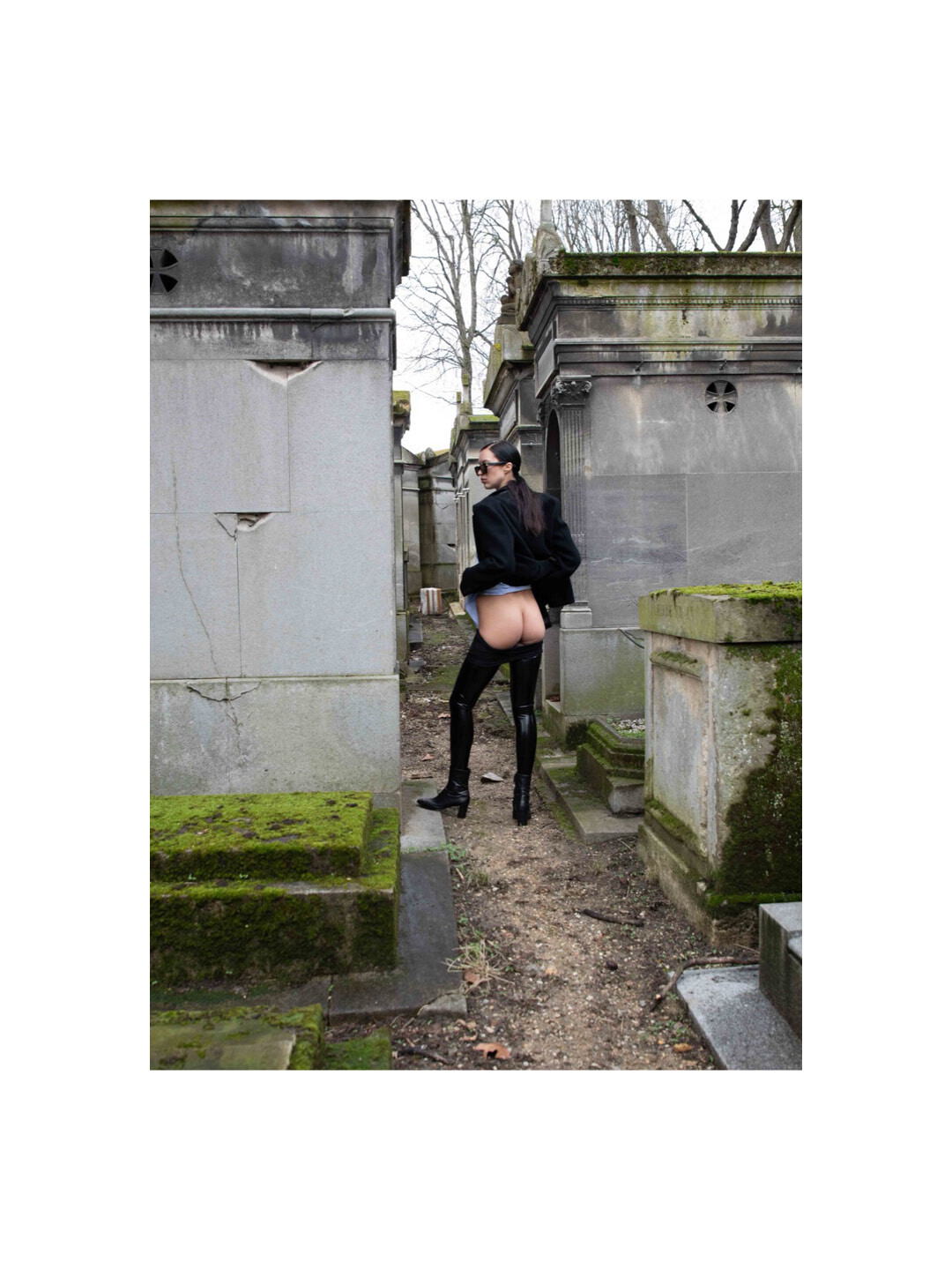
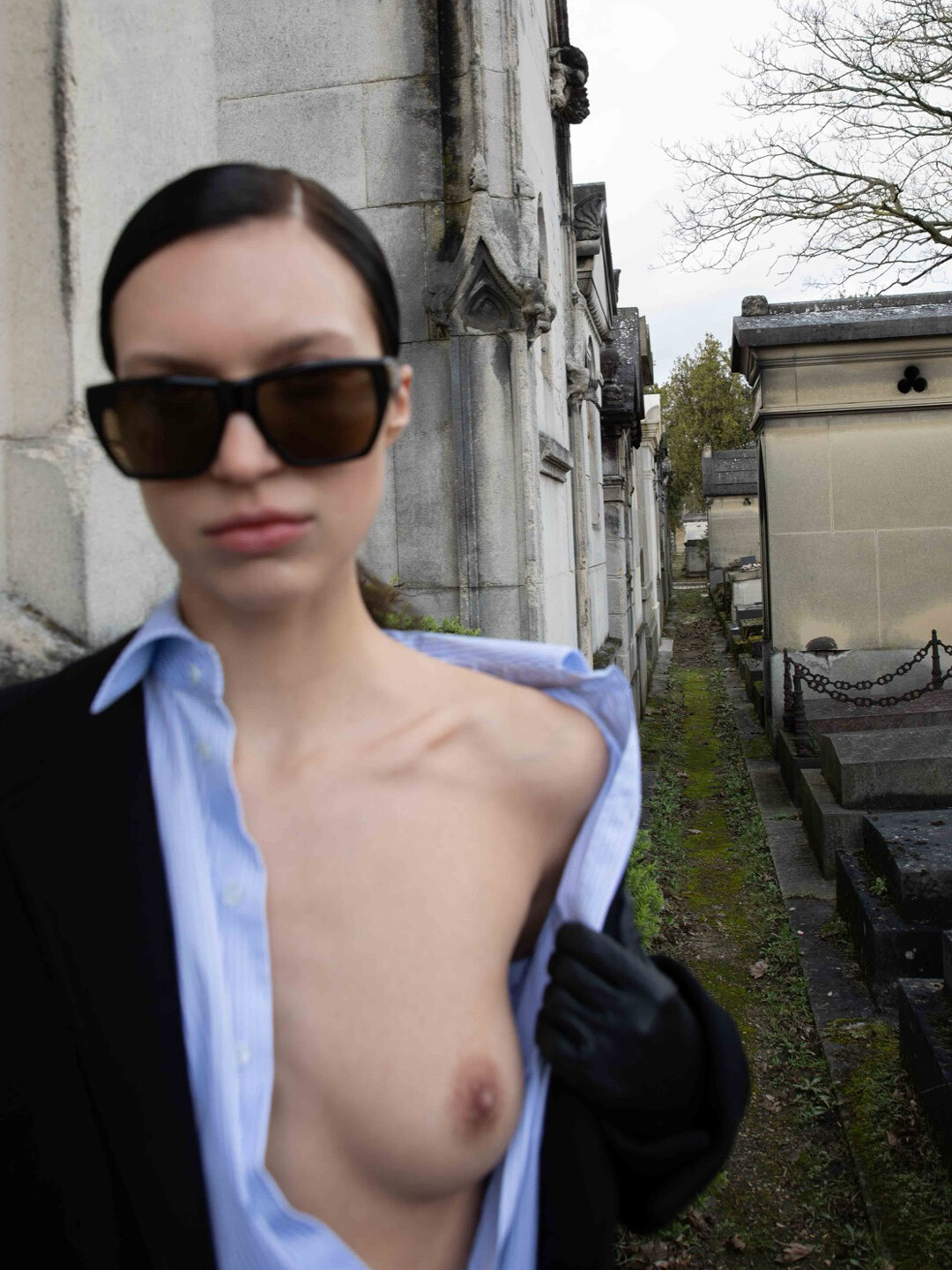
The cemetery provided that, at least temporarily — a space defined by stillness, by distance, by an implicit boundary of behaviour. Only one man approached us there, older, speaking about life, death, health, in a way that felt disjointed but not invasive; when we passed him again, he handed Mila a clover and said bonheur. It was the only interaction that did not position us as something to be consumed.

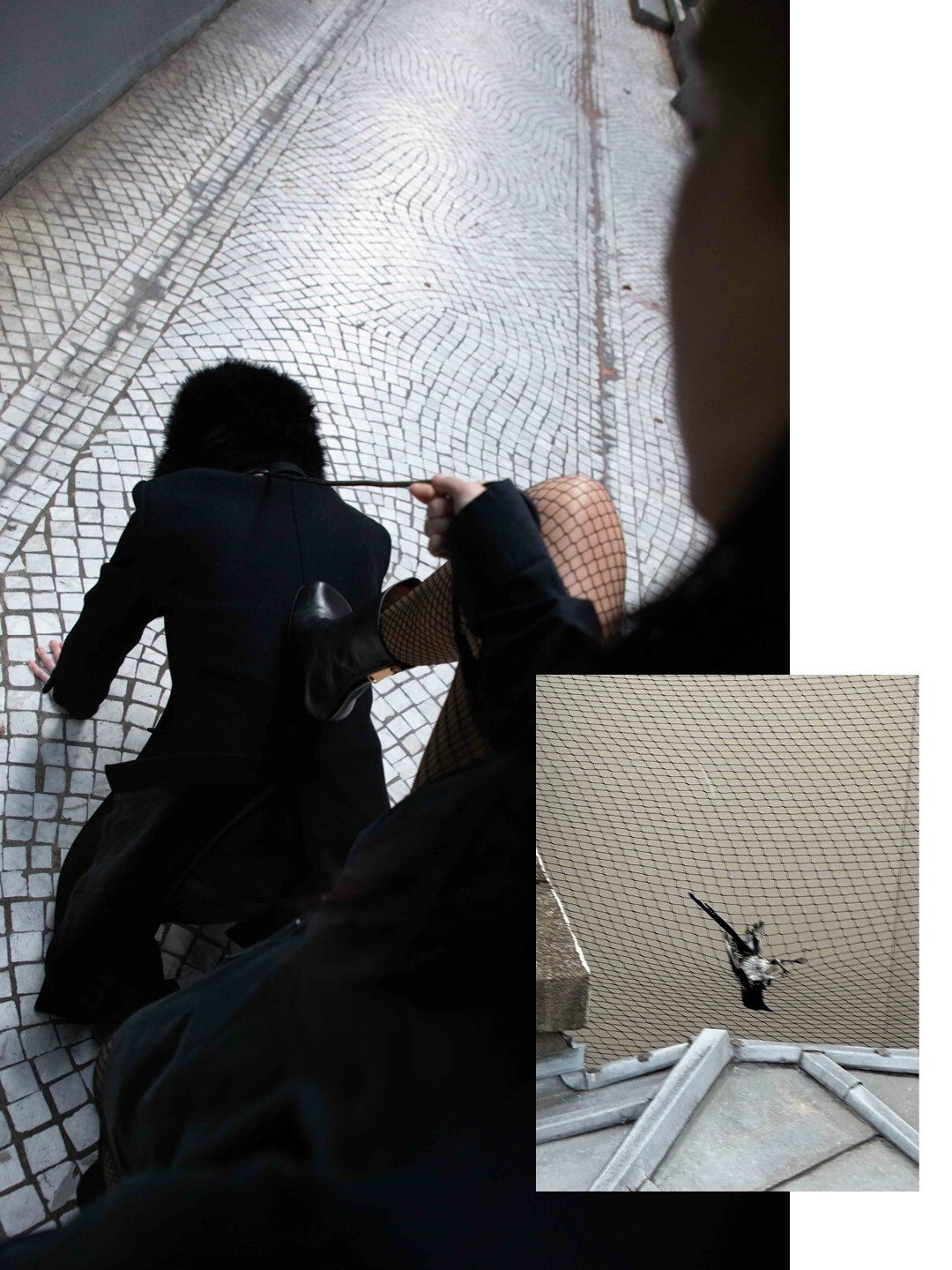
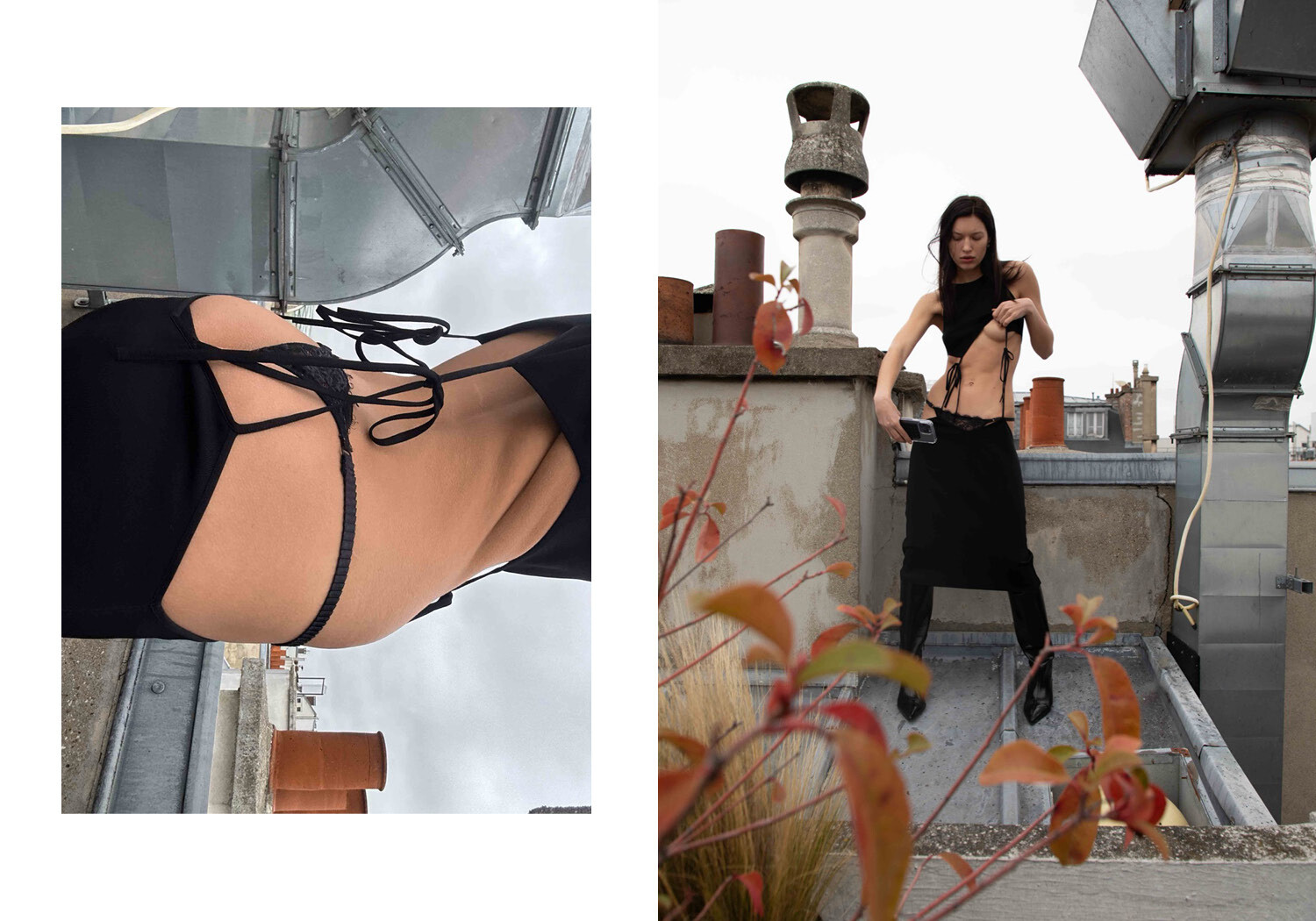
But the only place where the inversion held truly and completely was a rooftop, accessed through a friend’s apartment — a private garden removed from the logic of the street, where no one could approach unless permitted. In that space, finally, the conditions shifted: Mila could perform without interruption, without surveillance, without the constant anticipation of intrusion. Only there she could have control fully and finally become a proper threat. A sort of victimless perpetrator.

Milochka The Best

Credits:

Photography & Styling: Mila Chistyakova, Sofiia Franskevich / @52×25 , @iafros
Words: Sofiia Franskevich / @iafros
Model: Mila Chistyakova / @52×25
Agency: THEE MGMT / @thee_mgmt

You may also like

Fell in love at the seaside

Fashion | Exclusive
It felt like we were forever young, the sound of the sea and the silence all around us. Louisa photographed by Caren Detje and styled by Julia May-Yen Wu.

We’ll turn out fine

Fashion | Exclusive
An ode to controversy and the everpresent battle between the old and known versus the new and unknown. Fashion movie premiere by a team from Berlin, directed by Florian Christopher.

Silver Lining

Fashion | Exclusive
Felt cold as ice under the pale mid-Winter sun. A story from the wasteland shot by Doh Lee and styled by Markos Andriotis.