After the Noise / Mondrian Ibiza

Lifestyle / Cover Story.

Ibiza is a master of ascent. What it rarely admits is that the ascent was always in service of something sacred: a silence so complete your body forgets it was ever lost. Mondrian sits on a 1972 structure on the coast, the kind the guidebooks used to dismiss until someone saw its potential: what had been a family hotel became Mondrian. Every April it becomes the seat of IMS, the International Music Summit, where the people who run the night gather to argue about whether they are also destroying it. Beneath all of it: the same slow tide at Calla Longa. It carries the weekend back out to sea so gently you never feel it leave until what remains on the shore is only you.

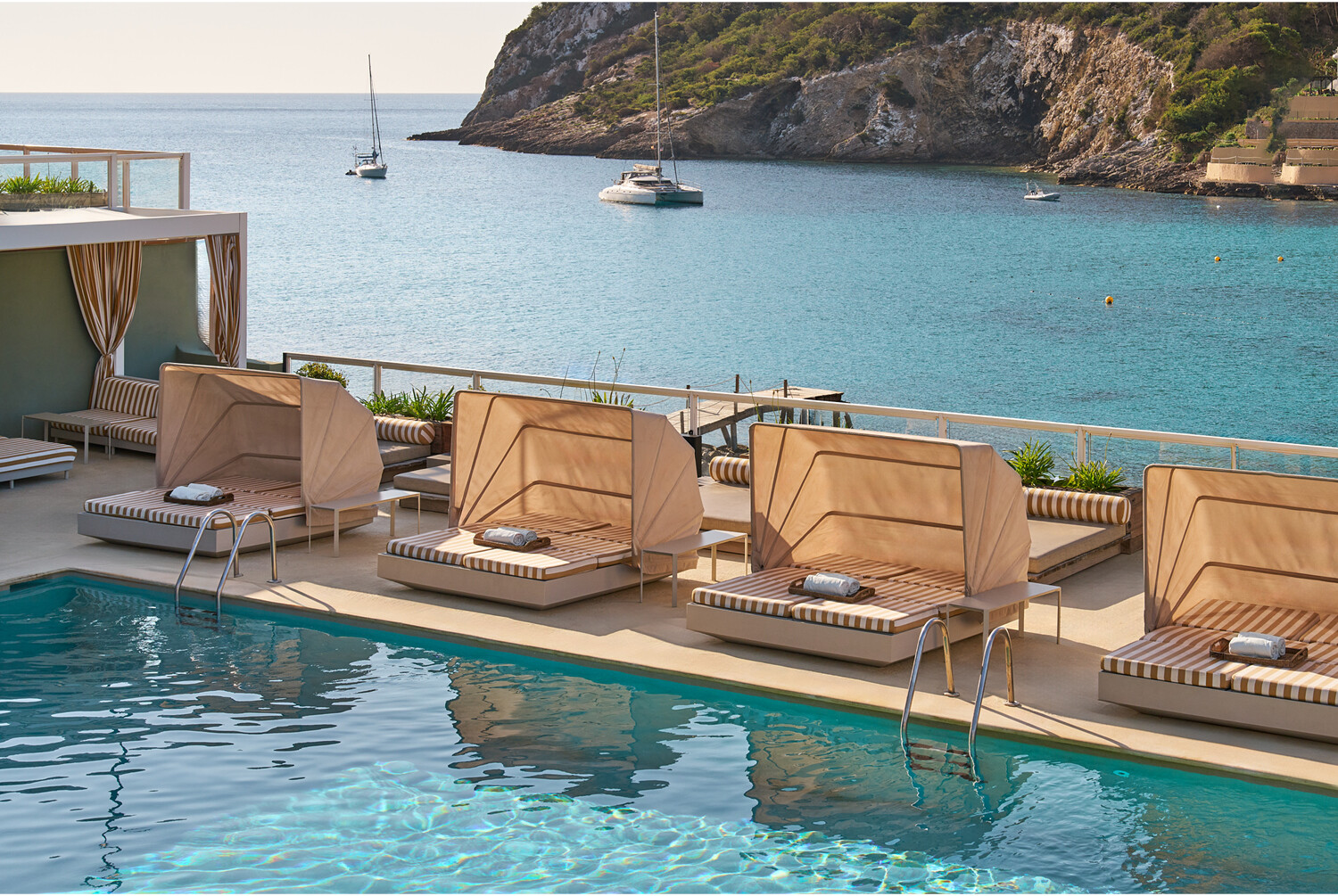
There is a specific kind of light that exists only in the hours after. Not dawn, something earlier. When you have been awake long enough that sleep has stopped being an option and become a philosophical position. The music is still in your body. The bass is still in your sternum. And Ibiza, which gave you everything you asked for, is asking for something back. The island has always been extraordinary at the ascent. It invented the ascent. Ibiza does this better than anywhere on earth, and it has built an entire civilization around knowing it. The descent is the harder work. The return to your own body, to the self you left somewhere before the night took it. The island has always held both. The beauty of the nature, the calm of the eastern coast were here way before the crowded clubs that shaped the modern tourism: unhurried, salt-bleached, indifferent to whatever was happening on the other side of the hills. Cala Llonga is the part of Ibiza that endures. Older than the mythology, quieter than the legend, present the way things are present when they have nothing left to prove. Which is how you find Mondrian Ibiza. By following the road east as the sun comes up, past the point where the sets are still audible, into the particular silence of the bay. This is where the second half of the week lives. The half the island more unique and less advertised.

It went up in 1972, when Cala Llonga was somewhere you found by accident, before the island set hard into superclubs — the first purpose-built hotel in the region, the hotel will tell you, raised for the bohemians only beginning to arrive. For five decades it sold the holiday the bay became: shallow water, sun loungers, the long flat afternoon of a family on the third day of the week. Then Ennismore took it. Mondrian was born in West Hollywood and born again under Ian Schrager in 1996, the Philippe Starck rooms tipping it into staged unreality above Sunset Boulevard. He built Studio 54 before he built a bedroom, and the bedroom, when it came, was the nightclub by quieter means — a hand that has since crossed an ocean and a string of owners into Ennismore, the lifestyle arm of Accor. The bay was a decision. The easy moves were Ibiza Town, Playa d’en Bossa, the west cliffs that sell the sunset by the glass. Ennismore went east instead, to the family beach the guidebooks file under built-up and overlooked. You arrive the way you arrive at the second half of a weekend. Nobody here asks you to choose the quiet over the loud and anyone who has spent real time on this island has learned not to insult it by trying. You take the road east while the sun comes up — past the place where the sets are still just audible, into the held breath of the bay  and you understand this is where the rest of it was always kept.

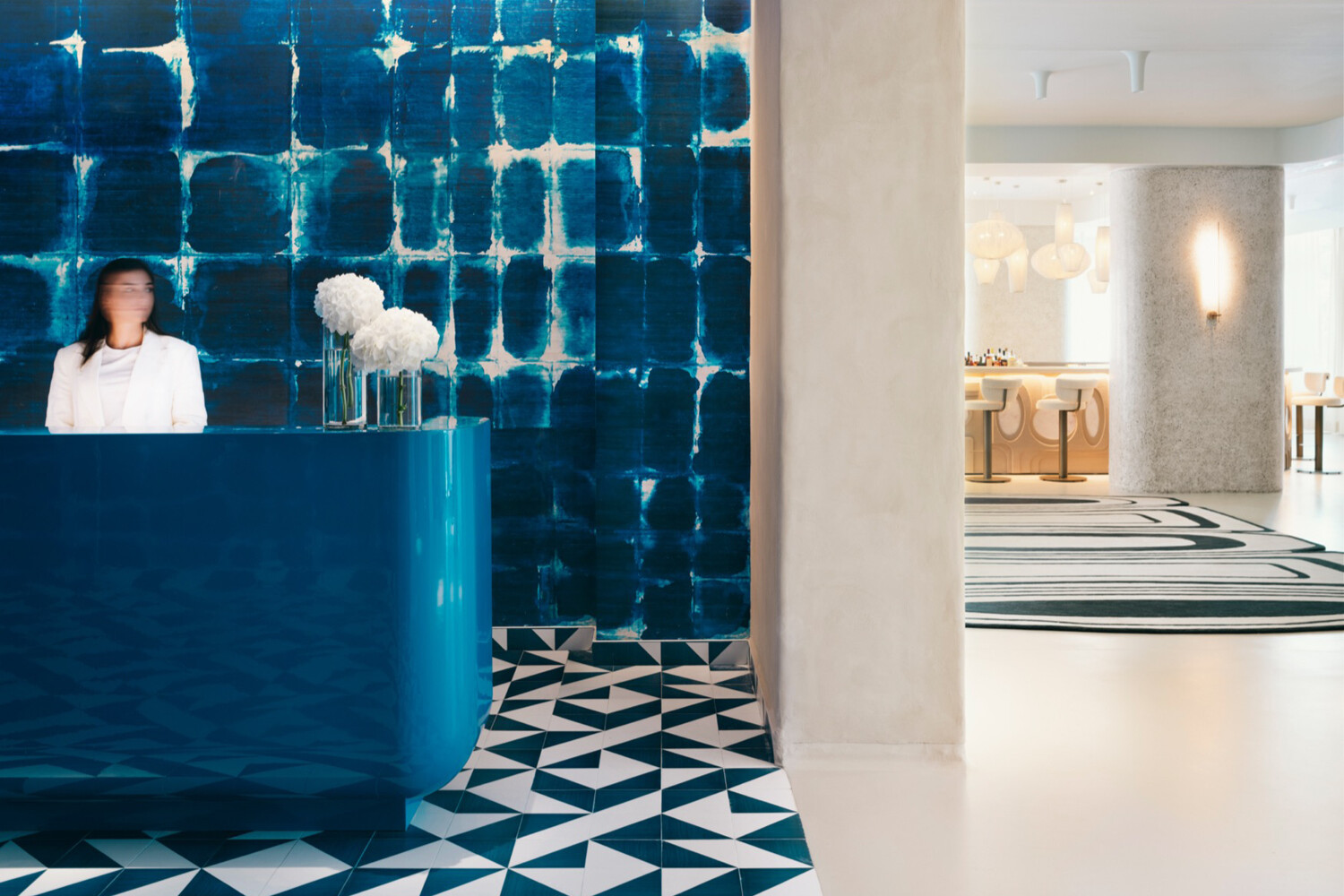
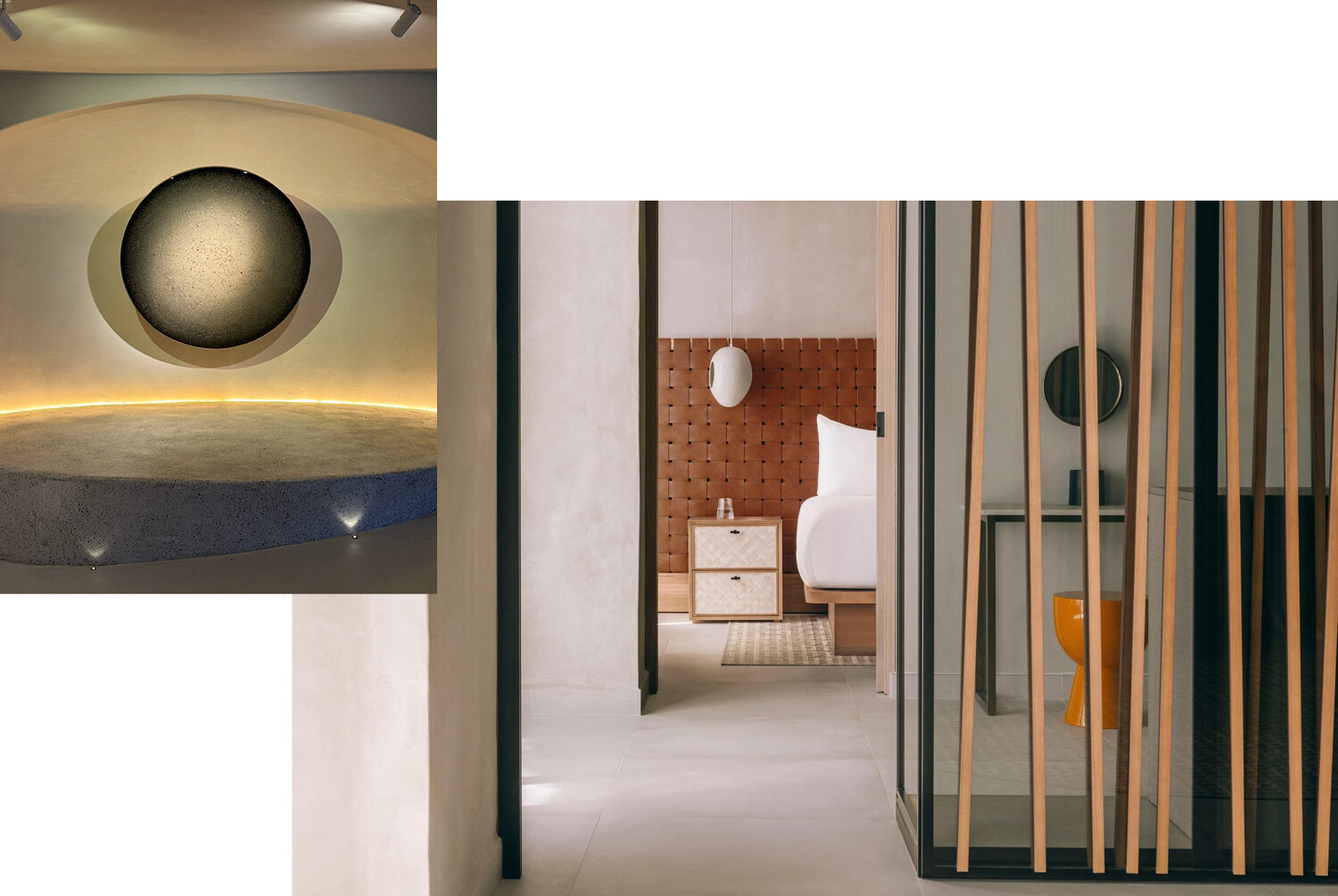
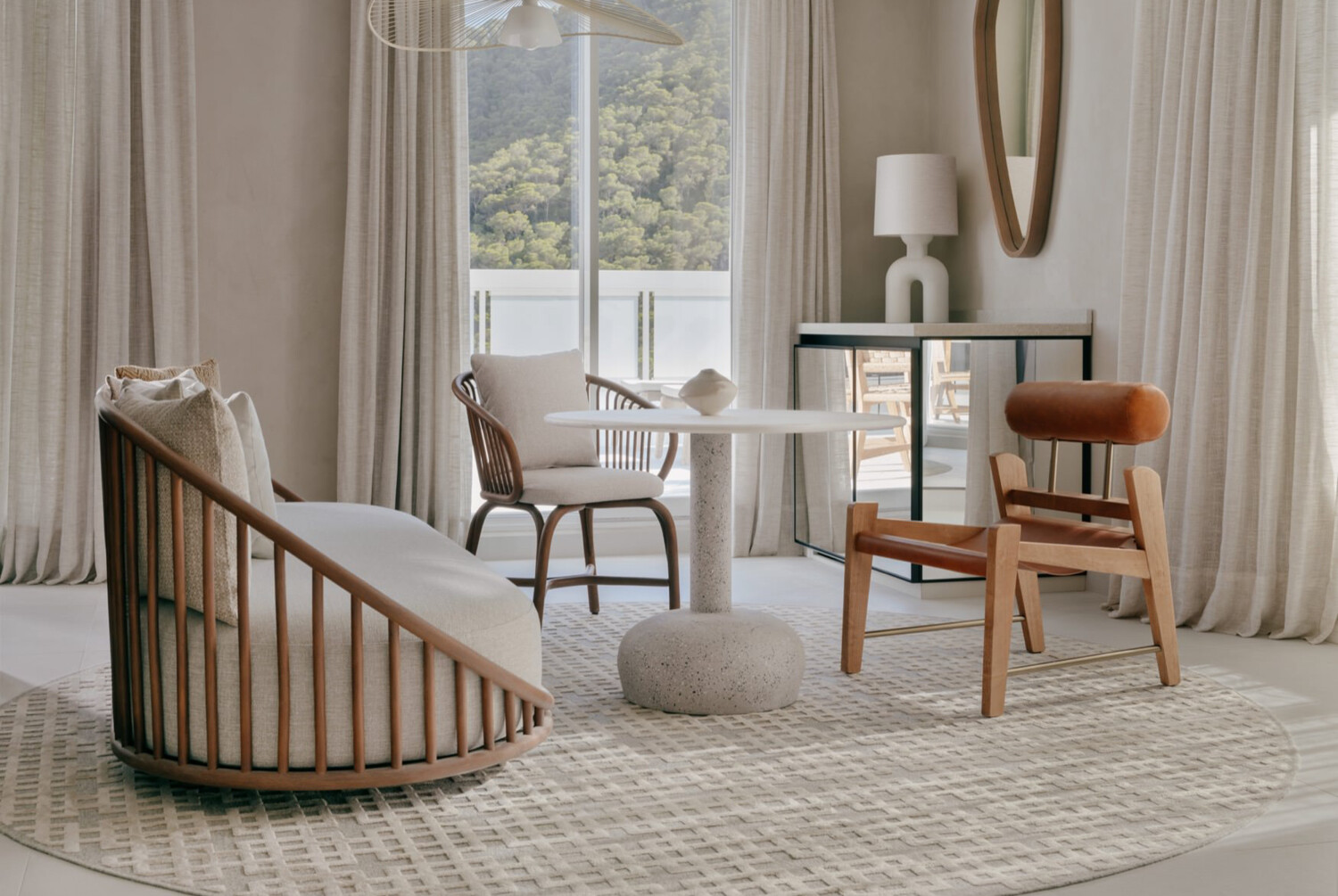
Beades Architects kept the 1972 structure intact. Cuarto Interior cleared everything inside and rebuilt from zero. What remains feels carved rather than constructed, as if the building had been hollowed out and re-finished from memory. Whitewashed walls echo the island’s cave systems. Plaster sits raw and warm to the touch. Leather headboards recall traditional Balearic chairs. Slatted timber references the old docks where fishermen once secured their boats. Across all 154 rooms, the palette stays within oatmeal, sand and stone. It never settles into a single era because it avoids becoming one. The lobby shifts the scale. It opens wider than expected. A deep indigo cut runs through the white, read as a gesture toward the sea. You can stay for days before the space fully registers. That delay felt like depth is part of the design. The windows hold the outside in place with quiet precision. Inside and outside almost touch, separated by something so thin it feels temporary. The building stays still and what you notice comes to you on its own.

“Cala Llonga is the part of Ibiza that endures. Older than the mythology, quieter than the legend, present the way things are present when they have nothing left to prove.”

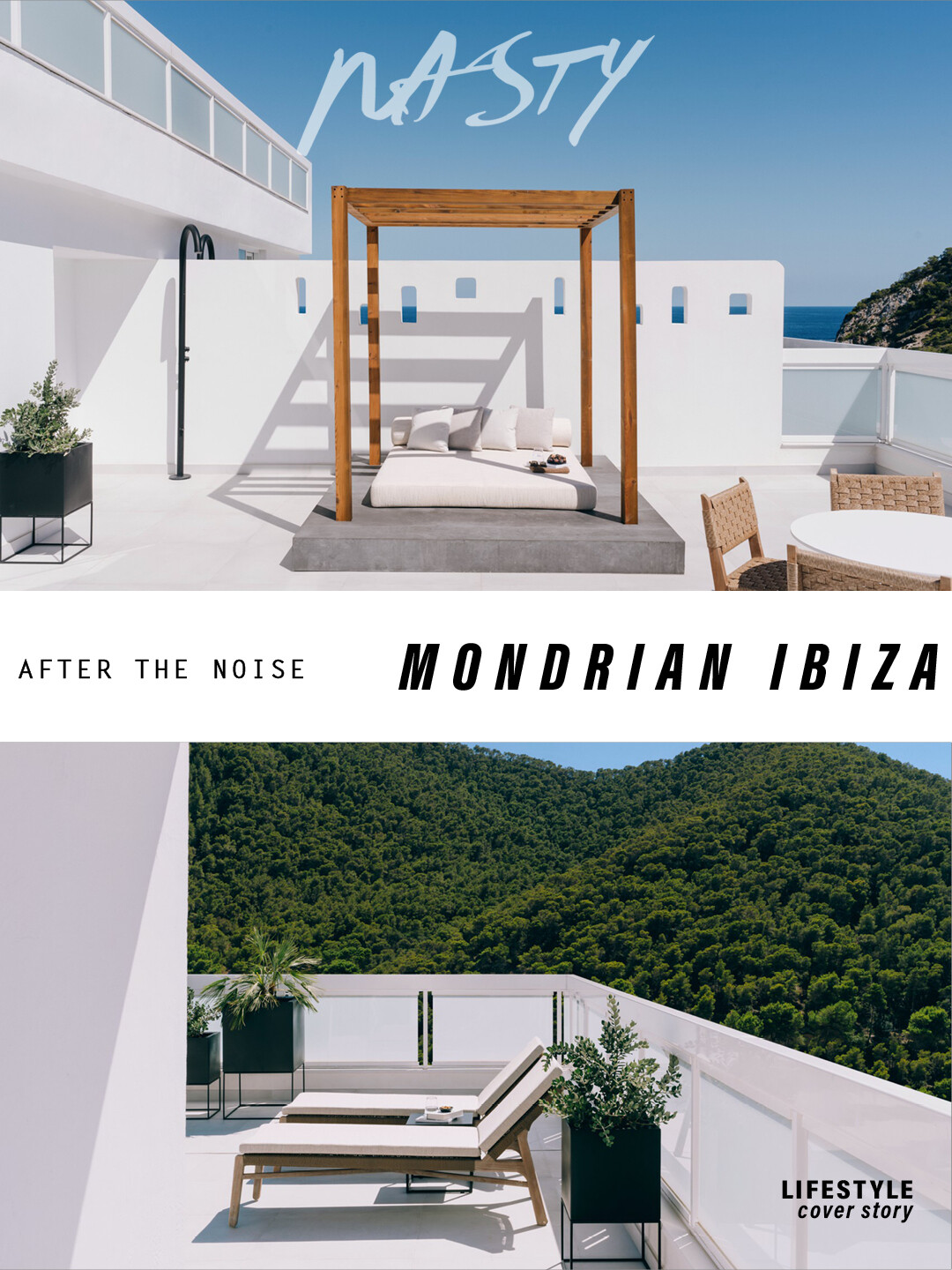
The rooms take you in without asking where you have been. There are 154, from deluxe kings to the Grande Suite with its cabana and daybeds at the crest of the climb. Each one runs on the island’s own grammar: materials that still remember their first life, lines that have stopped trying to convince you, light moving across a wall the way it moves over water nobody has touched. A terrace on every room, like a held breath let halfway out. Sea view, or forest view — and forest view is a window onto Hyde. The lobby shouts, the bar burns its neon, and then the room simply exhales and lets you go. It works because everything before it had you holding your breath.

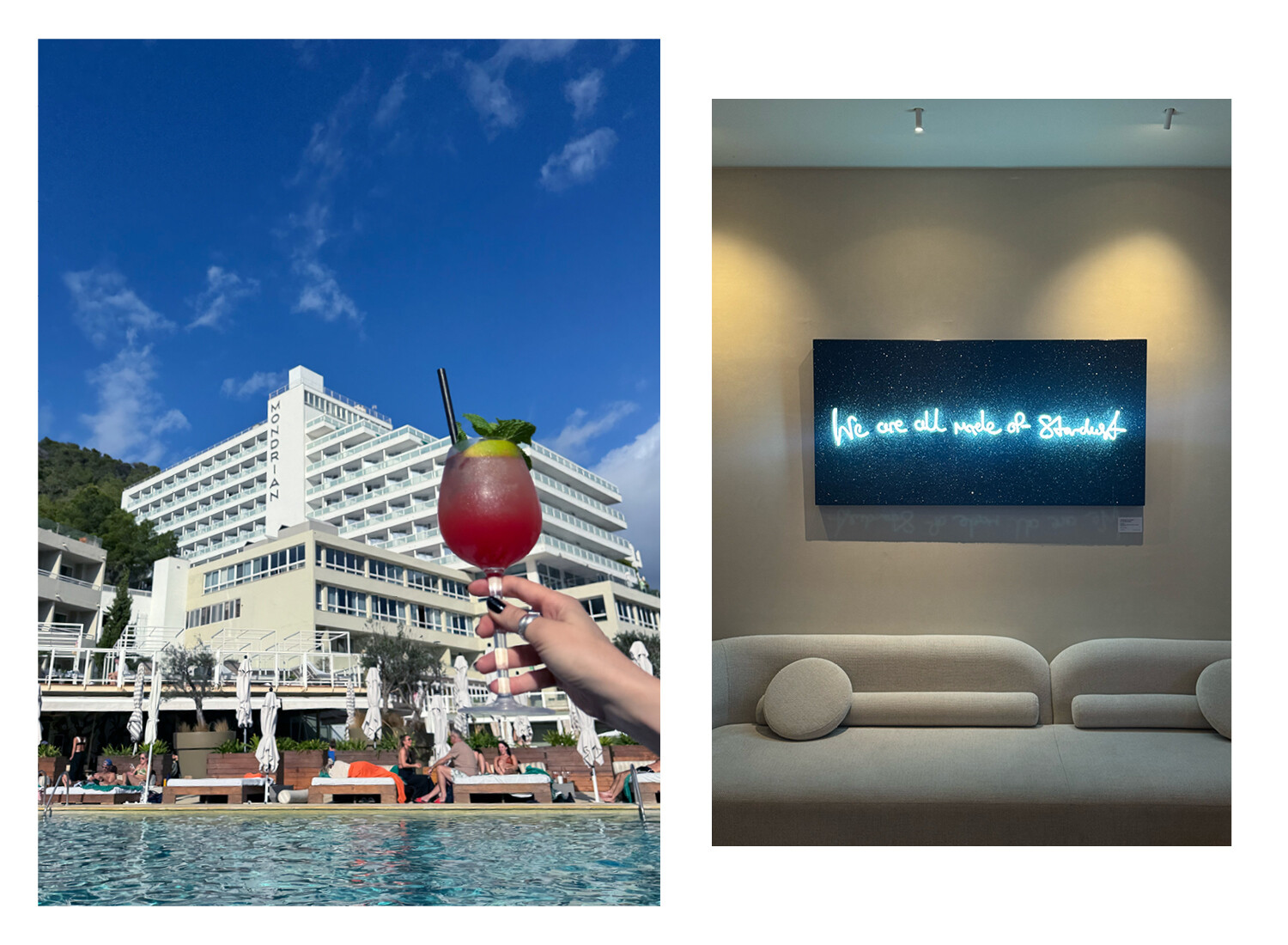
The art is where decoration ends and a collection begins. The London studio Gone Rogue assembled it, the same people who circulate work through Mondrian Shoreditch and ME London, walking unshown artists into rooms no gallery would lend them. The brief came down to sun and moon, sea and stone. Corine van Voorbergen holds the room still: resin and a piece called ASH, set through the lobby like a held breath. Lauren Baker answers with the opposite charge — Kissing of the Sun and the Moon carries diamond dust at its centre, which sounds like a press line until you are close enough to stop reading it as one, and her white neon, Remnants of Stars, is the only thing lighting a bar. Hannah Nijsten gives you Ocean View: blue squares on glass, horizon from across the room and pure abstraction up close. One wall turns over Ibiza-based artists across the season.

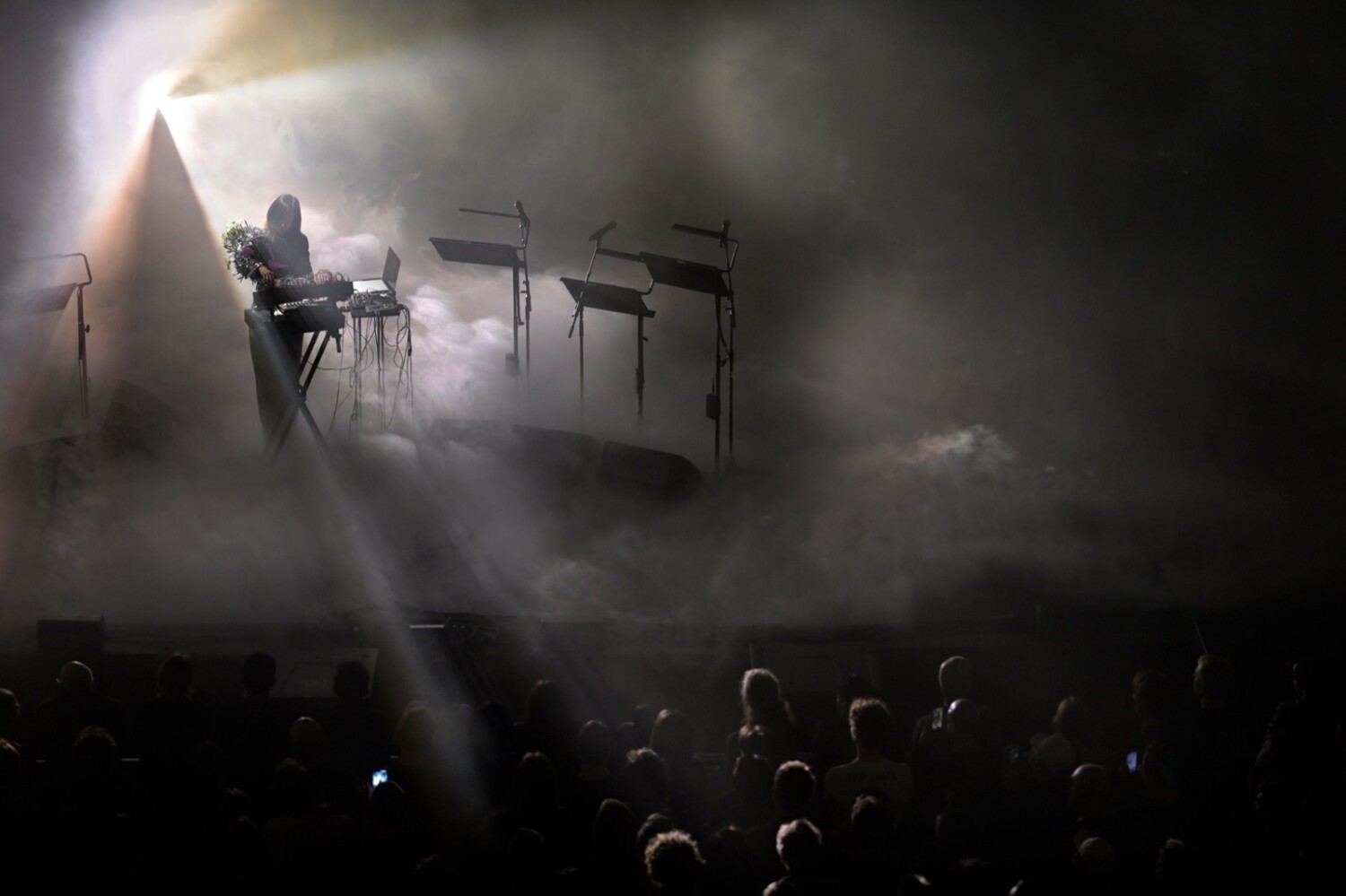
Then the building stops being somewhere you rest and becomes the room where an industry argues with itself. For three days every April, before the season is let in, the whole of Mondrian and its sister Hyde next door are handed to IMS Ibiza, the International Music Summit. This year it ran from the 22nd to the 24th, the third edition the complex has held since IMS came here in 2024, under the banner Reclaim The Dancefloor: more than two thousand delegates from sixty-four countries, the gun that unofficially starts the island’s summer. The talks circled what is eating the industry from the outside in — artificial intelligence, private equity, censorship, the question of what is left of a thing once it scales. The IMS report, compiled by MIDiA’s Mark Mulligan and read out in these rooms, sized the global electronic music industry at 15.1 billion dollars, up seven per cent on the year. Yann Pissenem, the man behind Ushuaïa, Hï and now [UNVRS], took the Legends Award. So for three days, the building where the night got taken back off you became the room where the people who built the night argued about what they had done to it. It is the move Schrager made in 1996: a building nobody wanted, bent into an industry’s mirror run again here, fifty years on.

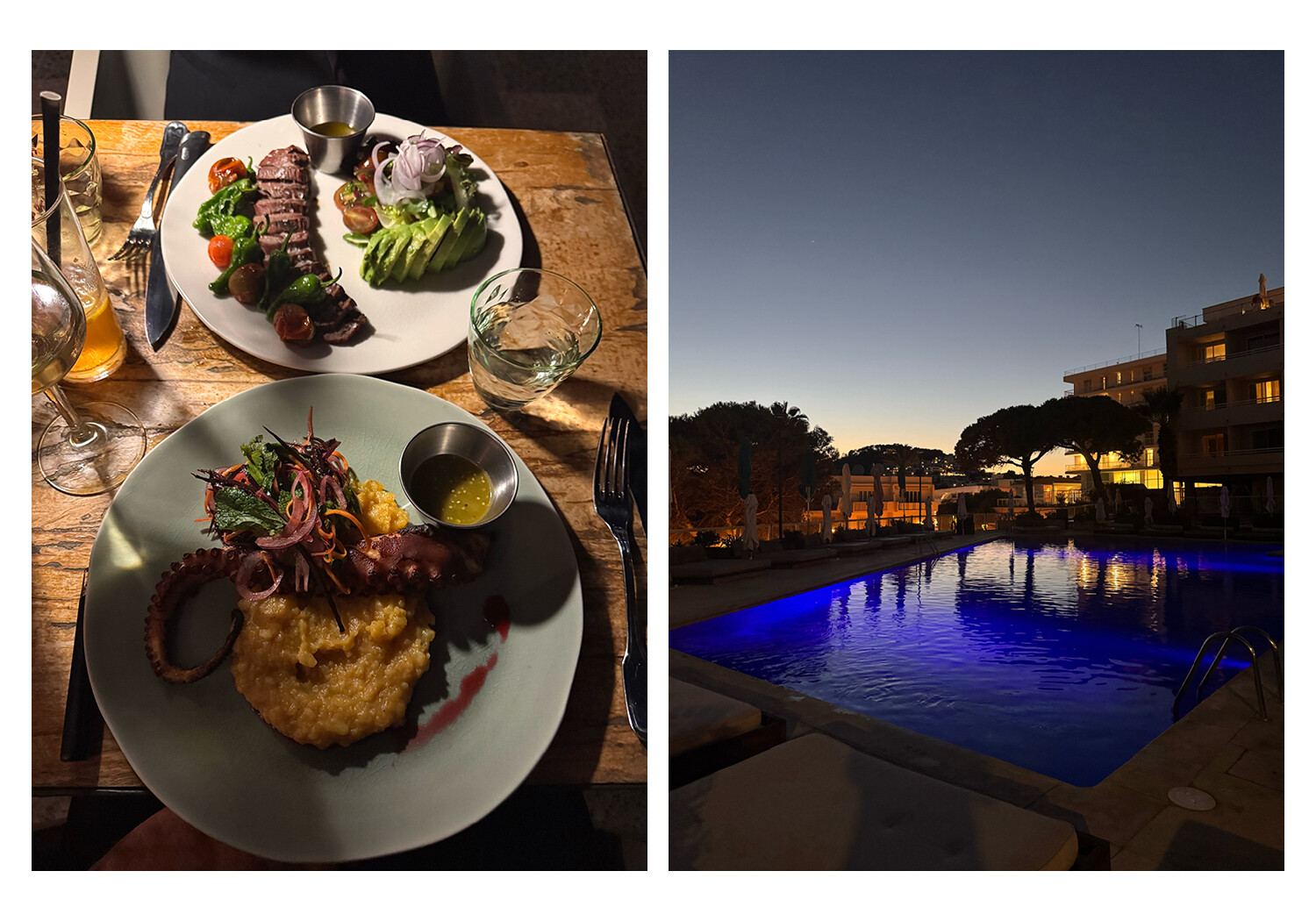
The conversation does not end at the door, because the building shares its ground with Hyde: one owner, two weathers. Mondrian is the island breathing out; Hyde is the breath dragged back in, louder, with its face to the crowd. You cross between them the way you cross between two moods of the same day and the buildings are laid down so the crossing has somewhere to land. The food walks both. Niko, the Japanese kitchen, was the island’s first, drawn by Cuarto Interior around a long counter and a lone olive tree, which was later carried outdoors onto the Sun & Moon terrace. The miso-glazed black cod and the soft-shell crab bao have weathered enough summers to answer to the word signature. The clearest tell of appetite came in summer 2024: the Best of the Best Culinary Series with The World’s 50 Best, two ranked chefs a month, opened at Niko by Pam Pichaya Soontornyanakij of Bangkok’s Potong, youngest Thai woman to take Asia’s Best Female Chef, then Deepanker Khosla of the Michelin-starred Haoma. Cross to Hyde and the clock loosens its grip: Bungalow holding the day’s charge, Sun & Moon thinning it out, slowing it down. It is the old rite the island has always run between the noise and the quiet, only now there is a roof pitched over each end of it.

The wellness is thin on purpose and the building says so: a sea-facing 24-hour gym, sunrise yoga, snorkelling, walks into the hills, a spa that works and never performs. This is a refusal, not an oversight. The blood here is nightlife, not silence and the place stays true to that rather than miming a calm the architecture could never carry. The honesty runs the full length of the place. It does not pretend to be a finca, the kitchen does not pretend to be a fisherman’s, the art does not pretend to be folk craft. Most of the island is pretending now, the white-and-bohemian look worn so smooth the newer places feel like stage sets, swearing they were always there. This one is honest about what it is — a 1972 building a global brand rebuilt on a beach that keeps a life of its own — and that honesty, everywhere you look, is where its nerve comes from.

Down the coast the superclubs are still counting last night’s takings. Up here a fifty-year-old building is quietly handing people back to themselves. It has done this as a family hotel and it does it now as a Mondrian, and for three days every April it does it for the very people who built the thing you are recovering from — IMS, two thousand of them, arguing about where the music goes next. Family beach, brand flagship, industry confessional. None of these cancels the others. The 1972 building holds all of them and asks you for nothing back but the weekend. You leave carrying two things that will not lie down together. You slept inside a piece of brand architecture that knew exactly what it was doing to you. And the bay beneath it is older, stranger, more indifferent than the architecture will admit, and stays that way the moment your key is dead. The building never reconciles them, and that refusal is the part that stays in the body — longer than you expect, the way the bass does. For three days in April it is conference floors. By summer, suites. By winter, nothing but the bay. Stand on the terrace at the right hour and the years fold flat: 1972 and now become one white building, one slant of light, one long way down. Ibiza is full of places that perform the descent. This is the one that delivers it: where the long way down stops being an ending and becomes a kind of return and the building has the grace to say nothing while it happens.

After the Noise / Mondrian Ibiza

Credits:

Location: Mondrian Ibiza / @mondrianibiza
Photography: Marco Giuliano & Courtesy of Mondrian Ibiza / @marcogiulianoph, @mondrianibiza
Editor: Anca Macavei / @ancamacavei
Editorial Assistant:  Ethel Romero / @_bby_ella_

You may also like

An Alpine Rhythm of Stillness / Aman Rosa Alpina

Lifestyle | Places
Set in the village of San Cassiano, Aman Rosa Alpina sits at the meeting point of forest, stone, and sky. The Dolomites rise behind it in pale vertical formations, shifting from soft gold to muted silver as the day moves across the valley.

Scent In Motion / Transparent

Lifestyle | Spotlight
Transparent introduces the Aroma Diffuser, expanding its design research from sound to fragrance. Known for its minimalist loudspeakers and precision engineering, the Stockholm-based brand applies the same attention to material, modularity, and sensory experience to a new field: scent.