Gaika / The Babylon Hole
Music | Interview
In conversation with Gaika Tavares, who has established himself as one of the most groundbreaking voices in the contemporary British music and art scene.
You’ve stood on a dance floor and felt a bassline land before you heard it. The sub-bass hit your sternum, your jaw, the soles of your feet. Your cortisol was already rising. That was a 40hz pressure wave reorganising the sixty per cent of you that is water. Cymatics — the science of sound’s geometry — has been proving since 1809 that frequency organises matter in every medium it enters: sand on a metal plate, liquid in a lab, the body on a dance floor. What the sand was doing, your body does every time you press play.
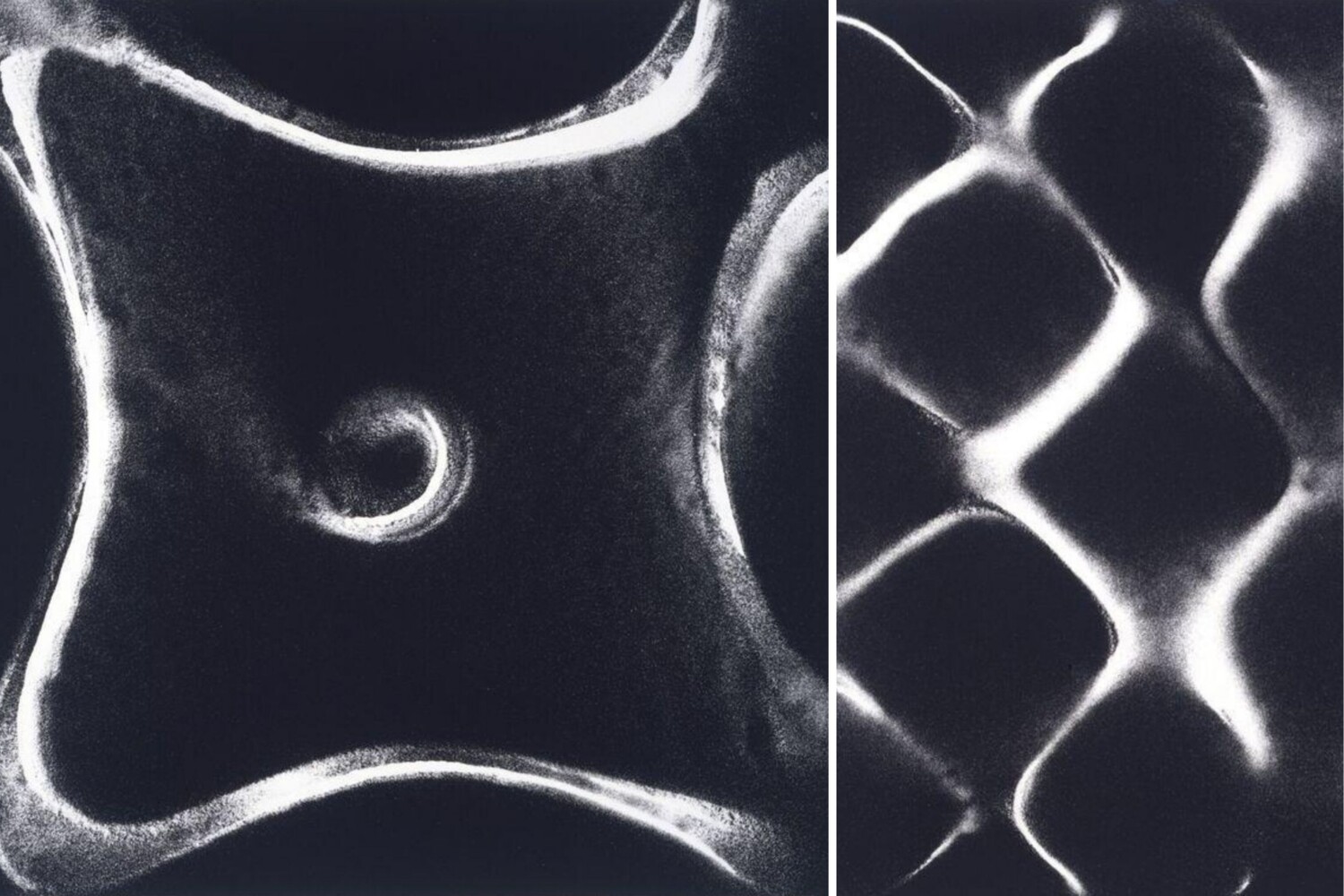
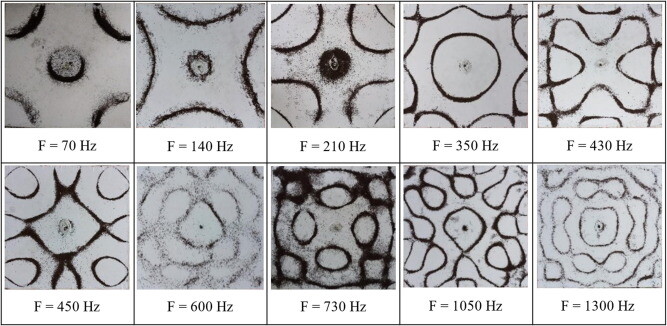
In 1809, Ernst Chladni pressed a bow against the edge of a metal plate covered in sand. The sand moved into precise geometric patterns, different for every frequency, reorganising with each change of pitch. That was the first time anyone made visible what sound does before you feel anything about it.
Cymatics
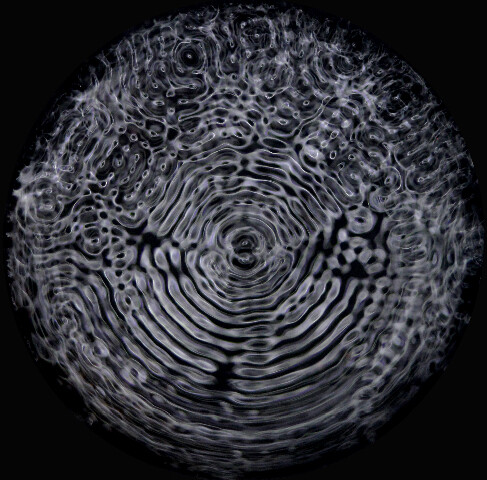
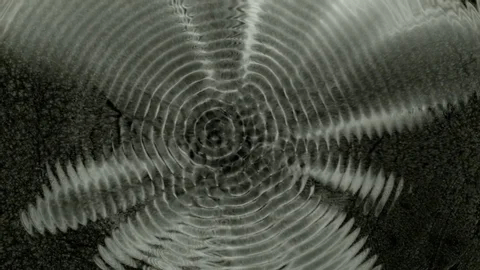
Chladni FigureHans Jenny spent the 1960s extending this into every medium he could find — liquid, paste, solid — and named the field cymatics. In 2016, researchers at the Université Grenoble Alpes confirmed the geometry holds at microscale in liquid. The human body is sixty per cent water. Frequency organises matter in every medium it enters. Including yours.
Cymatics in WaterThe evidence is older than the science. In Malta, the Ħal Saflieni Hypogeum, a 5,000- year-old limestone chamber carved three storeys underground, sings at 110hz. Dr. Ian Cook at UCLA measured what happens at that frequency: the prefrontal cortex shifts abruptly, language-processing centres deactivate, hemispheric dominance moves from left to right, linear processing gives way to emotional and creative. At 90hz, nothing. At 130hz, nothing. Only at 110. In 2020, researchers at the University of Huddersfield showed the Hypogeum’s peak frequencies are evenly spaced and resemble a whole-tone scale and that producing this spectrum required jointly fine-tuning the dimensions of multiple cave walls across independent chambers. The builders tuned stone the way an instrument maker tunes wood. The same frequency was found in prehistoric chambers across Europe — Newgrange in Ireland, sites across Italy. A frequency made permanent through limestone.
Music criticism has spent a century missing this. Every review describes what the listener felt. “Haunting.” “Atmospheric.” Words that arrive after the fact. What arrived first — the frequency hitting the body, triggering cortisol, dopamine, adrenaline before any opinion had formed — goes unnamed. In April 2026, a study in Frontiers in Behavioral Neuroscience exposed participants to 18hz infrasound which is below the threshold of hearing. They could not detect whether the sound was present but their cortisol spiked anyway. Their irritability rose. A frequency they literally could not hear was already changing their stress chemistry. A 2011 study in Nature Neuroscience found that dopamine releases in the brain during the anticipation of a musical peak — before the peak arrives, are in a different region from the one that fires during the experience itself. The reward starts before the event.
“The oldest known music venue was designed for what the sound would do to the people inside it.”
Chladni Plate
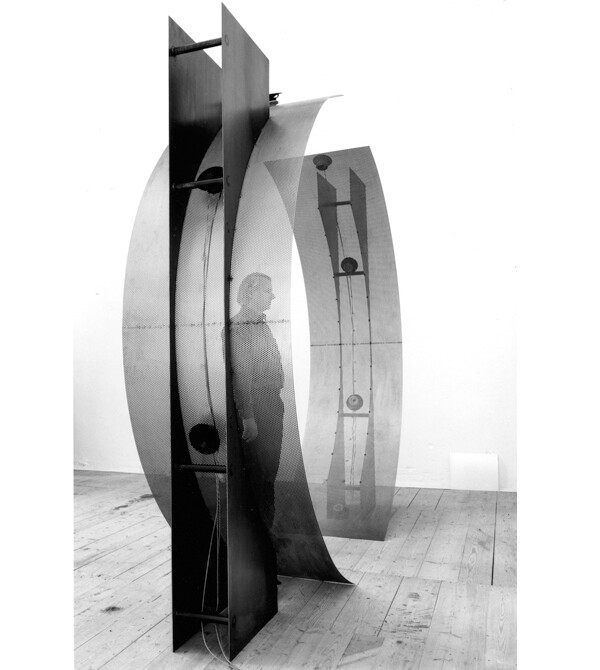
Hypogeum of Ħal-Saflieni courtesy of Smapse EducationBernhard Leitner understood this before most people considered it a question. “Sound is a building material,” said the Austrian sound artist. And: “I can hear with my knee better than with my calves.” Leitner mapped the body as an uneven receiver, each surface, each joint, each density of tissue picking up different frequencies at different intensities. His installations construct where listener stands in. A room without sound already has properties: its dimensions, its materials, its surfaces are already doing something before a note enters. Add a body and the equation changes. At a sold-out stadium show, the crowd shifts the sonic composition before a single note is played. Each body absorbs high frequencies, directly changing what everyone else hears. You were part of the instrument the whole time.
This is where the vocabulary of music criticism breaks. A bassline described as “heavy” is described by its aesthetic weight. What it actually does is bear load: it is compressive, it is pressing the air in the space into a different density, and you are inside that density. A track described as “hypnotic” is described by its effect on attention. What it actually does is entrain as the frequency mirrors the body’s own rhythms until the two synchronise and the boundary between you and the place dissolves. The silence between the notes has physical dimensions. A kick drum at 40hz is a pressure change you absorb. Below 20hz, the ears stop registering and the skeleton takes over: the sternum, the jaw, the soles of the feet pick up what the eardrums cannot. When a song feels heavy, the room is heavier. You felt this before the word “heavy” occurred to you.
Bernhard Leitner, 1996At a techno night, every person in the building — in front of the DJ booth, behind the bar, chilling on the sofas — is inside the same frequency field. The frequencies act on them regardless of whether they are paying attention, regardless of whether they would choose this track, regardless of whether they think of themselves as someone who likes techno. They are sixty per cent water inside a vibrating medium. The geometry is doing what it did on Chladni’s plate. The sand didn’t have a preference either.
You built a self around what moves you. The tracks you return to, the rooms that felt right, the specific weight of a sub-bass that once stopped you mid-sentence — you filed these under taste. Under identity. Under proof that you feel things other people don’t. But the frequency was already reorganising your body before you had a thought about it. Every person in that room was being reorganised the same way. The response you thought was yours was shared. It was physics first and feeling second. That should diminish it. It doesn’t. What it means is that the thing you felt was your sixty per cent water answering a frequency — honestly, immediately, before you had a word for it. The most private thing you felt on a dance floor was your body telling the truth without asking what you wanted it to say. You are the sand on the plate. You always were.
Hypogeum of Ħal-Saflieni courtesy of Malta i GozoCredits:
Words: Isabella Chiocca / @bambina___0
Editor: Anca Macavei / @ancamacavei

I See, Therefore I Am