What distinguishes the way your work is perceived across the different mediums you use? Do you consider photography a limitation, or a compressed form of cinematic language? And how does your approach shift when moving between documentary and editorial contexts?
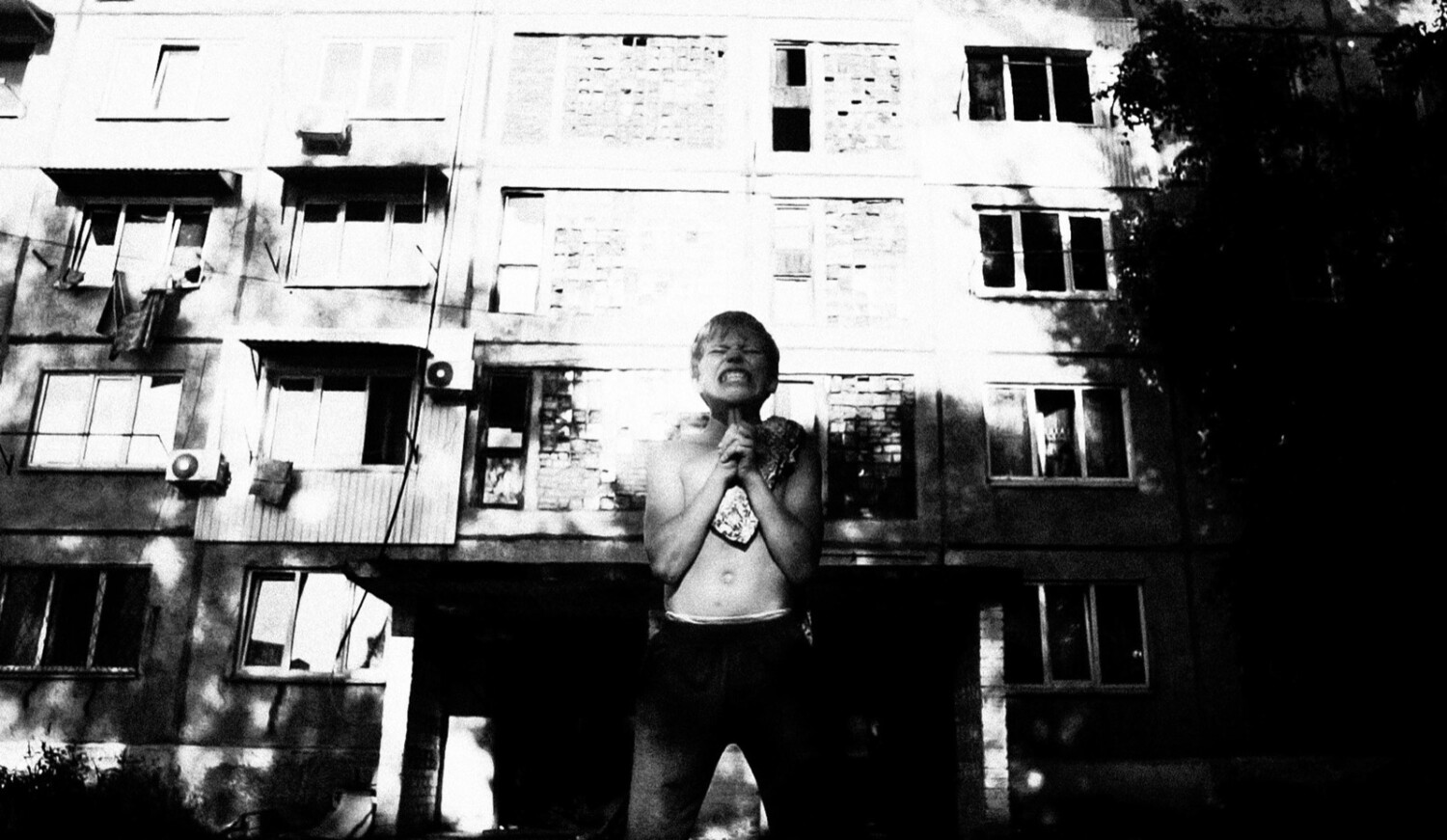
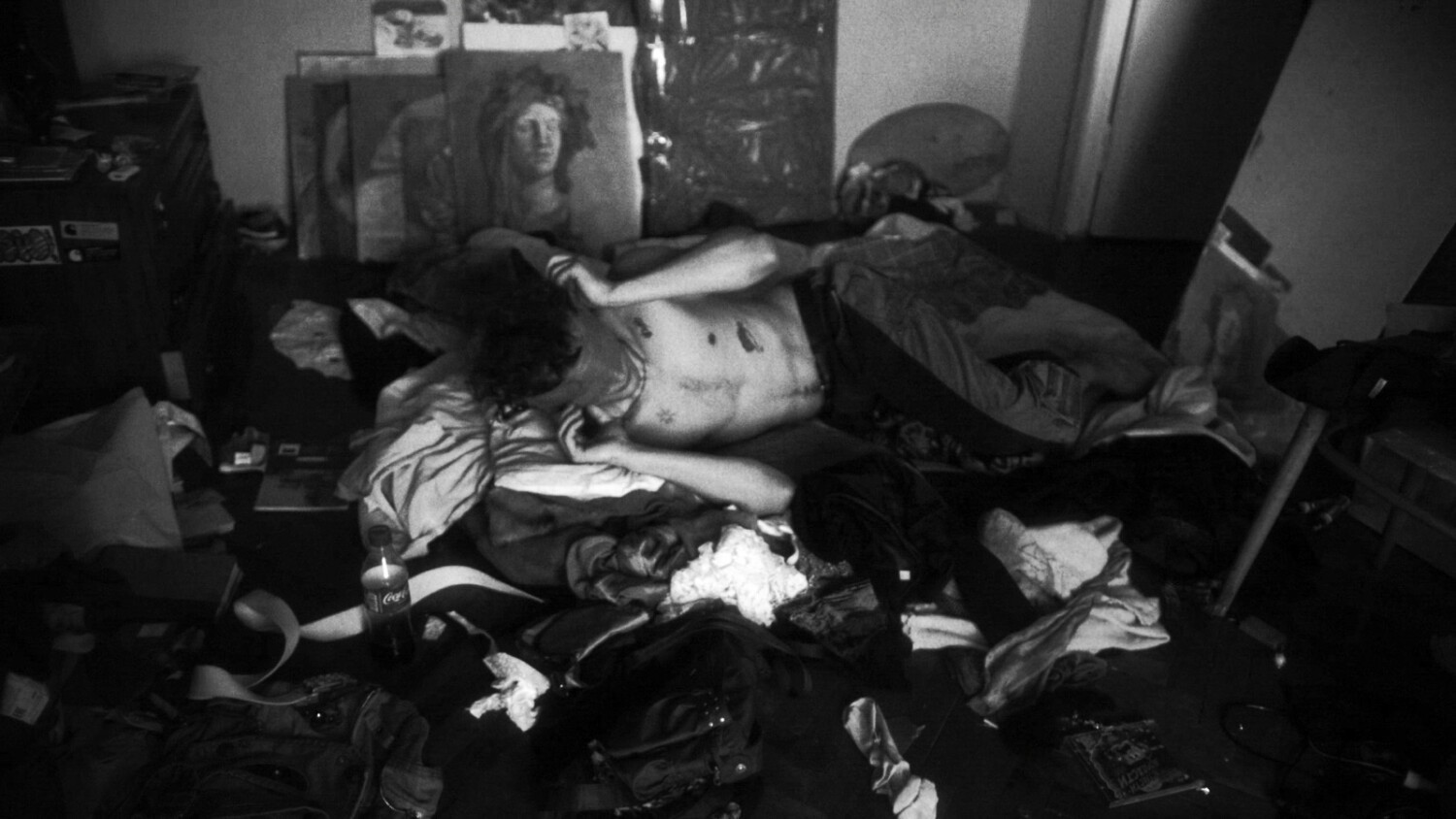
Whether I’m making photographs or films, there is always a strong documentary element in my work, if we define documentary as minimal staging, limited production resources, and, ideally, preserving the original authenticity of what unfolds in front of the camera. I began working in documentary simply because it’s a much more accessible way into filmmaking or photography. You don’t need an expensive studio, elaborate lighting, a crew of set designers, actors, stylists, or producers in order to express an idea. With a documentary approach you work with what life gives you: real people, natural light, minimal equipment often nothing more than your camera and entirely on your own. But what has always interested me is bringing a sense of artistry into this otherwise simple way of working. Among the endless variety of people and subjects, I searched for those that could express something I personally wanted to say. In that sense, I approached real situations and real people as though they already belonged to a fictional film. I have always paid close attention to lenses, framing, and camera movement all the cinematic tools that shape and communicate my perspective. By shooting my films in high-contrast black and white with an energetic handheld camera, I place real people into a dramatic monochrome world and turn them into actors within a work in which they simply play themselves. In that way, my perspective alone becomes enough to transform documentary material into something cinematic. Perhaps that is what defines my practice: working with documentary reality while using modest but effective artistic means of expression, whether in photography or film. So it’s difficult to say where do the differences lie. Technically, my projects often differ quite significantly. For example, all of my documentary films are shot in black and white using long, uninterrupted takes, sometimes lasting an hour or more. This is done to create a feeling of pure observation, where my presence as both director and cinematographer almost disappears. When I work on photographic projects, however, I enjoy shaping light, constructing more elaborate visual compositions, and introducing my own emotional perspective into the frame without losing that thread of authenticity and documentary truth.
How do you preserve documentary qualities within something like a fashion editorial, where everything has been carefully conceived and staged in advance?
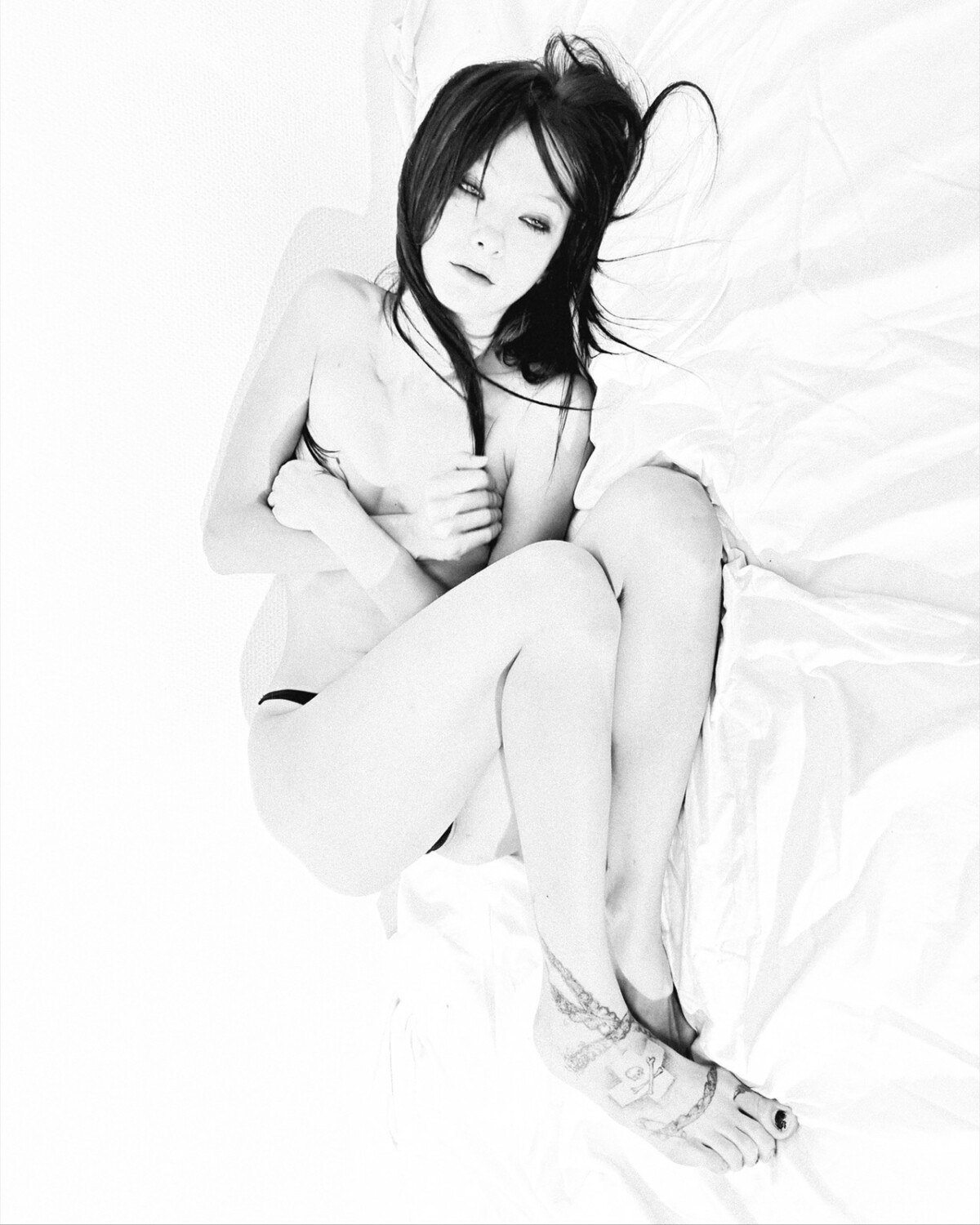
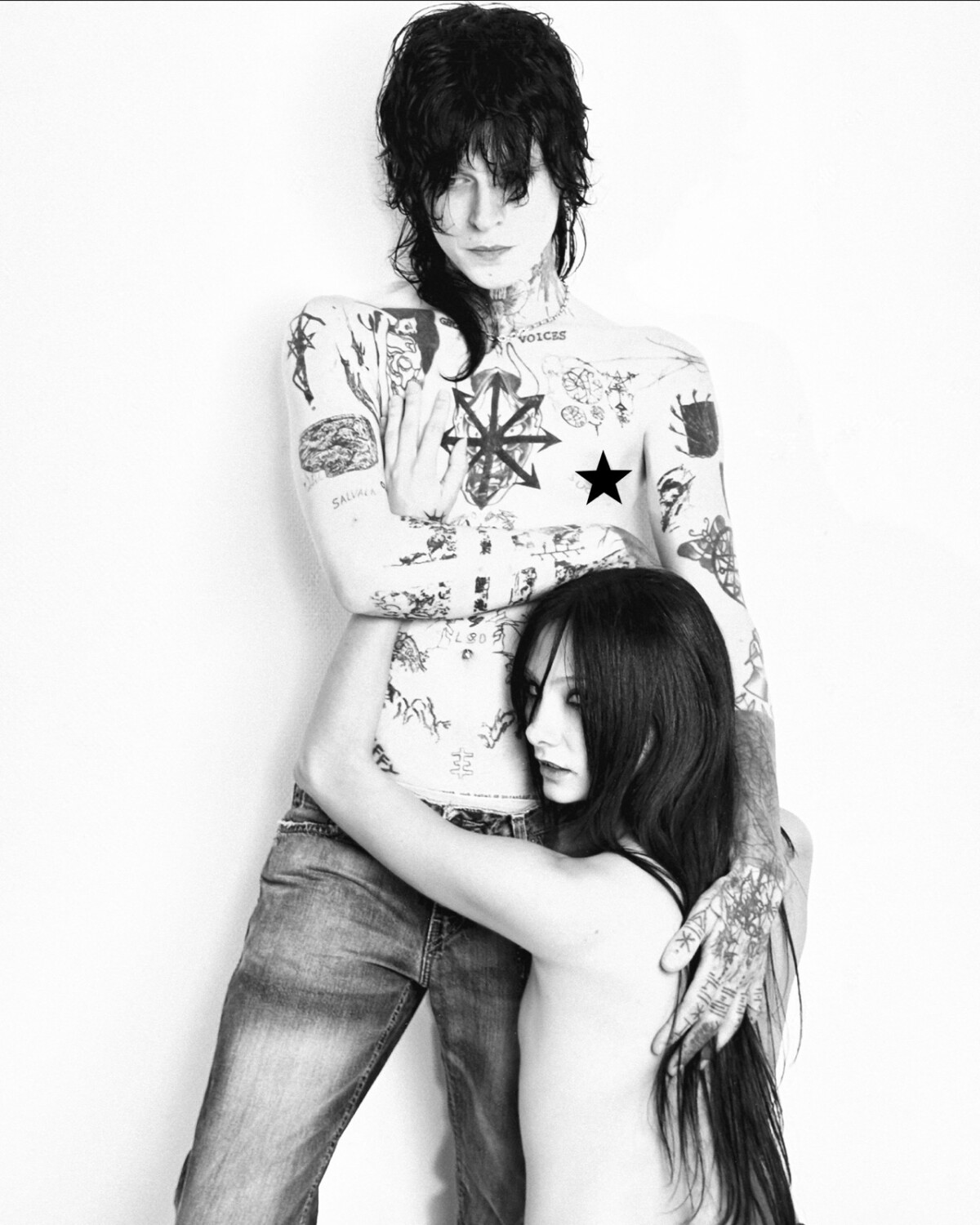
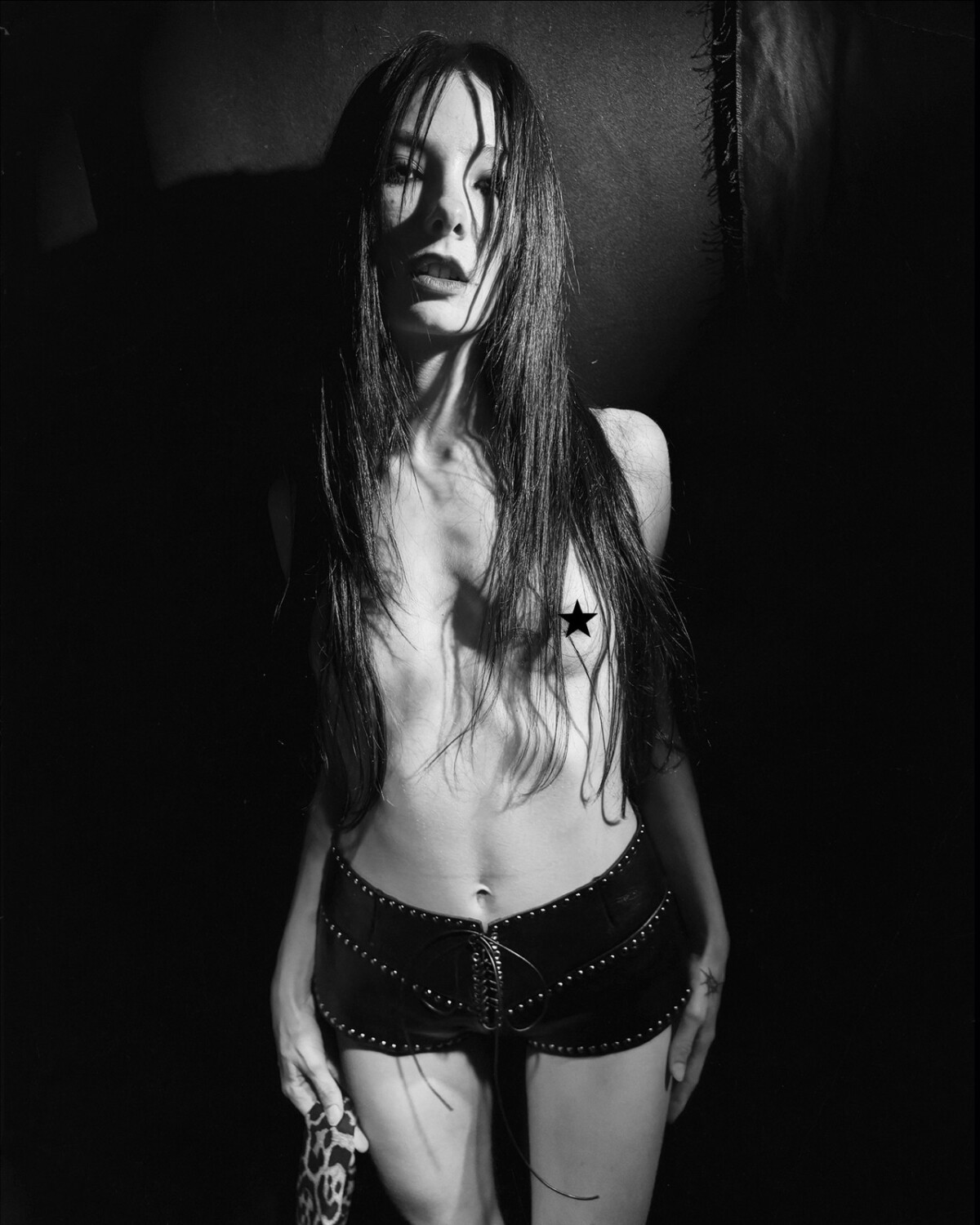
Documentary reveals itself through movement and through chance. I often ask models to move in unexpected ways, waiting for an accidental moment to emerge. Movement allows them to leave behind familiar, comfortable poses and reveal something more spontaneous, something emotionally alive. My work can range technically from purely documentary to entirely staged. But at its core, I always try to preserve a sense of documentary truth, performativity, and a living emotional tension.
On a thematic level, especially in projects engaging with youth and subcultures, are you interested in affirming identity or rather in exposing its fractures and its erosion?
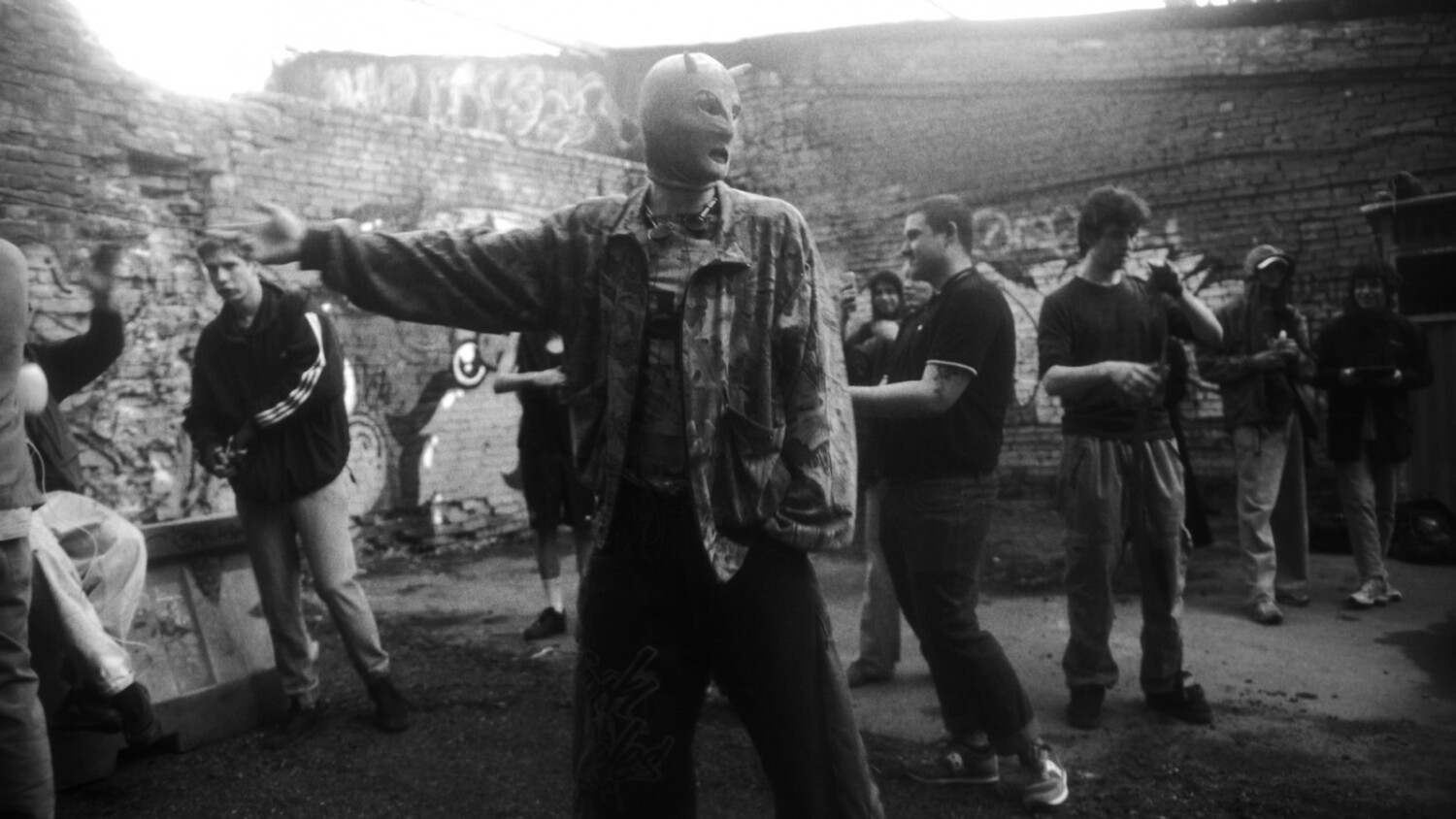
I’m not interested in slogans. I’m not drawn to people who believe they have completely figured themselves out. In that sense, I’m also not particularly interested in identity as something fixed and clearly defined. If you imagine identity as an image, it becomes static. Someone who has already decided everything about themselves no longer moves. And people who no longer move are simply less interesting to observe. What interests me are precisely those fractures, moments of rupture, uncertainty, and searching. That was what I tried to capture in my documentary film about a marginalised community of young creatives living in Moscow during wartime. I was interested in watching how young people navigate political restrictions, their own fear and anger, while trying to preserve a sense of freedom within a reality defined by control, censorship, and militarisation. And, at the same time, how youth itself continues to exist within those circumstances. Love, creative energy, and the experience of being young survive despite the pressure of such a harsh reality. There is certainly an element of self-destruction in some of these characters. We witness the destructive impact that reality has on their personalities. Yet there is still light, love, and simple human impulses that remain untouched by any system of control.
In an age of relentless overproduction, where very little still has the capacity to unsettle and most images remain superficial, can stylistic coherence function as a form of resistance? What, at this point, makes an image truly necessary?
One defining characteristic of our time is that creative tools have become available to everyone. Editing software on smartphones, AI, and affordable cameras now allow anyone to produce visual content. In the past, becoming a filmmaker, photographer, or cinematographer required education and years of professional experience simply to gain access to the tools themselves, to cameras, film stock, editing equipment. Today, we skip those stages entirely. The tools are already in everyone’s hands. The problem is that the visual value of much of this content often remains superficial. Many people have no artistic education, and their visual references rarely extend beyond Pinterest boards or fleeting online trends. To me, one form of resistance today is education, continually educating yourself, and refusing to simply imitate the work of others. Another is creating without constantly thinking about how algorithms will respond. Of course, we all have to acknowledge contemporary trends. Many artists adapt their work to shorter formats because that is what digital platforms reward. But I think genuine courage today lies in working independently of those expectations.
I often find myself thinking that I would rather devote all my attention to a single project, a film, for example and build one complete and coherent work than produce ten smaller projects designed for immediate results. But that is difficult. It demands concentration, faith in an idea, and an enormous amount of often repetitive work. That is the direction I aspire to move toward: creating larger works instead of satisfying my creative impulses with short-form projects that deliver immediate gratification but rarely possess lasting depth.
For me, that is another form of resistance against the speed and uniformity of today’s visual culture.
So what makes an image truly necessary?
I believe it begins with a deeply personal motivation.
In other words, any sincere impulse beyond simply attracting attention as quickly as possible or trying to turn visibility into profit.
How central is rawness to your work? What kind of “slap in the face” do you think is still needed today? And what is one you’ve experienced yourself that has fundamentally shaped your perspective?
I’ve never been a perfectionist, and I’m still not. In many ways, my entire practice is built around this idea of rawness.
When I first started, I simply wasn’t capable of producing technically polished photographs or films. So instead of focusing on aesthetics, I focused on meaning, content, and intention. Later, while making films, I deliberately adopted high-contrast black-and-white cinematography and handheld camera work so that I could concentrate entirely on what was happening in front of me instead of thinking about visual beauty. Eventually, that became my aesthetic. When it comes to music videos or choreography, I still believe that the intensity and sincerity of what happens in front of the camera matter more than stylistic devices. Of course, style is important too. But it can never replace genuine emotion, movement, or tension. Without those things, no matter how beautifully or professionally something is shot, it ultimately becomes empty. I think artists today need to reconnect with the reality of their own lives and draw inspiration from there. They need to work with material that grows out of lived experience. But for that to happen, you actually have to live your life. And I think that’s one of the hardest things today.
I recognise this in myself all the time. I spend too much time online. I catch myself approaching creative work as a purely stylistic exercise, when what I really should do is simply pick up a camera and immerse myself in real life, searching for material. Or even leave the camera behind altogether and just experience the world. But that’s much harder than it sounds. I’ve been postponing my new documentary about Paris for almost two years because making it would require speaking a language I’m not fully comfortable with, entering unfamiliar places, and approaching strangers. Fear keeps holding me back, while my mind offers easier alternatives: make a fashion editorial, direct another music video, stay in the realm of pure aesthetics. But every now and then, something inside me wakes up and starts demanding something real. My first film came into existence in exactly that way. I had been working as a videographer, making films about other artists for magazines, including one of my own. Eventually, I grew tired of it and decided to make a film that would reveal something about myself instead. So I went back to my hometown and made a film about my father, a man I had barely known and about his family. The result was a deeply personal and rather painful portrait of ordinary life in the Russian provinces. Shot entirely on a DSLR camera, the film went on to screen at IDFA, the world’s leading documentary film festival, as well as ten other international festivals. For me, that experience was a genuine slap in the face. It made me understand that meaningful work has to grow out of your deepest and most sincere motivations. In my case, that motivation was simply the desire to understand my father, not to make visually impressive AI images, something I still occasionally do. Even when I work with AI, though, I don’t want to imitate what already exists. I want to use it as another way of expressing my own voice. Recently, I created a fan film for Placebo. Although every frame was generated using AI, it’s one of the most personal works I’ve ever made. It was simply my way of saying “thank you” to a band that has meant a great deal to me.
In your practice, does reality need to remain legible to be effective, or does it gain strength through ambiguity? Do you align more with documentation, or with a deliberately open-ended form of narrative?
I’ve never really tried to verbalise my artistic practice, reduce it to a set of principles, or build a theoretical framework around it.
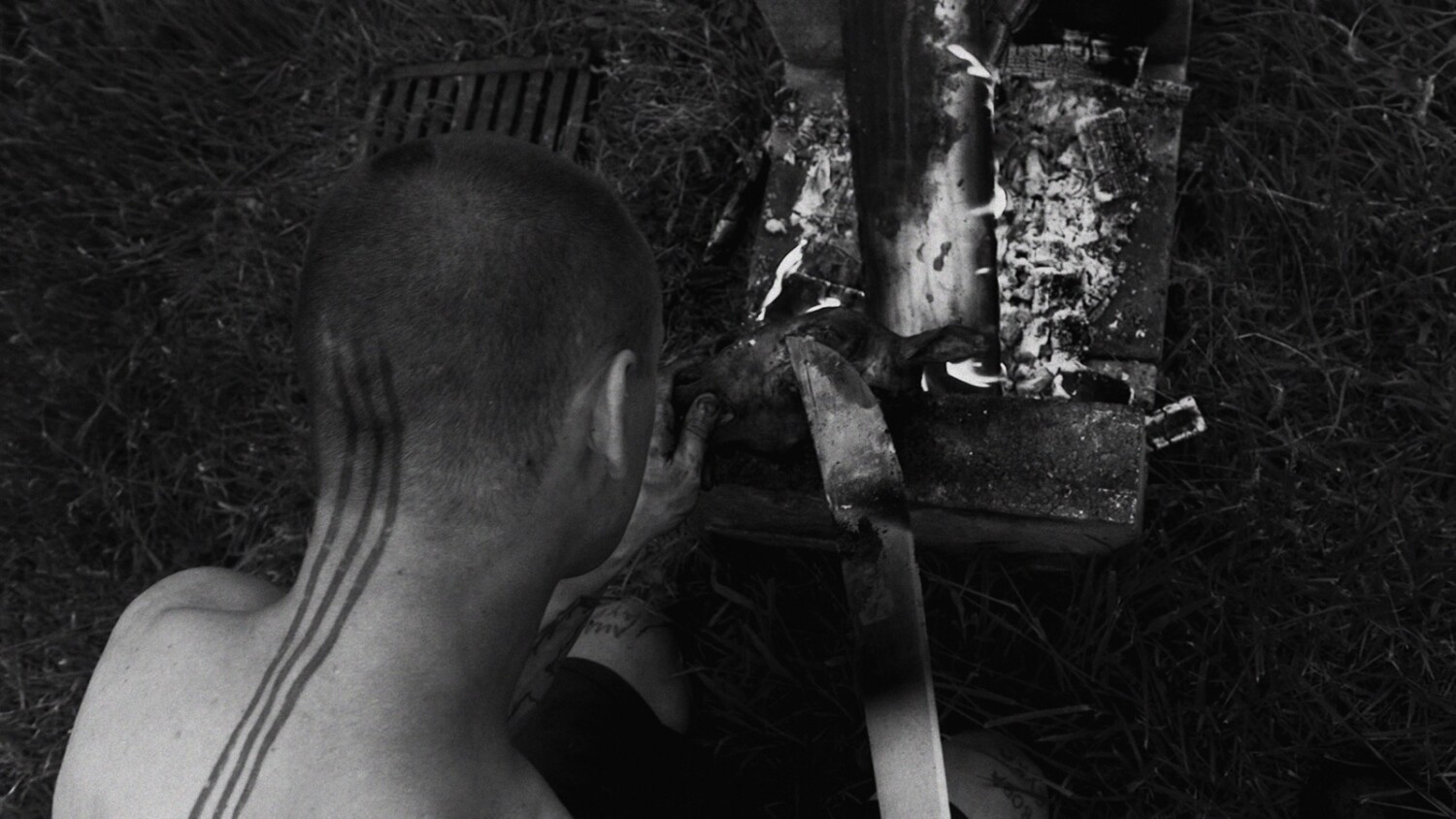
As I mentioned earlier, my work can roughly be divided into two directions: documentary filmmaking, and experimental short-form visual work photography, music videos, choreography. When I make documentaries, I try to remove myself from the process as much as possible and simply observe. My attention is focused on recognising meaningful moments rather than constructing them. When I’m filming, I often feel less like a director than like a fisherman: I wait patiently, and if something happens, I catch it. That’s also why I shoot in black and white with a handheld camera. I don’t want to think about style. What matters to me is the authenticity of the moment and the kind of situation I could never invent myself. In that sense, I really do lean toward pure documentation. I want stories to emerge naturally rather than being predetermined. I give my subjects their own voice, and the narrative gradually reveals itself while I’m filming. The moment the camera appears, a story begins. Life unfolds in front of it, and my task as a filmmaker is simply to recognise the moment when the story has reached its natural conclusion. That’s how I approach documentary filmmaking. When it comes to more experimental or staged work, however, everything depends on the context, on my state of mind, and on the circumstances surrounding the project. But if I had to summarise my approach, I would say that I naturally gravitate toward openness of interpretation. My work is ultimately about exploration exploring new subjects, new visual languages, and my own voice. Because of that, I don’t expect viewers to arrive at one definitive reading.I don’t think my practice follows a fixed system. I’ve never felt the need to fully conceptualise it, and I don’t believe my work demands a single correct interpretation.
In works such as Facing Evil, the face is central, yet often altered or withheld. What kind of truth are you pursuing through the human face? And how does your engagement with the body diverge from your engagement with the face?
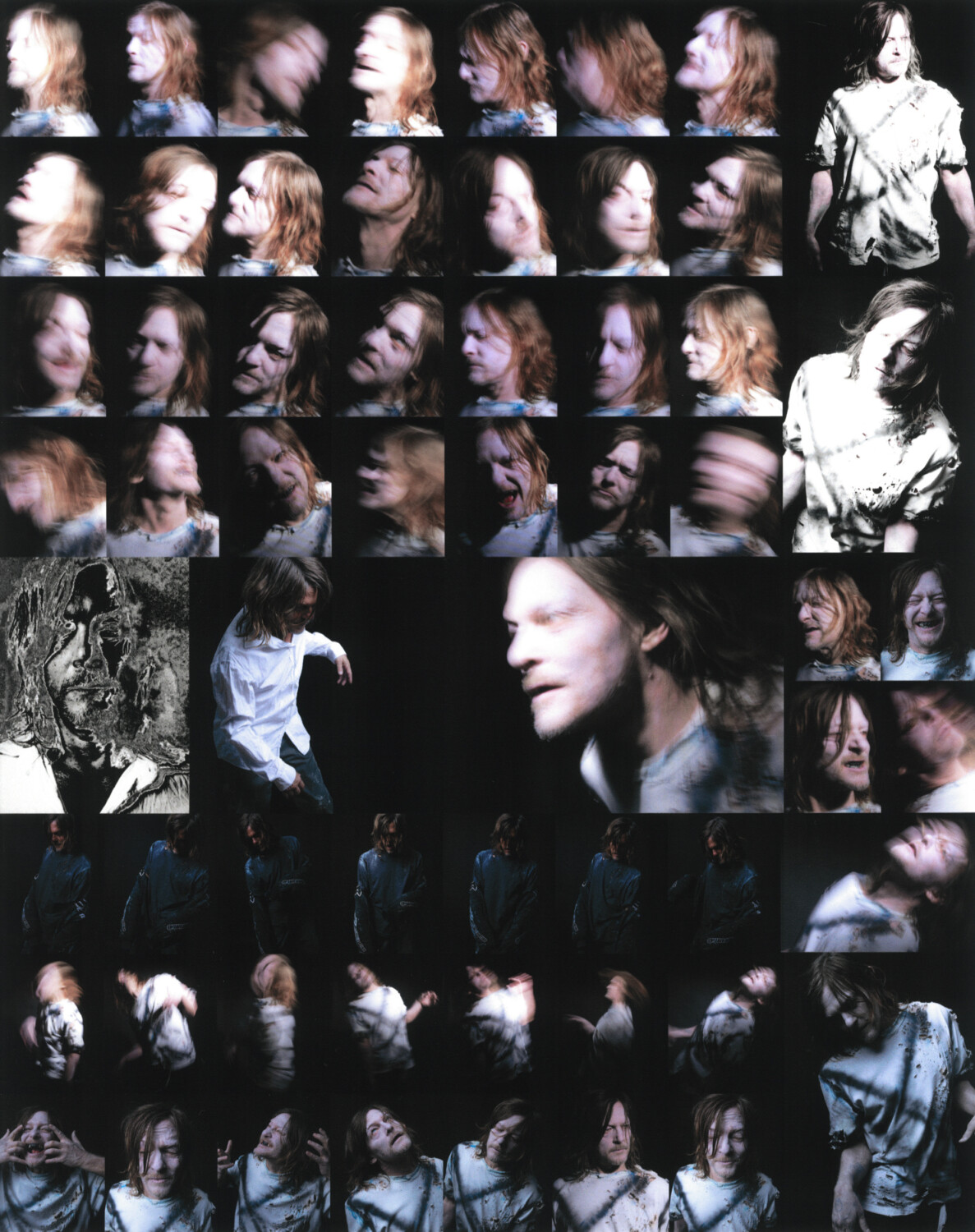
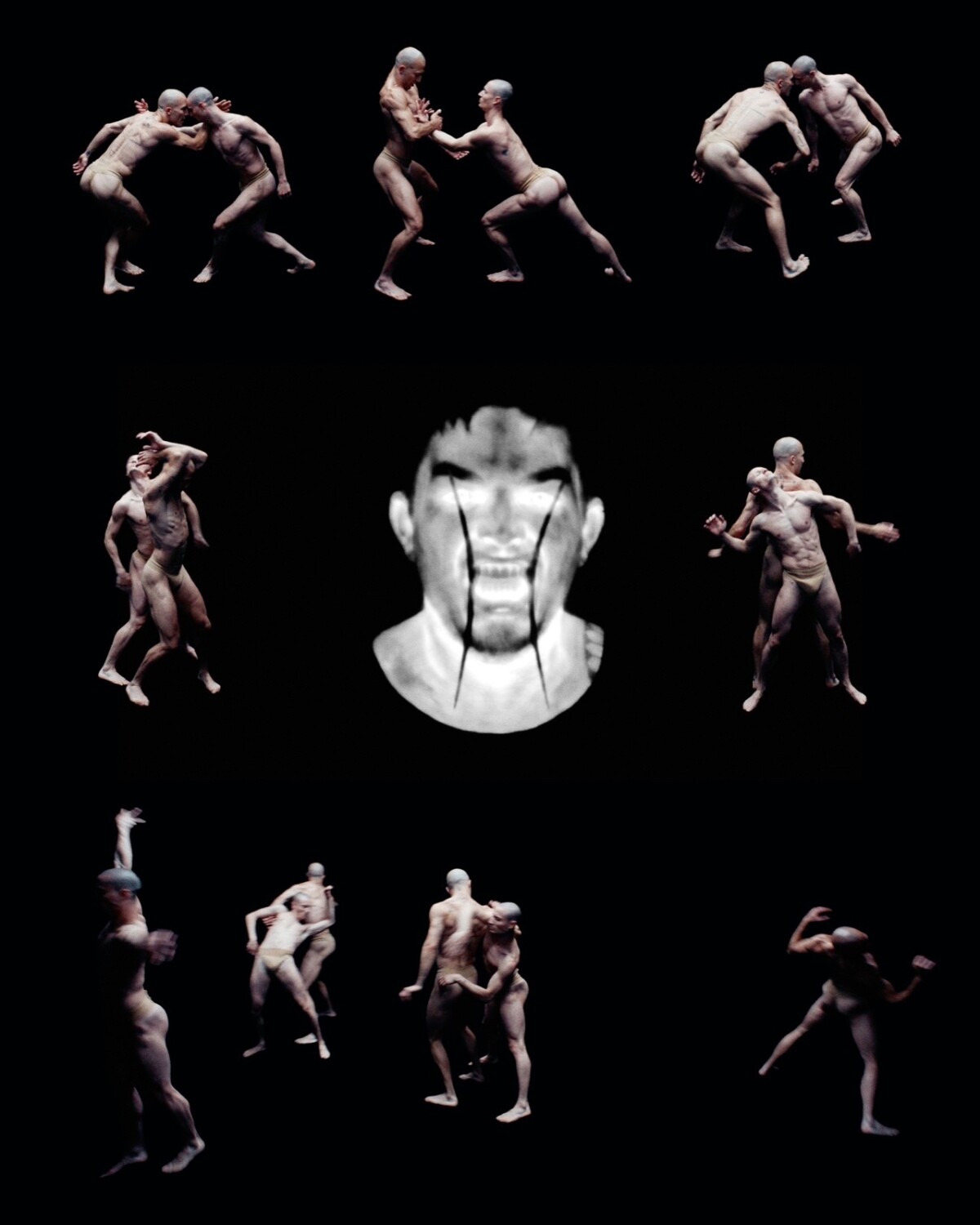
I enjoy distorting the face transforming it through makeup, special effects, or using light to create ghost-like facial forms. Whenever I make these kinds of portraits, I’m interested in capturing a moment of inner freedom, a moment when a person steps outside their familiar identity. Through movement, makeup, and lighting, I try to dissolve the recognisable features of the model and reveal something more universal and timeless: an archetype, or perhaps a pure emotional state. In the case of Facing Evil, the collective A.D.E.D. approached me with the idea of portraying people living under the constant influence of mass media and the permanent violence of the contemporary world. That led us to create the image of a family whose members gradually lose their human faces until, by the end of the series, those faces dissolve into an almost chaotic, shapeless mass. The face is probably the part of the body most closely connected to individuality. It’s how we recognise one another. By distorting or erasing it, I’m interested in depicting the moment when a person stops being only themselves and becomes the embodiment of something larger fear, pain, violence, or, conversely, inner liberation. The body functions differently for me. It is connected to movement, physicality, and energy. Through the body, I explore action; through the face, I explore inner psychological states. That’s why, in my work, the face and the body rarely exist separately. One extends the other, and it is through their interaction that the images I’m searching for ultimately emerge.
There’s a persistent tension in your work between an internal and an external gaze. Do you position yourself as a participant, or as a witness? And do your images tend to universalise experience, or do they remain as marks almost like residual scars tied to specific lives?
I would say that I do strive for a sense of tension in my work. More precisely, though, it isn’t a conscious artistic strategy. It’s simply one of the consequences of my own psychological state, which is often, especially while I’m creating, quite tense.I carry a lot of fear, doubt, and frustration, much of it rooted in childhood experiences, and those feelings inevitably resurface whenever I work. I experience a great deal of inner tension, and naturally that tension finds its way into my images. Sometimes I manage to break free from that psychological structure and approach my work with genuine openness. When that happens, the work gains a sense of freedom and spontaneity. But reaching that point usually requires a struggle with myself first, so traces of that tension almost always remain. I also think this psychological structure shapes the narratives within my work. Again and again, they revolve around overcoming fear, pushing beyond internal barriers, and finding a way to express oneself. It’s the voice that goes unheard, the voice no one is listening to.In many ways, my work is the cry of a child asking to be seen. The cry of a child abandoned in an environment marked by cruelty and a lack of love. Unfortunately, I grew up under those circumstances, and I still find myself looking at the world through that lens. It becomes especially apparent whenever I’m making work. Of course, I work with a therapist, and this isn’t a state I live in every moment of my life. My life also contains joy, freedom, and happiness. But creative work tends to reactivate those old emotional patterns more intensely than anything else. I often find myself working from a place of tension, so my projects inevitably carry that feeling with them. And if someone recognises that tension in my work, then perhaps it really is there.
Is there something in the bodies you photograph or film that exerts an almost compulsive pull on you?
What fascinates me is seeing someone express an inner emotional state through movement and the physicality of the body. I’m fascinated when the entire body is engaged, when every part of it contributes to expressing an internal condition. You can see this very clearly in the work of Sharon Eyal, whom I collaborate with regularly. Her choreography is built around inner tension. The impulse comes from within and activates the whole body, even though it may ultimately result in an extremely simple movement. A dancer can simply stand still in a basic position, yet you can feel every muscle engaged. The source of that tension exists inside the performer, and through the body it becomes visible as an emotional experience. Whenever we experience strong emotions, whether joyful or painful, they’re never purely psychological. Our bodies experience them too. That’s why movement can become a way of expressing emotion. In a sense, it also works in reverse: by creating physical tension through movement, the body can reveal an inner emotional state. Whenever I see a dancer, actor, or model expressing something deeply personal through movement, I find it incredibly moving. The choreography itself can be minimal, restrained, almost imperceptible. What leaves me completely cold is the opposite: technically brilliant movement with no emotional necessity behind it. Unfortunately, I often see this in contemporary dance. Endless jumps, insect-like gestures, waves, convulsions, ballet techniques flowing into breakdance vocabulary, all intended to communicate agony but without any genuine inner tension. That kind of movement doesn’t affect me at all.
On the collaboration for “Gimme a Sec” with Rick The Kid and his artistic universe, how did this creative collision come about? How did you channel and rework their imagery through your own visual language? Was it an instant stylistic connection, or a process of grinding, negotiating, and aligning two distinct worlds?
The story is actually quite simple. Alexander Wesley, a director I’d previously collaborated with on a music video for Swedish House Mafia contacted me and invited me to work with him on a project for Ye and Rich The Kid. The visual universe of the piece was primarily Alexander’s. We worked together on developing the AI-generated imagery, while I was mainly responsible for editing the film. It was genuinely a fifty-fifty collaboration between two artists, although the visual direction initially came from Alexander.
That said, our artistic sensibilities overlap in many ways, so the collaboration felt very natural. The same was true of our previous project for Swedish House Mafia, where I worked as cinematographer, lead performer, and editor. I contributed a great deal of my own visual language, but it integrated naturally into Alexander’s broader concept and artistic voice. Both projects came together remarkably quickly, with very few revisions or lengthy discussions. I think that’s simply a sign that our visual approaches share a common language and complement each other well.
Video game aesthetics have evolved into a form of identity. Your work seems to intersect with this visual territory: what do you consciously draw from it, and what do you resist, particularly in relation to AI-generated imagery?
In several of my projects, I’ve deliberately used the aesthetics of early-2000s video games as a way of disguising the AI origins of an image. It allows me to move away from the generic, plastic-looking visual language that most AI models naturally produce and instead build a world that feels more personal. For me, the most important part of working with AI happens long before the first image is generated. Extensive visual research comes first. Before I write a single prompt, I want to know what every element of the world will be its narrative, visual language, locations, costumes, weather, props. Everything needs references. If an artist carefully develops all of those components and then uses AI simply as a tool for bringing them together into a finished image, I think it’s fair to speak about authorship. But if AI is used only through a text prompt, then I’m not entirely convinced the authorship belongs to the person writing it. In that case, the model simply delivers an average solution shaped by its own default visual language rather than by the artist’s perspective. Personally, I use AI mainly as a substitute for tools I don’t currently have access to, for example, simulating the look of a game engine or creating imagery that resembles footage shot through a thermal camera in 4K. I only use it in small independent projects. If I had the time, budget, and resources, I would almost always prefer to achieve those results through traditional filmmaking. At the moment, AI is an incredibly powerful tool for independent artists. Sometimes it genuinely opens up unexpected creative possibilities. Much more often, unfortunately, it produces what people now call “AI slop.” I think that’s one of the main reasons why so many people have developed such a negative attitude toward generative imagery. More broadly, though, I think AI represents a highly unstable and potentially dangerous technology for humanity. It’s already creating serious long-term problems. Beyond the environmental cost of enormous computing infrastructure, none of us really knows what these systems may eventually become. Still, for independent creators working today, it’s an extraordinarily powerful creative tool.
In the current socio-political climate, should artistic practice maintain its autonomy, or does it inevitably become a vehicle for awareness? And are there any upcoming projects you would like to talk about with us?
I believe artists should strive for independence and autonomy. Only from an independent position can they create work that genuinely responds to reality and attempts to portray it honestly, rather than reproducing narratives imposed by political or economic power. At the same time, every artwork inevitably exists within a particular context. It can respond to social issues, reflect them, and engage with them. But as I mentioned earlier, I’m uncomfortable when art begins speaking in political slogans. At that point, it quickly becomes a tool of propaganda rather than an independent artistic statement. At the moment, I’m working on a documentary film about Paris. I’m filming demonstrations, public celebrations, such as France winning a football match, my friends, local residents, other immigrants like myself, and fragments of my own everyday life. Eventually, the film will become a kind of mosaic assembled from many different moments. Through those fragments, political realities, social tensions, and the broader atmosphere of our time will inevitably emerge. In that sense, it will become a political statement. But the process itself remains entirely autonomous, driven only by my own curiosity.