I Still Feel Curious/ Sterac

A chat with the artist on the occasion of his gig at Basilar 2026.

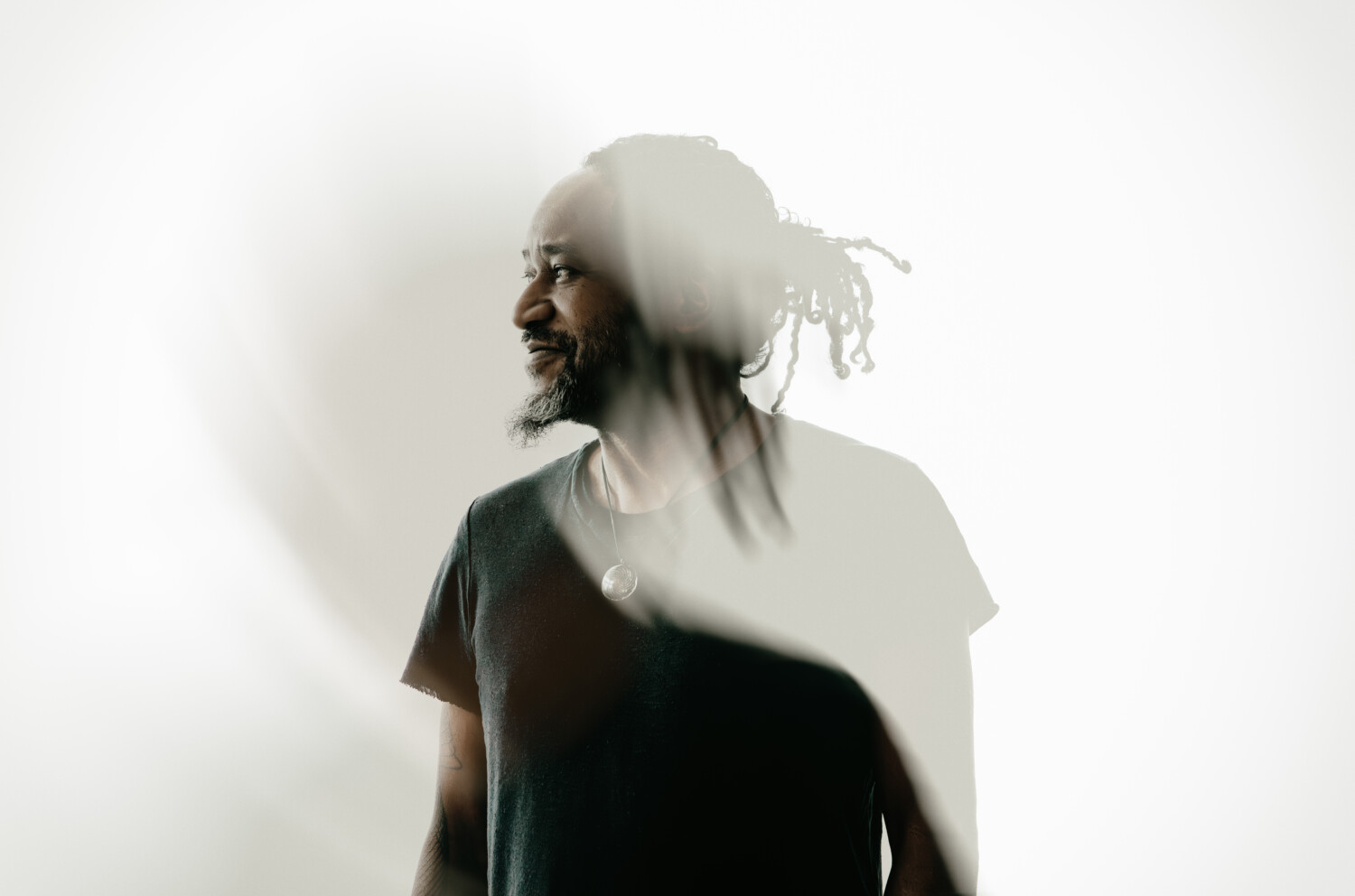
45 years into a career that has helped shape the language of techno, Steve Rachmad is still driven by the same thing that drew him to music as a kid: curiosity. Ahead of his Basilar Festival debut, the Dutch pioneer reflects on four decades of music, his many aliases, analogue machines, Detroit, the freedom to experiment, and the constant search for something new. From the records that defined his early years to the music he is still creating today, Rachmad looks back at a journey shaped by technology, instinct and an enduring need to explore. A conversation about legacy, creativity and what it means to keep moving forward without losing sight of where it all began.

You fell in love with music from a very young age: you bought your first record at 12 and played your first club gig in Amsterdam when you were just 15. School inevitably took a back seat, and your father initially saw what you were doing as more of a hobby than a real profession. Was there a specific moment when you realised, before anyone else, that this was going to be your life’s path? Can you imagine a parallel reality where you never became a DJ and ended up doing something completely different?

I don’t really remember one specific moment where I decided, this is what I’m going to do for the rest of my life. It happened much more naturally than that. Music became an obsession very early on. I bought my first record when I was 11, and from there I wanted to know everything: collecting records, DJing, how records were made, what machines were making those sounds. Once I discovered synthesizers and drum machines, it became even worse, haha.
My father didn’t immediately see music as a profession, which I can understand. At that time being a DJ or making electronic music wasn’t really presented as a career in the way it can be today. To him it was something I loved doing, but not necessarily something you could build your life around. For me there wasn’t much of a plan B, though. I just kept going deeper into it. Even today I can lose hours with a machine because I want to understand what it can do.
Could I imagine another life? Maybe, but it’s difficult. I have always been interested in technology and in how things work, so perhaps it would have been something technical or creative. But music has been such a constant in my life that it’s hard for me to imagine myself without it.

This year carries a number: 45 years, a world tour built around it, an album on Dekmantel that’s your first full-length in two decades, an EP already out on the same label. Most artists mark an anniversary by looking backward. You seem to be using this one to make more new work than you have in years. Is that a coincidence, or is there something about reaching 45 that made you want to prove the sound is still moving forward and not just being commemorated? And the album, an ambient record, arriving during Dekmantel Festival itself, after so long inside the techno frame people know you for, is it a departure, or is it the version of Sterac that was always there and just never had a reason to surface?

Actually, a lot of it is coincidence. It looks from the outside like I suddenly decided, 45 years, now I have to release everything, but that’s not really what happened.
Quite a lot of the music coming out now was made during the pandemic or comes from ideas that started around that period. There was finally time to be in the studio without constantly travelling.
Some things were almost finished, others stayed on the shelf, and over the last couple of years I started finishing them properly. There are actually several more albums waiting to be completed.
So I don’t feel I have anything to prove because it’s 45 years. If anything, I still feel curious, and that’s more important to me. The moment I feel I’m only repeating what I’ve already done, I think I would get bored very quickly.
And one small correction: Light and Time is my first album under the name Steve Rachmad in 20 years, but it isn’t my first full-length in two decades. I released Things To Think About as Sterac Electronics on Voyage Direct in 2017.
I also wouldn’t really describe the ambient side as a departure. People know me mainly through techno because that’s naturally what they hear in clubs, but I’ve always made many different kinds of music. Ambient, electro, dub, house, deeper things, music that doesn’t have any dancefloor function at all. I have even made meditation music and music based around frequencies under Divine Frequencies, which I think many people who know me through Sterac probably have no idea about.
So this album isn’t me suddenly discovering another side. That side was always there. Maybe now there is simply a moment and a label where it makes sense to show it.

You’re often described as the man behind countless aliases: Sterac, Parallel 9, Ignacio, Black Scorpion, Sterac Electronics, just to name a few. On one hand, they reflect the different facets of your musical identity; on the other, back then record labels often demanded exclusivity from their artists. Today that model seems to have changed. Do you think producers enjoy greater creative freedom than they did in the past, regardless of aliases? And do you experience these different names simply as separate musical projects, or do they also represent different sides of your personality?

There were different reasons for the aliases. Part of it was practical. In the ’90s there was much more label exclusivity, so if you wanted to release with different labels sometimes another name made sense.
But for me it also became a way of organising my brain musically. I make many different kinds of electronic music, and giving them different names helped me create a framework. Sterac became one thing, Parallel 9 another, Sterac Electronics another. If I entered the studio thinking about Parallel 9, I was already entering a certain world.
Today there is probably less need for aliases from a contractual point of view, and listeners are also much more used to artists moving between genres. That’s healthy. I think producers should have the freedom to explore without people immediately saying, “But this isn’t what you’re supposed to make.”
Are the aliases different personalities? I wouldn’t go that far. They’re all me. But they definitely represent different sides of me. Maybe you could say they are different rooms in the same house.

You’ve been making music for decades, working under different names, with different instruments and across countless releases. Yet it’s not uncommon for producers to shelve tracks for months, or even years. Have you ever revisited a piece long after it was originally written? And when that happens, do you tend to update and reshape it, or do you prefer to preserve the creative imprint of the moment in which it was born?

All the time. I have a ridiculous amount of unfinished music. Sometimes I hear something again after ten or fifteen years and immediately understand why I didn’t finish it. Other times I’m surprised because there is something in it that I couldn’t hear at the time.
The Sterac Electronics album Things To Think About is a good example. Much of that material had existed for years before Tom Trago and I went through the archive and realised there was an album there.
Whether I change an old track depends on what it needs. I’m not interested in making an old recording sound artificially modern just because production standards changed. Sometimes the limitations are exactly what give it character. But if something bothers me technically, or if I hear that the arrangement could be stronger, I have no problem working on it again. With the catalogue we’re remastering now, preserving the character is very important. The idea isn’t to rewrite history. It’s to let the music sound as good as it can while keeping what made the original recording what it was.

You’re currently rolling your entire back catalogue onto Bandcamp in phases. Tracks some people have never heard streaming, others that have circulated as rips and bootlegs for years. Was there a track in that process that embarrassed you, and one that surprised you by holding up better than you remembered? And with a Tresor reissue also on the way, a piece of your history tied to one of the rooms that defined it, does putting that record back into circulation now change what it means, or does the room it was made for still own it?

I wouldn’t say there are records in the catalogue that embarrass me. I have always been very critical about what I release. Of course, when you listen back 25 or 30 years later, you hear things you would produce differently today because you have learned more and technology has changed. But at the moment I released those records, I stood behind them 100%.
I think that is actually one of the reasons I am still here after all these years. Quality has always been very important to me. I never wanted to release something just for the sake of releasing it. I would rather keep music unreleased than put something out that I don’t believe in.
What has surprised me when going through the catalogue is how much of it still works today. Some of those tracks are 25 or 30 years old and people are still playing them. For me, that is the nicest confirmation that I managed to make music that is quite timeless. The production techniques may belong to another period, but the foundation of what I do has remained quite consistent.
That is also one of the reasons for putting the catalogue back out now. A lot of the older generation owns this music on vinyl, but younger listeners often have no proper access to it. Some tracks were never digitally available at all. So I’m going through the entire catalogue, getting rights back where necessary, remastering things where it makes sense and making the music available again.
I don’t think a reissue changes what a record was or where it came from. The Tresor material still belongs to that period and that environment. You cannot recreate the moment in which it was made. But you can give the music another life and allow a new generation to discover it in their own context.

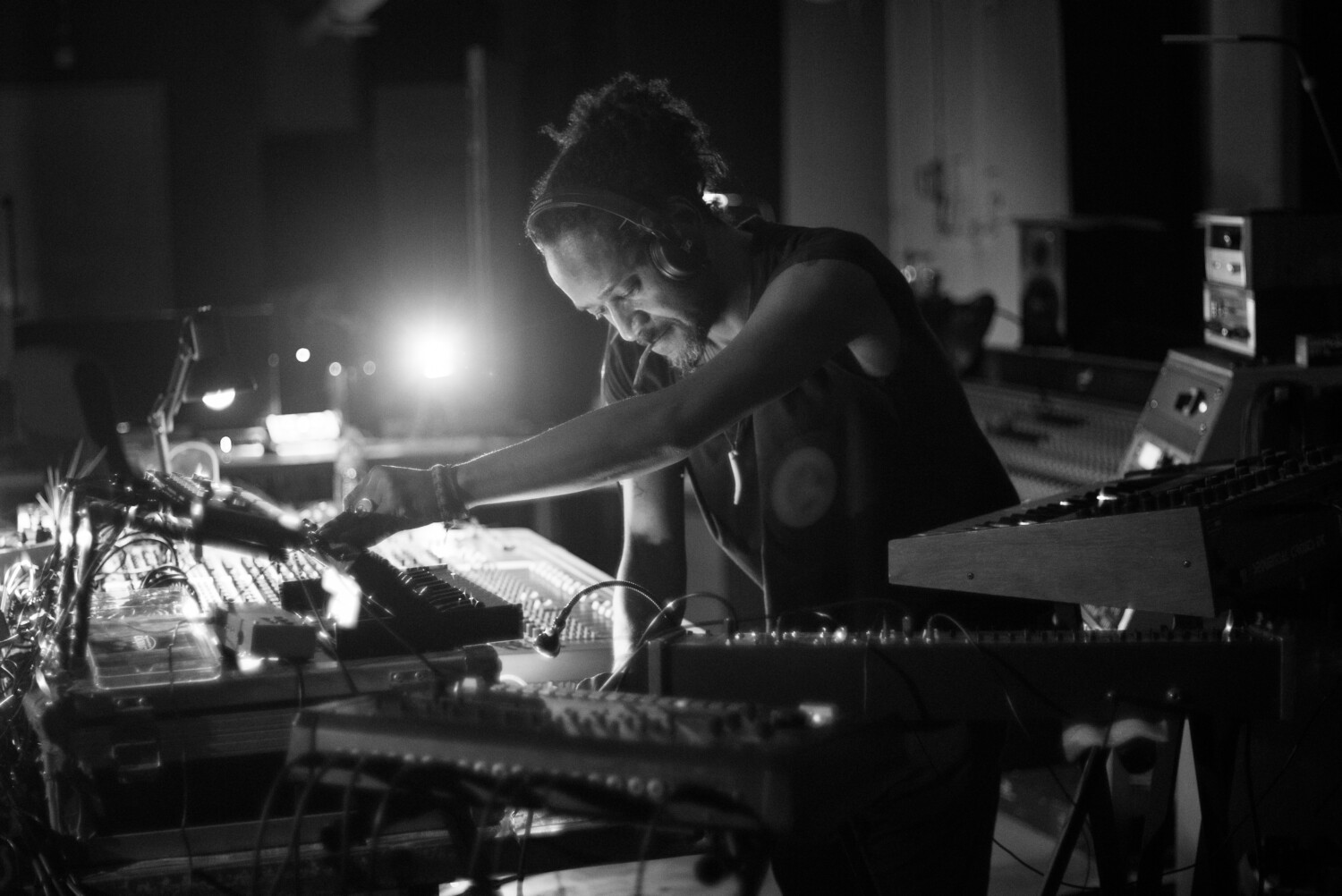
You’ve said that your creative process is deeply influenced by your mood and state of mind. At the same time, your studio is built around an impressive range of machines, from the Roland TR-909 and Minimoog to the Juno-106, Prophet-8 and Oberheim OB-8. Do you associate certain instruments with specific emotions or states of mind? And does your creativity change when you’re working with analogue hardware compared to producing inside a digital environment?

Definitely. Machines have personalities to me.
I don’t necessarily think, I’m sad today, so I’ll use the OB-8, haha, but certain instruments naturally take me somewhere. A particular synth can make one sound and suddenly the whole track changes direction.
That’s what I love about hardware. You touch something, something unexpected happens, and you react to it. It’s a conversation. Sometimes a mistake becomes the most important part of the track.
With software you can do almost anything now, and technically that’s incredible. But unlimited possibilities can also become a problem. With an analogue machine you have limitations, and limitations force decisions. I like that. I’m not against digital production at all. I use both worlds. For me the important thing is that technology stays a tool for getting to the feeling, instead of the technology becoming the point of the music.

Machines are often perceived as cold and passive objects that only come alive through human touch. But with the rapid rise of artificial intelligence, that relationship seems to be evolving. Some fear that, as we rely more heavily on AI, we risk becoming increasingly mechanical ourselves while machines appear to grow more “human.” Do you use artificial intelligence in your own creative process? And from your perspective, and perhaps that of your peers, how do you see AI shaping the future of music?

I don’t use AI to generate my music. I’m too interested in the process itself. For me, sitting with a machine, finding a sound, making mistakes and following something unexpected is a big part of why I make music in the first place. If I remove too much of that process, I’m also removing part of the pleasure.
But I’m not against technology. My whole musical life has been connected to technology. Synthesizers, drum machines, samplers and computers were all new technologies once, and people were afraid of some of those things too.
AI will become another tool. The question is how we use it. If it helps somebody organise something or do a technical job faster, fine. If we start asking it to replace imagination, taste and personality, then for me it becomes less interesting.
The strange thing is that as technology gets better at imitating perfection, human imperfections may become even more valuable. I want to hear why you made something. Otherwise we’re just generating more content, and there is already enough content.

In a previous interview, I was struck by something you said about learning to let go of many of your insecurities during the creative process. You also spoke about having to learn and unlearn at the same time, so that technical perfection wouldn’t overshadow your musical soul. Do you think embracing imperfection can sometimes be more valuable than chasing the kind of perfection the industry often demands? And if I may ask, what were the insecurities you were referring to?

Yes. This has probably been one of the biggest lessons for me.
I was always very critical of my own production. When I was younger I was listening to the records I loved from the ’80s and hearing how clean and perfect they sounded, and I set that bar very high for myself. That can make you better technically, but it can also become a trap.
At some point you can know too much. You know all the rules, you hear every little technical problem, and instead of listening to whether the music actually makes you feel something, you’re correcting things.
So the unlearning is important. Sometimes the first version has an energy that disappears once you make everything “correct.”
The insecurities were mainly connected to that self-criticism: whether something sounded professional enough, whether the mix was good enough, whether an idea was developed enough. Over time I’ve become better at recognising when that voice is useful and when I should ignore it.
A technically perfect track without soul doesn’t interest me very much. Give me something imperfect that makes me feel something.

Throughout your career you’ve collaborated with artists such as The Advent, Joel Mull, Heiko Laux, Ricardo Villalobos and Petar Dundov. You’ve said that meaningful collaborations require a shared vision and the absence of competition, leaving room only for mutual respect. For you, does collaboration end in the studio, or does it often evolve into genuine friendship? Looking back, is there one collaboration that left a particularly lasting impact or taught you something invaluable?

For me collaboration only works if I like the person and respect the way they think. I’m not interested in going into a studio because two names look good together on a flyer or a record sleeve.
I’ve always said there can’t be competition in the studio. If I’m trying to prove I’m better than you and you’re trying to prove you’re better than me, nothing interesting is going to happen. You have to be able to let go of your ego.
Most of my collaborations have come quite naturally from friendships or mutual respect, and some of those relationships have lasted many years. Heiko is a good example. We’ve been making music together for a very long time, and Accelerate brought together material from different periods of that relationship as well as newer work.
What I learn from collaboration is usually not a specific production trick. It’s seeing how another person’s brain works. Someone can solve in thirty seconds something you’ve been staring at for an hour, simply because they approach it from another direction. That’s the beautiful part.

Parallel 9 has always been your most dub-oriented alias, closer to atmosphere than function. Next year it’s pairing with Tikiman, a voice that comes out of dancehall and dub in a very different lineage from Dutch techno. What made you feel that alias, specifically, was the right room for that collaboration rather than Sterac or your own name? And is there a version of this pairing where the vocal leads and the production follows, rather than the other way round?

Parallel 9 is naturally the place for it because dub has always been part of the DNA of that project. Basic Channel was a huge inspiration for Parallel 9 from the beginning — that combination of dub, space, repetition and techno had a big impact on me. It’s spacious, hypnotic and much more aboutwhat happens between the sounds, so working with Tikiman within that world feels very natural.
Tikiman has such a unique voice and history in dub and electronic music that I wouldn’t want to just put his vocals on top of a track as decoration. His voice is an instrument in itself; it changes the space around it.
The idea of pairing us actually came from Richard Akingbehin, who runs Kynant, the label where the release will come out. Richard and I have built a close relationship over the years and play b2b quite regularly, and he also has a close working relationship with Tikiman. I have huge respect for both of them, so when Richard suggested bringing Parallel 9 and Tikiman together, it made a lot of sense to me.
And yes, absolutely, there can be moments where the vocal leads and the production follows. For me, a collaboration should work like that anyway. You listen to what the other person gives you and respond to it. Otherwise you’re not really collaborating — you’re just putting two things together. With Parallel 9 there is enough space to let that happen.

Since you began your career, one of the biggest changes in the role of the artist has undoubtedly been the rise of social media. For many, it’s become more of a necessity than a pleasure. Artists once carried a certain aura of mystery, whereas today much of their lives are constantly on display. How do you personally deal with being recognised and observed, sometimes by people who may feel a little too intrusive? Do you feel equally comfortable being yourself both online and away from the screen?

I’m naturally quite introverted, so social media doesn’t come very naturally to me. When I started, people mostly knew you through your records and maybe saw you in a club. There was mystery simply because there wasn’t another option. Now people are expected to constantly explain themselves, show where they are, what they’re doing, what they’re eating. That’s not really me.
I understand that social media is part of the job now, and it can also be a beautiful way to communicate directly with people who care about the music. But I still like having a private life. Being recognised is mostly nice. If somebody tells me a record meant something to them, that’s a beautiful thing to hear. It only becomes uncomfortable when people forget that an artist is also just a person and that there are boundaries.
Online you see a small part of me. In real life I’m probably still the same slightly introverted music nerd I’ve always been.

I’ve always felt that words are never quite enough when it comes to describing music. Just when you think you’ve found the right ones, another set comes along that feels even closer to the truth. It also seems that you view music as something sacred, ancestral and deeply intimate. In an era where music is increasingly abundant, fast-moving and disposable, do you think there’s still room for genuine emotional depth? When does a track, an album or a DJ set truly reach that level where it connects with both the heart and the mind?

Of course there is room. Human beings haven’t suddenly stopped feeling because there are more tracks on Spotify.
What has changed is the amount of music and the speed at which we consume it. You can hear thirty seconds of something, skip it, hear something else, skip again. That can make music feel disposable.
But when something really connects, all of that disappears.
For me the music I love has always had both sides. There is something intellectual in it — sound design, rhythm, technology, arrangement — but underneath that there has to be emotion. That’s what attracted me to Detroit techno in the first place. You had this futuristic, technical music and then suddenly these beautiful deep strings appeared. That combination fascinated me.
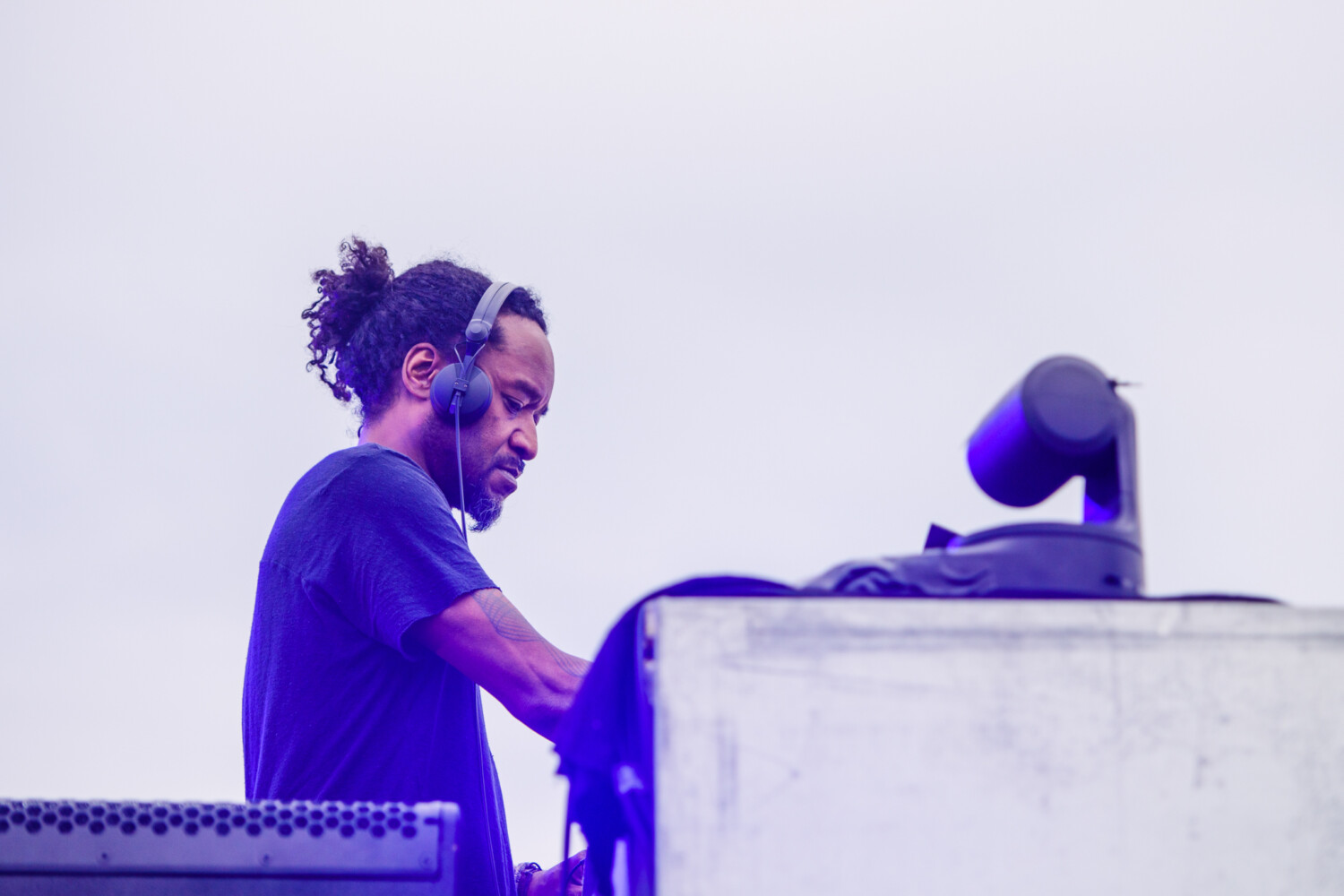
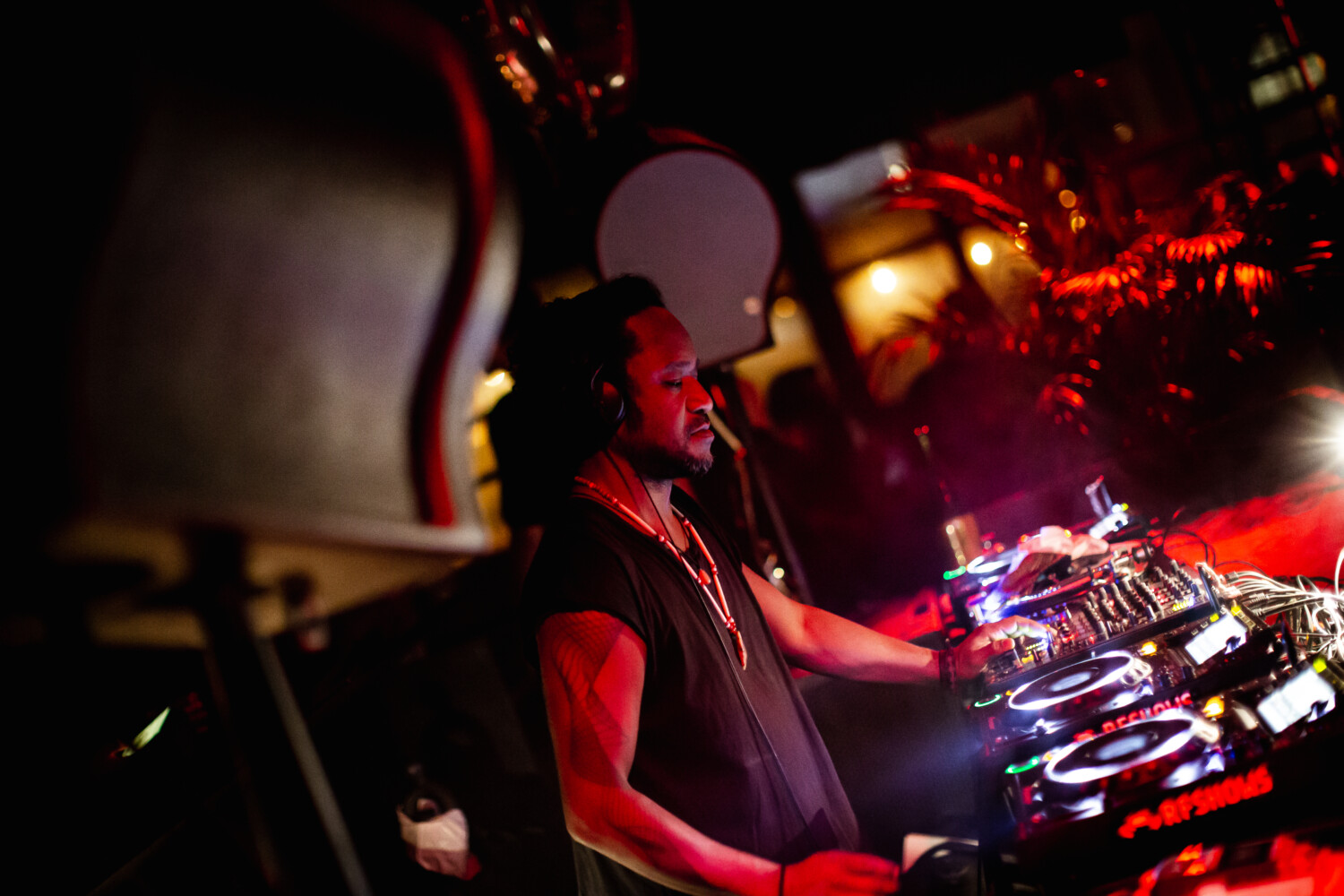
A DJ set reaches that place when there is a real conversation between the DJ and the floor. I’m not somebody who stands there with my hands in the air all night. I can get very locked into my own bubble. But I’m still feeling the audience, challenging them and letting them challenge me back. When that communication works, you don’t really need words.

I know you have a deep connection with nature, and summer naturally brings festival season with it. This year you’ll make your Basilar Festival debut, bringing your sound to a very different setting from the clubs where you regularly perform. Does your approach change when you’re playing inside a club compared to performing in a natural environment like Basilar? And how are you preparing for this first experience at the festival?

Every environment changes the way I play. I don’t think you can completely separate the music from the place where you’re hearing it.
A dark club at four in the morning asks for something different from an outdoor festival surrounded by nature. The sound behaves differently, people behave differently, even your own perception of time is different.
But I don’t prepare a set in the sense of deciding beforehand exactly what I’m going to play. I prepare music, of course, and I have ideas, but I need to see the place and feel the people.

You’ve never struck me as the kind of DJ who needs to play the role of a pop star or position himself as the centre of attention. Yet over the years, that image of the performer has inevitably shaped audiences too, sometimes turning the dancefloor into more of a spectacle than a shared experience. Basilar Festival is known for its conscious, passionate and respectful crowd. As you prepare for your debut there, what are you expecting from that kind of audience? And does the shyness you’ve spoken about in the past ever stay with you once you’re behind the decks?

I’m definitely not a pop star, haha.
I’ve always been quite introverted, and behind the decks I can disappear completely into what I’m doing. I’m not the typical hands-in-the-air DJ. For me the attention should ultimately be on the music and on what is happening between the DJ and the dancefloor.
The shyness doesn’t completely disappear. It’s part of who I am. But once I’m concentrated on the music, I’m in a different state. Then I’m communicating through records rather than talking.
I have heard a lot about Basilar and I am excited to debut there this year. What I appreciate about crowds like Basilar is openness. I like to take people somewhere and sometimes push beyond what they expected from me. A crowd that listens and allows that journey gives you much more freedom. For me that’s what a dancefloor should be: not an audience watching a performer, but everybody contributing to the same experience.

For you, Detroit has never been just another city. It’s where your musical journey truly began, where your sound evolved and where much of your artistic identity was shaped. Yet it was Berlin’s techno culture, not Detroit’s, that was officially recognised by the German Commission for UNESCO as Intangible Cultural Heritage. While the two stories are obviously different, do you feel Detroit deserves a similar level of recognition for the role it has played in the history of techno? If you were introducing these two cities to an aspiring DJ or someone discovering the genre for the first time, how would you describe their differences and their cultural impact?

Detroit absolutely deserves recognition. Without Detroit, techno as we understand it simply wouldn’t have the same history.
For me Detroit was a revelation because I recognised something in it from the music I already loved. I grew up with synth-based disco, funk and R&B, and then I heard this futuristic electronic music coming from Detroit with these deep strings and harmonies. It was technical and soulful at the same time.
People sometimes reduce Detroit techno to hard or fast music, but if you listen to Derrick May, Carl Craig, Kenny Larkin, Juan Atkins and so much of the classic material, there is enormous depth and beauty there.
Berlin’s importance is different. Berlin created an extraordinary culture around techno as a physical and social experience — the clubs, the long sets, the spaces, the freedom around it. It became one of the places where techno could develop continuously for decades. So I wouldn’t put one against the other. Detroit helped create the language. Berlin built one of the world’s most important environments in which that language could keep evolving.
And Amsterdam was somewhere in between all these influences. We were absorbing records from Detroit, Chicago, Belgium, Germany, France. That’s part of why our own scene developed the way it did.

You’re represented by AD Sound for both booking and management. One of the advantages of having an agency is the clear division of responsibilities: you can focus on the creative side while they handle touring and logistics. But relationships like these only work when they’re built on trust. In your experience, what makes the relationship between an artist and their agency truly strong and long-lasting? And have you ever had negative experiences with third parties that ended up affecting your career?

Trust is everything.
I’ve been working with Manuela and AD Sound for 23 years, so obviously that relationship goes much further than somebody sending offers and booking flights. She is my booking agent, manager and family. When you work together for that long, the people around you understand who you are, what makes sense for you and sometimes also when you should say no.
That’s very important because I’m not naturally interested in the business side. I want to make music and play music. Having people around me who can deal with the rest while still understanding the artistic direction gives me space in my head to do that.
For me a good agency shouldn’t just try to maximise the number of gigs. It should think about the artist’s career over a longer period. Sometimes the right decision is not the biggest offer.
Of course I’ve had situations over the years where third parties didn’t work in the artist’s best interest. If you’ve been in this industry for more than thirty years, it would be almost impossible not to. But I don’t like spending too much energy looking backwards at negative experiences. You learn who you trust, you learn to communicate more clearly, and you move on.

Between the tour, the Bandcamp rollout, a track for the Blitz Munich compilation, and more still lined up for early next year on Vault Sessions, this is, by output alone, one of the busiest years of your career, forty-five years in. Is that volume a product of finally having the time and independence to say yes to things, or is there a version of you that worries about diluting a catalogue you’ve spent decades keeping tight?

It’s funny because it looks much more planned from the outside than it actually was.
A lot of the music that is appearing now has been sitting with me for quite a while. Some of it comes from the pandemic period, when I had much more studio time, and then it takes time to finish things, find the right label, organise releases and so on. Suddenly several things arrive close together and it looks like I’ve become extremely productive overnight.
There are still several albums waiting to be finished, so there is definitely no shortage of music. I do think about quality, though. I don’t want to release something simply because I can. I’ve never been very good at that. Sometimes maybe I’m too critical and things stay with me for much too long.
But I don’t think releasing more automatically dilutes a catalogue. If the music represents something real and I still stand behind it, why should it stay on my hard drive? Maybe at this point I’m simply getting a little better at letting things go.

One of the greatest challenges for artists today is finding the right balance between their professional and personal lives. Studio sessions, international tours, interviews and industry commitments often leave very little room for rest, wellbeing or simply enjoying everyday life. Looking back on your long career, what have been the biggest changes in that respect? What have you gained, what have you had to sacrifice, and have you learned to listen to your body when it tells you it’s time to slow down?

Touring is probably the part people understand least from the outside. They see the two hours you’re playing, but not the airports, waiting, lack of sleep and constant changing of rhythm around it.
When you’re younger you don’t think about that very much. You just go. Your body recovers and you assume it always will.
As you get older you become more aware that energy isn’t unlimited. I still love travelling and playing — otherwise I wouldn’t be doing this after all these years — but I also value being at home much more. I need quiet. I need time in the studio without pressure. I need nature and space away from music as well.
What did I sacrifice? Probably a certain amount of normality. Weekends don’t exist in the same way when you’ve spent your whole adult life working while everybody else is free. Relationships and friendships have to adapt to you constantly being somewhere else.
But I’ve also been incredibly fortunate to spend my life doing the thing that fascinated me when I was a kid. I don’t take that for granted.
And yes, I’ve become better at listening to my body. Not perfect, haha, but better. Manuela has helped me a lot in that sense, guarding my schedule and thinking of my sleep and health. Longevity isn’t only about remaining musically relevant. You also have to remain healthy enough to enjoy it.

I Still Feel Curious/ Sterac

Credits:

Artist: Steve Rachmad/ @adsound_nl, @steve_rachmad_sterac
Event: Basilar Festival/ @basilarfestival
Words: Gianmaria Garofalo / @gianmaria.garofalo

You may also like

MemePlex™ / Seventeen Gallery

Art&Culture | Spotlight
Spotlight on MemePlex™ a group show by 12-artist collective Omsk Social Club and Joey Holder by Jessica Todd.

What would Juliet do? / Juliet Fox

Music | Interview
In conversation with Juliet Fox about her artistic process, how her alias mirrors her nocturnal instincts, and the seamless flow between her studio work and live performances. Expect unapologetic vibes, spontaneous sets, and a fierce commitment to balancing life’s demands with artistic expression.