Peeping through the chink
Fashion | Exclusive
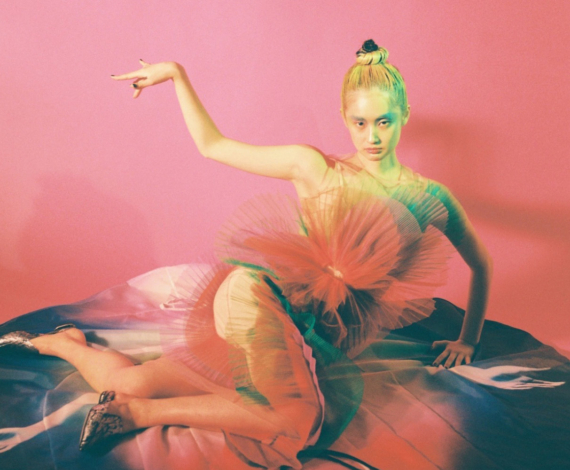
I dreamt I was peeping through a chink in a door that opened into a great and empty hall. Katya and Kellyanne shot by Thanos Poulimenos and styled by Notis Sakoulas.
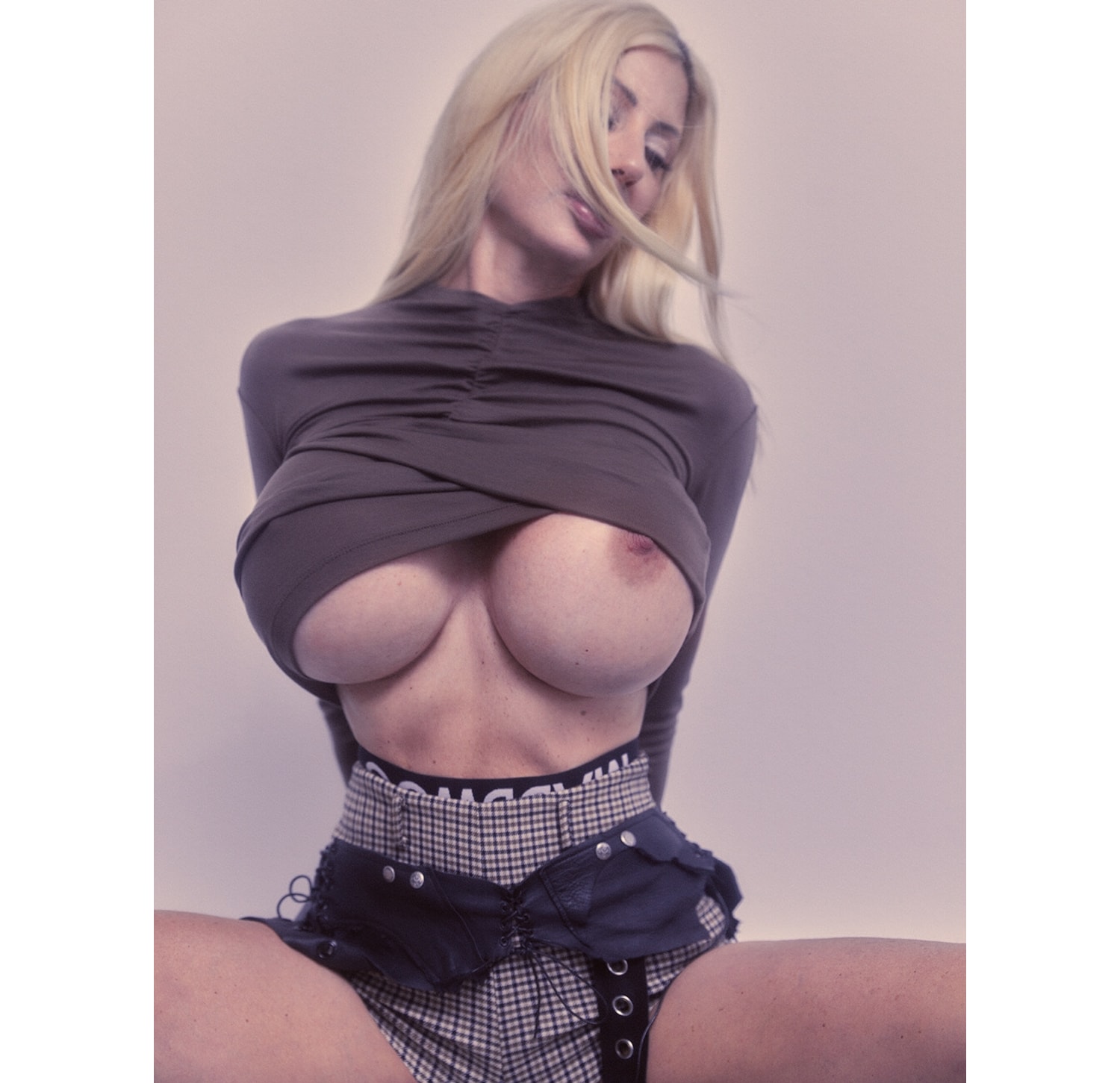
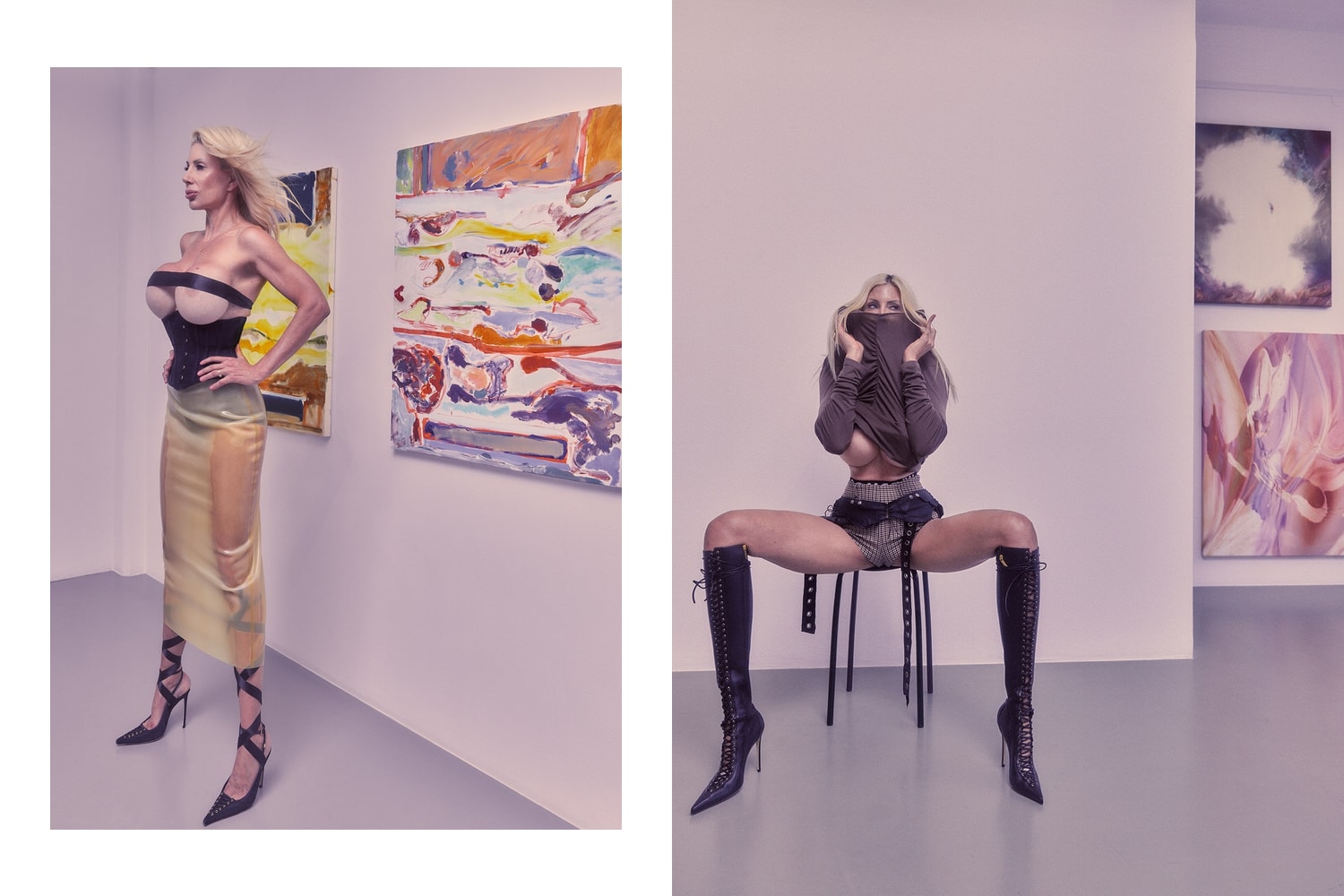
top WERA, knickers&belt MADD WOO, shorts ARAKII, shoes ELISABETTA FRANCHI, paintings MART VAINREThere is a particular cultural hypocrisy surrounding pornography. Everyone knows it exists, almost everyone knows where to find it, millions consume it, yet we continue to behave as if it were somehow outside culture. We talk about cinema, photography, fashion, music and literature as systems of representation; we analyse the fantasies they produce and the bodies they put into circulation. Pornography, meanwhile, is placed elsewhere, behind a paywall, a warning, an algorithm, a moral judgement. It is not outside culture. It is one of the places where contemporary culture produces and negotiates images of sex, gender, desire and the body, however it is discussed as pathology.
This contradiction is also the starting point of BODY TALKS: The Puma Swede, Seen by Sanna Fried , an ongoing project born from an unexpected friendship. Fried first met Puma in 2022, at a nail salon in Mexico City and, as they became friends, began questioning a distinction she had taken for granted.
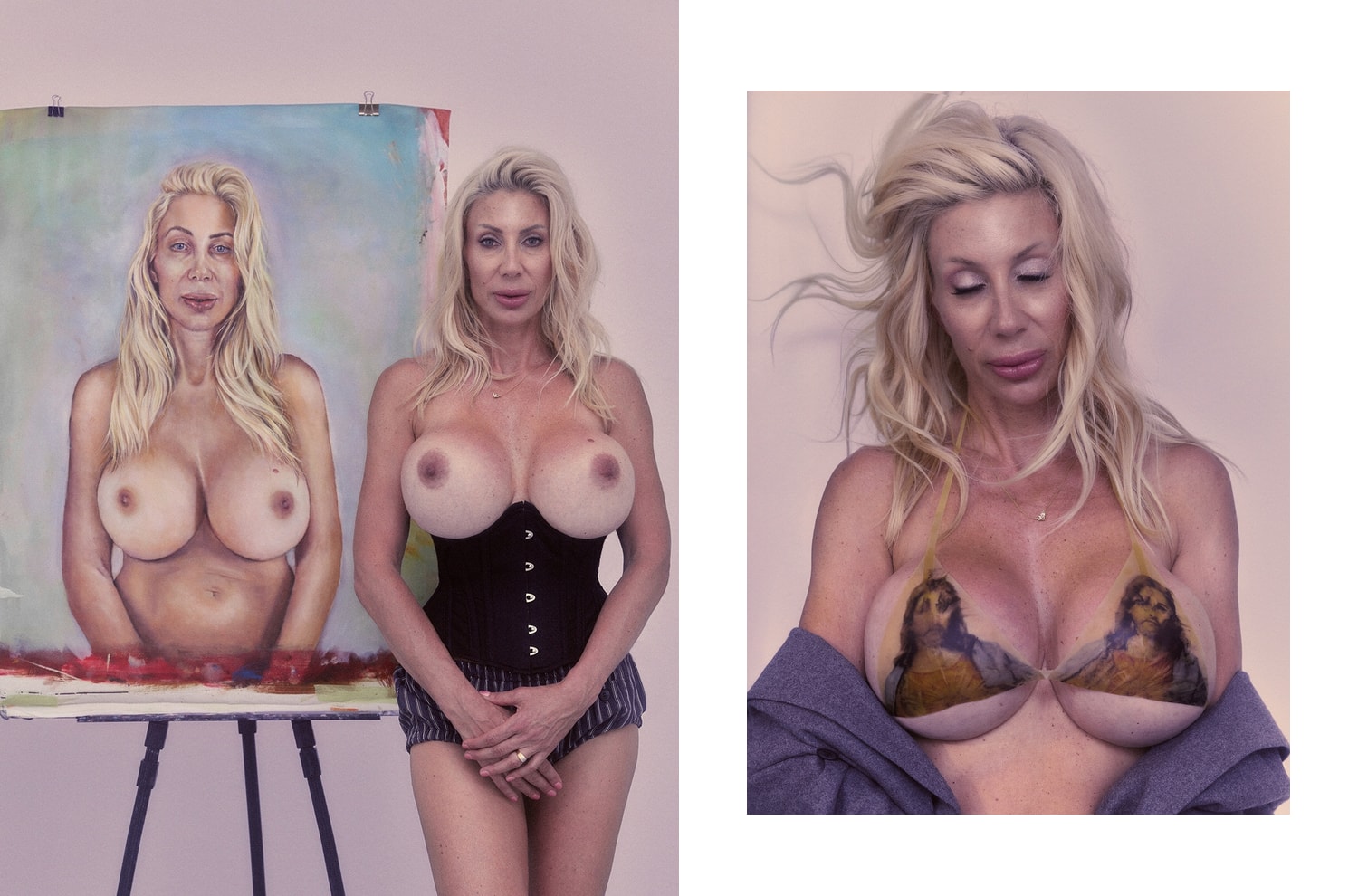
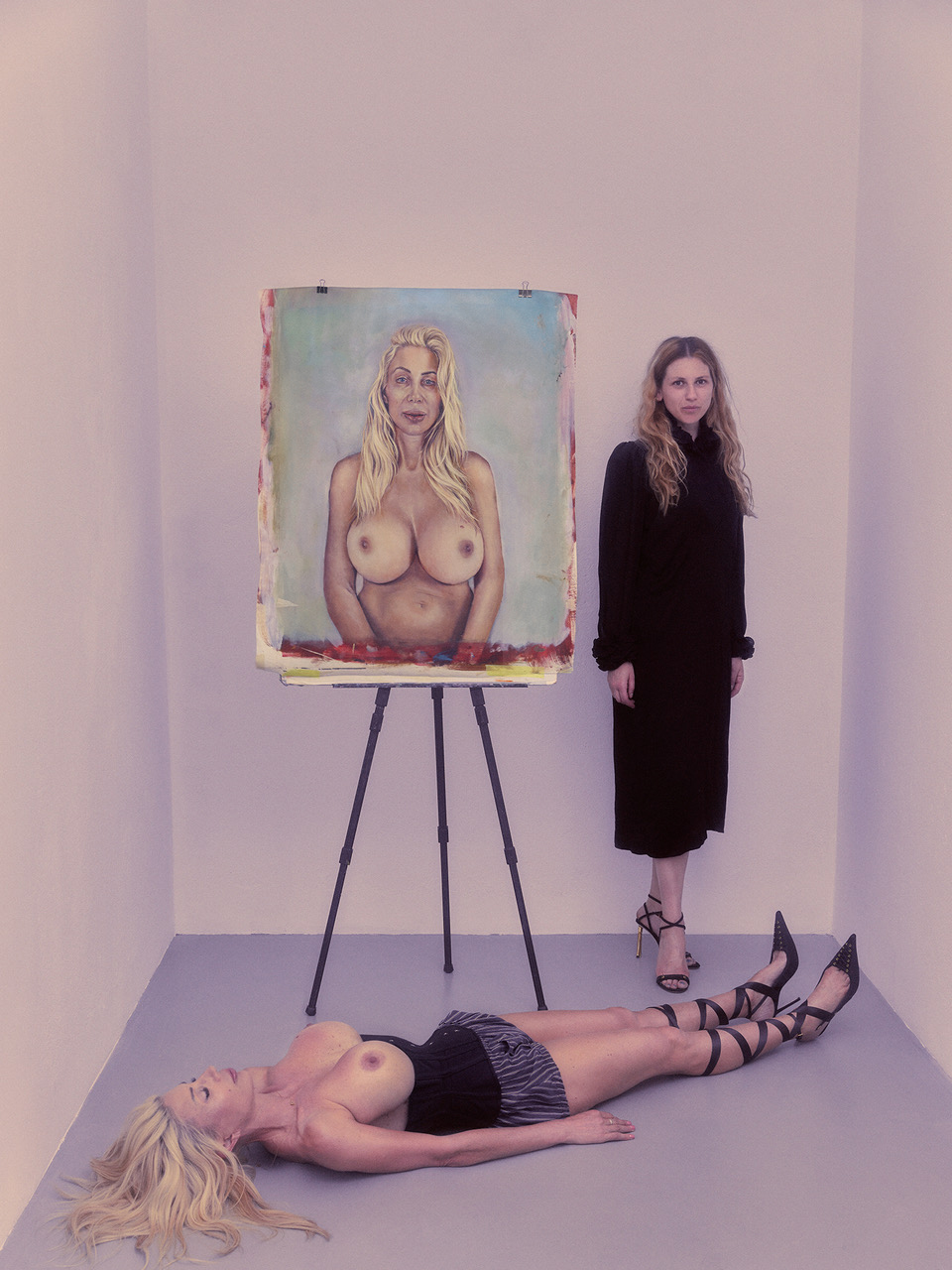
As an artist who has painted the naked body throughout her career, her nudity could circulate under the legitimacy of fine art; Puma also worked with her body, yet was granted a different cultural status. For the shoot for Nasty Magazine , Fried brings one of the most recognisable figures in adult cinema into a Stockholm art gallery, Galleri Duerr , placing her alongside artworks and high fashion.
The result is not simply a collision between pornography, contemporary art and fashion.
It is an experiment in context, exploring what happens to a body when the space around it changes, when the same gestures and forms read as pornographic elsewhere are suddenly framed as art, fashion or cultural production.
For more than twenty years, Johanna Jussinniemi has worked under the name Puma Swede. The distinction between Johanna and Puma matters. One is the person; the other the persona. One talks about contracts, money, algorithms, censorship and business. The other is the image photographed, watched and desired by millions. But the two are not opposites. Together, they complicate what a porn performer is supposed to be, not simply the body in front of the camera, but the person who controls, negotiates and produces that image.
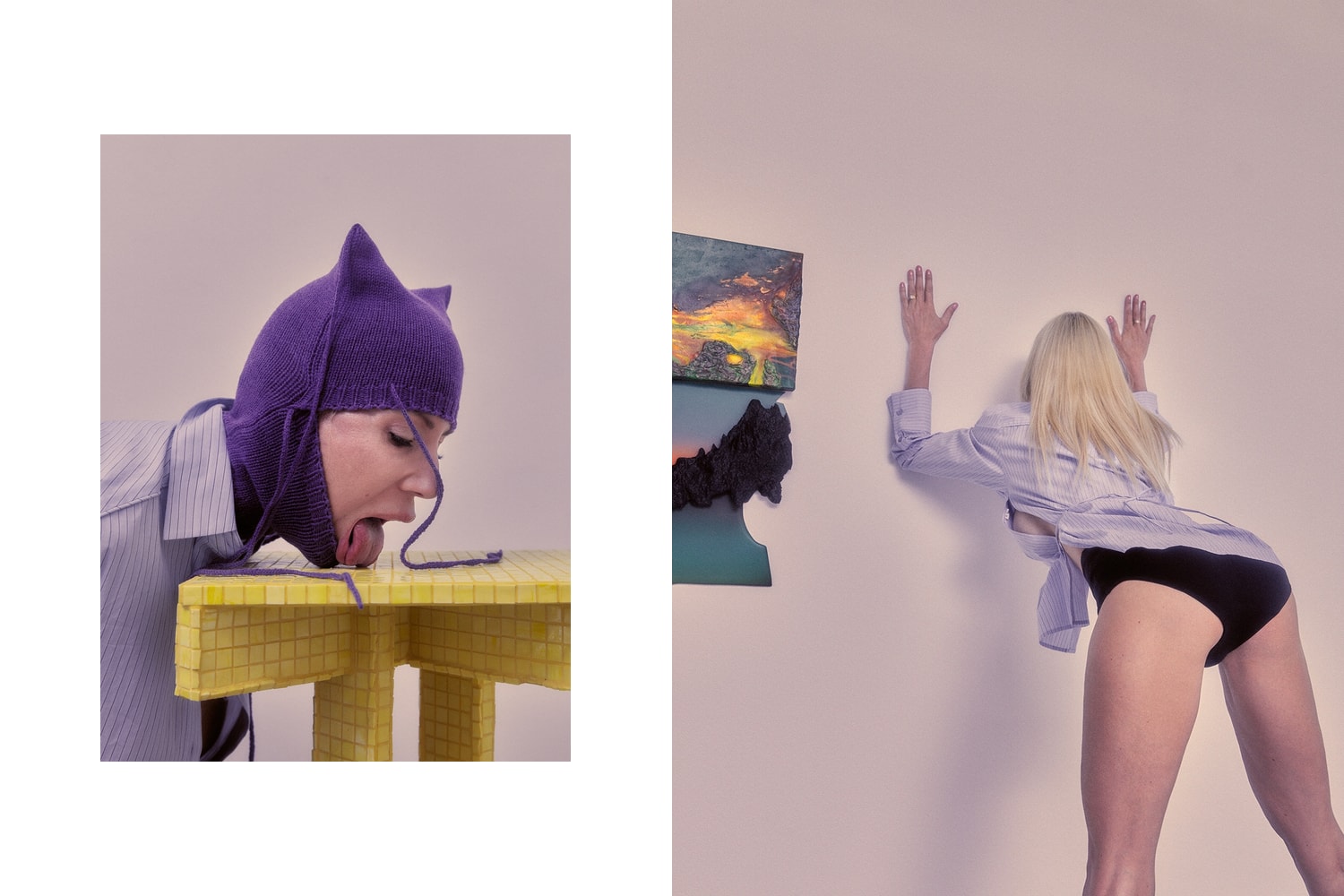
shirt ARAKII, knickers MARIKA VERA, balaclava IMASKOPI / THE FORUMIST STORE, paintings SIIRI JÜRIS, sculpture ANNA MLASOWSKYPaul B. Preciado’s writing has been crucial in understanding pornography not simply as a representation of sex but as a technology producing bodies, desires and ways of seeing. Linda Williams, in Hard Core: Power, Pleasure, and the Frenzy of the Visible , similarly examined pornography through its obsession with making bodily pleasure visible, turning sex into an image to be performed, displayed and verified.
Puma’s account introduces something often missing from those images: the labour behind them.
“People forget that we are actors and actresses, and that it is an act,” she says. “I can play being submissive. I can play being dominant.” It sounds obvious, but pornography is strangely resistant to the vocabulary of performance. Cinema can stage violence without anyone believing the actor was actually shot; theatre can produce grief without requiring genuine devastation. But when the performance involves sex, viewers tend to confuse representation with reality.
She describes the mechanics behind the fantasy as preparation, negotiation, physical limits, lighting, uncomfortable positions and conversations with co-performers about what will happen.
“It’s cold, my hip bone is hurting, but I look like it’s the best sex of my life.” The sentence reveals pornography’s machinery because it is normally invisible. The fantasy works because the labour disappears.
This is perhaps the first misconception she wants to challenge, the idea that the pornographic image is somehow more “real” than other forms of representation because it uses real bodies and real sexual acts. The body is performing. The camera is constructing. The performer is working.
There is another fantasy surrounding pornography, one less about sex than agency. The woman who performs sexualised images is rarely allowed to simply have chosen to do so. Her decision is immediately interpreted through exploitation, coercion, addiction, economic desperation or regret.
She has spent years encountering this assumption.
“People have trouble wrapping their heads around that this is something I can choose,” she says. Her position is not that pornography is automatically empowering, nor that everyone in the industry has the same experience. It is more basic, the possibility of choosing pornography cannot simply be dismissed.
“I get off on showing myself off on camera,” she says. “There are people looking at me, and then I know that thousands or millions will jerk off on this and enjoy this.”
There is no request for moral approval in the statement. What makes it uncomfortable is precisely its lack of apology. The cultural narrative surrounding women in pornography often seems to permit agency only if it eventually leads them away from pornography. The woman who regrets becomes a story. The woman who leaves becomes a warning. The woman who remains happy is somehow less interesting.
“I’ve been doing it for twenty years, and I’m still happy. And I plan to continue. But that’s not what they want to hear.”
The happy porn star is culturally inconvenient because she refuses the role assigned to her.
top COS, corset VIOLA LAHGER, shorts stylist’s own, necklace SYSTER P, shoes stylist’s own, sculpture JOHAN PRIEBEThroughout our conversation, the distinction between Johanna and Puma becomes increasingly fascinating. Puma is the fantasy; Johanna the strategist. Puma is expected to be endlessly available; Johanna talks about rates, contracts, boundaries and timing.
“I always consider this a business as well,” she explains. “I enjoy what I do, but I also take the business side seriously.”
Pornography is generally discussed through desire, while its labour structure remains almost invisible. Yet she describes her career with an entrepreneur’s pragmatism. She explains how she gradually introduced different scenes, waited for audience demand and charged accordingly: “Everything is worth money. You wait until there’s a big interest and then you charge for it.”
That sentence shifts the performer from object to economic actor. The body remains part of the product, but the person controlling that product is no longer invisible.
The distinction also complicates the “porn star” as a fixed identity. Puma is a persona, but Johanna is not simply the supposedly authentic person behind it. The persona itself is something she has constructed, managed and monetised. The fantasy is work. The image is work. Even the distinction between them is part of the work.
This is also one of the contradictions Fried’s project BODY TALKS, puts under pressure. Online, the same image can acquire different meanings depending on who posts it. An image of a naked or sexualised body may circulate freely when posted by a celebrity, artist or fashion figure, while an almost identical image posted by a sex worker can be immediately flagged.
“If David LaChapelle puts a picture, he will probably get away with most of it,” Puma says. “But if I post, I think the algorithm has something there and it will flag right away.”
Then she brings up Kim Kardashian. “If Kim Kardashian can do a picture where she’s covering her nipples, I can do it.”
The issue is not really about nipples. It is about provenance. The body does not arrive with a fixed meaning. Institutions, platforms and audiences attach meaning to it. A breast can be fashion, celebrity culture, art or pornography depending on who owns the image and where it appears. The algorithm, supposedly neutral, therefore participates in an older cultural hierarchy.
It doesn’t simply ask what it is looking at. It asks, implicitly, who is she? The answer determines how the image is classified.
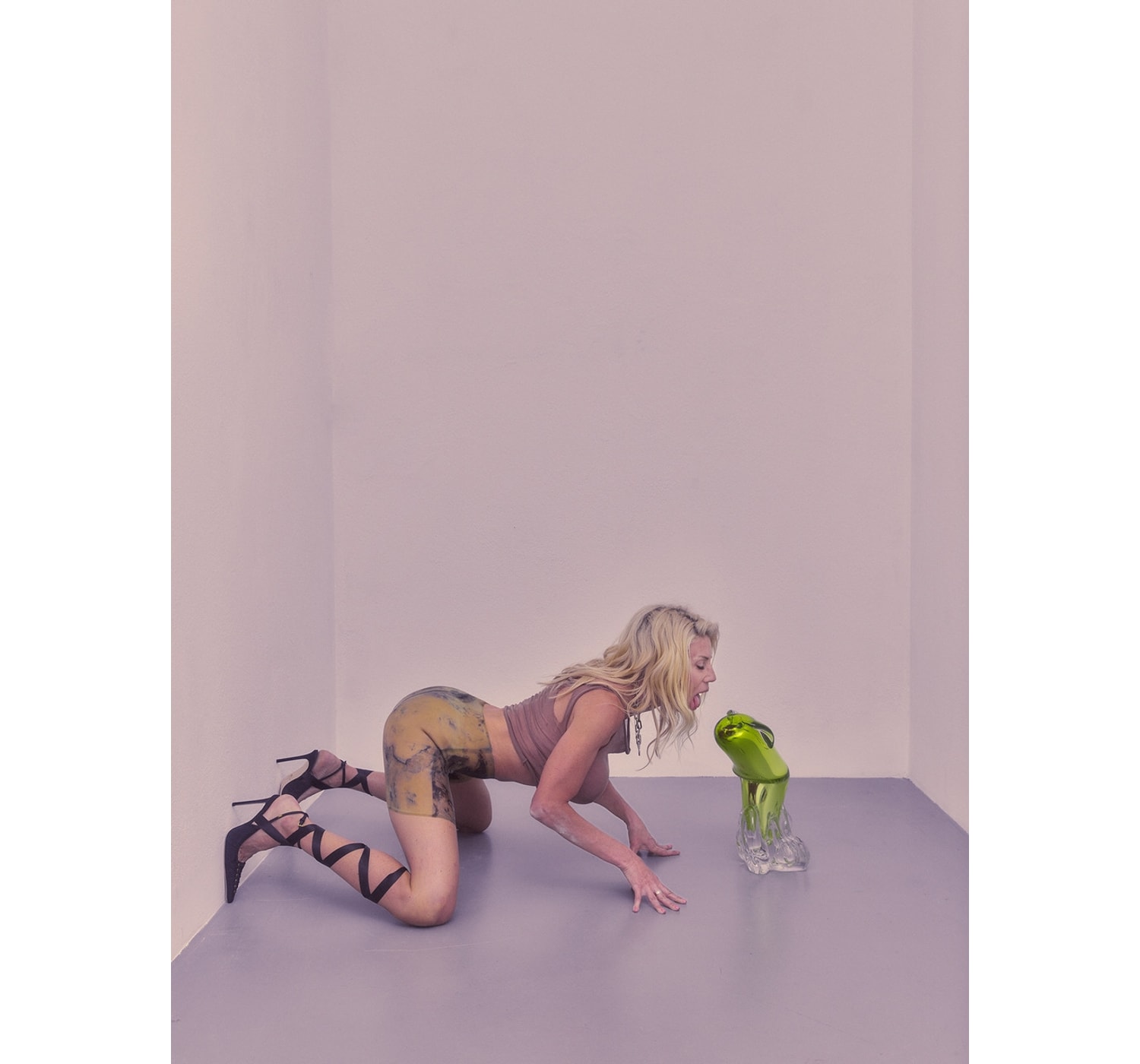
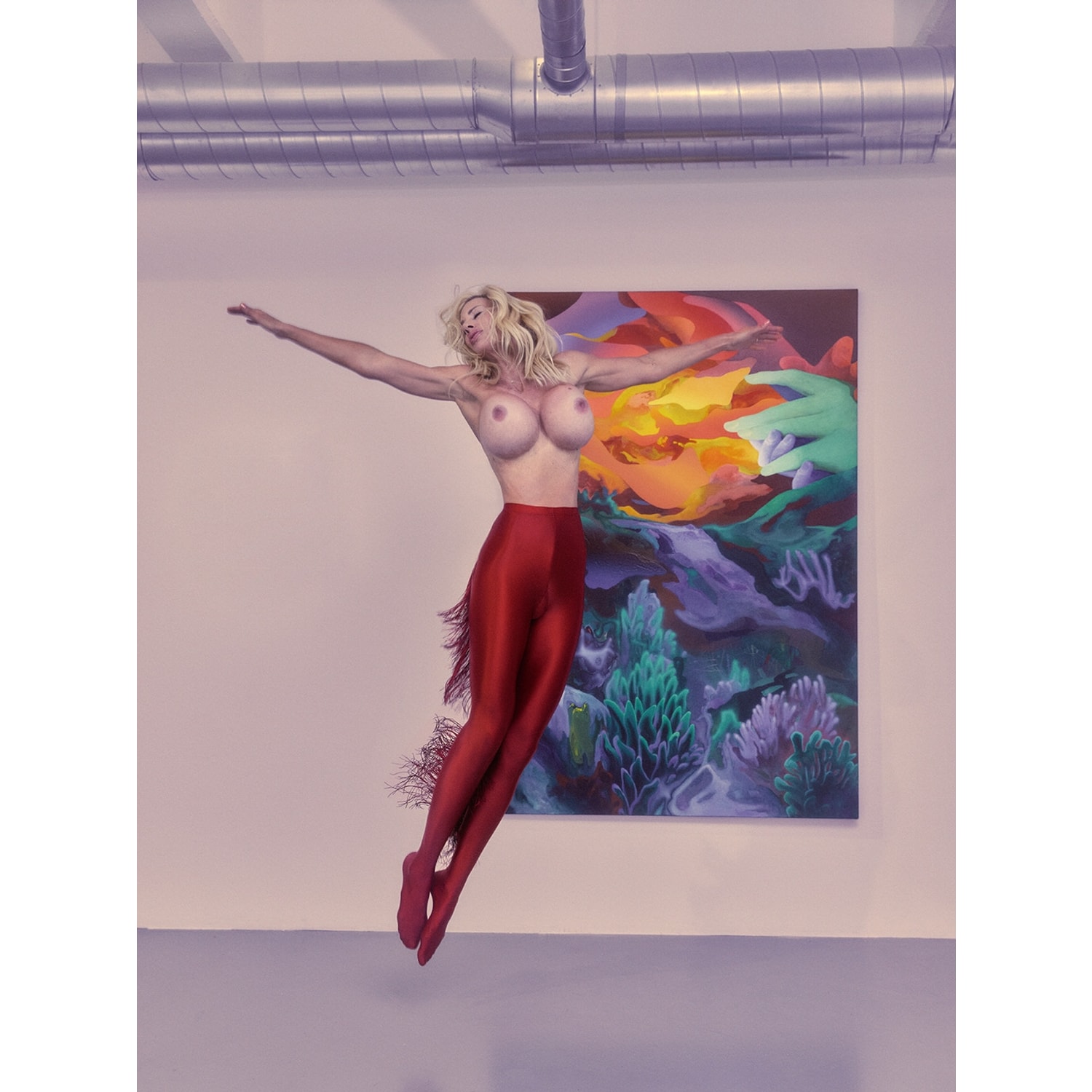
top STUDIO CONSTANCE, skirt GULLBO, necklace PERLENSAU / THE FORUMIST STORE, shoes ELISABETTA FRANCHI, glass sculpture JOSEFIN BRAVOContemporary art has long been extraordinarily good at changing the meaning of images through context. Place a naked body inside a museum and it becomes a representation. Put it in a gallery and it becomes discourse. Put it in a fashion magazine and it becomes editorial. Put the same body on Instagram under the name of a sex worker and suddenly it becomes potentially illicit. The image has not necessarily changed. The institution has.
This movement between contexts is central to BODY TALKS: The Puma Swede, Seen by Sanna Fried . Fried describes her method as “cultural repositioning and contextual displacement,” placing Puma within portraiture, galleries and cultural spaces, while the Nasty magazine editorial extends the investigation into fashion.
Puma’s presence in the art gallery exposes how strongly we rely on institutional context to tell us what we are looking at.
“I hope that doing something like this will give you credibility, and will change the view of people who say that you are just a porn star” says Ms Fried.
The word “just” contains the hierarchy. Art is regarded as culturally valuable; pornography is not.
An artist can represent sex. A porn performer can apparently only perform it.
Annie Sprinkle’s Post-Porn Modernist performances already challenged this division, refusing the idea that the pornographic performer had to remain on one side of the cultural border.
Fried’s BODY TALKS complicates that boundary under very different technological conditions.
Today, the battle is happening not only in galleries but inside social platforms, online payment systems and algorithms that decide who can show an image and profit from it and what information will be censored.
During the photo shoot at Galleri Duerr, Puma looked at some of the artworks in the gallery and immediately saw penises. One sculpture reminded her of a giant penis; another suggested another kind of sexual anatomy. Rather than correcting her reading, Fried allows it to become part of the project.
It was funny but revealing. The art world often assumes the viewer arrives with a particular kind of refined gaze. Puma arrived with another. After two decades working inside pornography, she possesses a sophisticated understanding of the visual grammar of eroticism, what a body communicates, what a pose suggests, what a camera does to an expression.
Why shouldn’t that be considered visual knowledge? Her interpretation of the artworks is not necessarily a failure to understand art. It is another way of looking. She brings a different archive to the gallery, built from years of looking at bodies as images and understanding how those images function.
The white cube does not neutralise the body. It simply gives us another language with which to describe it. And suddenly the pornographic gaze is no longer only the gaze directed at Puma.
It is Puma’s gaze directed back at the artwork.
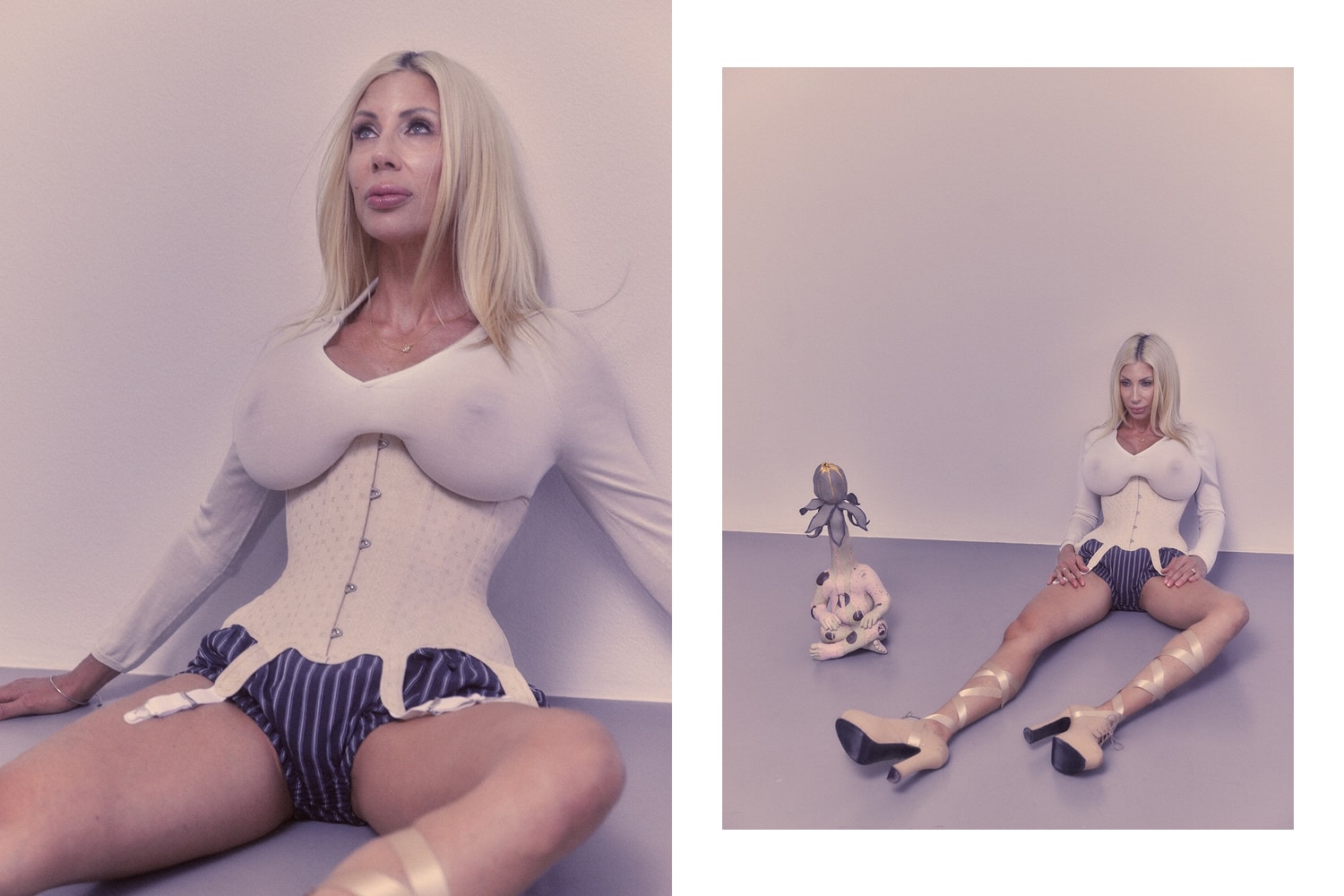
left: corset VIOLA LAHGER, shorts stylist’s own, shoes ELISABETTA FRANCHI, painting SANNA FRIED / right: bra GULLBO, jacket GANT, necklace SYSTER PDigital platforms have transformed pornography’s economics by allowing performers to communicate directly with audiences. The old adult industry depended heavily on studios, magazines, publishers and distributors. Platforms such as OnlyFans enable performers to produce, promote and monetise their own images, even as they remain deeply conflicted about the sexual labour that helped make them profitable. For Puma, the change has been significant.
“When I started in the business, I depended on companies,” she says. “Now all that is taken away. I don’t need a company. I can promote myself.” But audiences are not necessarily buying sex. Sometimes they buy access, attention or intimacy. During the pandemic, she noticed people who had never worked in the industry turning to OnlyFans for income. Others came for human interaction.
“They’re not always Puma, the porn star,” she says. “I’m also a person to them.” The distinction between Johanna and Puma becomes porous again. The persona attracts the audience; the person maintains the relationship. Pornography becomes part of a broader attention economy in which fantasy, intimacy and emotional labour are increasingly difficult to separate.
Perhaps the most revealing thing about her position is that she is not asking for special treatment, but consistency.
“I just wish the rules were the same for everyone,” she says. If Kim Kardashian can post a provocative image, why can’t Puma Swede? If an artist can show a naked body, why can’t a sex worker show her own? If an artwork can contain explicit sexual imagery and be displayed in a museum, why does the same body become dangerous when it belongs to the person who performs pornography professionally?
“If we have the same playing field, I’m fine with it,” she says. “I’m a sex worker. But don’t go after me just because.”
The sentence takes us beyond pornography, to authorship, labour, gender and cultural legitimacy. It asks who is allowed to produce images of desire without being punished, and why one body can become art when framed by an institution and pornography when framed by the person who owns it.
Perhaps pornography’s real cultural problem is not that it is too visible, but that we still refuse to look at it properly. We consume it, borrow from it, reproduce its aesthetics and build digital economies around it. Fashion has borrowed from pornography for decades. Contemporary art has repeatedly used its imagery and performers. Social media has turned sexualised self-representation into a powerful visual currency. Yet the person who works within pornography is still expected to remain culturally invisible.
Sanna Fried’s work disrupts that arrangement by placing Johanna inside another visual system without asking her to stop being Puma.
The art gallery does not erase the pornographic persona. Fashion does not neutralise the body.
Instead, the collision makes visible what was already there: a woman who has spent years being looked at, but who is also looking, choosing, negotiating, producing and making decisions about the image.
The problem was never simply the naked body. It was always who gets to decide what that body means.
left: bra stylist’s own, corset VIOLA LAHGER, skirt GULLBO, knickers MARIKA VERA, shoes ELISABETTA FRANCHI / right: top WERA, knickers&belt MADD WOO, shorts ARAKII, shoes ELISABETTA FRANCHI, paintings MART VAINRE
tights J.SIMONE / THE FORUMIST STORE, paintings SIIRI JÜRIS
corset VIOLA LAHGER, shorts stylist’s own, shoes ELISABETTA FRANCHI, painting and appearance SANNA FRIEDCredits:
Photographer: Ninja Hanna / @ninjahanna
Fashion editor&Creative director: Sanna Fried / @sanna.fried
Make up: Jaana Jussinniemi / @makeupbyjaana
Hair: Kristina S. Vučković / @studioartisanes
Art curation: Galleri Duerr, Sanna Fried
Location: Galleri Duerr, Stockholm / @galleriduerr
Words: María Muñoz Martínez / @maria_munoz_m
Talent: Puma Swede / @thepumaswede

Girls Like Angels / Cloudy