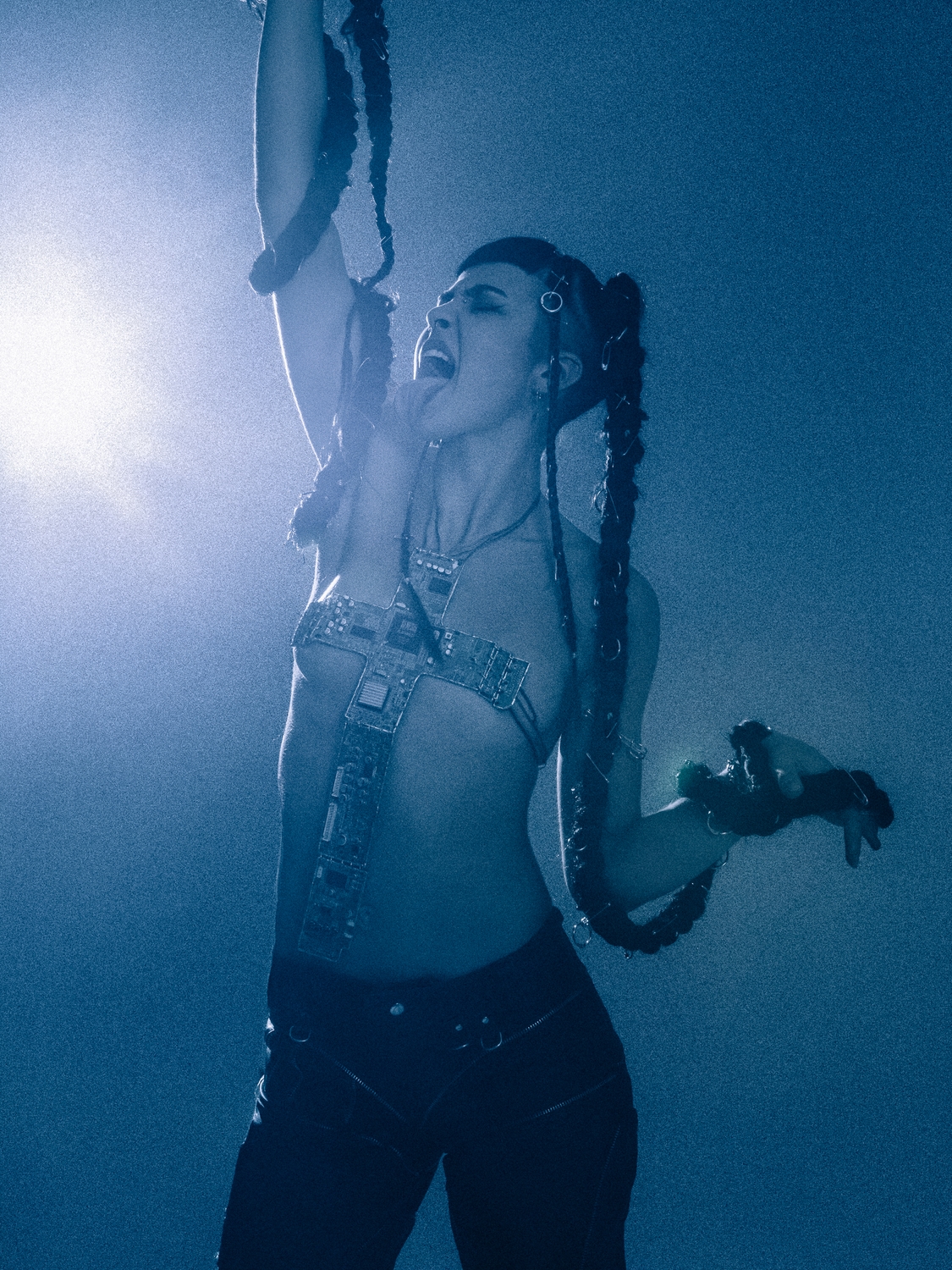
Virgen Maria / Metaglow
Music | Soundscapes
A chat with Virgen Maria. With her straight-forwardness, the artist subverts what has meant to be an artist and reflects, at the same time, the zeitgeist of our times.

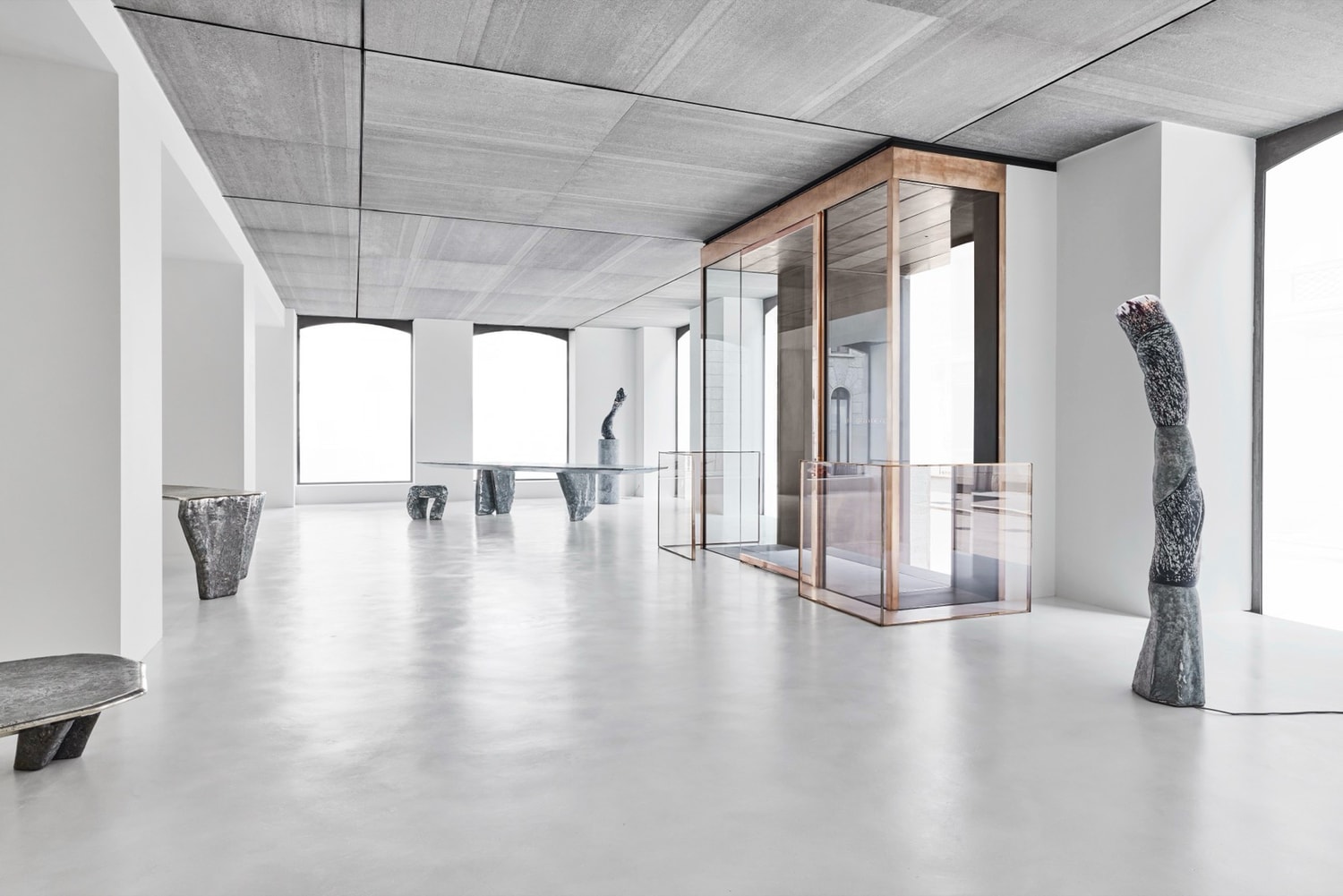
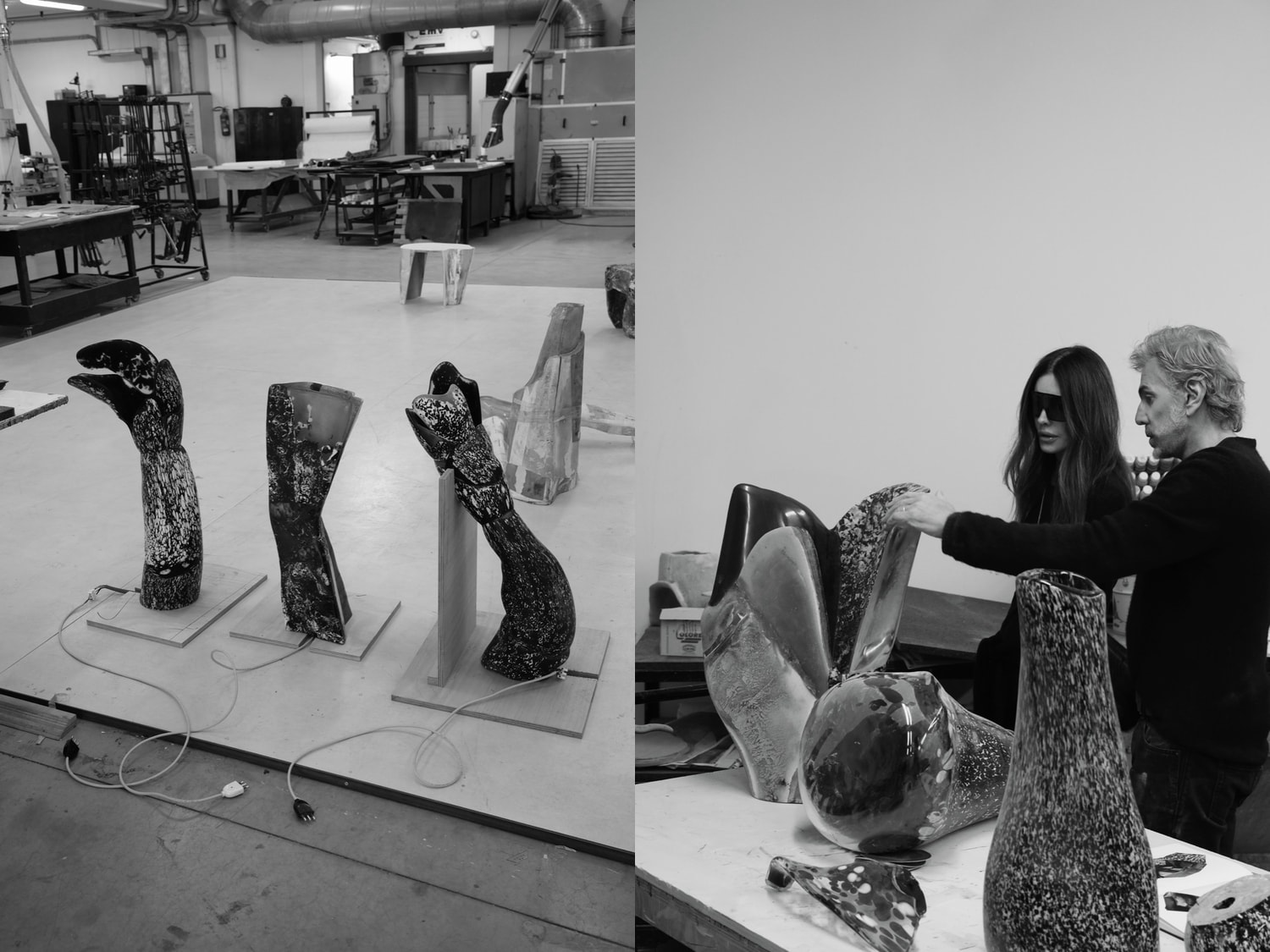
The atelier and the gallery share the same building: the making and the showing happen under the same roof. Walk me through what happens inside the making: who touches the piece, in what order, with what materials and at what temperature. And at what point in that process does the object stop being a De Cotiis and become itself?
The gallery and the workshops do not physically occupy the same space. However, for me, making and showing are not separate acts. An object begins as an intuition, but it only becomes visible through a long chain of gestures, materials, accidents and decisions.
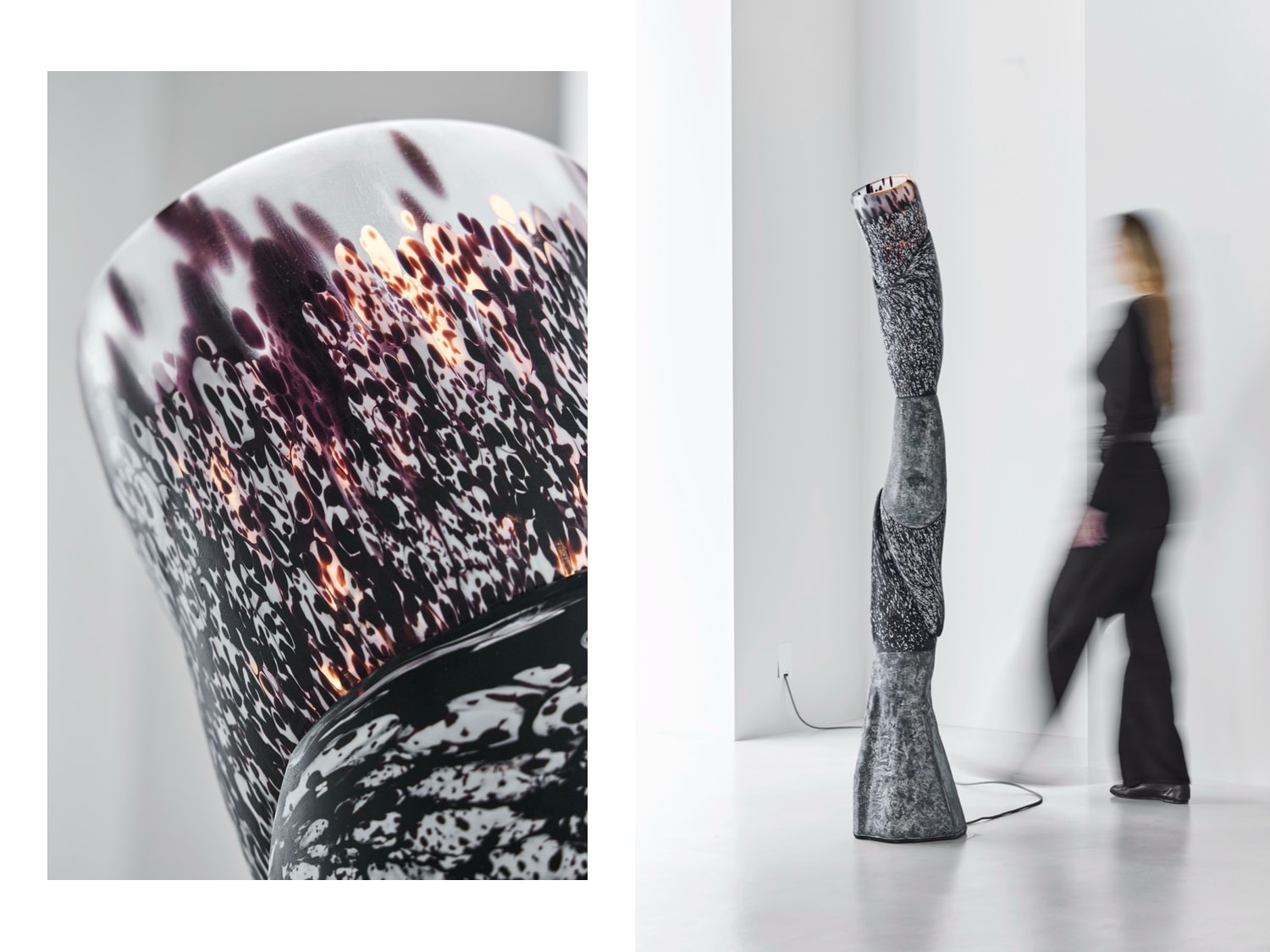
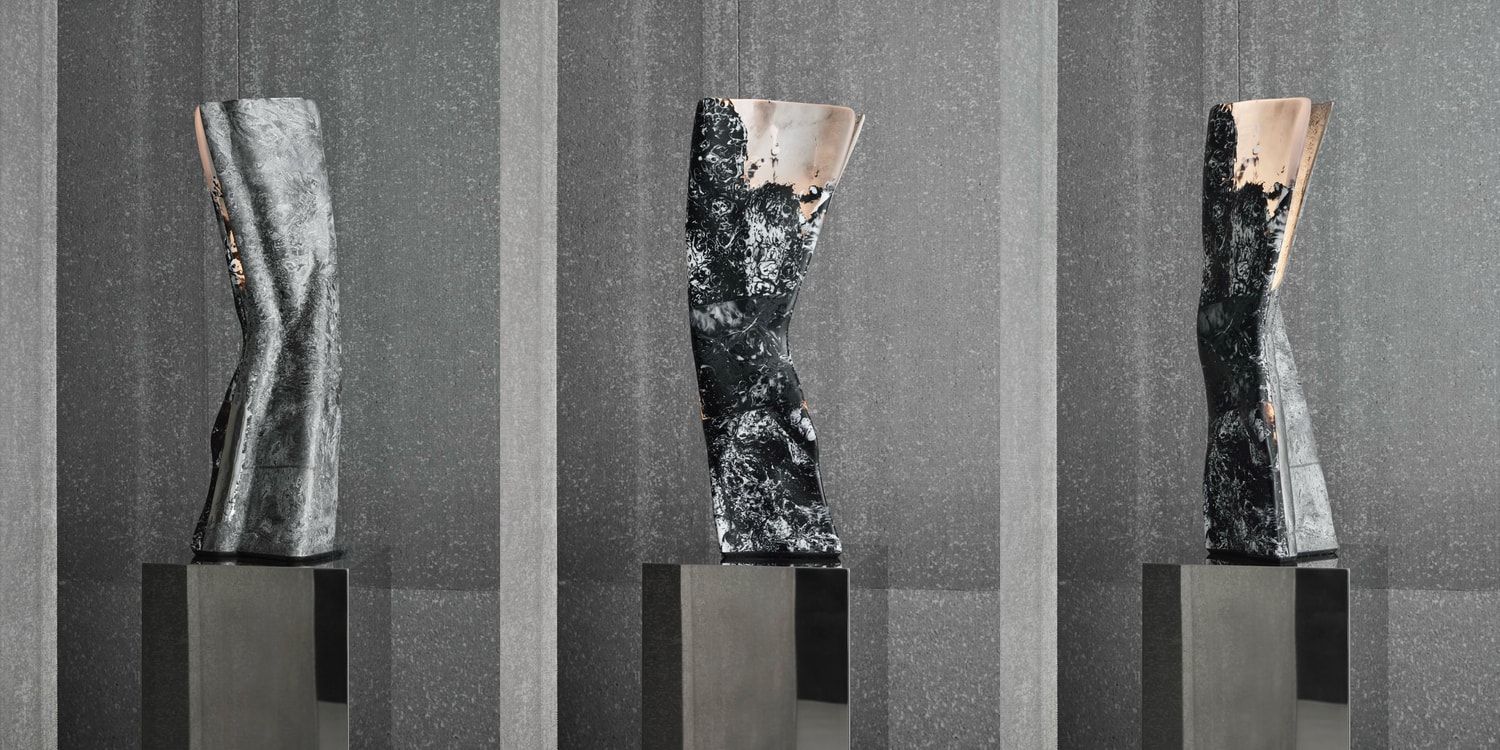
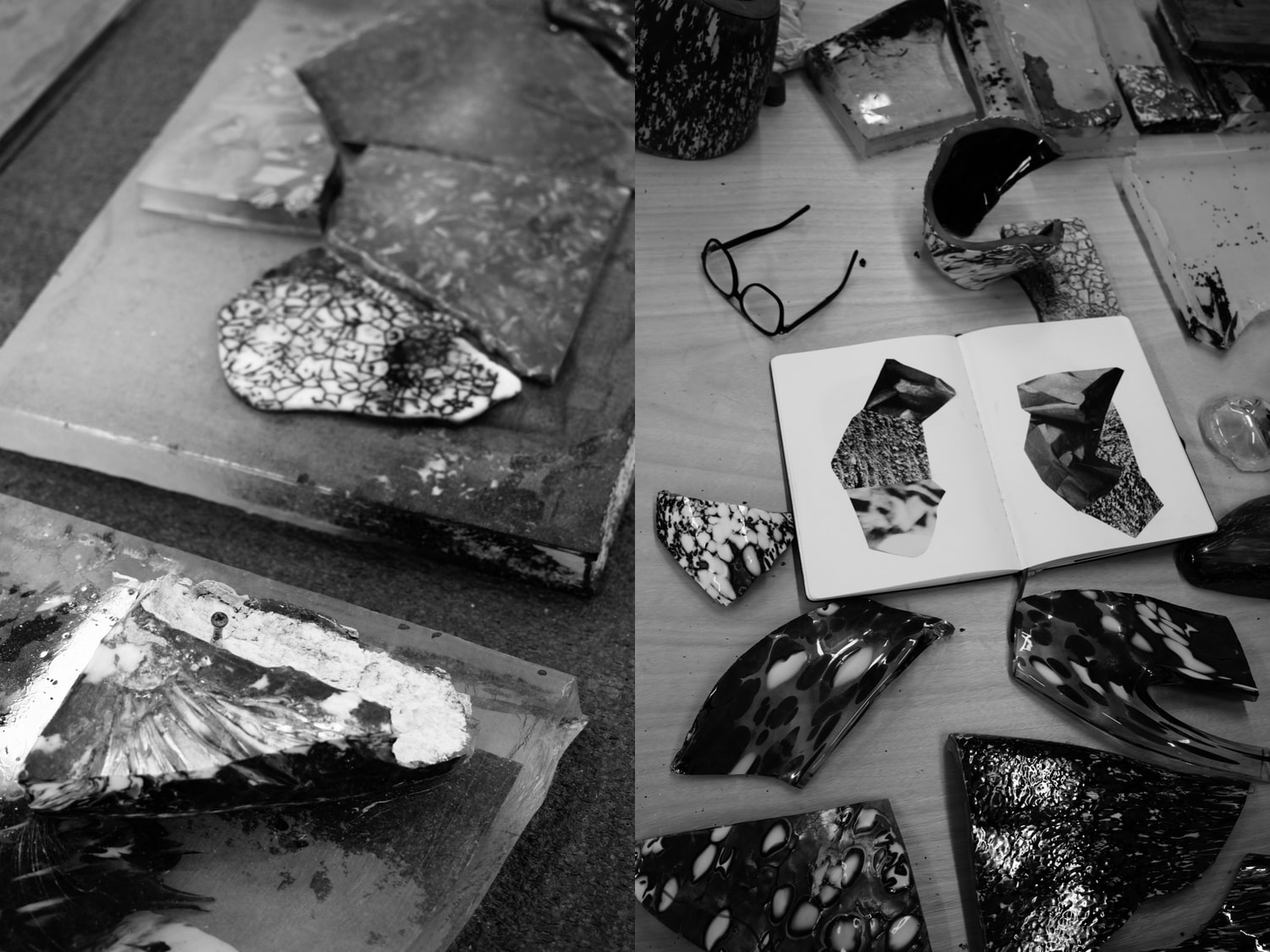
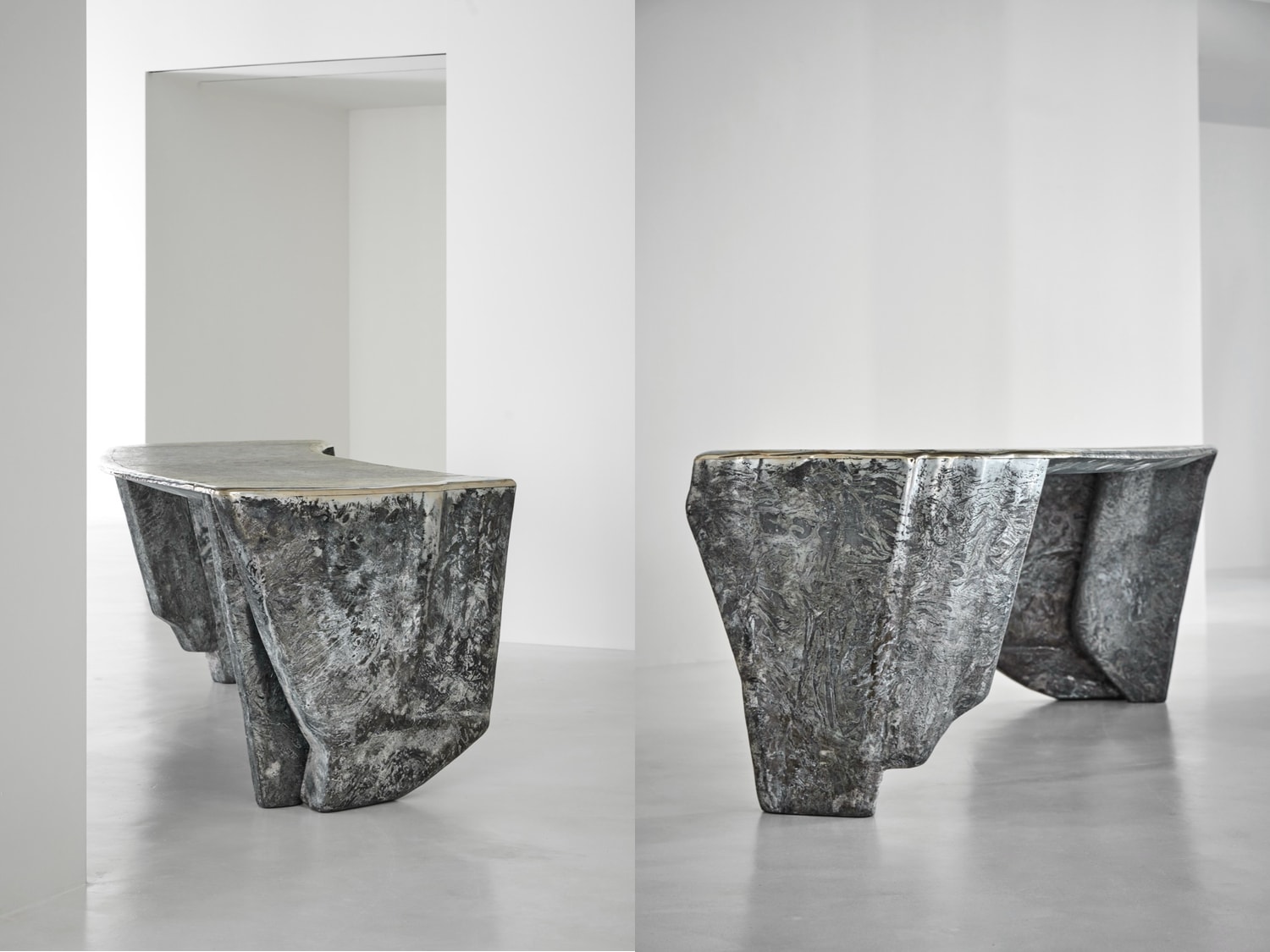
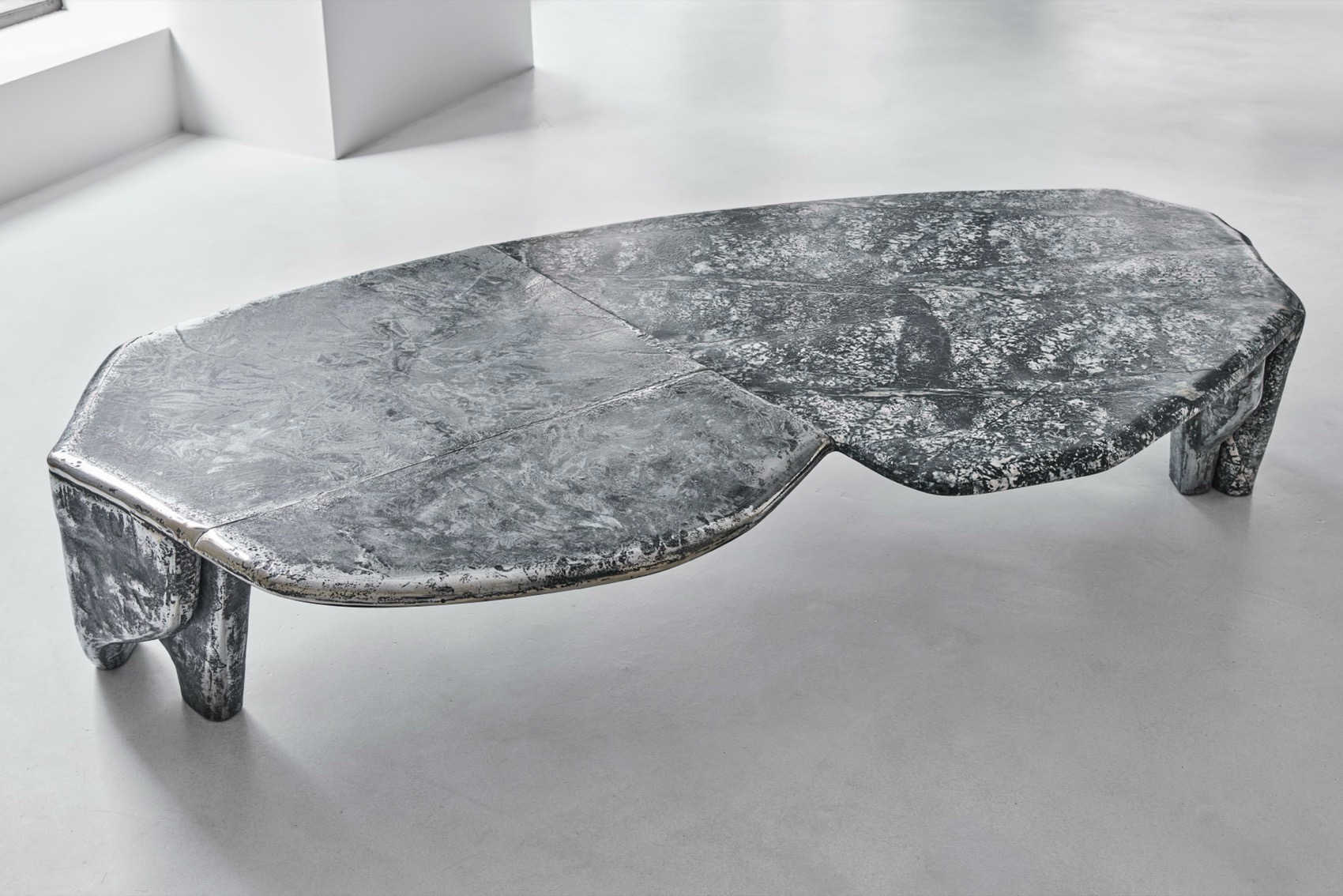
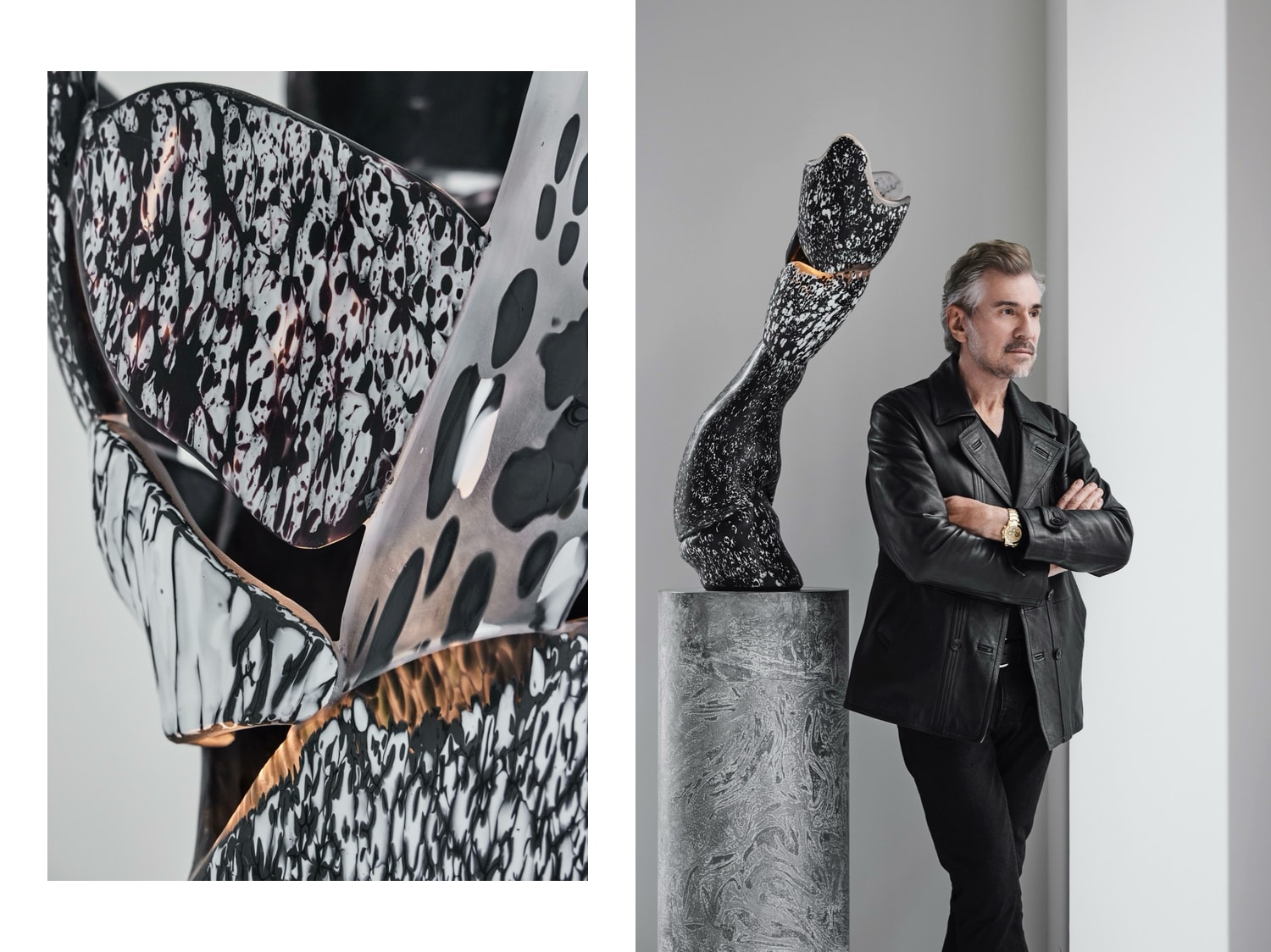
Many hands touch a piece. Metalworkers, glassmakers and artisans who have worked with me for years. Each material asks for a completely different approach. With Bronze you work with fire and transformation; Fiberglass requires patience and chemistry; Murano Glass involves heat that exceeds a thousand degrees and a dialogue with gravity itself. The process is never linear.
I do not believe in authorship as a fixed hierarchy. The object absorbs every encounter and remembers each intervention.
There is a moment when it ceases to belong entirely to me. Not when it is completed, but when it begins to resist my intentions. When the material starts proposing something I had not anticipated. At that point the work acquires its own agency. It is no longer an illustration of an idea. It becomes a living presence.


In 2021 you designed the Burberry flagship on Sloane Street. 857 square metres, and three floors. Your atelier produces singular objects made by hand in Milan. These are not adjacent practices — they operate under entirely different conditions. What did working inside a system that large require you to suppress? And is there anything it gave you that the atelier work doesn’t?
What specifically did you protect? What did you decide not to do? The gap between what you built and what you make alone?
Working on a project such as the Burberry flagship meant entering a different scale of complexity. Not a different philosophy, but a different ecosystem.
The premise is slightly more complex. The works are not produced within a single atelier in Milan. They emerge through a network of specialised workshops, artisans and makers across Italy with whom I have collaborated for many years. Each brings specific knowledge, techniques and sensibilities to the process.
What I had to suppress was the possibility of improvisation. In the atelier, uncertainty is productive. In a project of that size, uncertainty has consequences that involve hundreds of people, regulations, logistics and timelines. The work requires another form of discipline.
What I protected was the material sensibility. I refused the idea that luxury should be reduced to smoothness or perfection. I wanted surfaces to retain depth, memory and tension. I chose not to pursue the kind of flawless uniformity often associated with contemporary retail environments.
I also protected silence. Contemporary retail often overwhelms through stimulation. I was interested in creating spaces that could breathe.
What the project gave me was an understanding of architecture as a social instrument. An object speaks to one person at a time. A building speaks to thousands. It confronts a collective experience of space.
The distance between what I build and what I make alone is not a contradiction. It is a change of scale. The same questions remain.
You described the store as ‘the place as a portrait.’ A portrait of whom, Burberry, you, or?
A portrait is never only about its subject.
When I described the store as a portrait, I was referring to an accumulation of identities. Certainly Burberry, with its history and cultural memory. But also the city, the visitors, the artisans involved in its construction.
A portrait becomes interesting when it exceeds resemblance. It reveals something hidden.
In that sense, the space is not a portrait of Burberry or of myself. It is a portrait of a relationship.


The superyacht is the most hermetically sealed object luxury produces — engineered to resist everything your practice depends on. No patina, no corrosion, no material memory. The sea is outside; inside, everything is controlled, finished, perfect. You design objects that keep becoming. A superyacht is designed to stay exactly what it is. How do you enter that commission and what do you leave at the door?
The yacht represents an apparent paradox.
My work is often concerned with transformation, while the yacht industry is built around control. But the tension between those conditions is precisely what interests me.
I do not enter a commission by abandoning my language. I enter by identifying where life can still exist within the system.
Even the most controlled environment remains vulnerable to time, light, movement, reflection and use. Human presence leaves traces everywhere.
What I leave at the door is the romantic idea that materials must visibly deteriorate to possess memory. Memory can also exist through atmosphere, proportion and experience.
The challenge is not to reproduce an atelier object inside a yacht. It is to discover what transformation means in that context.
Your pieces are not finished when they leave the atelier — the atmosphere continues the work. The patina on a bronze from 2004 that has spent twenty years in a specific light, in a specific city, is not the patina you applied. Someone else’s environment made it. Has a collector ever sent you a photograph of what one of your pieces has become? And if they did — would you want to see it?
Yes, collectors occasionally send photographs.
I always find them moving because they reveal something I could never have predicted.
The object leaves the atelier and enters another ecology. Another climate, another architecture, another rhythm of life. The work begins a conversation with its surroundings.
What interests me is not whether it has remained faithful to its original condition. What interests me is whether it has continued to live.
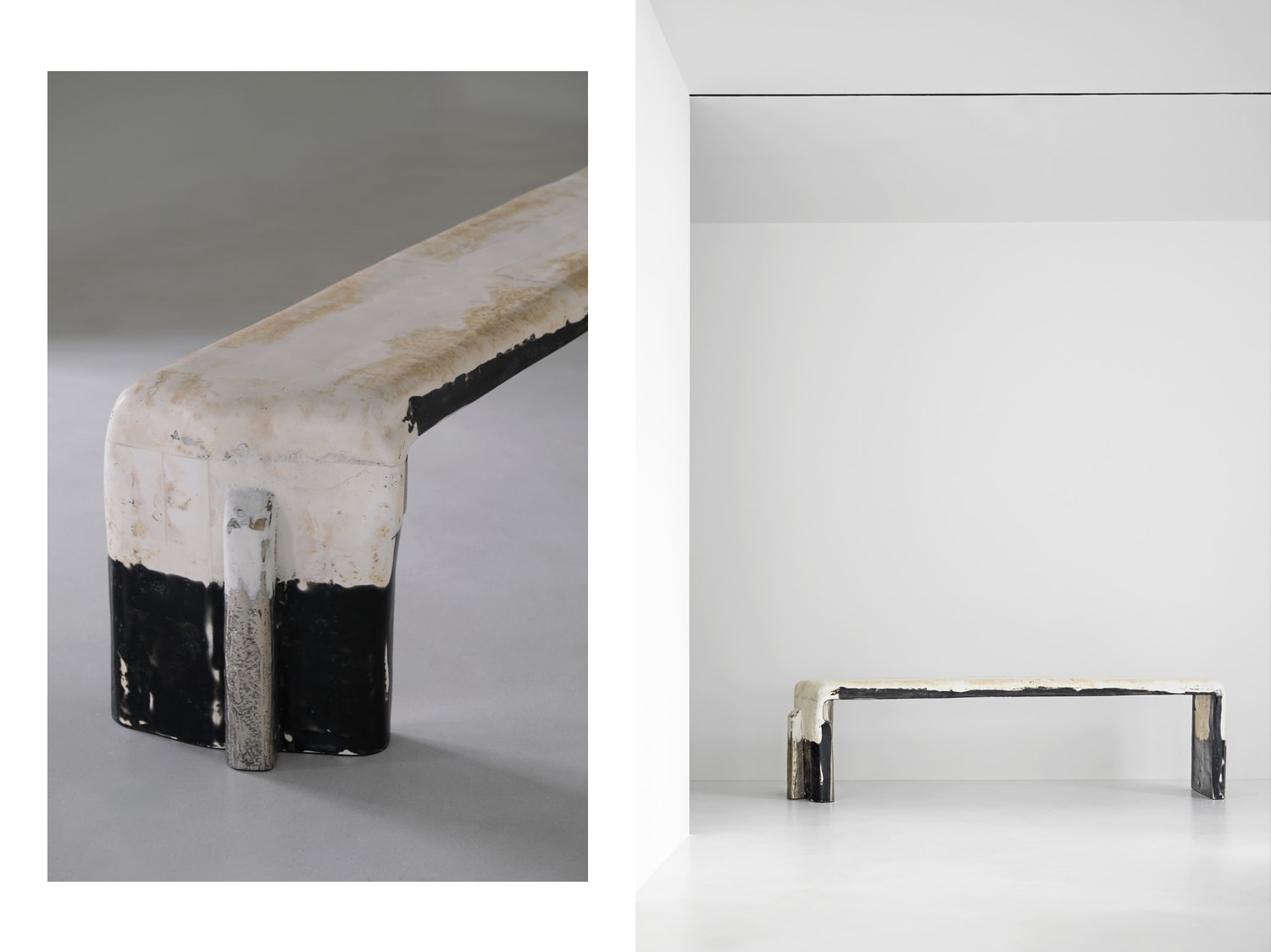
I have never considered patina to be a loss. On the contrary, it is often the continuation of a process. What I once described as “perfect imperfections” remains central to my thinking. The traces left by time, light and use are not defects to be corrected. They are evidence of life. They reveal the relationship between an object, time and the environment in which it exists.
A photograph is evidence that the relationship between object and environment is still active. In that sense, I am grateful to see them.
Collectible design has a grammar now, and you built a large part of it. The problem with building the grammar is that everyone starts speaking it. You can hear your own syntax in how younger designers present their work, in how galleries frame their entire rosters. What do you do when the language you invented to resist categories becomes the category?
Every language faces this destiny. If a vocabulary proves useful, it will inevitably be adopted, repeated and eventually institutionalized. The mistake would be to defend ownership of that language. Influence is not a problem. Stagnation is.
What concerns me is not whether others use certain materials, forms or textures. What concerns me is whether curiosity remains alive. The only response is to continue moving.
The work began as an attempt to escape categories. If it becomes a category, then the responsibility is to escape again. The objective is not consistency. It is evolution.


Does the financial appreciation change what you make? Do you design differently knowing where these pieces go?
No.
The market can influence visibility, but it cannot be allowed to influence necessity.
A work must emerge from a question, not from a prediction. Of course I am aware of where pieces go, of who collects them, of the conversations they enter. But awareness is different from obedience.
The moment financial appreciation becomes a criterion, the work loses its freedom. The responsibility of the artist is not to confirm value. It is to search for meaning.
Your wife Claudia runs the Foundation. The practice you’ve built — the gallery, the architecture firm, the Foundation, the collectible objects — is also a family structure. What does it mean to build something so total? And is the work separable from the life, or is the life part of the work?
I have never perceived these structures as separate entities.
The architecture, the objects, the Foundation, the exhibitions and family life all emerge from the same intellectual and emotional landscape.
Claudia and I have built something together over many years. Her role extends far beyond the Foundation. She has been fundamental in shaping the broader ecosystem that surrounds the work, providing continuity, structure and direction across its different dimensions. Not simply an institution, but an ecosystem.
That does not mean there is no distinction between life and work. Rather, it means the boundary is porous.
The Foundation is not an extension of a career. It is a way of creating continuity between generations, between disciplines and between forms of knowledge.
For me, work is not something that begins in the morning and ends in the evening. It is a way of inhabiting the world.


A practice this unified where the object, the space, the institution, and the life are all the same project, leaves nowhere to hide. From the outside, it looks like coherence. From the inside, what does it feel like?
From the inside, coherence feels less like certainty and more like exposure.
When every aspect of your life is connected to the same investigation, there is nowhere to hide from your own questions. The advantage is clarity.
The difficulty is that you cannot easily separate success from failure, or professional experience from personal experience. Everything becomes interconnected. But perhaps that vulnerability is necessary.
A practice should not protect you from life. It should deepen your engagement with it.
Claudia has lived inside this work longer than any curator, any collector, any critic. What has she seen and reflected back to you that none of them have?
Claudia has witnessed the intervals.
Collectors see finished works. Curators see exhibitions. Critics see narratives.
She has seen doubt. She has seen projects abandoned, directions changed, years of research that never became public. She has witnessed the invisible portion of the process.
Most importantly, she has always understood that the work is not about objects alone. It is about a way of thinking.
Her perspective is invaluable because it is neither institutional nor market-driven. It comes from proximity, honesty and time.
That kind of reflection cannot be replaced.
Your solo exhibition titles are in French: En Plein Air, Éternel, Je Marchais Pieds Nus Dans L’Étang. You are Italian, working in Milan, with materials that are deeply Italian: Murano glass, Baroque rhythm, Venetian surface. And yet most of the times you name a body of work, you reach for French. Is that a distance you need — and from what?
French, for me, is not a distance from Italy. It is a distance from certainty. Titles should not explain the work. They should open a space.
French possesses a particular musicality and ambiguity that interests me. It allows language to remain suggestive rather than descriptive.
My work is deeply Italian in its relationship to matter, history and craftsmanship. That identity is unquestionable. But titles belong to another territory. They operate closer to poetry than to geography.
I choose them because they create resonance rather than definition.
Conservation protocol says: arrest the patina, stabilize the surface, document the condition at acquisition and hold it there. That is the opposite of everything your material philosophy is built on. When FENIX took Ode, did you negotiate the conservation terms or did you let go?
Conservation is a fascinating paradox.
Many institutions are trained to preserve an object by stabilizing it. My work often emerges from the opposite understanding: that transformation is intrinsic to existence.
In the case of Ode, transformation was already embedded within the work itself. From the beginning, it was conceived not as a fixed object but as something capable of assuming different forms, functions and relationships over time.
When FENIX acquired Ode, the conversation was not about resisting conservation. It was about acknowledging the nature of the work.
An institution has responsibilities that differ from those of an artist. Preservation is one of them. At a certain point, however, one must let go.
In many of my works, the gradual transformation of a material is not a threat to the work. It is part of its intended life. Patina, change and adaptation are often embedded in the work from the beginning. What I once described as “perfect imperfections” remains central to this way of thinking
The work enters another life, another framework of care, another interpretation.
I believe museums should preserve objects, but they should also preserve ideas. The most important thing is not whether a surface remains unchanged. It is whether the philosophy embedded within it remains legible.
Time is not an enemy of the work.
Time is one of its materials.

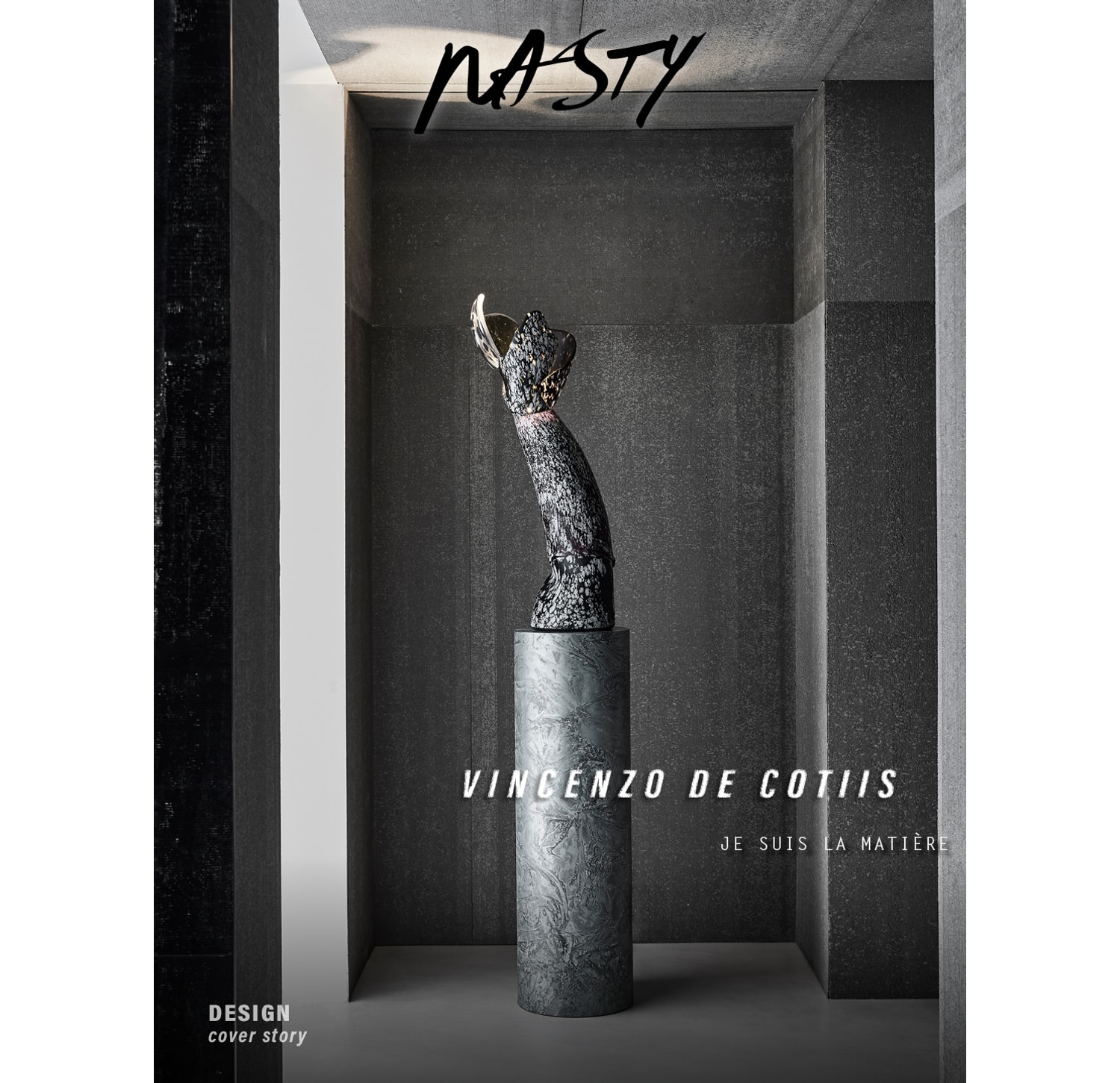
Credits:
Artist: Vincenzo De Cotiis / @vdecotiis

Rave is a state of being / Jazzy