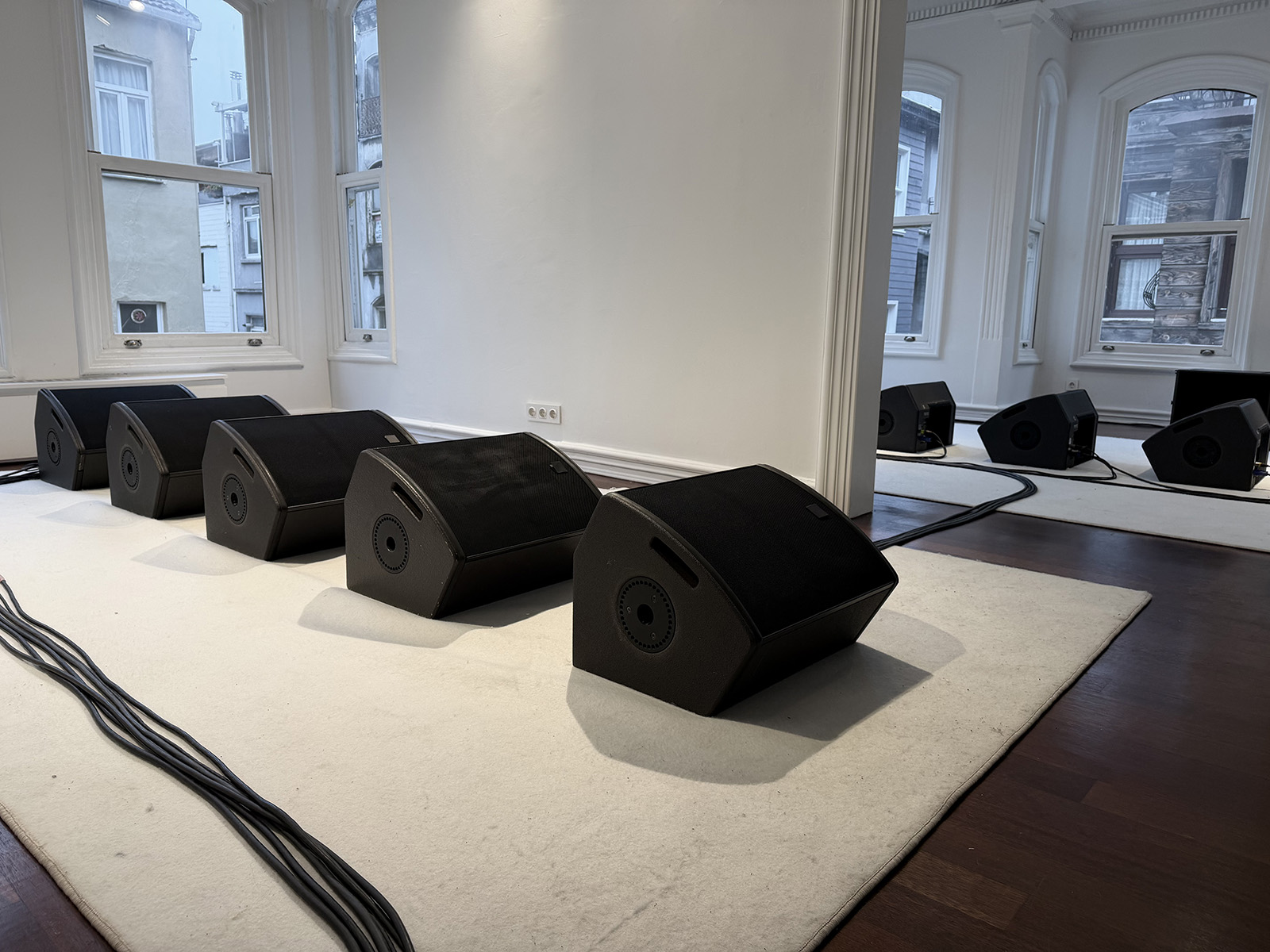
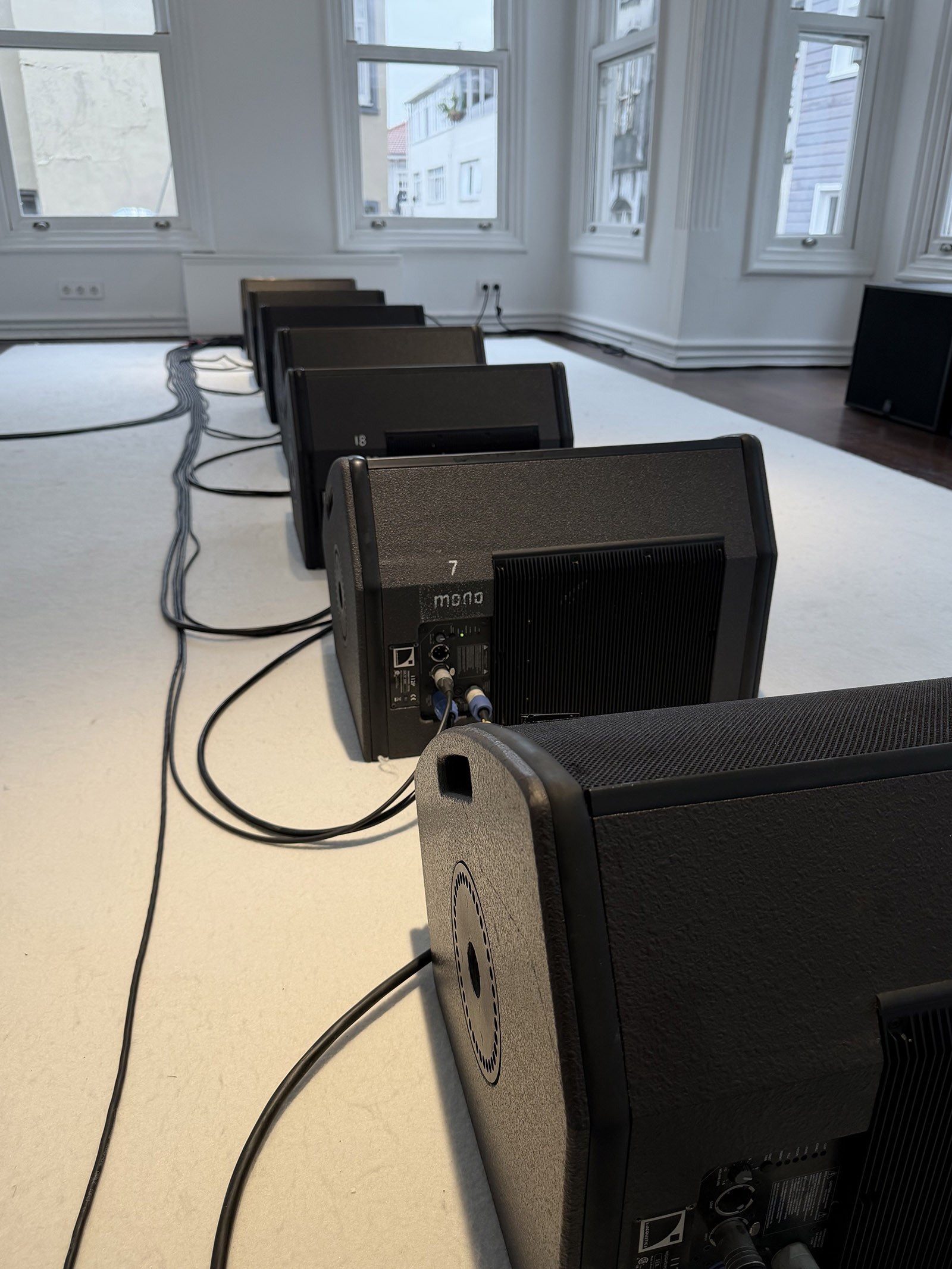
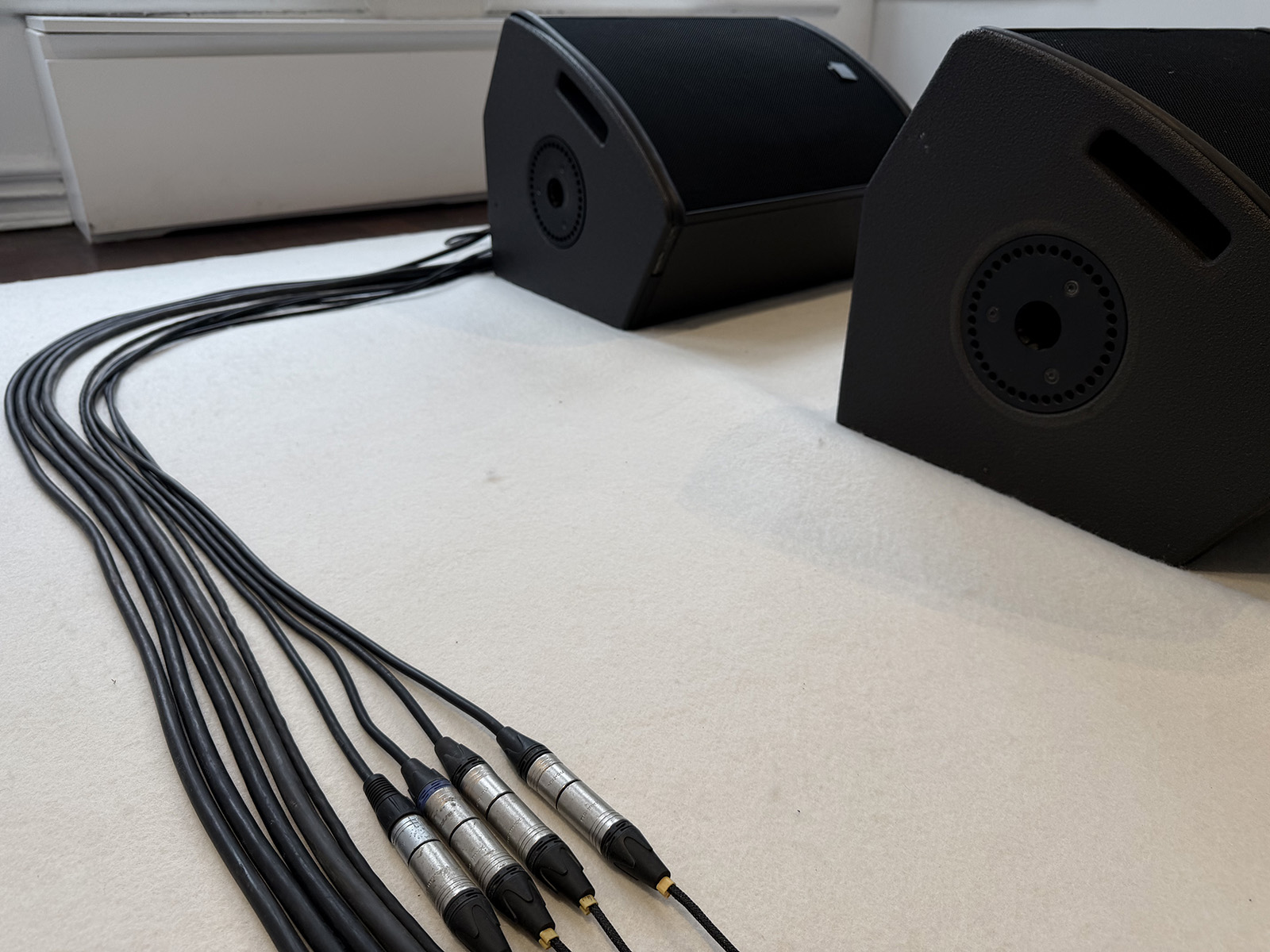
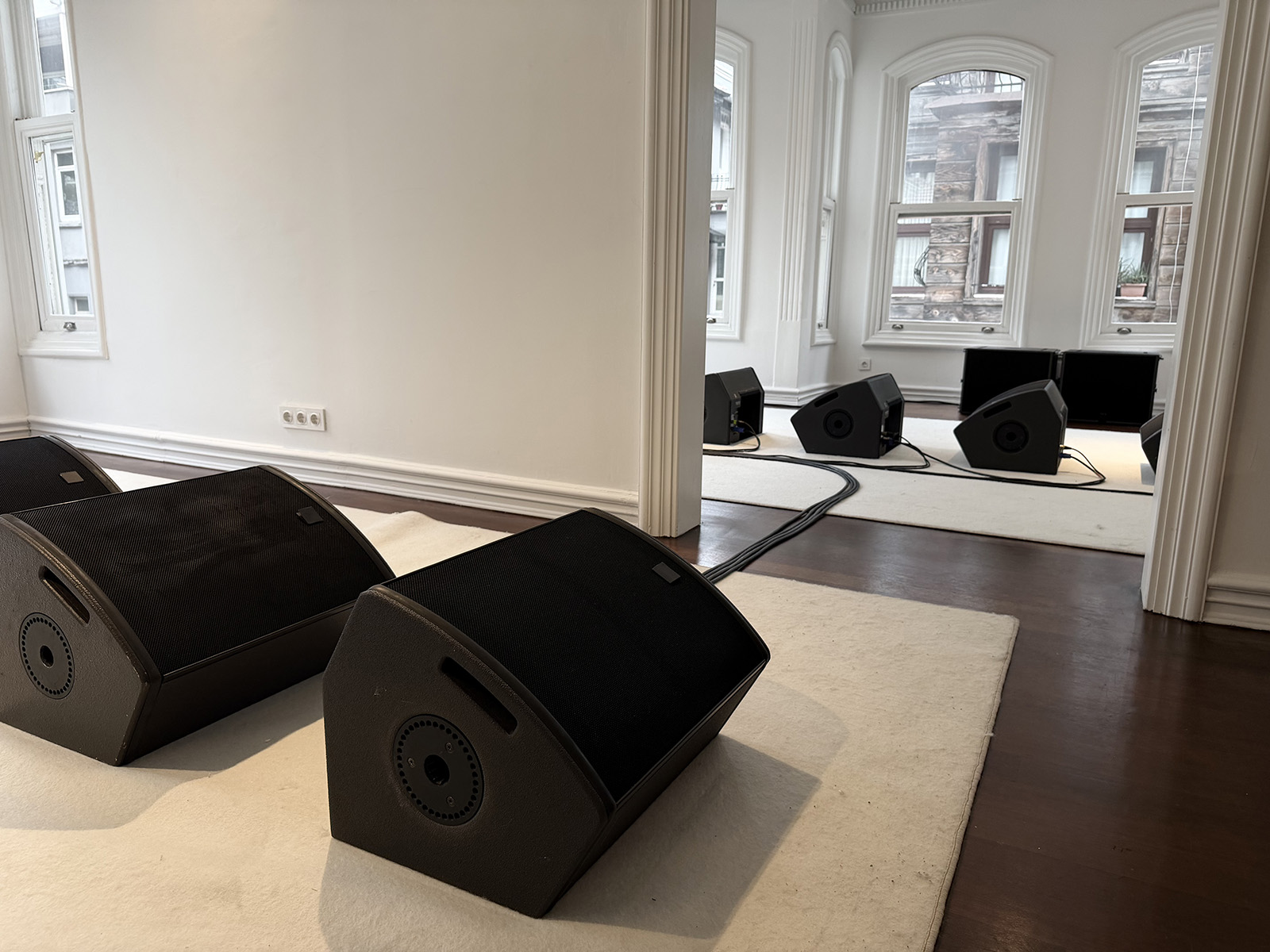
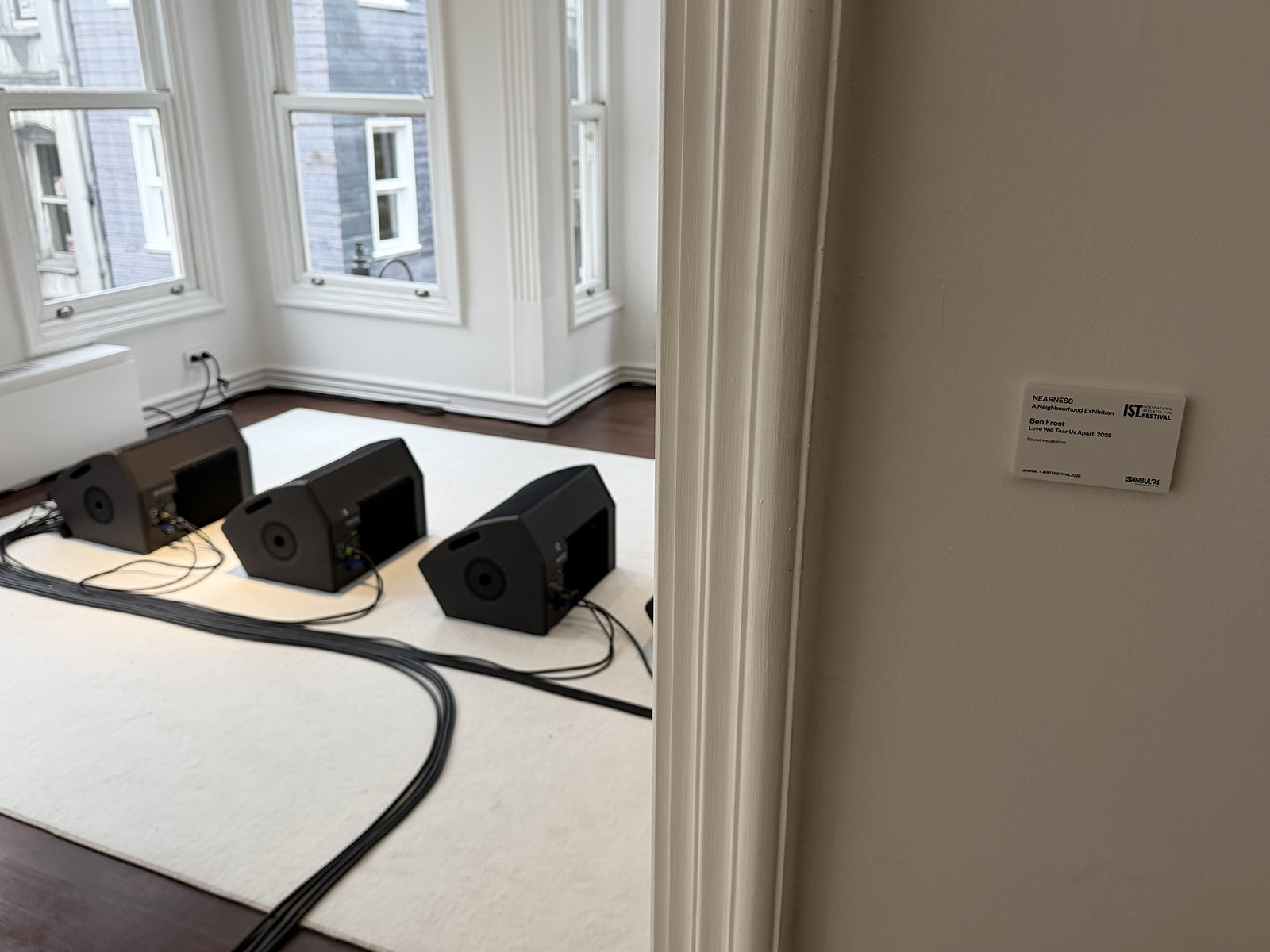
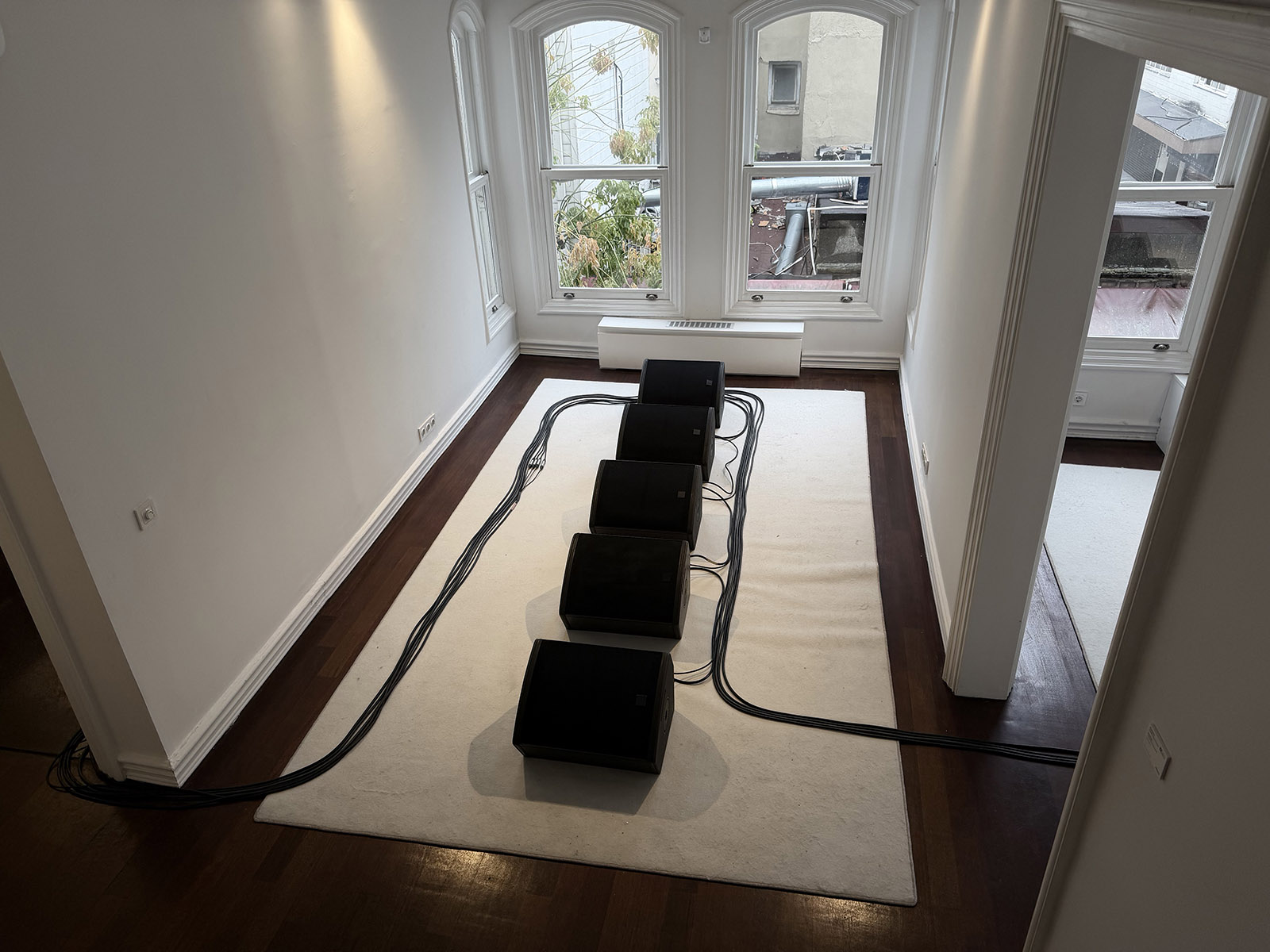
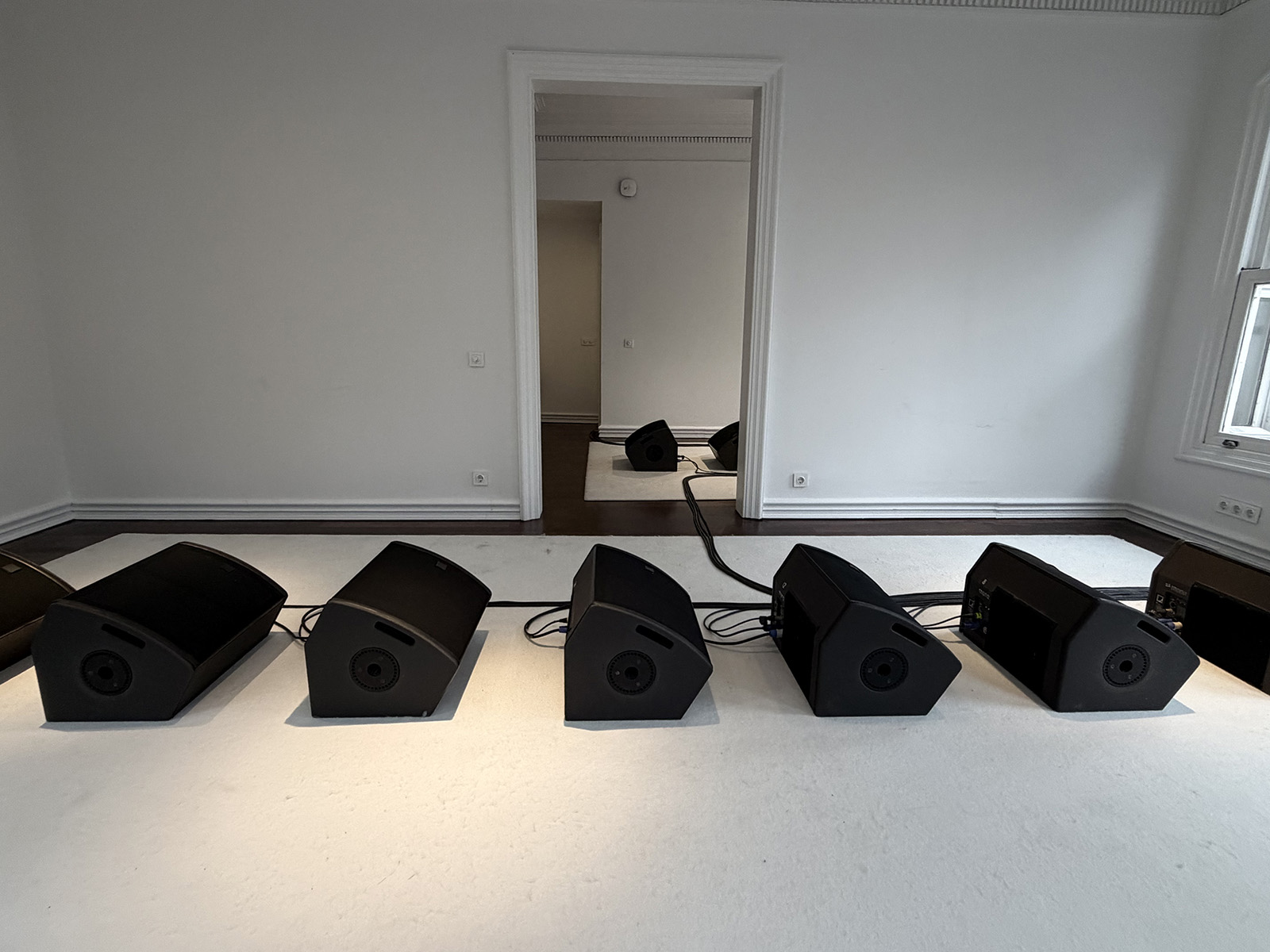
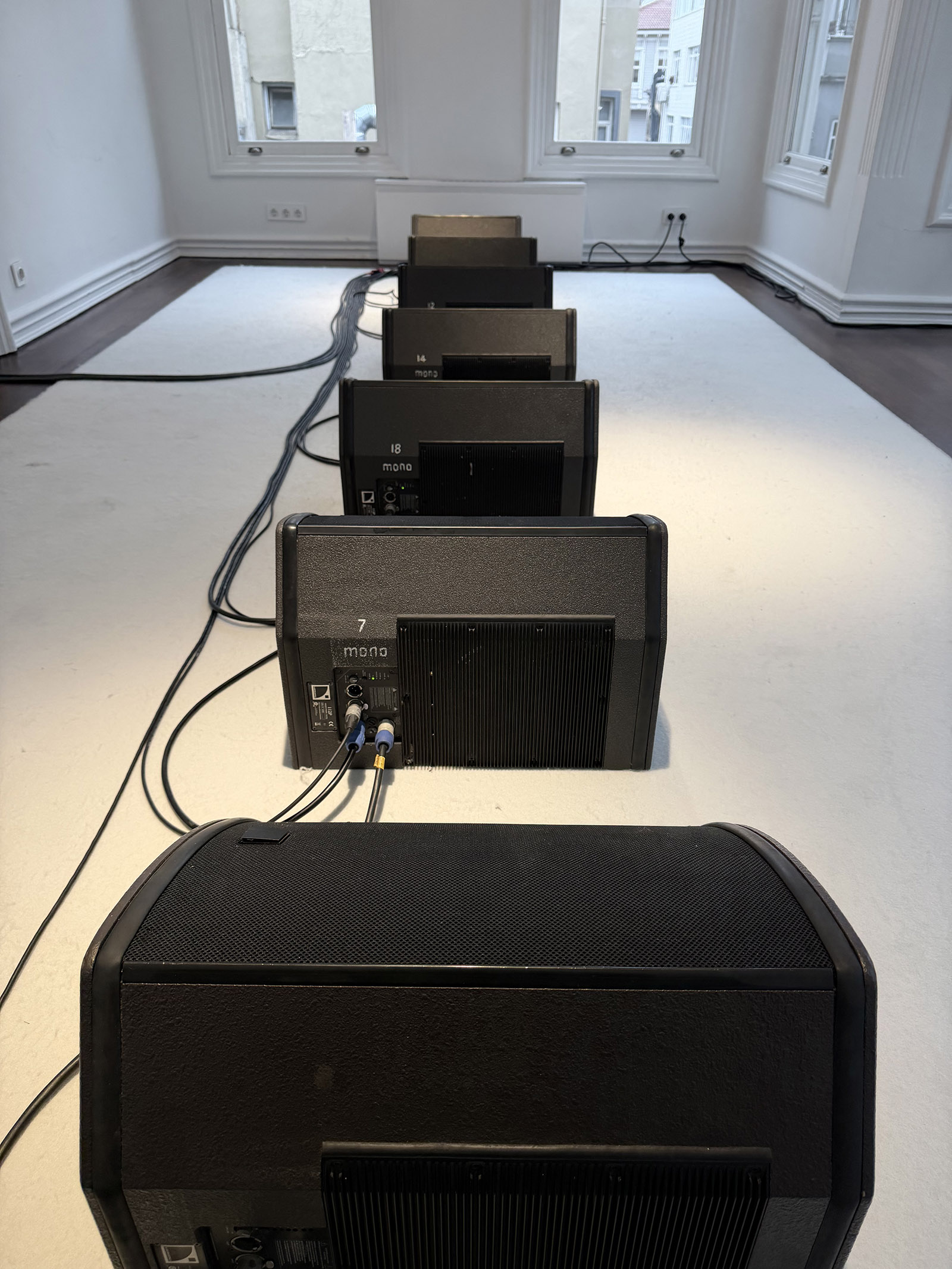
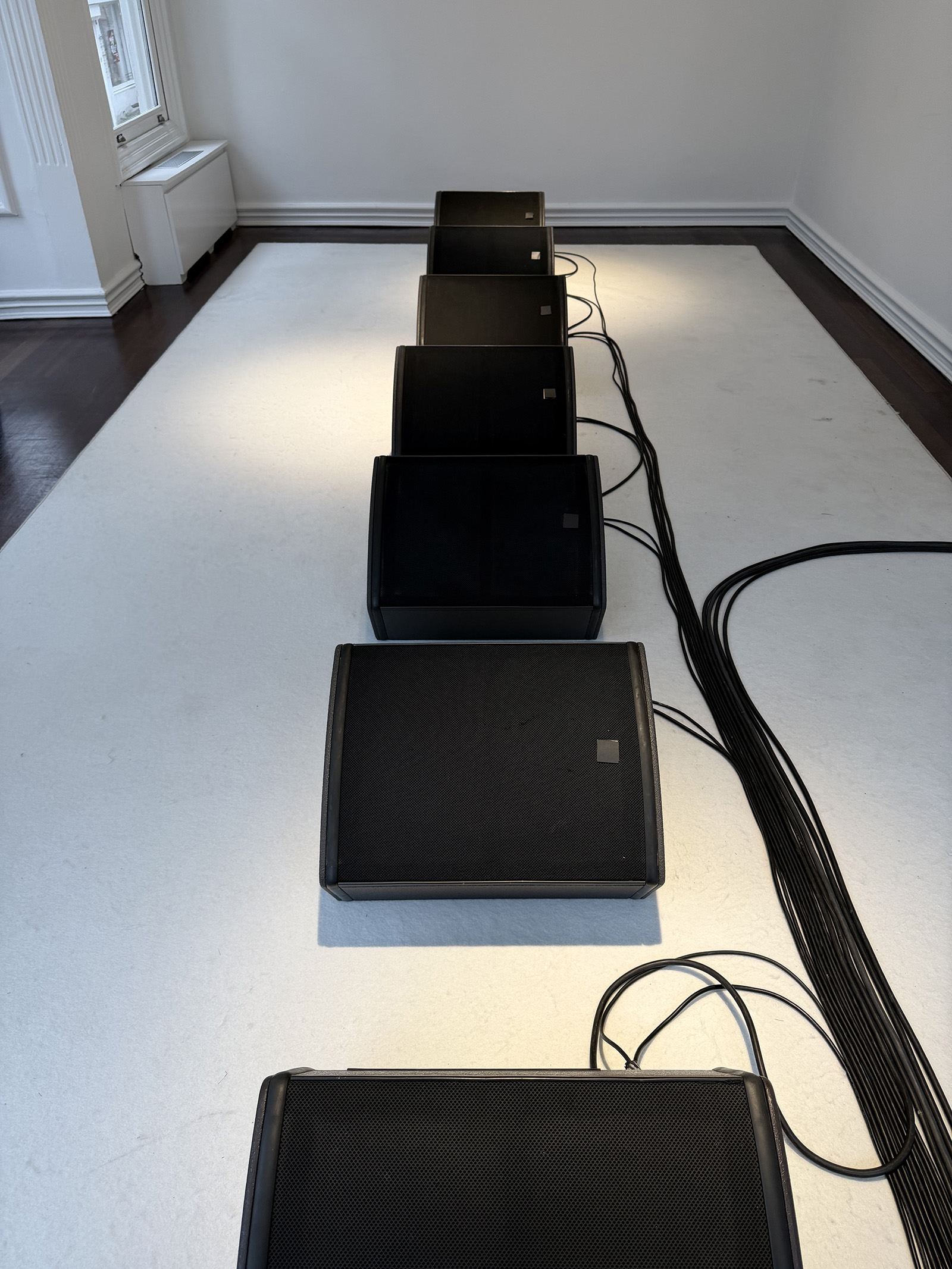
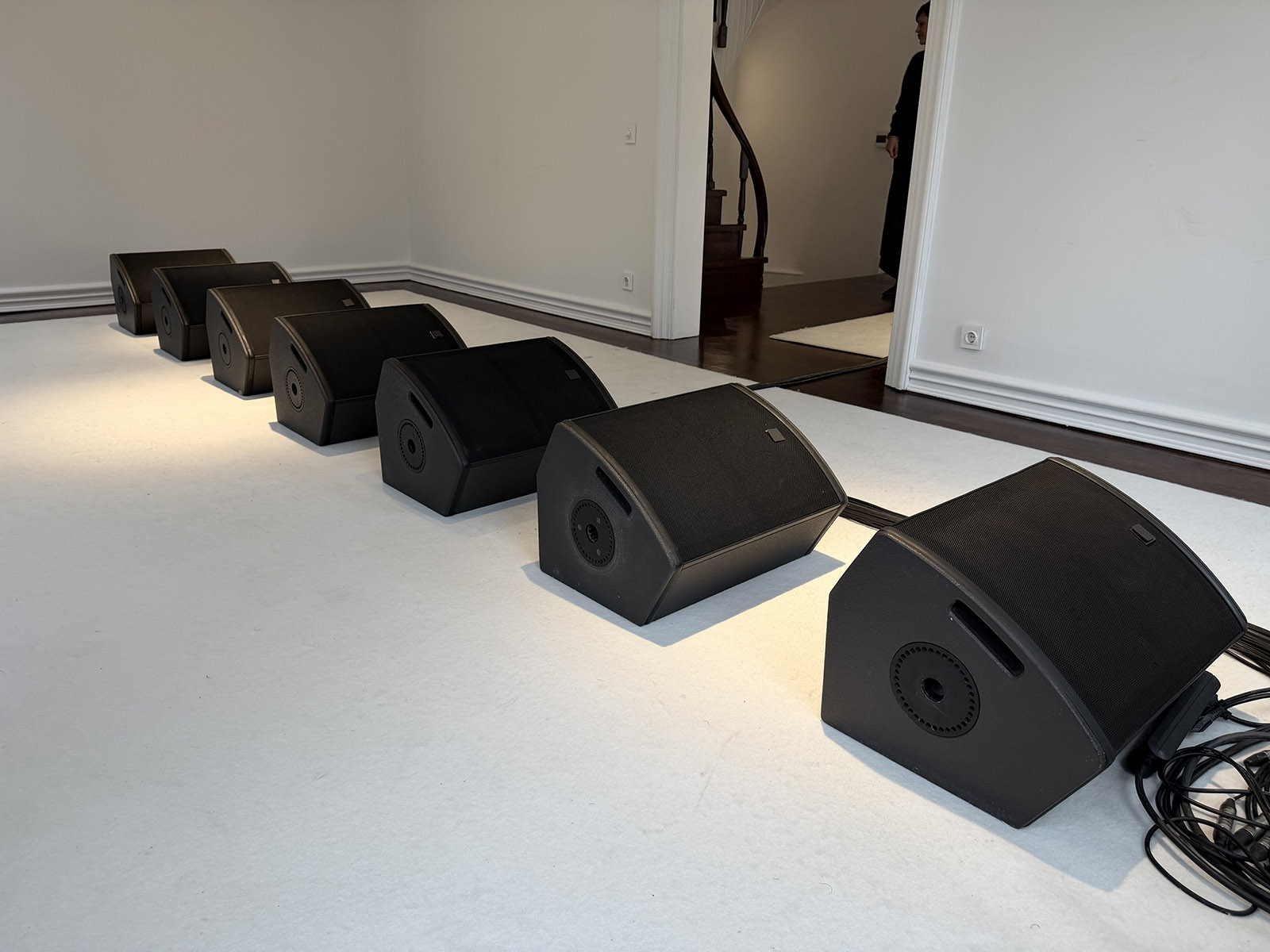
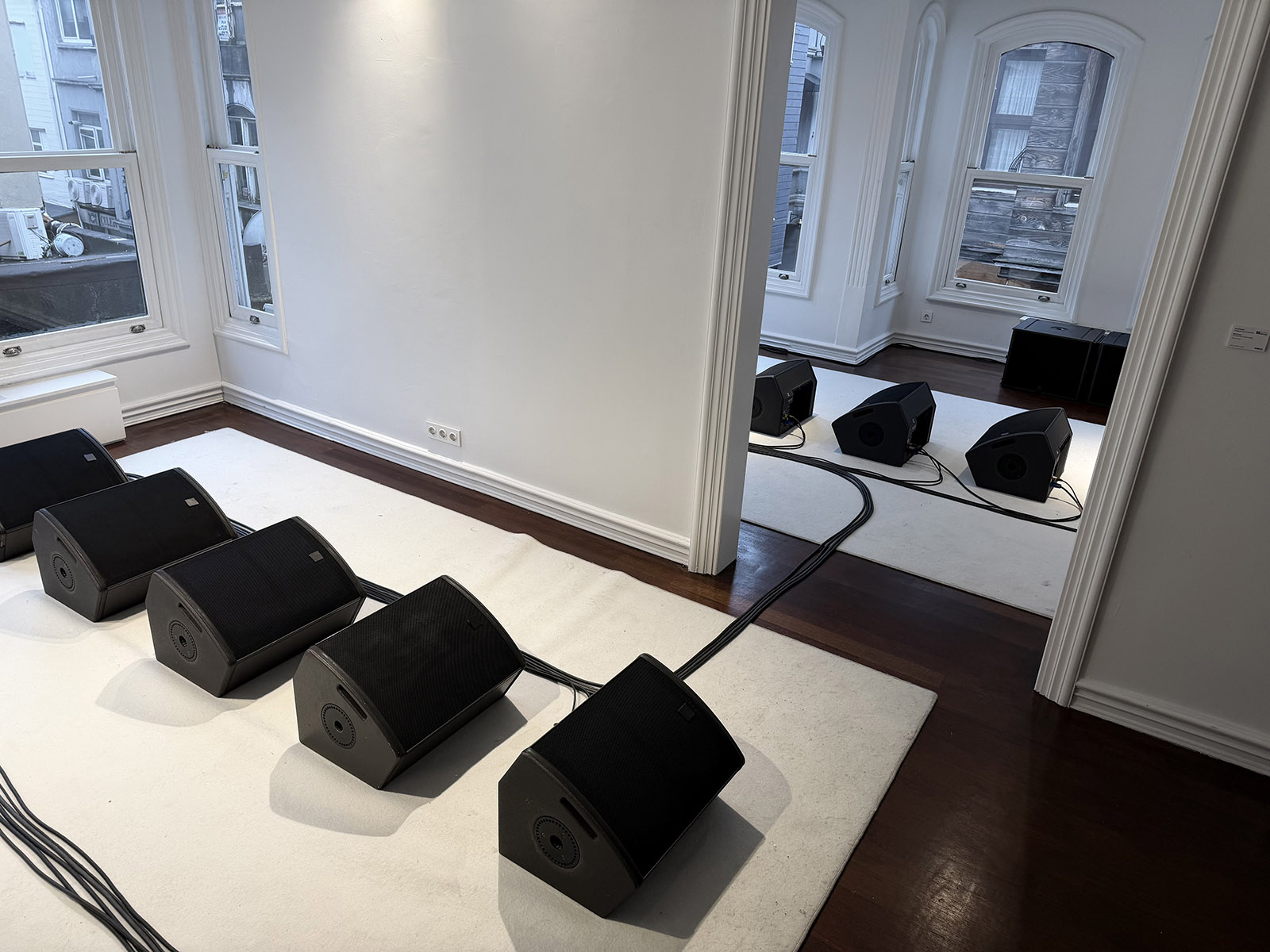
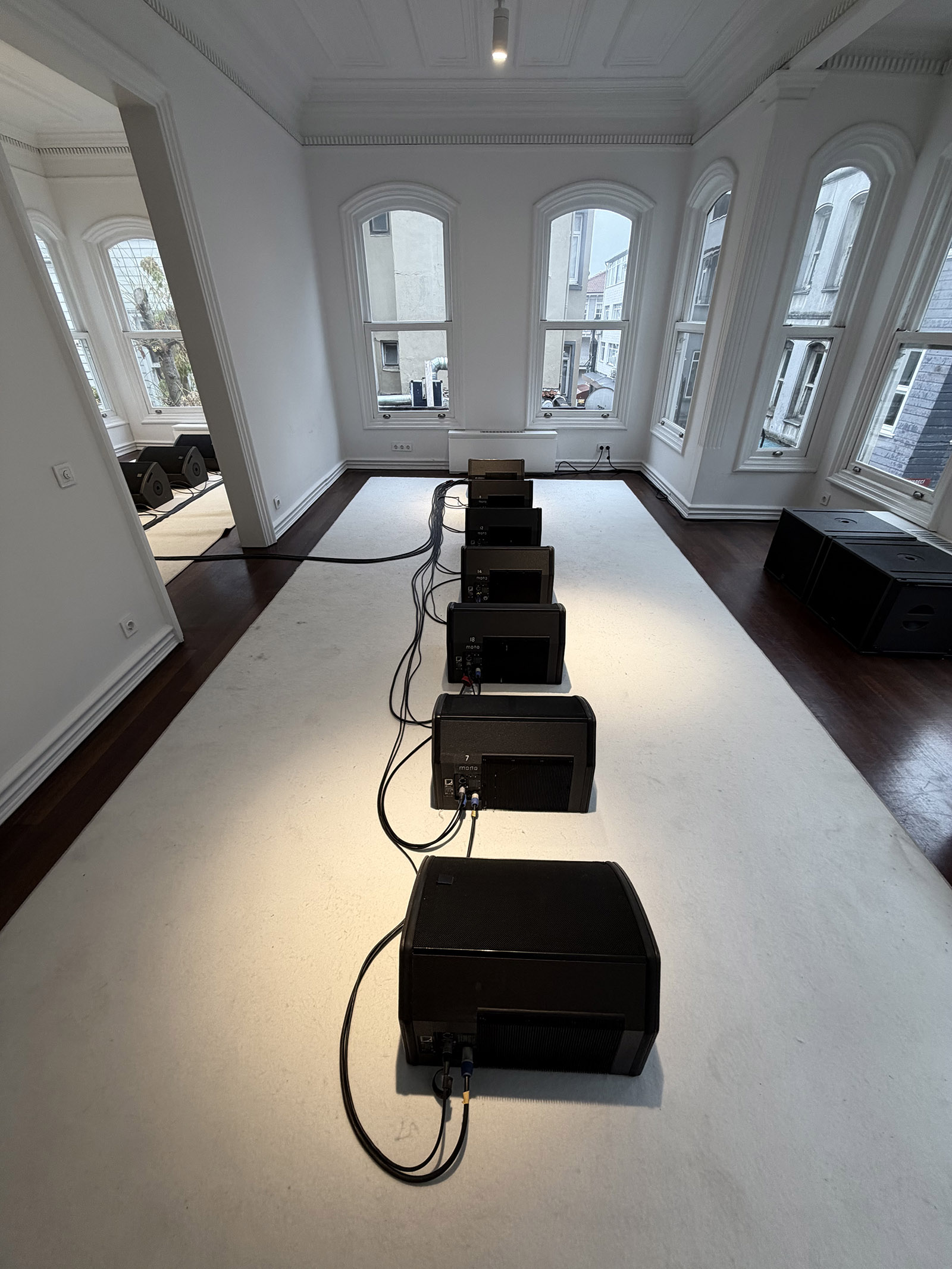
When the battered foldback monitors first arrived at Istanbul ’74, Ben Frost handled them with the quiet attentiveness of someone tending to wounded bodies. Their surfaces were bruised by decades of performances, still marked by beer, sweat and the blunt impact of life onstage. Yet they carried an undeniable persistence. They still wanted to speak up, to be heard, to reach someone beyond their immediate horizon. Cleaning them became an act of care rather than preparation: an attempt to restore dignity to objects that had already lived several lives. In Love Will Tear Us Apart, these same monitors become the central figures of a divided architecture based on sound: two rooms locked into a conversation that never fully stabilises, sending signals toward one another in a cycle of approach, withdrawal and unresolved desire.
“When routine bites hard and ambitions are low“
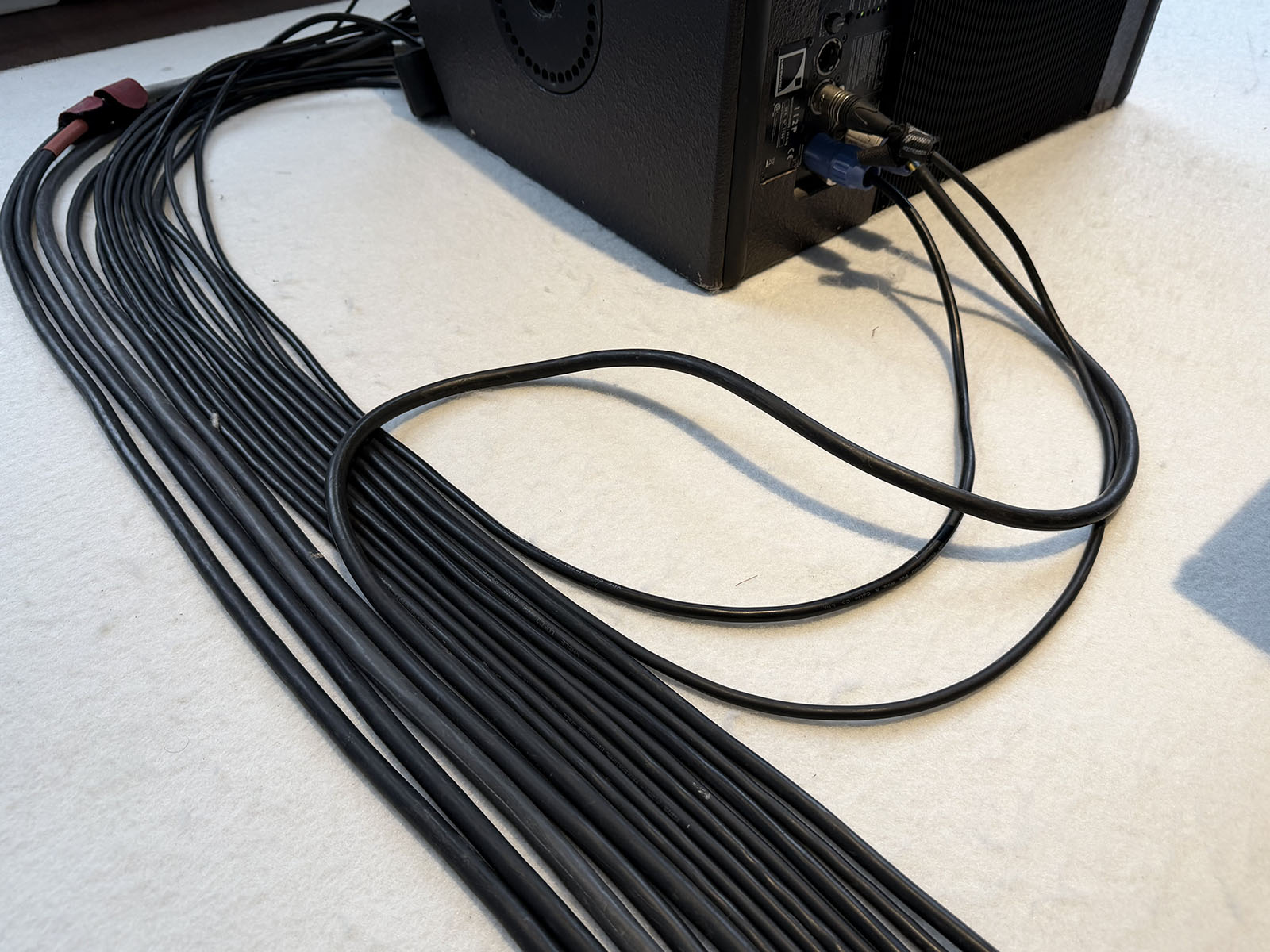
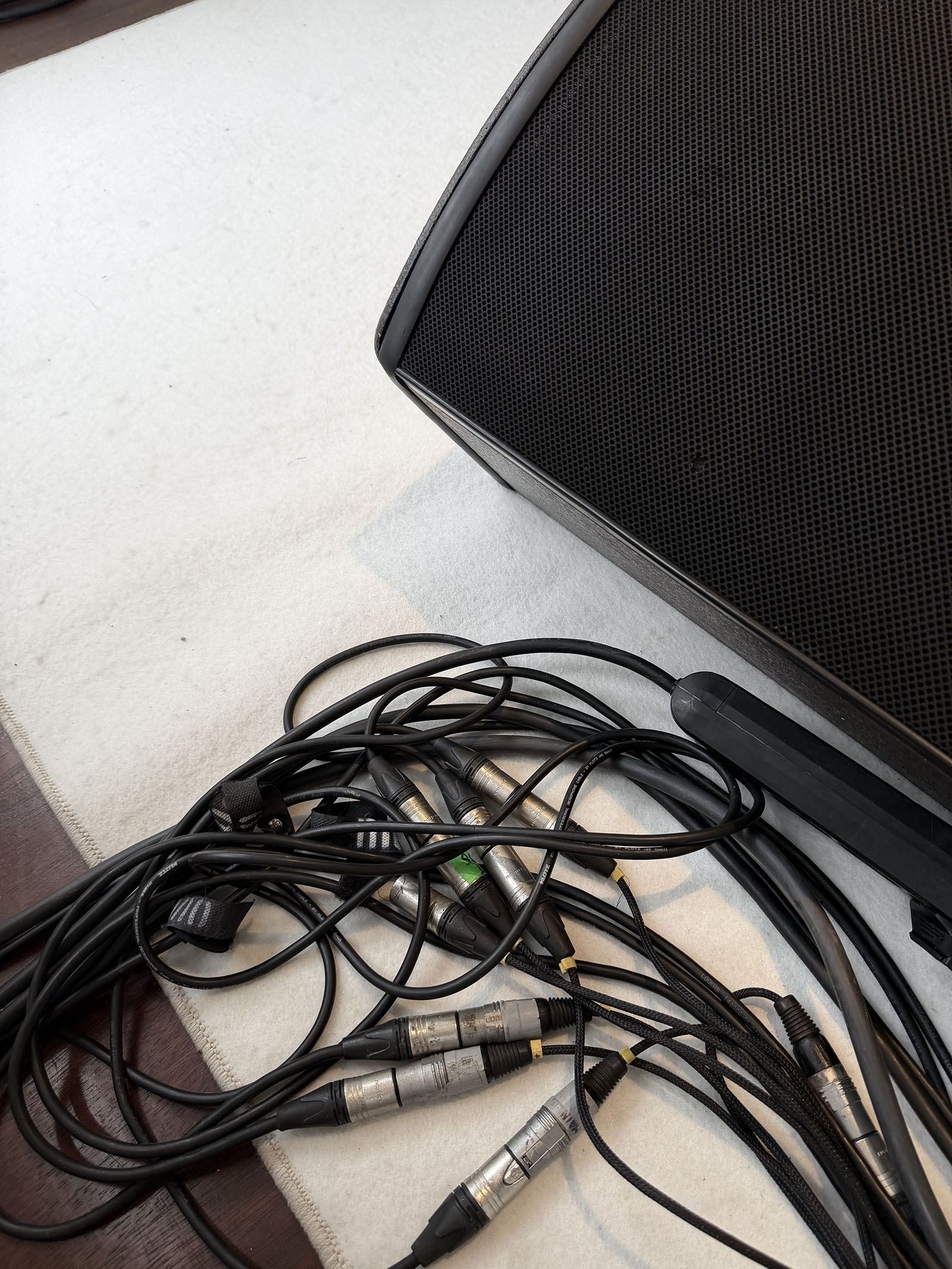
Each room contains a variable number of foldback monitors angled toward an absent performer, as if awaiting someone who will never return. Their clangs travel through a space immersed in bourgeois whiteness: an impassive candour that makes it impossible for sound to settle into stable alignment. At times, tones from both rooms meet in brief, lucid moments of convergence. At others, they collide in harsh bursts that unsettle the ear and sharpen the room’s tension. Sound becomes a language shaped as much by longing as by interruption, an invisible back and forth in which the only physical connector is a black cable running across the soft industrial felt over which the installation lays on. Its presence marks the path between these estranged bodies and suggests a line of communication that remains fragile yet unbroken.
“And resentment rides high, but emotions won’t grow“
The corridor that links the two rooms intensifies this sense of suspended dialogue. Vibrations shift with every step. Frequencies overlap and dissolve. Melodic traces surface and disappear before they can assert themselves. Walking through this passage feels like moving inside an unresolved conversation. The sound presses against the body, creating an awareness of proximity and absence at the same time. The installation frames the foldback monitors not as machines but as wounded interlocutors that besides carrying the memory of stages, performers, and volume poured into them, now whisper and argue to each other, struggling to bridge a distance that remains stubbornly intact.