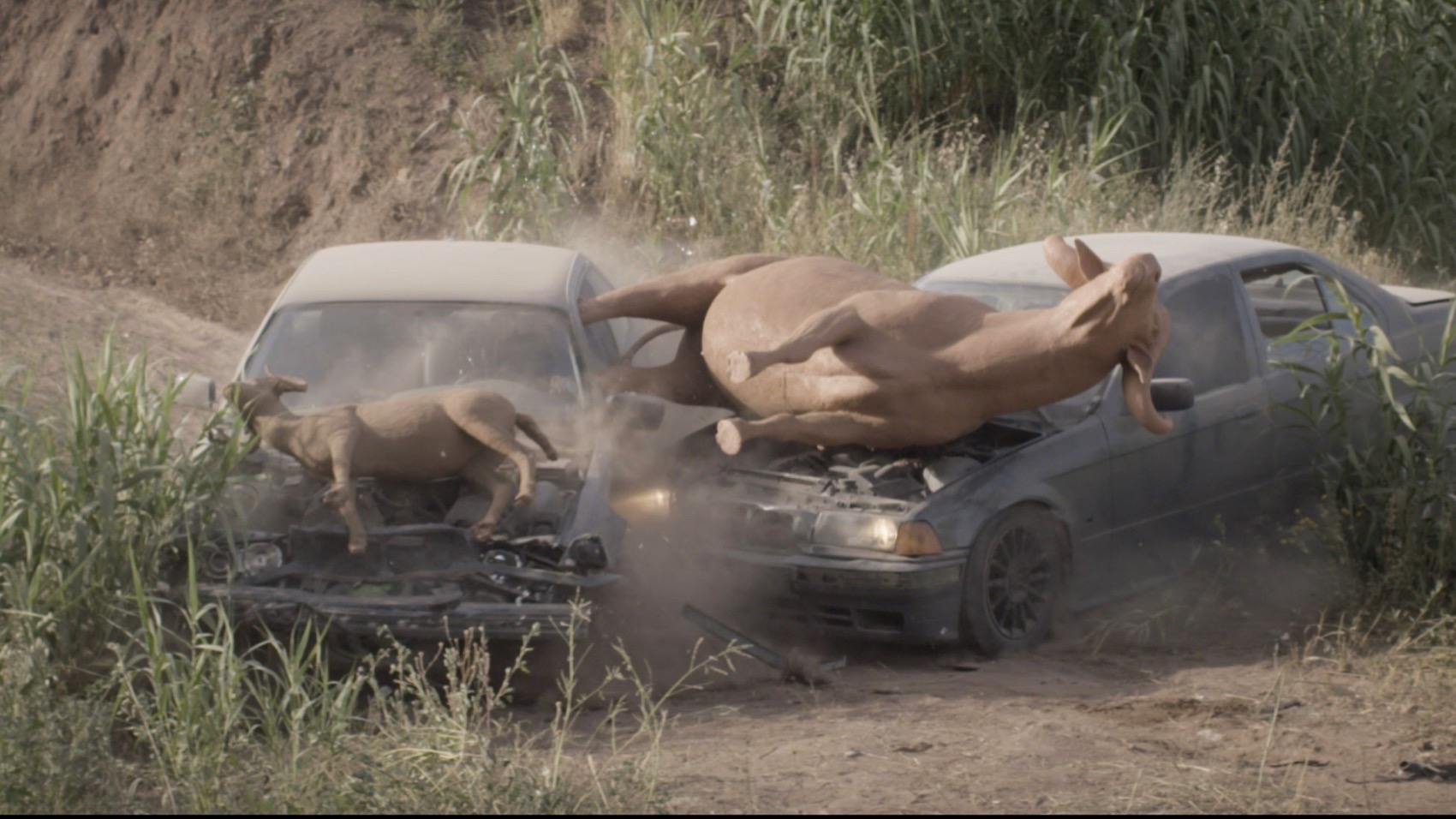
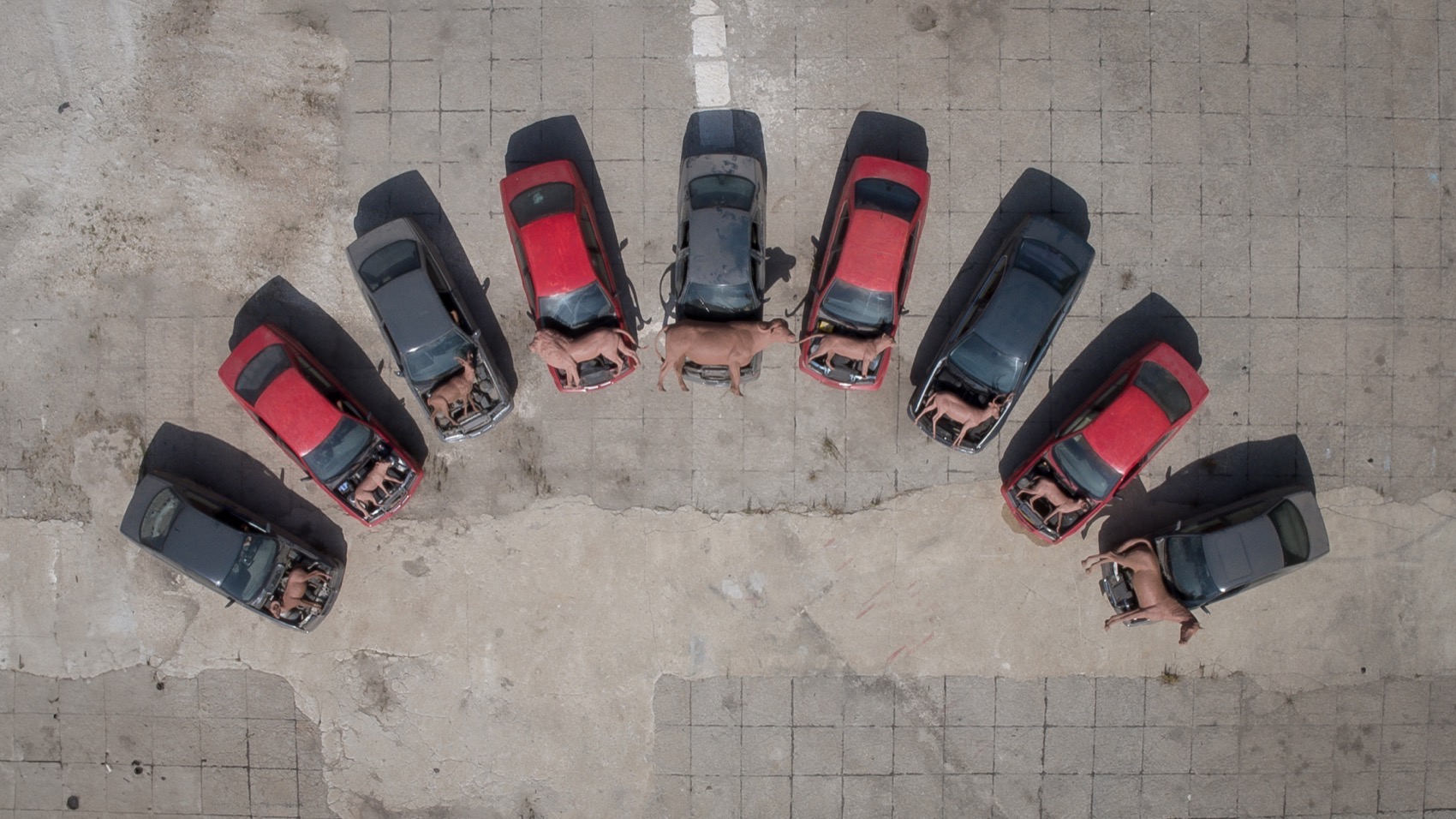
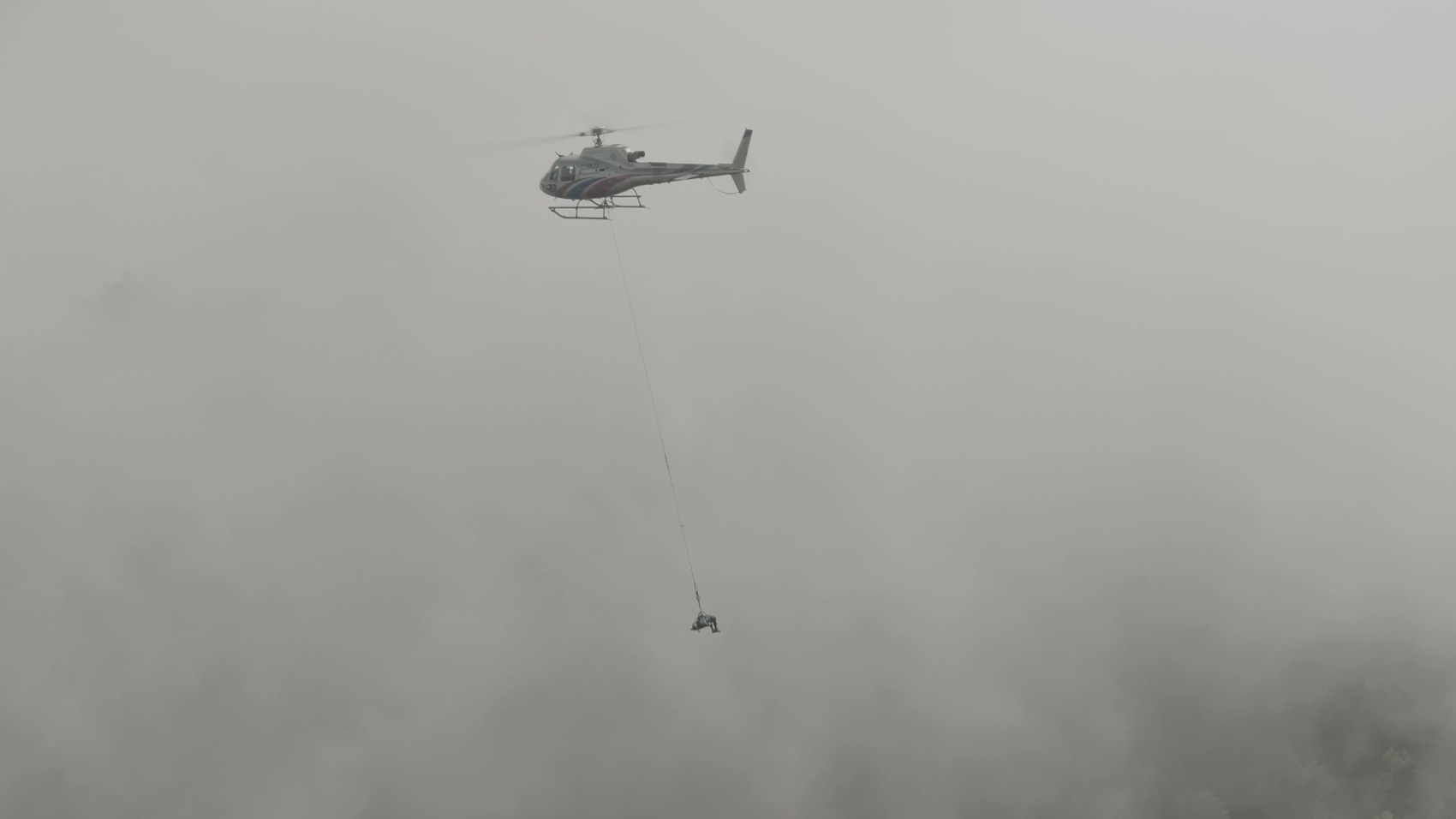
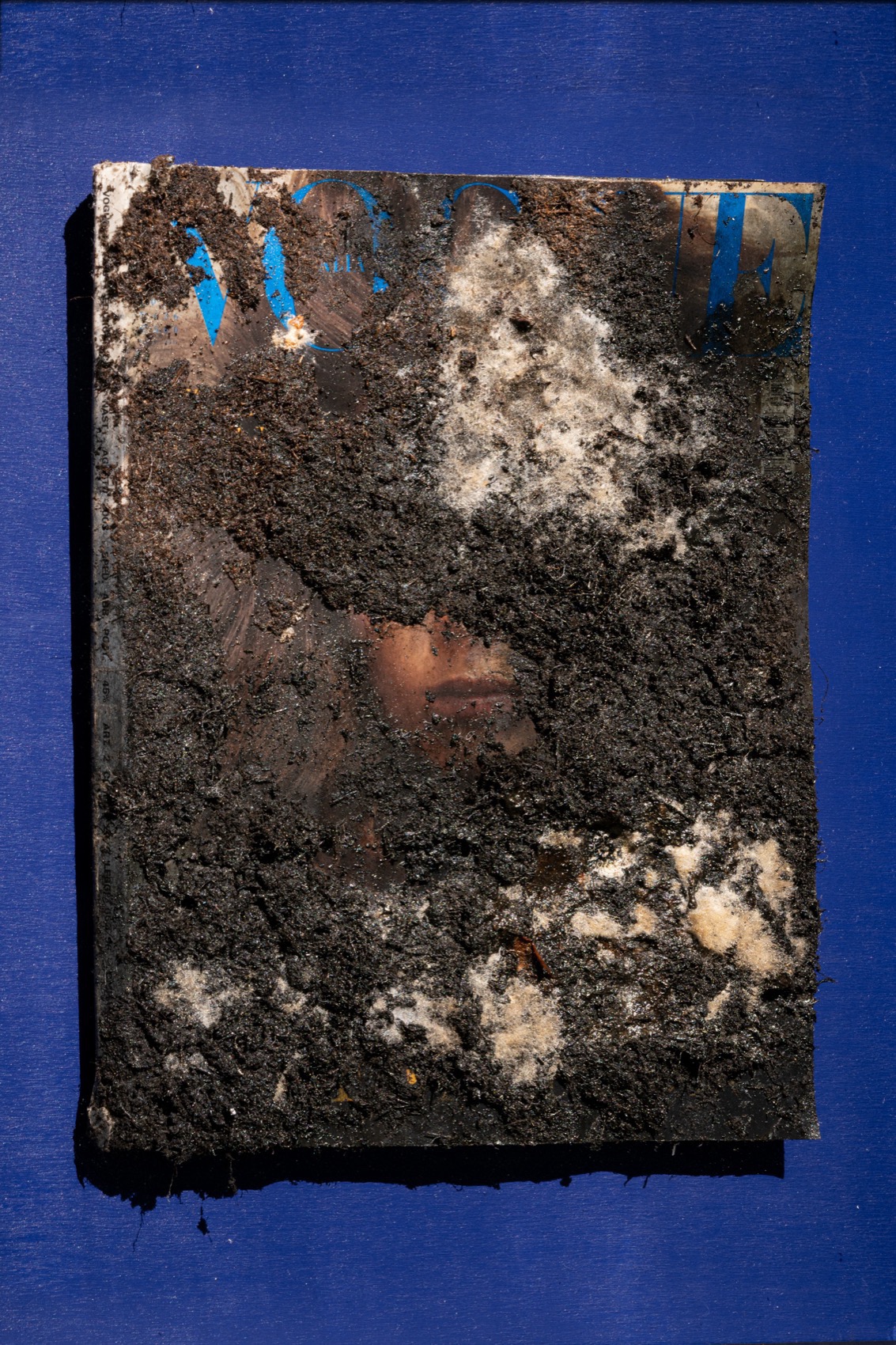
At what moment does research stop being investigation and become form? Is there a precise ritual that underpins the creation of a work?
Research becomes form when it stops asking questions and starts generating necessity. There is no precise ritual, but there is repetition: walking, reading, collecting, waiting. At a certain point, accumulation reaches saturation. Then something condenses into an image, a sound, a structure, anything. The archaic dimension you mention is not aesthetic; it is temporal. I am interested in forms that feel older than explanation. The work begins when intuition becomes irreversible.
In Melma at Forte Belvedere, you intervened within a Renaissance military architecture loaded with authority. How did you negotiate the weight of that context while constructing an environment that felt like an archaic cacotopia? Having been such a pivotal show in your career, how do you look back on it now?
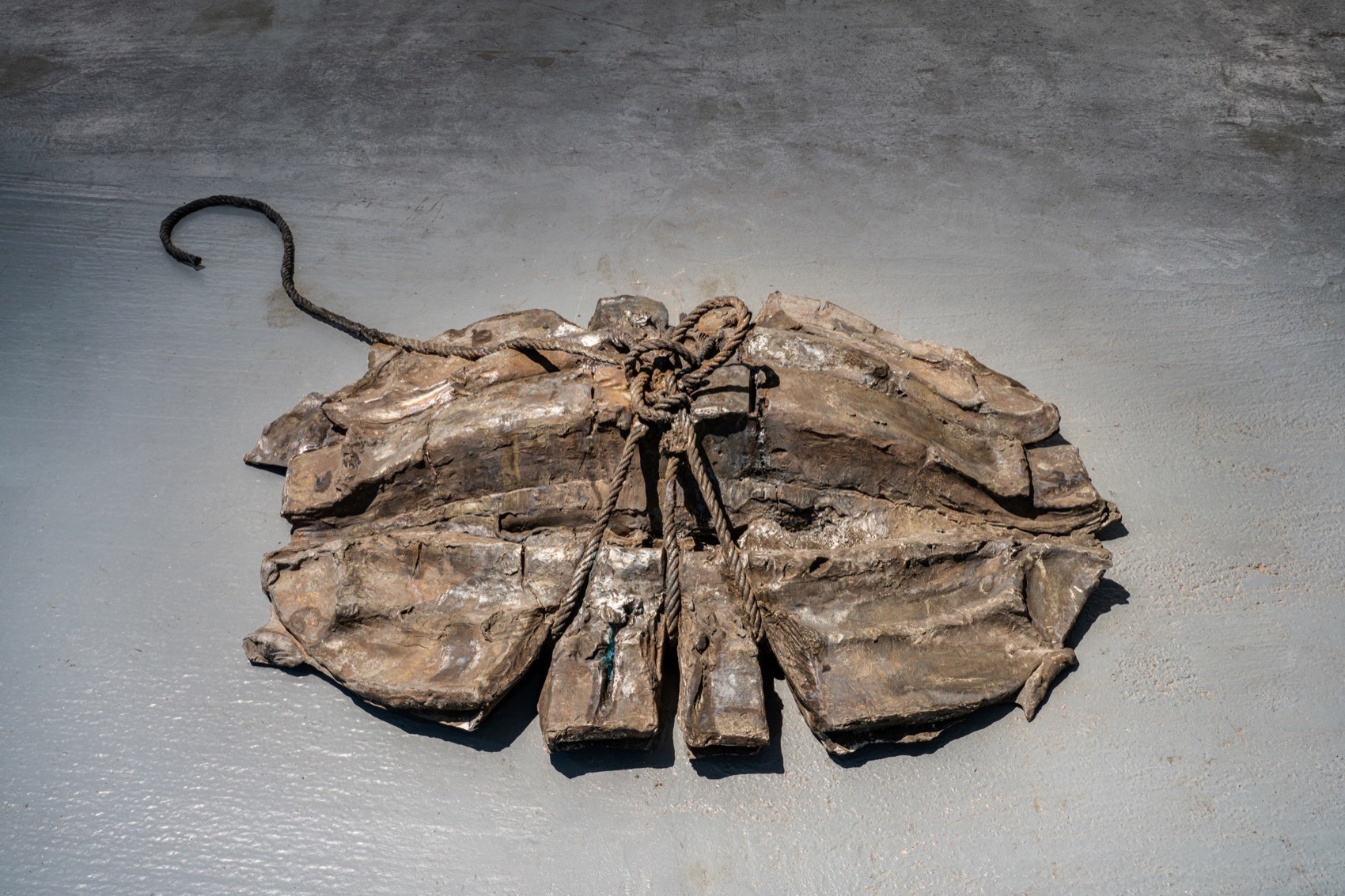
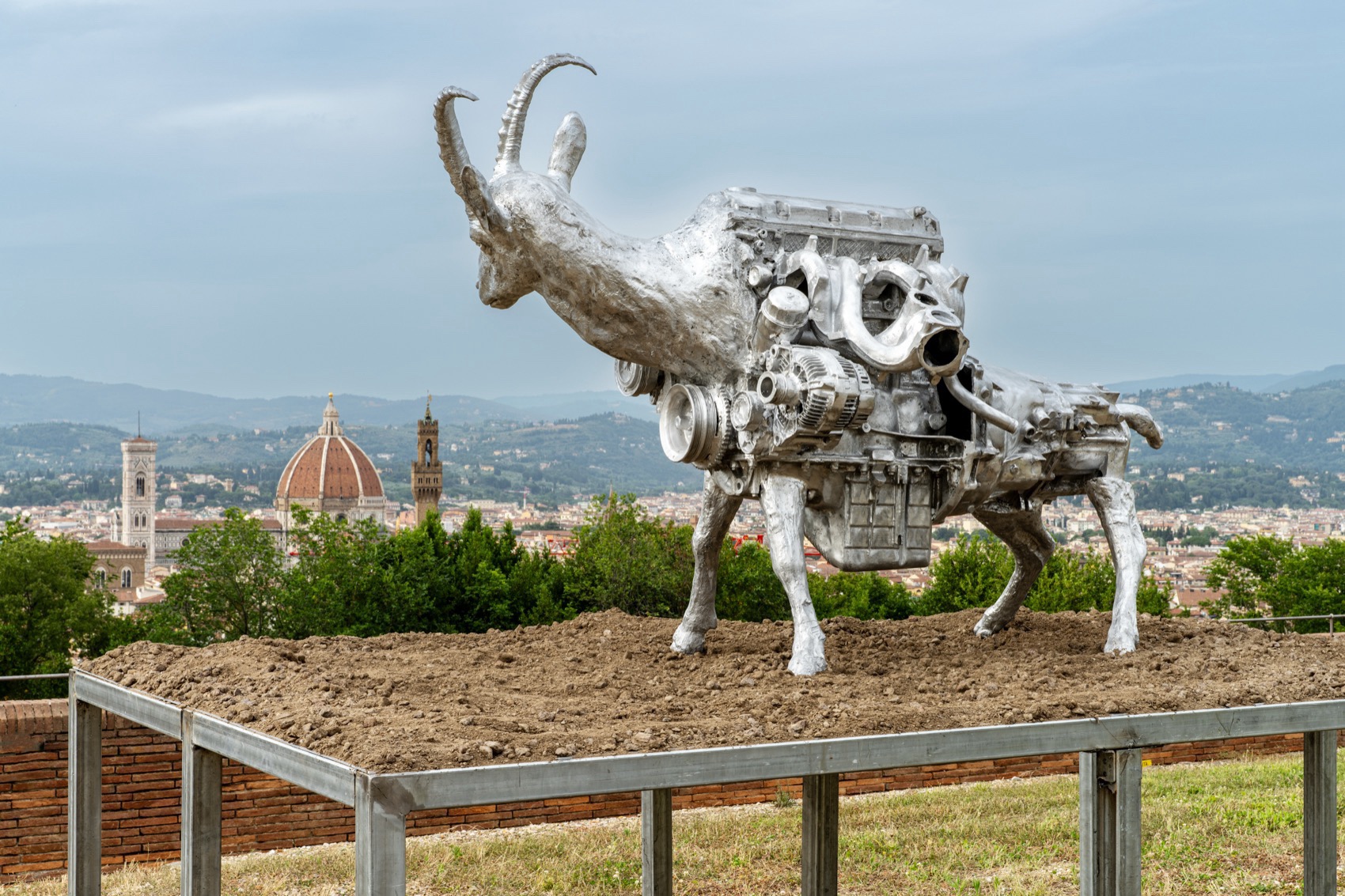
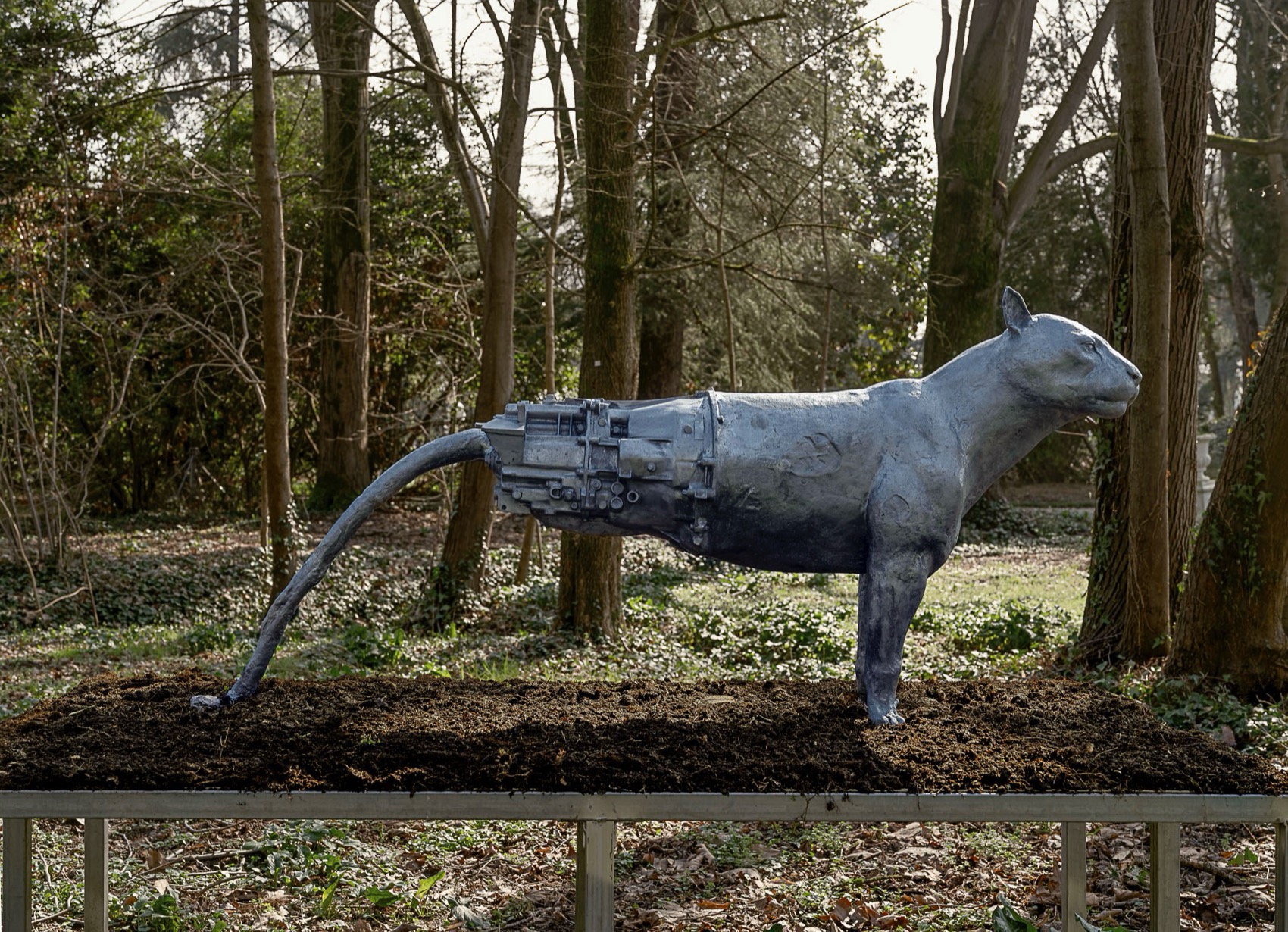
Melma at Forte Belvedere was a negotiation with authority, architectural, historical, and symbolic. Renaissance military space is built to dominate. I wanted to introduce something viscous, unstable, pre-cultural. Rather than opposing the architecture, I allowed it to absorb the intervention. The cacotopia emerged from contrast, like stone and mud, or control and dissolution. Looking back, I see it as a threshold. It clarified the scale at which I want to operate and the degree of risk I am willing to take.
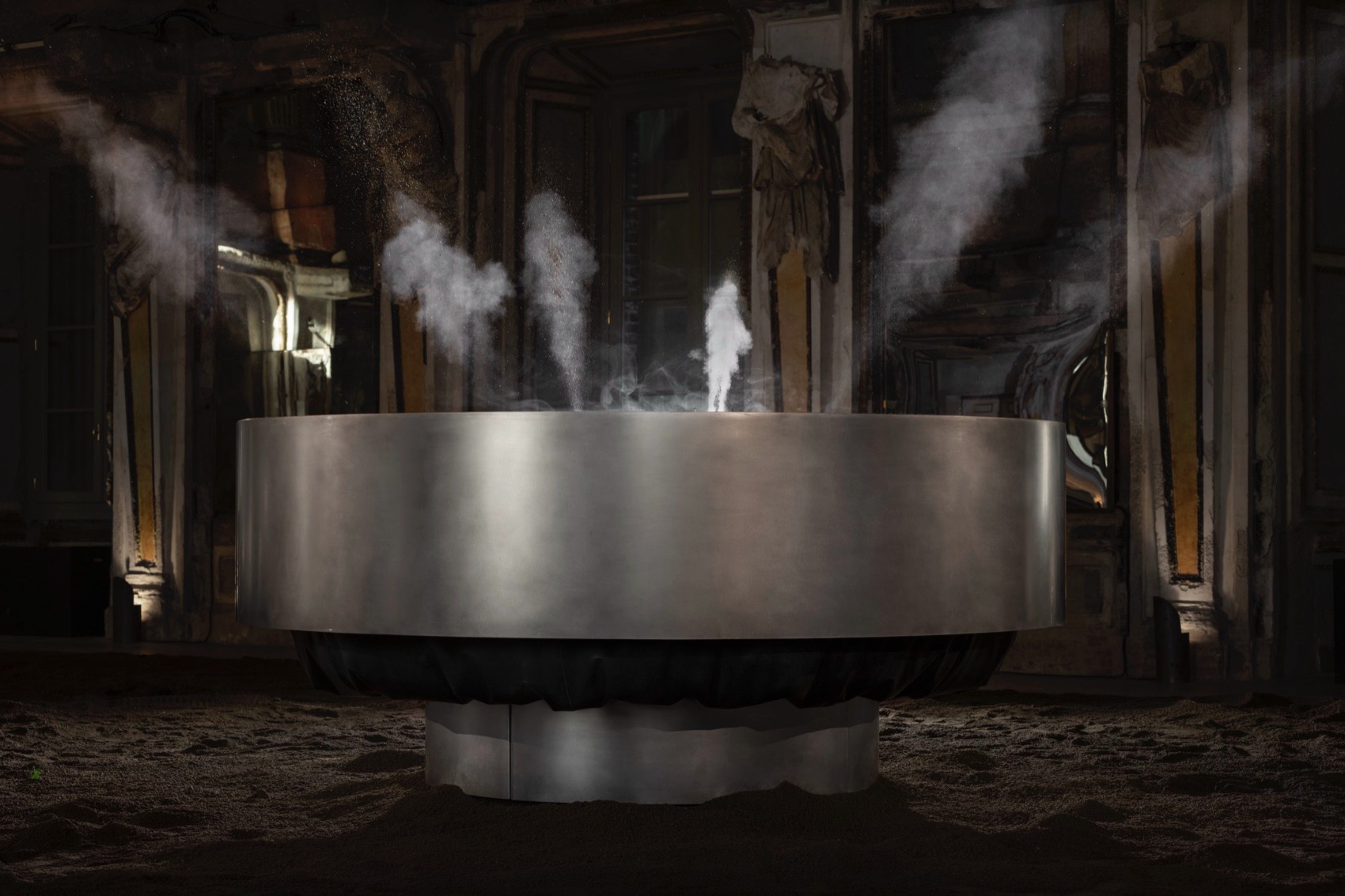
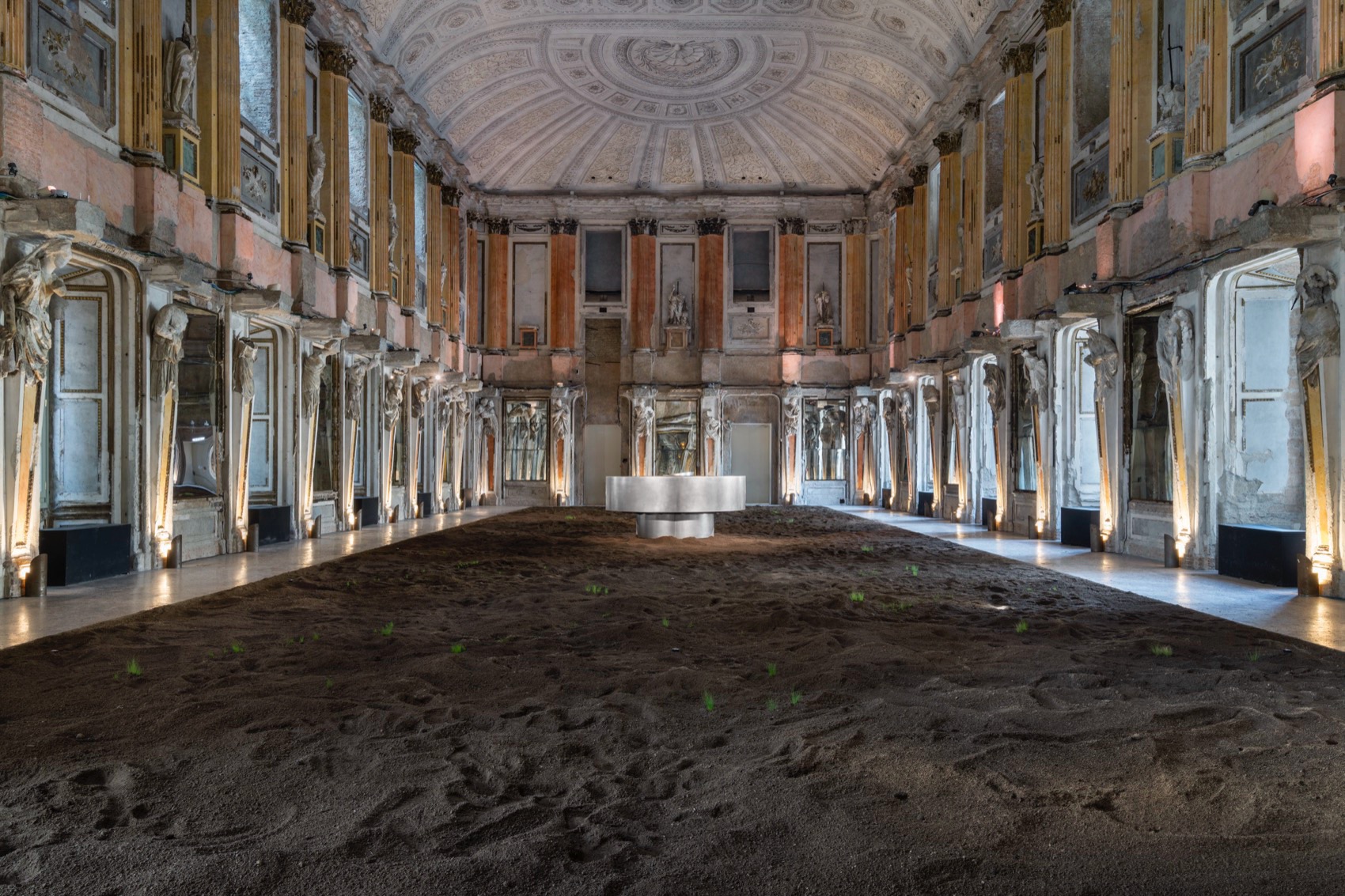
With Pastorale (2025), you invoked a term historically associated with harmony and idyllic balance, yet your interpretation destabilised that tradition. The location itself, Sala delle Cariatidi, brought together a sense of the sublime and decadence that was also reflected in your work. What was the most interesting reaction you perceived from the beholders?
With Pastorale, I was interested in destabilising the promise of harmony that the word traditionally carries. Sala delle Cariatidi, wounded and monumental, embodies a suspended balance between splendour and ruin. The most interesting reactions were not verbal. They were pauses. When viewers slowed down, when they seemed unsure whether they were witnessing collapse or emergence. That ambiguity was essential. I do not want reassurance; I want heightened perception.
In an interview you once suggested that when art becomes fully understandable, it risks turning didactic. How would you suggest your ideal viewer to experience your work?
When art becomes entirely legible, it risks becoming instructional. I prefer opacity with openings. The ideal viewer is someone willing to remain inside uncertainty without immediately translating it. The work should be experienced physically before being interpreted intellectually. Meaning, if it comes, should arrive later, hopefully outside the exhibition space.
What urgencies are occupying your mind now, as you give life to new shows?
I would say that one of my main interests remains finding and investigating the link between opposite forces. I am thinking about how to create works that feel inevitable but not fixed. There is also an urgency connected to community. For example, how to gather people without neutralising intensity. I am interested in forms that can hold collective energy without becoming spectacle. The challenge is always the same: to remain porous to the world while resisting simplification.