What does it mean to be contemporary today? Do you believe that one of the key elements lies in confronting the viewer with socio-political questions in order to stimulate reflection? How can an effective response be achieved?
The word “contemporary” is interesting because it implies a shared time, yet I feel we are constantly split across multiple timelines. We move through different speeds, different histories, different forms of access to resources. For me, being contemporary is less about being current and more about understanding how we relate to time. I feel we are always late… My early videos played a lot with making the moving images and the sound separately, and sometimes leaving moments of synchronisation up to chance.Today we are everywhere and in one place at the same time through the screen. Bearing witness, whether it be what is happening in Congo, Sudan, Gaza, or the natural disasters and floods in Indonesia, Sri Lanka and Thailand, to bear witness to suffering digitally makes one deeply aware of how uneven the world is, how proximity determines whose pain is acknowledged and whose is ignored. Achille Mbembe’s writing on necropolitics has been helpful here. It reminds us that the ability to live, to breathe, to move, to have a future, are things many of us take for granted.
Certain elements in your practice reappear across your exhibitions, almost like motifs traveling from one space to another, yet always taking on new forms. How do you interpret the idea that “the exhibition changes the space, but at the same time the space changes the exhibition”? When similar elements return with different meanings, is this dialogue shaped by the place itself?When similar elements return with different meanings, is this dialogue shaped by the place itself?
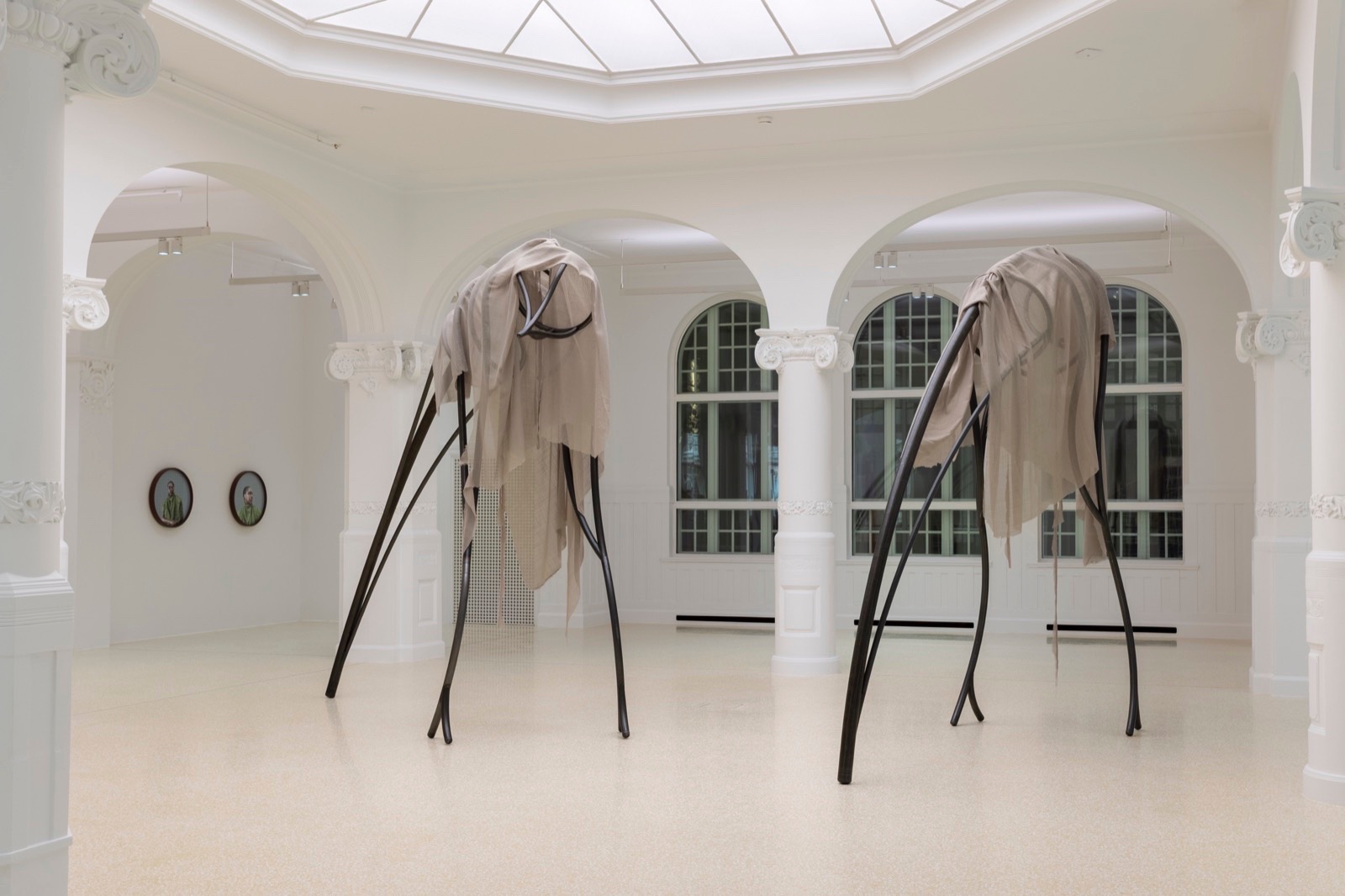
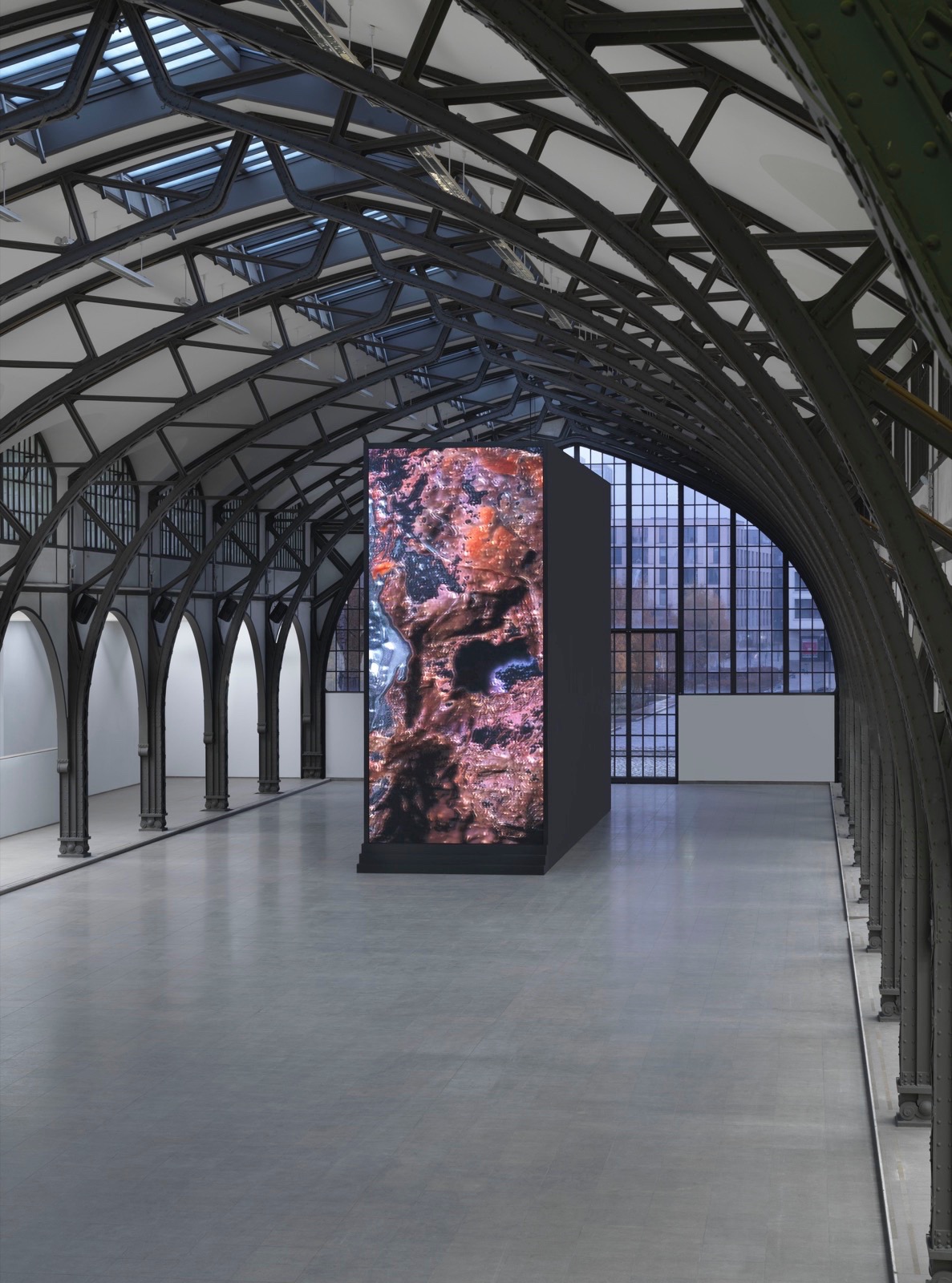
I approach each space with openness. I like thinking of architecture as alive and communicative. When I worked on I Build My Skin With Rocks at Hamburger Bahnhof, I kept imagining we were inside a whale. Something about the vastness and resonance of that architecture invited me to think in terms of absence, traces, and echoes. I was drawn more to what was “empty,” what felt like it had been left behind or was trying to move through the room. Something about thinking of absence as a body, and seeing what it is trying to communicate. An empty space reveals a lot of things, because it’s never empty. It shapes the work’s movement, the way sound travels, the scale of bodies, the shadows that appear or disappear in how we relate to the light. In return, the work altered the architecture, not only physically but atmospherically, as it had a soundtrack. The size gave the piece a shapeshifting quality because I was thinking about hiding through expansion, a body becoming a landscape. It would expand or contract a space; it was big (16 × 4 × 9 m), yet it could also feel small. I would say my works are in dialogue with the place, but also with what the space allows itself to become.
Skin plays a central role in your work, as a protective layer, an outer shell, a terrain of scars, and a means to confront ongoing issues of racism. Are there contemporary artists or figures who have inspired you with their engagement with this theme?
I’m indebted to many thinkers across the diaspora whose work has expanded my understanding of the body, Blackness, opacity, and relation: Édouard Glissant, Sylvia Wynter, Legacy Russell, Fred Moten, Zakiyyah Iman Jackson, Achille Mbembe, Saidiya Hartman, Olúfẹ́mi O. Táíwò, Alexis Pauline Gumbs, and the late Koyo Kouoh, and the list could go on.
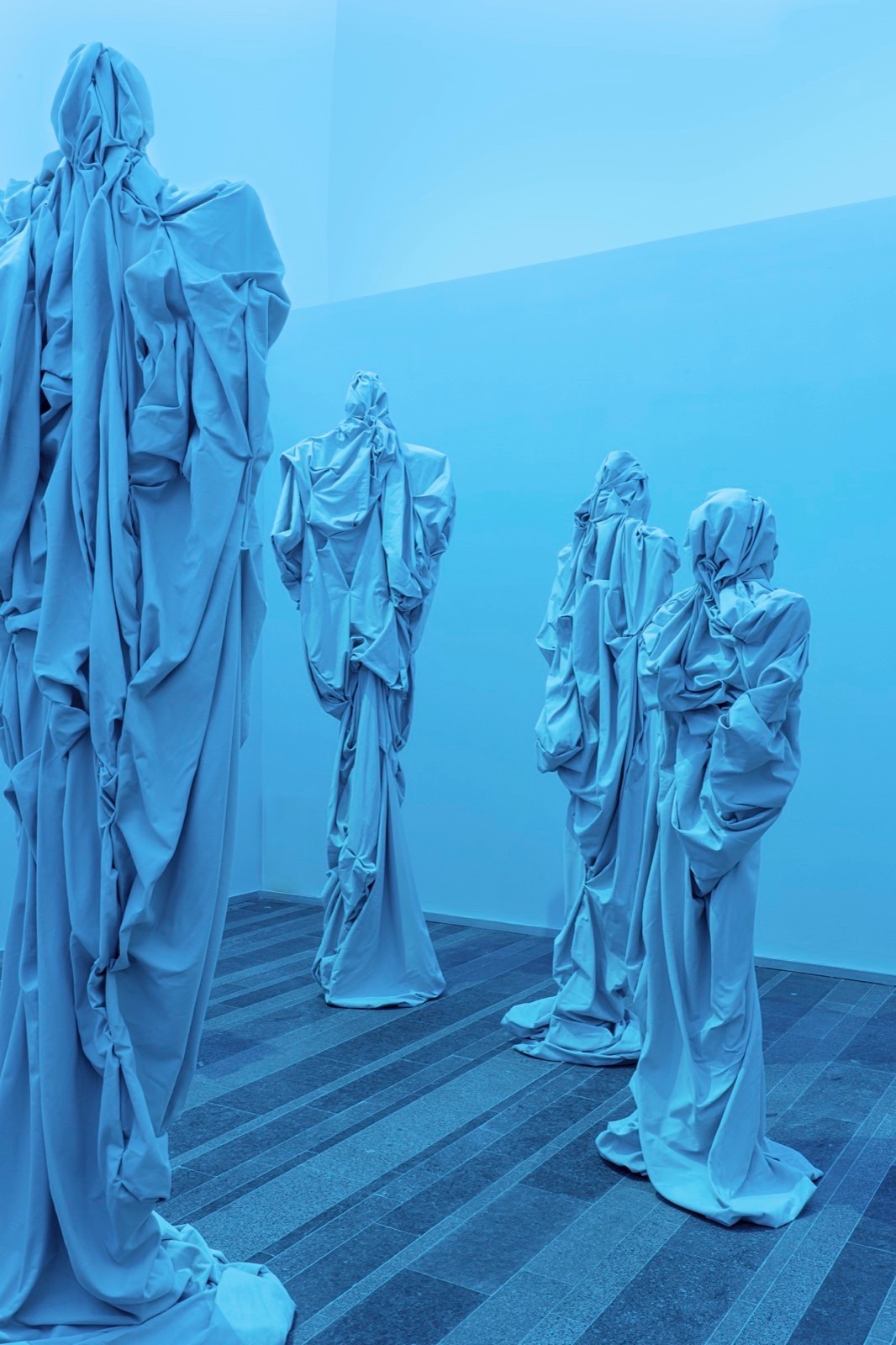
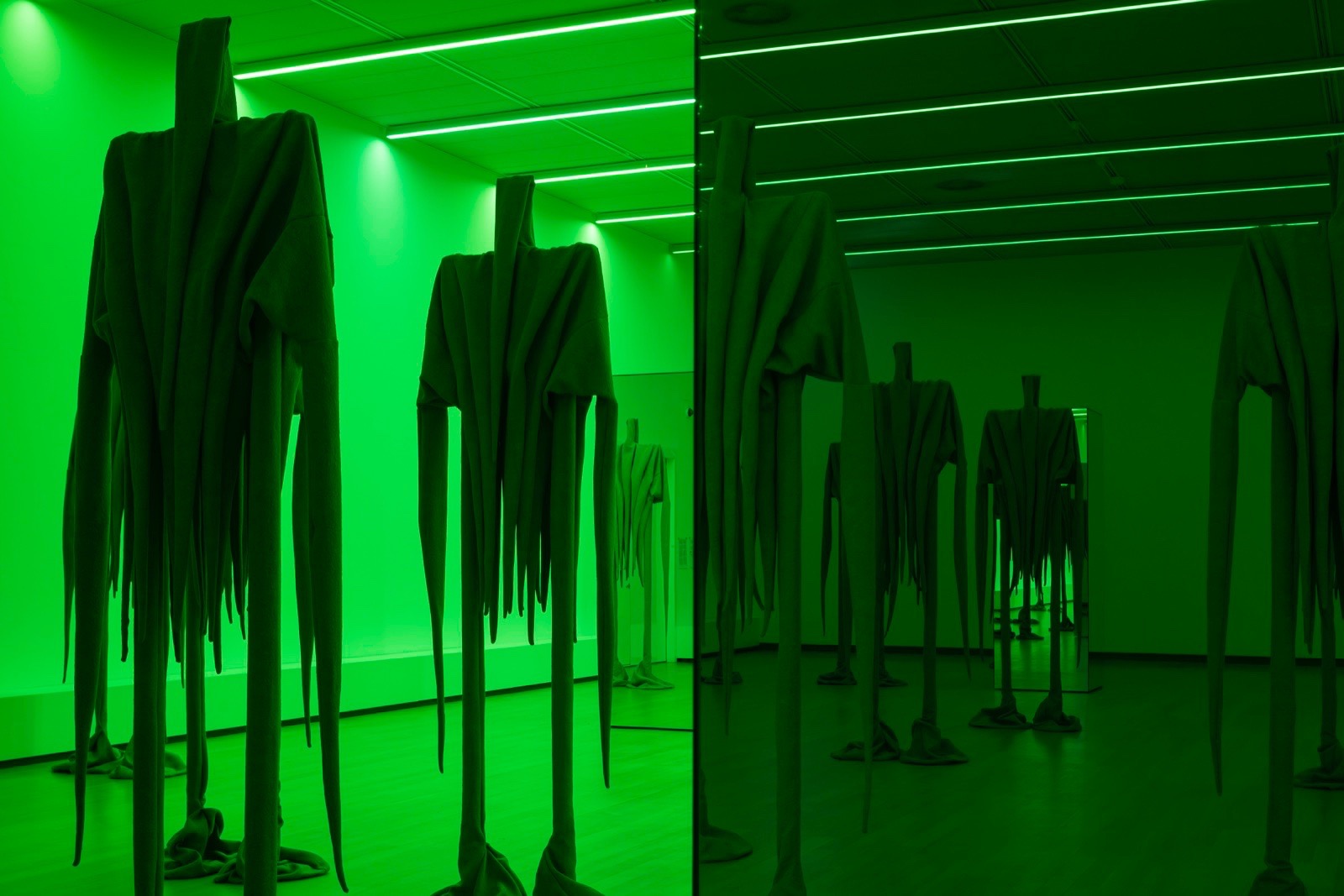
In past exhibitions such as Skin to Skin, Midnight, or Spectral Keepers, the deformed, faceless figures appear suspended in space, modular and almost silent, like witnesses. In this alternative universe, who is truly observing whom: the figures or us? And is this dystopian reality theirs, or ours?
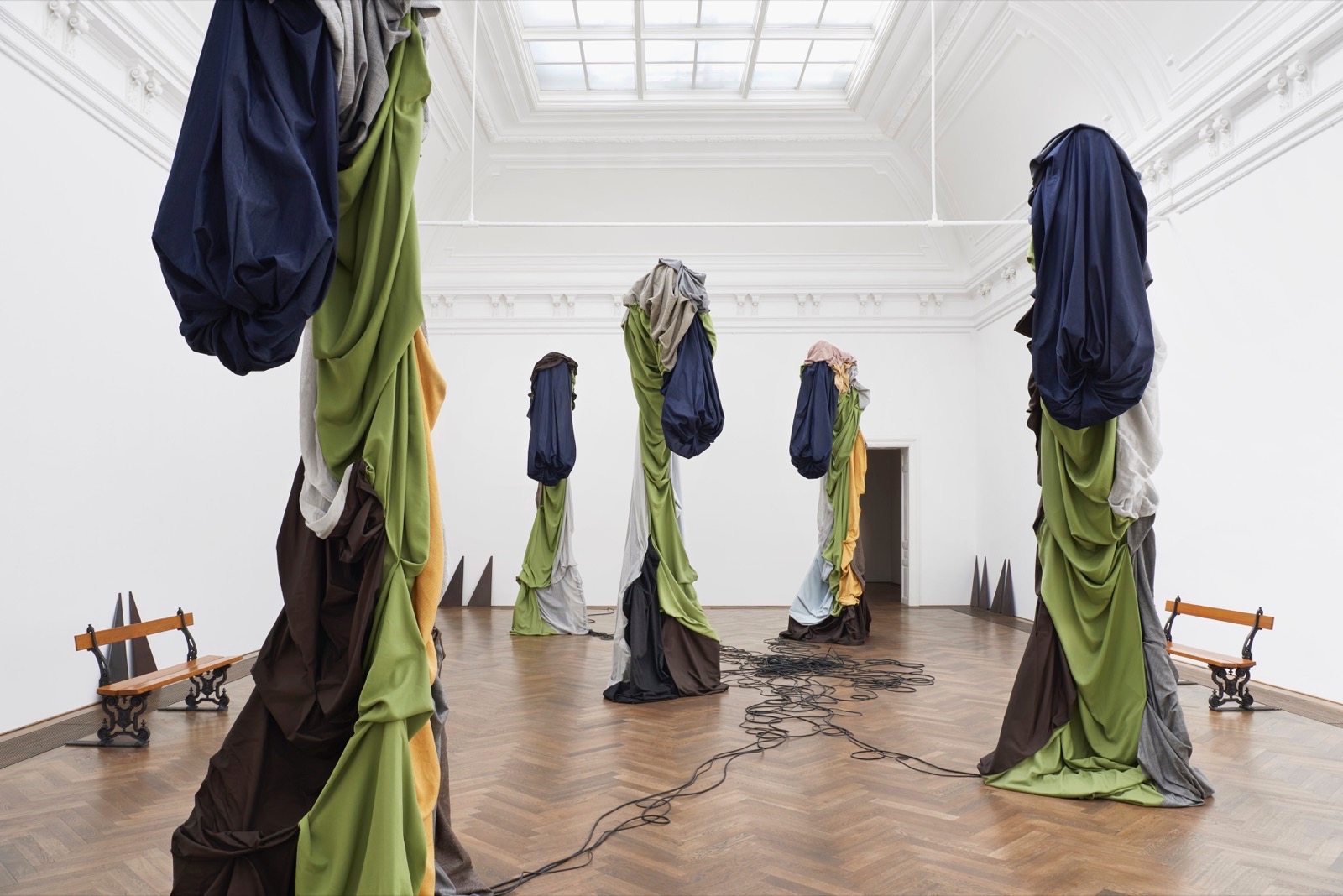
In art school, I became obsessed with the word “apocalypse.” It originally means an unveiling, not only destruction, but a reveal. I started thinking that the apocalypse is simply what was already there becoming visible. Around that time, I was making music and thinking about frequency. Some sounds exist but are outside our range. They need to shapeshift to be heard. I love that the sun makes sound we cannot perceive. We host trillions of microorganisms that we cannot see on our own. Just because something isn’t accessible to us doesn’t mean it is absent. So the worlds I build don’t center the viewer or the human. The figures might be witnessing us, or witnessing something we cannot perceive. They might be revealing our projections, our fears, our desires. I wouldn’t call it dystopian, it’s more like an alternate timeline running alongside ours.
In your recent exhibition at the Stedelijk Museum in Amsterdam, mirrors were integrated into the installation. Was this a way to enhance the viewer’s immersion in the artwork? How important is it to remind the observer that they are an active participant?
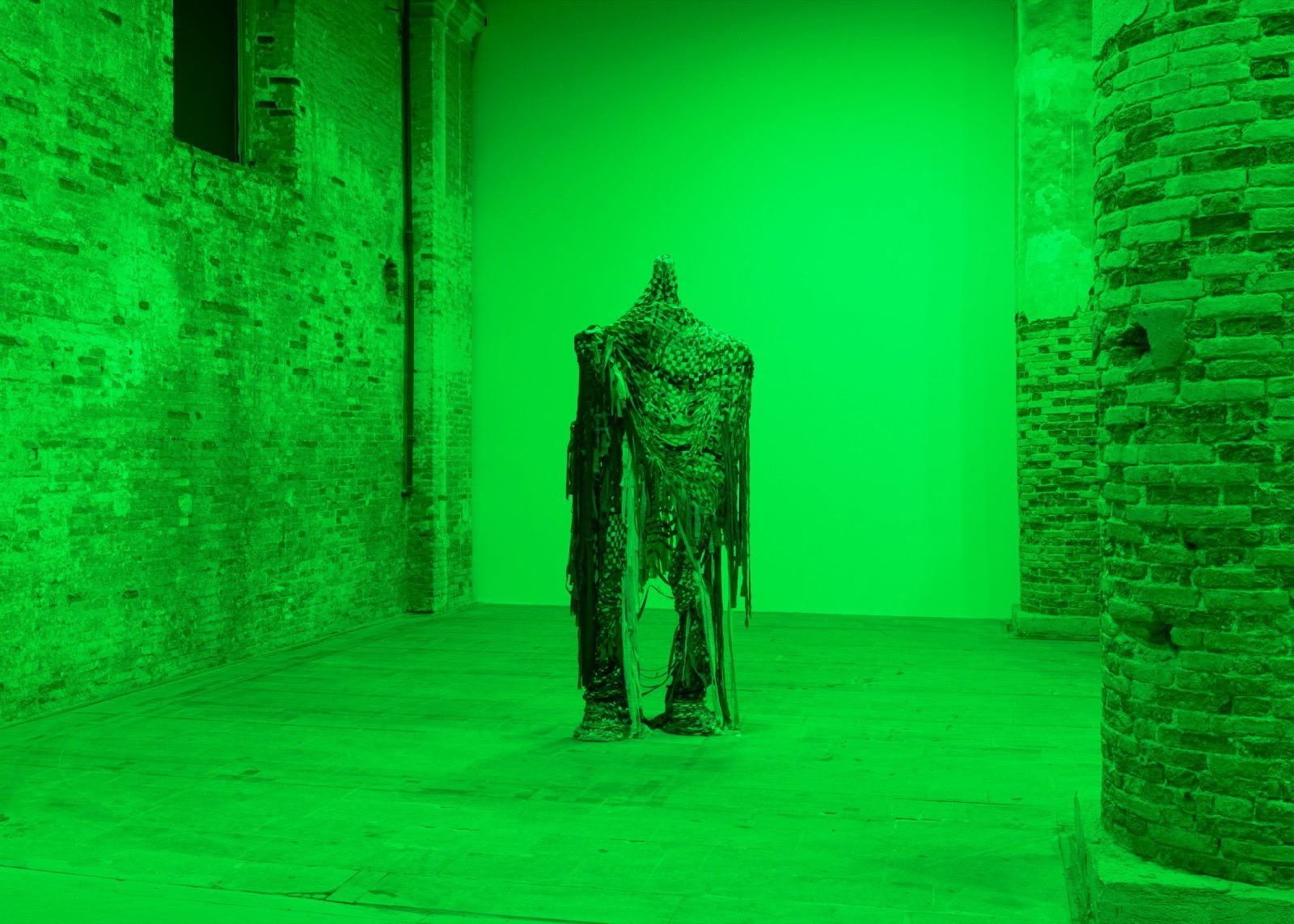
For that exhibition, it was important to think about choreography, how bodies move, pause, and activate a space. Working with the curator Melanie Bühler and studio Dennis Vanderbroeck on site helped refine that. The benches invited rest, and the mirrors created a sense of repetition, like a body appearing again and again. Mirrors are usually associated with self-revelation, but in the installation they also hid things. They multiplied bodies while blocking others. They acted like portals, showing an alternate side of the space and interrupting the idea of full visibility. The green light was presented as a sun cycle, and the mirror could display a sunrise while the walls behind them displayed a sunset. It became more of an emphasis on parallel timelines. The viewer’s presence becomes part of the work, but in a fragmented, shifting way.
A recurring concern in your work is the exploration of presence/ absence. How does the idea of seeking refuge or hiding within the “crowd” allow us to dissolve or disappear? Do you see this tension reflected elsewhere in the art world as well?
I’m interested in multiplicity, in how a body can be many things at once and not reduced. When I began working with the elongated figures, I was thinking about what “Black representation” means, and what it means to enter spaces that were not built for you to begin with. Finding communities online and being able to multiply digitally also gave a sense of freedom, that I don’t have to be one thing. Granting oneself complexity through obscurity and opacity.
In works like Flo, you explore the use and role of technology, whereas in I Build My Skin with Rocks, technology is involved but always through material manipulation. How do you view the role of technology in your practice? When does it take on a positive role, and when can it become problematic?
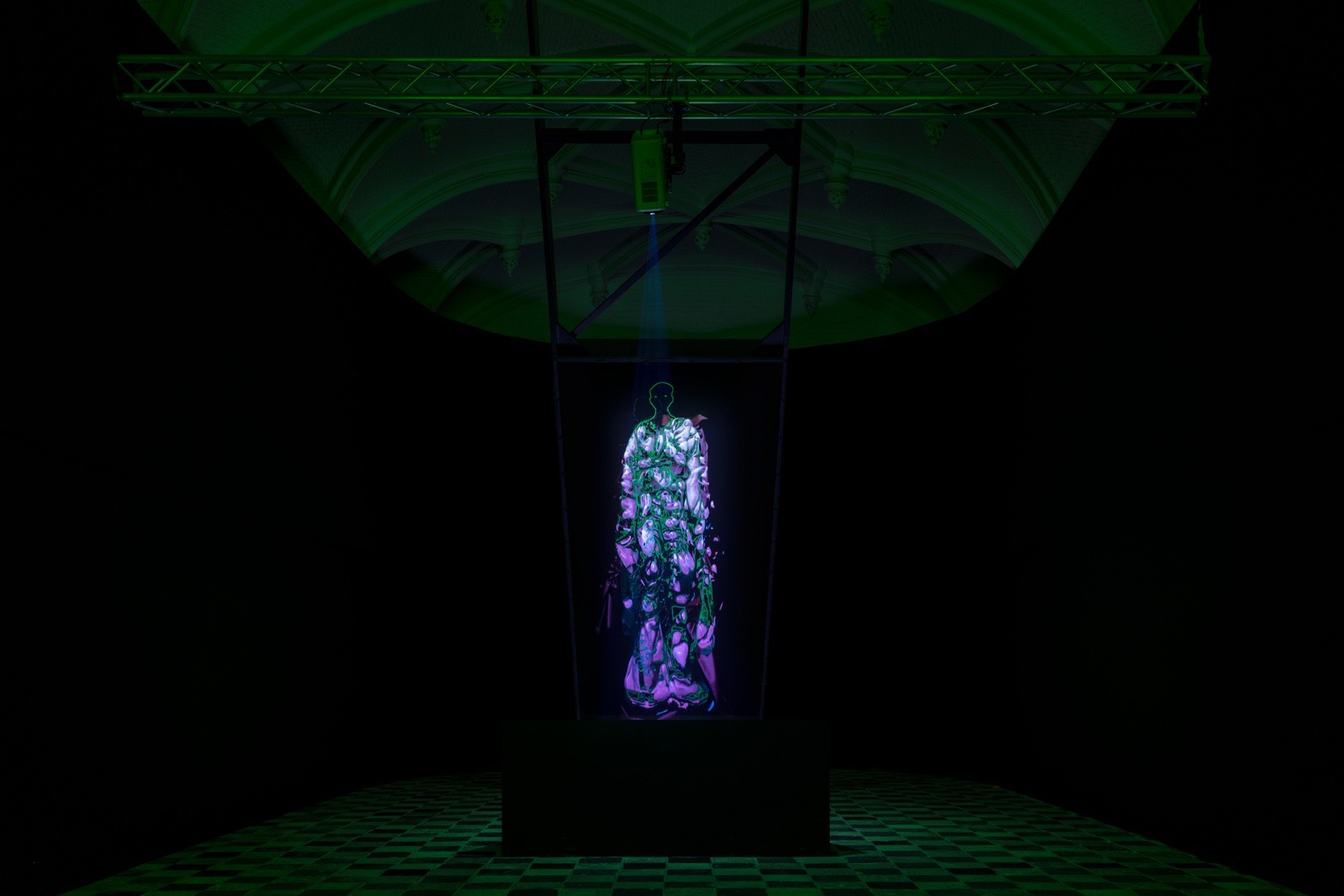
For me, it becomes positive when it extends perception or when it creates new forms of being together. Both works center on extending relationships, Flo using a hologram to bring loved ones back, but also asking questions about the labour of digital ghosts; IBMSWR thinking about what it means to be the last of your kind in a far speculative future, and how memories from others stored in your body keep you moving. I think how we talk about technology becomes problematic when it flattens complexity or reinforces systems of control. Its not just some cloud in the sky, our relationship to technology is also our relationship to the planet, and resources used to make it all possible. But even then, it reveals something important. Technology is not only a tool but also a mirror. I keep coming back to that so much is about what is stored, what memories we inherit, what we forget, and what we are forced to keep on storing.
Looking ahead, what remains unexplored that you would like to experiment with? Could you give us a glimpse of upcoming projects, a kind of “trailer” for your next works?
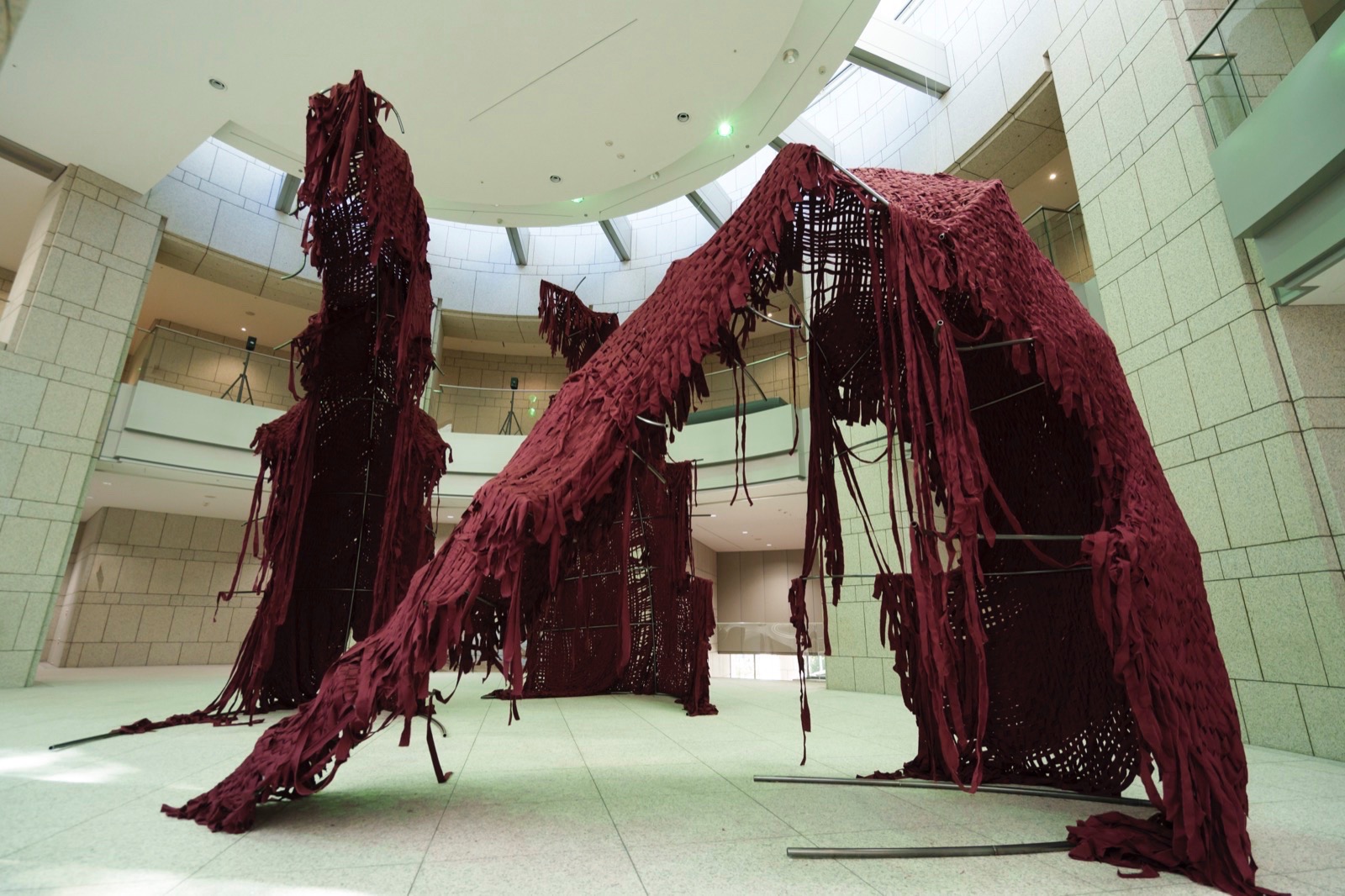
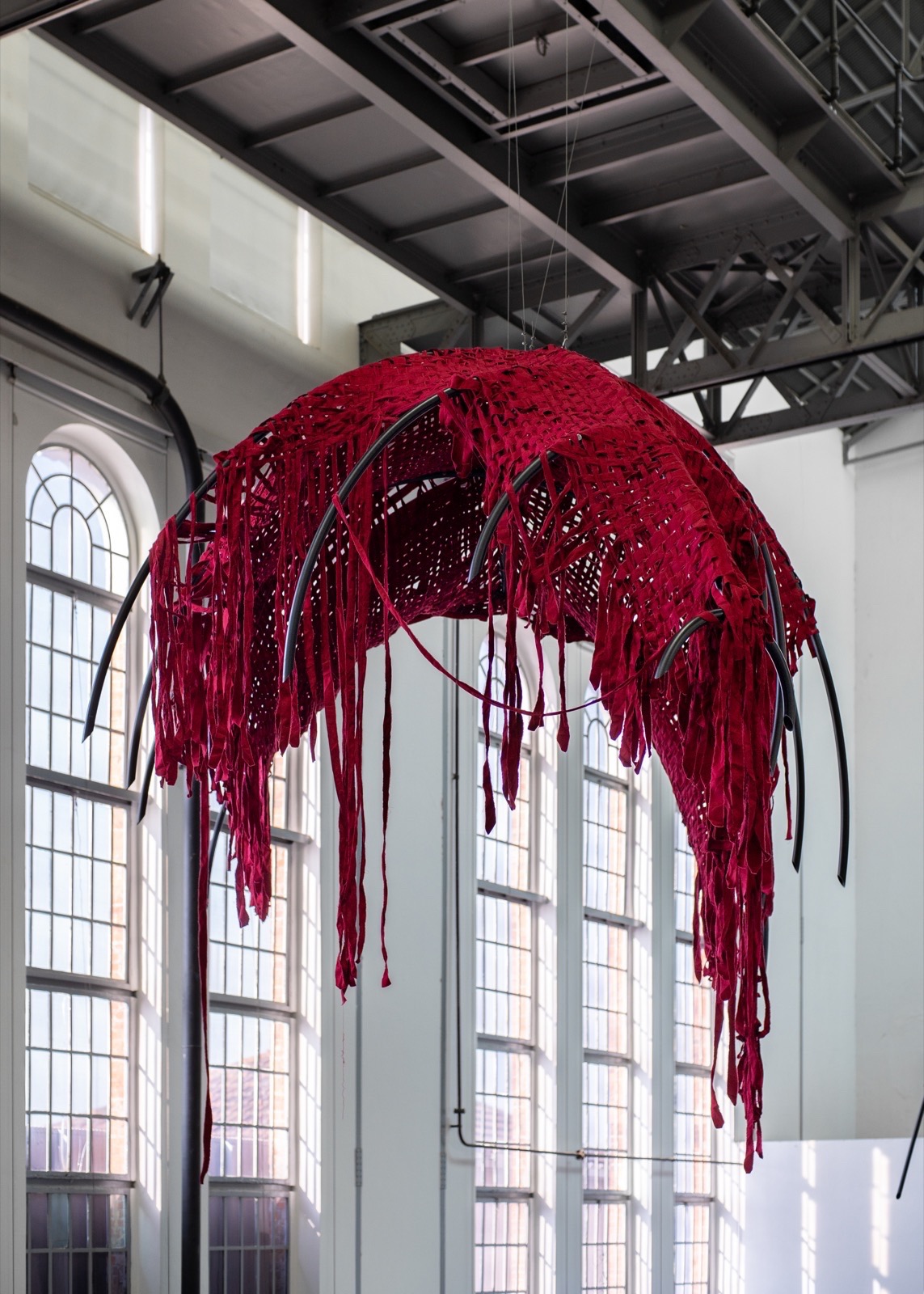
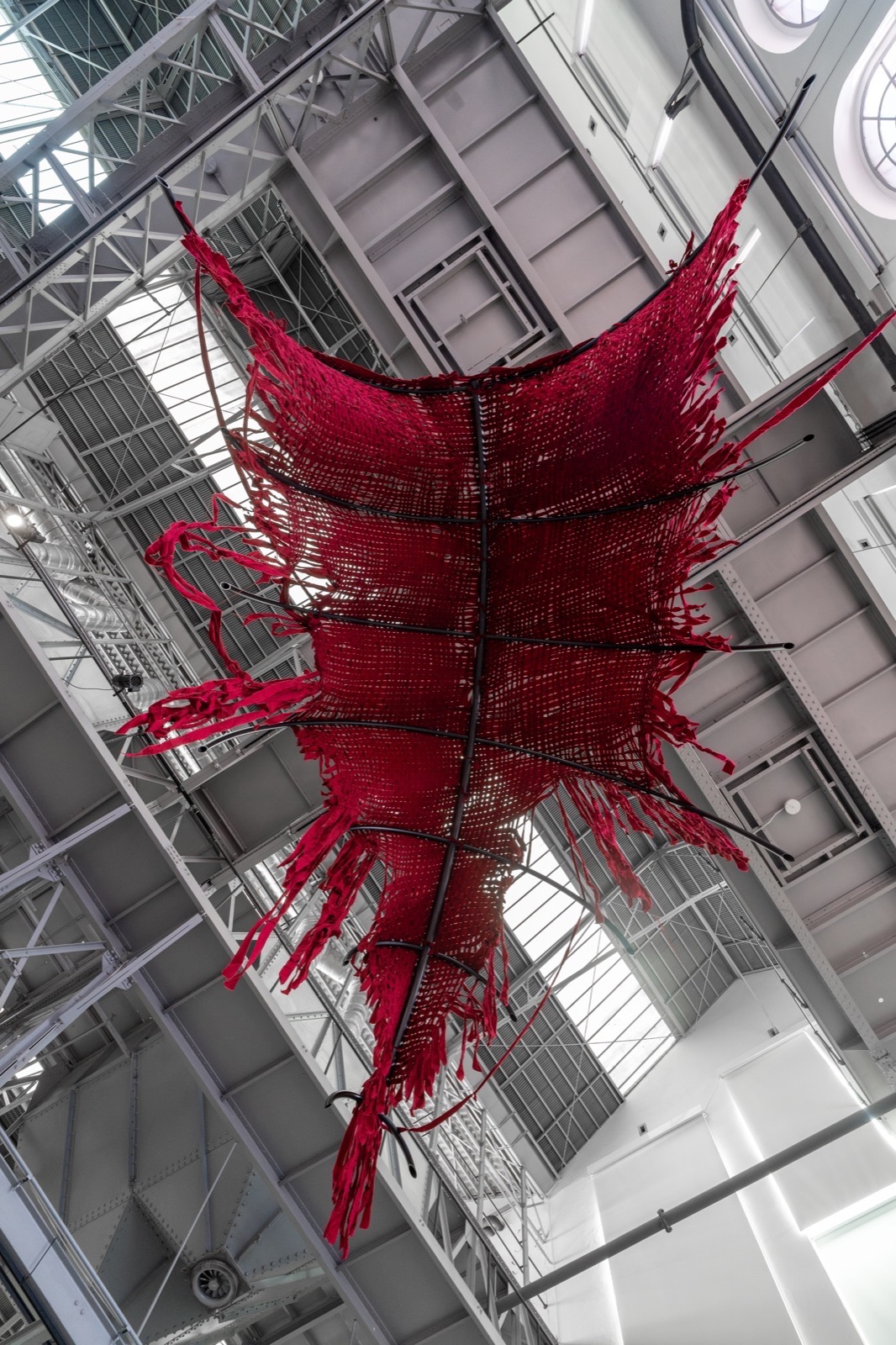
I am excited to be part of the Kochi-Muziris Biennale, where I will present a new installation titled Remember Me, 2025. The title is inspired by fishing traditions passed on through generations in Chute Wagenia in Congo, which the coastal city of Kochi inspired me to think more about.The bodies will be new speculative dinosaurs with fishing net as skins. I’m also looking forward to the presentation of Skin to Skin at Belvedere 21 in Vienna 29th of January.

 https://www.nastymagazine.com/wp-content/uploads/2024/07/WEB2-1.jpg
823
895
Editor Nasty
https://www.nastymagazine.com/wp-content/uploads/2015/02/new-logo-basker-WHITE4.png
Editor Nasty2024-07-24 12:01:502025-03-19 13:25:27Fleeting Phenomena / Mia Middleton
https://www.nastymagazine.com/wp-content/uploads/2024/07/WEB2-1.jpg
823
895
Editor Nasty
https://www.nastymagazine.com/wp-content/uploads/2015/02/new-logo-basker-WHITE4.png
Editor Nasty2024-07-24 12:01:502025-03-19 13:25:27Fleeting Phenomena / Mia Middleton