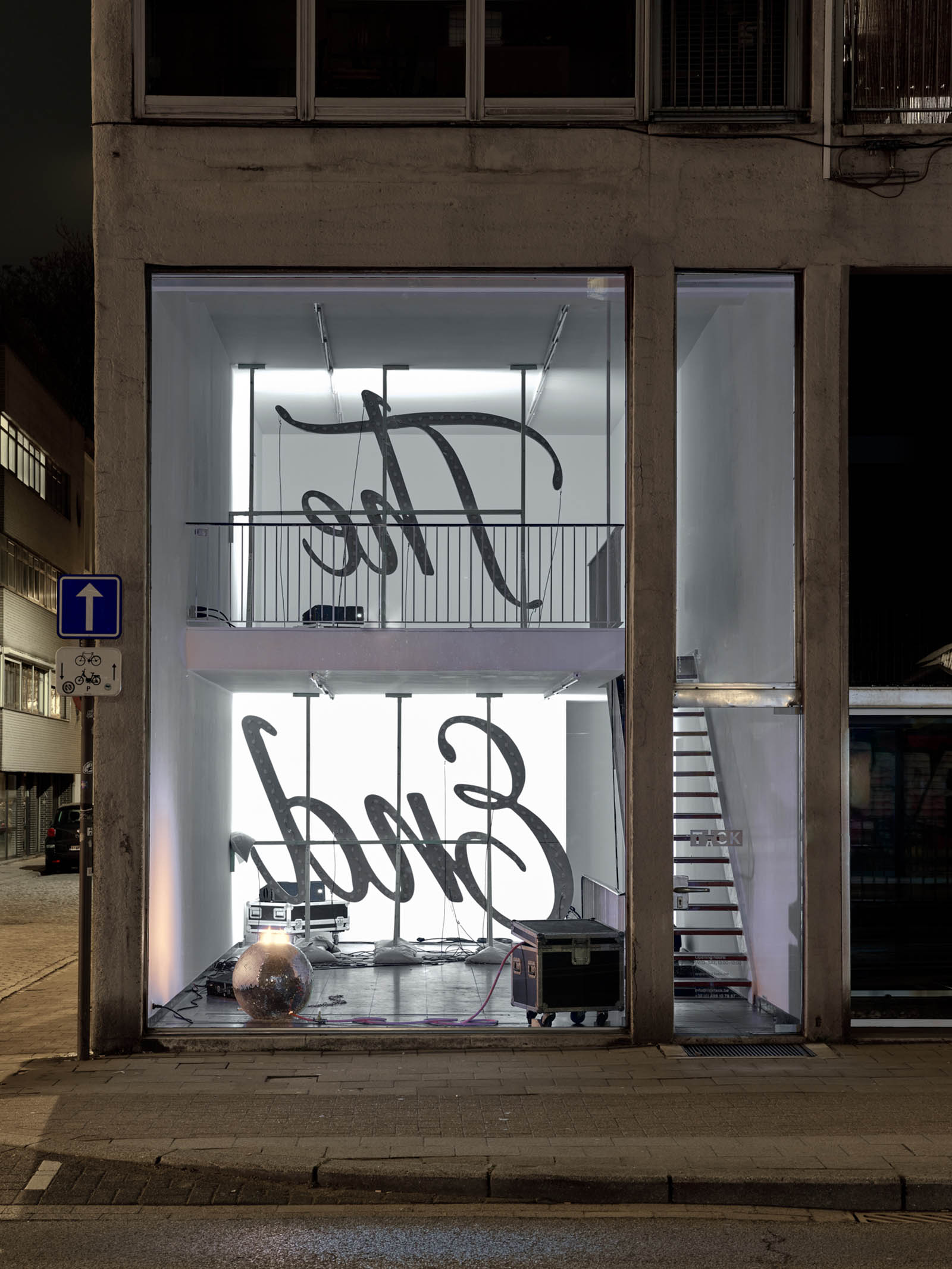
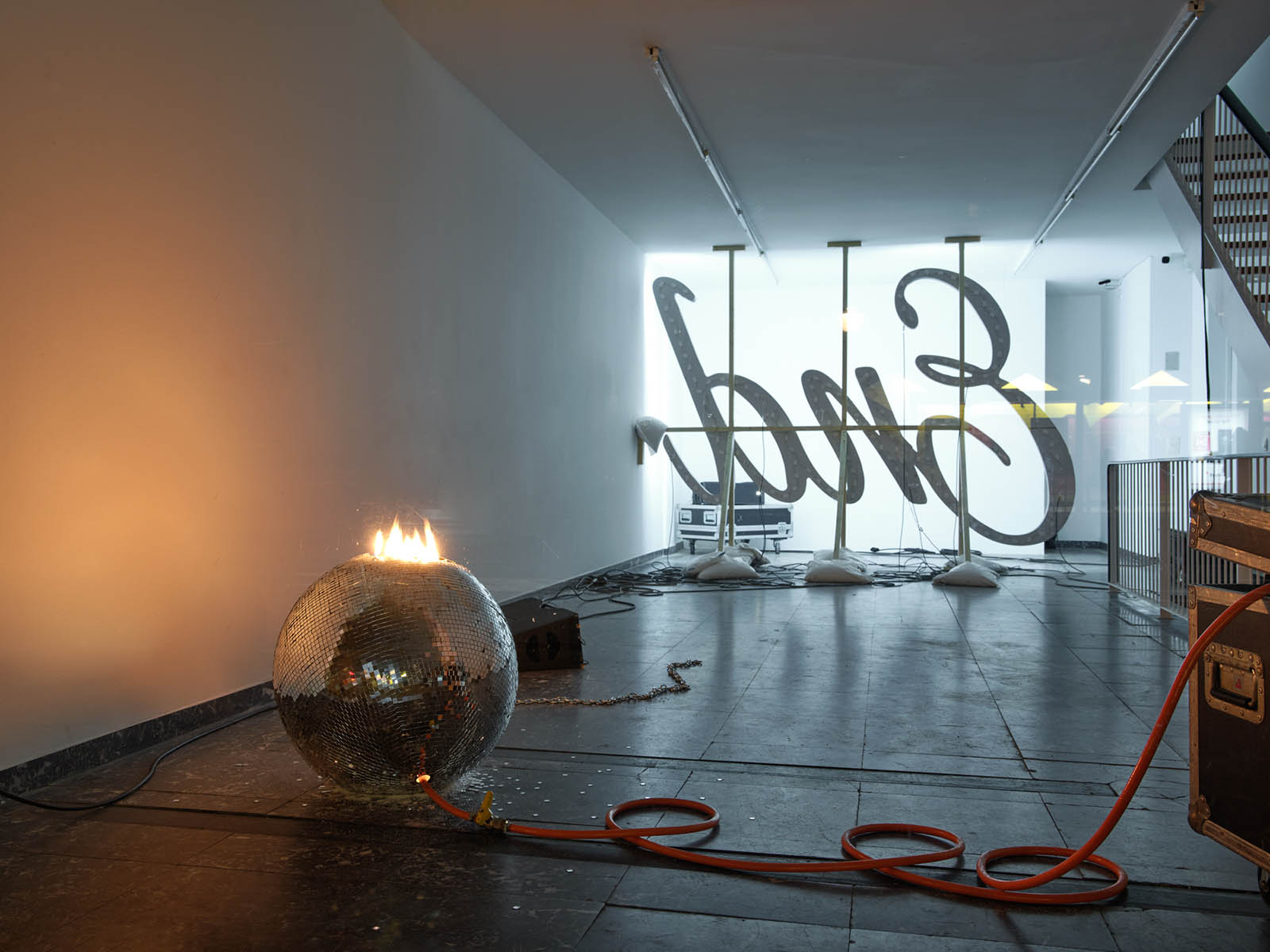
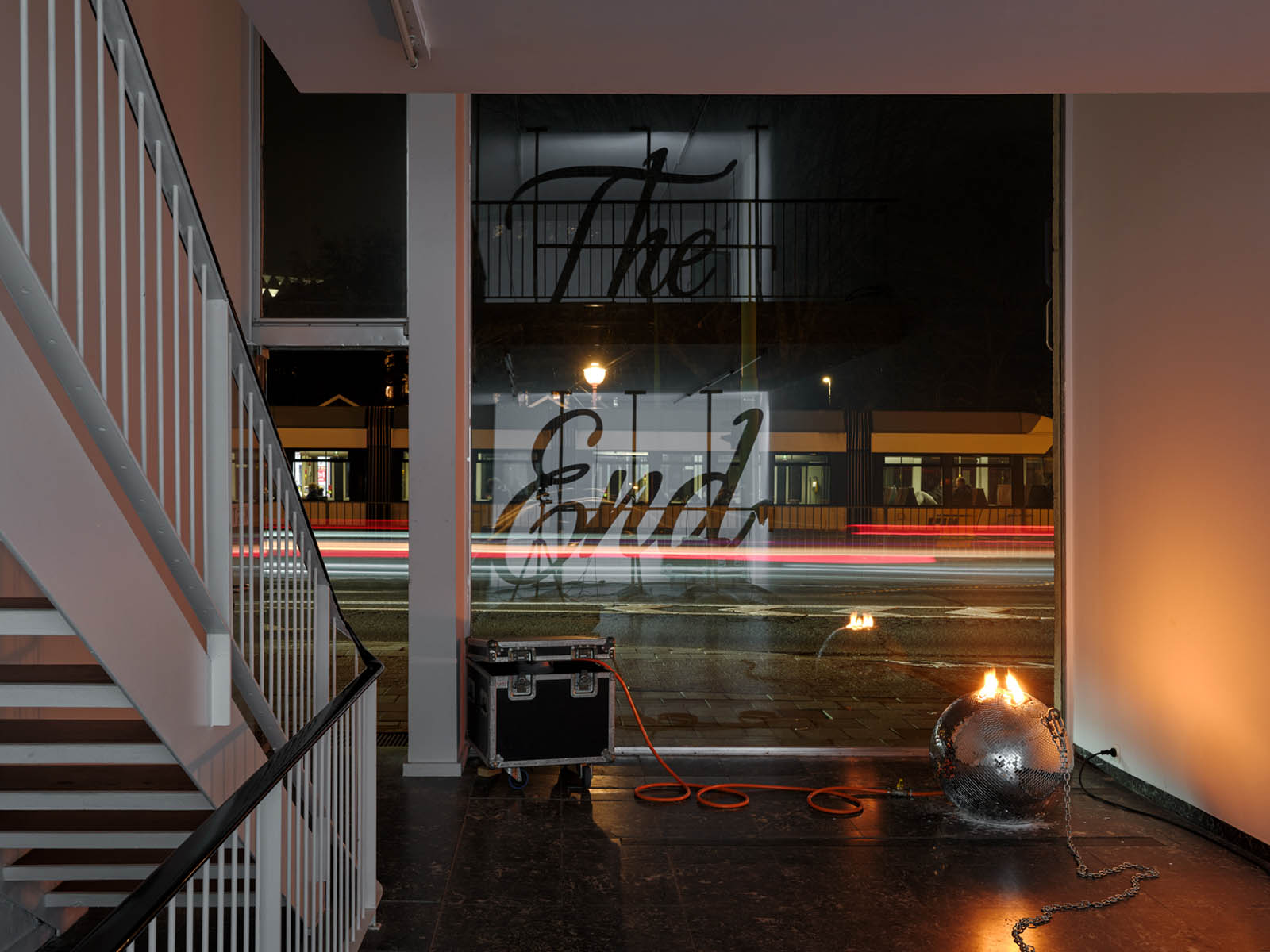
As the very space of TICK TACK suggests, together with the artist’s intentions, the experience of the exhibition begins well before one crosses its threshold. While walking along the pavement opposite, perhaps heading home from a bar late at night, suspended in a liminal state between lucidity and the complete derailment of the senses, it is possible to encounter an unusual glow. Slightly off to one side, tucked into a corner, stands a disco ball whose upper portion has been tampered with: deliberately broken, so that tongues of fire spill out from within. The softness of the flame, its enveloping warmth, clashes with its violated container, its once-pristine mirrored surface now compromised, crystals scattered across the ground. These fragments are the final traces of a disaster in which the viewer participates only through the observation of its aftermath. And yet, for all that this blazing presence may appear welcoming, capable of intriguing passers-by and eliciting a tender, almost affectionate reaction, that curious object is in fact an artwork that encapsulates the tragedy underpinning Wish You Were Here. In New York City, New Year’s Eve is marked not only by toasts and celebrations, but by a series of civic rituals, among them the tradition of dropping a crystal ball in Times Square. It is as though, in shattering, it might release the negative residues of the year drawing to a close, clearing space for moments of greater happiness to come. New Year’s Eve 2005 marked a pivotal moment in Banks Violette’s life: his friend and personal hero, Steven Parrino, died in a motorcycle accident that same night. Violette and his then wife were the last to see him before the tragedy unfolded. This proximity instilled in the artist both a need and a sense of responsibility to contextualise his friend’s death: something he had already done in other instances, as with Dash Snow.
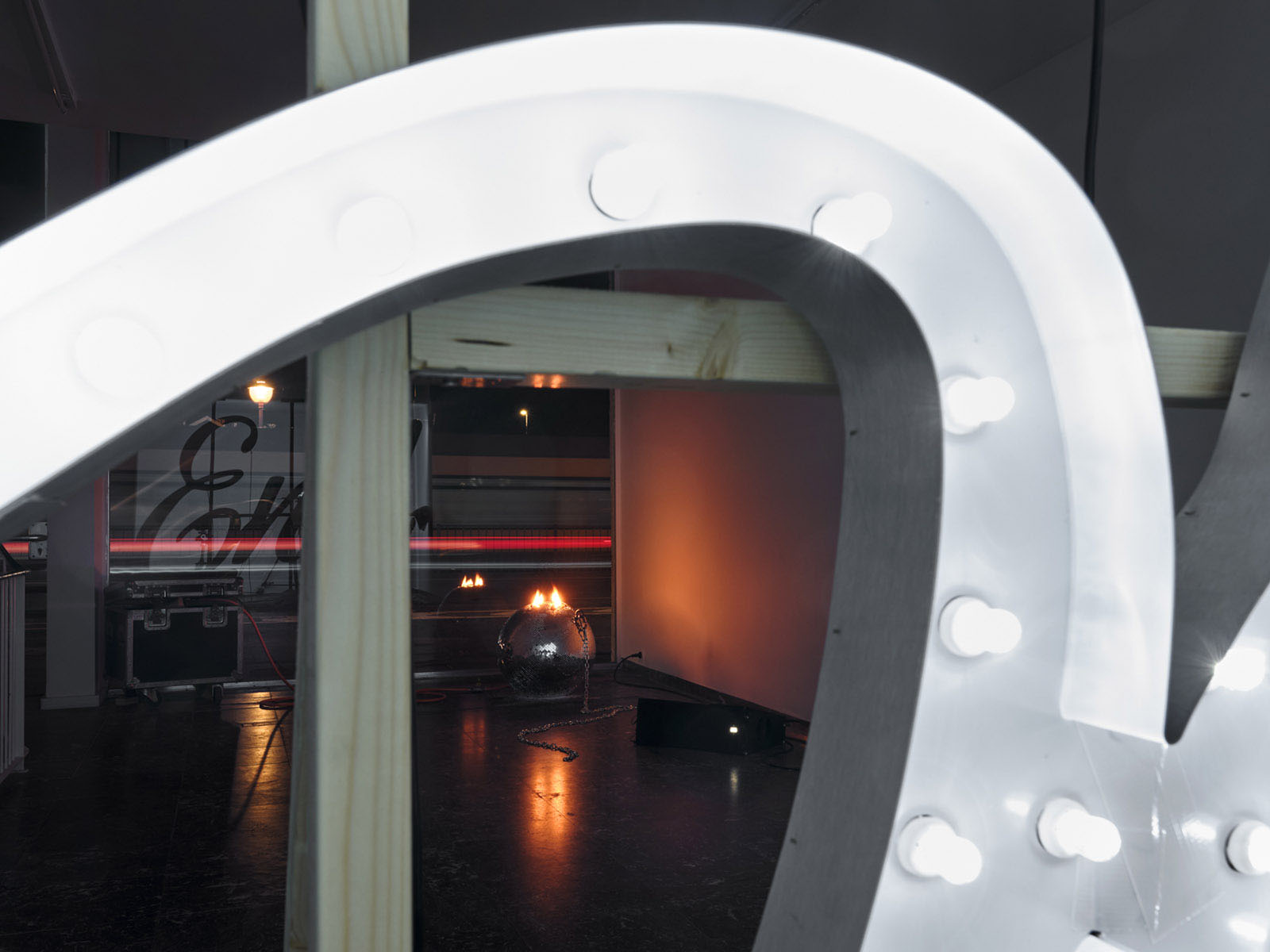
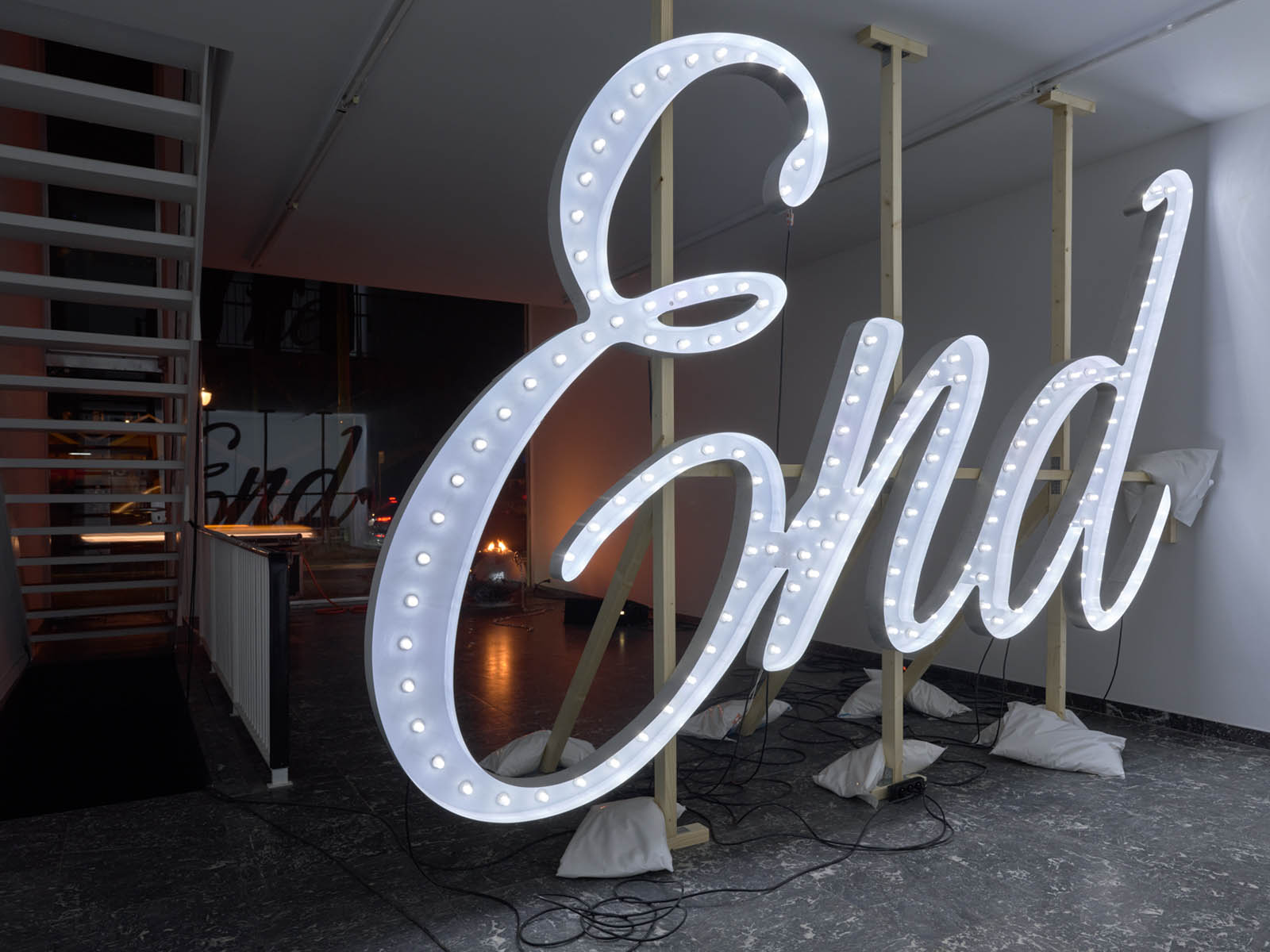
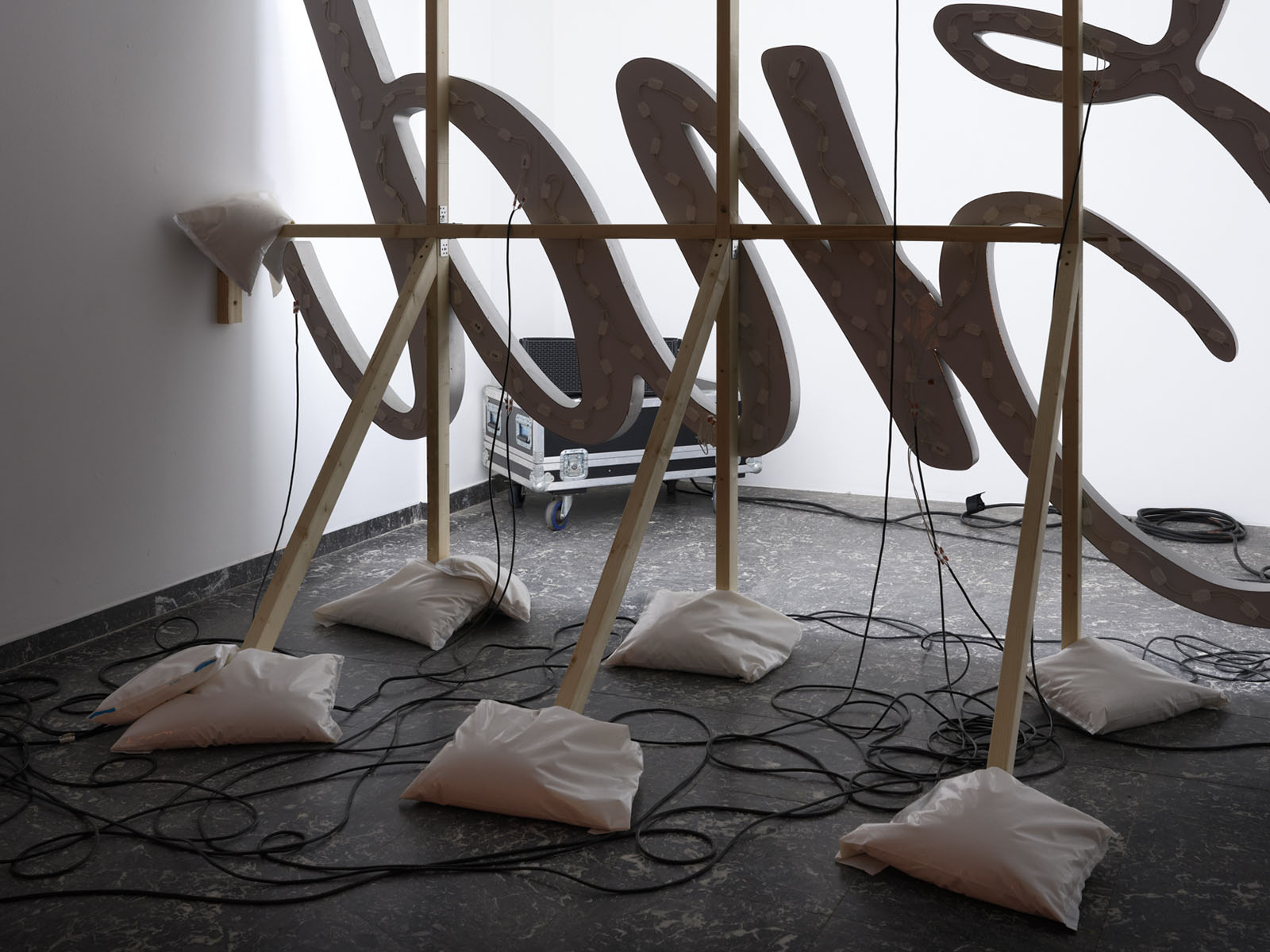
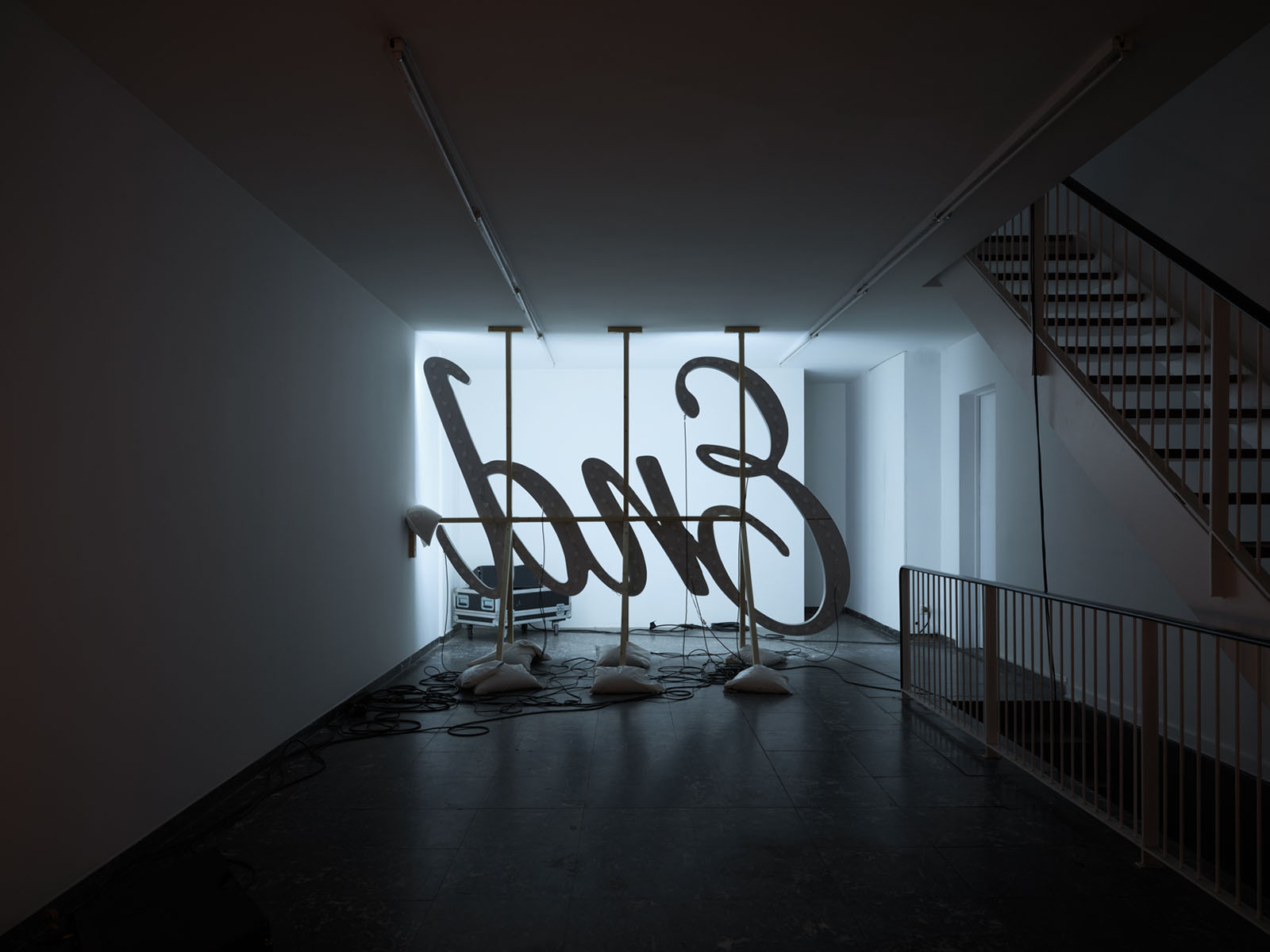
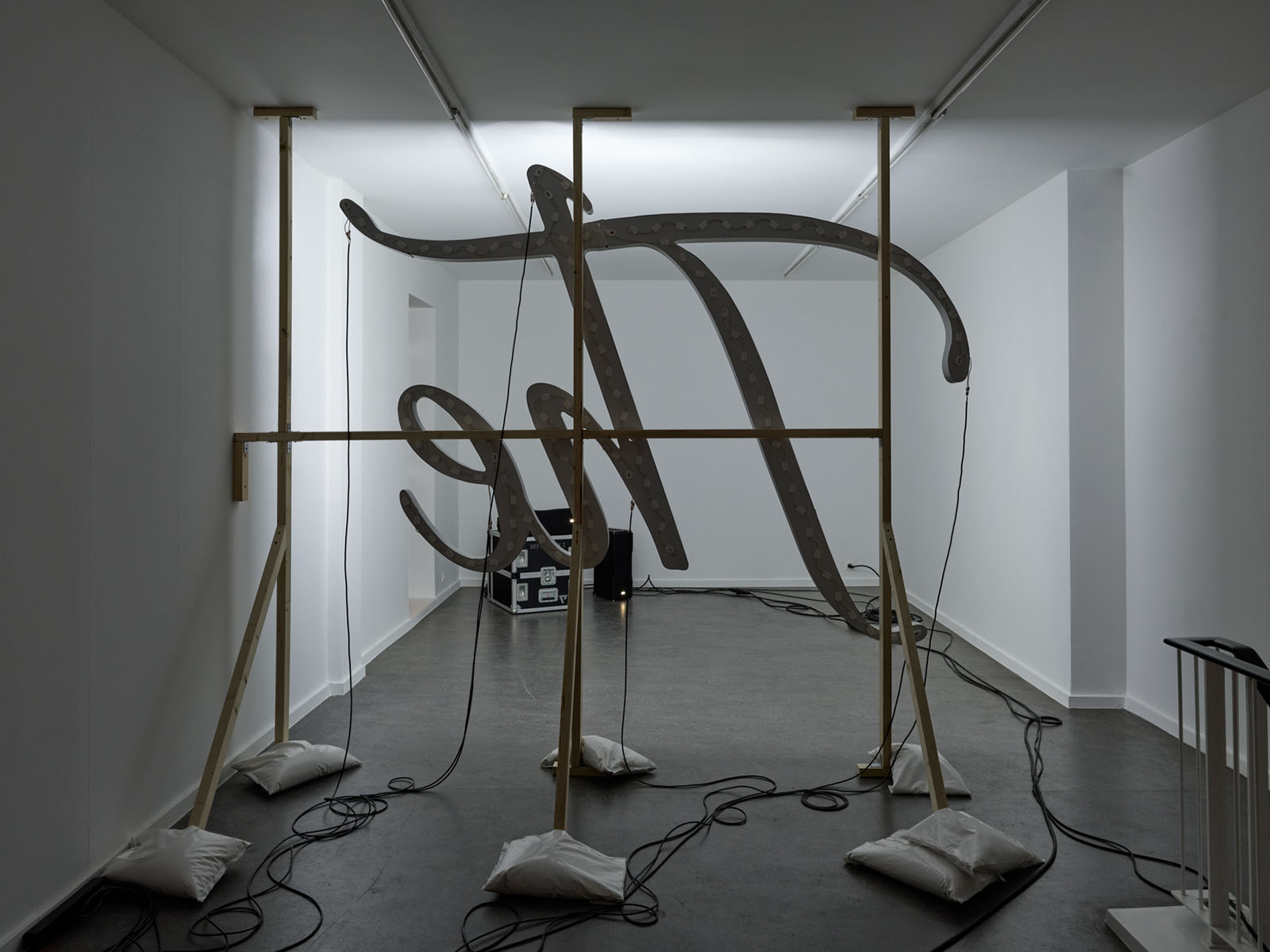
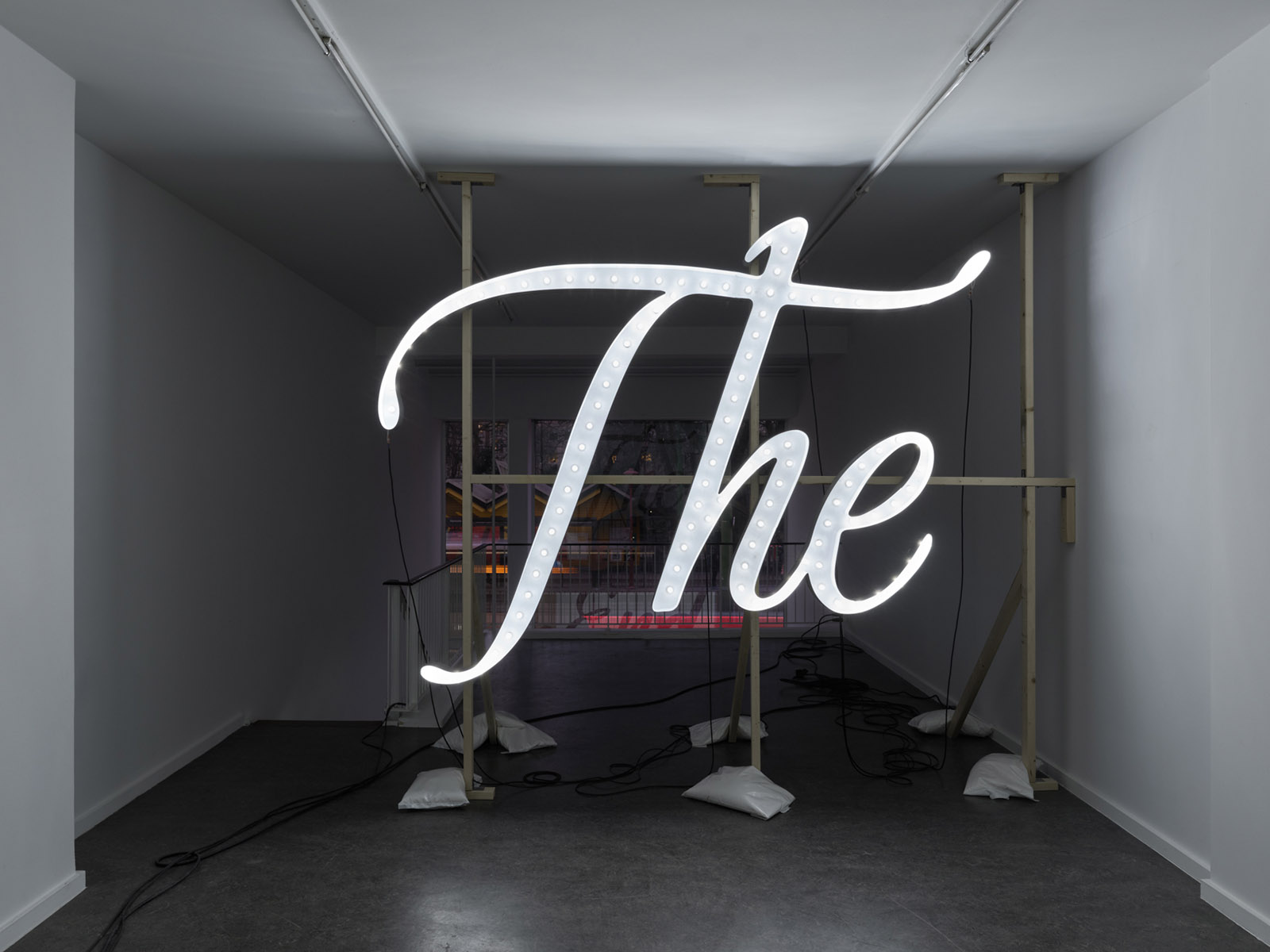
After the initial encounter with the disco ball, it is impossible not to be drawn towards the words The End, fragmented across two levels of the gallery: the ground floor and the upper mezzanine. Its typeface, so close to the end credits of films from the silver screen era, merges with luminous cues that evoke the dreamlike allure of Las Vegas, yet here they are cold, turned towards the wall, as if the spectacle and the frenetic pace of consumption they reference had been abruptly paused. A collective tragedy folds in on itself, bending towards the weight of a personal one.
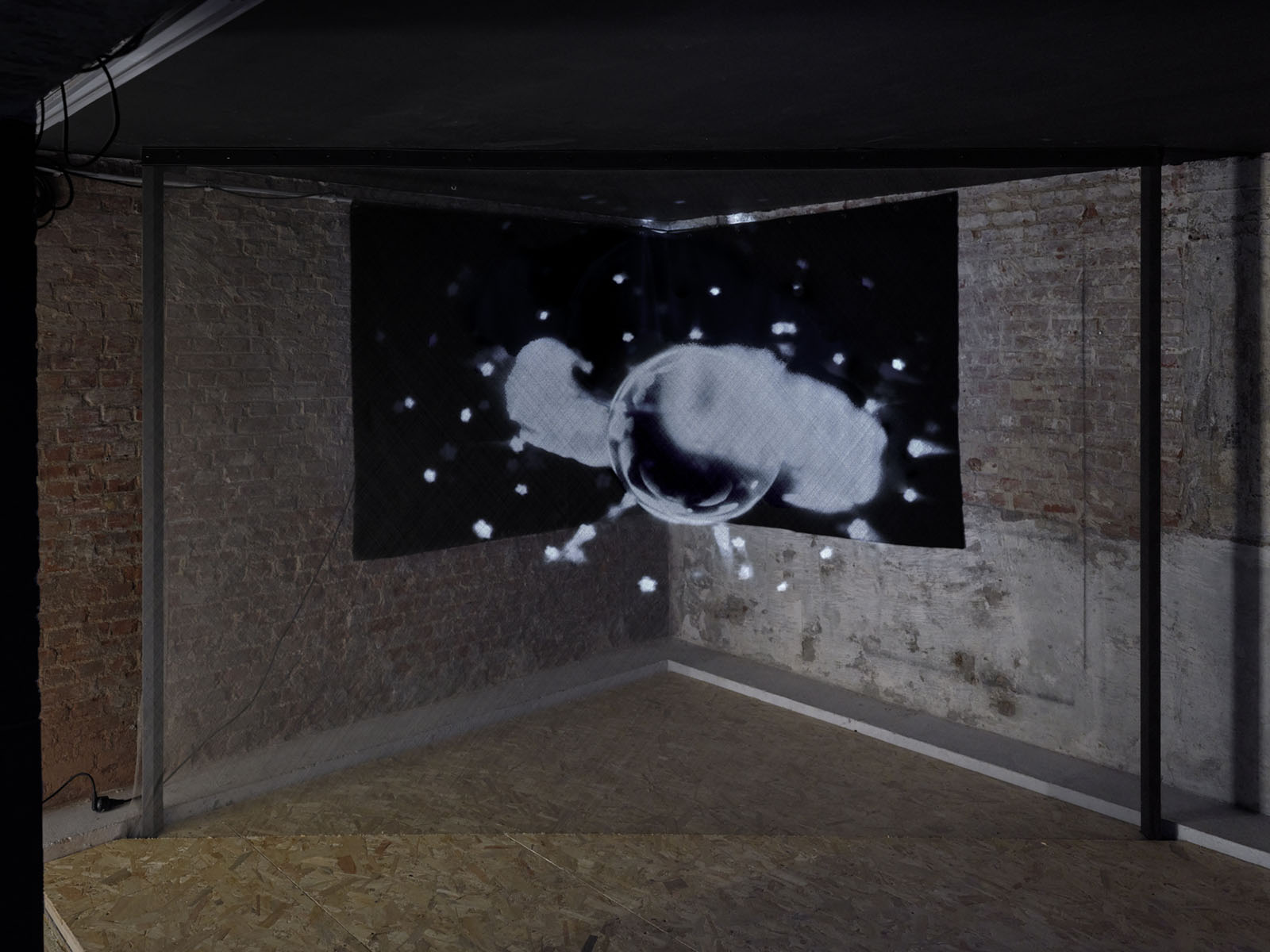
From the upper level, the visitor then descends underground, into a kind of two-chambered crypt. In the first room appears a 1936 Universal Studios logo in holographic form: an attempt to replicate a trope from early silent cinema: the Pepper’s Ghost. By projecting an image onto a dense, opaque framework while keeping a dark surface at a measured distance behind it, the effect achieved is that of a moving ectoplasm, an entity that seems to writhe freely in the air.