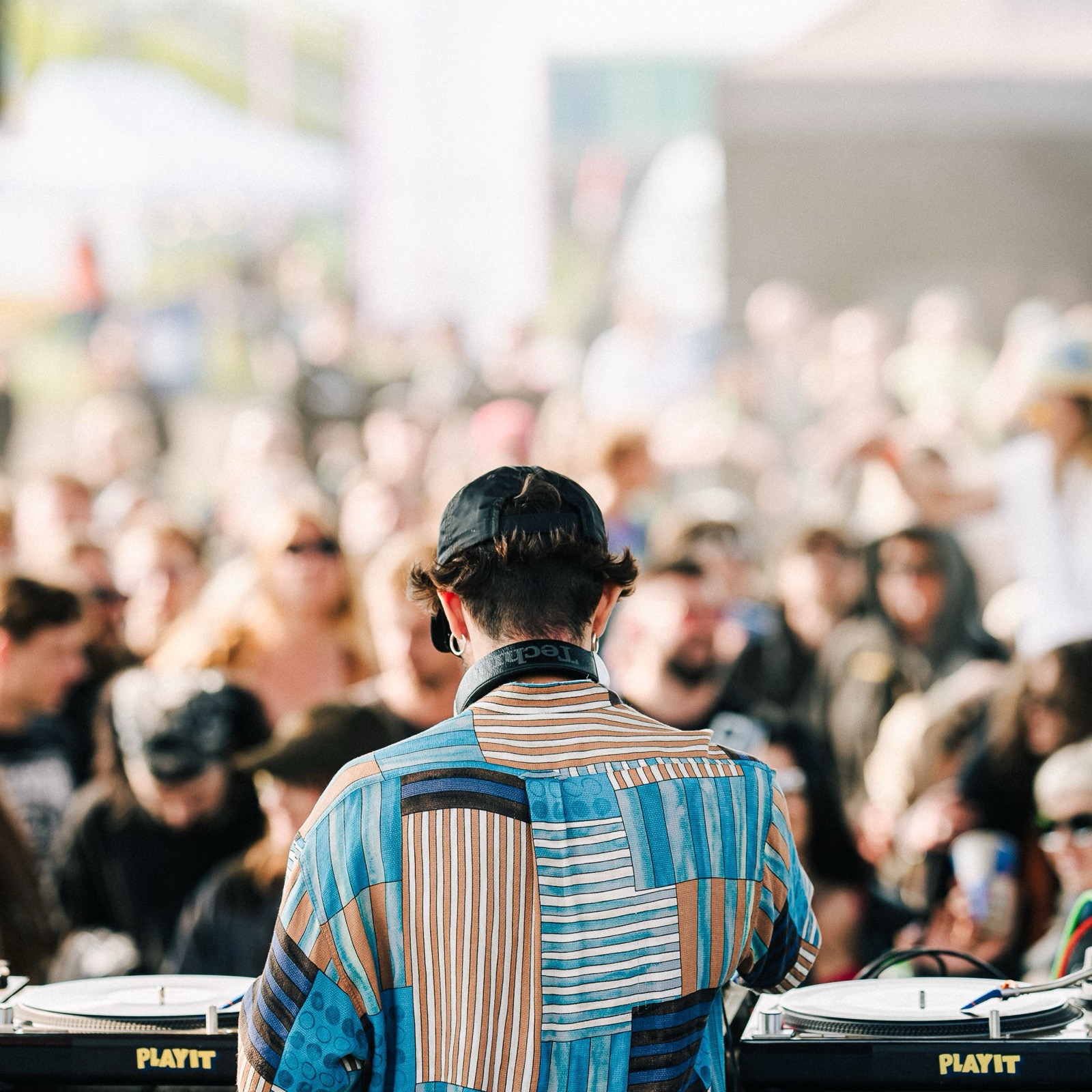
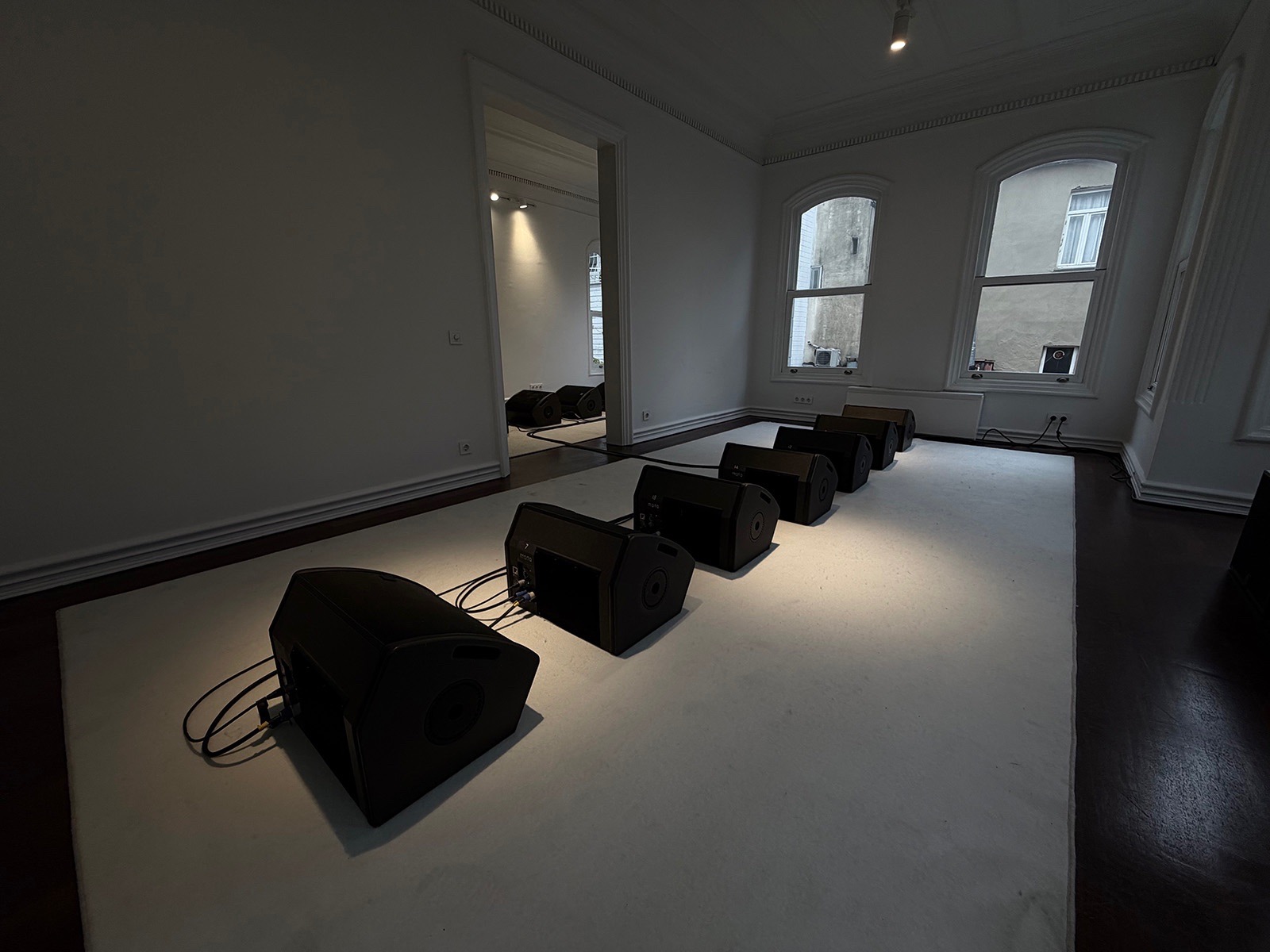
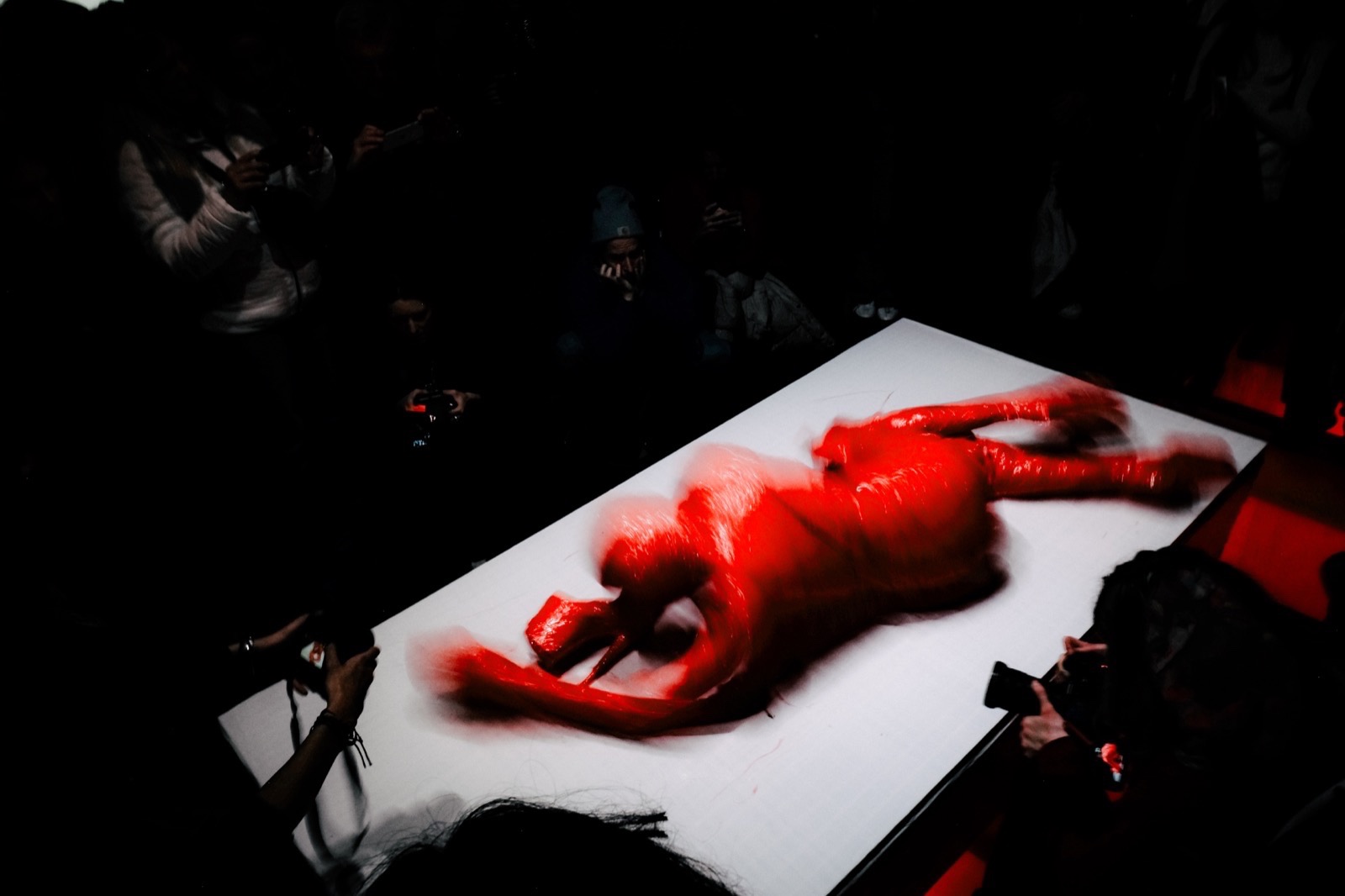
D-Leria, the sonic incarnation of Giuseppe Scaccia, has built his path through constant reinvention, from the darkness of Driving to Nowhere to the expansive vision of Multiverso, and the instinctive freedom of his brand new alias Kongas. His recent debut at Berghain’s Klubnacht stands as both a milestone and a mirror: the point where years of experimentation, loss, and rebirth converge. For D-Leria, sound is not just expression but transformation, a way to get lost, and in doing so, to finally find himself.
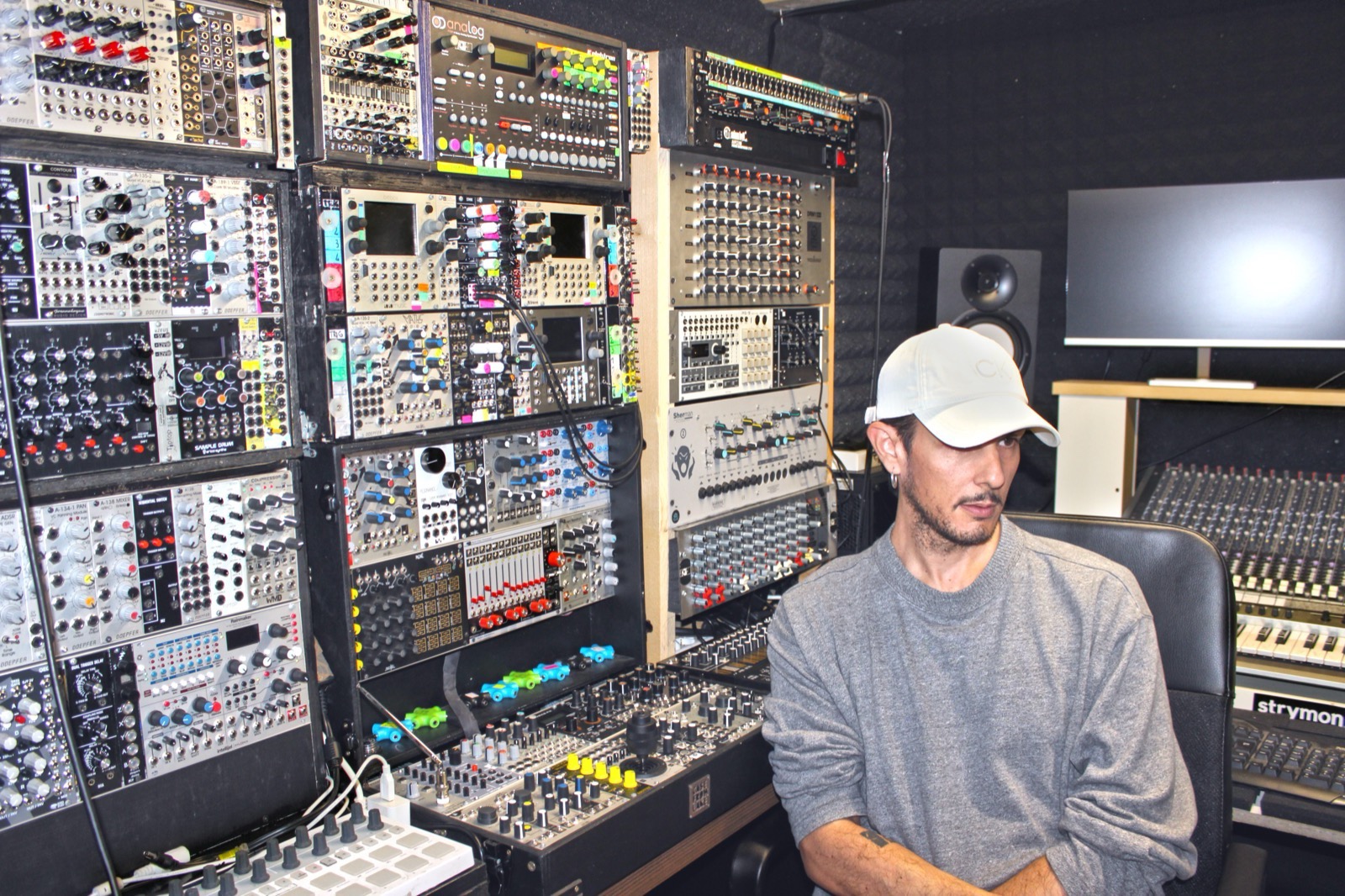
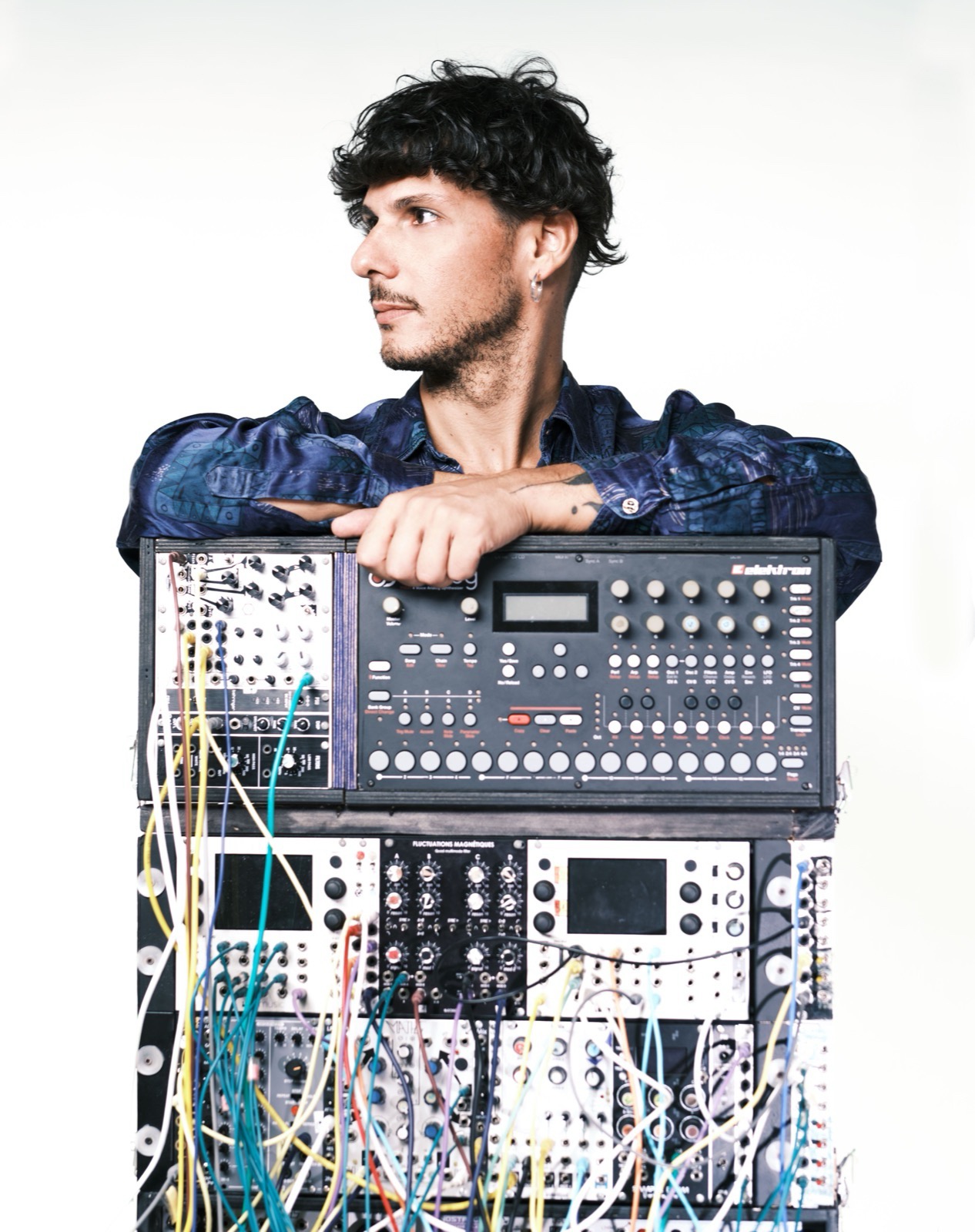
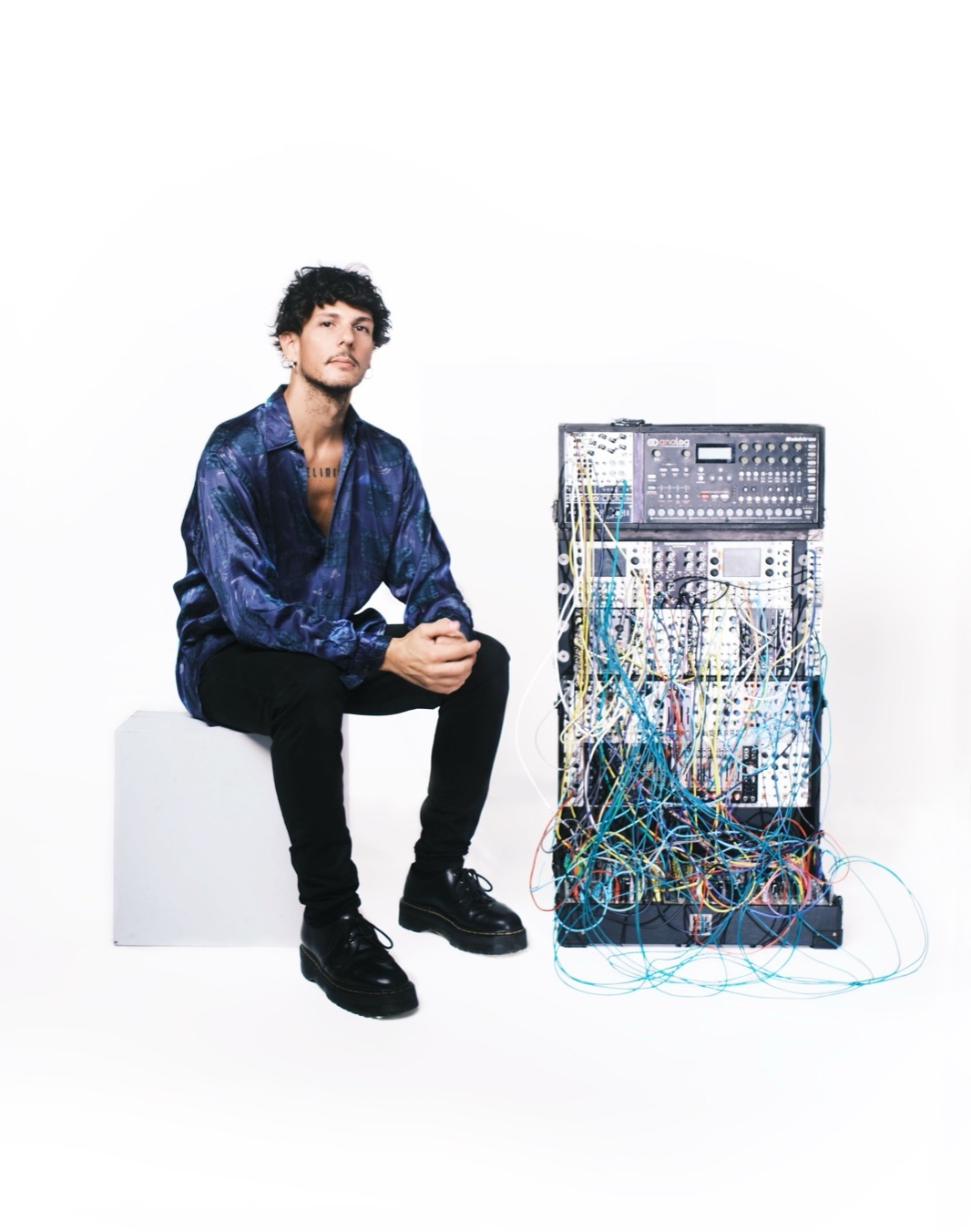
The machines of your modular sets have become an essential part of your artistic identity: an imposing column of gear in front of the dancefloor, and often you perform with your back to the crowd. How did this choice come about?
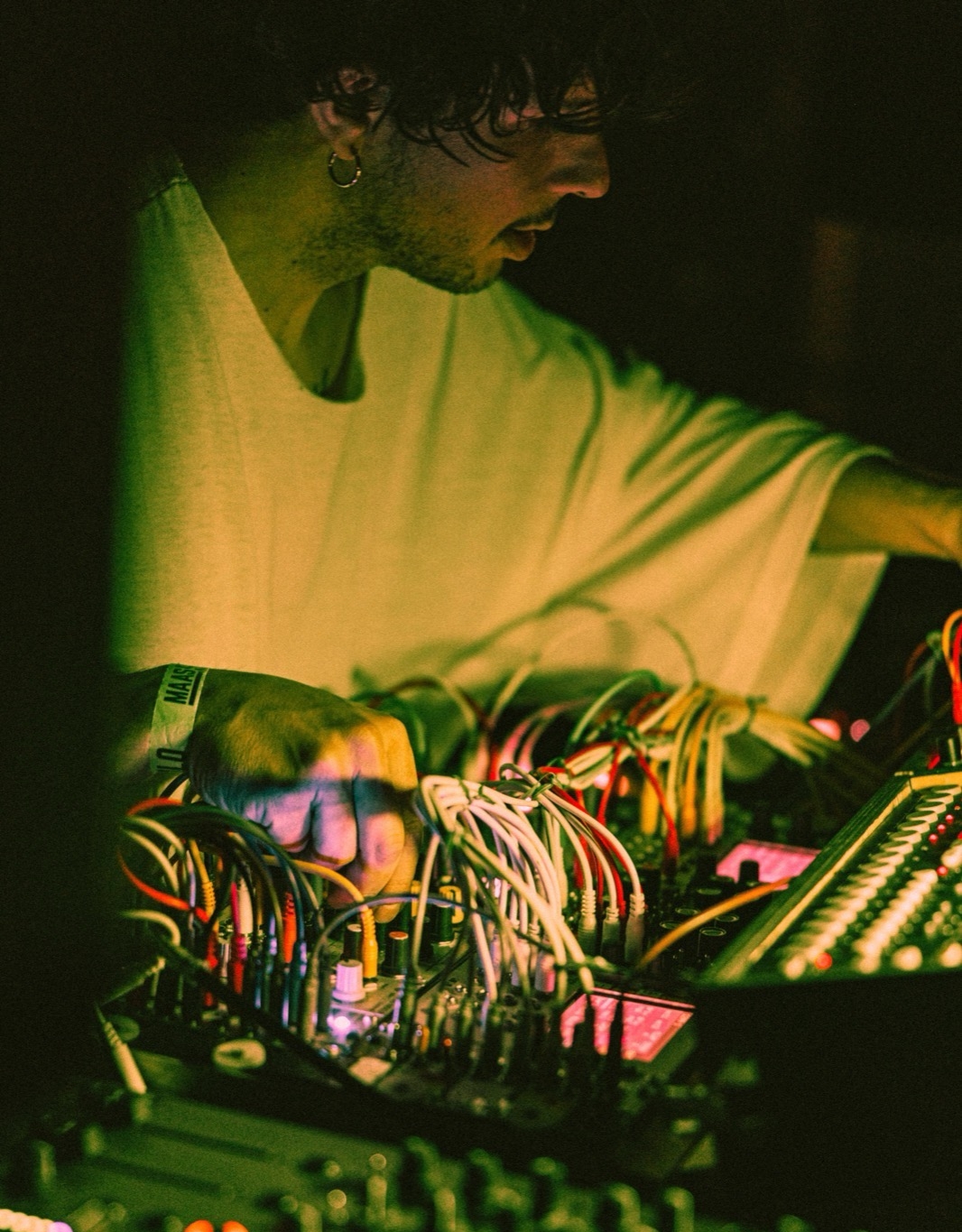
Looking at the dancefloor is certainly essential, but only once you actually have the time to do it. Let me explain: during a live set my eyes are glued to the setup because I literally do not have the time to look at the crowd. In recent times, though, I manage to do it occasionally, probably because I am now more comfortable performing compared to when I first started playing live in front of an audience, about three years ago.
Do you think eye contact with dancers is truly essential to create a deep connection, or not?
I decided to play with my back to the crowd in the Tower Live (the performance with the tower of modules) because if I stood facing the audience, they would only see the back of the tower with me hidden behind it. I also think it is interesting for the crowd to actually see where the sound comes from, to witness what is really happening.
And personally, how do you perceive the vibes of the dancefloor when you can’t see them directly, but only feel them?
Even if I cannot see the crowd, I can still sense how it is going. Sometimes I understand it from the shouts that rise from the dancefloor, or I only realise it at the end, when I come out of my world and turn around.
So you have two different types of live set?
Yes, there are two different versions of the live set. The one I mentioned before, the Tower Live, where I play with my back to the crowd, can last two hours or more and is more of a journey, a story. Then there is a more compact version, around one hour, more direct, more for “bringing the whole place down”. In this case, I bring half of the tower with me, meaning two rows of modules mounted into a wine crate, an Analog Four, another mini case (made from a drawer) for building synth lines, effect pedals and sometimes other unbuffered modules adapted in a slightly “hardcore” way because of the limited space in the case.
In a past interview, you said: “I like thinking back to when, as a teenager, I listened to DJ sets recorded during major events, which would start and end in fade-outs… What happened before or after the fade-out remained a mystery, as if the DJ set could last forever, without knowing what would happen either before or after.” Is there a particular moment or feeling that you always hope to convey to your listeners, one that lingers even after the music ends?
Yes, I believe that is ultimately the meaning of it all. When I went to my first parties, if I went back home with a strong memory, a precise moment, a feeling that stayed with me afterwards, I felt that something inside me had shifted, as if it had filled my soul. And now that you mention it, some incredible moments come to mind, moments that never left me. Every time, I feel the urge to thank those who made them possible: the artist, the place, the atmosphere, because in some way they left something within me, perhaps even changed me. If I knew I could create the same effect for someone, even just once, I think it would be the greatest compliment.