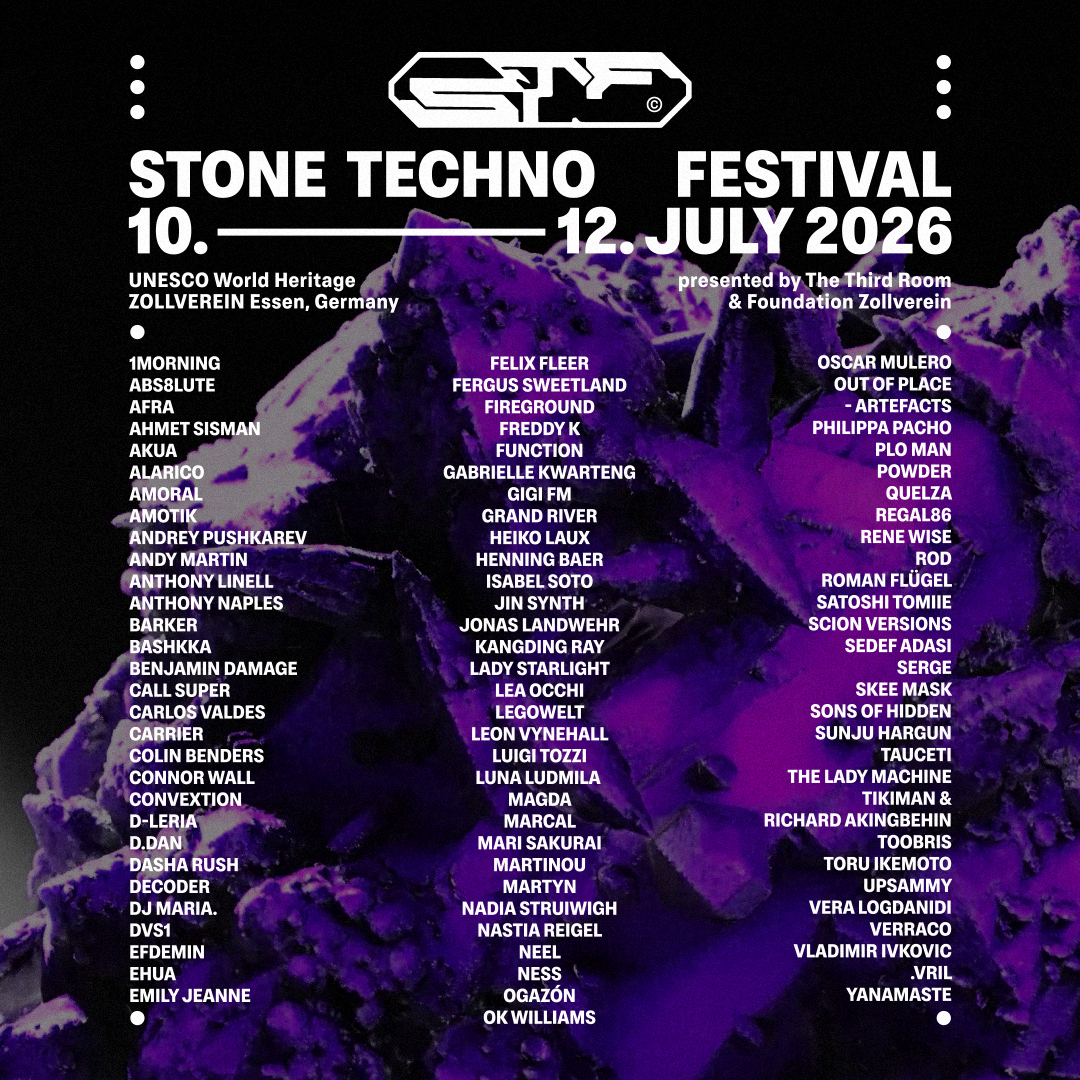
The other major addition is the Listening Floor: a fifth stage inside the Kokerei, designed as a circular amphitheatre with seating and a wine bar. Sixteen artists perform there exclusively: Barker, Vladimir Ivkovic, Upsammy, Legowelt, Kangding Ray, Colin Benders, Grand River among them. Festival founder Ahmet Sisman will perform there himself, shaping the space he built.
The Listening Floor changes the body’s behavior entirely. It asks for stillness in a culture built around acceleration. You sit down. You remain inside the sound long enough for subtleties to emerge. Ivkovic’s selections, obsessive and impossibly detailed, suddenly unfold in conditions that reward patience. Legowelt’s music, always carrying that strange sensation of half-remembered futures and decaying dreams, will be performed in a space built for exactly the kind of attention his sound rewards — oblique, unhurried, built for a listener who isn’t moving. Inside the Listening Floor, the music finally gets the kind of room it asks for: somewhere people stay still long enough to disappear into it completely.
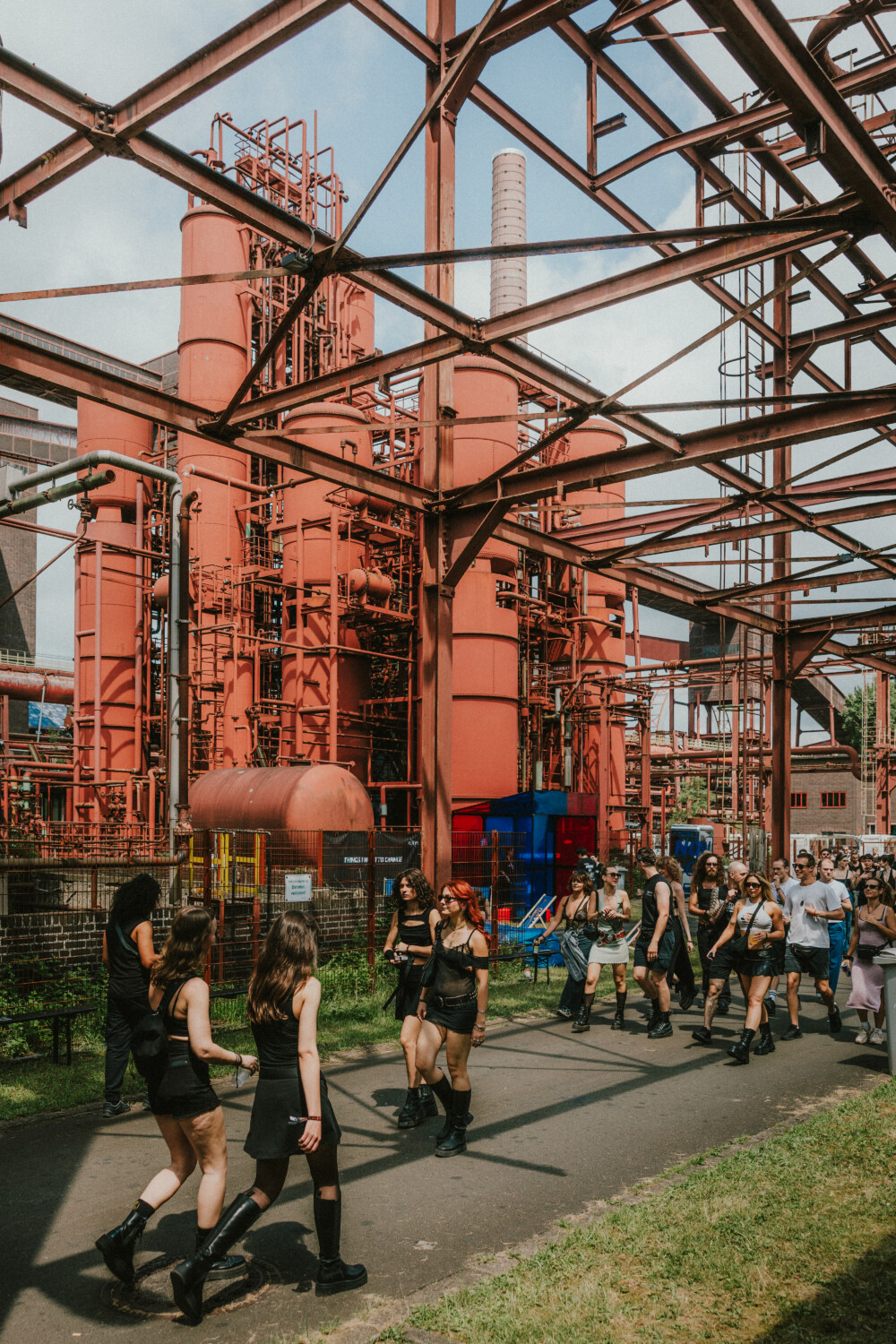
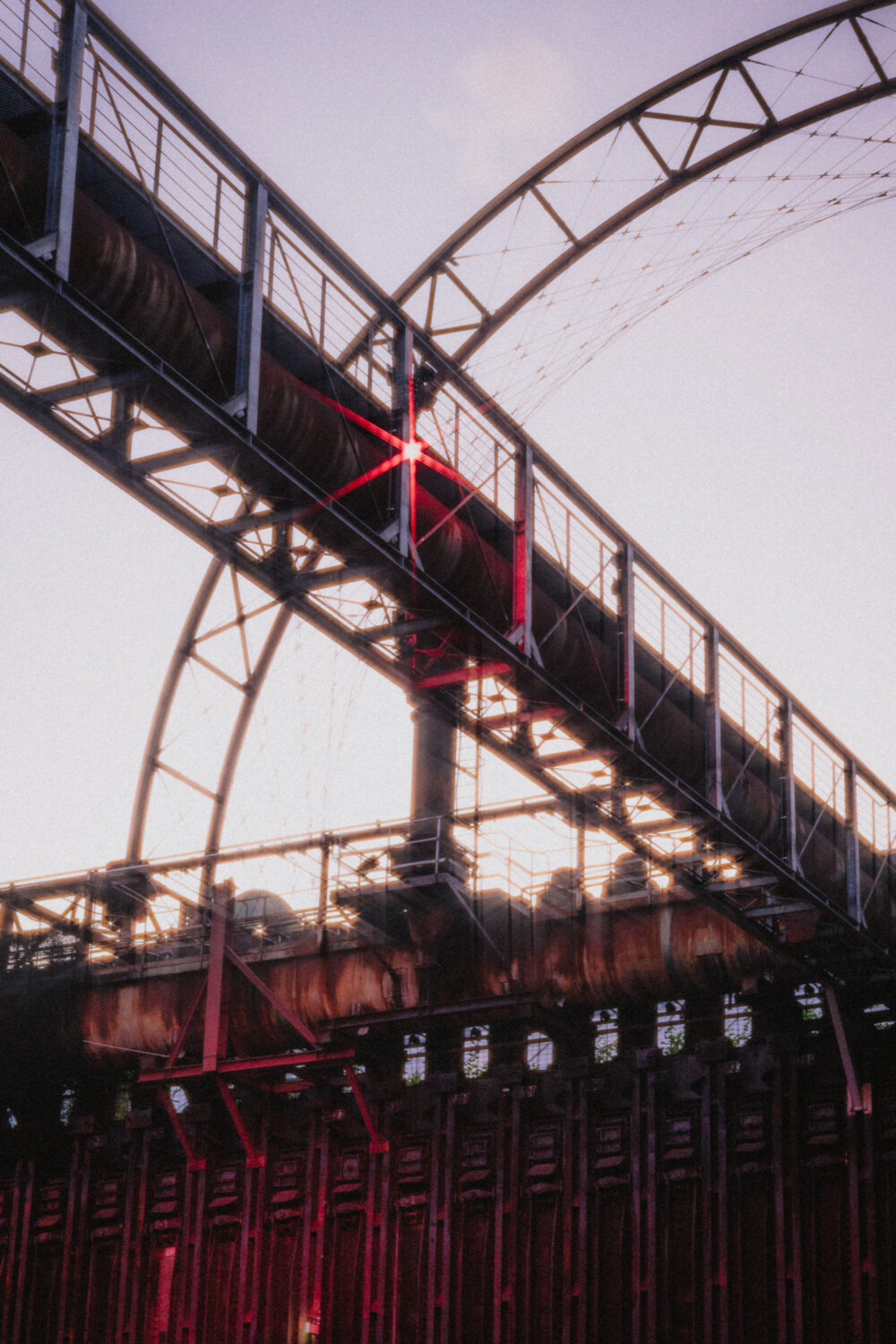
Underneath all of this runs the festival’s ongoing geological collaboration with Dr. Achim Reisdorf, where the mineral composition and strata of the Ruhr basin are translated into frequencies and sonic research. It sounds almost mythological when described plainly, yet standing inside Zollverein it begins to feel completely logical. This is how The Third Room operates: ideas that initially appear somewhat esoteric suddenly become materially obvious once experienced in context. Zollverein was once the largest coal mine in the world. Mining ended in December 1986. The coking plant continued until 1993. The silence afterward lasted decades. Long enough for another form of extraction to emerge inside it, this time pulling resonance, memory and collective experience from the same ground where coal once disappeared into industry.
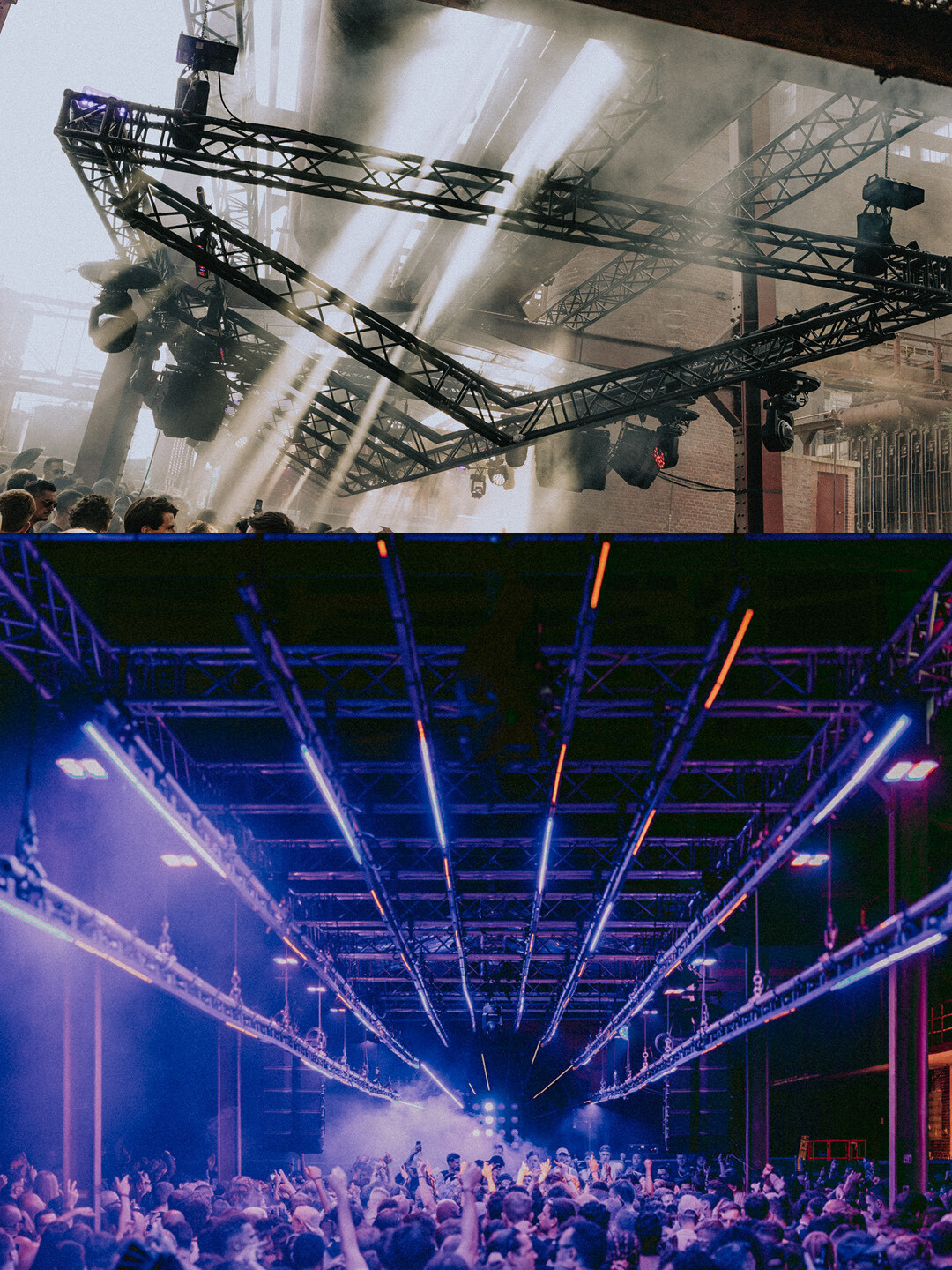
Clone Records returns with its vinyl store across the weekend. ARTE Concert documents the festival again. The sound system has been rebuilt and refined once more through D&B array processing and an in-house engineering team developed internally by The Third Room itself. None of this announces itself loudly when it functions correctly. Precision rarely does.
Five years in, Stone Techno feels increasingly unconcerned with expansion for its own sake. What grows instead is density: denser curation, denser conceptual framing, denser relationships between sound, architecture and audience psychology. Every element now feels constructed by people who understand exactly what it means to hear the right record through the right system inside that specific building at the exact right hour of the day or night.
The ground at Zollverein still holds 135 years of extraction beneath every stage, every array, every corridor, every seated listener holding a German beer while frequencies move through concrete built for another century entirely. What The Third Room pulls from the site now is different. Slower. Harder to name. Sound, memory, emotion, all rising back through the same ground where coal once disappeared for more than a century. Five years in, Stone Techno still carries the rare feeling of an event that could only exist exactly where it does.