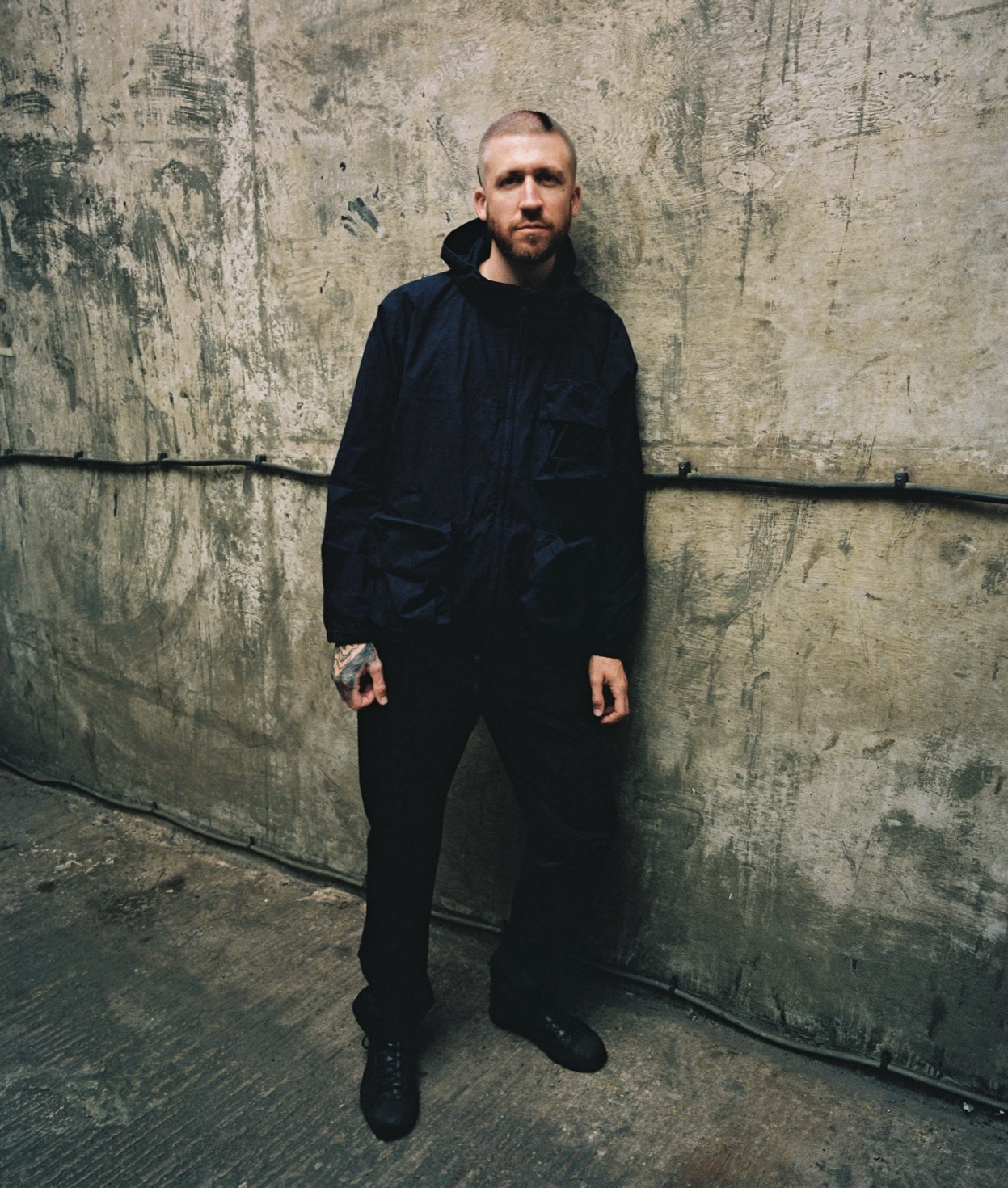
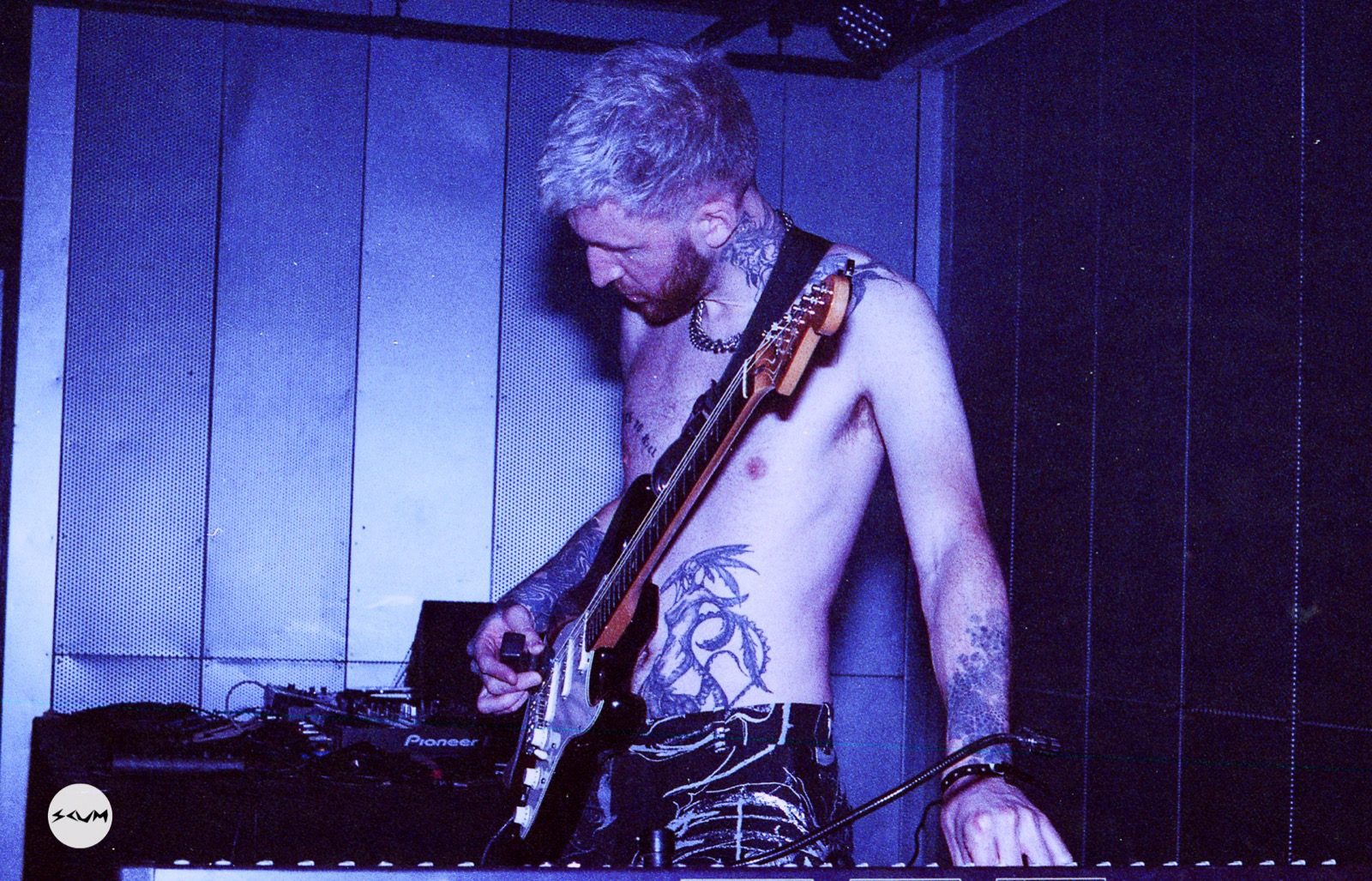
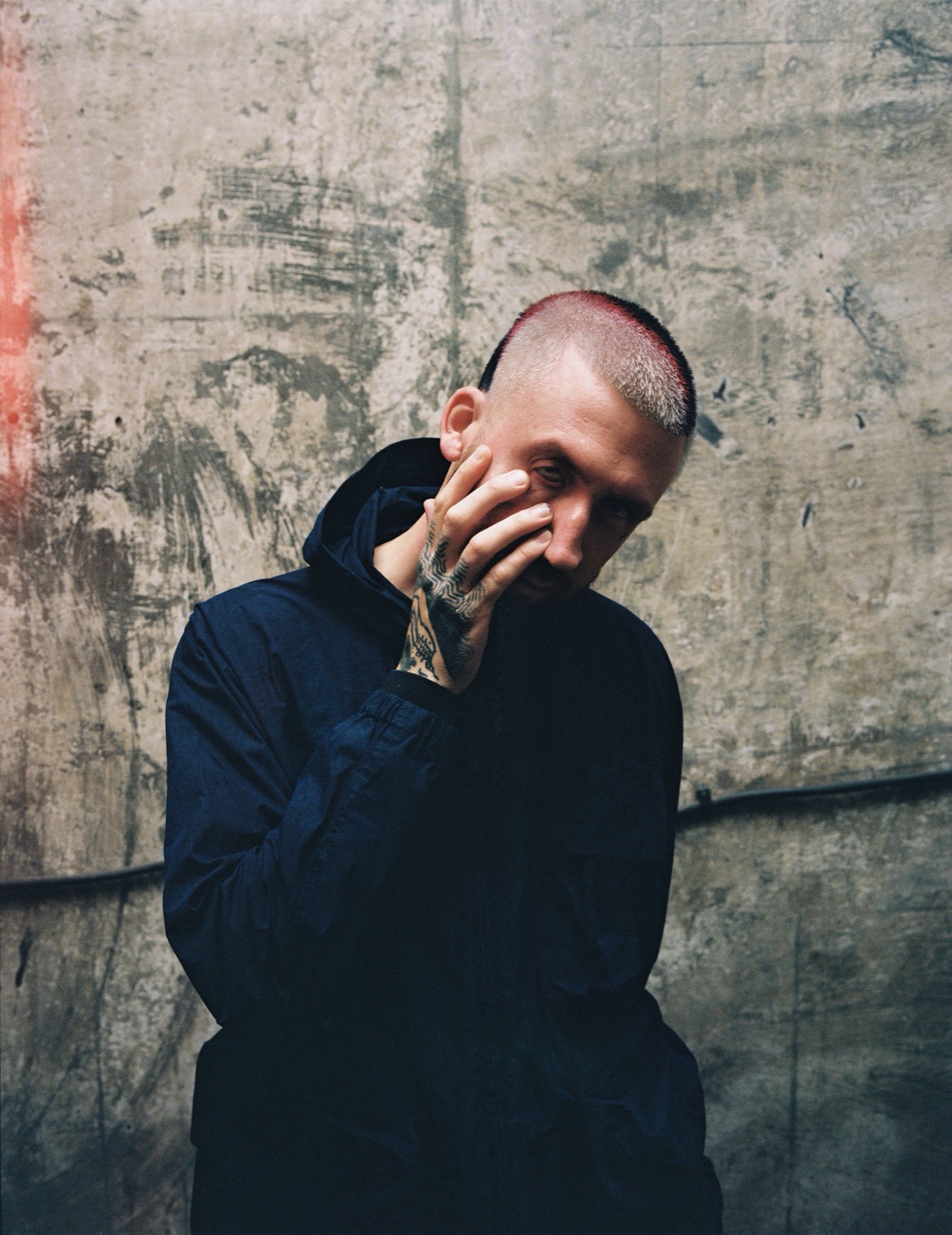
On Desintegration / Samuel Kerridge

In conversation with the British DJ and producer.

With Memoir of Disintegration now out on Blueprint Records, Samuel Kerridge speaks about Downwards as context rather than concept, and about the shift from confrontation to clarity following Kick to Kill. The conversation moves through experimentation, defiance without nostalgia, and the need to push sound and format until they break and begin to make sense again.

It’s well known by now that your city is Manchester. In this regard, people often talk about the “Mancunian spirit” or “Manc pride,” expressions used to describe your tenacious, direct, supportive and energetic character. It makes perfect sense when I think of you. What makes this city and its inhabitants unique? How has it influenced your music? And what are the first memories that come to mind when you think of the Manchester–music connection?

It’s a city of innovators! And spice heads……and everyone in-between. I love the true multiculturalism of the city, it’s always been vibrant and diverse which was something I missed greatly when I lived in Berlin. What’s not to love?! The weather’s shit, but this is England. Manchester doesn’t romanticise itself. It’s blunt and it’s funny in a cruel way, it doesn’t give a fuck if you’re uncomfortable. People do help each other out, but they also stand for no nonsense. That comes from years of graft, decline, and reinvention.
Musically, it taught me abrasion and honesty. No excess polish and no pretending. My first memories are physical ones: bass leaking through walls on cheap sound systems, doused in sweat, drugs and rain. We had Acid house and post-punk with the residue of The Haçienda. It was sound as escape and as threat. Manchester music always had teeth and that always stays with me.

You grew up during one of the most discussed periods in contemporary English history: the Margaret Thatcher era. While the South was growing, the North was falling behind. For many young people like you, there was no future. Yet venues for young people began to open, clubbing arrived, and new sounds emerged: post-punk, electronic music, acid house. Based on your experience, do you think music at that time served as an escape from reality and a way to fight the system?

It was absolutely an escape, but not a passive one. It wasn’t about forgetting reality, it was about surviving it. The North was written off and I felt that as a kid. Luckily I only caught the last four years of Thatcherism, but I remember a real anger towards her growing up from my own family and the community. Being working class, the Tory party were hated and Thatcher wasn’t abstract, she was personal.
Music gave people agency. Raves and pirate radio, they were spaces where hierarchy collapsed for a few hours or days. That’s political whether it’s labelled that way or not. Acid house wasn’t a protest song, but it dismantled social order through pleasure. We were submerged into that world as my parents would take us to raves as children. Then came along Labour in 1997, United won the treble in 1999, and there was a real sense in England that anything was possible.

When the subject of artistic education has come up in the past, you’ve often positioned yourself as non-aligned and countercurrent. You once said: “You can’t learn creativity or teach imagination.” It immediately reminded me of a quote from someone I’ve always admired, Marina Abramović: “Art must be a direct experience. The audience doesn’t need preparation.” However, can a lack of knowledge or of reciprocal exchange of ideas limit one’s personal development, making it self-referential and closed?

I still believe you can’t teach imagination. But isolation isn’t purity, it can become a trap. I’ve felt that for sure. When there’s no exchange and no resistance you start circling yourself. I regularly feel closed off and alone in music. But those experiences make me dig my heels in and it makes me more determined to show people an alternative. The issue isn’t knowledge, it’s rigidity. Education can open doors if you don’t worship it. The problem is people using theory as a shield against feeling. Abramović is right, art has to be direct. But friction and disagreement….even misunderstanding with others is part of growth. You need something to push against otherwise we all stand still.

You lived in Berlin for a period of your life. Although your expectations were high, once you arrived they weren’t fulfilled, at least musically speaking. Your style simply didn’t fit the club context. Don’t you find it contradictory that in a city celebrated for its artistic freedom like Berlin, each country still seems to have its own “dominant” genre (house in the USA, punk/metal in the UK, techno in Berlin), pushing all other styles into the background?

Berlin sells freedom but it also sells an aesthetic. When I arrived I expected danger, something raw and unresolved, straight out of a mad max film. What I witnessed was a lot more polished and it felt curated, all smoothed out. Techno as a uniform. Scenes protect themselves by narrowing the frame as it’s big business now.
My sound didn’t fit initially because I wasn’t interested in servicing the dominant narrative. That tension is what eventually kick started Contort. If a place is truly free it should be able to tolerate discomfort. In the end it turned on its head and I was playing live in Berghain at 8am on a Sunday morning, making ears bleed! We made a mark on that city, for a short time anyway. I’ll try it all over again on March 21st with the Contort re-incarnation of Kick To Kill at OHM. 

Despite this, your desire to experiment led to the creation of the Berlin party series Contort, where you took risks and acted as ambassadors for the genre. Even though the events were well attended, by the sixteenth edition you decided to stop everything. The audience had changed: more appearance, less substance. Today, how much do volatile trends and the desire to be seen really shape the music scene? Are events still made out of passion for music, or do business, money and a narcissistic community now prevail?

Trends are fucking brutal now. Everything’s accelerated and chewed up, then spat out. A lot of people aren’t there for the music anymore, they’re there to be seen near it. Proof of attendance and content. I don’t say that bitterly, it’s just reality. I welcome spaces that ban phones. When we stopped Contort it was obvious the room had shifted. Less sweat, more mirrors. That kills the reason I do this, I’ve never been interested in servicing a lifestyle brand. I want friction with danger and release. Passion still exists, there’s some fantastic collectives still kicking back, but you have to dig for it. The business side is louder than ever and narcissism is the background noise. I’ve come to the conclusion you either accept it or step away, time will tell if i’m still standing in 2026.

Looking at the other side of the coin, Berlin did allow you to interface with platforms such as Not Equal, CTM Festival and, last but not least, Atonal. In fact, you became a key and essential figure there, even curating the festival for three consecutive years. What can you tell us about this unique experience? And what is your relationship with what is often described as “the biennial of experimental electronic music”?

CTM, Atonal, and Not Equal, those were lifelines during my time in Berlin. Spaces where risk wasn’t just tolerated, it was expected. I was invited to curate the final day of Atonal for a few years under the Contort guise.
Atonal isn’t a festival to me, it’s a pressure chamber. You don’t go there to be comfortable, you go there to confront sound, body and architecture colliding. I’m very proud of what we created, we took those Sundays by the scruff of the neck and created something huge. I never saw it as ownership, more like stewardship. Temporary custody of something bigger than you.

One of the most interesting audiovisual projects you presented in this context of intense cultural ferment was The Mysterious Other, created in collaboration with Taylor Burch of Tropic of Cancer. The inspiration is no coincidence: La Fin de l’An 2000 by Jean Cocteau. Intended as a manifesto to future generations, Cocteau reiterates themes such as death as a form of life, poetry as superior to time, and the errors that define the individual. To me, these themes reflect you deeply. Am I wrong? Are there other filmmakers or authors in whom you particularly see yourself?

You’re not wrong. Death as continuation, error as identity, that’s real life to me. Cocteau understood that poetry survives when systems collapse. I can relate to that feeling of an other, being a vessel for something bigger than my own conscience. Musically and visually, I’m drawn to people who don’t feel the need to explain themselves. Ambiguity is respectful. The Mysterious Other was about creating a space where meaning isn’t handed to you, you bleed into it. I get a lot of kicks from performing The Other AV show, it is a timeless piece of art. 

In recent years, DJ sound has increasingly been accompanied by images, videos, or, as Baudrillard would call them, “simulacra.” Beyond your own Fatal Light Attraction AV show, I’m thinking of works like Oscar Mulero’s Monochrome AV, Chlar’s KERNEL, or Ignez’s Paradox. Is it correct to speak of a synesthetic relationship between sound and image? From a perceptual standpoint, does the audience tend to focus on one over the other, or is it possible to achieve a balance?

Sound and image can either amplify each other or cancel each other out. Most AV work fails because one dominates, and maybe some music needs the visuals to dominate for reasons we won’t expand too greatly on. When it works, it’s not synesthetic in some romantic sense, it’s oppressive. You’re submerged. The audience wants hierarchy, something to latch onto. Balance takes discipline. Fatal Light Attraction was about restraint as much as intensity. Less is more! If the image explains the sound, it’s dead. If the sound ignores the image, it’s pointless. Tension is the sweet spot and I think the visual aspect of Fatal light Attraction elevated the whole experience far greater than my expectations.

After the pandemic years, you took a step back from your approach to DJing. It felt as if something had broken inside and outside of you. But it was only with the idea of a hybrid set that this fracture began to heal. Can you tell us more about this personal path? Were there particular events or external factors that contributed, or was it something that arose entirely from within you? And among all the hybrid sets you’ve performed in recent years, which one do you hold closest to your heart?

Post-pandemic I felt hollow, DJing felt transactional and the scene had changed completely. Same motions but no catharsis, something had snapped. The hybrid sets came from necessity, not ambition. I needed risk back in the room and to fulfill my constant calling to show others a different path, to experience something new together. The set closest to me? Probably the first time it really worked, just instinct and noise. 

Downwards Records, created by your close friend and collaborator Karl O’Connor, alias Regis, has been a home to you, artistically and emotionally. With your 4 EPs and 3 albums, between broken techno, snarling punk, industrial music and metal influences, you helped redefine the label’s sound. What made you realise it was the right home for you, and especially for your sound? And how do you imagine your life now if it had never existed?

Downwards was inevitable. It wasn’t a decision, it was gravity. Something far greater brought myself and Karl together. Nothing to do with an Irish pub and football. Karl understood the ugliness and the abrasion. He never asked me to be anything else. If it hadn’t existed, who knows…..I’d still be making noise, but perhaps shouting into a void. Downwards gave context, lineage, and teeth. It made the work sharper because it mattered.

On Desintegration / Samuel Kerridge

Credits:

Artist: Samuel Kerridge / @samuel_kerridge
Interview: Gianmaria Garofalo / @gianmaria.garofalo
Editor: Anca Macavei / @ancamacavei

You may also like

Objekt / Kaleidoscopic wormhole

Music | Spotlight
Objekt opens up about his perception of the clubbing scene, his creative process, and his background at Native Instruments. A fine mind in the music scene, Objekt acts as a spatiotemporal tunnel connecting audiences through his highly polished DJ sets, resembling what he calls a ‘Kaleidoscopic wormhole’. 

Soundscapes vol.101 | Superpoze

Music | Soundscapes
"Songs I was listening to while writing my latest album Nova Cardinale to make you dive into music made of lyricism, mythology, repetition, rock, modular synthesizers, baroque music and endless adventures." continues his journey in electronic and instrumental music.

The Sirens of Titan / Dark Heart Beating

Art&Culture | Spotlight
In conversation with John-Paul Pryor about the release of their new single Dark Heart Beating.