Marc Bijl / Complex dilemma of ambiguous minds

New wave art by Dutch artist, discussing music, dystopian thoughts, the dark future and his art practice. In conversation with Maria Abramenko.

New wave art by Marc Bijl: Maria Abramenko in conversation with the Dutch artist, discussing music, dystopian thoughts, the dark retro future and his art practice.

What is your artistic background? Please tell us about your post punk music band. Do you still play?

Yes I still play music but our post-punk band ‘Götterdämmerung’ just stopped (again). Late 80’s were a bit doomy and gloomy I guess maybe that influenced me because I was attracted to it as well. Now I have a Dark Synthwave band: ‘Digital Nights’, which refers to the retro futuristic aesthetics of dystopian B-movies of the 80’s. Music and counter-culture was always a part of my youth and young adolescent life. During Art School we formed the band, and did art school ‘on the side’. Another influence was living in squats and organizing events as part of an income. Artistic development then only happened when I connected my own personal background with that of art history and the present.

You very often work with symbols, why?

Simplifying complex thoughts and structures into a symbolic work might tell the story better than telling the actual story. I think that art sometimes becomes too much a personal expression from one individual. In my work I also have other parameters that influence the work; society and politics of today and history of art. So my symbols are actually referring to a more complex dilemma of ambiguous minds….mine and that of the viewer.

How would you describe your art practice?

At this moment as an observer of society, my life in general and our culture. I am very much an observer who likes to be detached from responsibility. Partly to stay away from trouble and partly to develop new works at a slower pace. Better quality and less trashy. I usually work very quickly and randomly shoot around, but these times require a different approach then let’s say 10 years ago. So the practice now is, studio, music and reading and living. A work of art leaves my studio rarely lately.

How much of his personality should an artist put in his work?

In my case it is quite a lot… I would say 20 to 40 % then there is a part of our ‘zeitgeist’ in it…dystopian thoughts, the dark future and now the retro dark future. Another part is that reference to art historical modern masters. Art is like the blues, the tormented souls made the best works; van Gogh, Rothko, Pollock.

What are you working on these days?

An outdoor sculpture for a project called ‘Imagine the City’ in Hamburg HafenCity. Working on music with ‘Digital Nights’ and on smaller wood panels with eighties pop song titles. And an installation in my studio and a volcano…so quit a lot actually. I also give classes at a Master Degree art school ‘Frank Mohr Institute’ in Groningen (NL) once a month.

Listen to Soundscapes vol.22, a playlist curated by Marc Bijl

You may also like

Carsten Höller x Kulm Hotel / St. Moritz
Art&Culture | Spotlight
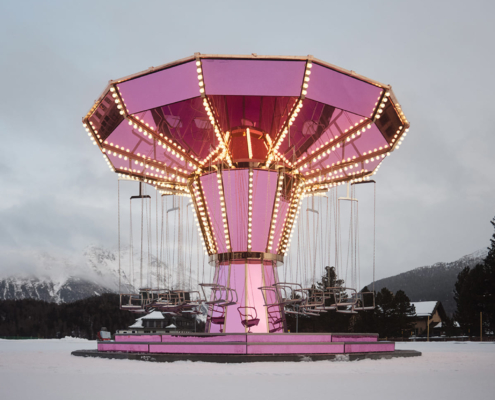
A suspension of ordinary perception is born from the collaboration between two forces, the Kulm Hotel St. Moritz in Switzerland and German-Belgian artist Carsten Höller.

Esoterrorist / Lust for Paper

Art&Culture | Spotlight
Esoterrorist is a publication that, much like its creator Genesis P-Orridge, refuses to be confined by definition or category, inhabiting a space that is deliberately unstable. In approaching its content, we have chosen to translate it into the form of a cut up, a process of dismantling and reassembling words that finds its origins in the experiments first of Brion Gysin and then William S. Burroughs.

One Sun / Alexander Wessely

Art&Culture | Interview
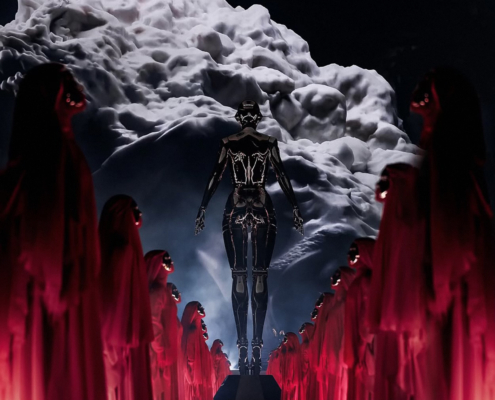
Alexander Wessely moves through sculpture, spatial installations, film and large-scale scenography with monolithic, ceremonial clarity and brutality. Light, body, architecture collide in spaces that feel almost ritualistic. He’s worked with The Weeknd, FKA Twigs, Grimes, Anyma, Arca. Shown at the Royal Dramatic Theatre, Konserthuset. Played with scale at Sphere in Las Vegas and at Madison Square Garden. He was the creative mind behind the 2025 Nobel Prize Ceremony, tracing light from the first spark of dawn. Stark. Precise. Brutal, if you want to call it that. And it works. Every single time. Leaves you altered, mesmerized, lingering, unsettling, like a forgotten memory that presses against the skin of the mind. In this conversation for NASTY, he reflects on perception as constructed, solitude as focus and why meaning in a world of infinite simulation only appears through limits.