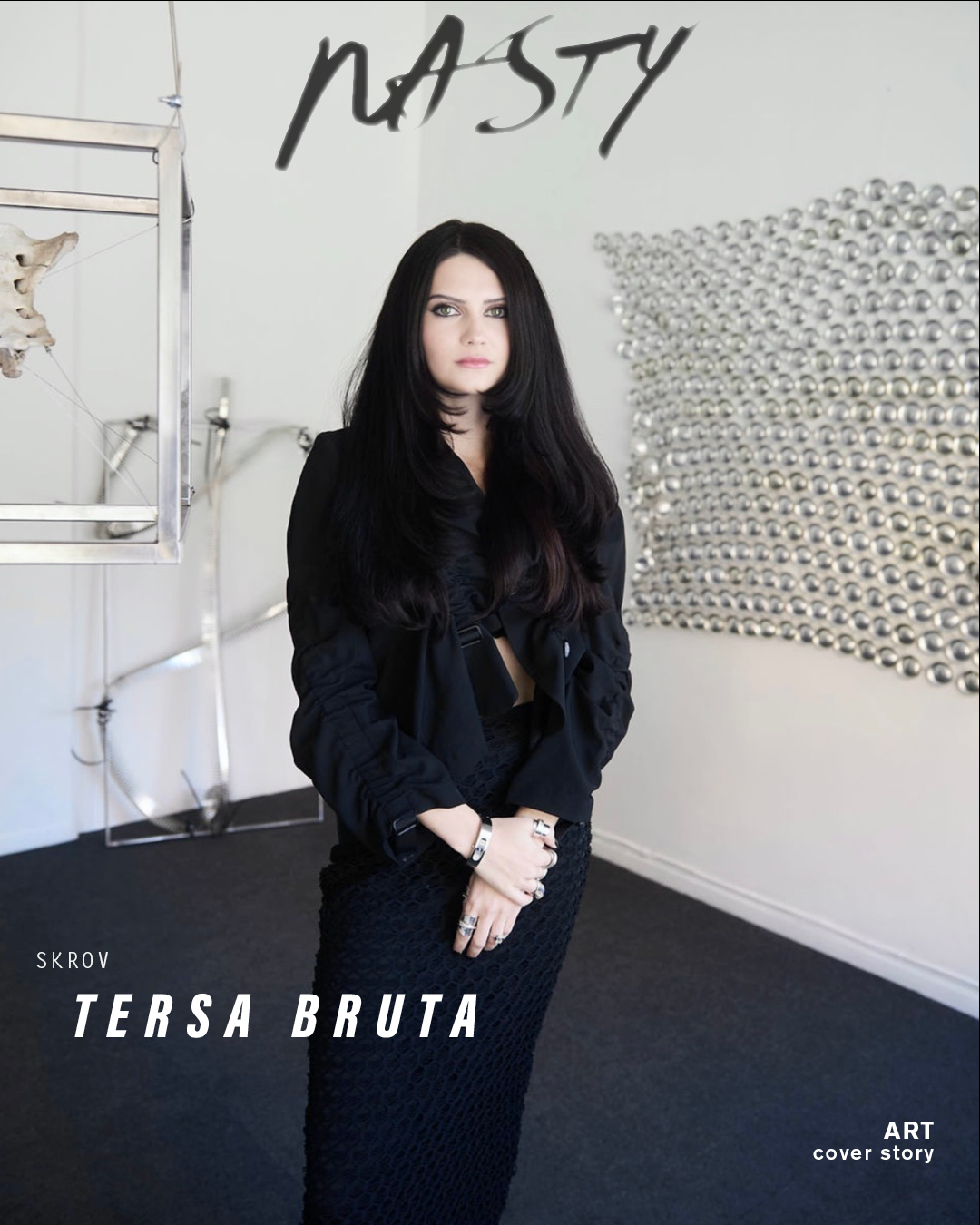
Showing inside HUD Space, whose name translates to skin. That alignment feels too precise to be accidental. Did the space find you, or did you find each other? How much does the architecture of where work lives change what the work means?
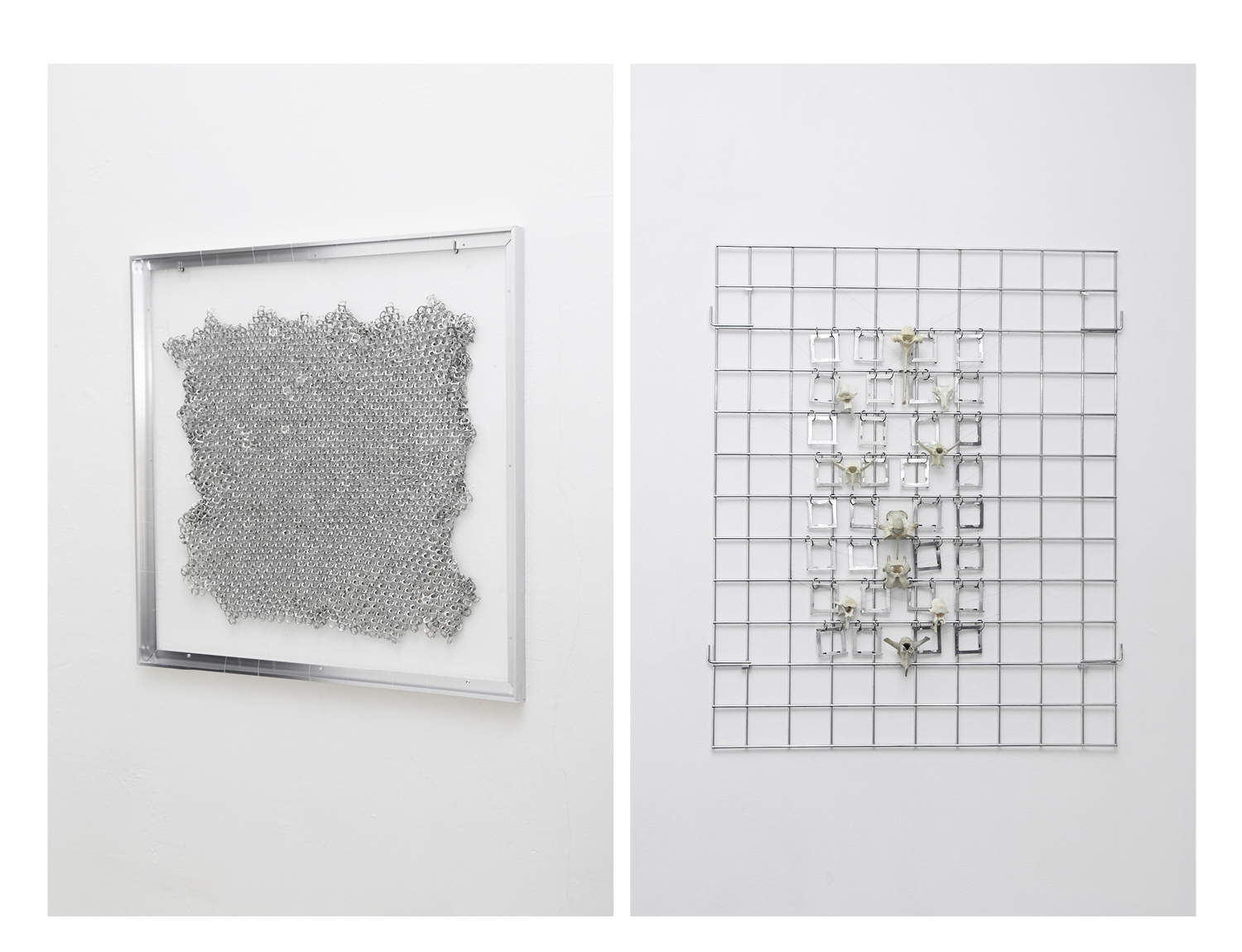
It was accidental, but the connection was immediate and impossible to ignore. The introduction came through my dear friend Undine Markus of New Arrivals, who helped produce the exhibition. Once I understood that HUD translates to skin, it felt exact. Skin was already central to the work, not as surface but as a system shaped by pressure, repetition, and time. HUD is run by Siri von Bothmer, together with Jonas Eriksson, and it’s not a neutral space. It’s not a traditional gallery, and that felt right for where I am in my practice right now. I love how she lets different types of creativity intertwine or stand completely alone. The soda can bottom quilt was developed specifically for the space. It acts as a surface in direct contact with it, becomes one with the internal architecture of HUD. The architecture determines how a body moves through it, and in this case, how a single word, skin, opens into multiple meanings depending on what it contains.
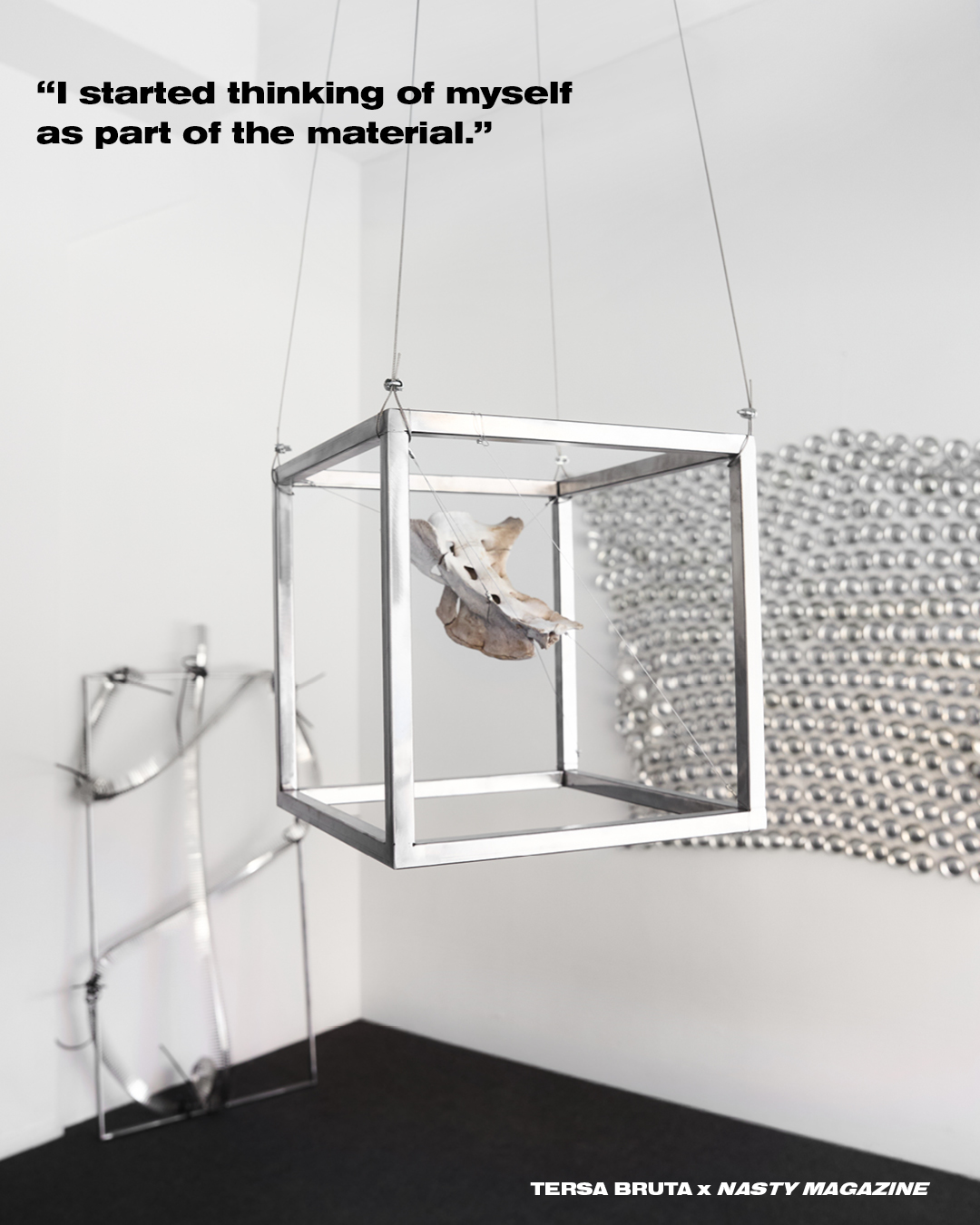
Deer vertebrae, “not as ornament but as structural truth: what persists once vulnerability has passed.” What does the vertebra do structurally in the work? And what does it do psychologically for you and for the viewer?
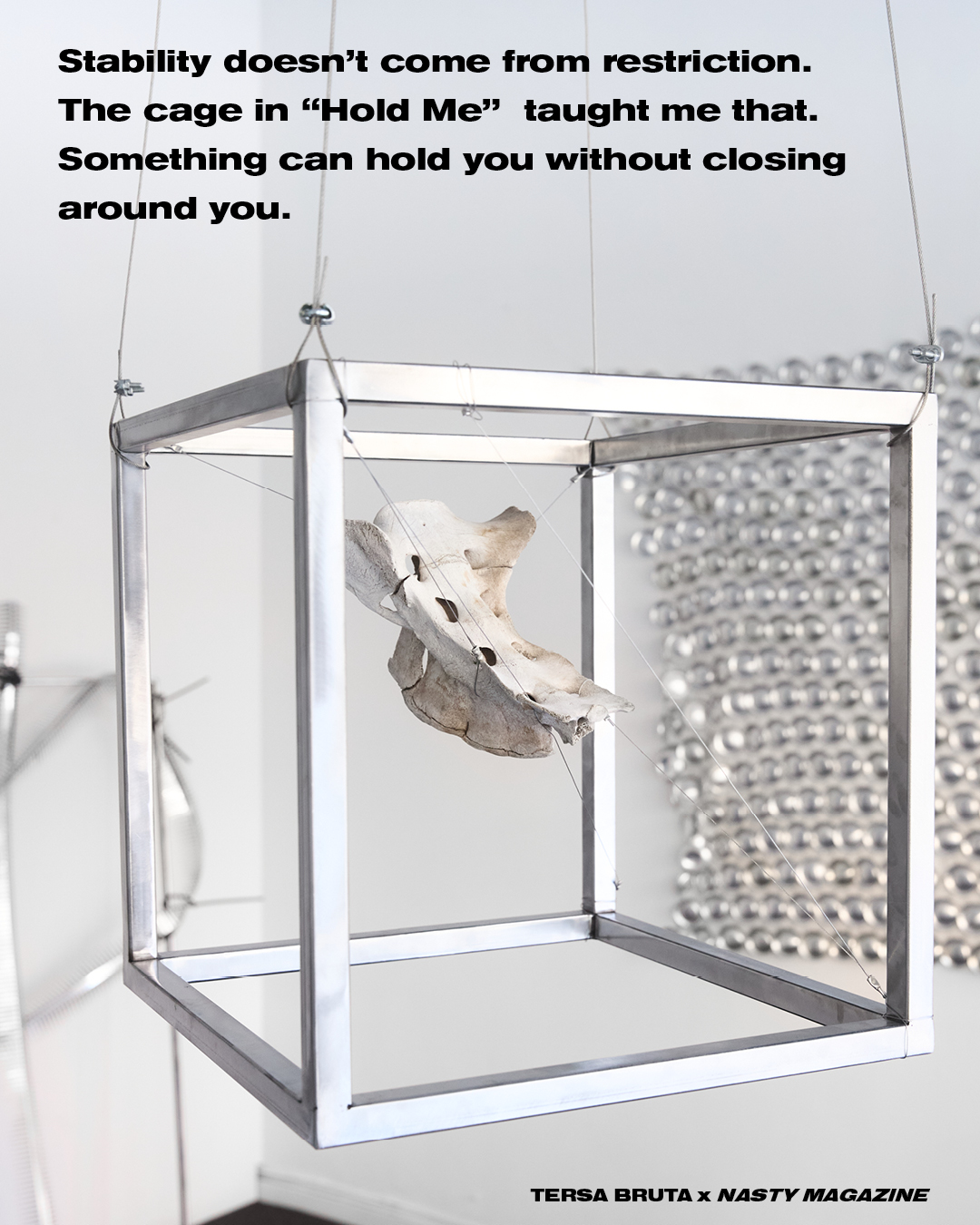
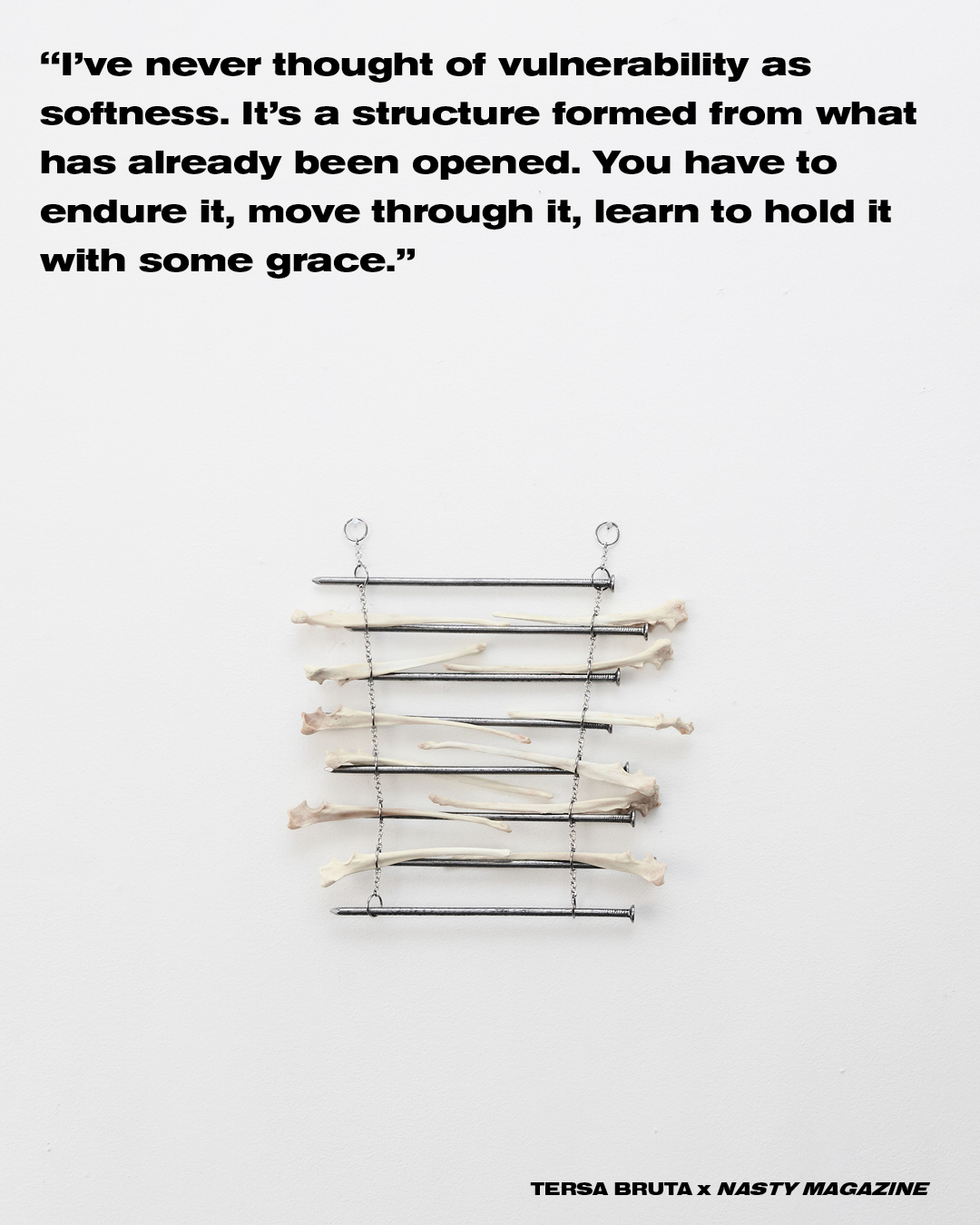
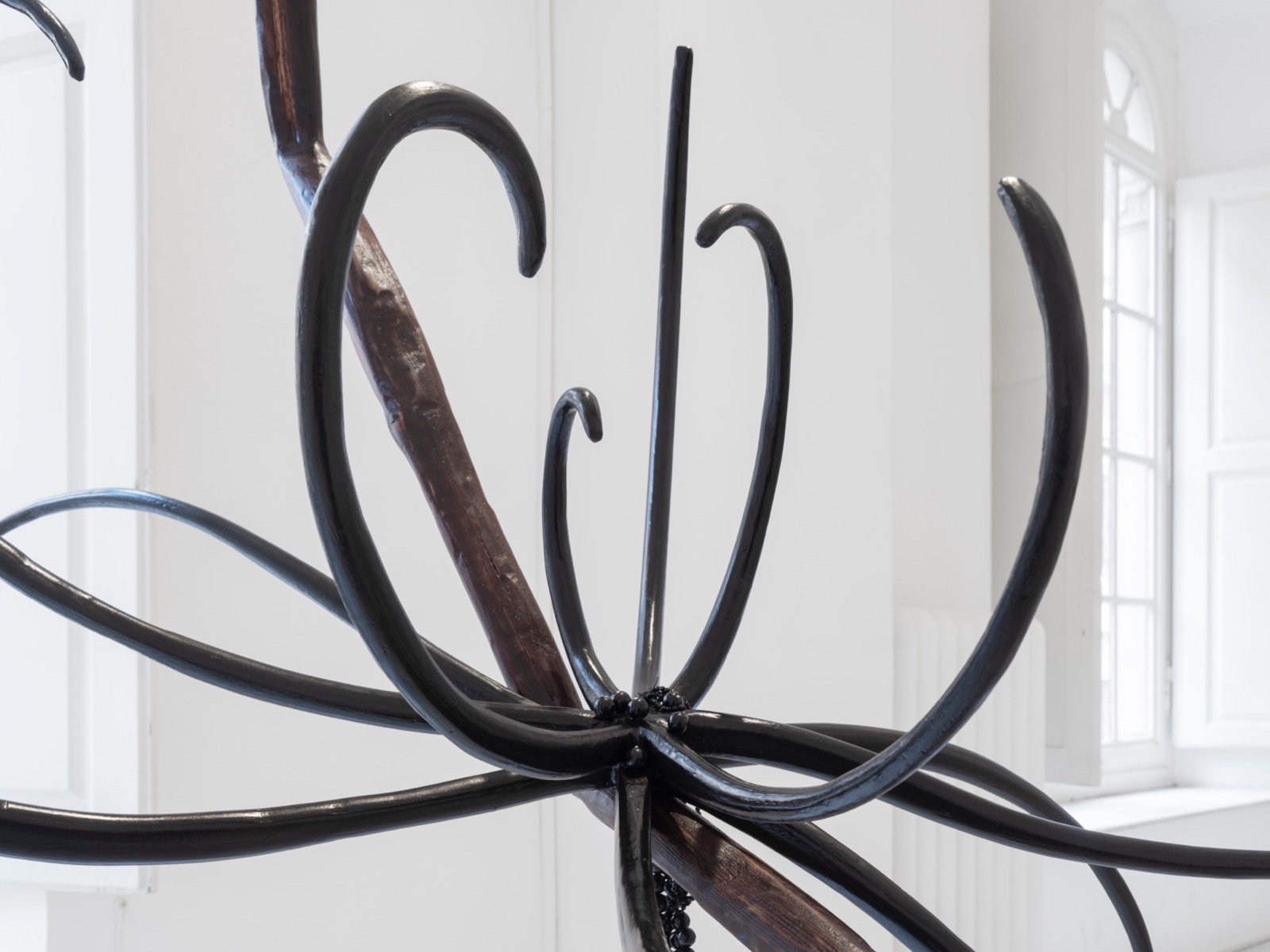
The vertebra is not symbolic. It’s structural. It holds the body. Carries weight over time. Allows movement without collapse, but it’s never fully secure. It’s both strong and fragile, responsible for everything while remaining exposed. Placed within a more rigid system, it interrupts abstraction and pulls the work back to the body. It introduces support that is precise, necessary, and always at risk. In Hold Me, I think of myself as the vertebrae. The wiring that suspends it is my trust in myself. I know it could snap. The steel cube is a higher form of me, holding me in place, telling me I’m protected without needing layers, without additional material. It’s contained and suspended at the same time. Still vulnerable, but held.
You source bone fragments, materials already used up by something else. What is your philosophy on what they carry: memory, history, prior life? And how does that differ from working with metal, wax, industrial remnants?
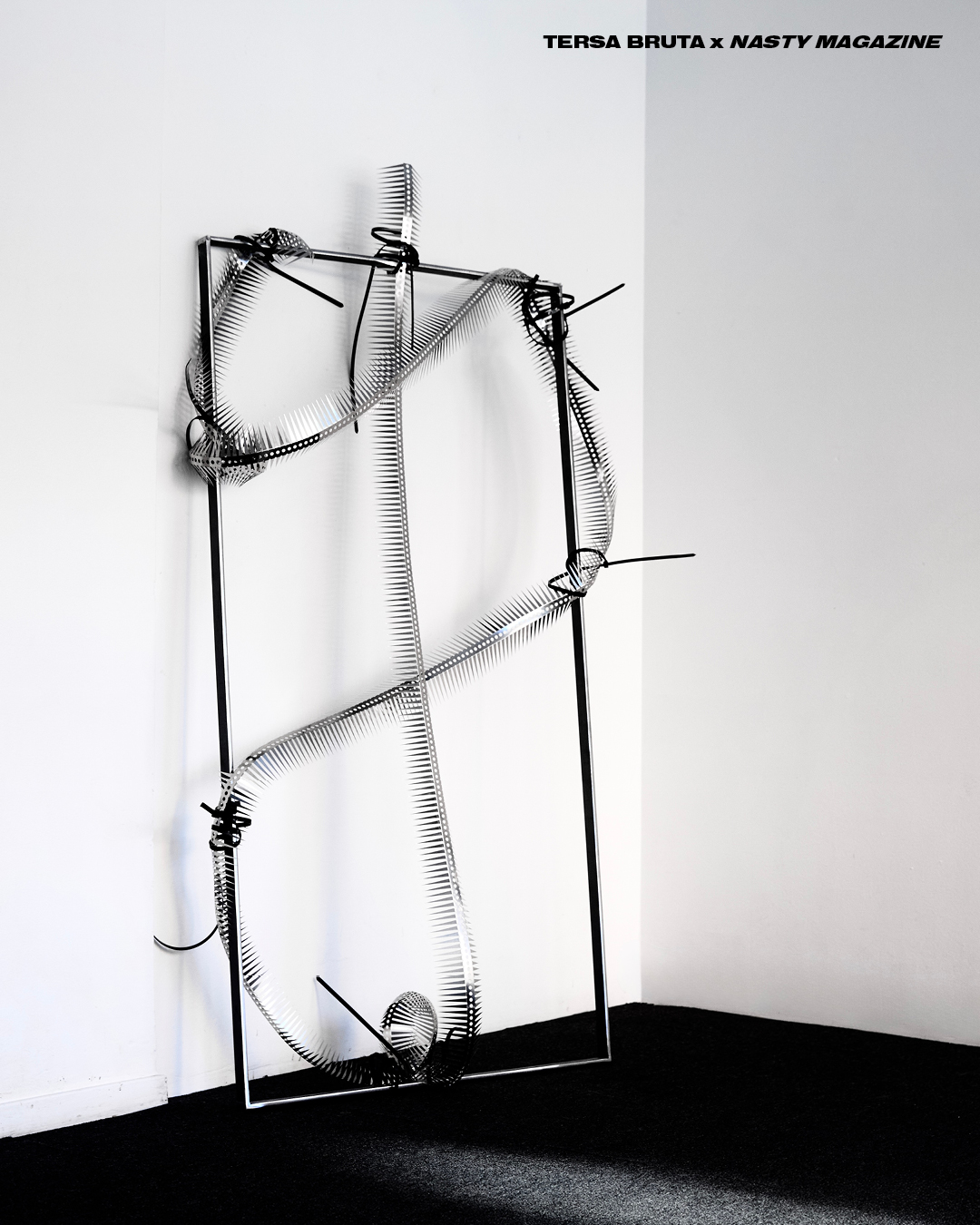
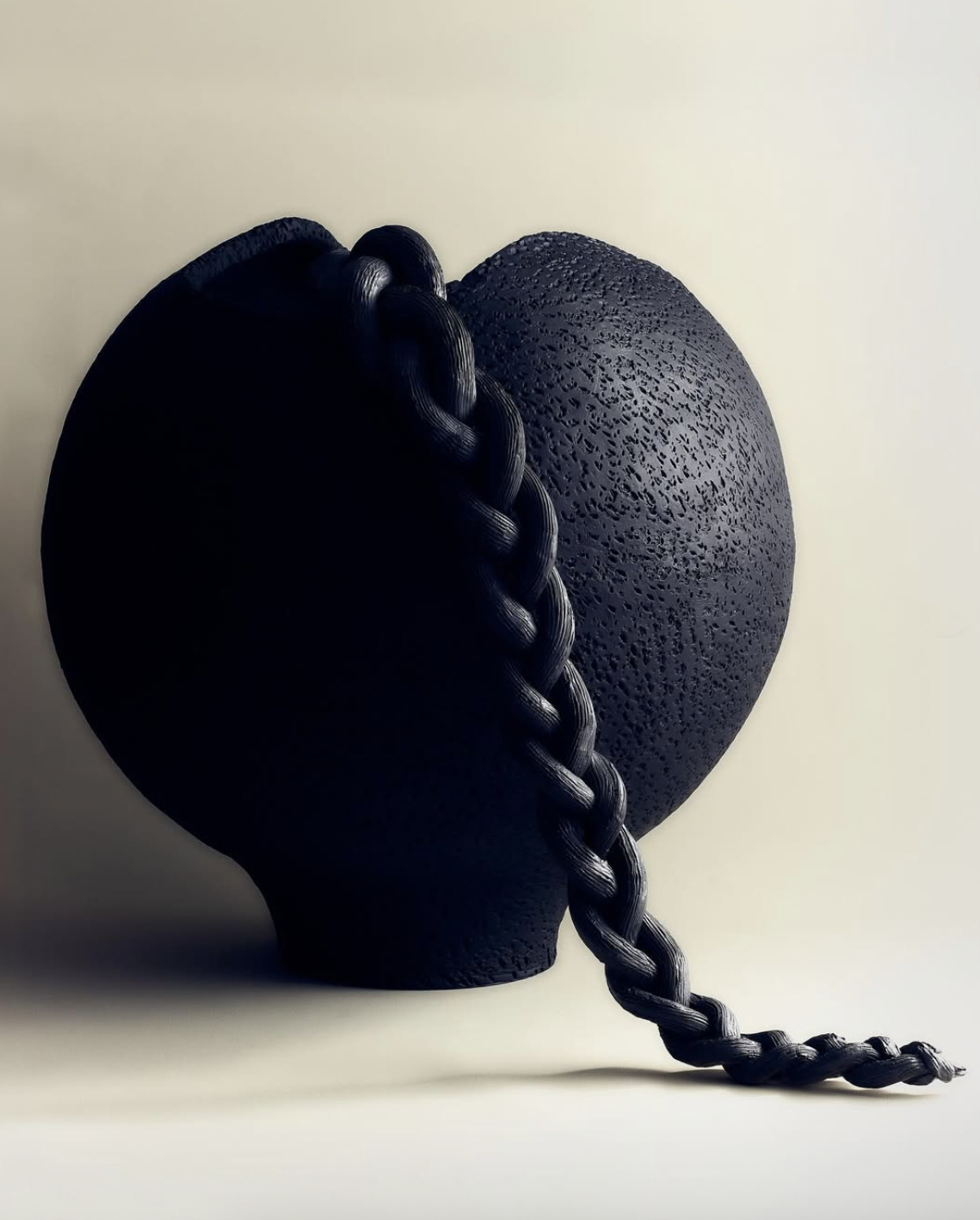
Bone carries prior structure. It held weight, functioned as support, existed inside a living system. Industrial material carries a different kind of history: production, repetition, consumption, disposal. It’s shaped by process rather than growth. I’m not interested in separating those conditions. I think they work in a strange harmony. The body doesn’t exist outside of either system. Bone and metal aren’t opposites, they’re parallel structures, one biological, one manufactured. The work lives where they meet, where the distinction between them starts to collapse.
The statement says materials enter the work through the artist’s own body. Explain that literally. What enters you, what passes through, what stays?
The material is processed twice. First through consumption: the cans pass through my body as part of a daily system, mine and my partner’s, eight months of water, beer, soda. Then they’re processed again through labor: hand cut, punched, each ring linked one at a time. What results is not neutral material. It has already moved through intake and residue before it becomes structure. It carries a prior use, then a second transformation. Consumption and construction collapse into the same system. I spent a lot of time alone in the studio building Obsessive Consumption I. Sometimes with no music. I’d let my thoughts move and come back to me in resolution or just fall away. I physically and mentally poured myself into it and felt myself change through the making of it.