“Charred and limbless trunks of trees stretching away on every side, ash moving over the road and swinging hands of blind wire strung from the blackened light poles whining thinly in the wind. A burned house in a clearing and beyond that a reach of meadowlands stark and gray. And a raw red mud bank where a roadbank lay abandoned.” (The Road, Cormac McCarthy)
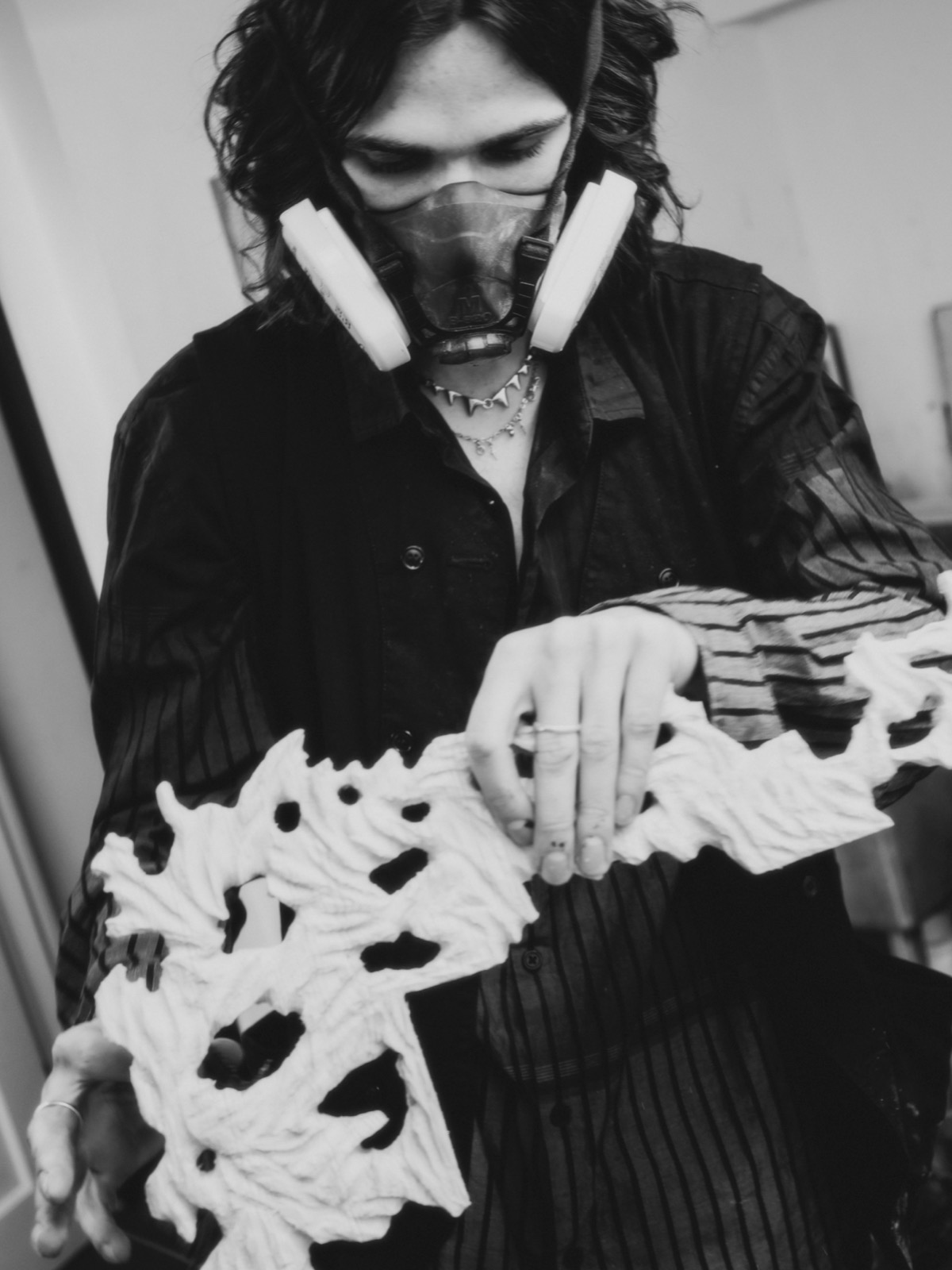
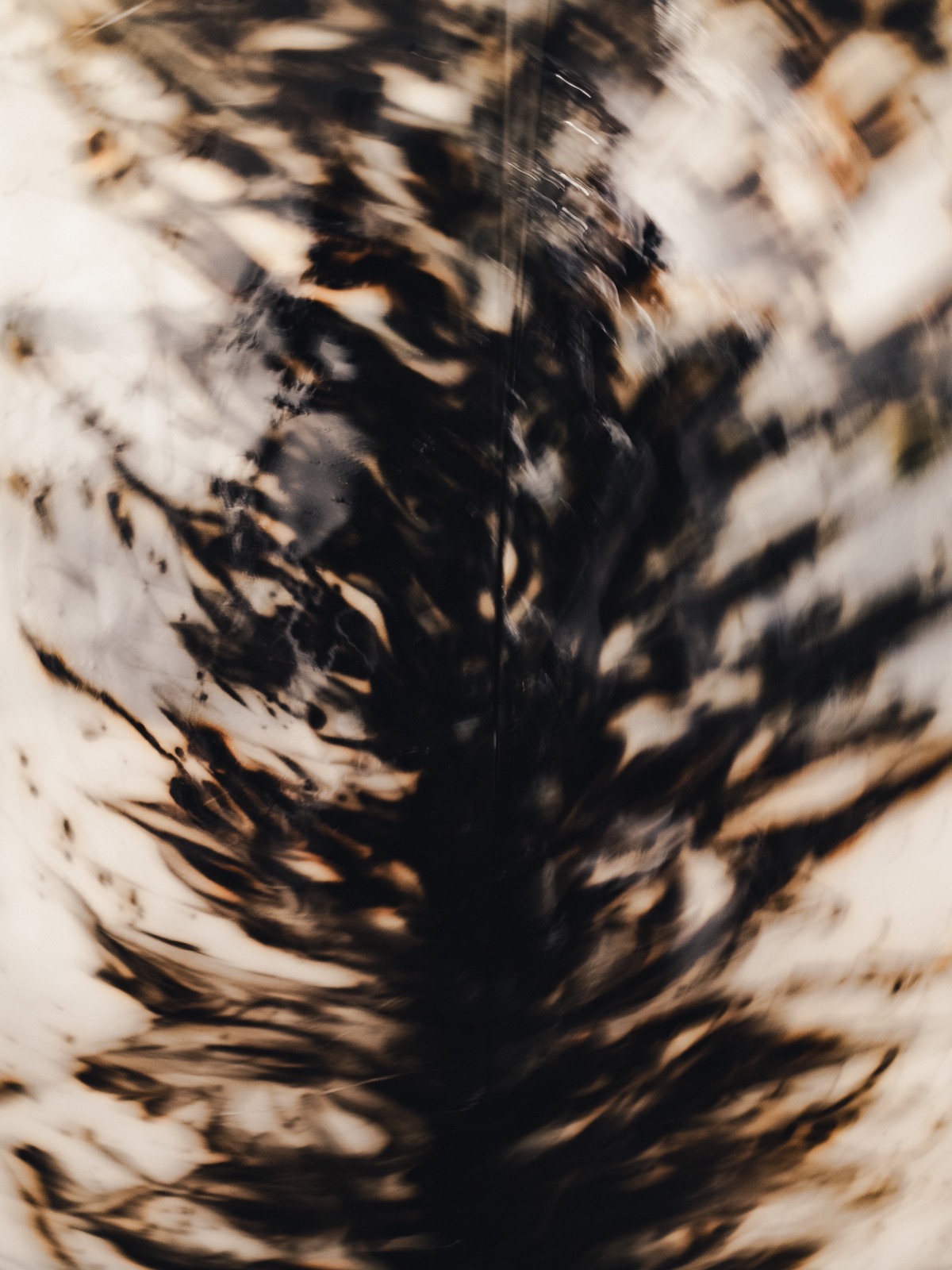
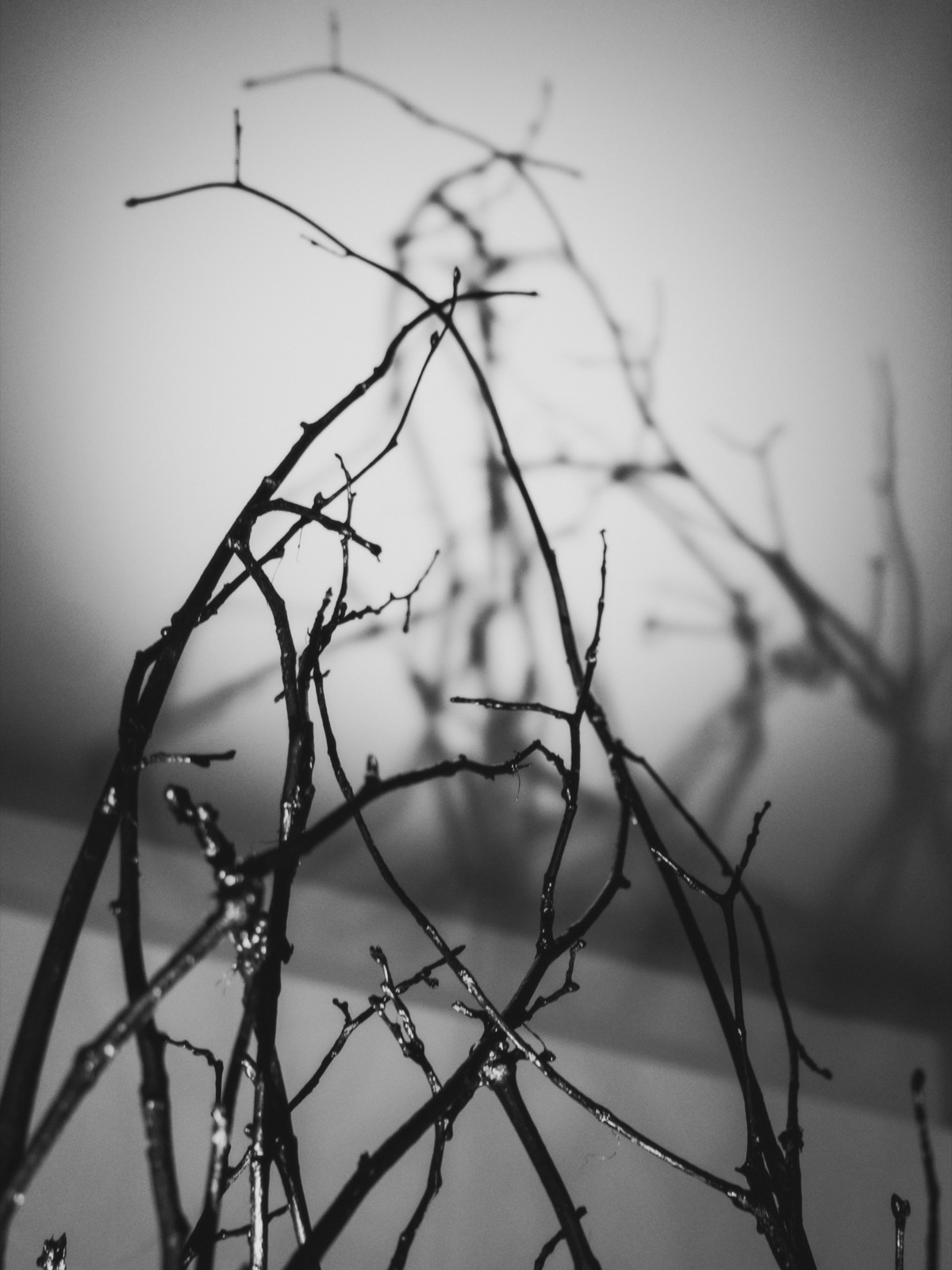
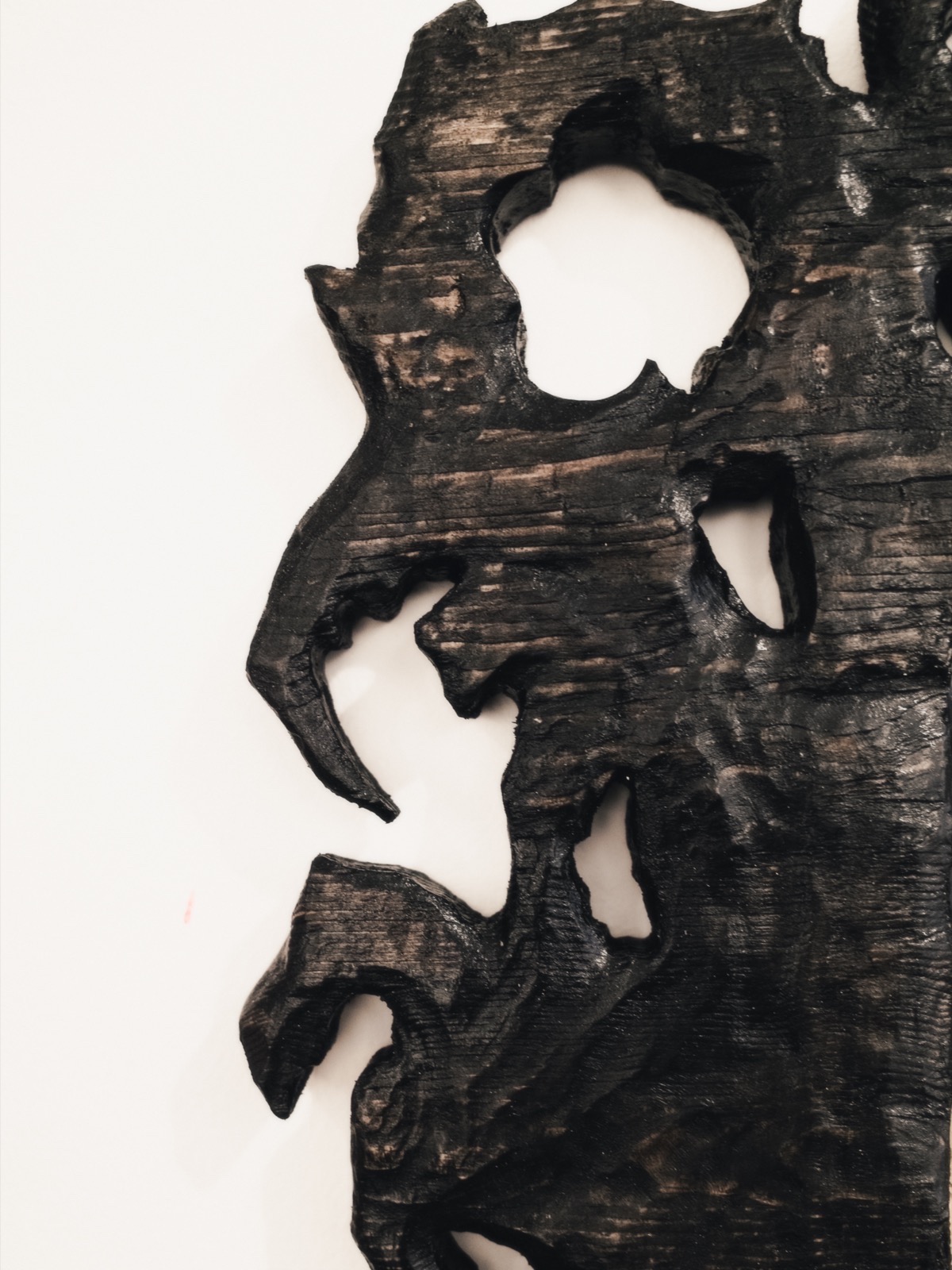
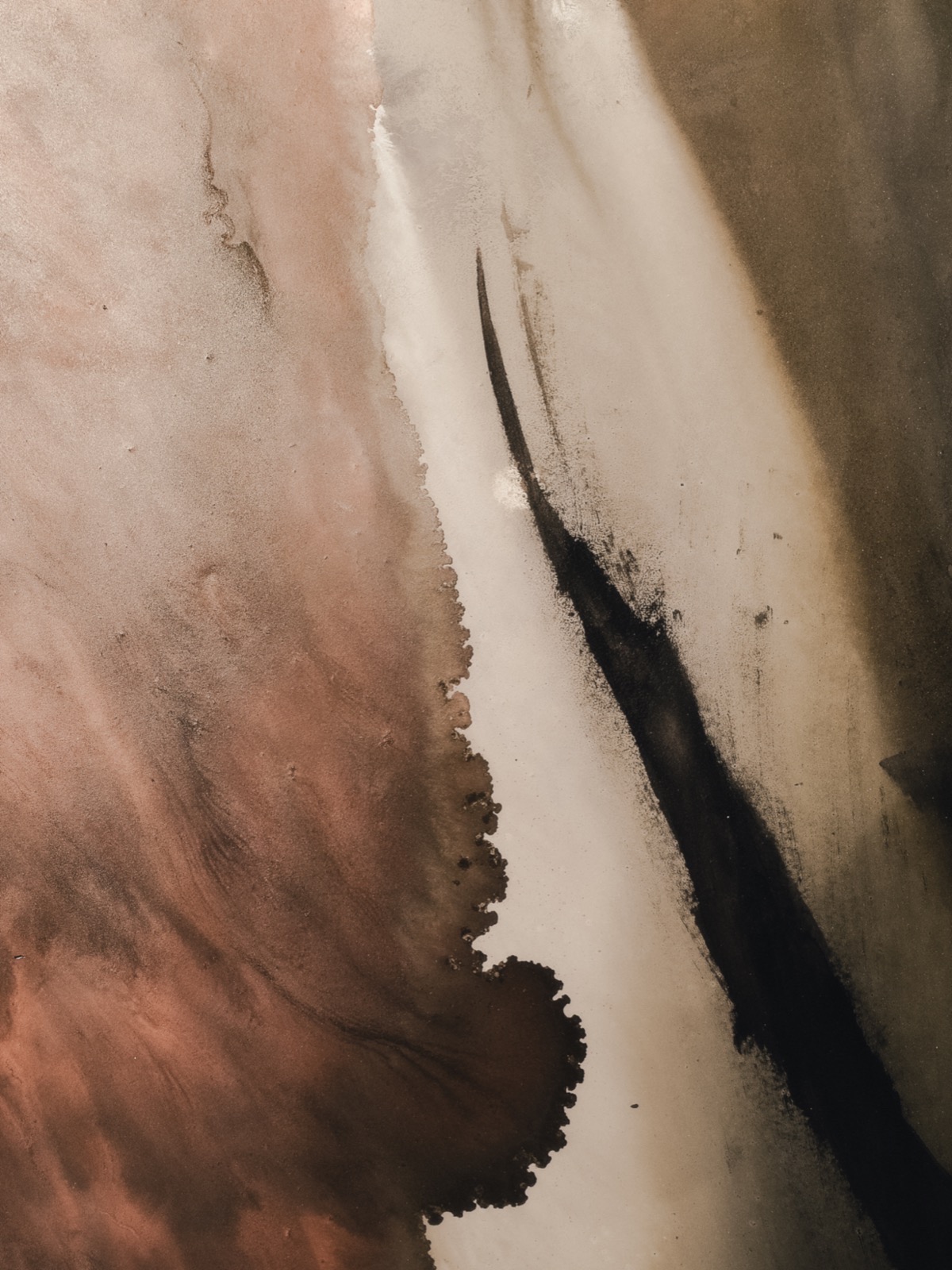
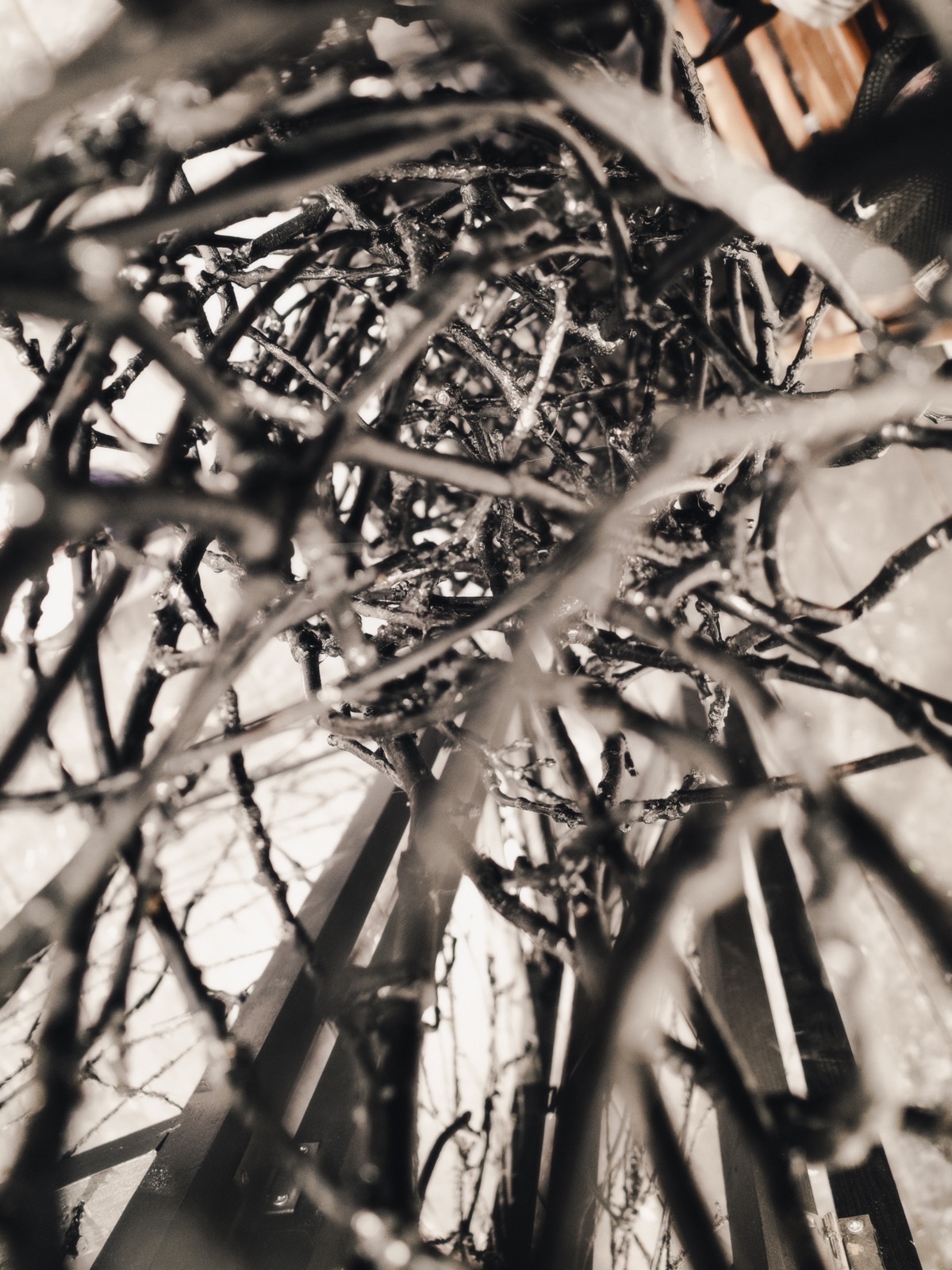
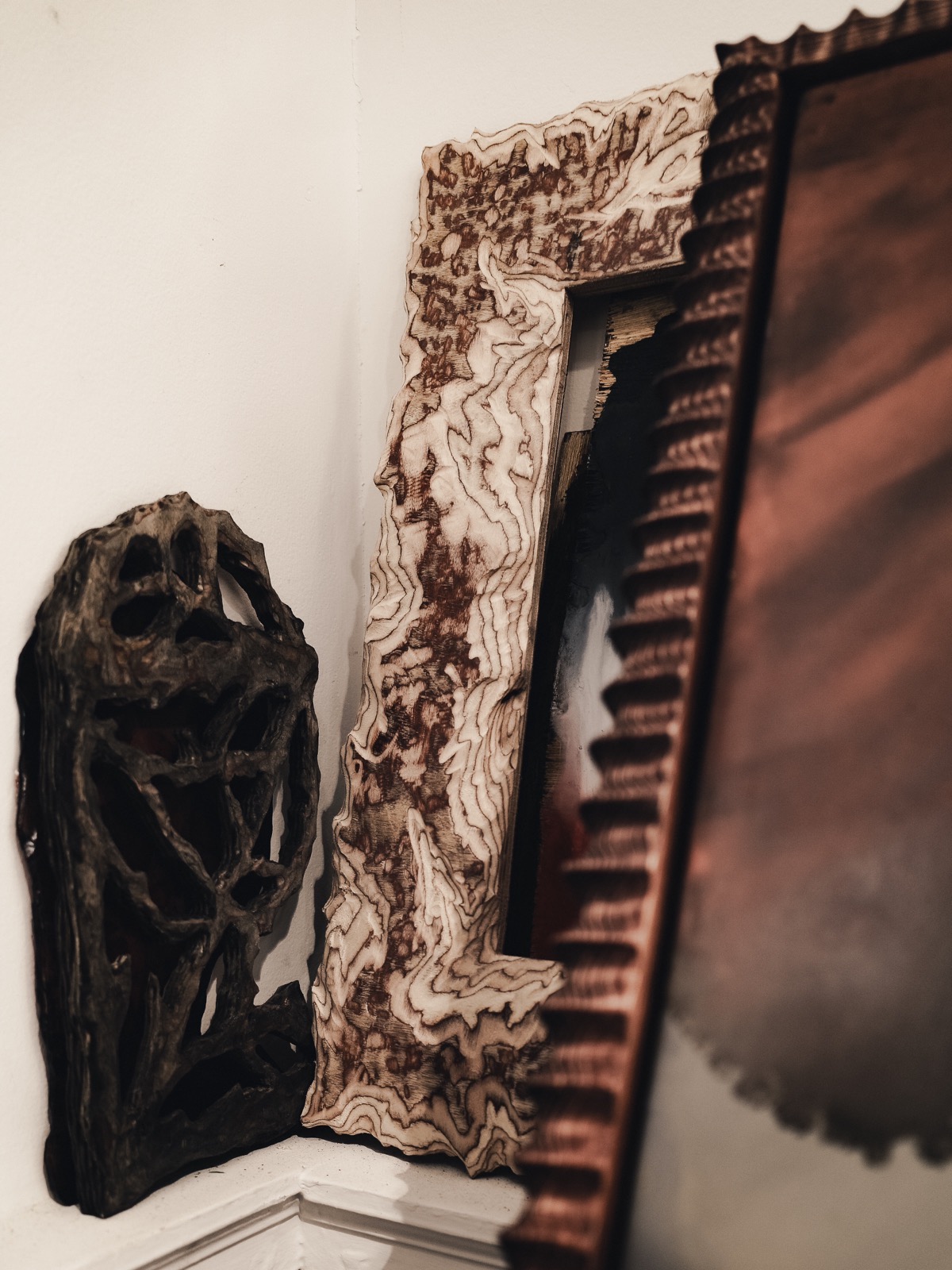
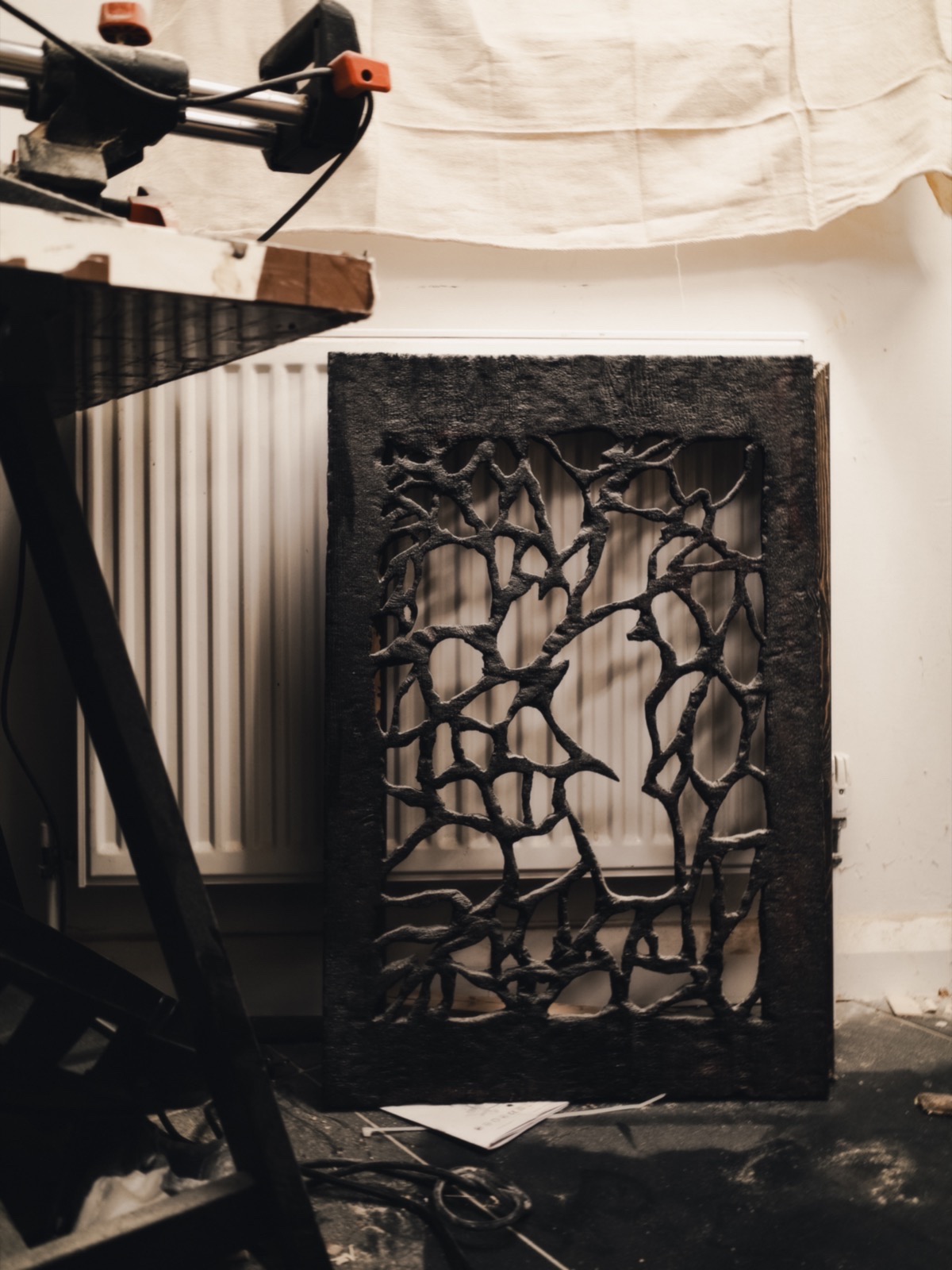
This passage illuminates human fragility in the face of nature – at its most raw and consumptive. With the two elements competing in permanent tension. With “A Moth to a Flame”, Laver broaches humankind’s interaction with the natural world and the struggle between control and freedom within that. This is explored through abstract landscapes that have been created as spontaneous compositions. Vast surfaces with a fluid sculptural quality. A contemplation of nature’s physical realities and depths, through veins, roots, weather systems, and fractured river paths that cut through the landscape.This will begin in a stark white room where these landscapes reside, but the works grow and change in the light. Their jagged edges casting mutable shadows that will bathe the room. Before being drawn to a darker cocoon – emanating mystery. The materials mirror the same struggle as the themes. Chosen for their volatility and the ability to yield the unexpected.
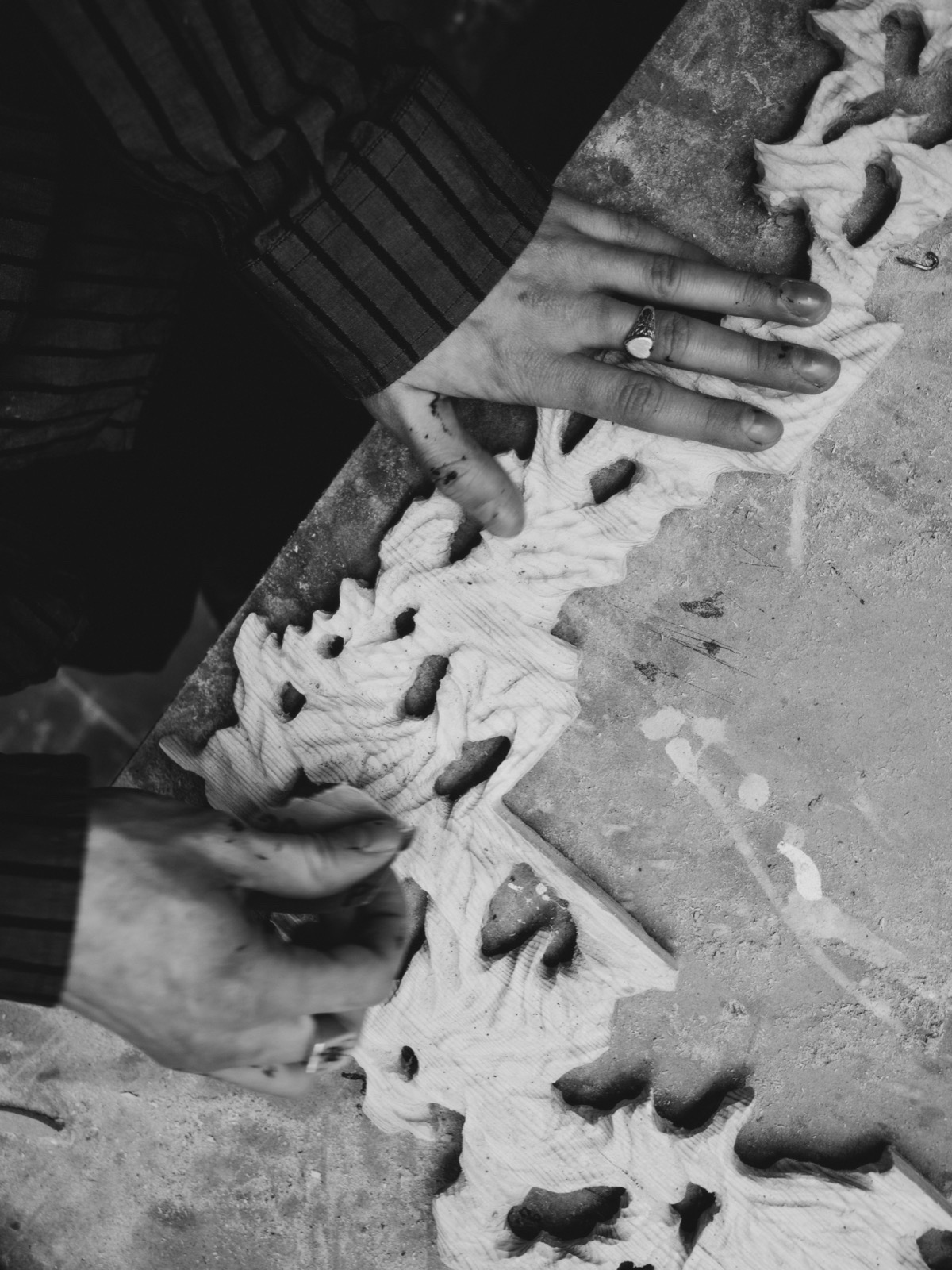
For Laver, the very act of creation becomes a battle with the materials that mirrors the tension found in humanity’s interaction with nature. As there is a mutability to them that defies control. Some are immediately volatile and some change with time. Using ink washes, pigments and resin.The desolation of these landscapes deliberately exists beyond humanity’s influence on nature. Suggesting something pre or post humankind in the cycle of growth and decay. Humanity as a transient flicker on this wider landscape or timeline even. The hubristic advance of modernity and technology for its own sake. Laver almost called the show “Flicker” alluding to this transience. Joseph Conrad explores this in Heart of Darkness. Reflecting on civilisation and how humanity is but one precarious moment in time: “We live in the flicker, may it last as the old earth keeps rolling! But darkness was here yesterday”. Come and experience this flicker. Be humbled by the perspective of nature. Who knows when the darkness will envelop again.