Until 12th December, Galleria Francesca Minini presents an exhibition by Ivana Bašić that feels like a threshold moment. Fantasy Vanishes in Flesh is a place where the human and the post-human meet through instinctive gestures, ancient substances and shapes that hover between species. This is the final opportunity to encounter a body of work in which clay, alabaster and encaustic wax are pushed to states that feel both prehistoric and futuristic. The exhibition unfolds less as a sequence of artworks and more as a journey of birth and regeneration, in which the visitor becomes a witness to forms that appear to be discovering themselves for the very first time.
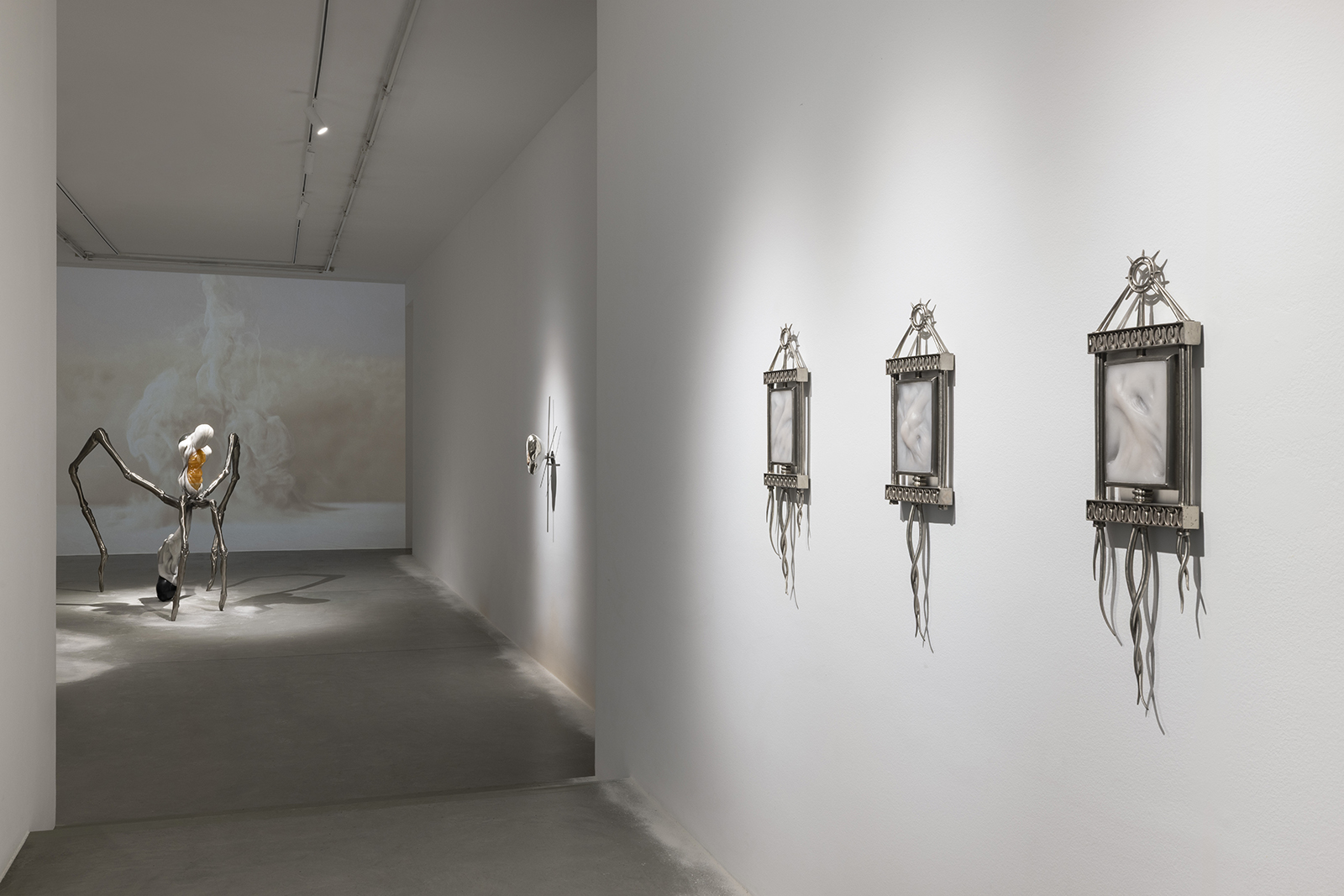
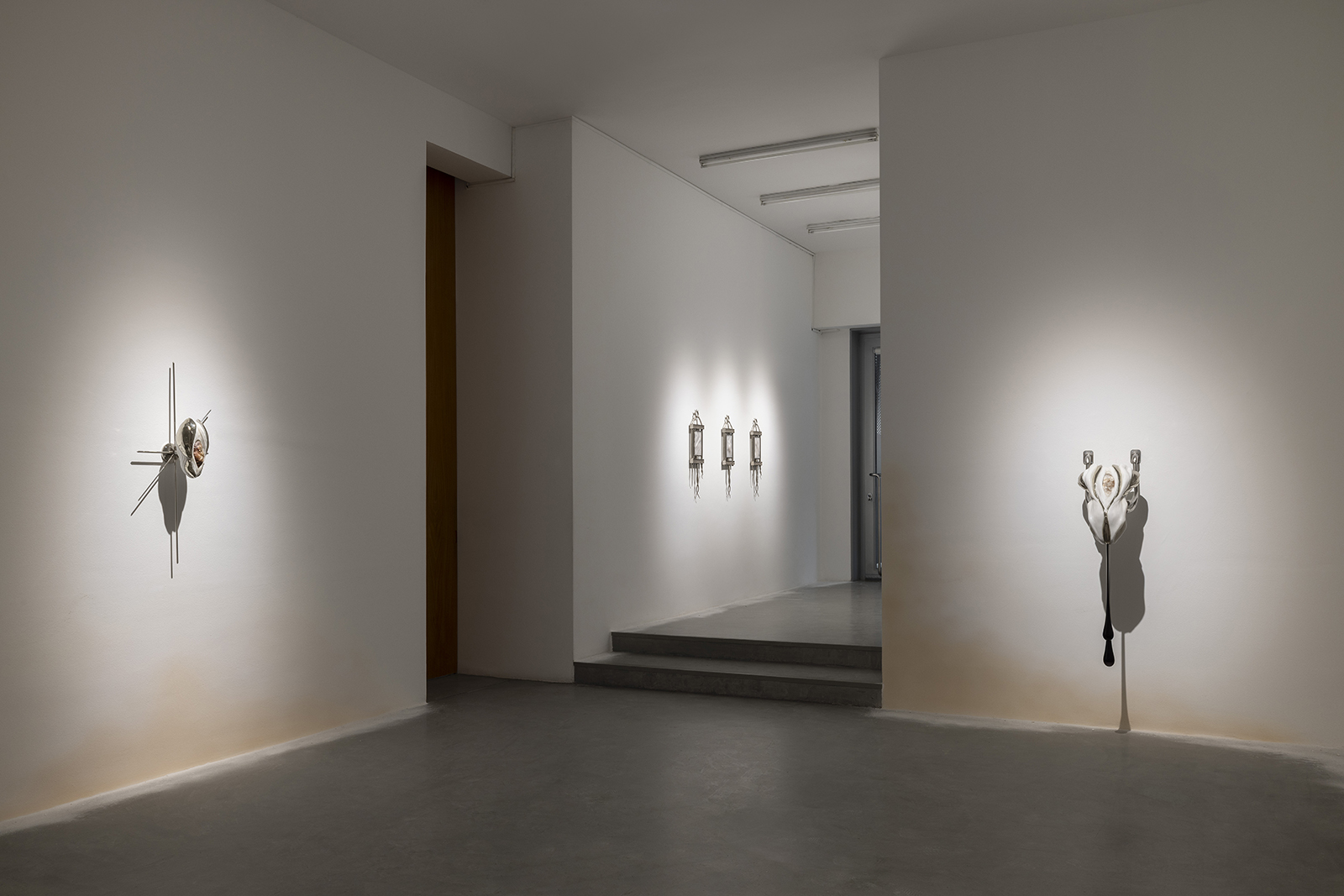
The small works that greet the visitor are essential because they establish not only the title of the exhibition but the grammar for everything that follows. The three Fantasy Vanishes in Flesh (2025) are simple but decisive gestures that set the rules of the entire universe of the exhibition. Each one describes a relationship between two elements that are almost opposites balancing the celestial and telluric. These pairings form a vocabulary of dichotomies: human and non-human, softness and hardness, fragility and resilience, all accustomed by the instinctive mark and the slow shaping of matter. These early pieces provide the key to interpret the entire exhibition; they are like an alphabet of tensions that Bašić returns to again and again, allowing the rest of the show to build in complexity. Their directness is important as it offers clarity before the visitor enters the denser metamorphic space of the first room.
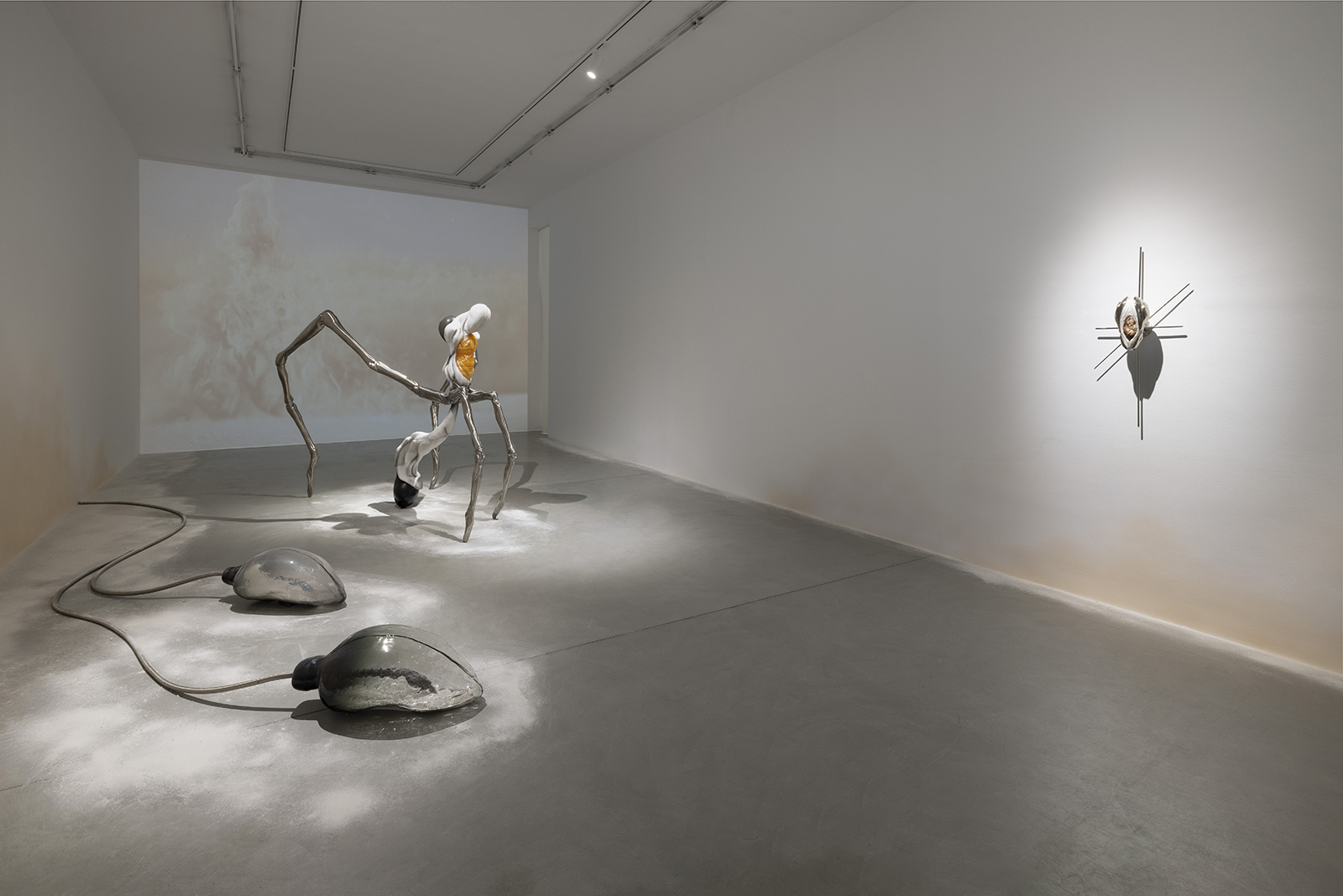
The first room is where the exhibition truly begins its movement from language to creature. At its centre stands the mantis-like sculpture in encaustic wax. This work quite narratively titled I had seen the centuries, and the vast dry lands; I had reached the nothing and the nothing was living and moist (2018-2024), embodies many of the dualities announced at the beginning. It is an insect but also human. It is fragile but also alert and ready. The material choices intensify the ambiguity. The wax suggests skin but also carapace, while the subtle chromatic shifts add a sense of something living that is quietly breathing beneath its surface. The mantis figure feels as though it has only recently achieved verticality, as if standing is a discovery rather than a habit. Bašić’s creatures do not simply exist. They appear to be in the process of learning what a body might be allowed to do and this is precisely what gives them their uncanny tenderness: they are neither monsters nor symbols but new presences made from an ancient desire to shape the world with one’s hands.
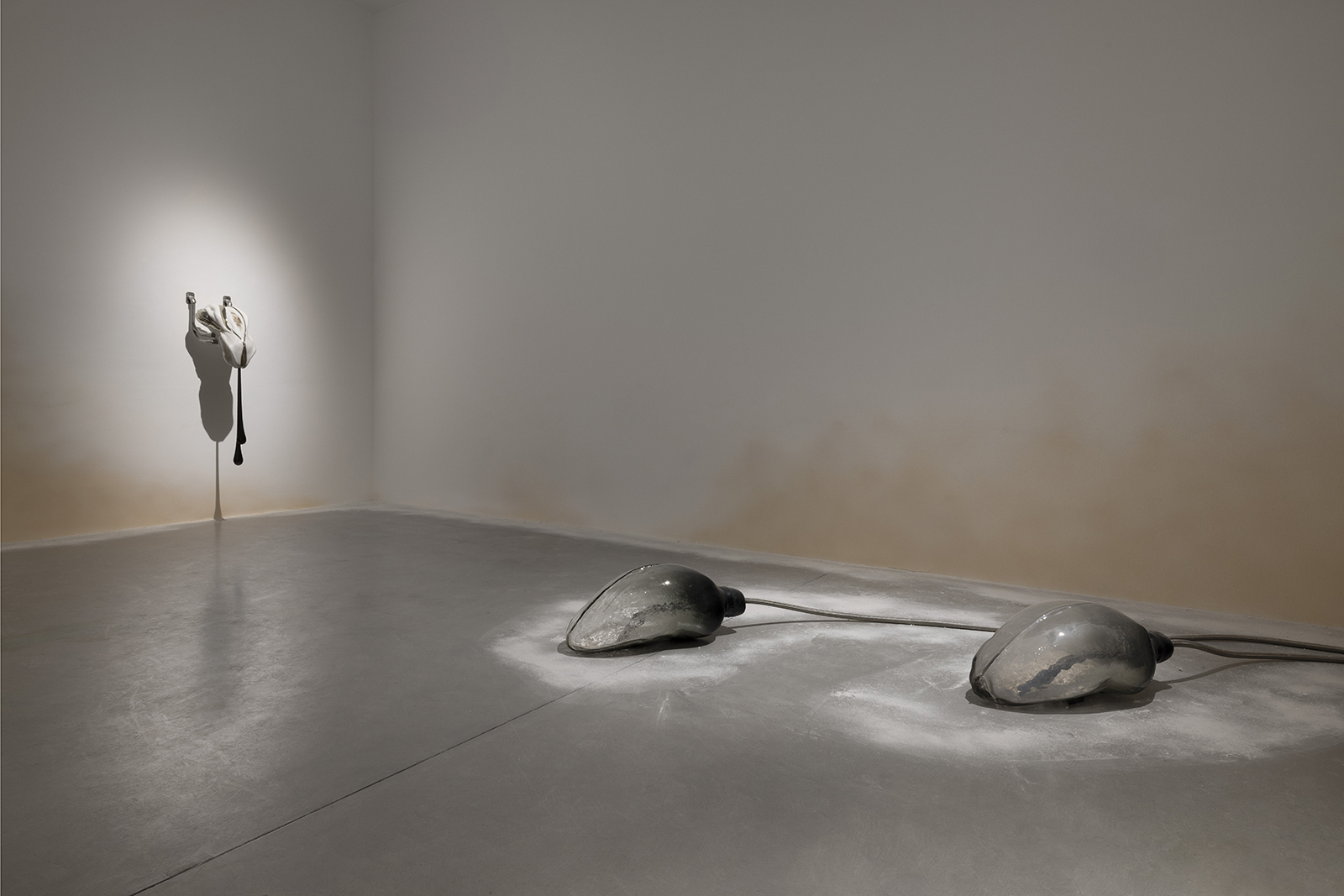
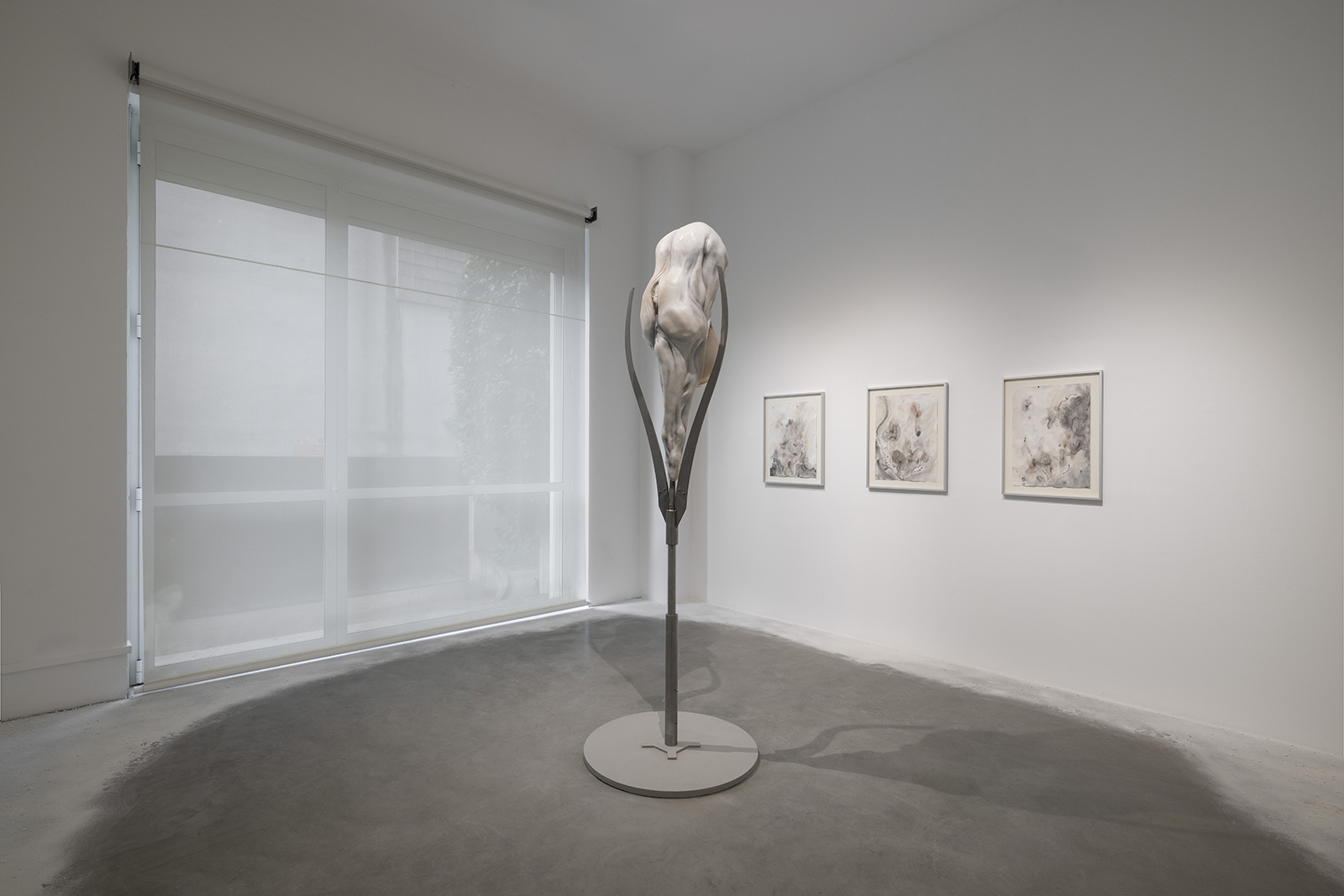
At the end of the journey the visitor encounters a sculpture that seems to be shedding its own substance. Viewed from the back, it resembles alabaster peeling or separating, almost like a membrane in the midst of splitting. The surface appears to be folding away from itself, revealing a new presence below; its wax, clay and alabaster feel older than language, as if their histories carry memories of the earth’s earliest attempts at life. Placed alongside this sculpture are three watercolour paintings on paper each of them titled Undergrounding (2024) even if numbered differently. Their softness counterbalances the sculpture’s physical tension: a juxtaposition so central to the exhibition that it bears on its shoulders the conversation, the inner movement of the sculpture and the material quality of the watercolors. It is the moment in which the exchange between archaic and futuristic materials reaches its most intimate form. The work evokes the early stages of pregnancy, when cells divide and reorganise into something that does not yet have a name. This makes the final sculpture feel like the exhibition’s deepest truth. It is not simply the end of the journey. It is the beginning of something that has not fully appeared yet.
Ivana Bašić’s exhibition offers a rare combination of directness and depth. It uses clarity to open a space for wonder and employs ancient materials to articulate a vision of bodies that have not yet been conceived but that feel like the alien embodiment of our desires and fears. Her forms carry the memory of a world marked by conflict. They bear the residue of histories shaped by violence, displacement and survival. The creatures that appear in her sculptures look as though they could have emerged from a post nuclear terrain, where the human has been forced to evolve beyond recognition in order to persist. This is what gives the exhibition its urgency. Bašić’s vision is not dystopian but insistently present, a reminder that new anatomies are already being shaped by the pressures of our time.