Halfway Across / Sirat

A movie by Oliver Laxe, 2025.

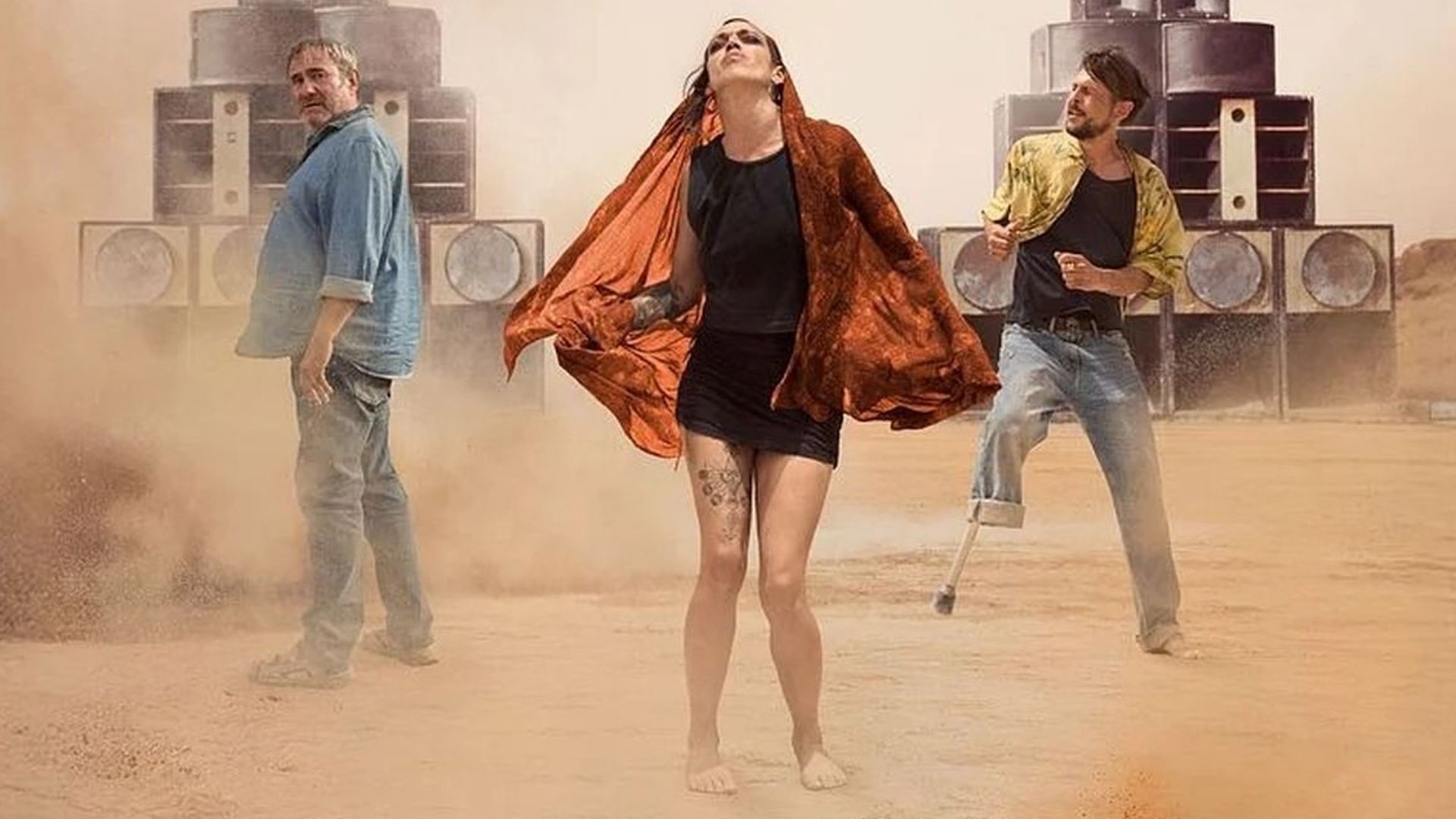
A wall of speakers stands in front of me. Kangding Ray’s soundtrack pushes through the room with a density that feels almost material, while bodies projected onto the screen move in rhythmic waves across the Moroccan desert. For a moment, the distinction between film and environment becomes unstable: sound spills outside the image, and the room begins to behave like an extension of the film itself. This was the condition of the immersive screening organized at BASE in Milan. Sirat, the latest film by Óliver Laxe, is a work that resists passive viewing. It operates through pressure, sonic, spatial, and emotional, until spectators stop observing from a distance and begin inhabiting the film’s conditions.
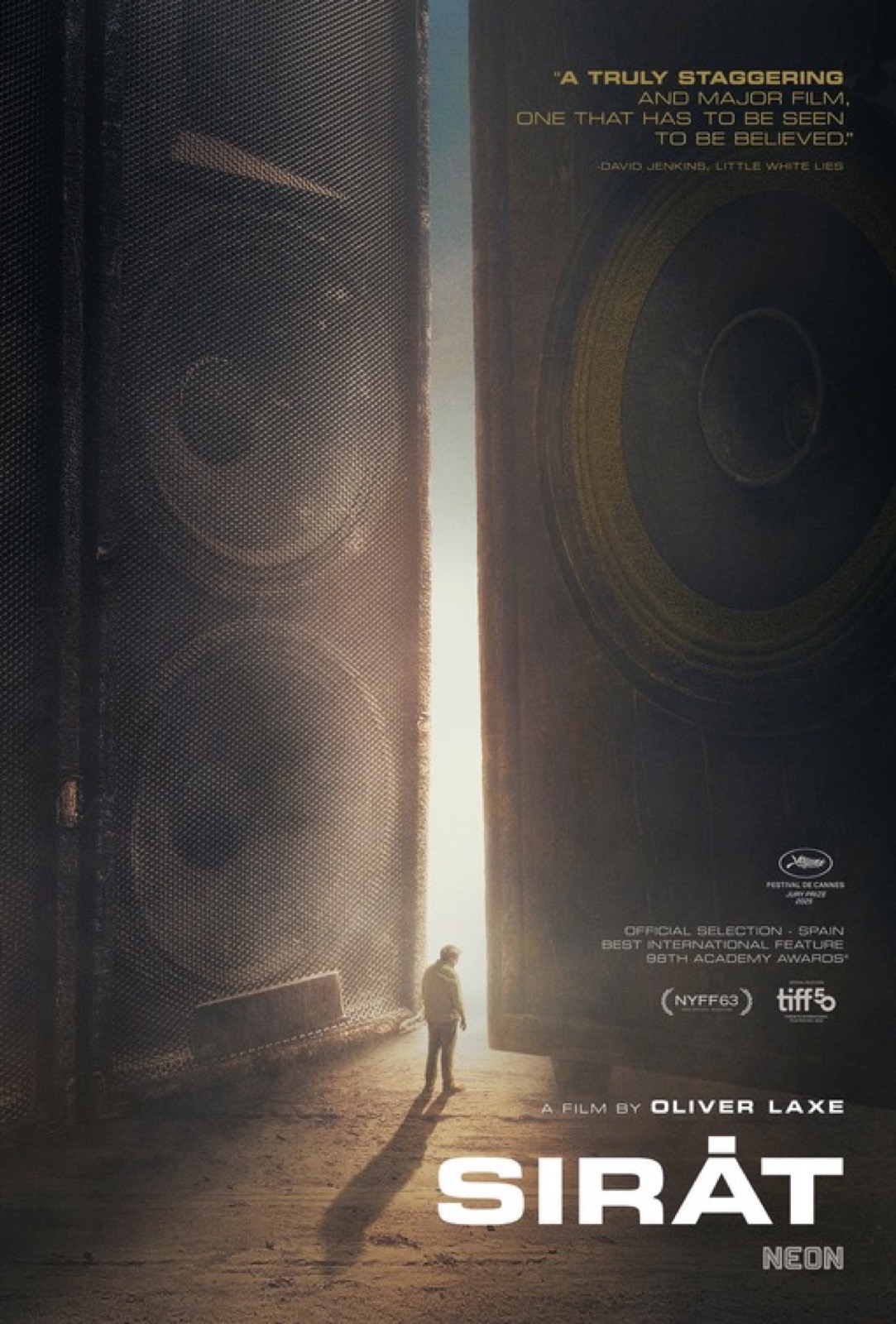
Cinema rarely ends when the lights come back on. It ends later, when the body begins to register what it has been subjected to. The moment I anticipate most in any film is its ending. Not because I am eager to leave the theater, but because the closing credits mark the point at which impressions start to take shape as thoughts. During the screening, they remain suspended, partial, unstable. Only afterward can they begin to settle into language. With Sirat, that process is unusually difficult. Winner of the Jury Prize at the Cannes Film Festival, the film moves with a quiet but relentless logic. Its opening gesture is already a warning: the title refers to the bridge that, in Islamic tradition, souls must cross on the Day of Judgment. The Sirat, thin as a hair, sharp as a blade, connects paradise (Janna) to hell (Jahannam). The idea inevitably recalls another literary threshold: the inscription at the gates of hell in The Divine Comedy by Dante Alighieri: “Abandon all hope, ye who enter.” Both structures serve the same narrative function: they establish that once the crossing begins, return is no longer guaranteed. Sirat adopts that logic almost immediately.

The title refers to the bridge that, in Islamic tradition, souls must cross on the Day of Judgment. The Sirat, thin as a hair, sharp as a blade, connects paradise (Janna) to hell (Jahannam). The idea inevitably recalls another literary threshold: the inscription at the gates of hell in The Divine Comedy by Dante Alighieri: “Abandon all hope, ye who enter.”

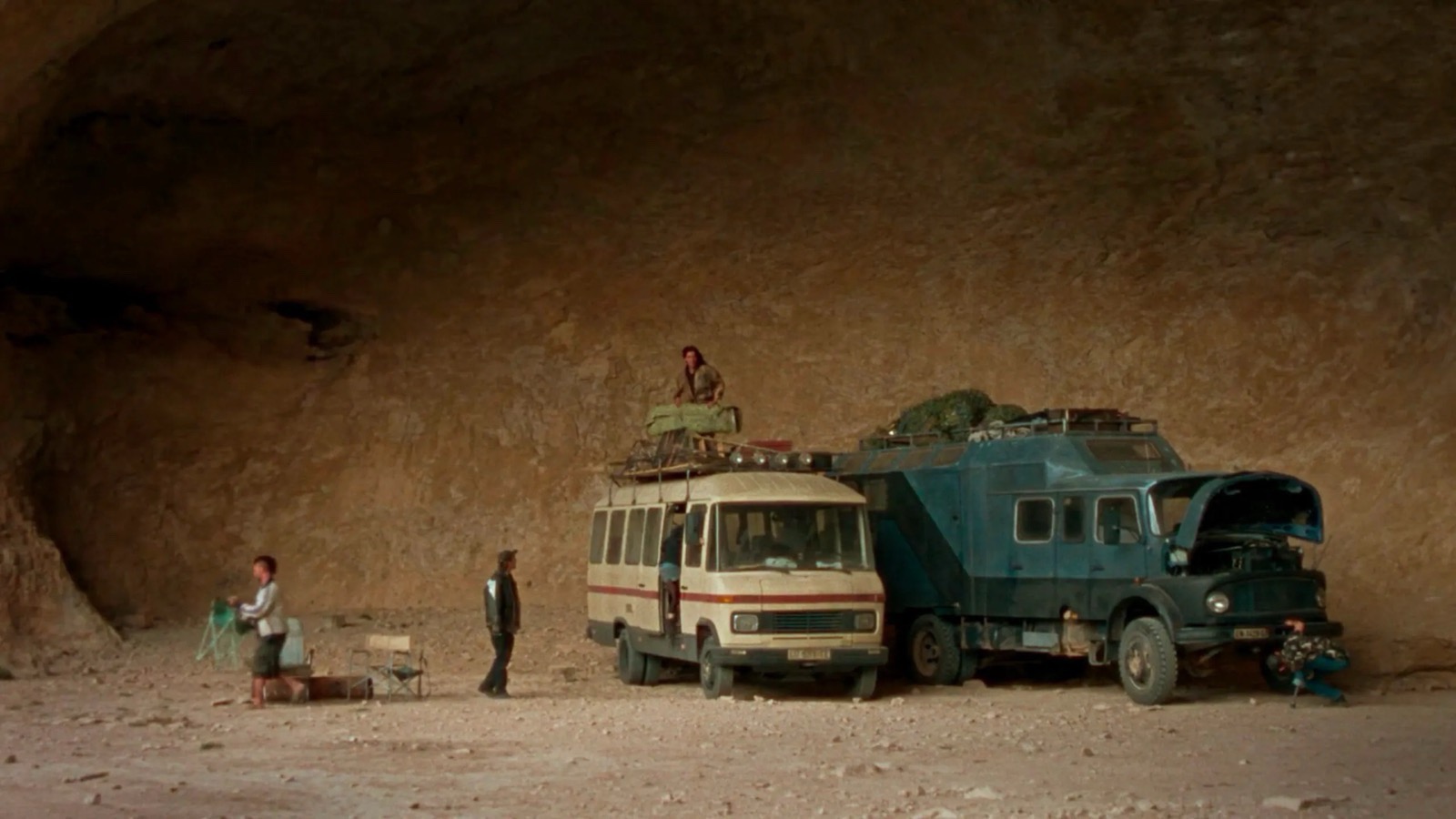
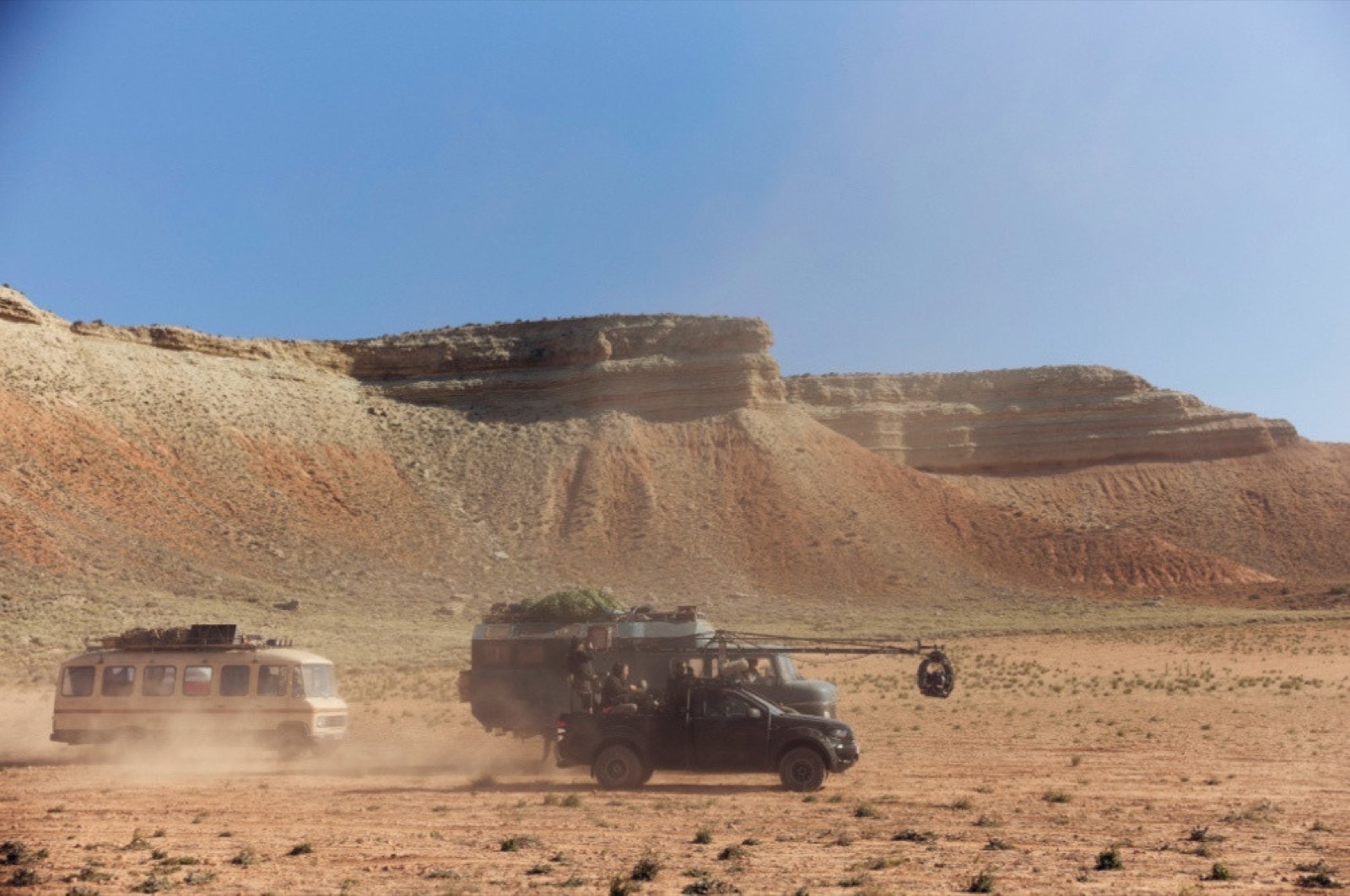
The first images show a rave unfolding in the Moroccan desert. Speaker stacks rise like temporary monuments against the landscape. Around them, bodies move in collective rhythm, less like individual dancers than components of a shared organism. Circling the scene are two figures who soon become the film’s axis: Luis, searching for his missing daughter Mar, and Esteban, the son accompanying him. Their path intersects with a group of ravers, Jade, Tonin, Josh, and Stef, who suggest that Mar may have moved on to another gathering somewhere deeper in the desert. No one knows exactly where. When the army arrives and forces everyone to disperse, Luis decides to follow the group further into the desert. Only at that moment does the title appear on screen: Sirāt. The journey begins there. The film visually marks the transition through a simple but precise image: a thin white line dividing the road that stretches ahead of the two groups as they drive away together. It functions almost like a diagram of the film’s premise. From that point onward the story no longer behaves like a search narrative. The missing daughter gradually becomes secondary.

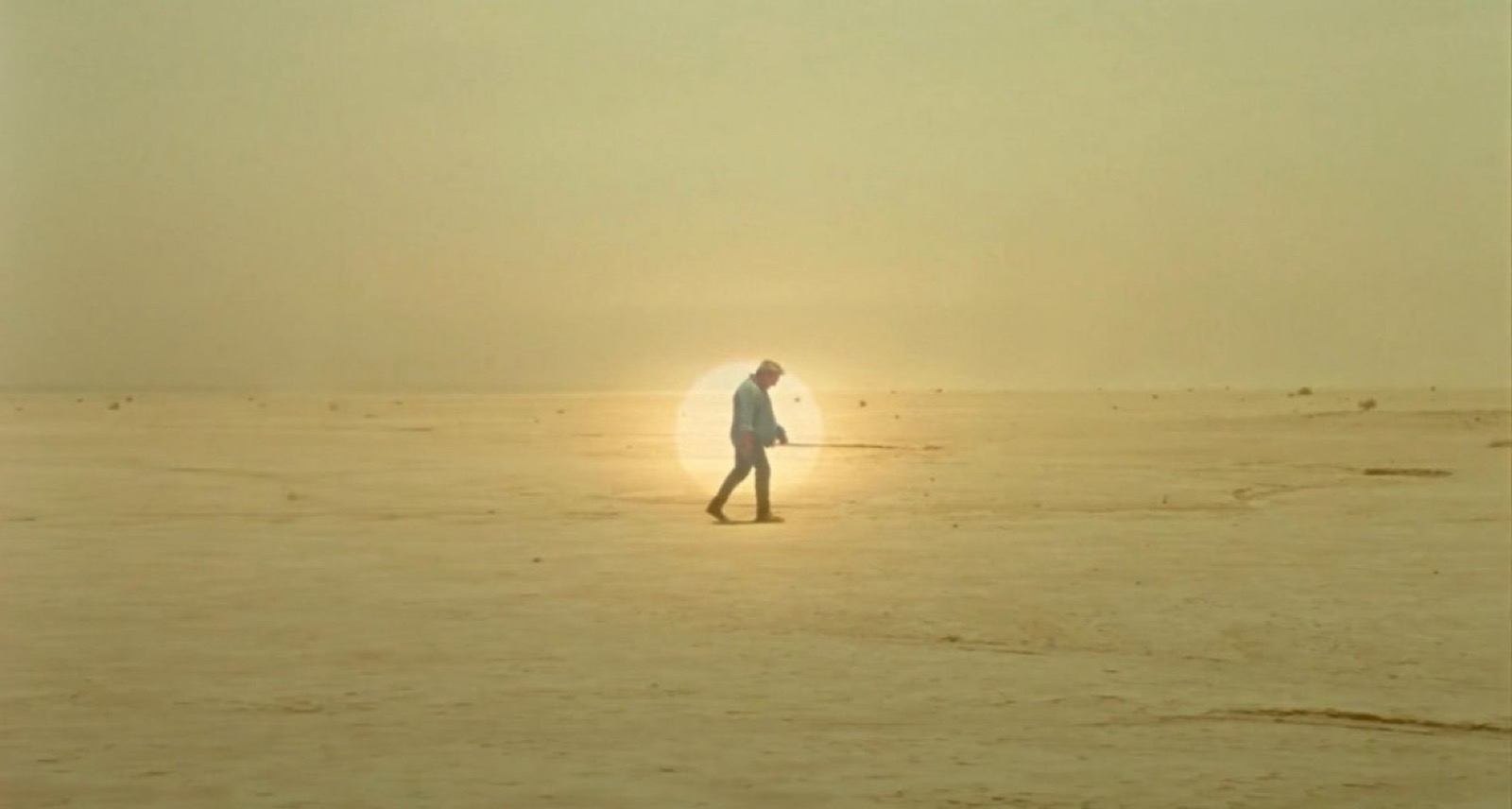
What takes its place is something closer to a descent, an irreversible movement toward loss. At one point, Luis voices the doubt that hangs over the journey: “This doesn’t make sense. We shouldn’t have come. What are we doing?” The film quietly suggests that the only moment when a different decision could have been made was earlier, when the army first arrived. Turning back was still possible then. After that point, the narrative moves forward with a kind of fatal momentum. The presence of the army also establishes a wider temporal horizon. Radio broadcasts mention geopolitical tensions and the possibility of an approaching global conflict. These fragments remain sparse, but they place the film unmistakably within the present. The apocalypse here is not speculative; it resembles the atmosphere already surrounding contemporary life.

“Perdition, in other words, does not begin with the journey. It precedes it.”

Halfway Across / Sirat

Credits:

Words: Gianmaria Garofalo / @gianmaria.garofalo

You may also like

The Allure of Transcendental Decay / Tali Lennox

Art&Culture | Interview
This interview explores an artist’s fascination with religion, symbolism, and the intersection of life and death. Reflecting on personal experiences and cultural encounters, she reinterprets Catholic imagery with themes of pain and transcendence, blending art, vintage fashion, and a search for beauty into a multi-dimensional creative journey.