SOSHIOTSUKI
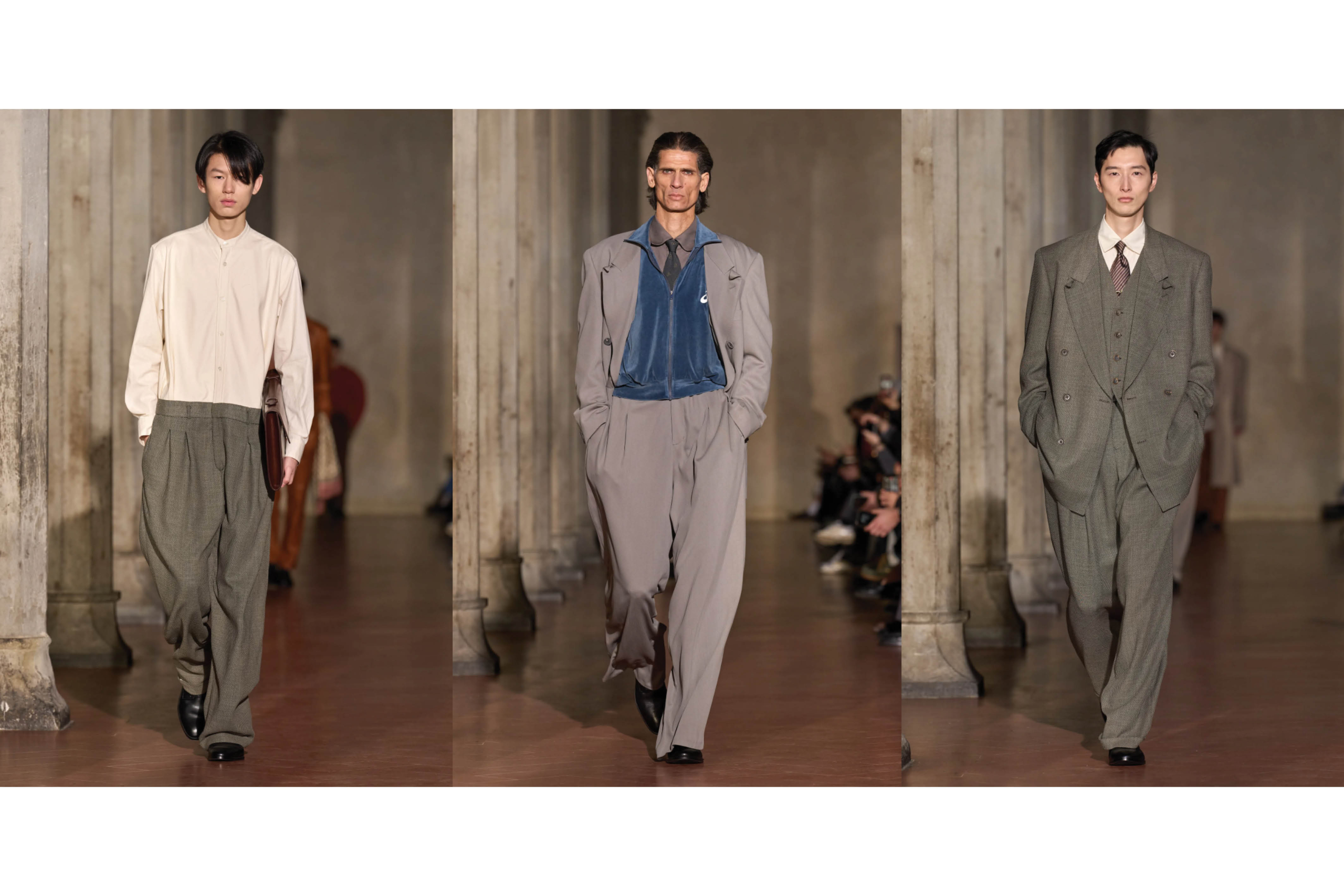
This was not a quiet show. Soshi Otsuki’s Pitti Uomo debut unfolded inside the Refettorio di Santa Maria Novella. The choice felt intentional: sacred, classical, and severe, yet threaded with a delicacy that hinted at its Gothic heritage without feeling historical. Against that backdrop, Otsuki presented a collection that mirrored the stage. Something in between old and new, discipline and looseness, formality and ease. His first show since winning the LVMH Prize for Young Fashion Designers, and the energy in the room full of expectancy.
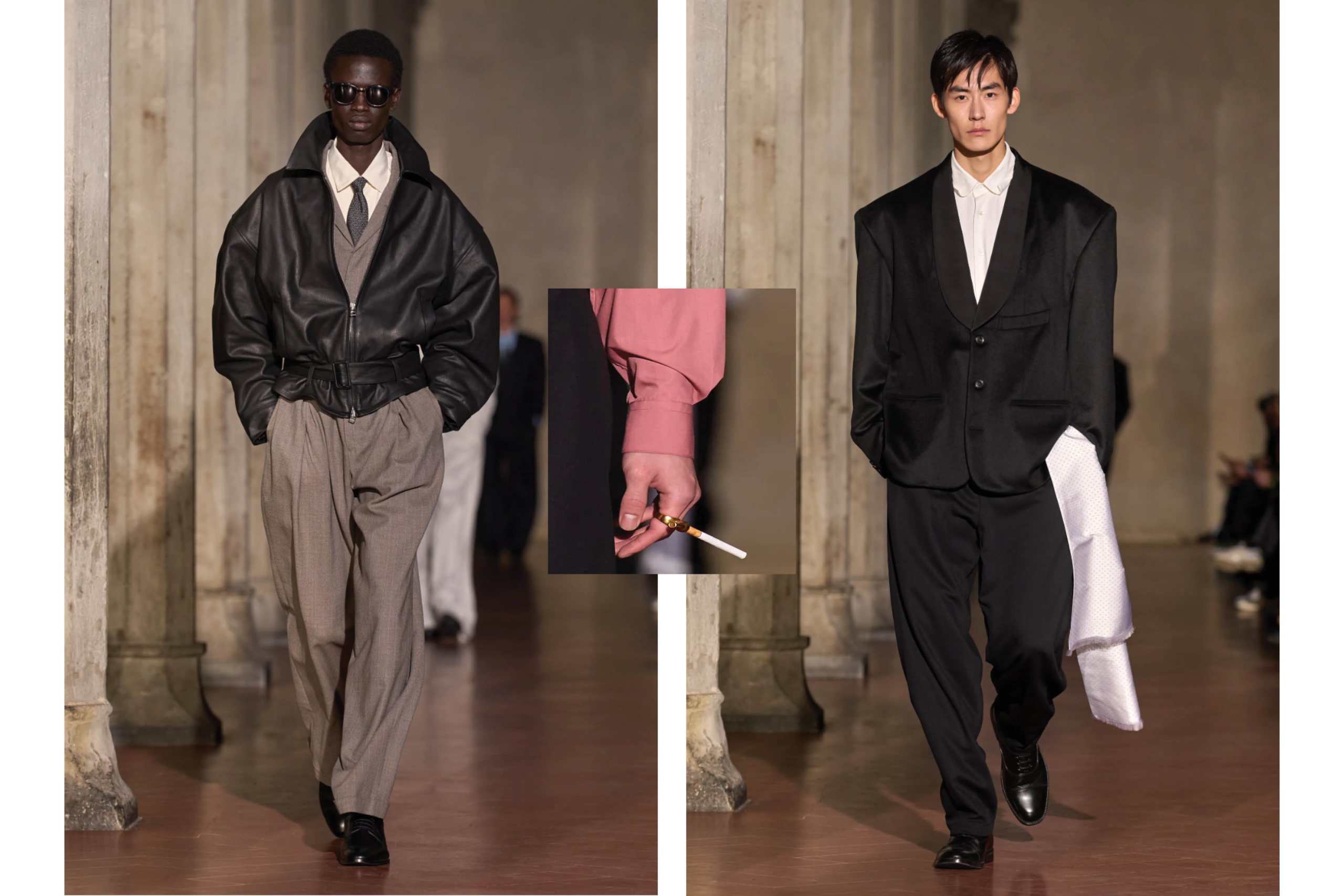
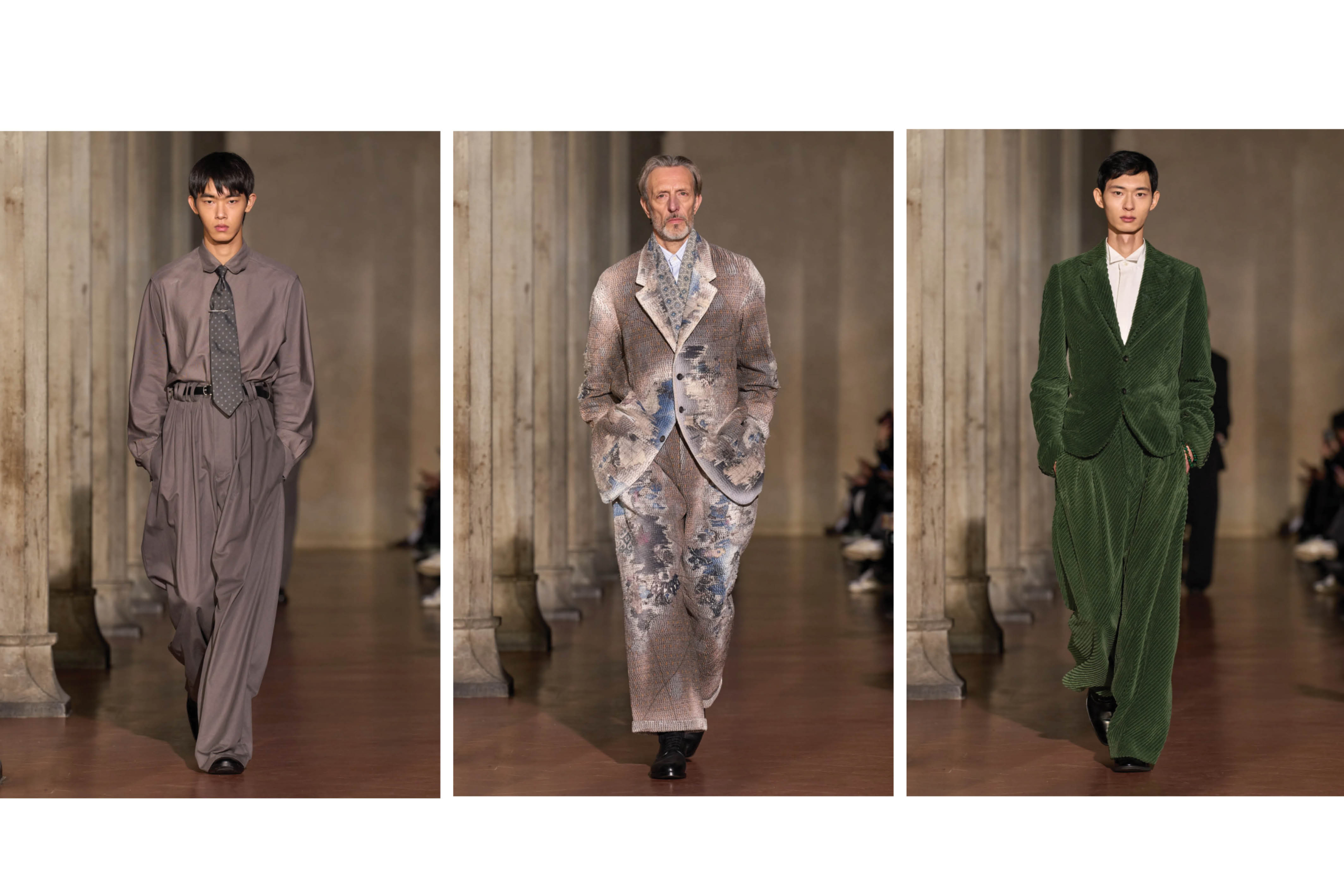
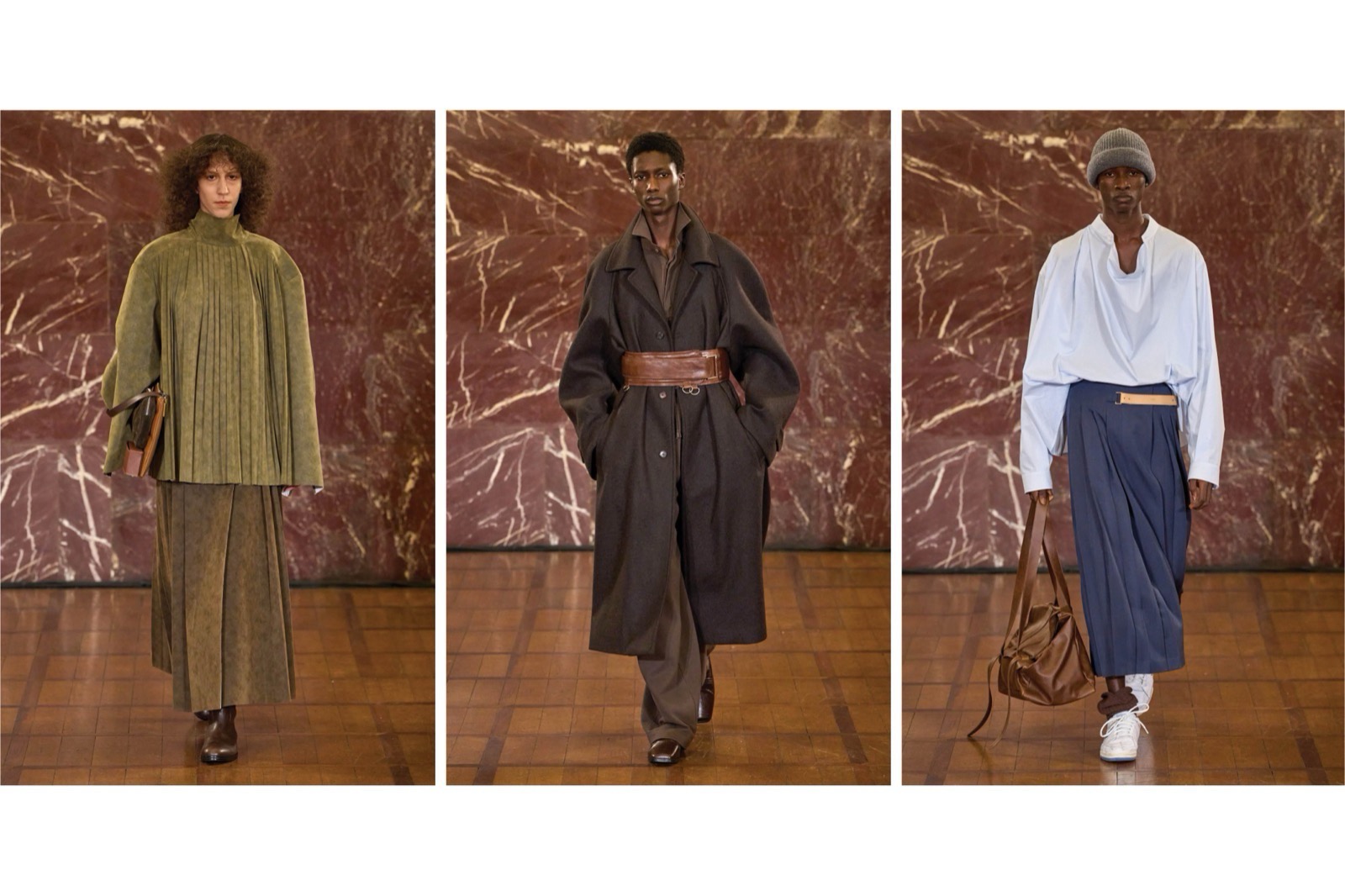
The collection drew inspiration from the 1980s Japanese salaryman, but this was no costume exercise in nostalgia. Otsuki distilled the archetype, restructuring it with modern instincts. Not quite Japanese, but not quite Italian. Oversized blazers anchored the looks, some knee-length, others sharply cropped, cut with precision but styled with softness. Collars were exaggerated and curled at the edges, disrupting the rigidity of tailoring with a subtle sense of movement. Everything felt intentional, but never stiff. Color and texture introduced warmth and play. Bright oranges and pinks punctuated the lineup, while cable-knit pieces softened the sharper silhouettes. Cropped cardigans appeared alongside jeans, breaking down the hierarchy between tailoring and everyday dress. An ASICS quarter zip slipped seamlessly into the mix, reinforcing Otsuki’s ability to blur boundaries without forcing contrast.
Trousers were detailed with reams of belt loops, and accessories sharpened the narrative further: cigarette rings by Kota Okuda, eyewear that framed the face with intention, and neck scarves replacing ties. Fur and leather added texture and weight, with a leather blazer standing out as both assertive and refined. The message was clear; this was formality reimagined, not rejected. What made the collection resonate was its balance. There was delicacy, particularly in the tailoring, but it never tipped into fragility. Every look held its structure. The styling felt fresh, meticulous without feeling precious. It was menswear that understood restraint, yet wasn’t afraid of pleasure. The room, a mix of Italian, Japanese, and international guests, buzzed with anticipation. By the final walk, the applause turned into loud cheers. Conversations sparked immediately: animated, excited, real. As the audience filtered out of the refettorio, there was a tangible giddiness.
Otsuki’s strength lies in his ability to honor tradition while quietly rewriting it. The collection offered clarity of vision, of craft, of emotion. In a menswear landscape often caught between irony and excess, Soshiotsuki delivered something rarer: confidence without arrogance, elegance without stiffness, and a future that feels considered, wearable, and genuinely exciting.