The Human Cost of Funding Your Own Work

A designer & stylist on the split between commercial and personal.

Being a designer looks like what nobody shows you on Instagram. It looks like three a.m. dreams about silhouettes you’ll never build, a laptop and a spreadsheet at your corporate desk while your best work lives somewhere else entirely, watching your own ideas walk past you with someone else’s name attached. It looks like choosing between paying rent and creating something that belongs to you.
To put it in Lady Gaga’s words: “No sleep, bus, club, another club, another club, plane, next place, no sleep, no fear, nobody believed in me.” Or perhaps it’s more like: “No sleep, no budget, neck pain, headache, another guest list, another opening, no sleep, no credits, another event, another party, fashion week, no sleep, neck pain, night shift, no budget, nobody cares about you.”

To be honest, reality involves fewer clubs, fewer events, and fewer guest lists. Instead, it’s more nights spent in front of a laptop, more neck pain from endless hours of work, sleepless nights before deadlines, constant self-doubt, growing insecurities, and a bank account that seems permanently overdrawn. Yet there’s always this feeling that you still need to attend one more event, meet one more person, show up at one more place – because maybe that’s where the next opportunity is waiting.

At some point, all the places start to blur together. The conversations do too. You simply keep functioning, sleeping too little, working too much, convincing yourself that this is just part of the process. Until one day you realize that ambition and exhaustion are sometimes difficult to tell apart.

And still, you keep going. Not because it’s sensible, but because nobody can be as persistent as someone who never imagined doing anything else.

I studied fashion design. In a room full of people who were convinced that creativity could be bought. People whose daddy’s money had made life significantly easier for them and who believed a full wallet could replace talent. Back then, it made me angry. Today, I understand that’s exactly how this industry works.

Throughout my studies, I was constantly told that success only comes from having your own signature. A distinctive style. Something that doesn’t look like everything else. So that’s exactly what I worked on. I absorbed everything I could find, experimented, made mistakes, grew, failed, and started over again. And again. For years. Today, I feel like I’ve reached that point. I’ve created something that feels like me. A visual language that carries my name. Something of my own. And yet now, I keep being told that I’m too creative. There is often a vast gap between “you don’t fit in here” and “you’re too creative, this wouldn’t do you justice.” But where is the space in between? Surely it can’t only be one extreme or the other.

And yet now, I keep being told that I’m too creative.

I’m tired. Not of the work itself, but of this constant need to prove myself. For years, you’re told to be different, to find your own path, to develop your own voice. And when you finally do exactly that, suddenly you no longer fit the mold.

The irony is that I’ve always wanted to be here. I grew up in a small town and dreamed of being part of this world. Not someday. Not maybe. Not on the side. Really part of it. There was never a Plan B. When people ask me today why I do all of this, I often answer, “Because I can’t do anything else.” And honestly, that’s true. I never imagined myself doing anything else, and I never would want to. My creativity drives me. Again and again. Yet I would argue that I’m not actually made for this job. I’ve spent seven years working in design, and in many ways I’ve felt incredibly limited by it. I’m an artist. A designer. A stylist. A creative mind. And never entirely satisfied by my work. Perhaps that’s exactly what keeps me going – not the pursuit of perfection, but the pursuit of satisfaction. Isn’t that what drives all of us, in one way or another?

Whenever I tell people what I do, it often sparks curiosity and amazement. Probably because they still carry the same image of this industry that I once had myself. I attended Fashion Week for the first time when I was fifteen years old. I had no invitation, no contacts, and absolutely no reason to be there. But I didn’t care. Back then, all the shows took place in the same location. I spent the entire day observing who went where, which wristbands mattered, and which doors weren’t really being monitored. I stood in lines, followed random groups, and pretended I belonged.

Suddenly, I found myself sitting in the front row. On either side of me were people who looked as though they sat there every day. People you recognized from magazines or later found again on Instagram. And right in the middle of them was me – a teenager from a small town who had simply hoped to make it through the door.

Today, almost fifteen years later, that memory feels like it belongs to another era. Not only because the world has changed, but because the industry has changed as well. Everything is curated, regulated, by invitation only! Maybe nostalgia softens certain memories. But I miss those little coincidences. The open doors. The feeling that with enough curiosity and a bit of courage, you could somehow end up somewhere you were never supposed to be. Not even for myself – but for the generations that come after us.

Even then, I knew I would return. Not only as a guest. Not as someone sneaking through side entrances.

When I moved to Berlin in 2021, that feeling briefly returned. Suddenly I was right in the middle of it all again. In the same rooms, surrounded by the same conversations and the same promises. For a moment, I felt like that fifteen-year-old kid again, stepping into Fashion Week for the first time, convinced that this was where the magic happened.

Only now I was older.
I’d studied, worked, completed projects, gained experience. Yet I still wanted to attend

everything. Every event. Every party. Every exhibition. Every show. Always with the feeling that I was only one event away. One person away. One conversation away from a door suddenly opening. It didn’t take long to realize that reality is often far less romantic than I imagined.

Success in this industry isn’t always based on what you can do. Often, it’s based on who you know.

Of course talent exists. Of course hard work matters. But over time I learned that many careers aren’t built in studios and ateliers. They’re built at bar counters, on rooftops, in hotel lounges, smoking areas, and somewhere between conversations that were never intended to be decisive but somehow become exactly that.

The longer I work in this industry, the less I want to be part of that aspect of it.

Maybe because I was never particularly good at it. Maybe because I never understood why you have to constantly market yourself as if you’re a brand instead of a person. Or maybe because the people who truly inspire me are rarely the loudest ones in the room.

And then there’s the other side – the side nobody likes to talk about openly because it feels almost embarrassingly ordinary: ideas get stolen.

Young creatives develop concepts, invest their time, risk their money – and then suddenly that work appears somewhere else. Reworded. Slightly altered. Stripped of context. Classic! I could probably tell the specific stories here. Name names. Share details. Lay everything out. But honestly, that’s not even necessary. The industry is small enough. Everyone knows everyone through two or three degrees of separation, and things spread quickly anyway.

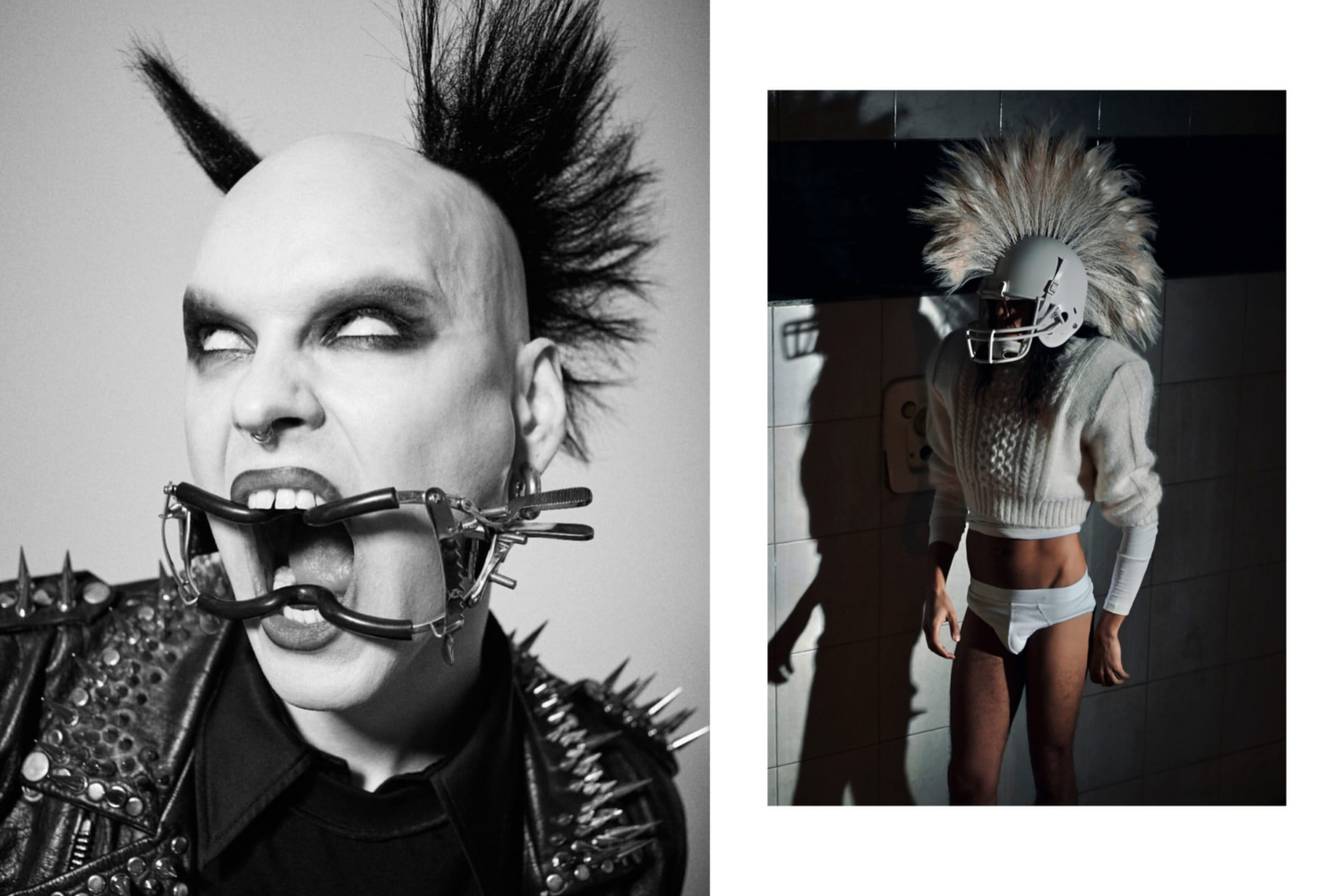
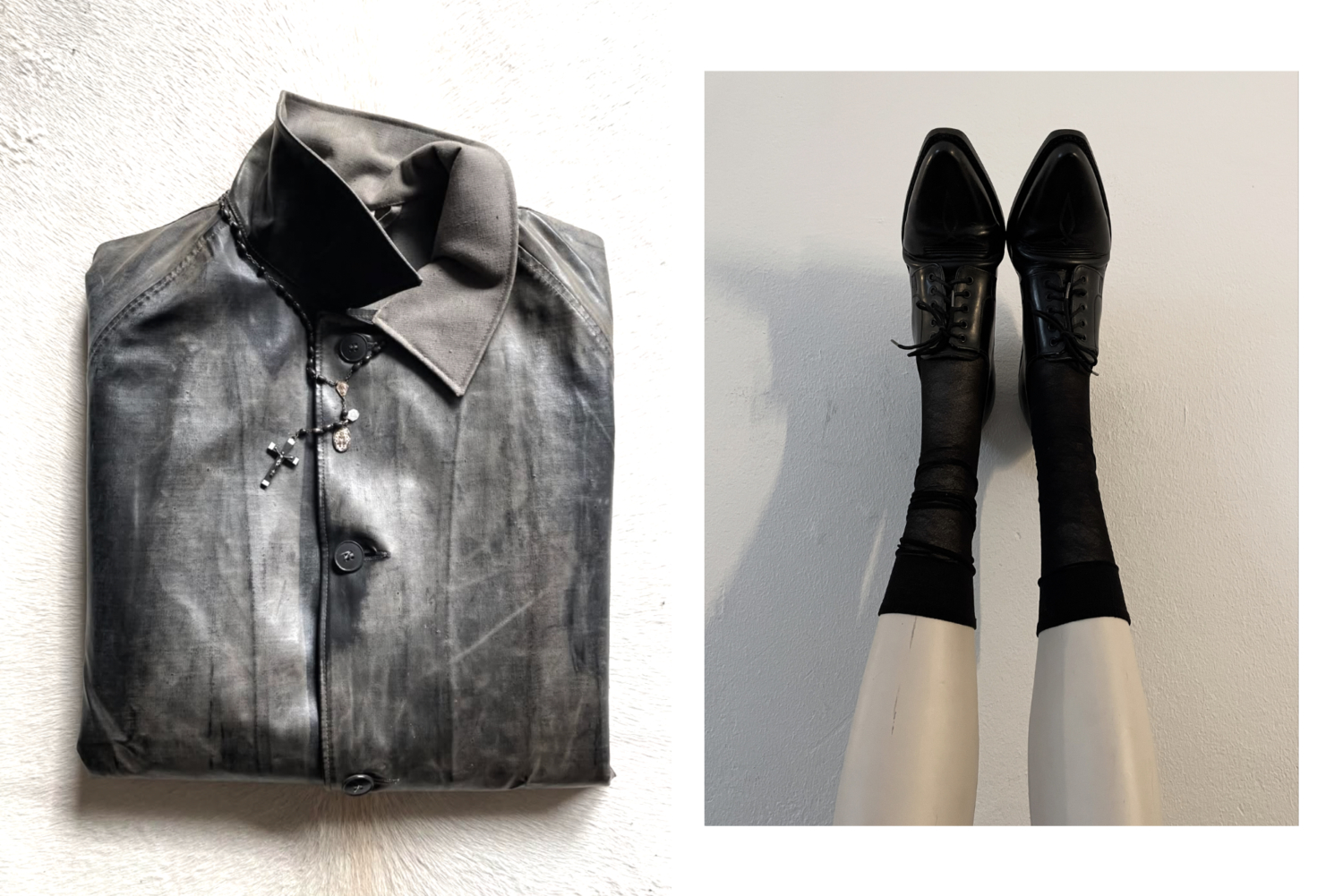
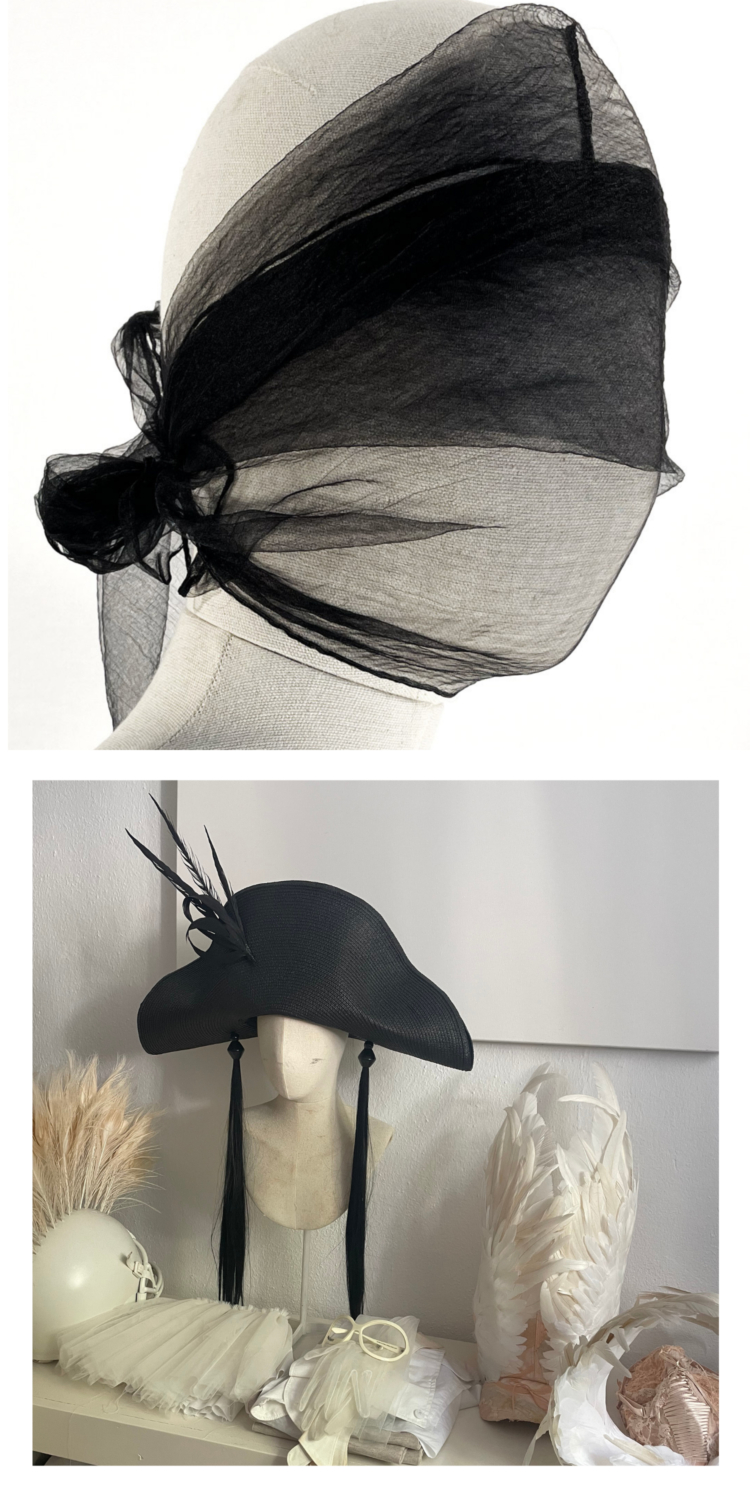
The first time it happened to me was a few years ago, during the second lockdown, I believe. Everything had stopped. No shows. No productions. No real opportunities to work. There were days when I barely left my apartment. And I hate that feeling. I’m terrible with inactivity. If nothing happens for too long, everything inside me turns into a kind of restless anxiety. So I started working on a personal project. A costume project. Ten looks designed and produced by me, then photographed together with my team. The process lasted roughly six months. Time, money, energy – everything went into it without any guarantee it would lead anywhere.

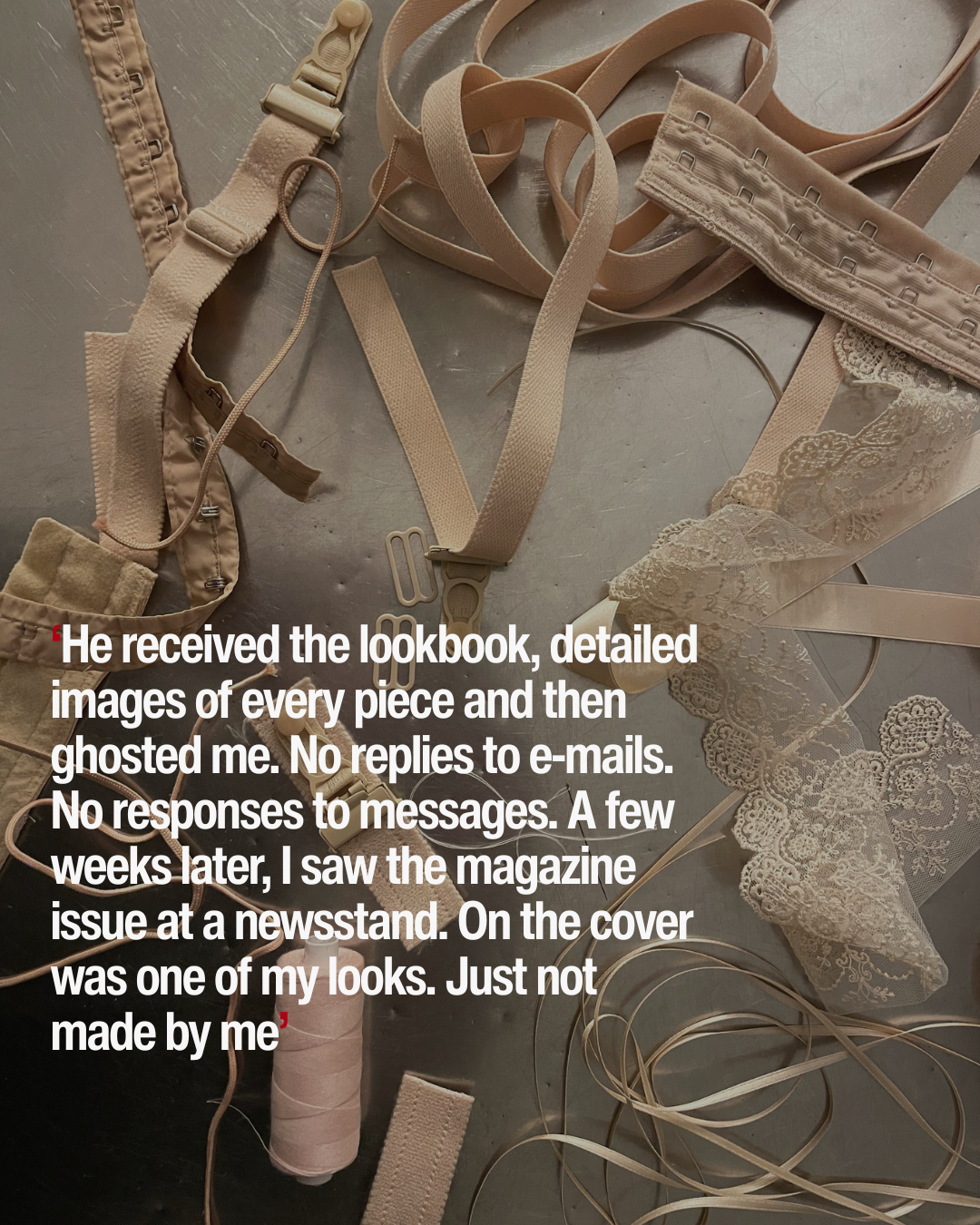
After publishing the images, the Editor-In-Chief of a major German beauty and fashion magazine contacted me. Someone highly visible in the industry. Someone whose name carries weight and promises visibility in return. He asked whether I would lend pieces from the project for a cover shoot. I was asked to send the complete lookbook again, including detailed overviews of all available pieces, and then ship the looks to Hamburg.

Of course you’re excited by a request like that. Especially early in your career, it feels like the kind of moment that might open doors. The compensation, however, would only be credits and photographs. Even back then I questioned it. Not necessarily out of naivety, but because it felt strange that a major publication could somehow have no budget. In the end, the collaboration never happened.

I stood there staring at that cover, and for a moment everything else disappeared. Complete overwhelm. It was so obvious and yet so absurd. First came silence. Then sadness. Then anger. I confronted him immediately. Right there, from that emotional place, without distance, without filters. It was a brief but very clear confrontation. Less than five minutes. Afterwards, I was blocked.

By now, this process has become so familiar within the industry that people barely question it anymore. Yet the bitterness remains. Because it’s almost always young creatives investing their time, ideas, and passion while major brands benefit from the results. Again and again I ask myself: Why not simply hire us? Or at least pay us. With money. Not visibility. Not promises that it will somehow pay off someday.

I’ve always struggled with doing things purely for money. Not because money isn’t important – quite the opposite. But because it was never my primary motivation. I never wanted to simply execute instructions. Never wanted to deliver exactly what’s expected. I need freedom. The possibility to make something my own. Otherwise, the work eventually feels empty. The irony is that the money is usually found exactly where that freedom is smallest: commercial work. That’s where the budgets exist. The deadlines. The need for everything to function safely and predictably. Those jobs pay the bills – but rarely feed the soul.

The projects that genuinely excite me – editorials, personal work, the absurd ideas that emerge somewhere between inspiration and delusion – those are usually the projects that generate little money. Often none at all.

So you take the commercial jobs in order to afford the creative ones. You spend weeks working on campaigns you don’t truly believe in, only to pour the earnings into an editorial that will probably never become profitable.

But that’s the price of still creating something that belongs to you. I remember one independent production we created several years ago. A small team. Two models I’d cast on the street just days earlier. Most of it came together at the very last minute because all of us had packed schedules and very little preparation time.
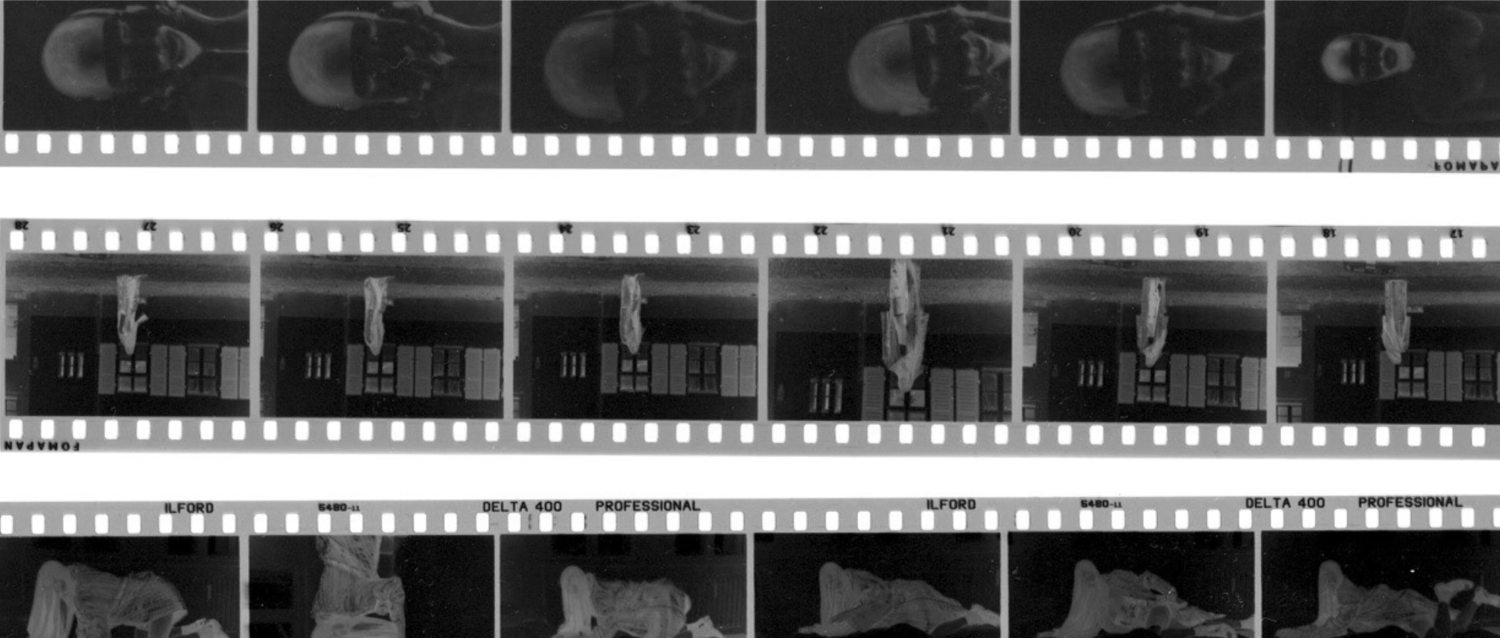
When we arrived on set, we were exhausted, stressed, and mentally still stuck in unfinished to-do lists. Yet from the very beginning there was a special energy in the room. By the first look, I realized the concept worked. All the thoughts, effort, and stress of the previous days had come together into exactly the atmosphere we’d hoped for. In that moment, I couldn’t hold back my emotions anymore. Tears rolled down my face. It was probably relief more than anything else. That deep exhale that comes when you finally realize the effort was worth it. Of course, my goal is always to work professionally and create strong results. But over the years I’ve realized that something else has become even more important to me: That everyone on set feels seen, heard, and appreciated. That a space exists where creativity, trust, and mutual respect can thrive. And this was one of those rare moments when you understand that it’s not only about the final result. It’s about the people who made it possible together.

From the outside, this industry often looks very different from what it actually is. There are the shoots. The events. The parties. The invitations. The free drinks. The PR packages. The showrooms. The people dressed in perfectly curated outfits. On social media, it all looks like one endless evening where everyone is successful, creative, and slightly more beautiful than the rest of the world.

And sometimes I’ve contributed to telling that story myself.

What the photos don’t show are the compromises. The unpaid invoices. The spreadsheets. The rejections.

The countless creatives who head straight to the office after a shoot or drop off returns at the post office before work in the morning. Nobody likes talking about it. Maybe because it doesn’t fit the image. But the truth is that many of us have second jobs simply to survive. We don’t pay our rent with guest list spots. Not with goodie bags. Not with free drinks at the bar.

Sometimes I think this industry survives on an illusion. The idea that passion alone is enough. That creativity always finds a way. That success is simply a matter of talent, discipline, and perseverance. Reality often looks different. Many of us spend our days at perfectly ordinary desks. Answering emails. Attending meetings. Working through task lists. And all the while we’re trying, behind the scenes, to build something of our own. Something we believe in. Something that might one day become more than just an idea.

As I write this text, I’m sitting in the office of my corporate job. Thirty-five hours a week. Sometimes six days in a row. At the same time, I’m working on what is probably the most time consuming project of my career so far. Twenty-four hours a day. Seven days a week. Creative processes don’t clock out. They don’t disappear when the laptop closes. They run through every day, every observation, every thought. My mind always returns to the project. To what’s still missing. To what could be better. It’s a constant cycle of euphoria and exhaustion. Of feeling like you’re creating something meaningful while simultaneously fearing you’ll never live up to your own expectations.

I’m a perfectionist. My own harshest critic.

Sometimes I wake up at three a.m. in the morning because I dreamed about a look. A silhouette. A solution to a problem I’ve been wrestling with for days.

Suddenly there’s an idea that didn’t exist before, and now it’s so loud that sleep becomes impossible. The next morning I’m back here. Coffee in front of me. Answering emails. Sitting through meetings. Trying to get through the day while part of me is already somewhere else.

Sometimes I wish a day had more hours. Or that humans required less rest. As if we could somehow squeeze a few more hours out of our dreams. Yet I know how unhealthy that thought is. We’re not built to live permanently in this state. Between tension and hope. Between the next goal and the fear of running out of time. Sometimes it feels like a high you don’t want to come down from, even when you already know how much energy it’s costing you. Maybe we forget too often that not everything has to happen immediately. That time isn’t the enemy. That not every opportunity has to be seized. Not every door opened. Not every request answered with a yes.

Maybe the real challenge isn’t to keep going forever. Maybe it’s allowing yourself to stop sometimes. To trust that what you’re building will still be there tomorrow.

Recognition doesn’t always have to be loud — and that visibility is no substitute for appreciation.

There used to be euphoria. The belief that every opportunity might open a door. That every collaboration will move you forward. You gave a lot. Often more than you actually had. Out of excitement. Out of hope. Out of the desire to be seen. Today, very little of that feeling remains. Maybe it simply became quieter with time. Maybe disappointment sanded away its edges. Or maybe it had to disappear so that something more honest could take its place.

I no longer want to be visible at any cost. I no longer want to constantly prove that I exist. I just want to do good work. Work that means something. Work I can be proud of. And if that work speaks for itself, then that’s enough.

The Human Cost of Funding Your Own Work

Credits:

Photographer: Nina Bennett, Sebastian Pollin, Marvin Schmidt  / @nnbnntt, @sebastianpollin, @marvinpunktschmidt
Words: Max Teutsch / @maxteutsch
Visual editor: Carmela Giraudo / @carmelag________

You may also like

Light, Shadow & Beyond

Fashion | Exclusive
Through time, we are chasing the light. At times, we fall into the darkness. We are walking the fine line in between. We are fragile and sharp. In the name of light and shadow, we are the explorers and pioneers of the time. Don’t fear your own shadows. We were forged in darkness. An onirical fashion story shot by Yanle Shen.

From the archive

Fashion |
In between fashion images and imaginary movie posters. Photographed by Cheng Po Ou Yang and styled by Or Haung.

Oppium

Fashion | Exclusive
A descent into decadence, where desire drips like liquid gold and indulgence is the only law. A world suspended between delirium and elegance, where beauty is intoxicating, and excess is a whispered secret.