At the beginning of every career, there is a moment that is as delicate as it is challenging for a DJ: choosing a stage name. It becomes a true calling card for the audience. Yet you decided to go with your given name. Looking more broadly at the Italian scene, it also seems that many of your peers have made the same choice. In your case, what motivated this decision? Does it have anything to do with Italian pride?
This was indeed not an easy choice, mostly because my real name is very long and often times has been misspelled on flyers and/our announcements. So, because of that, I actually wanted to change it and find some sort of nickname. I couldn’t really come up with anything interesting though, and then one of my labels convinced me to keep my original one, as it is more special and authentic. So yes, I have decided to keep it. This has nothing to do with Italian pride though.
In 1997 you left your hometown of Tricase and moved to Milan to deepen a strong passion of yours: dance. In 2001, you graduated in theatre, dance, and choreography from the Civica Scuola di Teatro Paolo Grassi. Its co-founder Giorgio Strehler once said: “Theatre doesn’t serve to change the world, but to change people. And people change the world.” Looking back, did this “change” happen for you? Have the studio, as an intimate space, and the club, as a collective one, become your own form of “theatre” to impact the world?
Somehow yes, I believe so. Or at least, I hope! After all, going out dancing for most people is some sort of liberation from their normal daily routines, almost an escape. And as a DJ, I usually provide the sound-track for this little journey. I help them to feel new or different, just by closing their eyes and dancing to my beats. Same applies to music and the healing power that it has on devoted listeners. How many times, when I sit in the studio and work on a new track, I have been thinking how it could affect someone else, when one day they will listen to it. I do hope my music changes something in their lives, and in a positive way, obviously.
After completing your studies, you moved to Berlin, where you continued your training in dance. At the same time, by immersing yourself in the city’s nightlife, music gradually took on a more central role. Even if your legs no longer move the way they once did, your DJ sets now move the legs of hundreds of thousands of people. Could we say that your connection with the body hasn’t been lost, but rather transformed into something collective?
Actually my legs still move a lot and I am quite known for that :) Many people tell me how much they enjoy when they see me DJing because I dance so much. And I get that, it’s nearly impossible for me to stay still. Music takes me high and my body naturally needs to move. In this sense, I can say that the connection with the body is definitely still there. And I love transmitting and exchanging this kind of feeling with the crowd. It becomes a collective dance therapy and music is the key during this process.
During your early years in the European city that never sleeps, you were a regular at Ostgut, now known as the legendary Berghain, where you have been a resident since 2015. You’ve played both on the lower floor and at Panorama Bar upstairs, as well as at Laboratory during the iconic Snax parties. What moments and emotions do you associate with each of these spaces within what is often considered a global temple of electronic music? And how did “Techno Massi” come to life?
I have always been very eclectic when it comes to music, and I have listened to a lot of different genres. This has also influenced my style of DJing. In fact I like to be very diverse and I try to go in different directions, within the same DJ Set, if it’s the right context. Berghain has definitely offered me the chance to explore all of this, with all the different dance-floors as well as time-slots. For instance, when I do the opening at Panorama Bar, I get to play slow stuff (starting around 100 BPM) and gradually build-up. Obviously, this is different than when I play a typical Sunday peak-time slot, like 8 pm- midnight, and the room is totally on fire. Techno Massi was actually born a very long time ago, when I first started DJing. In fact, back then, I was more into techno. Within a few years though, I got more into house and disco, and that has become my most natural playground. But since 7 years now, Techno Massi is back, and occasionally I play a techno set for dedicated dance-floors. Closings are my favorite, as I really love telling a story while exploring different musical territories. Luckily I play so many and so I do have lots of fond memories about them. My longest set ever, was New Year’s Eve at Panorama Bar, in 2020, where I played for 12 hours. Epic!
One of the great privileges of being a DJ and producer is that home often coincides with the workplace, more precisely, the studio. It’s the place where the magic happens: tracks take shape, albums are completed, and the rest becomes history. How would you describe your relationship with your many machines? Which tools from the past do you miss the most? And regarding the issue of gentrification that is increasingly affecting Berlin, what can you share from your personal experience?
I have now lived in Berlin for almost 25 years and 20 out of these, in the same building. Within this same building, I have moved once, from a smaller into a bigger apartment. My studio with all my machines has always been with me at my place and my entire music discography was made in this building. I like to combine both living and working spaces together, and don’t feel the need to go to the “office” in order to be productive. Thus, I can say that I have been pretty lucky, that I didn’t have to look for another space, especially since Berlin has changed a lot in terms of rent and availability. It is so much harder these days to find a free space to rent at a reasonable price. So I guess I will just hold on to my studio-apartment for ever. I have been collecting vintage synthesizers and drum machines since day 1. I bought, sold and then bought them again many different machines throughout these 20 years. I love playing with hardware, I enjoy the tactile experience to it and the kind of flow which comes out of this. I prefer touching some keys and moving knobs or faders, rather than just staring at the screen of my computer and clicking on the mouse. During the pandemic, I used the time to remodel my place and studio and I got rid of some gear. I definitely regret selling some of them, such as the legendary LinnDrum LM2 drum machine, which I bought ages ago, for only 600 euros (now it’s 10 times more expensive). Another one that I do really miss is the Korg Trident, which I had for a very short time, almost at the very beginning and you can hear some of it in the tracks “Whirlwind” and “Holding Patterns”. However, I still have more than enough and I am quite happy with my current set-up, although lately I have been thinking that I could perhaps sell a few more. It’s now been 20 years that I have had some of these and I feel like I need to change my flow a bit, for the next round of music production. I don’t want to get stuck somehow. Rather, try to re-invent myself through a new sound spectrum.
Another artistic field that clearly fascinates you is fashion. You curated the music for the SS19 and AW19 runway shows of the Chinese brand Li-Ning. Correct me if I’m wrong, but a collection presented to the public needs its soundtrack not as a didactic support, but as an emotional and creative one. Which other brands would you like to collaborate with? And how do these experiences influence your musical imagination?
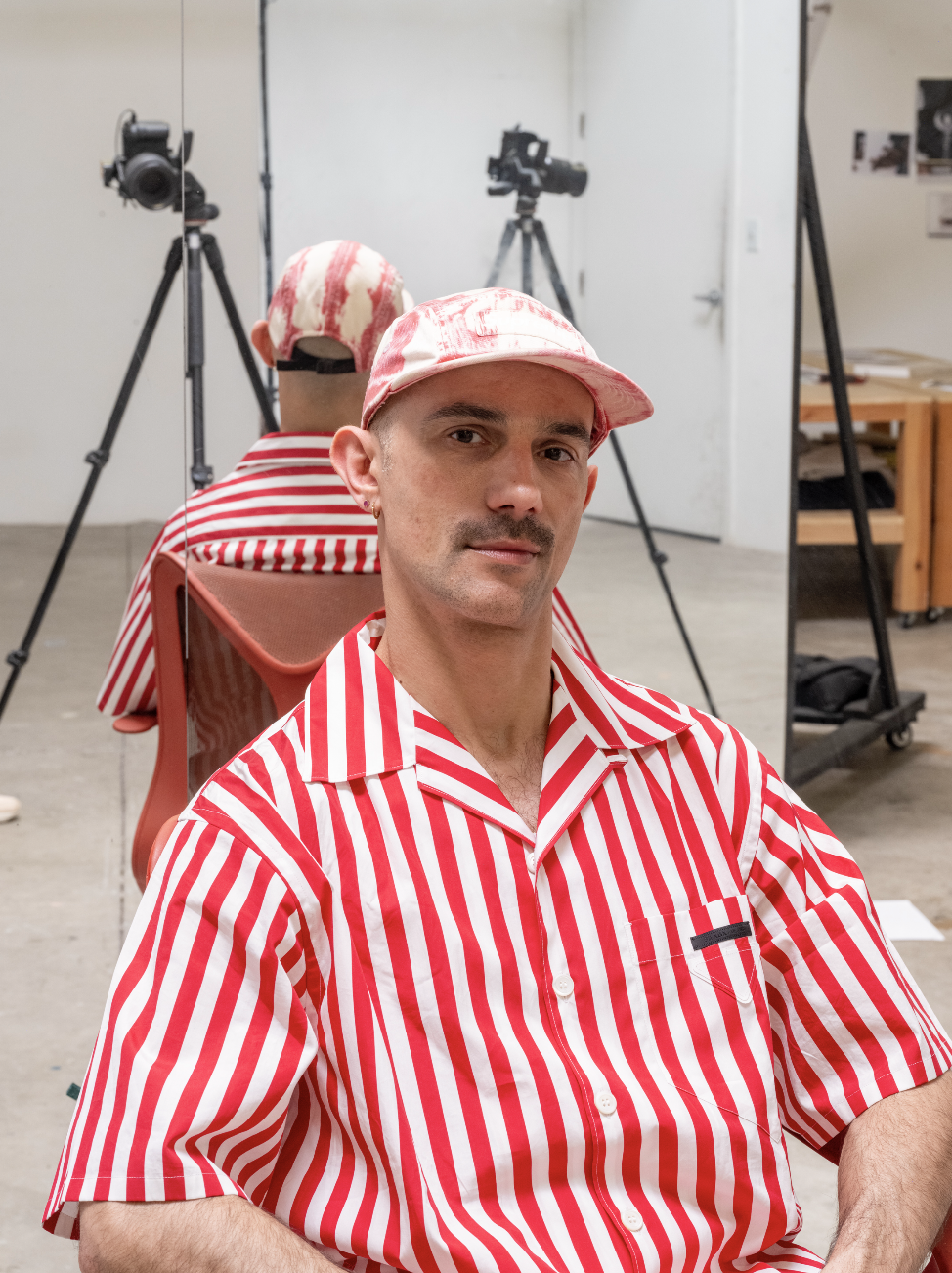
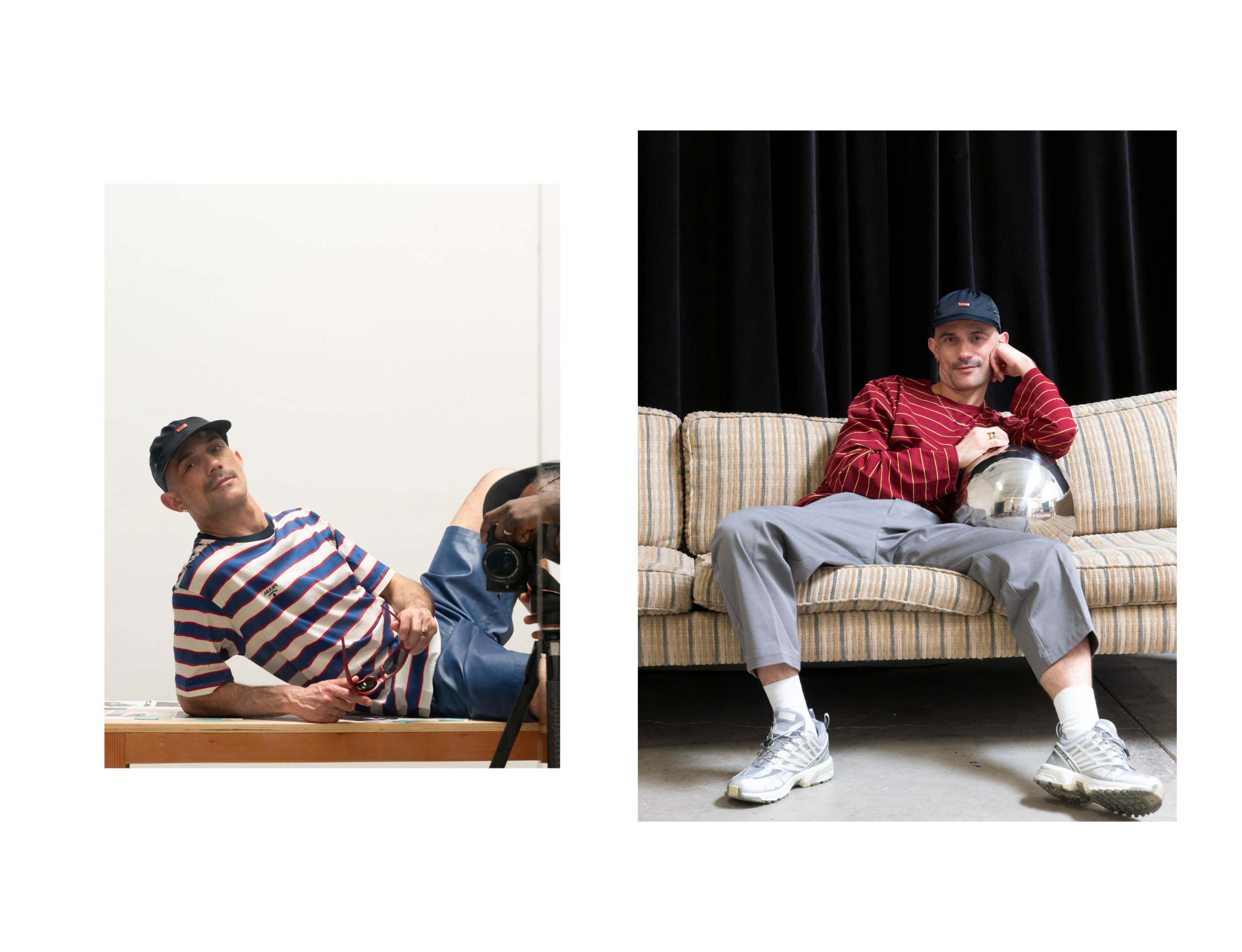
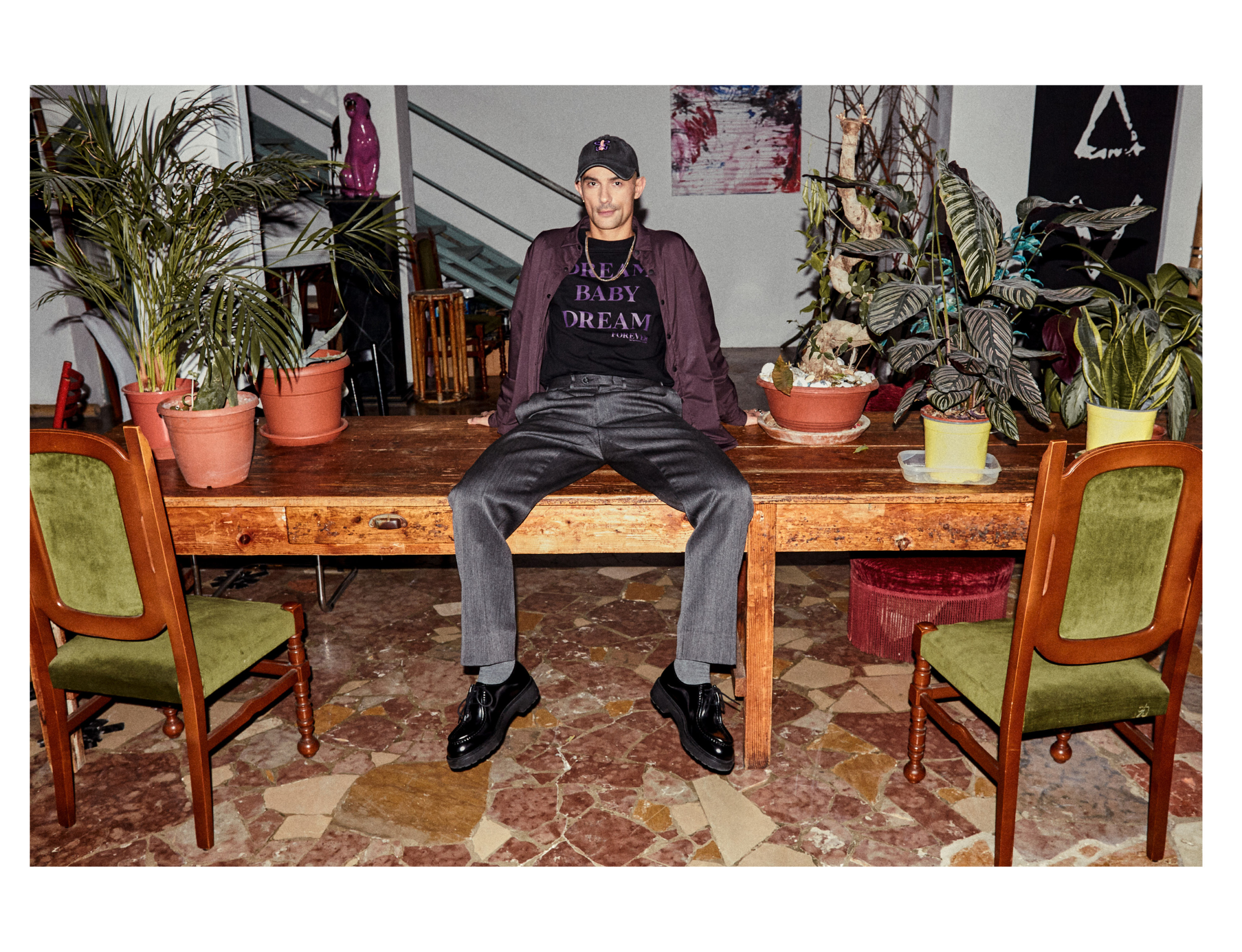
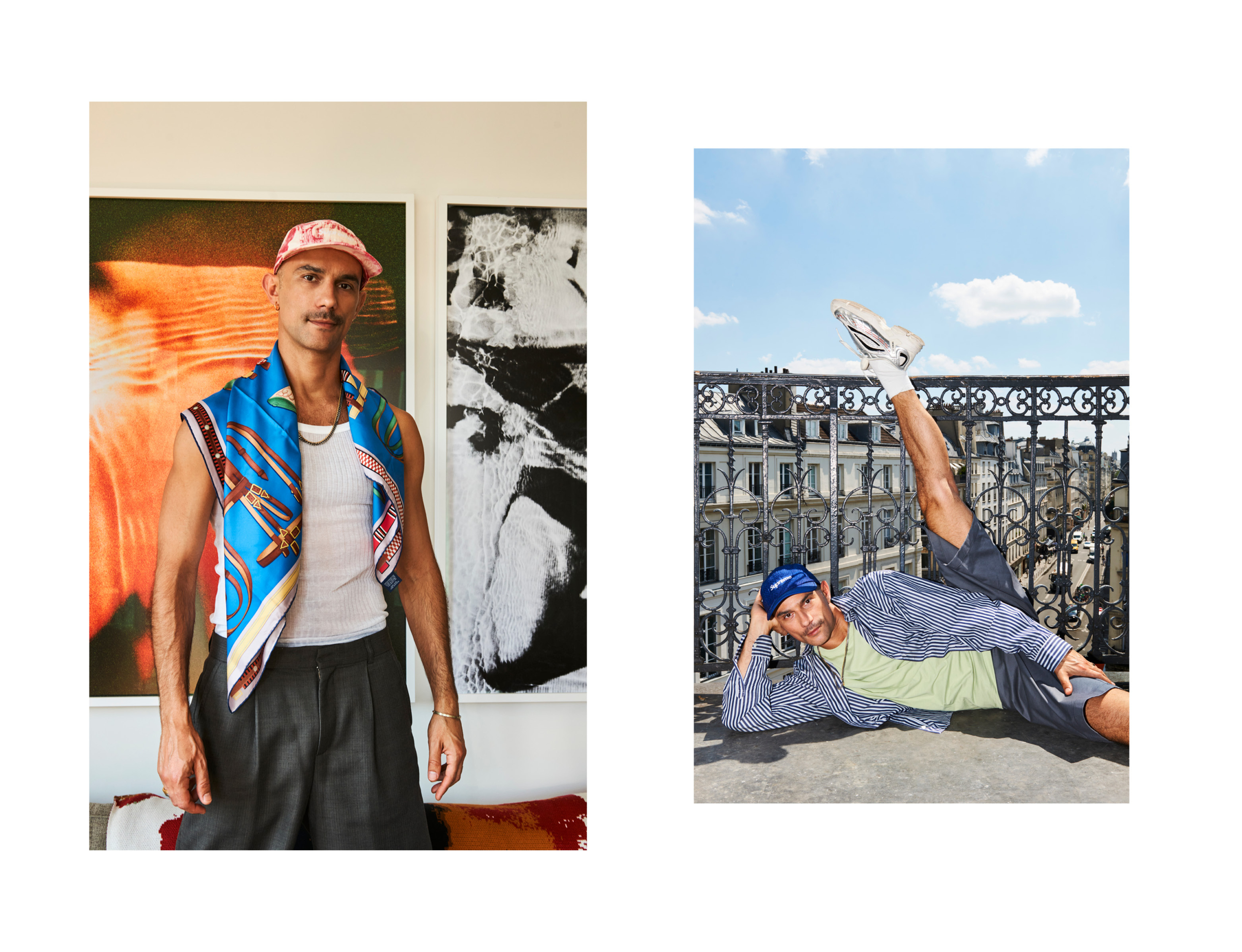
Yes, very true, I do have a thing for fashion. I always did. In fact, when I was a child my mom had a clothing store, where I spent so much time trying out new looks and also styling the mannequins in the shop window. I have always been quite obsessed with clothes, they are definitely an extension of me and they inspire me a lot. What I wear, has a certain impact on my creative process as well as interiors, such as furniture, different objects, lighting, they all play an important role. It was a great experience to score the Li-Ning and Rochas runway shows, and I do hope I can do more of this in the near future. Some of my favorite brands are Prada, Miu Miu, Margiela, Bottega Veneta, Comme Des Garçons, Undercover, Saint Laurent, Dior, JWA, Loewe, Jil Sander, Our Legacy, Sun Flower, Palace, Supreme, Carhartt, On, to name but a few. I always enjoy watching fashion shows, as they do inspire me both sonically as well as stylistically.